- Monthly Conservation Note - The Nature of Nativeness
- Thank You to Our Donors
- New Federal Funding and Key Support
- "Meet Our Team" Spotlight - Welcome, Atea & Goodbye, Samantha!
- Give Miami Day 2021
|
|
Monthly Conservation Note |
|
As we move further into Anthropocene and a changing climate, it will become more and more difficult to determine whether a plant or animal is native to a particular place. But it is critical that we do so, as it greatly affects how we restore and manage species and ecosystems. Recently, IRC and the Society for Ecological Restoration (SER) used data from the Floristic Inventory of South Florida to help critique a global restoration web tool that used global datasets and machine learning to autogenerate lists of "native" plants for ecological restoration sites. Partly due to issues of scale, the lists were wildly inaccurate and were disabled from the public website when it launched earlier this month.
IRC has long held that we need a practical, definitive, ecologically-based definition of native species that will function in a changing world, and we are working with SER and other global partners to reach this goal. In the meantime, there are important issues that we can all consider. First, we know that nature is not static over time, and definitions of nativeness that use a date (e.g., before European contact in Florida) need to be reconsidered. Second, scale matters. Plants and animals are native to particular places and ecosystems, they are not "native" to cities, states, or even ecoregions, which are artificial constructs. Third, species are moving in response to climate change. Our definition must take into account this |
| important migration of species, which is needed to allow for native species and communities to adapt and evolve, but we are better "following" this natural response rather than thinking we know how to predict it.
Our goal is to maximize success and minimize costly mistakes, whether we are managing a mostly intact native ecosystem, restoring one, or building a native habitat in our garden. These key concepts are incorporated into IRC tools, like Natives For Your Neighborhood, and our mission "to protect - and restore - viable populations of all native plant and animal species within key regions by designing conservation strategies powered by rich, geographically-distributed data."
George Gann Founder and Executive Director |
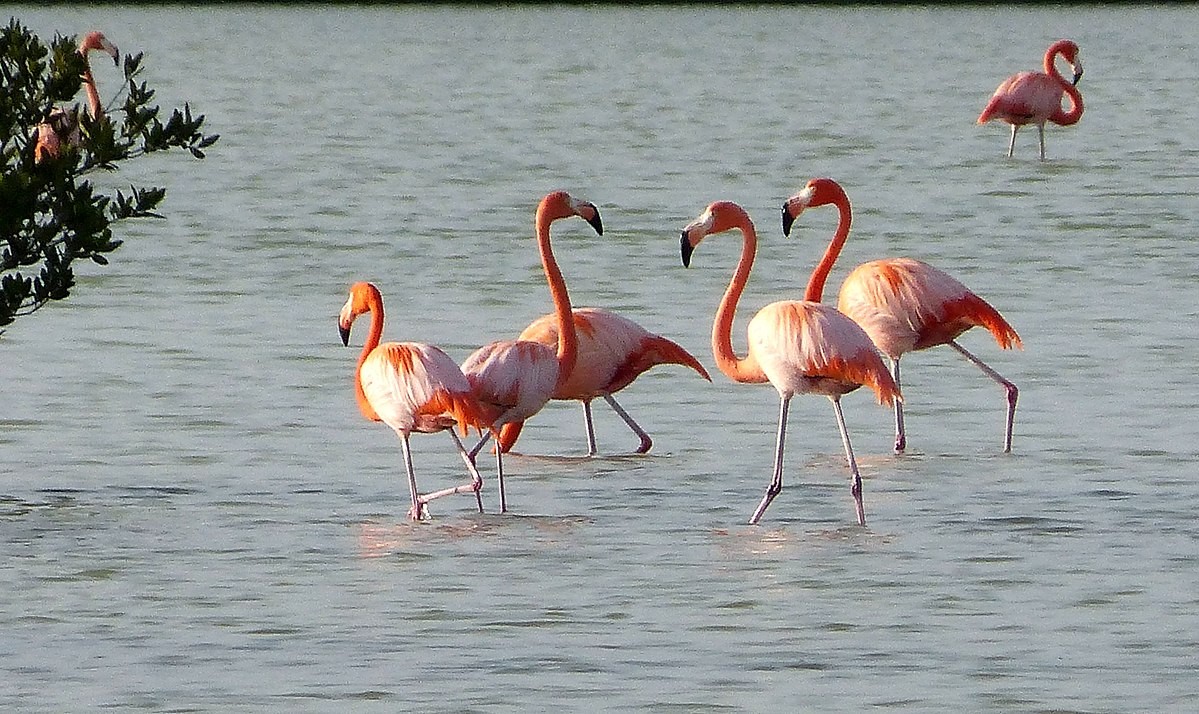
The nativeness of the American Flamingo in Florida has long been a source of debate, but a recent paper indicates they are historically native. Image by gailhampshire (Creative Common Attribution Generic 2.0 license). |
|
 | Thank you to all who have supported IRC's programs in the last month.
Jan Kinder, Connie Nagele, Joseph Kernisky, Naisy Sarduy, and Trish Macdonald.
~~
IRC has an E-Trade account. Please contact us about giving gifts of stock.
While we get funding for some great projects, those funds rarely cover all of our costs, so we really do need your support to continue our important work.
Donations allow us to provide important conservation services such as improving our free online resources, increasing protection of rare plants and animals, restoring native ecosystems, and advocating for better public policy. |
| | |
The Palm Beach County Chapter of FNPS meets monthly at 7:00 pm on the 3rd Tuesday of every month. The All Native Garden Center and No Lawn Landscaping, through it's owner John Sibley, became our first Emergent sponsor of NFYN in 2016. Thanks in part to John's vision, we have built a robust sponsorship program that allows us to continue improving our NFYN resources. Sadly, John passed away earlier this year, but his legacy will carry on through the new owner of the All Native Garden Center, Joaquin Herrera. An online memorial to John is posted on the Florida Association of Native Nurseries website. |
| |
|
New Federal Funding and Key Support |
|
October 1st marked the beginning of a new federal fiscal year in the USA, and we are grateful to report we have some key new agreements in place. Critical to our Pine Rockland Initiative, we have a new 5-year agreement with the US Fish & Wildlife Service (FWS) Coastal Program and the 1st year of federal funding secure for that program. We have a new FWS agreement to work on the Key Tree Cactus in the National Key Deer Refuge with our partner Fairchild Tropical Botanic Garden. We also have new funding in place to continue work on pine rockland restoration at SOCSOUTH and the Homestead Air Reserve Base in Homestead. Thanks again to our federal partners without which our key programs would not be possible. We are also excited to report that we have a new agreement with the National Parks Conservation Association to provide support for and collaborate on our Pine Rockland Initiative. |
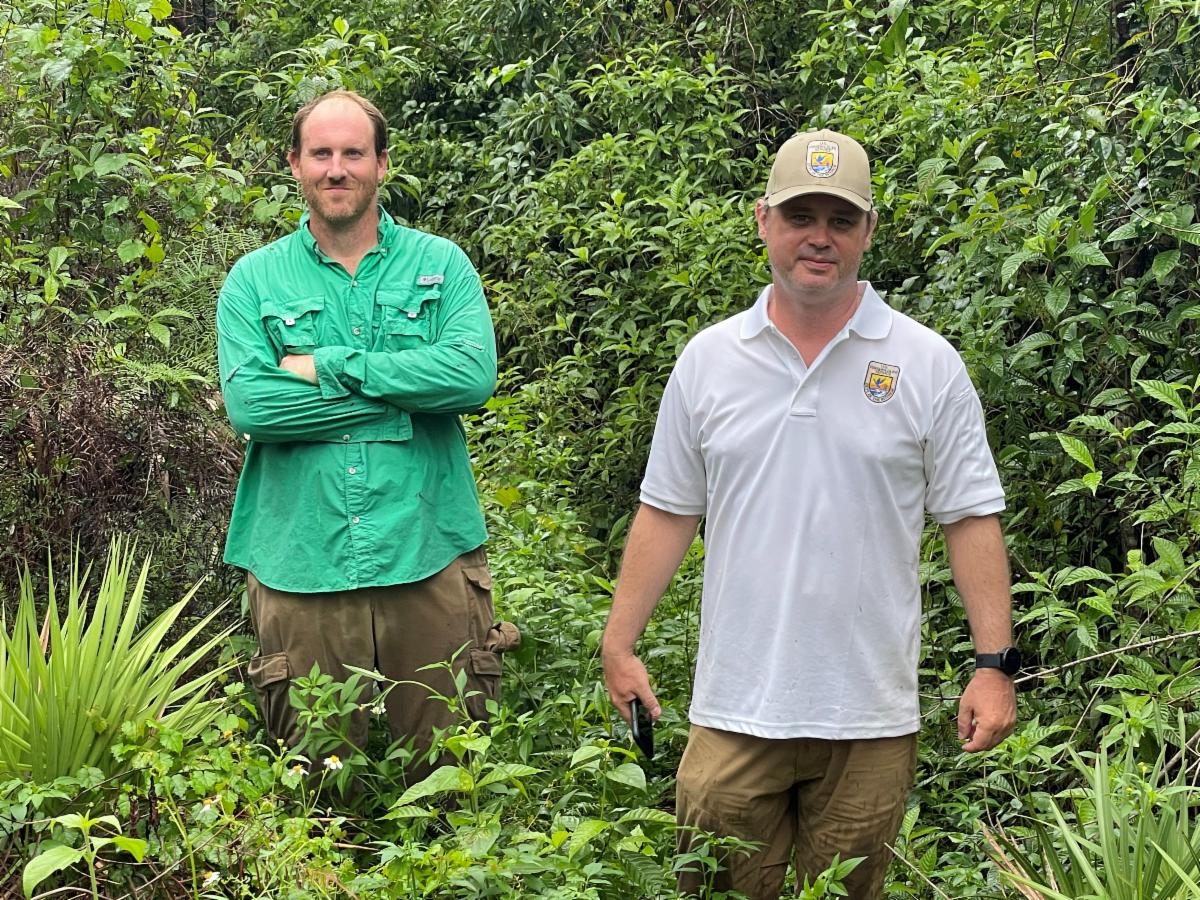
| Kevin Kalasz from the FWS Coastal Program and Alex Seasholtz, IRC Ecological Restoration Team Leader, walk though a fire-suppressed pine rockland fragment in southern Miami-Dade County. Restoration of these degraded pinelands is only possible with support from FWS and partners such as the Miami-Dade County Environmentally Endangered Lands (EEL) Program. |
|
"Meet Our Team" Spotlight |
|
| Samantha Gabriel joined our team in 2017 as an administrative assistant. She has been responsible for all aspects of office administration and also contributed to our programs, including uploading new photos to our websites, entering field data into the Floristic Inventory of South Florida, digitizing historical data, and editing reports.
While doing all of this, she was also in grad school at FAU where she recently graduated with her Master's of Education degree in Clinical Mental Health Counseling. She is now starting her career as a mental health counselor.
Though she will be greatly missed here at IRC, we are excited for her to start this new chapter. Congratulations, Samantha! |
|
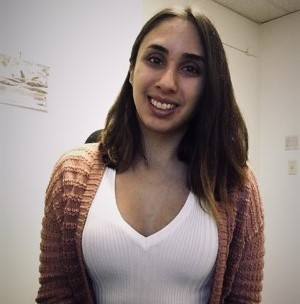
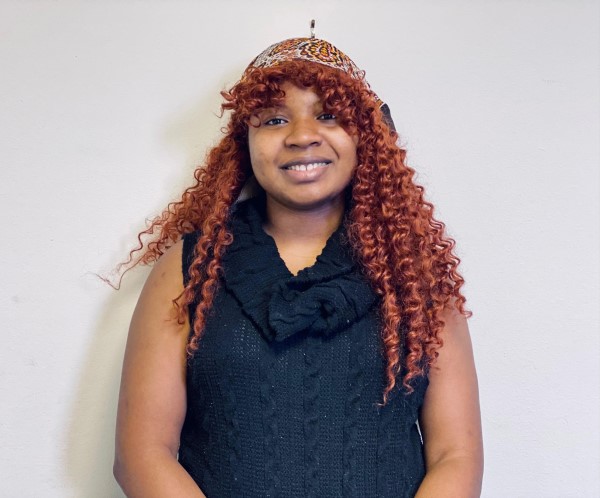
IRC would like to welcome our new administrative assistant, Atea Anderson!
Atea will be graduating from FAU in the fall of 2021 with a Bachelor's Degree in Business. She is responsible for all aspects of office administration and contributes to education and outreach tasks. Her interests are reducing our community's carbon footprint and seeking out low waste alternatives. |
| |
Give Miami Day on November 18, 2021 |
|
| We are excited to be participating in the 10th annual Give Miami Day on Thursday, November 18. This is one of the nation's largest 24 hour giving events, with bonus pools and other prizes awarded to nonprofits.
At IRC, we rely on funds raised through donors like you to keep our Pine Rockland Initiative and online resources running smoothly.
Please consider making a tax deductible donation to IRC on Give Miami Day to help us reach our $4,000 goal by clicking here. |
|
We are a nonprofit conservation organization exempt from taxes under the U.S. Internal Revenue Code Section 501(c)3. |
|
The Institute for Regional Conservation | Website |
| |
|
|
|
|
|