The content in this preview is based on the last saved version of your email - any changes made to your email that have not been saved will not be shown in this preview.

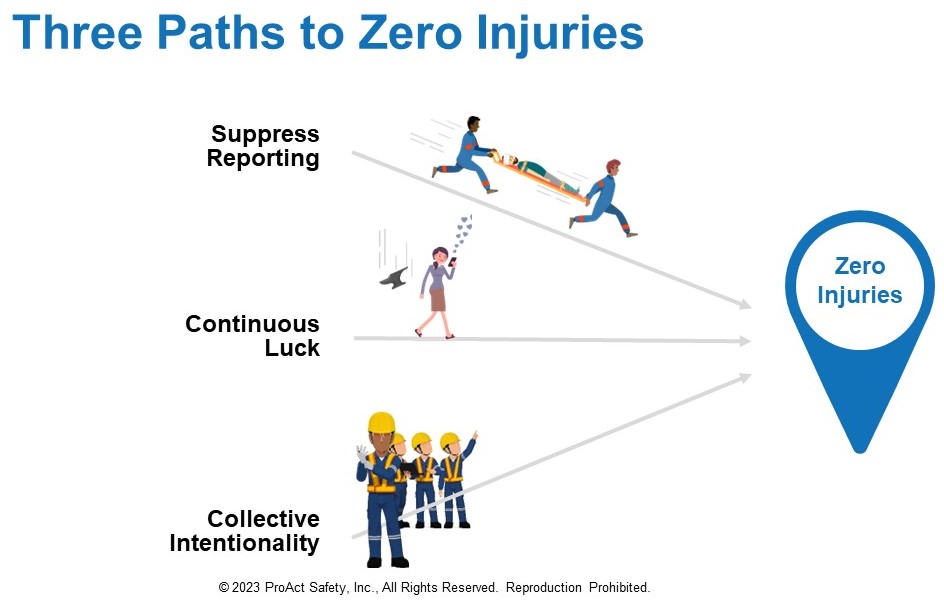
Three Paths to Zero Injuries

X Share This Email
LinkedIn Share This Email

Zero injuries sounds like excellence. But there are three very different paths that can produce "zero," and only one of them is worth chasing.


First path: suppressed reporting. When people feel pressure to protect the number, they hide deviations, near misses, and even injuries. That’s not excellence. That’s fear. The fix is psychological safety: make it normal to talk about what went wrong and why, without hunting for who. Discipline becomes a last resort.


Second path: continuous luck. Some teams go a month or a year with no injuries, but if leaders cannot confidently explain why, luck is doing too much work. Luck is a terrible strategy. The way off this path is more visibility and learning: better pre- and post-job conversations, leaders in the field, and real talk about where work is drifting from the plan.


Third path: collective intentionality. This is excellence minute by minute. People are equipped to succeed, deviations are expected in complex work, and recovery systems are strong enough to catch problems early and reduce harm.


So here's the question: Are you on the path of suppression, luck, or intentionality?

Join our Virtual Discussion on November 12th


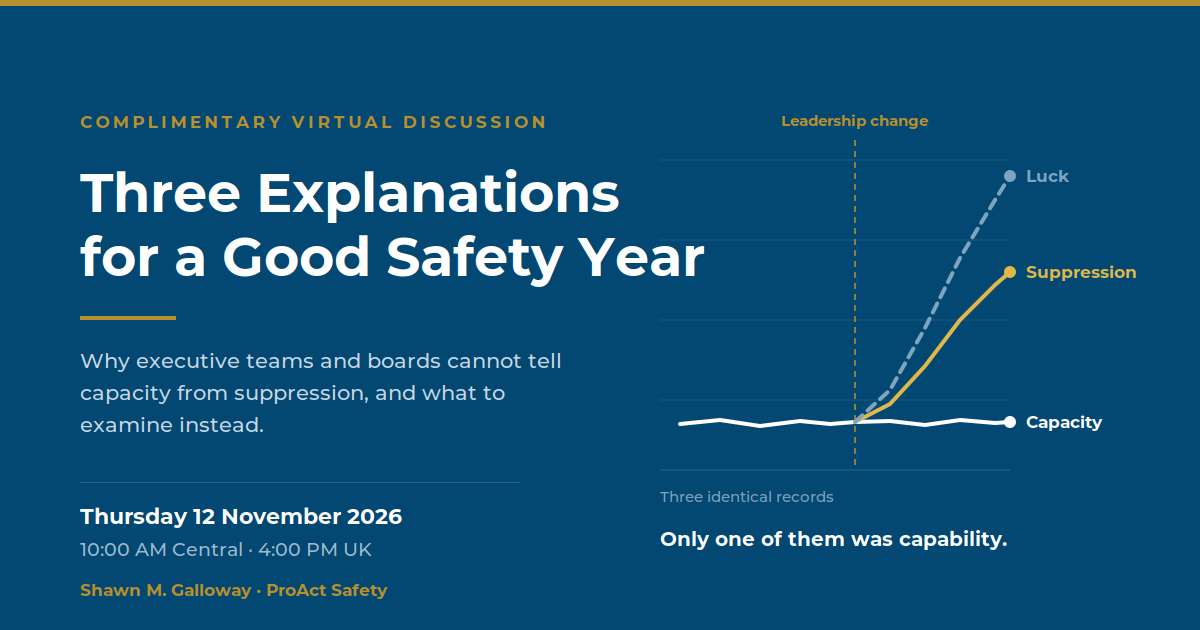
Three Explanations for a Good Safety Year

When an organization reports its best safety year on record, there are three possible explanations of why. It may have:

  1. built genuine capability to prevent serious harm.
  2. applied enough executive attention to suppress the variance that would otherwise have surfaced.
  3. gotten through a period without an event that its exposure made possible.

On a quarterly report, the three are indistinguishable. And only one of them can survive a change in leadership.


Who should attend

This session is built for the people accountable for safety performance who do not directly produce it.

  • Board members and directors
  • Chief executives, chief operating officers, and other C-level leaders
  • Senior executives with operational accountability
  • General counsel, chief legal officers, and heads of risk or internal audit
  • Senior HSE executives who prepare board and executive materials


1127 Eldridge Pkwy S

Suite 300 Box 379

Houston, TX 77077


Tel: 1.800.395.1347

Intl: 1.936.273.8700

info@proactsafety.com