|
Roebling Museum Feasibility Study for Workers Rowhouse
We continue to work with the Roebling Museum in Florence, NJ on a “community-driven adaptive reuse feasibility study for a company town worker's rowhouse.”
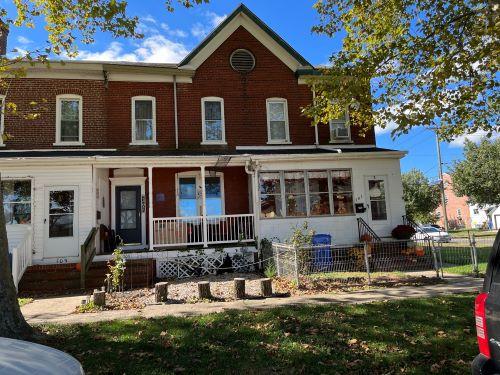
We have already completed one of the two Audience Research components, an online and paper survey of community residents, to get their views about the future use of the 101 Second Avenue building (the building pictured on the right below). The Roebling Museum purchased the property in 2021 to better interpret the lives of workers at the Roebling Company in Roebling, NJ. The New Jersey Historic Trust fully funded this audience research project in their grant round in 2021. We just completed hosting four focus groups to understand the views of participants about the future use of 101 Second Avenue.
From the community surveys and focus groups, we will provide a report to the Roebling Museum board on two options for 101 Second Avenue that seem the most viable based on this audience research. We are looking forward to completing this project in mid-2023.
Presentation at AASLH conference in Boise, ID
This year, we are traveling to Boise, ID with client Lynne Calamia of the Roebling Museum to speak at the annual American Association for State and Local History (AASLH) conference about “Big history in smaller houses: Interpreting working-class, Black and immigrant history.” We will be using our focus group research in Roebling NJ to ask our public history colleagues to help us ponder the reuse of 101 Second Avenue in Roebling as a site to interpret the lives of workers at the Roebling Plant. Our session focuses on the questions below.
“With the goal of exploring the experiences of working-class laborers, can we fully tell the story of Black and immigrant family life in a company town from inside the steel mill where they worked? Or would that story be better told in worker housing? Join public history practitioners for a hands-on program to work through the challenges of designing an interpretive experience in worker housing in a company town. With only 700 sq feet of useable space, can a historic house function to facilitate education, inclusion, and community engagement? Should it? In small groups, using audience research findings, floor plans, and historical context, participants will explore whether it is feasible to interpret working-class Black and immigrant identity in a historic house setting.” If you plan to be in Boise at the AASLH conference, please join us at this session on September 6-9 in Boise.
|