National Impaired Driving Prevention Month
December is National Impaired Driving Prevention Month. December holidays often bring increased travel and social gatherings, which can influence impaired driving risk. Impaired driving includes driving while using alcohol and/or other substances as well as driving while fatigued. This remains a leading avoidable cause of injury and death. Effective substance use prevention can help support safe driving.
To support impaired driving prevention, check out the following resources:
-
The National Highway Traffic Safety Administration has campaign materials for a variety of driving safety topics, including drunk driving, drug-impaired driving, and distracted driving.
-
California Highway Patrol has information on statewide Impaired Driver Enforcement Programs and facts about driving under the influence.
-
Explore California Office of Traffic Safety’s goals and resources for driving safety programs.
- Consider collaborating with local organizations, first responders, community members, local businesses such as alcohol and cannabis retail outlets, and others to implement safe driving campaigns in the community.
| |
Social Drivers of Health:
Neighborhood and Built Environment
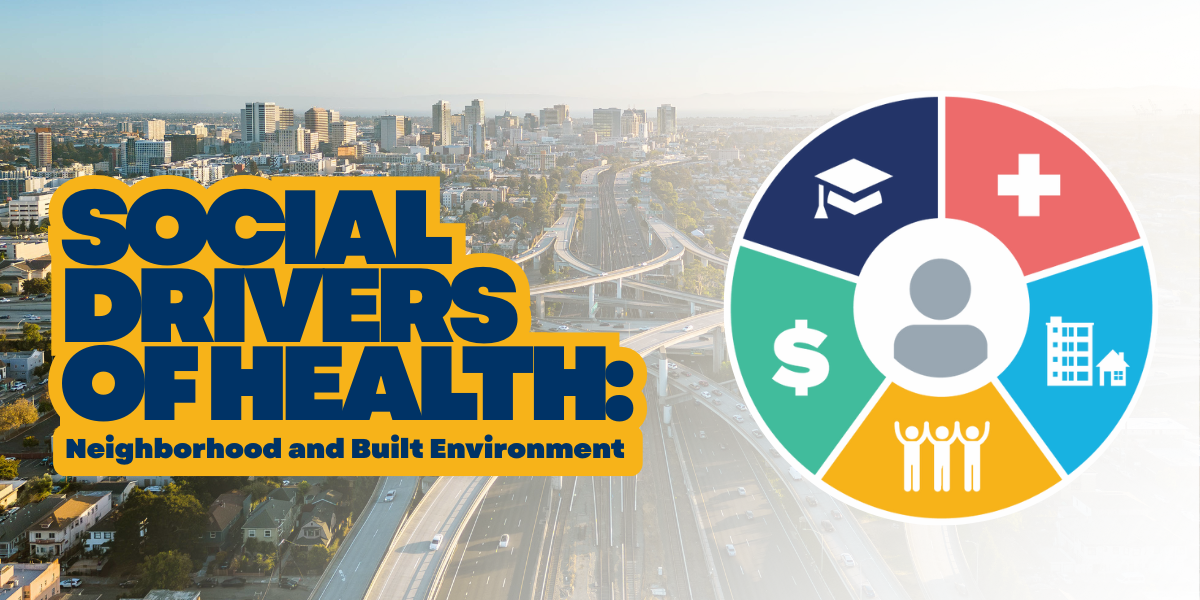
The social drivers of health, also called the social determinants of health (SDOH) are the conditions of the environments where we are born, live, learn, work, play, worship, and age that affect our health, functioning, and quality-of-life outcomes. They exist across the domains of risk and protective factors (individual, relational [family, peer, and school], and community). SDOH also have an impact on the risks we take in our lives. SDOH impact our families and personal lives, but they do not necessarily originate from our families and our personal lives.
The places where people live, work, and connect deeply shape their physical and mental health, including risk of substance use and misuse. Neighborhood factors such as housing quality, accessible transportation, safe public spaces, and green spaces play a major role as either protective or risk factors. Research has shown that neighborhood safety and stability can significantly influence substance use outcomes. For example, a study involving mothers in treatment found that perceived neighborhood safety doubled the odds of successful recovery, showing how environmental factors enhance or hinder recovery resilience. By focusing on elements like lighting, walkability, and community cohesion, prevention professionals can address upstream contributors to substance-related harm.
Tools are available to help prevention providers assess and address neighborhood factors. The Healthy Communities Data and Indicators Project from the California Department of Public Health provides neighborhood-level data on indicators like green space, walkability, and housing. Meanwhile, the California Department of Health Care Access and Information includes data related to housing, parks, transit access, and kitchen facilities, which are also helpful for crafting targeted prevention strategies. Prevention coalitions can use this data to identify high-need areas, partner with local planning and housing departments, and apply environmental strategies to strengthen protective factors and promote community wellbeing.
| |
Community Spotlight: Youth Empowerment and Action for Health Unit (YEAH!) Public Health Division, Health Services Agency, County of Santa Cruz
Contributor: Lara Jung (they/she), Program Coordinator
Throughout the summer of 2025, nitrous oxide use was in the news in Santa Cruz County—law enforcement had seized $40,000-worth of nitrous oxide in the forested area near a college campus, a driver with used nitrous oxide containers in their vehicle was arrested for Driving Under the Influence, and community members wrote letters to the editor expressing their concern. Nitrous oxide, also known as whippets, galaxy gas, laughing gas, and nangs, is a colorless gas with both legitimate medical and commercial applications. It can also be misused recreationally by people seeking a short term “high.” Long term effects of nitrous oxide use include nerve problems, loss of bone marrow function, and more (PRV038_Nitrous Oxide_12.04.2024_FINAL). At the time, nitrous oxide sales were permitted throughout the county with minimal restrictions on where and to whom it was sold.
To better understand local access, the Youth Empowerment and Action for Health team conducted a preliminary assessment on nitrous oxide availability throughout Santa Cruz County. Staff visually assessed 30 retail establishments including convenience stores, gas stations, liquor stores, and grocery stores for nitrous oxide products. In total, only four establishments visited sold nitrous oxide products, however due to staff age, some retail locations were not assessed (i.e. smoke shops). Concerningly, the nitrous oxide that was seen was available in some cases on the floor in front of cash registers. Findings were shared with County Board of Supervisors and law enforcement.
In partnership with law enforcement and public health, on September 30th, 2025, the County Board of Supervisors voted to approve a new ordinance banning the sale of nitrous oxide in Santa Cruz County. This work was made possible by close collaboration between policy makers, community, law enforcement, and public health.
| |
DHCS Announcements and Updates
» The Steinberg Institute’s Vision 2030 Solution Symposium returns on February 4, 2026
Hosted by the Steinberg Institute, this statewide convening brings together leading policymakers, advocates, county and health system partners, providers, researchers, and individuals with lived experience for a full-day event focused on solutions and collaboration.
Attendees can expect thought-provoking keynote conversations, expert panels, and opportunities to connect with over 200 leaders transforming California’s behavioral health landscape.
Learn more and reserve your seat: https://steinberginstitute.org/vision-2030-solution-symposium/
| | If you are interested in having your organization or prevention program featured in an upcoming bulletin, email Olivia Shrago at oshrago@cars-rp.org to get started! | |
CONNECT WITH US ON SOCIAL MEDIA | | | | |