|
The California Asphalt Pavement Association
Vol. 18, Issue 39 || Sept. 29, 2025
| | |
Greetings!
This weekly report contains news and information of interest to the asphalt pavement industry, customers and agency partners in California. Please feel free to distribute this newsletter to others who may be interested in asphalt pavements. To subscribe to the newsletter click HERE. To provide feedback or story ideas click HERE. Having difficulty viewing this newsletter? View as Webpage
| |
Driving on poor roads in CA costs the average motorist $878 per year, report finds | |
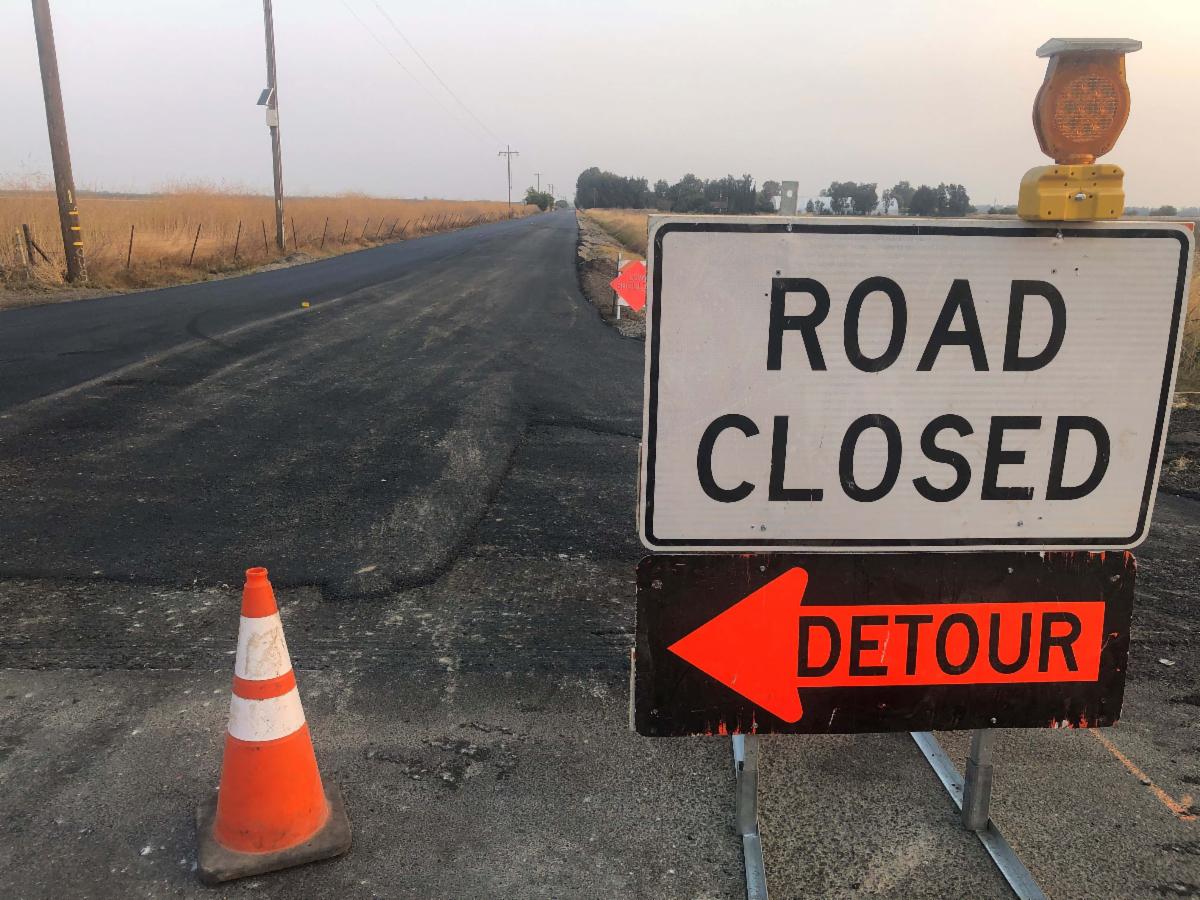
With schools back in session, another type of report card has landed in California, and it's not a good one. An assessment of California's road infrastructure has found half of major roads are in poor or mediocre condition and traffic congestion costs the state's drivers billions annually in lost time, car repairs and wasted fuel.
This is despite billions spent by SB1, the Road Repair & Accountability Act of 2017, which raised fuel taxes under the promise of fixing much of the problems highlighted in the report by TRIP, a national transportation research non-profit.
"Driving on deteriorated roads costs the state’s drivers a total of $24.2 billion each year in extra vehicle operating costs, including accelerated vehicle depreciation, additional repair costs, and increased fuel consumption and tire wear – an average of $878 per motorist," the TRIP report concluded. Productively losses due to time wasted in traffic congestion add many billions more, the report found.
The analysis lands as concerns mount about the viability of fuel taxes to pay for road repairs as more Zero-Emission Vehicles and hybrids hit California roadways. The Legislature held hearings earlier this year spotlighting the road-funding problem and exploring what to do about it. More attention has also been paid to impediments to delivery of road-improvement projects at the local and state level.
The lack of road work is not only hitting pocketbooks, but also represents a threat to safety. Traffic crashes in California claimed the lives of 24,508 people from 2019 to 2024, the report noted. While the 2024 traffic fatality rate of 1.19 deaths for every 100 million miles traveled is slightly below the national average, and has been trending down in recent years, crashes continue to be unacceptably high in the minds of engineers, elected officials and policy-makers.
“California’s future depends on transportation infrastructure that can withstand the challenges of a changing climate and a growing population,” state Sen. Dave Cortese, chair of the California Senate Transportation Committee, said in the announcement that accompanied the report. “These investments don’t just move people and goods—they cut emissions, strengthen communities, create jobs, and spur economic growth. The TRIP report makes clear that smart infrastructure investments are among the most powerful tools we have to support California’s workforce and drive long-term economic prosperity.”
The TRIP announcement is HERE. It includes breakdowns by major metropolitan areas in California.
| |
Update: Nigerian transportation official arrives at UCD to conduct pavement research | |
After navigating complex new visa requirements, a determined Nigerian civil engineer is now in California, working at the University of California Pavement Research Center as a graduate student researcher.
Andrew Onoja, P.E., is a familiar face to the asphalt industry in California, having attended numerous CalAPA asphalt pavement conferences and events, and met with many local and state transportation agency officials on his visits. He was profiled in CalAPA's official magazine, "California Asphalt." That issue is on-line HERE.
Onoja liked what he saw in California and decided to pursue additional studies at UCD and also participate in the UCPRC's groundbreaking research, but his ability to obtain the proper visa from the U.S. government was in doubt recently as the State Department has imposed new restrictions on visas for skilled workers and students, and delays have also created uncertainty at U.S. academic institutions.
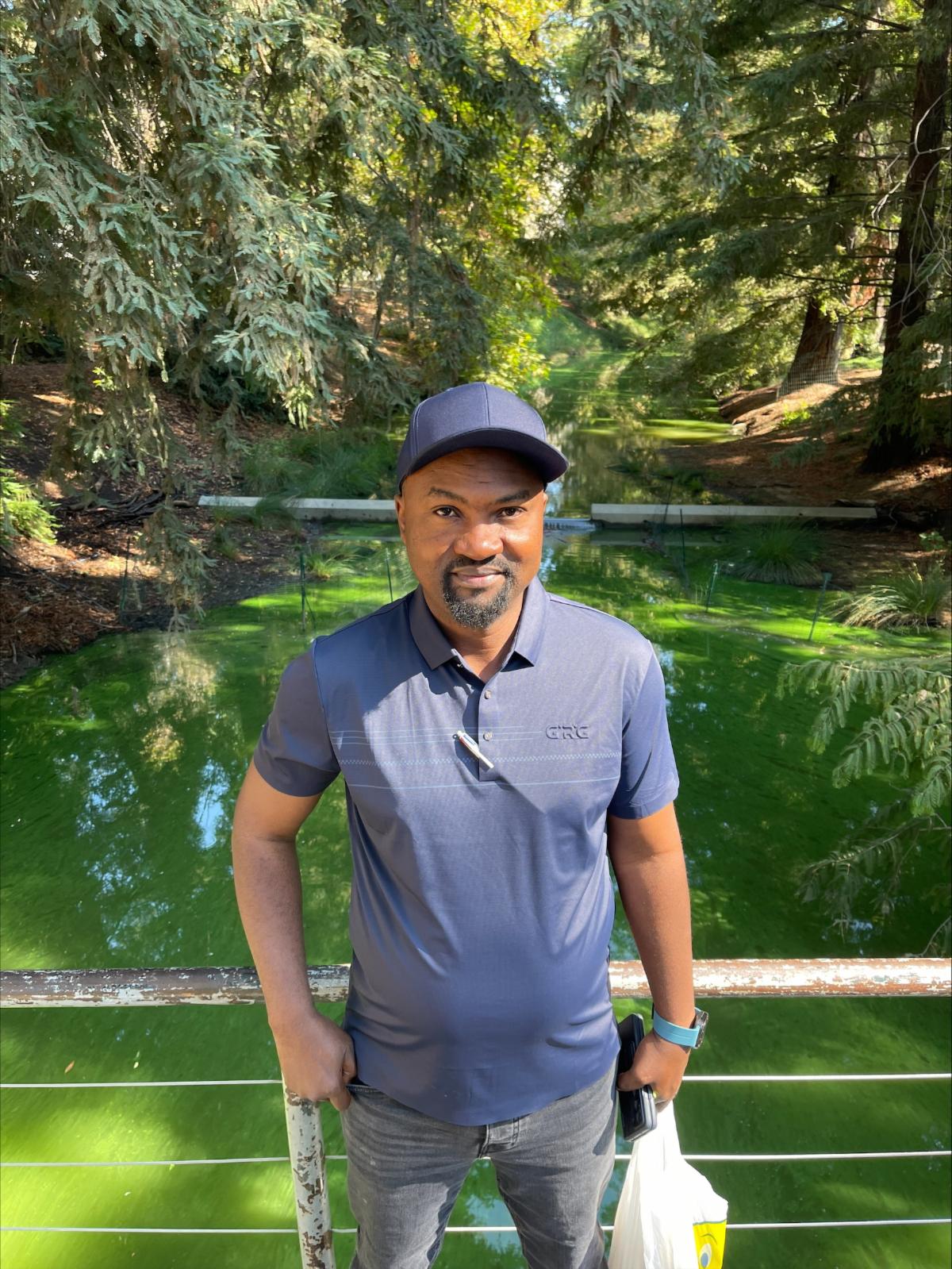
Nevertheless, Onoja, working with the U.S. Embassy in Abuja, Nigeria, was able to secure the proper approvals in time for the start of the Fall instructional season at UCD that began earlier this month. (He is pictured on a walking tour of the famed UC Davis Arboretum). He will be conducting pavement research under the direction of Dr. John Harvey, an engineering professor and director of the UCPRC. Harvey previously worked for the Nigerian government for three years in the pavement and materials lab, where Onoja worked and conducted his own research most recently before coming to the United States. Onoja is currently on leave from the Federal Roads Maintenance Agency of Nigeria while he pursues his studies in the United States.
In an interview with Asphalt Insider, Harvey said he was gratified Onoja and his other international students have made it to the campus this year, but worries about the pipeline of expertise that may be disrupted by new federal government immigration policies.
"Of the 20-ish Ph.D student’s I’ve had, not one has been born in the United States," he said. "So, getting American-born students to follow-through on a Ph.D. in pavement and pavement materials is extremely difficult. We get masters students, but to go that extra mile it’s been 100% international students. Many of those stayed, and many of those hold key positions in industry. When you look around to the companies in California, you look around Caltrans, even look around local government, it’s our international Ph.D students who are there."
The new restrictions are having an impact across the nation. According to the non-partisan Association of International Educators, known as NAFSA, the more than 1.1 million international students who studied in the United States last year contributed an estimated $44 billion to the U.S. economy in the 2023-24 school year. California, the nation's most populous state, also has the most international students at nearly 141,000 last year. They contributed $6.4 billion to the economy, NAFSA said. The drop in foreign enrollments this year could cost the U.S. economy more than $7 billion, NAFSA reported. More information on that study is HERE.
Those impacts are being felt in California academic institutions. Out-of-state tuition is substantially higher than tuition for in-state residents, and California's colleges and universities are already feeling the financial pinch. Harvey said international graduate student enrollment to UC Davis engineering programs is down about 70% this year. "It is ... extremely uncertain," Harvey said. "Our pipeline of these folks is drying up, and we really rely on them."
The CalAPA Board of Directors has identified the ongoing need to recruit and retain qualified workers in the asphalt pavement industry as a major strategic goal, and created a charity, the California Asphalt Research & Education (CARE) Foundation, expressly to address the issue. More information about the CARE Foundation can be found HERE.
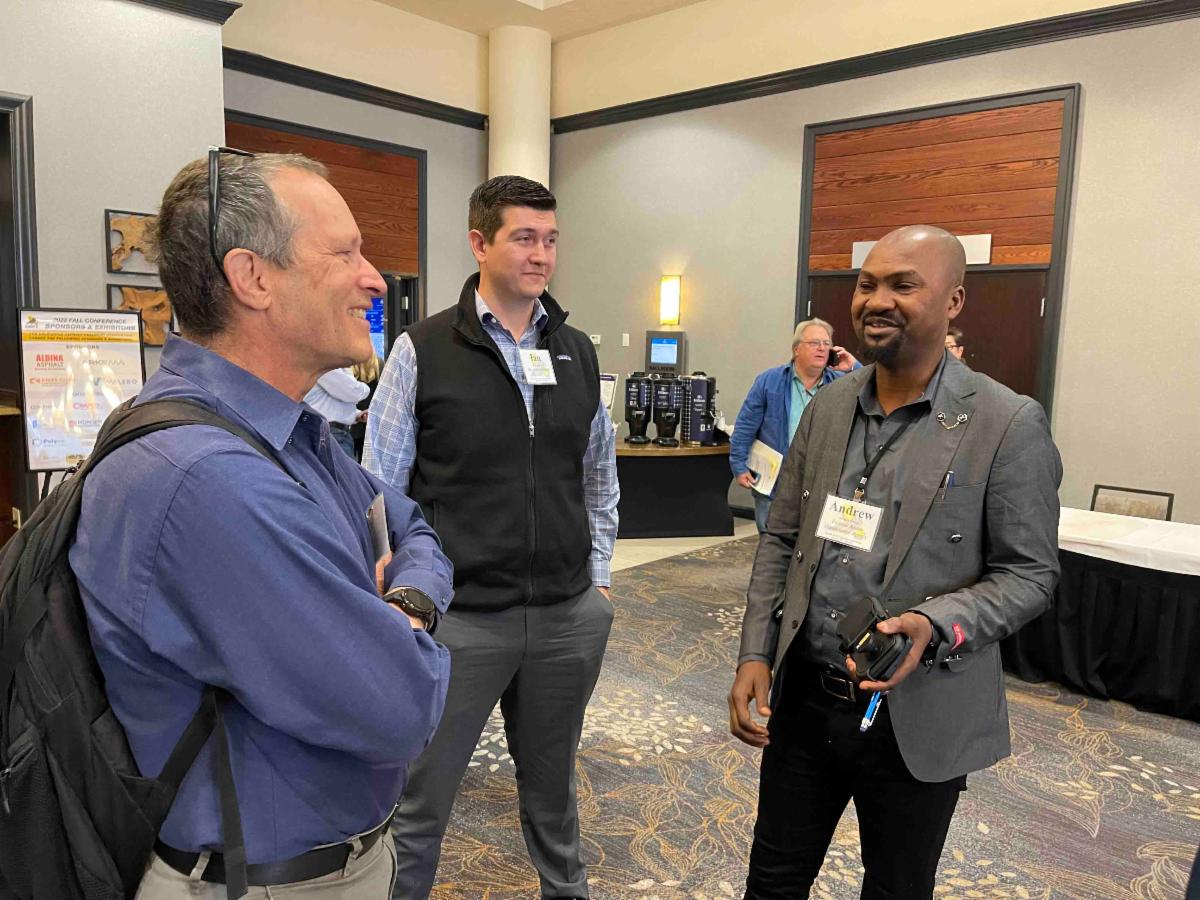
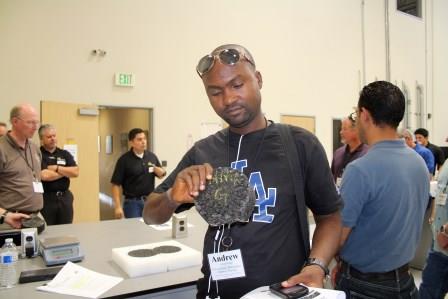
| | Andrew Onoja (right) chats with Dr. John Harvey (left) at a CalAPA asphalt pavement conference in Sacramento in 2022. Joining in the conversation is Ian Broddrick with Alta Vista (center) | | Andrew Onoja inspects samples at a lab tour as part of a CalAPA asphalt pavement conference in Southern California. | | Andrew Onoja (left) meets with Bonny Nyaga of Caltrans, who heads up the state's mentor-protege program for contractors. The meeting took place March 13, 2024 during one of Onoja's visits to California. | |
A first for CalAPA's annual golf tournament: a hole-in-one | |
There was a historic first that took place during last week's annual CalAPA golf tournament in Temecula: a hole-in-one.
The epic drive, made by Braden Porter from CalAPA member R.J. Noble Co., took place on Hole 15 of the championship-caliber course, a distance of 154 yards. Braden says it was his first hole-in-one in his life.
The Sept. 25 charity tournament, to benefit the California Asphalt Research & Education (CARE) Foundation, was once again sold out and took place during perfect weather. Golfers remarked about the quality of the course, which is consistently ranked as one of the best public courses in the nation. A pre-golf networking event that took place the evening before at the Bare Knuckle Brewery also was well-attended.
The popular tournament includes numerous contests and prizes, including a $10,000 "hole-in-one" prize and a "closest to the pin" contest. In the case of Porter's epic drive, he made the shot on the "closest to the pin" hole, and was able to record "0.0" on the clipboard on the green. The $10,000 hole-in-one hole was two holes later, on 17, and the prize went unclaimed. Nevertheless, Braden's name will be engraved in a special "Hole in One Honor Roll" plaque in the lobby of the clubhouse.
CalAPA recognized Porter (pictured in the middle) and his golfing companions from R.J. Noble Co., Francis Garcia (left) and Rocco Castillo (right), figuring that good karma must have had some influence in producing the ultimate "best ball" in the best ball tournament.
The sponsors of the tournament were Albina Asphalt, Butler-Justice, Inc., Diversified Asphalt Products, Ergon Asphalt & Emulsions, Forta, Goldstar Asphalt Products, Martin Marietta, Nixon-Egli Equipment, Pavement Recycling Systems, Quinn CAT, Sully-Miller/Blue Diamond Materials; Valero and World Oil.
For more photos from the tournament, visit CalAPA's Facebook page HERE.
| |
|
Each week we highlight a word, acronym or other term commonly used in the asphalt pavement industry in California.
CEMENT-TREATED BASE: Cement-treated base consists of specified soil aggregates and Portland Cement Concrete mixed in a pug mill and deposited on the subgrade to the specified thickness.
| |
Paving Pointer of the Week | |
Each week we highlight a key point or best practice of interest to asphalt paving crews, inspectors and others working in the field. We welcome suggestions. More tips can be found in our "Asphalt Parking Lot Construction Checklist" HERE. Information on the CalAPA "Quality Paving Certificate" program is HERE.
COMPACTION: Check pavement temperature before compaction begins. Don't rely solely on an infrared temperature gauge. Have a probe thermometer on hand to check the internal temperature of the mat. The ability to achieve proper compaction requires a mat temperature of 175 degrees or greater. Do not let roller operators park equipment on the fresh mat while compaction is ongoing.
| | |
Each week we highlight a term that is specific to climate-change issues related to the asphalt pavement industry. This feature is intended to raise awareness of the asphalt industry's climate-change initiatives and the specialized terminology that goes with them. More information on "The Road Forward" asphalt industry climate initiative can be found HERE. A recent CalAPA magazine story on the topic is HERE.
CARBON NEUTRALITY: Net zero emission achieved through carbon offsets and elimination.
| |
Caltrans Statewide Crude Oil Price Index | |
Editor's Note: As a convenience to our readers, Asphalt Insider reports the most current Caltrans "Statewide Crude Oil Price Index" posting. The department posts this monthly on its public website HERE. The index is used to calculate payment adjustments for paving asphalt under special provisions section "Payment Adjustments for Price Index Fluctuations" in those projects containing the section. The department posts the index on or about the first business day of the month using the daily Brent crude oil prices from the previous month as reported by Business Insider. Inquiries about the index should be directed to Caltrans at: Oil.Index@dot.ca.gov .
September 2025: $363.7 ($/ton)
| |
|
"You only live once, but if you do it right, once is enough."
– Mae West
| | |
We hope you enjoy CalAPA's Asphalt Insider newsletter. We are committed to providing you with the most up-to-date information on technical issues, regulation, news, analysis, people, events and trends in California that is of interest to the asphalt pavement industry and our various agency partners. Please note: This publication is 100% human-produced with 100% original content, and is only possible due to the generous support of CalAPA members. To subscribe to the newsletter, click HERE. For comments, questions or to suggest a story idea, click HERE. We are committed to promptly notifying our readers of any errors in this publication. Please click on the comment link above to alert the editor of any errors or omissions.
Sincerely,
Russell W. Snyder, CAE
Executive Director
The California Asphalt Pavement Association (CalAPA)®
| | The "Asphalt Insider" is an official publication of the California Asphalt Pavement Association. For more information or to inquire about membership, call (916) 791-5044, or click HERE to contact us. Copyright © 2025 California Asphalt Pavement Association -- All Rights Reserved. The CalAPA name (No. 5,621,794) and logo (No. 5,621,795) are registered trademarks with the U.S. Patent & Trademark Office. | | | | |