|
With federal transportation funding due to lapse on Sept. 30, a $580 billion bill to extend transportation programs for another five years passed its first major legislative test last week.
The text of the 1,000-page bill, H.R. 8870, dubbed the Build America 250 Act," was released last weekend and it was immediately scheduled for consideration by the House Transportation & Infrastructure Committee.
In a marathon "mark up" session on May 21, the bill was approved by the committee on a bipartisan 62-2 vote. It was key early milestone for the bill, which has been in the works for more than two years. It still faces an uphill battle to the House floor, and must somehow attract the attention and support of the U.S. Senate, which has so far demonstrated little interest in the topic in an election year.
California was well-represented on the T&I committee, and several members of Congress from the Golden State praised the bipartisan nature of the development of the bill, which was characterized as a "back to basics" legislation with a primary focus on improving roads and bridges.
The multi-year bill is a foundational piece of the transportation funding puzzle and is one of the most complex in Washington. State and local agencies rely on long-term and stable funding to develop projects to maintain and improve roads and bridges. The $1.2 trillion Infrastructure Investment & Jobs Act (IIJA), signed into law in November of 2021, contained a host of infrastructure investments, including $560 billion to roads, bridges and other transportation programs.
The latest version of the federal surface transportation act renewal strips away some of the discretionary spending and climate focus that was included in IIJA, and relies heavily on "formula" distribution of federal dollars to states, a familiar and predictable system intended to cause the least amount of disruption. During the "mark-up" session, which is Washington-speak for opening the bill up for proposed amendments, most of the amendments were not approved.
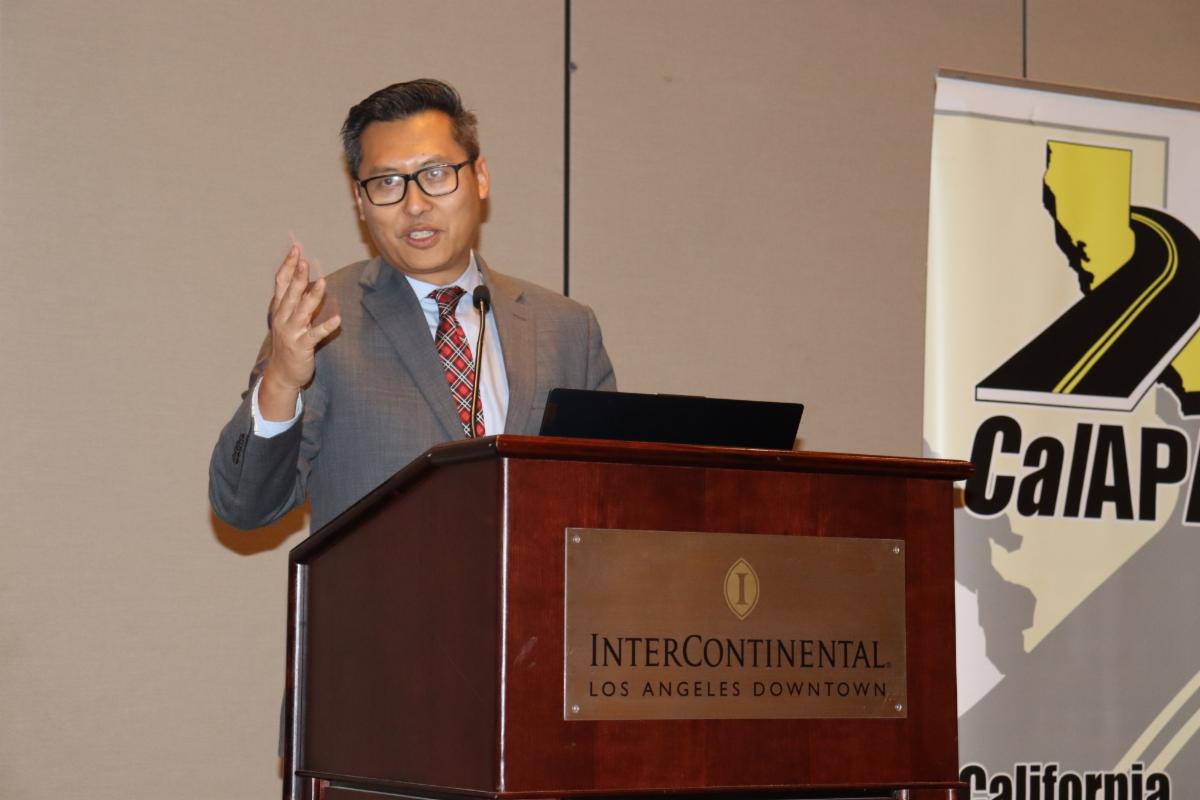
“While not perfect, it’s a good bill," said U.S. Rep. Salud Carbajal, D-CA, who represents part of the Central Coast of California. "For communities like the ones I represent this bill also helps ensure local leaders have greater flexibility to prioritize projects that reflect local needs. I also appreciate that this bill takes a forward-looking approach to emerging transportation technologies."
Carbajal was active during the lengthy committee hearing on the bill, where committee members offered up various amendments for consideration. Most were not accepted as committee leadership sought to hold together the bipartisan compromises that helped get the bill out of the committee.
Indeed, forward progress on such a key piece of legislation in a climate of conflict and dysfunction in Washington was noted by several committee members.
"There are so many ways in which Congress is not working as it should," said Kevin Kiley, a Republican from Rocklin locked in a tough battle to keep his seat in a newly redrawn district. He changed his party preference to Independent after a voter-approved redistricting plan put him in a much more competitive district.
"Where the gridlock has gotten out of control, paralyzing," Kiley said, "this legislation, and the work of this committee, is much closer to the way it should work. I believe it (the bill) will have broad bipartisan support. It’s really about taking care of the basics."
U.S. Rep. John Garamendi, a veteran Democrat from Northern California, voiced his support for a proposed amendment to provide preference to cement products made in the United States, but it was not accepted by the committee. When the time came to give the bill a final vote, however, Garamendi was only one of two lawmakers who did not record a vote. All of the other T&I committee members cast votes, and the bill passed with ease.
One of the amendments brought forward by Kiley sought to cap the state's fuel taxes at 50 cents per gallon, but it was not approved by the committee. Californians currently pay 61 cents in taxes at the pump, the highest in the nation. Pump prices have soared in recent months following the U.S. invitation of Iran.
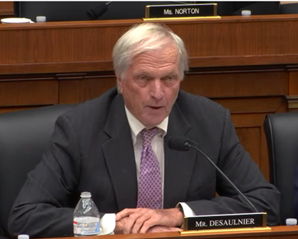
California boasts nine members (seven Democrat and one Republican plus Kiley, a former Republican now calling himself an independent) on the T&I Committee, with several possessing impressive transportation credentials. Two of the committee members, Mark DeSaulnier and Laura Friedman, served as chairs of the state Senate Transportation Committee when they were legislators in Sacramento. Another T&I member, Rep. Vince Fong, previously was the vice chair of the Assembly Transportation Committee.
The bill still faces an uphill climb as it heads toward the House floor, and eventually consideration by the U.S. Senate. The two-year session of Congress ends at the end of the year, which means if no bill is signed by then the Congressional clock will be reset and the process will start over.
The National Asphalt Pavement Association, a CalAPA partner, has created a handy page to assist in sending such a letter to your elected officials. That page is HERE. A letter that outlines the asphalt industry's reauthorization priorities is HERE. CalAPA prepared letters of support for H.R. 8870 for all members of the California Congressional delegation. A sample letter is HERE.
A Transportation & Infrastructure Committee announcement about the bill is HERE. Links to videos of the hearing and amendments can be found HERE.
A previous Asphalt Insider report on this topic is HERE. To learn more about CalAPA's advocacy mission nationally and here in California, click HERE.
|