|
A Note From Our New Outdoor Minister
—David Coleman
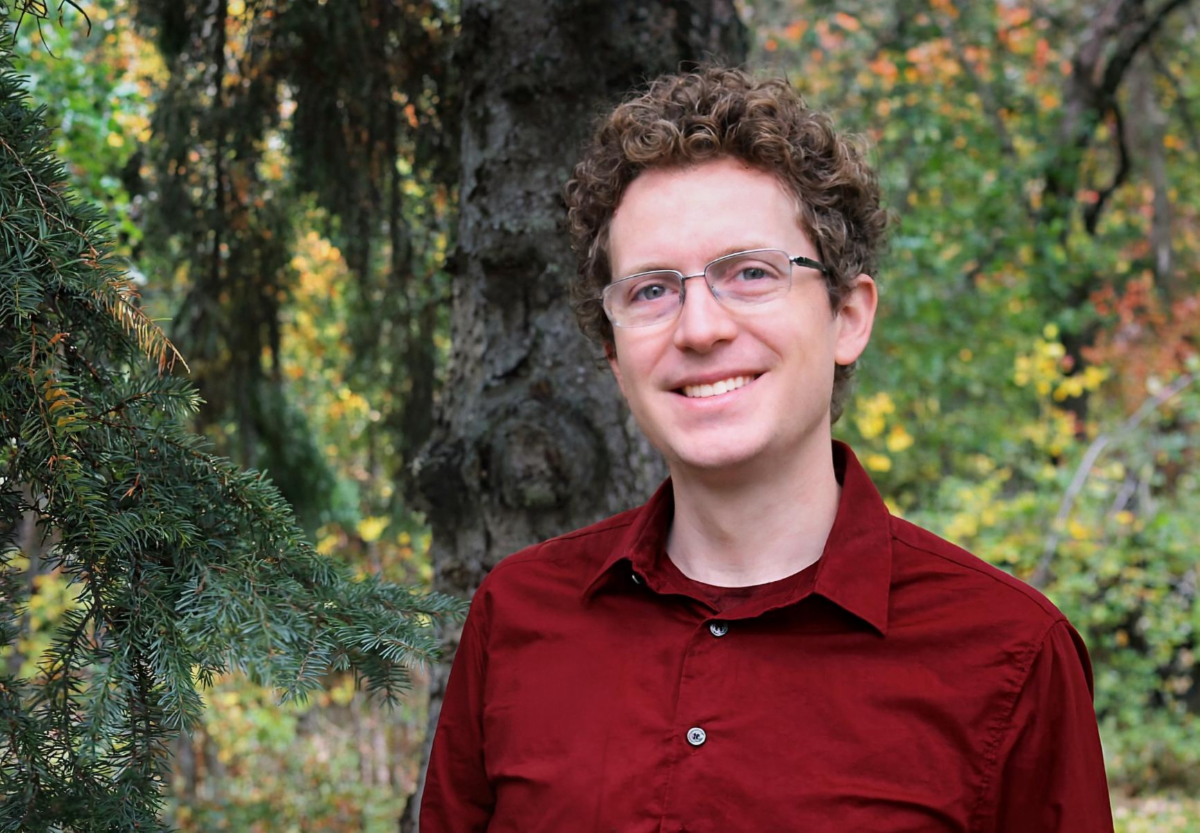
I’m grateful to be joining you as the Minnesota Conference’s new Minister for Outdoor Ministry. I recently returned from my first national gathering in this role, and wanted to share a little of what I encountered, learned, and felt along the way.
Held at a retreat center in the midst of the gorgeous, rolling Smoky Mountains, the Great Gathering for Outdoor Ministries revealed both inspiring strengths of organization and networking, alongside revealing deep challenges for existing outdoor ministry models.
First, the strength of Outdoor Ministry networks across the country, across mainline Protestant traditions, is outright astonishing. From the UCC’s own Outdoor Ministries Association (OMA) to the Campfire Collective we’re part of across many denominations, these networks share strategies, resources, talent, and vision. There is so much passion and love for a ministry that brings out the quirkiest among us.
All week offered opportunities to connect. OMA’s director, Bill Bourdon, offered his help and collaboration at any time. I met leaders from across the country whose work and priorities overlap with ours in real and promising ways: people of different ages, backgrounds, and ministry contexts. Each day brought keynote speakers, worship, and workshops that created space to reflect together on the challenges and joys we share.
One workshop focused on how we think about inclusion, contrasting a utopian model with one grounded in the realities of community and belonging. Another explored how trans youth can be made to feel genuinely safe and fully welcome in camp settings. Another integrated scripture into outdoor ministry. And one finally challenged us to rethink the entire model of what outdoor ministry itself can be as we think beyond the boundaries of our organizations.
One of the most powerful takeaways came from our final keynote speaker, Brian McLaren. In his workshop, he emphasized how essential it is that we work together across organizations. As religion, and every denomination, faces deep decline, our future depends on collaboration, not working alone or in competition.
We are stronger when we’re not just UCC, or Methodist, Presbyterian, Episcopalian, ELCA -- and not even just Christian. We are co-creating something larger than any one tradition. And this mutuality feels profoundly aligned with the values of the Minnesota Conference.
I hope to spend my time here strengthening others as they strengthen us.
I also learned about Outdoor Afro, founded by Rue Mapp, who was both a keynote speaker and workshop leader. Outdoor Afro connects African-American communities with outdoor experiences and leadership. Rev. Kevin Brown told me we even have a local chapter, and I hope we can explore what partnership might look like.
One of the biggest tensions I felt at this gathering was context. Much of the conference focused on camp-based ministry. Here in Minnesota, as many of you know, we’ve closed our only UCC camp. Outdoor ministry for us may not look like camp at all; and, in truth, I think that positions us not as “behind,” but potentially ahead.
Connecticut is closing a camp. Ohio and Missouri are facing similar changes. Minnesota may be one of the places best positioned to model what’s next, not simply preserving old forms, but building something new that truly reflects who and where we are now in the 21st century.
And I believe we should build something new. At their best, camps create deeply meaningful spiritual experiences in the outdoors. And at their worst, they risk becoming something like a Christian country-club model that centers the already-privileged and requires a baseline amount of money to participate.
Coming from the daily realities of inner-city spiritual triage from my previous front-desk work at All God’s Children MCC in Minneapolis, that tension was hard for me not to feel. And it made something clear: if outdoor ministry is going to matter in this century, it must become a space that is more accessible, more inclusive, more courageous, and more rooted in real communities.
We are one of the first conferences with the rare opportunity to move beyond inherited models to honor what worked before, learn from what didn’t, and to create something new. And that’s what I’m excited to do here:
To build new models for the 21st century.
To innovate, together.
|