The content in this preview is based on the last saved version of your email - any changes made to your email that have not been saved will not be shown in this preview.
 
Facebook  X  Linkedin  Instagram  YouTube  Web  Email


May 5, 2025 - Volume 25, Issue 11


A Special Session Will Be Needed for Florida’s Budget and an Update on Bills that Moved Through the Process


A special session will need to be scheduled to approve Florida’s Budget. The main obstacle is that the House remains determined to get some form of permanent reduction in the state’s sales tax rate, and the Senate remains concerned about making any deep permanent cuts that could leave the future Senate leadership dealing with a shortfall. This session will not be extended immediately due to FSU graduation and other challenges to accommodations, so an extended session will need to be called for later in May or June.


The Florida Developmental Disabilities Council is supporting funding for individuals to transition from the iBudget pre-enrollment or waiting list and funding to ensure that there are providers in place to assist those new enrollees. This is especially important for individuals who are in crisis and need immediate services. Support Coordinators and direct support providers, including Adult Day Training providers, are funded through an antiquated reimbursement rate procedure that prohibits a way to significantly expand to accept individuals off the waitlist. The Council is also supporting funding for the dual diagnosis mobile treatment pilot and funding for the Innovative Services grant through the Transportation Disadvantaged Trust Fund.


The Agency for Persons with Disabilities bill passed as HB 1103E1, and it is on the way to the Governor for approval. Please scroll down for the final details outlined in the Senate Companion SB1050. Other bills that have passed include those below.


SB 112- Children with Developmental Disabilities by Harrell

This bill expands the scope and services of healthcare and educational programs for children with developmental disabilities in Florida.


HB 447 - Disability History and Awareness Instruction by Salzman

This bill provides an option for comprehensive disability history and awareness instruction in schools


SB 1156 - Home Health Aide for Medically Fragile Children Program by Harrell

This bill revises training and operational requirements for the Home Health Aide for Medically Fragile Children Program to improve care and coordination. The bill mandates a swift federal approval process for Medicaid waivers or amendments to include private duty nursing and home health providers in the program and exempts home health aide income from public assistance eligibility considerations.


Please keep scrolling for more information.


Below are bills the Council supports or tracks. Keep in mind that bills usually must pass through three or four committees before getting to the full House or Senate chambers. Once in a chamber, bills are read three times before final passage and then sent to the other chamber for acceptance to end up with one bill to send to the Governor.


When the Governor receives a bill, he can sign it, let it become law without his signature, or veto the bill. The Legislature can overturn a veto the next time they meet by two two-thirds vote of both chambers. 


Please click on bill links to track a bill’s full journey through the legislative process.


The information on the status of bills is current as of Thursday, May 1, 2025.

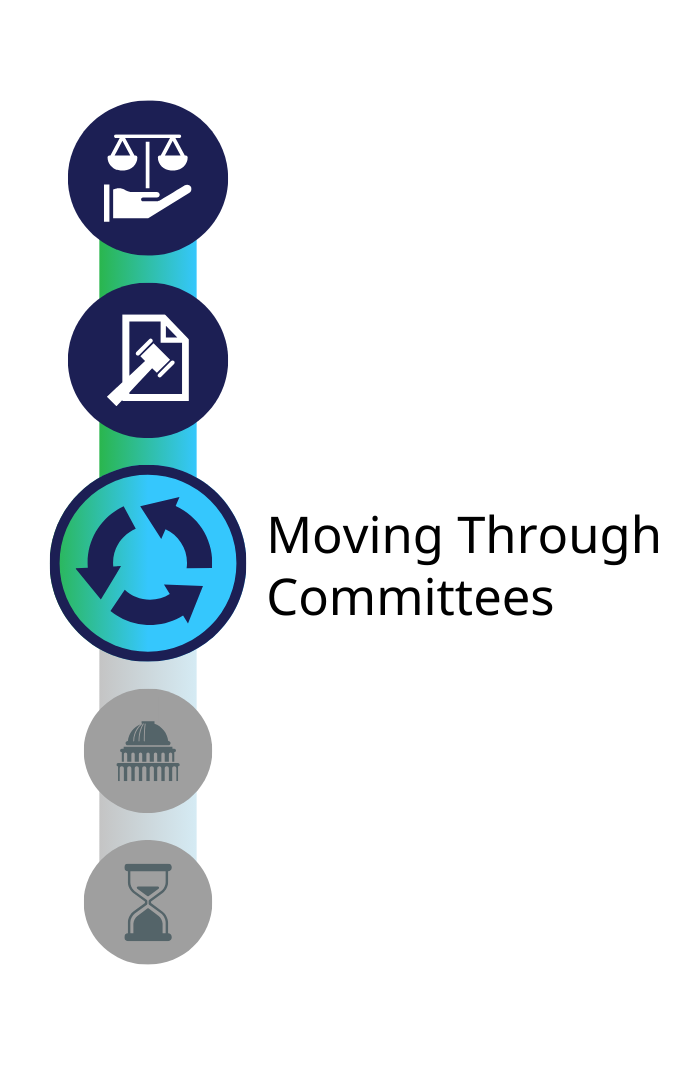
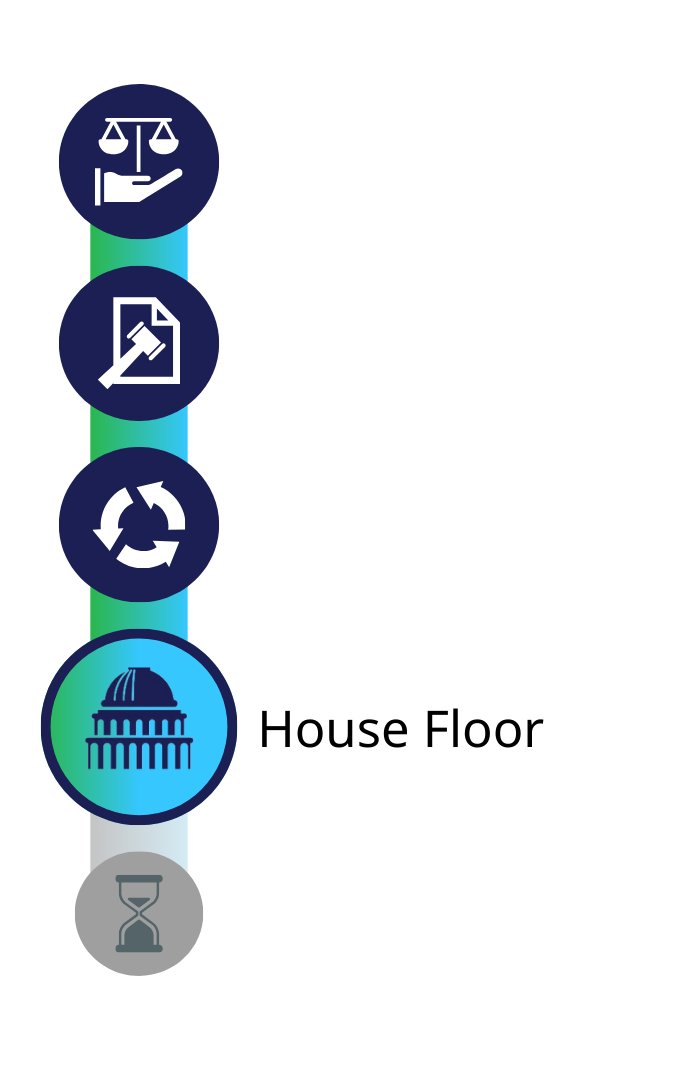
New for 2025: next to each bill, you will see a graphic that indicates the stage at which the bill is in the legislative process.

Important Bills to Watch

SB 460 - Student Elopement by Arrington

Summary of Original Filed Text - 02/03/25


The bill would create a framework for addressing student elopement in Florida public schools by establishing various requirements for planning and response.


The bill defines "elopement" as the act of a student with disabilities leaving supervision and mandates each public school to set up a School Staff Assistance for Emergencies (SAFE) team and a comprehensive elopement plan.


The bill specifies that the school principal and assistant principal, along with at least five other appointed members, will constitute the SAFE team. This team is responsible for developing, updating, and enacting the elopement plan.


The elopement plan would include detailed procedures for immediate actions following an elopement, a structured search plan including a search grid of critical areas, and a communication strategy among all school personnel, security, and law enforcement.


There is directive language that the elopement plan be submitted annually to the district school board and authorizes the State Board of Education to adopt rules to implement the provisions effectively.


Identical Bill

HB 0345 Student Elopement by Eskamani

Passed first committee

SB 112 - Children with Developmental Disabilities by Harrell

Summary of Original Filed Text - 02/05/25


This bill expands the scope and services of healthcare and educational programs for children with developmental disabilities in Florida.


It amends the Cinotti Health Care Screening and Services Grant Program to include autism under eligible services and it creates the Early Steps Extended Option, extending eligibility for existing early intervention services until a child's fourth birthday.


The bill mandates local program offices to prepare for children's transitions out of the Early Steps Program.


This bill establishes guidelines and funding priorities for startup grants managed by the University of Florida Center for Autism and Neurodevelopment aimed at supporting schools and summer programs for children with autism.

It directs the Commissioner of Education to review and report on educational curricula for disabilities, enhancing training for professionals with a focus on supporting students with autism.


Identical Bill

HB 0591 Children with Developmental Disabilities by Maggard

Passed as SB112

HB 377 - Health Insurance Coverage for Individuals with Developmental Disabilities by Tant

Summary of Original Filed Text - 02/04/25


The bill revises definitions related to health insurance coverage for individuals with developmental disabilities, impacting Medicaid options and law enforcement training. It updates the definition of "autism spectrum disorder" to match the most recent edition of the Diagnostic and Statistical Manual of Mental Disorders by the American Psychiatric Association.

The bill changes the definition of "eligible individual" to expand criteria beyond age restrictions, focusing on the diagnosis of a developmental disability without specifying the age at diagnosis.


The bill reenacts specific statutes to adapt to the updated definitions impacting optional Medicaid services and law enforcement training regarding autism spectrum disorder and retains clauses regarding the adjustment of services based on budgetary constraints and the need for legislative approval for the implementation of new Medicaid services.

Identical Bill

SB 0756 Health Insurance Coverage for Individuals with Developmental Disabilities by Burton

Passed Senate

HB 447 - Disability History and Awareness Instruction by Salzman

Summary of Original Filed Text - 02/06/25


This bill provides an option for comprehensive disability history and awareness instruction in schools, replacing prior optional guidelines with required educational content.


The bill designates the act as the "Evin B. Hartsell Act." It requires that for a two-week period, students receive intensive instruction on individuals with disabilities, including disability history and the disability rights movement.

The instructional content across educational levels includes:


  • Grades K-3: Conversations on bullying and activities teaching about physical disabilities.
  • Grades 4-6: Provides information and activities related to autism spectrum disorder.
  • Grades 7-9: Includes content and activities about hearing impairments.
  • Grades 10-12: Focuses on different types of learning and intellectual disabilities, with practical activities to illustrate these conditions.


The bill allows district school boards to collaborate with the Evin B. Hartsell Foundation for curriculum development.


Identical Bill

SB 0540 Disability History and Awareness Instruction by Collins

Passed as HB 447

HB 413 - Swimming Safety by Gossett-Seidman

Summary of Original Filed Text - 02/05/25


This bill enhances water safety requirements and regulations for children, particularly those with autism, at public swimming areas and prohibits organizations from allowing children access to public bathing places or pools without swimming proficiency verification from a parent or legal guardian.


The bill requires organizations to provide U.S. Coast Guard-approved personal flotation devices (for public bathing places and pools) to children identified as non-swimmers or at-risk and allows organizations to refuse water access to children without the required documentation and penalizes organizations for non-compliance by allowing disciplinary actions, including administrative penalties.


This bill includes changes to the "Residential Swimming Pool Safety Act," now part of a broader "Swimming Pool and Public Water Safety Act," reinforcing safety barriers and pool standards.


Similar Bill

SB 0568 Swimming Safety by Rodriguez

SB 102 - Exceptional Student Education by Gaetz

Summary of Original Filed Text - 12/17/24


A bill mandates the development and implementation of a workforce credential program for students with autism spectrum disorder by the Department of Education.

It mandates the Department of Education to develop and implement a workforce credential program by January 31, 2026, specifically designed for students with autism spectrum disorder to aid in securing employment upon graduation.


Requires the program to allow students to earn badges that demonstrate the acquisition of skills needed by employers, with each badge representing five discrete skills, including workplace safety.


Specifies that the validation of each badge must be done by two members of the instructional staff who specialize in exceptional student education.

SB 102 directs the Department of Education to produce an annual report from 2026 through 2030, which includes details on the badges offered, data on post-graduation employment, student participation rates, and other relevant outcome data.


Similar Bill

HB 0127 Exceptional Student Education by Kendall

House floor

SB 1156 - Home Health Aide for Medically Fragile Children Program by Harrell

Summary of Original Filed Text - 02/25/25


This bill revises training and operational requirements for the Home Health Aide for Medically Fragile Children Program to improve care and coordination.


The bill specifies family caregiver training to include minimum hours of theoretical instruction, skills tailored to the child's care needs and directed clinical training. It also establishes a Medicaid fee schedule for home health aides at a minimum rate of $25 per hour with a daily cap of 12 hours per child, requiring justification for additional hours.


The bill mandates a swift federal approval process for Medicaid waivers or amendments to include private duty nursing and home health providers in the program and exempt home health aide income from public assistance eligibility considerations.


Lastly, the bill requires an annual program assessment detailing caregiver satisfaction, support needs, hospitalization rates, adverse incidents, and comparison data between home health aides and registered or licensed nurses.


Similar Bills

HB 1529 Home Health Aide for Medically Fragile Children Program by Tramont

Passed as SB 1156

SB 412 - Repair of Motorized Wheelchairs by Smith (C)

Summary of Original Filed Text - 01/30/25


This bill establishes requirements for the availability of motorized wheelchair repair resources under the "Motorized Wheelchair Right to Repair Act."


The bill mandates that original equipment manufacturers (OEMs) provide documentation, parts, and tools necessary for diagnosing, maintaining, or repairing motorized wheelchairs, including updates, on fair and reasonable terms. 


The purpose of the bill is to offer more options for wheelchair repair and the bill stipulates that any contractual provision attempting to waive or limit OEM obligations under this act are void and enforces violations of these provisions under the Florida Deceptive and Unfair Trade Practices Act.


Similar Bills

HB 0311 Repair of Motorized Wheelchairs by Eskamani

Passed the House

SB 1050 - Agency for Persons with Disabilities by Bradley

Summary of Original Filed Text - 02/24/25


The Committee Substitute of this bill enhances services for individuals with developmental disabilities through several key provisions and requirements targeting state agencies and Medicaid programs. It removed the Vocational Rehabilitation and Blind Services merger to APD and expands the developmental disabilities managed care pilot to cover the whole state. The bill includes transparency and choice in services for individuals with developmental disabilities by establishing new Family Care Councils requiring timely reporting and revising waiver enrollment options. The bill more specifically includes the following.


  • A requirement that the Agency for Persons with Disabilities furnish a written list of qualified organizations within 5 days of enrollment in iBudget.
  • A requirement to post quarterly reconciliation reports online within 5 days of submission.
  • The bill mandates the agency’s active involvement in transition planning for certain foster youth.
  • The bill requires posting of the total number of individuals in each priority category by county at least every 5 days.
  • Guidelines to establish the Statewide Family Care Council to coordinate with local family care councils are identified. 
  • Revises Medicaid managed care enrollment by prohibiting automatic enrollment of certain Medicaid recipients and requiring an affirmative choice to opt in.
  • The bill amends the developmental disabilities pilot program to be fully voluntary and allows immediate assessment for each enrollee, including all services under s. 393.066(3), mandates plan oversight and corrective actions, and updates reporting and evaluation requirements.
  • Two amendments give the Pilot almost full authority to implement the pilot and clarifies that no federal approval is necessary to add a person-directed option or to expand the pilot to the whole state of Florida.
  • Finally, the bill directs a study of the iBudget algorithm and requires the Agency for Persons with Disabilities to report findings and recommendations to the Governor and Legislature by November 15, 2025.


Similar Bill

HB 1103 Agency for Persons with Disabilities by Kincart Jonsson

Passed

HB 257 - Exceptional Students and Video Cameras in Public Schools by Chambliss, Tramont

Summary of Original Filed Text - 01/27/25


The bill mandates that each public and charter school with self-contained classrooms must install video cameras and stipulates that cameras must monitor and record all classroom areas, excluding restrooms and changing areas.


The bill specifies that recordings must be retained for a minimum of three months or until all associated investigations and legal actions are resolved and designates school principals as custodians of the video cameras and recordings, detailing protocols for viewing and handling recordings.

Immediate family and legal authorities are allowed to view recordings for investigation purposes within specified conditions and timelines.


Similar Bill

SB 1006 - Video Cameras in Public School Classrooms by Calatayud


HB 299 - Elevator Accessibility Requirements by Woodson

Summary of Original Filed Text - 01/29/25


The bill amends Florida Statutes to specify requirements for support rails in elevator car interiors for accessibility.

The bill would require that:


  • Each elevator car must have at least one continuous support rail.
  • The support rail must be between 31 and 33 inches high from the floor, not exceeding 2 1/2 inches in diameter.
  • The minimum length of the support rail must be 42 inches.


Identical Bill

SB 0960 Elevator Accessibility Requirements by Bernard

Passed first committee

HB 711 - Spectrum Alert by Borrero, Campbell CoSponsors: Booth, Grow, Maggard, Partington

Summary of Original Filed Text - 02/19/25


The bill establishes the Spectrum Alert in Florida to address safety risks associated with children who have Autism Spectrum Disorder (ASD) prone to wandering, particularly leading to accidents or deaths from drowning and traffic accidents. The bill requires the Department of Law Enforcement to work with transportation, highway safety, lottery departments, and local law enforcement to create and implement the Spectrum Alert. The bill also includes the following:


  • Instructs these departments to collaboratively develop a training program and alert system compatible with existing emergency systems, focusing on improving responses to missing ASD children incidents.
  • Mandates the implementation of crisis intervention training for law enforcement to better manage interactions with ASD children.
  • Specifies that policies and procedures be set for handling reported missing ASD children, including quick dissemination of information and informing relevant emergency and law enforcement personnel.
  • Stipulates increased awareness efforts to understand autism-related elopement risks and strengthen community support for ASD children.


Identical Bill

SB 0500 Spectrum Alert by Ávila

Passed as SB 711

HB 877 - School Readiness Program by Bartleman, Trabulsy Co-Sponsors: Campbell, López, J., Partington


Why I Filed This Bill (by Representative Bartleman): This bill addresses the challenges children with disabilities face in early childhood education. Logan, a child with autism, was expelled from six different preschools because they could not accommodate his needs. Without consistency and proper support, children like Logan face significant barriers to early education. The expulsion rate in early education is three times higher than K-12 combined. Students with disabilities must be provided a stable learning environment with teachers trained to meet their unique needs. Currently, early learning providers are paid an increased rate from ELCs for enrolling a student with a disability. Providers receive these additional dollars as an incentive; however, there is no training requirement for teachers. This bill will require training for all providers who choose to take advantage of this increased rate. This bill incentivizes early learning providers to accommodate students with special needs and equips teachers with the training necessary to manage these students so that they can maintain a classroom conducive to all learners. It also requires training for autism screenings and increases access to after-school programs. Early identification is key, and it is vital that every child is provided with a strong foundation.


Summary of Original Filed Text - 02/21/25

This bill 

  • Reassigns participation priority in the School Readiness Program by emphasizing children from economically disadvantaged working families, at-risk children, and children mandating special accommodations validated by qualified professionals.
  • Introduces specific requirements for children with special needs, including a validated IEP, individual family support plan, diagnosed special need, or determined accommodations.
  • Establishes eligibility for additional funding for providers caring for children meeting enhanced criteria, including those under subsection (6) of revised statute.
  • Creates a special needs differential allocation which school readiness providers can access if they meet program standards, undertake specific training, and fulfill ongoing educational requirements by July 1, 2027.


Identical Bill

SB 1102 School Readiness Program by Calatayud

Passed

HB 1227 - Medicaid Enrollment for Permanently Disabled Individuals by Tramont Co-Sponsors: Bartleman, Melo, Tant CS Sponsors: Health & Human Services Committee, Health Care Facilities & Systems Subcommittee

Summary of Committee Substitute Text (C2) - 04/16/25


This bill establishes continuity of Medicaid coverage for permanently disabled individuals during redeterminations. Highlights of this bill include the following.


  • The bill presumes continued eligibility for individuals initially determined disabled who are receiving Medicaid services like institutional care, hospice, or specific home and community-based services unless their disability or economic status changes.
  • The bill requires the Agency for Health Care Administration to continue payments for these services throughout the redetermination process unless there is a reported change in disability or financial status.
  • There is a requirement that recipients or their caregivers notify the agency and the Department of Children and Families of any changes impacting eligibility, triggering a possible redetermination of continued coverage.
  • The term “permanently disabled” is defined as a person previously determined disabled whose disability is certified by a licensed physician as permanent.
  • The bill directs the agency to seek federal authorization to exempt qualified permanently disabled individuals from annual redeterminations and to develop a notification process with the Department of Children and Families.


Identical Bill

SB 7032 Medicaid Enrollment for Permanently Disabled Individuals by Appropriations Committee on Health and Human Services

Senate floor


CONNECT WITH US

www.fddc.org

Facebook  X  Linkedin  Instagram  YouTube  Web  Email