Advancing our understanding of atmospheric composition and climate | | The Chemical Sciences Laboratory (CSL) is one of ten NOAA Research Laboratories located throughout the United States organized under the office of Oceanic & Atmospheric Research (OAR). CSL is one of four individual OAR labs located within the David Skaggs Research Center (DSRC) in Boulder, Colorado. The research conducted at CSL aims to advance scientific understanding of the chemical and physical processes that affect Earth's atmospheric composition and climate. | | That Delicious Smell May be Impacting Air Quality | | | | |
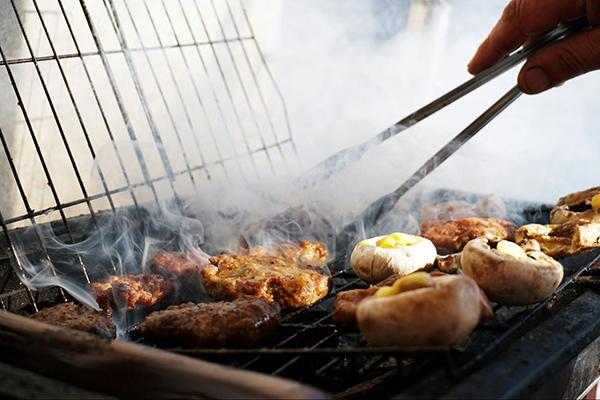
A new study finds that air pollutants emitted from food cooking can account for nearly a quarter of human-caused volatile organic compounds (VOCs) in dense urban areas.
Stroll along the downtown streets of any major city around dinner time and it's easy to identify the mouth-watering aromas of cooking foods – the enticing smells attracting hungry patrons to nearby restaurants like moths to a flame.
| | | |
But if there's one thing the scientists at NOAA CSL have learned in their years-long deep dive investigating the unrecognized and underappreciated sources of urban air pollution, it's this: if you can smell it, there's a good chance it can impact air quality.
When it comes to those delicious food smells, the impact could be significant, according to a new study published in the journal Atmospheric Chemistry & Physics quantifying cooking emissions in the urban air of downtown Las Vegas.
| |
First-of-its-kind Experiment Illuminates Wildfires
in Unprecedented Detail
| | The groundbreaking study could lead to vast improvements in fire weather forecasting. | | | | |
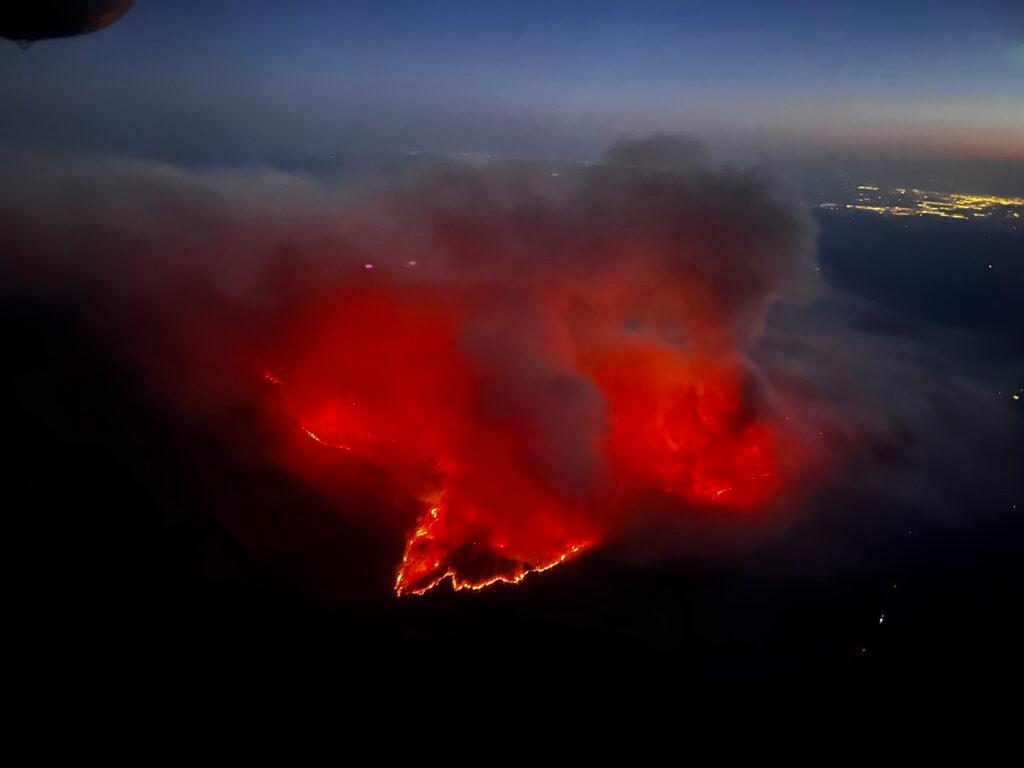
First results have been published from 2022's California Fire Dynamics Experiment (CalFiDE), a NOAA-led campaign to capture coordinated wildfire observations in real time.
The new study shows it's possible to collect measurements of fire and smoke chemistry, weather conditions, and smoke plume dynamics in real time around an active wildfire. The preliminary results are also shedding light on how pollutants like ozone are made and dispersed in a wildfire plume.
| | |
CalFiDE results could ultimately provide better forecasts for first responders on the ground who need to make quick decisions about firefighting strategy and evacuations, according to the researchers.
"We're able to learn a lot from this campaign because a lot of these observations have never been made," said Brian Carroll, a CIRES scientist working in NOAA CSL who led the new study detailing CalFiDE's first results. "Especially the structure of an updraft of a fire, how that's coupling to the intensity at the surface, and then linking that to some of the chemistry and air quality downwind."
| |
Scientists Detail Research to Assess the Viability
and Risks of Marine Cloud Brightening
| | |
As the levels of greenhouse gases in the atmosphere continue to increase and climate change impacts become more costly, the scientific community is redoubling efforts to investigate the potential risks and benefits of artificially shading Earth's surface to slow global warming.
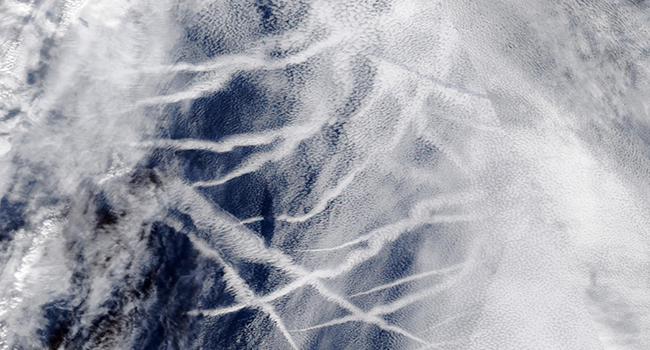
Marine cloud brightening (MCB) is one of two primary solar radiation modification methods being proposed to offset the worst effects of global warming while decarbonization advances. MCB proposals involve the injection of salt spray into shallow marine clouds to brighten them, increasing their reflection of sunlight and reducing the amount of heat absorbed by the water below.
A group of 31 leading atmospheric scientists are now offering a consensus physical science research roadmap to build the knowledge base needed to evaluate the viability of MCB approaches. Their roadmap is described in a new paper published in the journal Science Advances.
|
| Could Drying the Stratosphere Help Cool the Planet? | |
Yes, but only to a small degree.
While human-caused carbon dioxide emissions are by far the most important driver of climate change, water vapor is actually the most abundant greenhouse gas, and is responsible for about half of Earth's natural greenhouse effect – the one that keeps our planet habitable.
| | | |
Now, as scientists explore ways to address the impacts of climate change by removing excess heat-trapping carbon dioxide from the atmosphere and by reflecting sunshine back into space, one group of researchers has asked the question: Could removing some water vapor from the atmosphere also help mitigate climate change?
This is precisely the idea explored in a new research article published today in the journal Science Advances that authors have dubbed "intentional stratospheric dehydration" or ISD.
| | | | Scientists Convene in Boulder to Discuss First Results from AGES+ Campaigns | | |
Last summer saw the largest coordinated air quality research campaign to date, bringing together researchers from NOAA, NASA, DoE, and multiple universities for a nationwide investigation of air pollution sources, emissions, and chemical transformations impacting the urban and marine atmosphere.
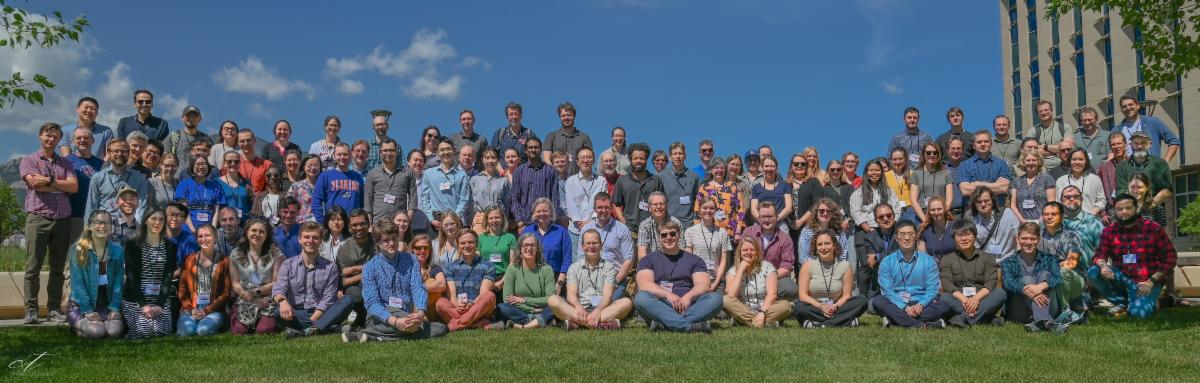
Last week, the many researchers involved in the sprawling AGES+ campaigns convened in Boulder, Colorado for a science team workshop hosted by NOAA CSL and held on the University of Colorado Boulder campus. The workshop was the first glimpse at the breadth of new research and insights arising from the campaigns, with sessions focused on Marine Science, Meteorology, Satellite Evaluation, Emissions & Inventories, and Chemical Transformations.
Over 150 scientists from U.S. and international organizations attended last week’s workshop. Funding was provided by NOAA CPO AC4 and NASA ESD/TCP. More information on the event, including the detailed agenda, can be found on the workshop website.
| |
AirMAPS Campaigns Kick Off this Summer
with Back-to-Back Projects in Colorado and Utah
| | |
AIrborne and Remote sensing Methane and Air Pollutant Surveys (AiRMAPS) is a series of studies over FY24–FY28 led by NOAA Oceanic and Atmospheric Research (OAR) and NOAA National Environmental Satellite, Data, and Information Service (NESDIS) to provide comprehensive and quantitative top-down emissions data for methane, other greenhouse gases, and major air pollutants from oil and gas production basins, and selected urban and agricultural areas.
The first studies will begin in July, starting with the AMMBEC (Airborne Methane Mass Balance Emissions in Colorado) campaign during which airborne, mobile, and ground-based observations of methane and air quality pollutants will be conducted around the Denver metro area and the Denver-Julesburg oil and gas basin. AMMBEC will target emissions from oil & gas operations, agriculture, industry, and urban sources.
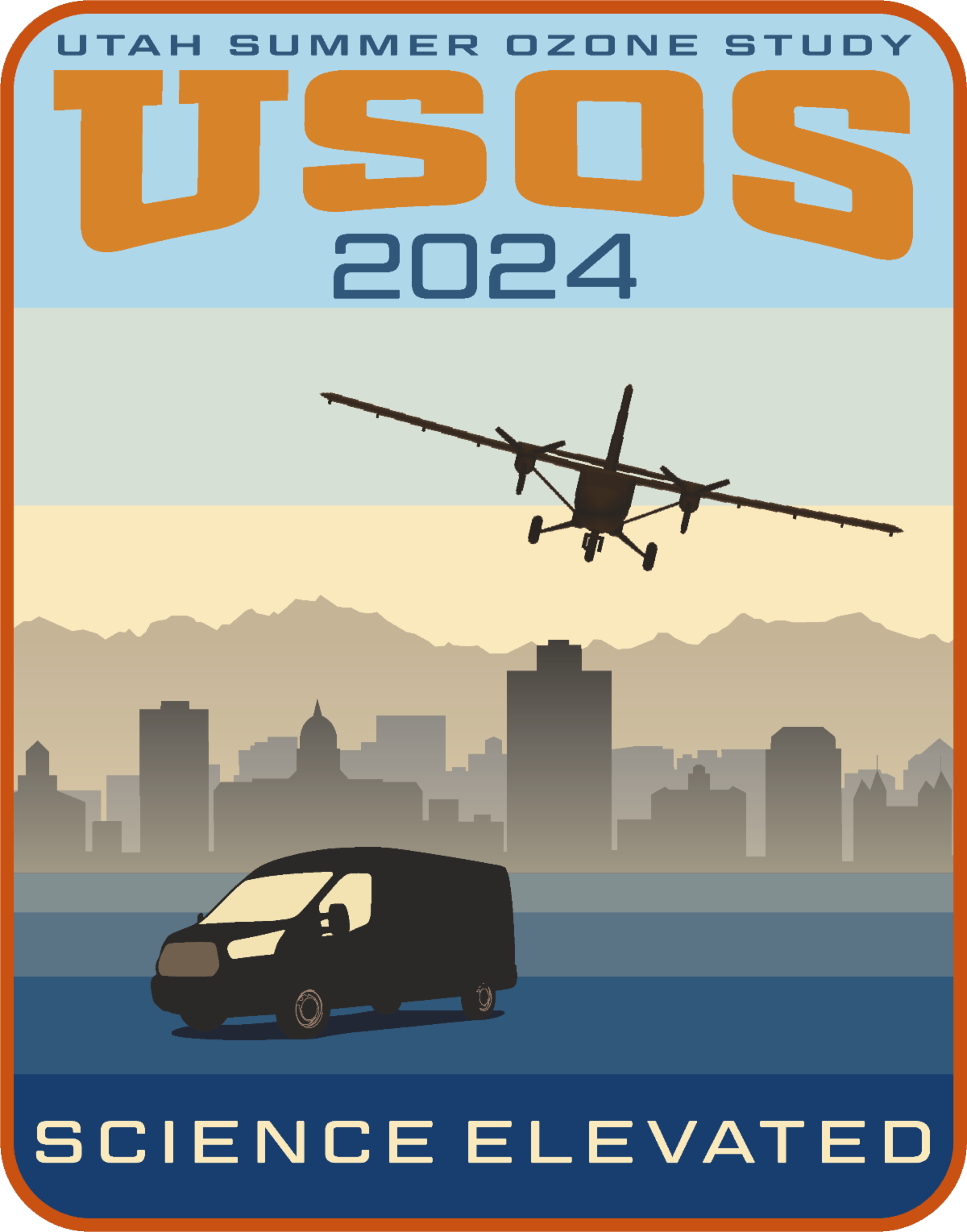
In August, the aircraft and mobile labs will travel to Salt Lake City, Utah for the USOS (Utah Summer Ozone Study) project. Measurements will focus on the spatial distribution and speciation of major ozone precursors (NOx and VOCs) and the structure of the planetary boundary layer within the Great Salt Lake basin, along with additional chemical measurements and meteorological data, to enable better understanding of the factors leading to ozone exceedances in the Salt Lake region.
| | CSL Scientists Awarded a CIRES Innovative Research Grant | | | | |
CSL/CIRES scientists Alex Baron and Kate Smith and CSL scientist Troy Thornberry have been awarded a grant through the CIRES Innovative Research Program (IRP) to develop a novel balloon-borne method for collecting and analyzing stratospheric aerosols.
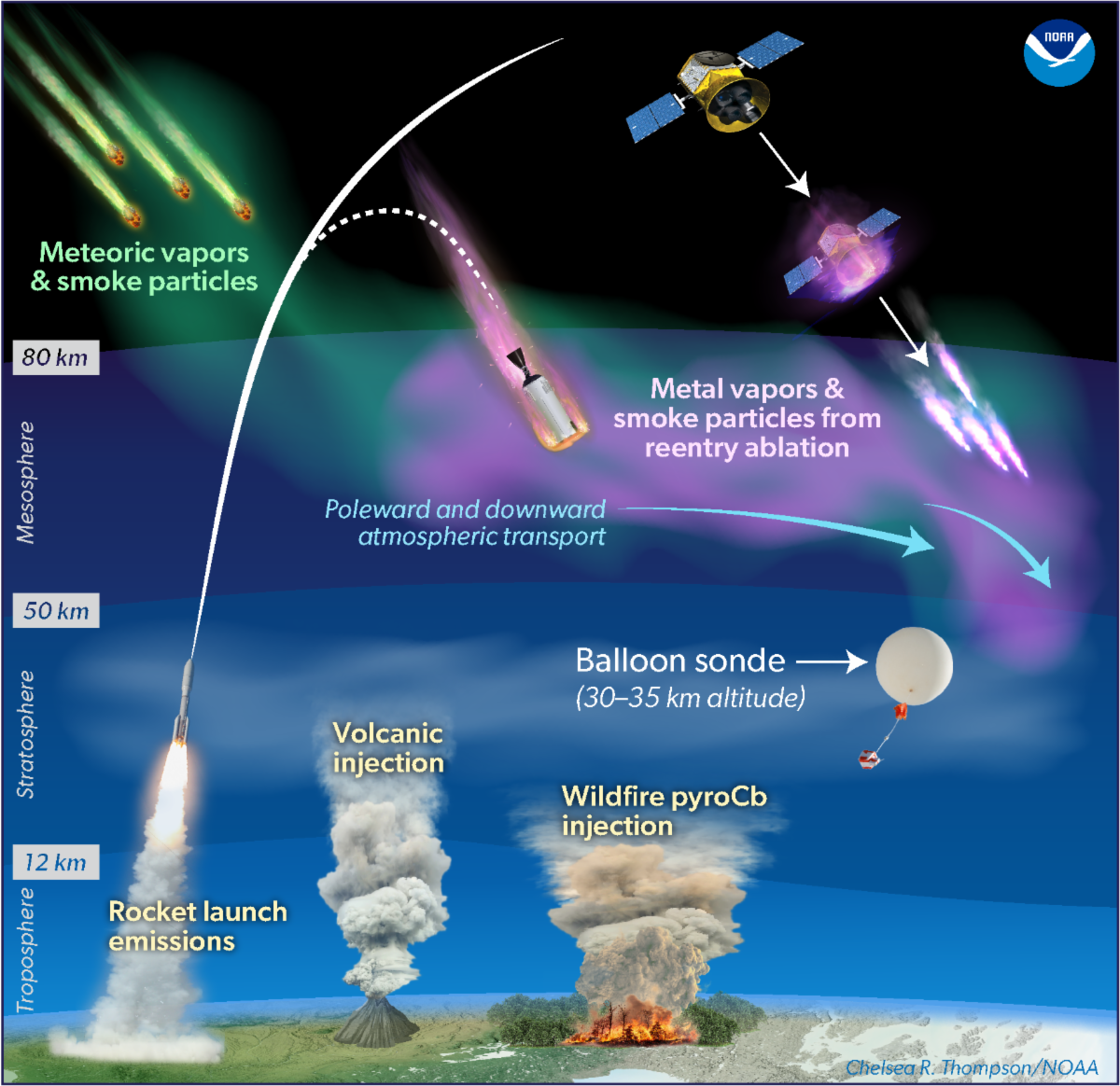
Understanding the nature and climate impact of stratospheric aerosols remains incomplete. A striking example is the recent CSL discovery of metals from spacecraft re-entry debris in stratospheric aerosols.
To target these and other sources of stratospheric aerosols, the researchers proposed to develop a unique and lightweight aerosol sampler that can be flown on a balloon sonde up to ~30km altitude.
| | The sampler will collect vertically-resolved aerosol samples along the path of the balloon, and the retrieved samples will then be analyzed back in the laboratory for chemical composition and morphology. The researchers hope to better constrain the impacts of wildfires, volcanoes, rocket plumes, re-entry ablation, and meteoric materials on stratospheric aerosol composition. | | Steven Brown Elected AAAS Fellow | | |
CSL scientist and program leader Dr. Steven S. Brown has been elected as a Fellow of the American Association for the Advancement of Science (AAAS) in the section of Atmospheric & Hydrospheric Sciences, for distinguished contributions to the field of atmospheric science, particularly for performing novel measurements to improve understanding of atmospheric oxidation and reactive nitrogen.
AAAS is the world's largest general scientific societies and publisher of the Science family of journals. The 2023 Fellows are at the forefront of discussions about emerging technologies, environmental issues, science education, innovative therapies, and more as the world grapples with societal concerns around these topics.
Read more >>
| | | CSL scientists Karen Rosenlof, Troy Thornberry, Steve Cicicora, Ru-Shan Gao, along with Bryan Johnson (GML), Gary Morris (GML), and Alice Crawford (ARL) received a Dept. of Commerce Silver Medal for scientific/engineering achievement "for successfully executing a rapid response campaign to study the atmospheric impact of the unprecedented Hunga Tonga-Hunga Ha'apai volcano eruption." | | | |
The group is honored for executing an international rapid response to quantify the atmospheric impact of the Hunga Tonga-Hunga Ha'apai (HTHH) volcanic eruption. Within 6 days of the eruption, a strategy was developed, instruments were prepared, and scientists made the 36-hour journey to Reunion Island, in time to measure within the volcanic plume over Reunion. It was the fastest in situ measurement response to a major volcanic eruption. The balloon measurements taken over 5 days continue to be analyzed and will improve the representation of aerosol/climate interactions in global models.
They are recognized with CIRES affiliates Elizabeth Asher (CSL, now at GML), Patrick Cullis (GML), Emrys Hall (GML), Dale Hurst (GML), Allen Jordan (GML), Yunqian Zhu (CSL), Kensy Xiong (GML, now at Agilent Technologies), and Michael Todt (CSL, now at Finnish Meteorological Institute). The CIRES researchers were recognized in kind with the CIRES Silver Medal Award at the annual CIRES Rendezvous on May 16.
Read more >>
| | | | |
CSL's Chelsea Thompson received a NOAA Silver Sherman Award. Chelsea is recognized "for outstanding support of the 2022 UNEP/WMO (United Nations Environment Programme/World Meteorological Organization) Scientific Assessment of Ozone Depletion. Her experience and training as a scientist, her imagination and skills as a graphic artist, her attention to detail, and people skills were essential aspects in producing these exceptional documents that have been distributed to all nations of the world."
This award was initiated during Dr. Kathy Sullivan's tenure as NOAA Administrator, to recognize individuals who excel in their work, achieve a milestone that contributes significantly or critically towards a particular program's goal, or demonstrate leadership toward process improvement of a significant magnitude. Dr. Sullivan was particularly invested in reaching down into the organization to recognize those who made extraordinary efforts to keep the mission moving forward.
Read more >>
| |
People of CSL — Staff Spotlight
| | | |
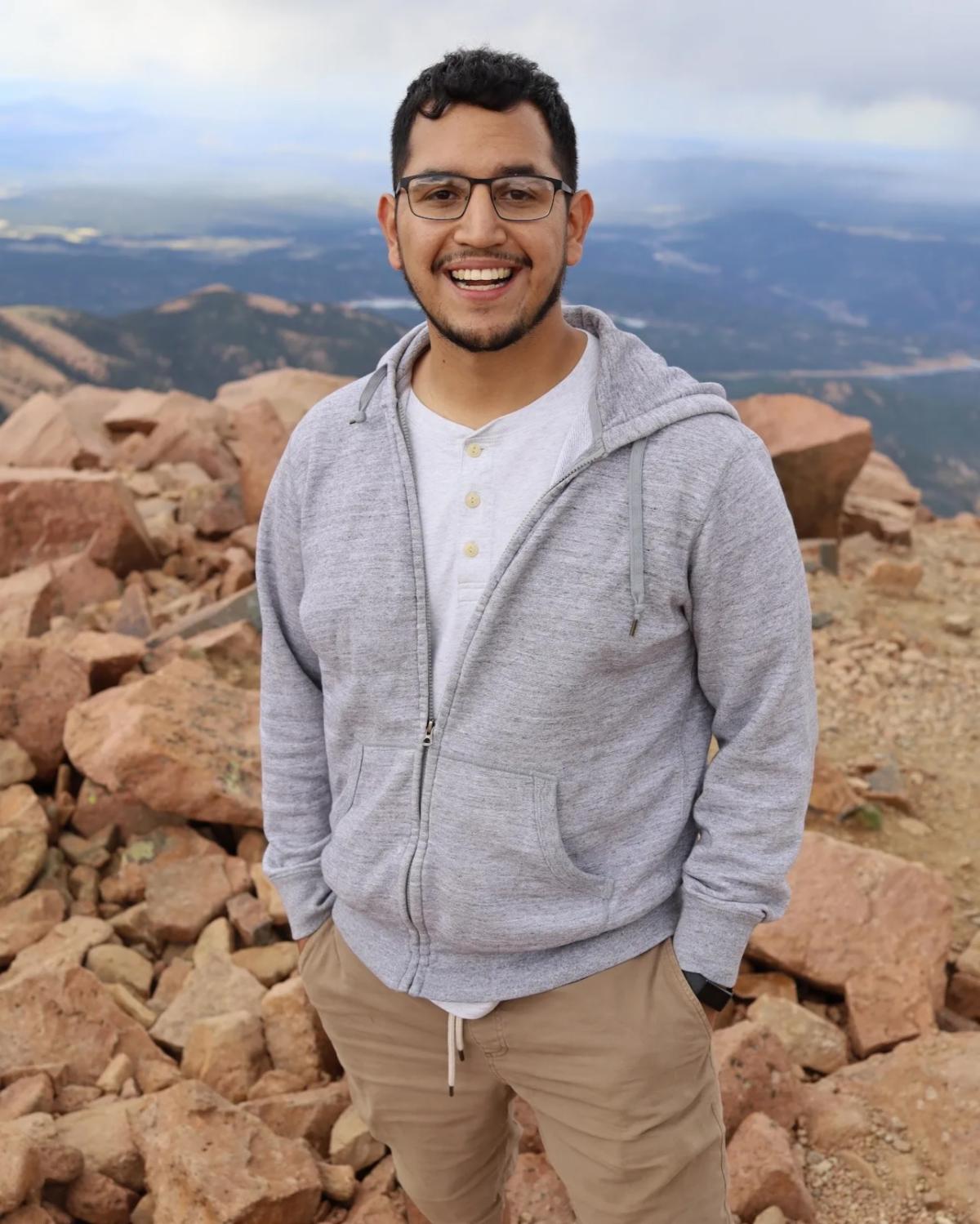
Harold Gamarro
Graduate Research Fellow Harold Gamarro joined the Atmospheric Composition Modeling research program in 2022.
When did you start at CSL?
I initially joined NOAA CSL in early 2020 for a six-month period through the NOAA Experiential Research and Training Opportunities (NERTO) program. I returned to CSL in 2022 as a NOAA Educational Partnership Program with Minority Serving Institutions (EPP/MSI) Graduate Research Fellow, continuing my dissertation work with the support of CSL scientists. Both these opportunities came through the NOAA EPP/MSI Cooperative Science Center (CSC) at The City College of New York (CCNY), where I am completing a PhD in mechanical engineering. A big shout-out to the NOAA office of Education for their outstanding efforts in connecting students like me with the distinguished scientists at CSL.
| | | |
What do you do here at CSL?
My current research focuses on the complex interactions between urban infrastructure and land cover, examining how these factors collectively influence weather extremes, including urban heat, energy consumption, and air quality. At CSL, I am involved in developing and refining modeling tools that investigate the dynamics of flow and transport within urban environments, with a particular emphasis on studying New York City and Houston.
Where are you from/where did you grow up?
My family is originally from Chicaman, a small town in Guatemala, but I was born and raised in Queens, New York after my mom decided to make NYC home.
What was your career path to get here?
I began my academic journey as a mechanical engineering major in undergrad. I was drawn to this major from my background in fixing airplanes out of high school and enjoyment of math. Initially, I pursued traditional internships in HVAC and design within mechanical engineering but found that they did not fulfill me. My perspective shifted during a summer research internship under the guidance of my current advisor, where I was introduced to the NOAA CSC at CCNY. There I made the connection that weather modeling was just a fluids and heat transfer problem but at a much larger scale. I am now nearing the completion of my degree, fully committed to the path I discovered.
Name one thing about you that people wouldn't/don't expect.
I got a license to fix and maintain airplanes out of high school but never used it because I went to engineering school.
| | |
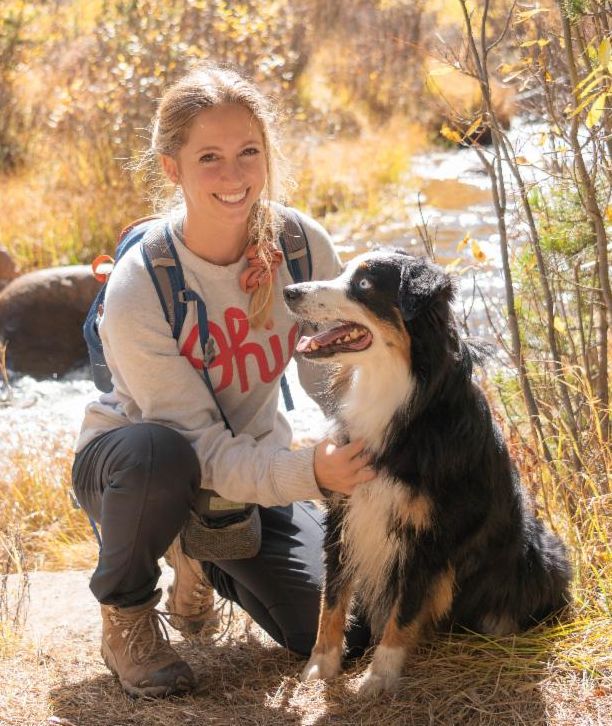
Samantha Lee
Software Engineer Samantha Lee joined the Atmospheric Composition & Chemical Processes research program in April 2022.
Where are you from/where did you grow up?
Mostly in Colorado, but due to my parents being in the military we moved around a bit.
What was your career path to get here?
I started out as a Petroleum Engineer in North Dakota, then Covid happened, I was laid off and took that time to learn a few new skills including sailing and computer programming. After bothering Shuka for weeks he let me interview, and then I got the job (after a few more weeks of bothering Shuka).
| | | | |
What did you want to be when you grew up?
When I was little I wanted to be a veterinarian, now I want to be a flower farmer.
What were you like in high school?
In high school I was quiet. I got good grades, I was in orchestra and worked after school, so there wasn't a lot of time to get into trouble.
Name one thing about you that people wouldn't/don't expect.
I've lived in 12 different states and 4 different countries.
What do you enjoy doing in your spare time?
Gardening, hiking, sailing, and skiing.
| | | | | |