Advancing our understanding of atmospheric composition and climate | | The Chemical Sciences Laboratory (CSL) is one of ten NOAA Research Laboratories located throughout the United States organized under the office of Oceanic & Atmospheric Research (OAR). CSL is one of four individual OAR labs located within the David Skaggs Research Center (DSRC) in Boulder, Colorado. The research conducted at CSL aims to advance scientific understanding of the chemical and physical processes that affect Earth's atmospheric composition and climate. | |
One facility makes a big contribution to
Salt Lake City's winter brown cloud
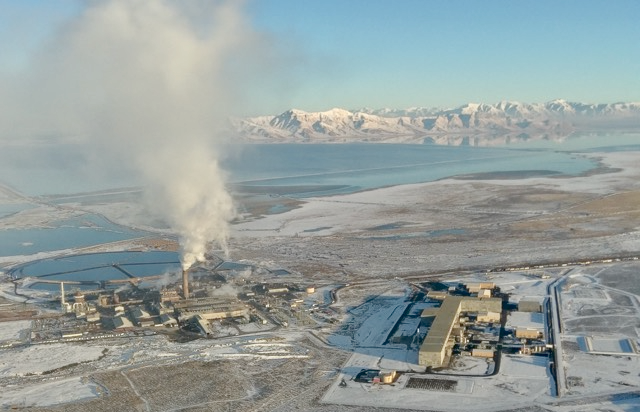
| | | | The 2.4 million people who live along Utah's Wasatch Front experience some of the most severe winter particulate matter air pollution in the nation. Now, analysis of measurements taken during NOAA research flights in 2017 indicates that emissions from a single source, a magnesium refinery, may be responsible for a significant fraction of the fine particles that form the dense winter brown clouds that hang over Salt Lake City. | | | |
The finding was published this week in the journal Environmental Science & Technology. Lead author Dr. Caroline Womack, a CIRES scientist working at CSL, said analysis of airborne measurements directly from the plume rising from the US Magnesium refinery during a 2017 winter air pollution study in Utah found that emissions of chlorine and bromine, known as halogenated compounds, were significant contributors to the persistent winter brown clouds.
The Utah Division of Air Quality requires reporting of particulate precursors, such as chlorine and nitrogen oxide emissions, which are then shared with the U.S. Environmental Protection Agency. However, NOAA's measurements also identified significant emissions of bromine, a reactive chemical that is not required to be reported. Modeling demonstrated that the chlorine and bromine emitted by the refinery were responsible for 10 - 25% of regional PM2.5 during winter pollution episodes.
"Our measurements of chlorine and nitrogen oxides agree with what the facility reports to regulators," Womack said. "But what we found suggests that bromine industrial emissions may deserve a closer look."
| |
Follow-up:
NOAA study prompts new Utah bill to study halogen emissions
| | |
The local NBC affiliate in Salt Lake City reported on February 22 that a proposed Utah bill to address air pollution along the Wasatch Front received a last-minute amendment to study halogen emissions in direct response to Dr. Womack's timely publication. Dr. Womack testified to the legislative committee about her study and the underlying science just prior to the bill receiving a unanimous favorable vote from the committee. The following is a excerpt from the news report:
SALT LAKE CITY — A bill that sets up a study of halogen emissions, such as bromine and chlorine, cleared its first legislative test Wednesday.
Members of the Utah House Natural Resources, Agriculture and Environment Committee unanimously voted in favor of HB220 after a last-second amendment to the bill, sponsored by Rep. Andrew Stoddard, D-Sandy.
Stoddard originally introduced the bill to the Utah House of Representatives on the first day of the 2023 Utah legislative session, Jan. 17. It sought to provide an “incentive-based legislative package” that would aim to reduce air pollution along the Wasatch Front by 50% by 2030, according to the environmental nonprofit o2 Utah, which helped push for the bill.
But Stoddard eventually rewrote the proposed legislation to address the results of a breakthrough National Oceanic and Atmospheric Administration study on air quality last month, which found that high levels of chlorine and bromine boosted Wasatch Front and northern Utah particulate matter levels by as much as 25% during a study period in 2017. It also pinpointed the US Magnesium plant in Tooele County as the major source of the chemicals.
The bill aims to require the Utah Division of Air Quality to “conduct an inventory and prepare a plan related to reducing certain emissions” to find other sources of bromine in the northern half of the state and to find ways to regulate and reduce those emissions.
See also February 23 article in the Salt Lake Tribune >>
| |
Spotlight on Earth's Radiation Budget (ERB):
SABRE research flights probe the chemistry and
composition of the polar stratosphere
| | |
A major airborne research mission is underway in Alaska. A converted Cold War bomber packed with sensitive instruments is investigating atmospheric chemistry and aerosols over the Arctic this month in the most ambitious NOAA airborne stratospheric research mission yet.
The Stratospheric Aerosol processes, Budget and Radiative Effects (SABRE) project is one element of NOAA's growing Earth's Radiation Budget research program, an effort to provide baseline observations of the stratosphere and other elements of Earth's climate system to inform evaluations of potential future efforts to slow global warming by modifying the amount of heat captured by the atmosphere.
"Processes in the stratosphere can change climate at the Earth's surface," said Dr. Karen Rosenlof, CSL's senior scientist for climate and climate change. "Satellites give us important information, but not everything we need to know. SABRE measurements will help to assess the increasing impacts to the stratosphere through space flight or deliberate climate intervention."
| | ERB and SABRE in the News | | |
ERB and the current SABRE flights in Alaska have spurred a number of recent news articles:
| | Towering wildfire clouds have big impacts on the stratosphere | | | | |
The biggest fires' climate influence lasts longer than once thought.
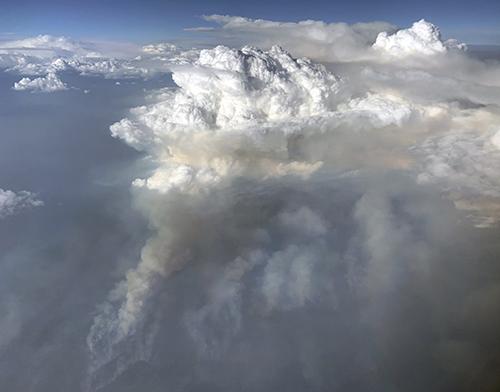
Images of vast clouds of wildfire smoke towering into the sky have become all too familiar from recent active fire years across the western United States and Australia. Now, a team of atmospheric scientists led by NOAA has demonstrated these big vertical plumes of wildfire smoke have a major long term impact on the stratosphere – and climate.
| | |
Fire-triggered thunderstorms, called pyrocumulonimbus or pyroCbs, are generated when the intense heat of a wildfire triggers a huge thunderstorm that carries smoke into the stratosphere, five to seven miles above the surface. In 2017, the flight path of a NASA airborne mission to study the background atmosphere over the remote oceans, the Atmospheric Tomography mission (ATom), intersected with smoke from the largest pyroCb event observed in the satellite era to that date over the Pacific Northwest. The smoke injection was so large that remote sensing instruments around the globe monitored it for more than eight months. Measurements showed that it and several additional Northern Hemisphere pyroCb events that year dominated contributions of black carbon and organic carbon to the lower stratosphere, the net effect of which cooled the planet.
The results of this study, led by former CIRES researcher Dr. Joseph Katich and CSL scientist Dr. Joshua Schwarz, have been published in the journal Science.
| | | |
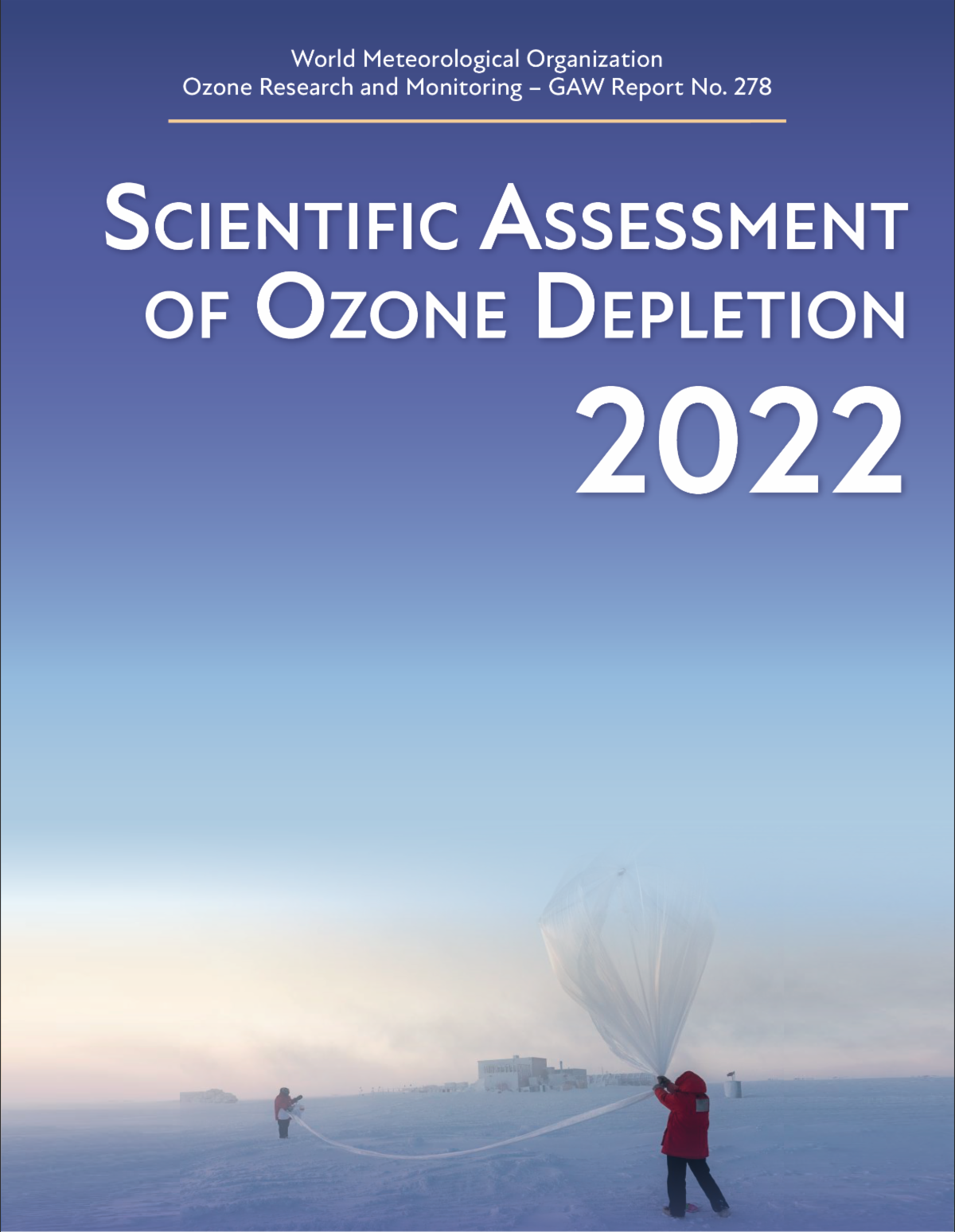
2022 Scientific Assessment of Ozone Depletion report released
United Nations report: Ozone layer recovery on track
A new report from the U.N., which includes key scientific contributions from NOAA and international partners, confirms that the recovery of Earth's protective ozone layer is on track, and that the Montreal Protocol, the international treaty that guides the phase-out of ozone-destroying chemicals, has had the additional benefit of slowing global warming.
| | |
The 2022 Scientific Assessment of Ozone Depletion presents the updated status of the ozone layer, which is projected to recover by the mid-21st century to values observed in 1980, before the appearance of the ozone hole. The report also describes current challenges and future policy choices that could influence the ozone layer recovery timeline.
"The Montreal Protocol is one of the most important and successful global environmental treaties ever," said Dr. David Fahey, director of NOAA's Chemical Sciences Laboratory and Co-chair of the Scientific Assessment Panel of the Montreal Protocol. "Since the adoption of the Montreal Protocol, NOAA has led the development of the report, which is produced every four years to guide and support the decisions of the Montreal Protocol. NOAA's leadership aligns with its substantial and longstanding commitment to stratospheric ozone research with models, observations and laboratory studies."
Dr. Sarah Doherty of CIRES/CSL served as the Assessment Coordinator and Dr. Chelsea Thompson of CSL served as the Graphics & Layout Coordinator for the 2022 report. Numerous other Federal and CIRES scientists and staff from CSL and GML have made substantial contributions to this report, serving as authors, contributors, review editors, and support staff.
| |
Scientists peer into the dark for insights on daytime air pollution
Scientists have long known that when common pollutants from traffic exhaust get cooked by the sun, they get transformed into ozone and particulates, two "secondary" pollutants that are harmful to human health. But what happens when the sun goes down? As it turns out, the chemistry of air pollution at night is much less well understood, even though it primes the atmosphere for what happens the next day.
New research in Nature Geoscience found that while the rate of nighttime oxidant production was very rapid in polluted regions of the U.S. and Europe in the past, it has moderated due to the implementation of air quality regulations. In contrast, nighttime oxidation rates in China are still rapidly increasing, despite recent controls on nitrogen oxide pollutants there.
Read the full story >>
| |
NOAA and CIRES Team Receives Colorado Governor's Award for High-Impact Research
NOAA forecasters in the National Weather Service and NOAA scientists in the Chemical Sciences Laboratory, Global Systems Laboratory, and the Cooperative Institute for Research in Environmental Sciences (CIRES) at the University of Colorado Boulder receive a 2022 Colorado Governor's Award for High-Impact Research for "rapid-response science in service to communities after the Marshall Fire."
The award for Pathfinding Partnerships, recognized CU Boulder and NOAA scientists and forecasters who worked around the clock to figure out how to serve citizens, emergency managers, and others with critical information before, during, and after the Marshall Fire roared through Superior and Louisville, Colorado at the end of 2021. The award recognizes a core team determined to help ordinary people make extraordinary decisions that day and after, and several dozen others whose work was essential. Their ongoing research promises to help guide wildfire response and mitigation long into the future.
Read the full story >>
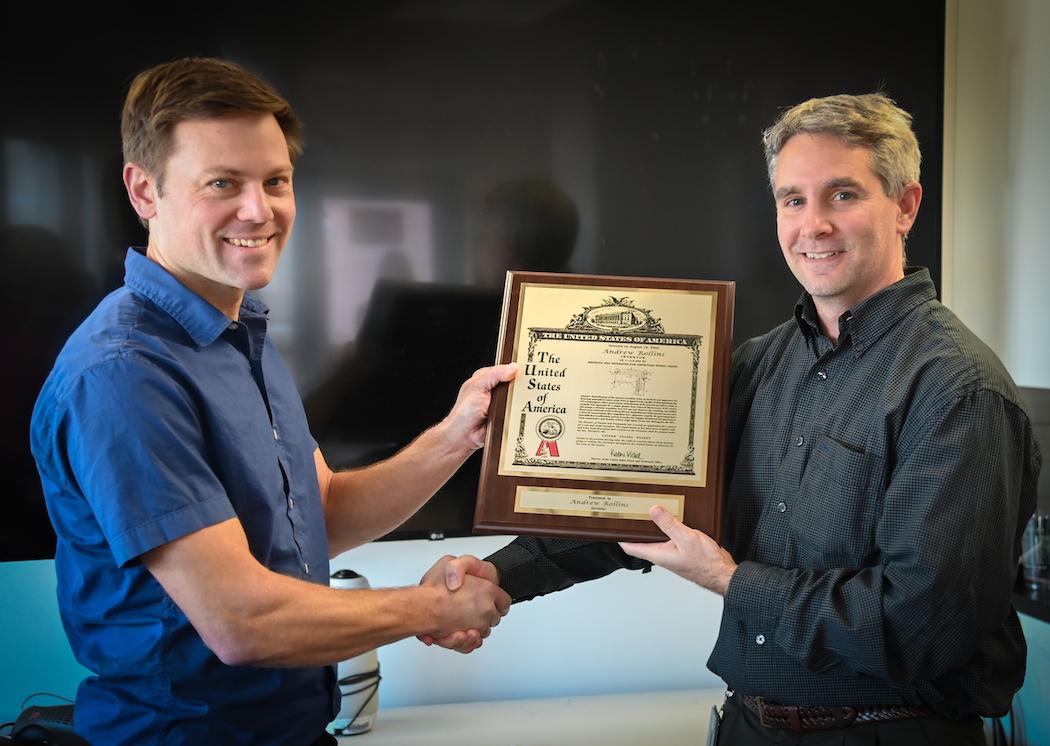
| | CSL scientist receives patent for innovative instrument that pushes the limits of atmospheric chemical observations | | |
For decades, atmospheric scientists have been studying and measuring nitrogen oxides— a class of pollutants generated primarily by human activity that are one of the most important contributors to poor air quality.
While research has greatly expanded scientists’ understanding of nitrogen oxides, or NOx, the “standard” research-grade instrument used to measure it in the atmosphere hasn’t changed much since the 1970s. The size of a major household appliance and weighing several hundred pounds, it requires cryogenic cooling of the electronics to ultra-low temperatures, and is unable to measure NO at levels low enough to answer important scientific questions. Despite these drawbacks, scientists have been hefting them onto research aircraft for nearly four decades to measure NO across the globe.
That has now changed, thanks to a breakthrough design developed by Dr. Andrew Rollins, a research chemist at NOAA’s Chemical Sciences Laboratory. Dr. Rollins’ design not only measures levels of NO with greater precision at levels 10 to hundreds of times lower than the standard instrument, it’s much smaller, lighter, and easier to operate.
“I realized that the measurement uncertainties at lower NO concentrations, even using the existing state-of-the-art instruments, were simply too large to understand all of the sources and chemistry of NO in the atmosphere,” said Dr. Rollins about his motivation for developing this new instrument.
Dr. Rollins was awarded a U.S. Patent for his innovative design, which was presented to him in January of this year by Dr. Steven Thur, Assistant Administrator of NOAA’s Office of Oceanic and Atmospheric Research. The new instrument, installed aboard NASA’s WB-57 research aircraft, is already collecting measurements of NO in the mid-latitude and polar stratosphere during CSL’s ongoing SABRE field campaign.
Read the full story >>
| | | | |