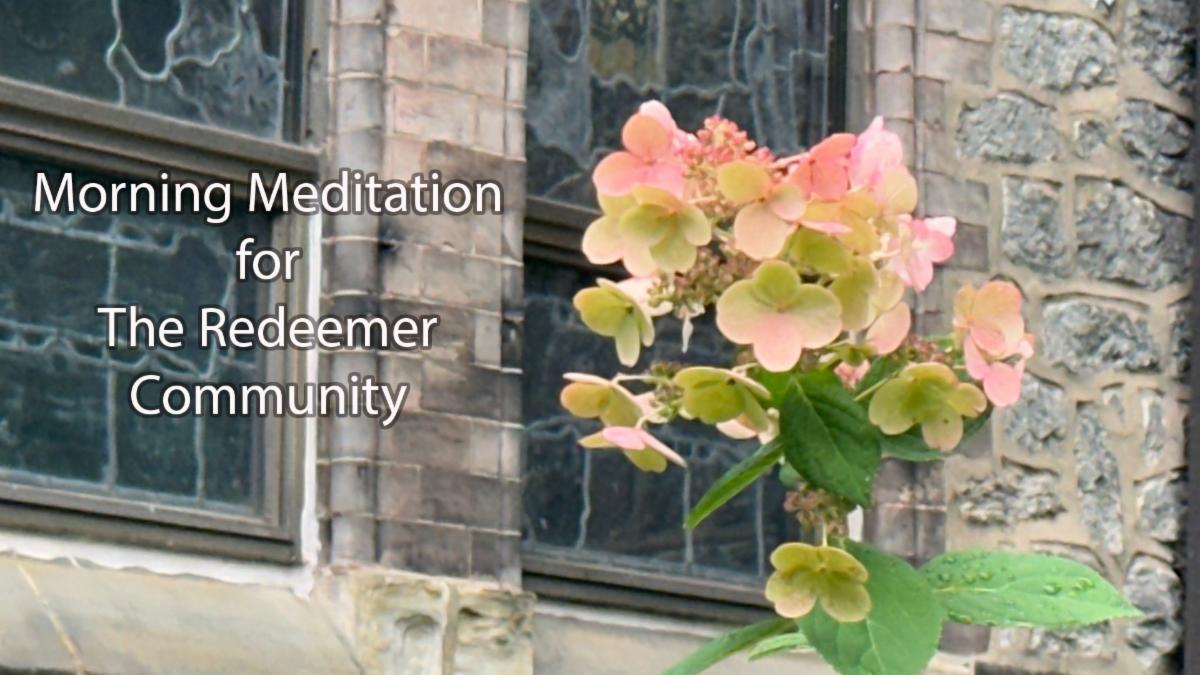
|
Morning Meditation
October 22, 2026
Reading: Luke 10:25-30
Just then a lawyer stood up to test Jesus. ‘Teacher,’ he said, ‘what must I do to inherit eternal life?’ He said to him, ‘What is written in the law? What do you read there?’ He answered, ‘You shall love the Lord your God with all your heart, and with all your soul, and with all your strength, and with all your mind; and your neighbour as yourself.’ And he said to him, ‘You have given the right answer; do this, and you will live.’ But wanting to justify himself, he asked Jesus, ‘And who is my neighbour?’ Jesus replied, ‘A man was going down from Jerusalem to Jericho, and fell into the hands of robbers, who stripped him, beat him, and went away, leaving him half dead.
Meditation by Peter Vanderveen
It’s fairly obvious that the reading above is just a fragment of the whole story that’s appointed for today. Jesus’ reply to the lawyer’s second question is clearly cut short. What follows in the text is the Parable of the Good Samaritan, which is so well known that this part of the story probably doesn’t need to be added. Most know the parable and its conclusion. And if it’s taken to heart, it seems to lay on our shoulders a particularly heavy ethical burden (which we like to wriggle out from under by interpreting the parable as merely a general call to be kind to strangers, especially those in need… not, strictly speaking, as we happen to encounter them, but when we have the time and the inclination to do so).
The preface to the parable is often overwhelmed by the compelling nature of the story Jesus told. But the lawyer deserves equal attention, for the parable is specifically meant to answer and illumine his questions. He asked twice about his own responsibility in securing his own favor with God. “What must I do?” he wondered, and “For whom?” His aim, as is directly stated, was to “justify himself.” That’s quite a task, and it’s made all the more daunting when one is standing before God, when nothing is hidden.
Initially, at Jesus’ prompting, the lawyer quotes the summary of the law, which, even given a cursory reading, seems impossible to fulfill. There’s no margin for either error or even a moment’s lapse in effort. The demand of the law is absolutely comprehensive. We, nonetheless, feel that we can be selective in how the law is actually applied. Hence the lawyer’s following inquiry. At very least, Jesus prodded, neighbors are any persons with whom we find ourselves face to face. Their presence, at any time, demands whatever is required from us to bring them to some semblance of wholeness. But who can do this? Who of us can even try?
Jesus told the lawyer that he understood the law. He had stated it “rightly.” But in so doing, the lawyer immediately and effectively indicted himself. For the law justifies no one, ever. That’s its function; it forces us to admit our frailty and our dependence on the grace of God.
When Jesus said that the lawyer should do as the Good Samaritan did, it was, in part, and secondarily, his declaration that there is no limit to the kindness and care we are asked to give to others. But it was primarily Jesus’ rebuke of the lawyer’s focus, which was on himself. He neither saw others as the neighbors they are, nor did he see God standing right in front of him. Jesus wanted him to shift his perspective and see both.
The Lord's Prayer
Our Father, who art in heaven,
hallowed be thy Name,
thy kingdom come,
thy will be done,
on earth as it is in heaven.
Give us this day our daily bread.
And forgive us our trespasses,
as we forgive those
who trespass against us.
And lead us not into temptation,
but deliver us from evil.
For thine is the kingdom,
and the power, and the glory,
for ever and ever. Amen.
|