Stepping back in the Classroom | | |
For the twenty three years I taught HS science I was also a part time experienced farm worker on my buddies market garden farm. While I did everything from making hay, to pruning fruit trees to managing and harvesting vegetable crops, pretty much everything but customer service, the start of the school year was similar to a changing of the seasons.
The last couple weeks of summer saw a change, cooler mornings that required a sweatshirt to start the day. While the veggies kept growing, the last seeds of the season had been sown and the tending of the fields was not as frenetic as the two month before it.
School can be similar while not the same. Many of us as educators try to stuff so much into our summers that back to school brings back a bit of normalcy, and schedule, and rhythm that while maybe a bit crazy for the first few days of school becomes familiar after the beginning goes by.
I'm excited for the new school year and the new opportunities I see in front of me. We will be cranking up our first Agroforestry cohort and I've spent the summer developing experiences for our educators to partake in. Additionally I'm developing a program around apples and cider, with curriculum, books and activities teachers can use with their classes. We also have our second maple cohort in full swing and they'll begin to implement the curriculum that goes along with it. And lastly we are in the planning stages for our Maple Symposium, scheduled for January 23rd in Portsmouth which is for teachers and led by teachers. All of this to enhance hands on-minds on education that is engaging for both the teachers and students as well. In the articles below is more information about these offerings and how to partake.
So as the summer activities come to an end, and classroom activities hit full stride, take a deep breath and know if you have any interest in ag related educational curriculum or activities NH Ag in the Classroom is happy to help.
Have a great school year.
Want to talk, or have some ideas to share? Shoot me an email!
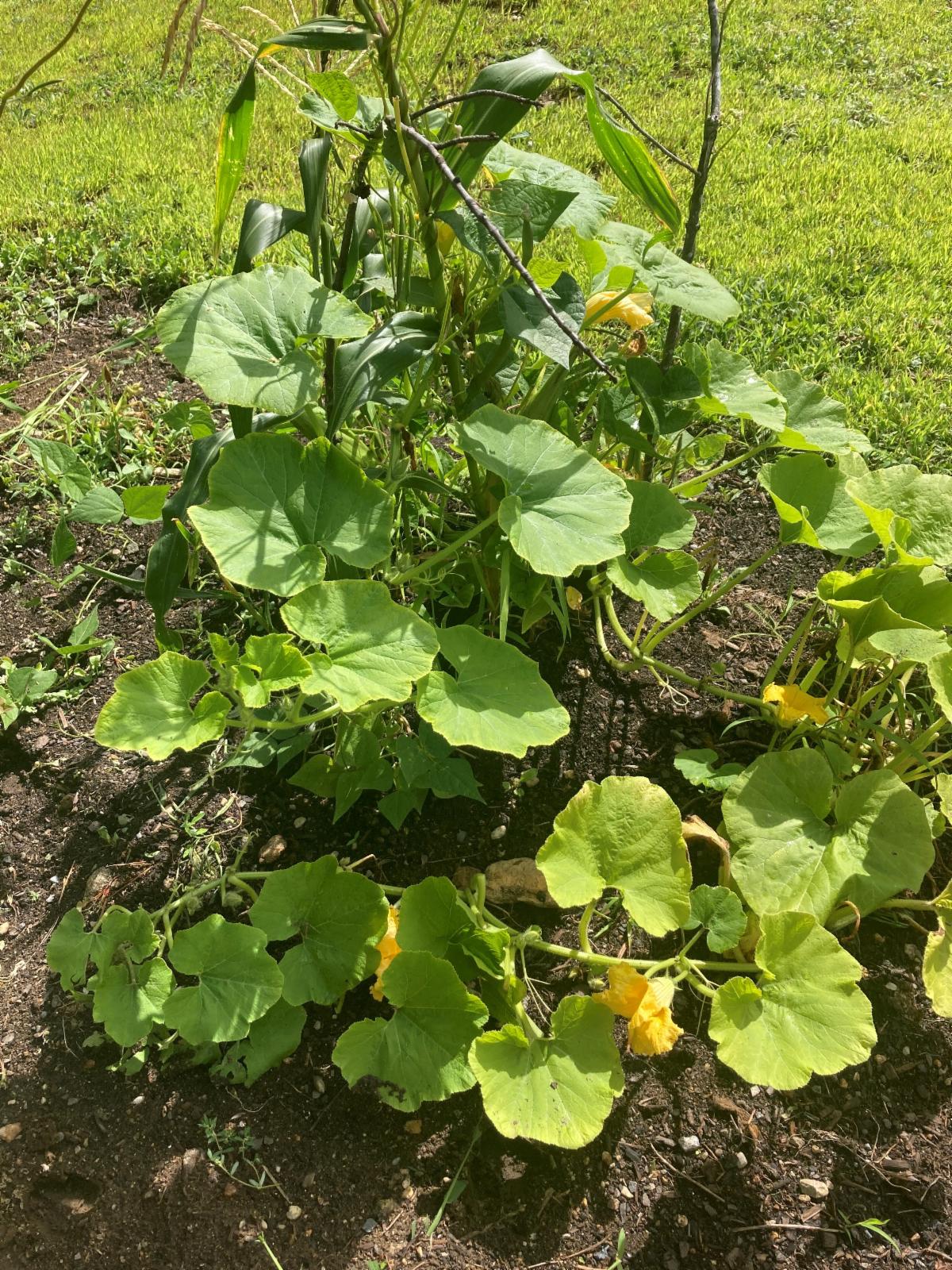
(Photograph of a three sisters planting)
| | Coming in September, the Belknap School to Farm day | | |
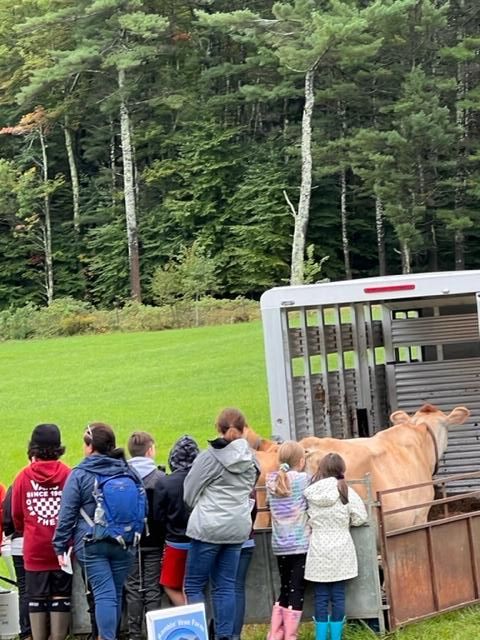
Once again we'll be offering our Belknap School to Farm day on September 23rd at Ramblin' Vewe Farm in Gilford for area 4 graders. Learn how to shear sheep, make wool, raise cattle, pollinate flowers, stop erosion and other farm related activities that affect our daily lives. Students will be presented with lots of different activities that happen within the county that shape the food we eat, the clothes we wear and the resources we use. Come learn aobut them!
To register, click here.
| | |
Up and Running, new curriculum offering,
Apple and Cider: From Blossom to Bottle
| | |
In my travels I find a number of people I speak with know NH Ag in the Classroom for its maple programming that falls under the heading on our home page "Tapping into Maple Tradition" all there in a nice tidy package. In a conversation recently I also realized that we have a strong connection to apples and orchards in the state and an apple focused program might be a benefit as well. So over the summer we will be collecting lessons and resources that will help engage learners in the history, science and economics of the apple industry and one of NH's most well known fall products, apple cider.
This fall, look for the addition of apple curriculum on our front page under Apple Cider: Blossom to Bottle, for associated lessons and activities, ways to get grants, and where to get a cider press and a list of local orchards for tours and apples. There is nothing more hands on-minds on than making apple cider! Click here to review!
| | 2026 NHAITC Teacher of the Year | | | | Are you, or do you know someone who is kicking butt in weaving agriculture into the daily fabric of their classroom? Someone who inspires students to connect with the natural world and where their food comes from? Who helps make the connections of sustainability, growth and ties to the world of agriculture? We are looking for 2026 Teacher of the Year applicants and nominees. Click this link and fill in the registration form to nominate yourself or a colleague. Applicants that are submitted before October 15th will be consider for 2026. Any applicants after October 15 will be considered for 2027. | | Ag Literacy Educator certification | | The National Center for Agricultural Literacy has developed a fantastic online certification course that will enhance any teachers understanding of agriculture across the US and world wide. I was able to participate as part of the pilot program and was blown away. The depth of resources and information would be helpful for anyone who discusses food systems, food security and world population as it relates to feeding the world. Self paced, with an anticipated twelve hours of working time, the $25 cost of enrollment for professional development is way cheap and you end up with a NCAL certification as a Ag Literacy Educator. Click here for more information. | | Here are two opportunities from the American Horticultural Society for use in helping develop garden science opportunities for your school or community. The first is the Julia Rappaport Growing Gardeners Fund that can land you $1,000 - $2,000 towrds your gardening efforts. That information is here. | | Agricultural Career Cards are Here! | | |
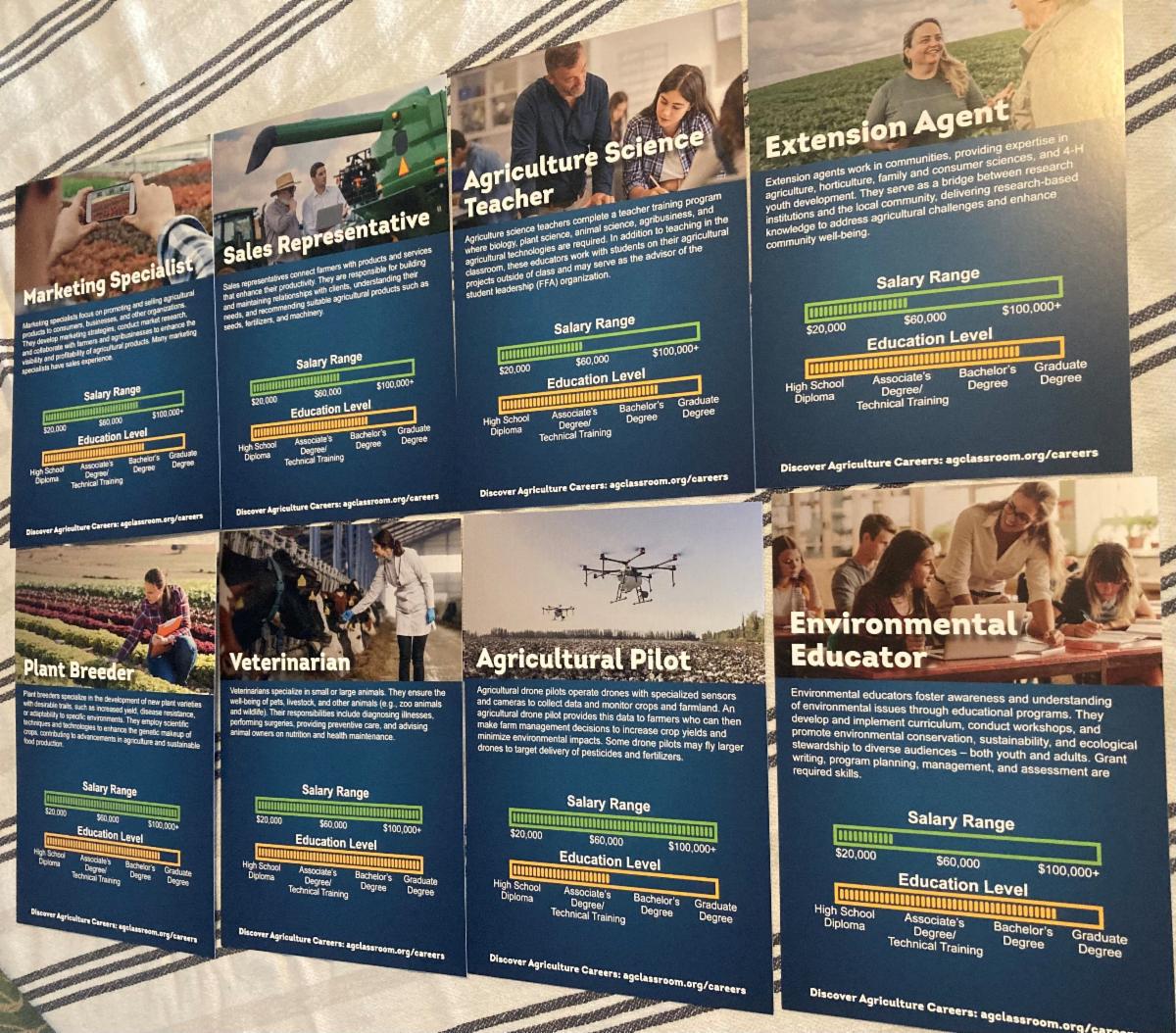
Looking to help direct students to those all important agricultural careers of the future? NHAITC has a set of career cards developed by National Ag in the Classroom and their really good as a first step to identifying a students interest in ag career opportunities with some basic job requirements and expectations and an easy to view amount of advanced school versus the anticipated pay for those jobs. There are cards for 48 different ag related careers. Want to check out our set, email us.
Want to skip that step and simply order your own? Click here.
| | Cool Activities for the Classroom | | |
Here are two unique ideas you can use in your classroom to connect to agriculture all year long. The first is the Adopt-A-Cow program where classrooms can connect with an area farm and watch their calf grow virtually over the year with regular check ins and data collection. Great for math concepts, data collection and graphing, but tying into real world issue like food systems. More information can be found here.
The other is the Farm to School program hosted by the NH Food Alliance and UNH Cooperative Extension. This program works to link students with the food they eat in school through various types of programming, monthly curriculum tied to locally grown food, and connections with the farmers who grow it. More information can be found here.
| | |
We have our usual assortment of ag related activities. Check out our curriculum matrix with over 600 lessons, lesson plans and resource lists for all grade levels so easy to do right out of the box. Just go in, type in an ag topic and voila!
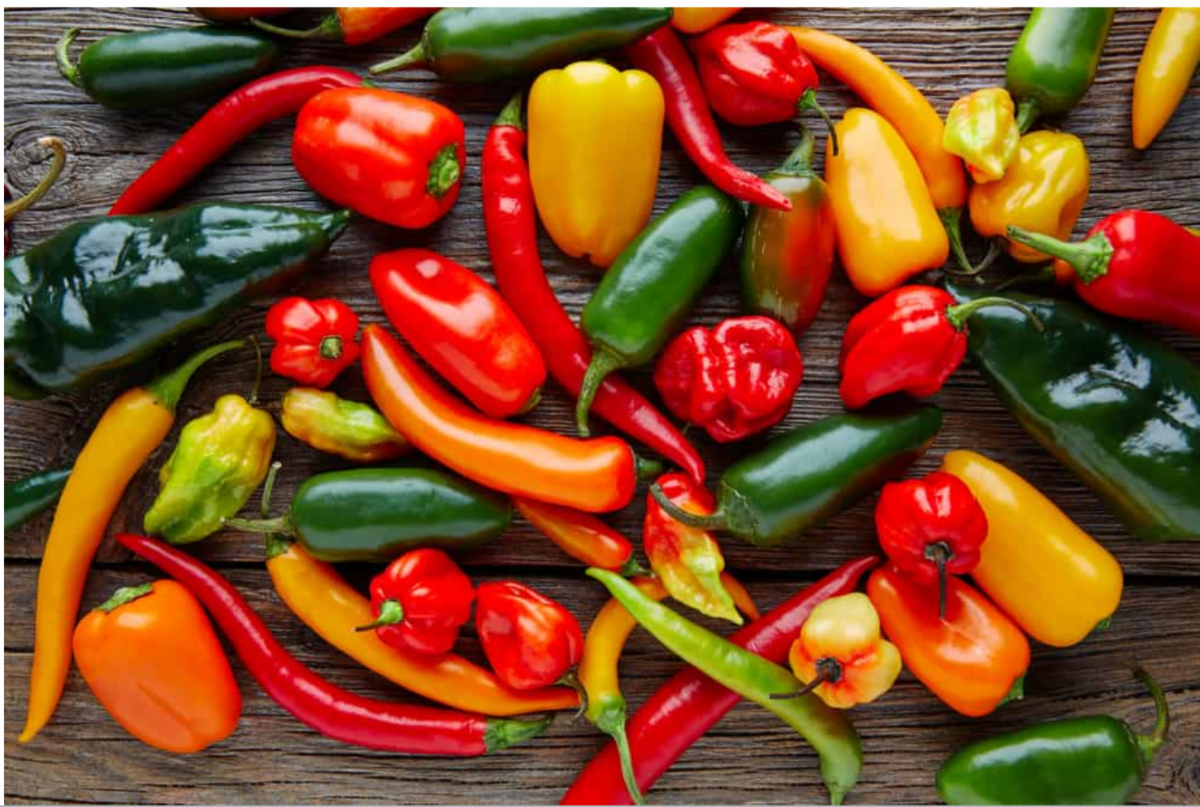
I'm a bit of a chile head and have a teaching plot in Concord at the Russell Shea Growers community garden on Birch Street. I call it the North East Chile Pepper Institute and I continue to play with pepper varieties here by doing some hybridizing along with some plant rigor evaluation. Email me if you're interested in a tour.
Additionally 4-H has a teaching garden at Russell Shea as well. We have a few different types of gardens that might work well at a school or library setting that we open to people to come and visit, talk, collaborate and simply get ideas for things they can do in their spaces. Email me if you're interested as well.
| | Ag Foundation/Farm Bureau resources | | Want more resources for teaching ag related lessons? Check out the American Farm Bureau Foundation for Agriculture learning resources for Educators page. Much like our own National Ag in the Classroom offerings, AFBF has resources that might be useful in your classroom. Check them out! | | In conjunction with the NH Farm to School Network we are trying to develop a list of school gardens across the state where we might be able to "lean in" and help facilitate programming. Gardening tends to be a passion, and with school gardens that sometimes means when teachers retire or move on, gardening programs go by the wayside. So while we are looking for active gardens, we'd like to compile a list of school with gardens that also need some attention. Please use the link to fill out the survey! | | |
Want to provide your students a simple way to enhance their agricultural knowledge? Check out our Ag Facts, short little videos with questions embedded in them. Check them out on our Facebook, Instagram, and on our YouTube channel. Teachers can use this as quick class activity to test their student's ability to "flesh out" the answer to the embedded question. Keep the kids on their toes!
| | Environmental Lesson plans | | Looking for lesson plans that go along with what your teaching in ag literacy with regard to the environment? Here are free lesson plans from the EPA on things like acid rain, air pollution and other climate related issues. | | |
Free Seeds from UNH/Master Gardeners/
Live Monarch Foundation
| | |
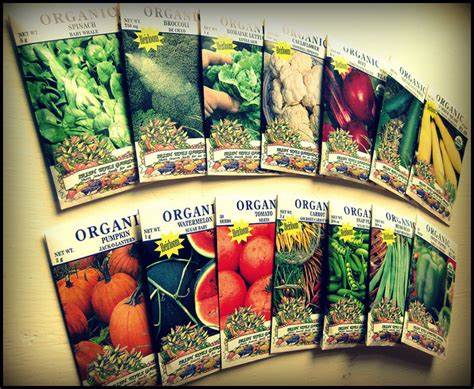
Looking for free seeds? UNH Master Gardeners offers free seeds up to ten packets per classroom/program to teachers using them for educational purposes. Use the link here.
We also have a collection of free seed here at the office so shoot us an email at nhaitc@nhfarmbureau.org
Monarchs are active in pollinating many of the wild flowers in our mixed ecosystems, and they thrive when they have milkweed around. You can get free seeds here!
| | Other Grant Opportunities | | |
NHAITC LESSONS and ACTIVITIES
Please check out the curriculum matrix on our website provides you with over 800 lessons you can do pretty much right out of the box. In the craziness that is the final days of school, you might just need a quick, fill in type activity to get you over the hump when unanticipated interruptions come along. Why not do an easy-on-the-teacher, easy-on-the-student ag related activity? Here's the link to the matrix so check it out.
Highlighted lessons will take a pause for the summer break.
Students use their five senses to investigate apples, identify and model the parts of an apple, make applesauce, and discover how apples are grown. Grades K-2
Students explore organic and conventional farming practices by analyzing multimedia texts to investigate the differences between conventionally and organically grown apples. Grades 3-5
Using the context of apples, students will apply their knowledge of heredity and genetics to distinguish between sexual and asexual reproduction as they explain how new varieties of apples are developed and then propagated to meet consumer demand for a tasty, uniform, consistent product. Grades 6-8
Students will distinguish between natural and artificial selection and use a student-centered learning activity to see how science and genetics have been used to artificially select apples for specific traits like color, texture, taste, and crispness. Grades 9-12
| | |
BOOKS and OTHER RESOURCES
Ag Literacy books:
We have a number of Ag Literacy books that cover topics such as dairy, maple syrup, corn, vegetables and many more for either cheap or as loaners. Let us know if you're interested, nhatic@nhfarmbueau.org.
Ag-Badging: National Agriculture in the Classroom is rolling out a new program. The AgBadging Field Guide will lead you through an exciting exploration of agriculture: what you eat, wear, and use every day. Throughout your journey, students will have the opportunity to earn five different theme badges based on completed activities. The AgBadge Field Guide, developed for youth ages 8-11(68 pages) is now available online as a free download. New Hampshire Agriculture in the Classroom has some printed copies available as well. If you are interested, email nhaitc@nhfarmbureau.org for more information.
National Agricultural Literacy Curriculum Matrix: an online, searchable, and standards-based curriculum map for K-12 teachers. The Matrix contextualizes national education standards in science, social studies, and nutrition education with relevant instructional resources linked to Common Core Standards. Search our instructional, classroom-ready resources now.
| | Make sure these dates are on your calendar ... | | |
Tucker Mountain Challenge
join the competition in making the best maple syrup you can along with the best lessons to go with it.
School to Farm Days
a day of hands-on agricultural education for 4th-grade students around the state
see the complete list of dates and locations ..................................................
Agriculture in the Classroom National Conference
June 23rd - 26th, Providence RI...........................................website
| |
NH AGRICULTURE IN THE CLASSROOM
Phone: (603) 224-1934
| | | | | | |
|
I have to admit, I've been lucky. While I'm often regaled with stories of people not knowing chicken comes from a farm, or that vegetables are grown in the dirt, that almost all the ingredients in a cookie are grown, or that the grocery store is not the starting point of where you food ends up on the table, I personally haven't heard any of those first had. No, I grew up lucky.
My parents moved from a Massachusetts suburb to rural southern NH, where for all but a brief stint I've lived ever since. Growing up on what I'm going to call a gentleman's farm (certainly feel free to contradict me) with a smattering of cattle, sheep, pigs, chickens, turkeys, geese and a sizable garden as my dad wanted to get out of Taxachusetts and get back to our roots. There were plenty of mornings where I had to do my hour of weeding before I could go find anything fun to do.
As I graduated on in life I went to school for Horticulture at the Thompson School, worked in landscaping/nursery production for a while, before going back to school for Environmental science, eventually landing a teaching job in a pretty round about way.
In those early days on a new teacher's salary I needed to work and signed on as part time farm help with one of my good buddies growing up. I did a bit of everything, mowing and baling hay, managing weeds, overseeing the picking detail, transporting produce, but eventually settled on the vegetable production manager. Even back in my nursery days I was thrilled to be producing the best product I could.
And now that product is educators, with their product being our youth. Providing them the tools so they can grow their agricultural knowledge, and recognizing where they can use this understanding to strengthen the lessons they already teach, and use ag literacy to provide hands on-minds on learning they can take with them for the rest of their lives.
Now there's some growth.
We have our usual assortment of ag related activities. Check out our curriculum matrix with over 600 lessons, lesson plans and resource lists for all grade levels so easy to do right out of the box. Just go in, type in an ag topic and voila!
Another way NHAITC can help is trying to procure funding for schools, classrooms and teachers in order to further your interests in teaching ag ed. Maybe you'd like to set up a hydroponics system, are looking to add a greenhouse, or simply wish to update or create school gardens. Email us and maybe we can help locate that funding.
Speaking of school gardens, we'd love to help you find the resources you need to set up a school garden. Let's face it, there's nothing better to teach students where their food comes from than growing it right outside the classroom. We can help locate resources, human and otherwise, so you can be productive in the garden.
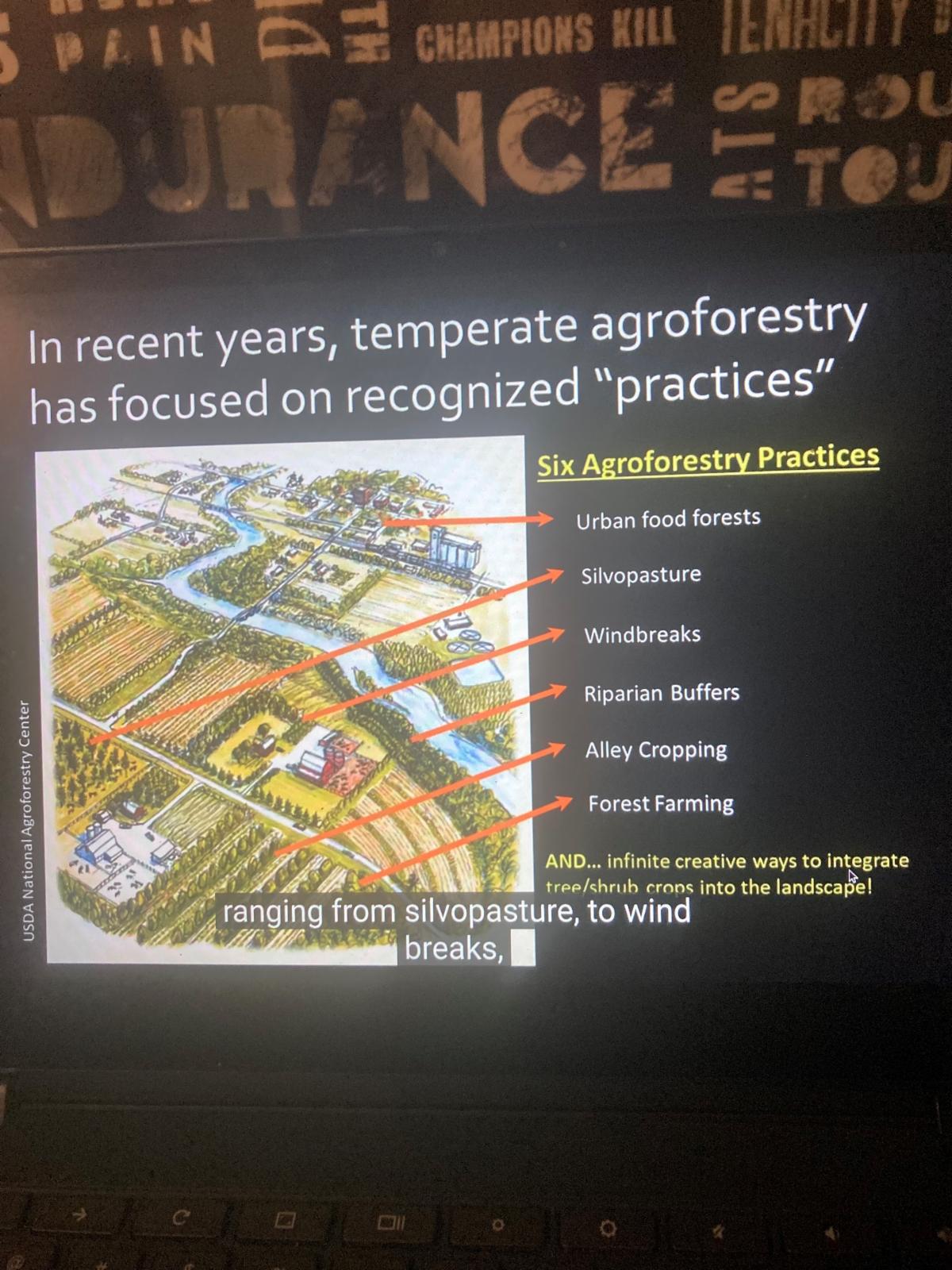
We will be hosting an Agroforestry cohort that will study the concept of using forest systems to provide a range of food products using three different Agroforestry concepts: silvopasture, forest farming and food forests. We will help educators become familiar with these concepts and help them determine where available curriculum fits best with the concepts they are already teaching. Email if interested.
And research shows that ag lessons, that have a hands on component, helps students learn, with 84.3% of teachers who use school gardens to teach in agreement. They feel that students that participate in school garden education see gains in overall GPA in math and science and increased positive attitudes towards learning in general. Not to mention engaged kids are kids that are learning.
| | National Gardening Day, April 14th | | |
It's National Gardening Day on April 14th, so get out there and do something cool. If you have raised beds, spring greens or peas can be planted now. If you have plantings it might be a good time to clean those up and remove the extra leaves that have accumulated. Maybe it's time to stir your compost, turn over the soil for planting or add organic matter to your garden. If you don't have any of this, maybe it's time to go out in the school yard or even at your own home and start planning on growing your own food or planting flowers and shrubs to attract pollinators. Nothing better than a fruit or vegetable you grew yourself!
| | Get Ready for the Farm, Forest, and Garden Expo | | |
On May 2nd and 3rd the 42nd Farm, Forest and Garden Expo will be happening at the Deerfield Fairgrounds from 9am to 5pm on Friday and Saturday. In it's thrid year at the fairgrounds, the Expo has grown exponentially with vendors and exhibitors from tractors, to greenhouses, to maple syrup to honey, to animals of every sort! UNH Cooperative Extension and 4-H will have a bigger presence this year, with many activities for youth that include STEM projects and Maker activities, 4-H Presents, Chain Reactions, Grillmaster Cookoff and more. Click here for the Clover Corner events.
Click here for more information!
| | School to Farm days for 2025 | | | | |
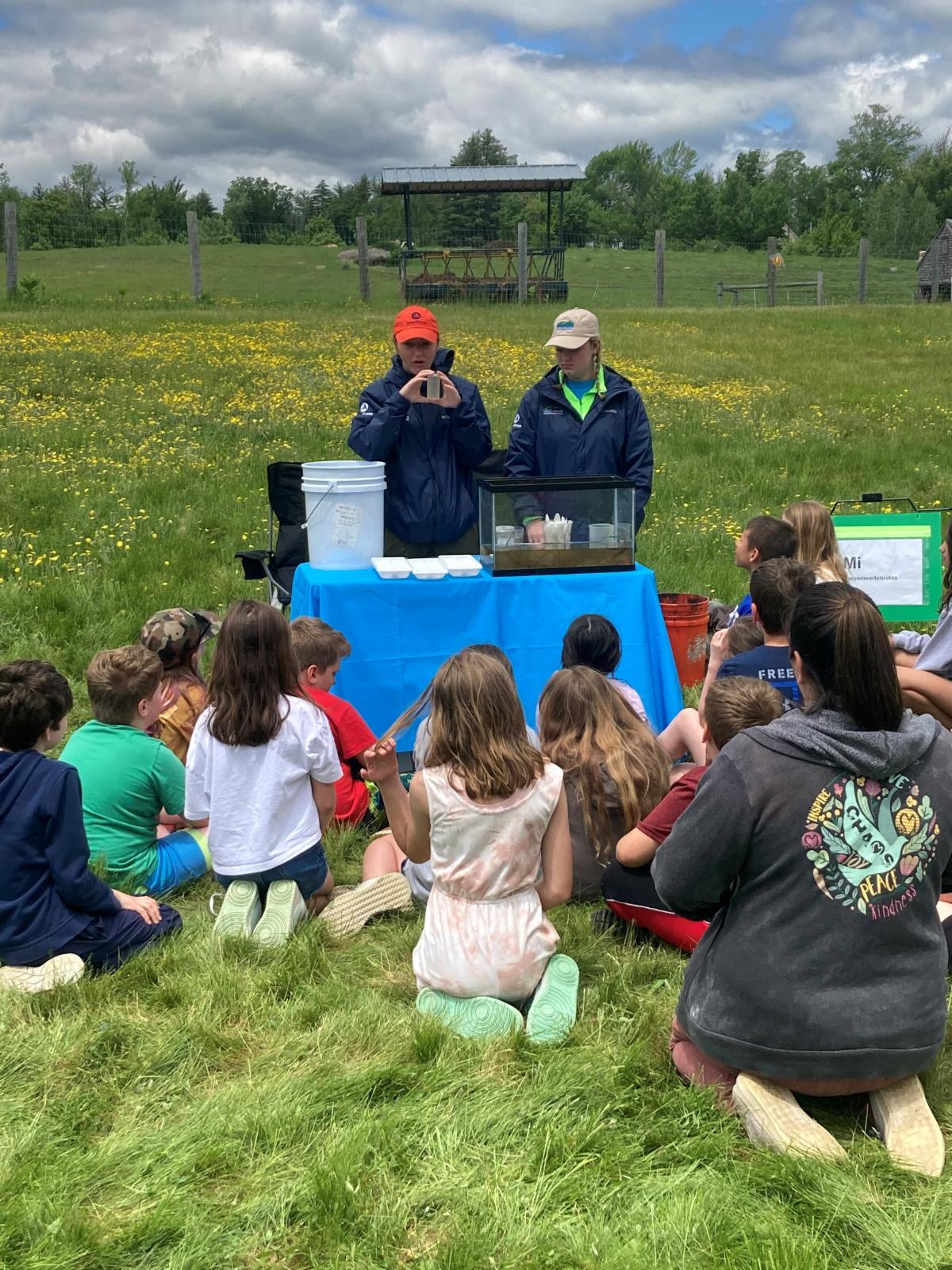
The registration links for the spring 2025 School to Farm days are ready! These immersion fourth grade centric field trips to local farms by county give participants a look at what it's like to be on a farm or work in agriculture. Classes attend twenty minute rotations of different agricultural topics throughout the day, learning from industry professionals. The day begins at 10am, with the last rotation finishing up by 1:10pm. Come enjoy this fun packed, hands on-minds on day of agricultural activity!
Here's the dates, counties and registration links, and locations.
May 8 - Merrimack, Carter Hill Orchards, Concord
May 12 - Sullivan, Sullivan County Complex, Unity (closed)
May 21 - Grafton/Coos, The Rocks Estate, Bethlehem
May 28 - Carroll, Remick Farm Museum, Tamworth
June 3, 4 (closed) and 5 - Rockingham/Strafford, UNH, Durham
| | Ag Literacy Educator certification | | The National Center for Agricultural Literacy has developed a fantastic online certification course that will enhance any teachers understanding of agriculture across the US and world wide. I was able to participate as part of the pilot program and was blown away. The depth of resources and information would be helpful for anyone who discusses food systems, food security and world population as it relates to feeding the world. Self paced, with an anticipated twelve hours of working time, the $25 cost of enrollment for professional development is way cheap and you end up with a NCAL certification as a Ag Literacy Educator. Click here for more information. | | |
Here are two opportunities from the American Horticultural Society for use in helping develop garden science opportunities for your school or community. The first is the Julia Rappaport Growing Gardeners Fund that can land you $1,000 - $2,000 towrds your gardening efforts. That information is here.
The other is a scholarship for professional development at the 2025 National Children and Youth Garden Symposium in Hartford, CT this July 8-11. Join hundreds of educators to learn about the benefits of gardening as a keystone in the educational process. That information is here.
| | Agricultural Career Cards are Here! | | |
Looking to help direct students to those all important agricultural careers of the future? NHAITC has a set of career cards developed by National Ag in the Classroom and their really good as a first step to identifying a students interest in ag career opportunities with some basic job requirements and expectations and an easy to view amount of advanced school versus the anticipated pay for those jobs. There are cards for 48 different ag related careers. Want to check out our set, email us.
Want to skip that step and simply order your own? Click here.
| | |
Forests as Food Farms:
AgroForestry cohort coming
| |
| |  | UNH in collaboration with Dartmouth and Yale are embarking on a grant funded initiative focusing on Agroforestry, cultivating our forested land, combining portions of our food system with sustainable forest practices to build climate resilience while creating a strong market for food items. The grant looks specifically at silvopasture practices, forest farming, and food forests as the three universities invest in their own facilities along with collaborator farms by building capacity along with developing research to enhance these practices across the region. 4-H/Cooperative Extension has been tasked with developing training programs for both interested farmers and researchers, and along with educators and teen ambassadors across the state and region. 4-H and NH Ag in the Classroom are in the process of developing trainings and experiences for educators, along with collecting and curating lessons and activities that will help educators use agroforestry principles within their classrooms.
The plan is to have a core group of educators over five years to develop a community of practice around agroforestry principles and act as the experts of sorts with regard to Agroforestry education. Teachers will be stipend up to $1200 to attend and participate in a variety of educator activities that will include field experiences with farmers and researchers, participation in the NorthEast Agroforestry Training modules, various workshops, and other experiences to be completed within a two year period. Participants will also be able to participate in either the National Ag in the Classroom conference in June or the North American Agroforestry conference in July.
We are still putting together the schedule of activities, workshops and field experiences, with the anticipated kickoff scheduled for late September/early October.. Participation is open to traditional and non traditional educators K - 12, with the concepts being delivered at the collaborating farmer level. The website for this program should be up and running by the middle of April, however interested educators can indicate their interest by emailing Michael.Smith1@unh.edu.
| | 2025 NHAITC Teacher of the Year recgnoized | | |
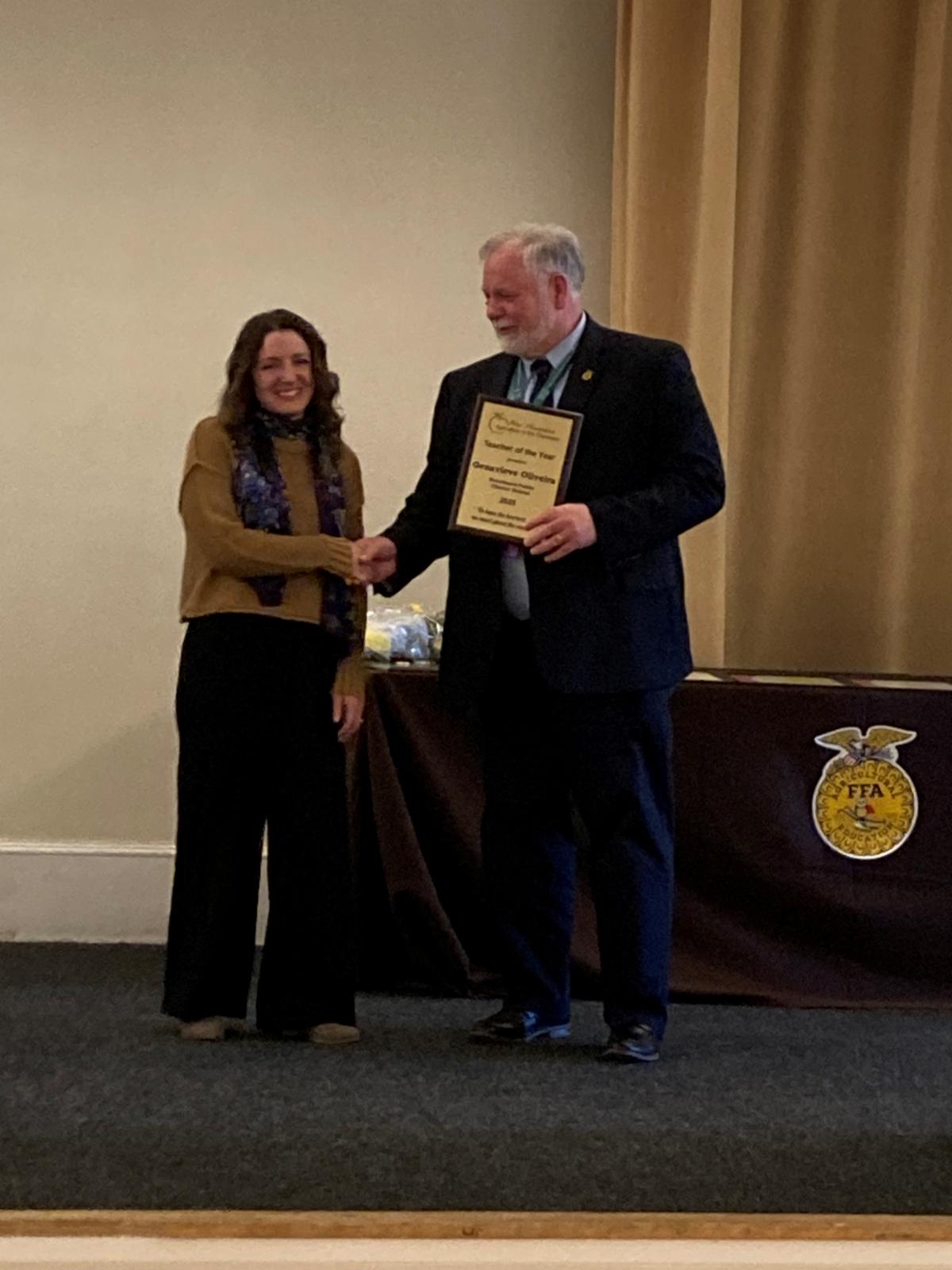
At the annual NH Future Farmers of America conference held last week at the Omni Mount Washington Hotel, 2025 NH Agriculture in the Classroom Teacher of the Year Genavieve Oliveira was recognized in an awards ceremony Thursday evening. She received recognition for her outstanding work at Heartwood Public Charter School in Jefferson, NH. Her endeavors with their school gardens, working to revitalize the existing ones while fostering new ones, along with rehabbing existing apple trees, working with vermiculture (worm composting) along with using a variety of experts and field trips to enhance her students experiences in agriculture all add to her student's understanding of the world around them and how agriculture affects their lives.
Congratulations Genavieve!
| | Ag Foundation/Farm Bureau resources | | Want more resources for teaching ag related lessons? Check out the American Farm Bureau Foundation for Agriculture learning resources for Educators page. Much like our own National Ag in the Classroom offerings, AFBF has resources that might be useful in your classroom. Check them out! | | Drinking Water Festival for students | | The NH Department of Environmental Services (NHDES) will be hosting a NH Drinking Water Festival and Science Fair for fourth and fifth grade students on May 7th in Rochester. Students will be able to participate in hands on demonstrations involving the the protection and use of water here in NH. These interactive lessons will provide important background on the state of water in NH and what can be done about it. Students also have the opportunity to be a apart of the Science Fair, where they can share their projects around water quality with others across the state. For more information and to register, click here! | | In conjunction with the NH Farm to School Network we are trying to develop a list of school gardens across the state where we might be able to "lean in" and help facilitate programming. Gardening tends to be a passion, and with school gardens that sometimes means when teachers retire or move on, gardening programs go by the wayside. So while we are looking for active gardens, we'd like to compile a list of school with gardens that also need some attention. Please use the link to fill out the survey! | | |
Want to provide your students a simple way to enhance their agricultural knowledge? Check out our Ag Facts, short little videos with questions embedded in them. Check them out on our Facebook, Instagram, and on our YouTube channel. Teachers can use this as quick class activity to test their student's ability to "flesh out" the answer to the embedded question. Keep the kids on their toes!
| | Environmental Lesson plans | | Looking for lesson plans that go along with what your teaching in ag literacy with regard to the environment? Here are free lesson plans from the EPA on things like acid rain, air pollution and other climate related issues. | | |
Free Seeds from UNH/Master Gardeners/
Live Monarch Foundation
| | |
Looking for free seeds? UNH Master Gardeners offers free seeds up to ten packets per classroom/program to teachers using them for educational purposes. Use the link here.
We also have a collection of free seed here at the office so shoot us an email at nhaitc@nhfarmbureau.org
Monarchs are active in pollinating many of the wild flowers in our mixed ecosystems, and they thrive when they have milkweed around. You can get free seeds here!
| | Other Grant Opportunities | | |
NHAITC LESSONS and ACTIVITIES
Please check out the curriculum matrix on our website provides you with over 800 lessons you can do pretty much right out of the box. In the craziness that is the final days of school, you might just need a quick, fill in type activity to get you over the hump when unanticipated interruptions come along. Why not do an easy-on-the-teacher, easy-on-the-student ag related activity? Here's the link to the matrix so check it out.
(The top three here, Farming in a Glove and Desktop Greenhouses are avialable to purchase at the NAITCO webstore!
Farming in a Glove (Grades K-2)
Students observe how a seed sprouts and investigate the conditions necessary for germination to occur. Grades K-2
Desktop Greenhouses (Grades 3-5)
Students investigate the importance of light to plants by creating a desktop greenhouse investigation and exploring the process of photosynthesis. Grades 3-5
Desktop Greenhouses (Grades 6-8)
Students investigate the importance of light to plants by creating a desktop greenhouse investigation and exploring the process of photosynthesis. Grades 6-8
The Science of GMOs
Students will map the scientific process of creating a bioengineered (GMO) plant, compare bioengineered soybean seeds to conventional soybean seeds, describe the impact weeds have on plant growth, and understand how a bioengineered seed can help farmers manage weeds. Grades 9-12
| | |
BOOKS and OTHER RESOURCES
Ag Literacy books:
We have a number of Ag Literacy books that cover topics such as dairy, maple syrup, corn, vegetables and many more for either cheap or as loaners. Let us know if you're interested, nhatic@nhfarmbueau.org.
Ag-Badging: National Agriculture in the Classroom is rolling out a new program. The AgBadging Field Guide will lead you through an exciting exploration of agriculture: what you eat, wear, and use every day. Throughout your journey, students will have the opportunity to earn five different theme badges based on completed activities. The AgBadge Field Guide, developed for youth ages 8-11(68 pages) is now available online as a free download. New Hampshire Agriculture in the Classroom has some printed copies available as well. If you are interested, email nhaitc@nhfarmbureau.org for more information.
National Agricultural Literacy Curriculum Matrix: an online, searchable, and standards-based curriculum map for K-12 teachers. The Matrix contextualizes national education standards in science, social studies, and nutrition education with relevant instructional resources linked to Common Core Standards. Search our instructional, classroom-ready resources now.
| | Make sure these dates are on your calendar ... | | |
Tucker Mountain Challenge
join the competition in making the best maple syrup you can along with the best lessons to go with it.
School to Farm Days
a day of hands-on agricultural education for 4th-grade students around the state
see the complete list of dates and locations ..................................................
Agriculture in the Classroom National Conference
June 232d - June 26th in Minneapolis
registration and details available on March 15th.............................................website
| |
NH AGRICULTURE IN THE CLASSROOM
Phone: (603) 224-1934
| | | | | | |