|
Greetings!
The Society of Television Engineers invites you to our upcoming presentation on Thursday, February 26th, 2026, at the Elks Lodge in Glendale.
The Topic: Hybrid Satellite & IP Workflows
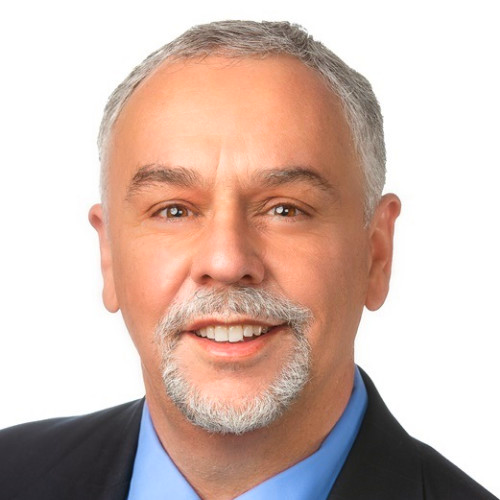
Dr. Ciro Noronha will discuss satellite-based content distribution, highlighting both its strengths and its vulnerability to impairments such as rain fade. The presentation focuses on VSF TR-06-4, Part 7, which defines an Internet-based, on-demand data recovery method to mitigate these effects.
Satellite distribution is the ideal way to send the same content to many locations that are geographically distributed. However, satellite transmission may be subject to localized degradation due to rain fade, interference, and other factors. Additionally, the satellite link is often unidirectional, from one source to a multitude of receivers – no return channel exists.
One possible approach to solving this content delivery problem is to augment satellite delivery using the Internet. The basic idea is to use the satellite for the “heavy lifting” (transmitting as much data as viable), with the Internet to “fill in the gaps”. In other words, any data that is corrupted or lost in transit is retransmitted over the Internet using RIST, and only to the locations that need it. If there is a complete satellite fade (e.g., due to rain), the Internet can be temporarily used to deliver the complete signal. This way, if a region is experiencing any sort of fade or interference, only the receivers in that region need to use the Internet.
A requirement for the solution to this problem is that it must co-exist with current receivers to allow for gradual deployment. Such receivers expect a traditional MPEG-2 Transport Stream. The signal transmitted to the satellite either cannot change, or any changes to it must be backward compatible with existing legacy receivers. Broadcasters utilizing this solution can then gradually deploy the solution as needed, with high-priority sites being upgraded first.
This solution is especially timely in the US, since the FCC has been mandated to auction half of the remaining C-band spectrum, with an option to auction all of it. C-band is used primarily for distribution due to its resiliency. The alternative is Ku-band, which is susceptible to rain fade.
The recently approved VSF TR-06-4 Part 7 describes a method to use the satellite forward path in a way that is compatible with legacy receivers, and RIST to correct any lost data. This presentation is an in-depth discussion of the Technical Recommendation. Also included is a roadmap for additional methods that can be used for the same purpose and are being worked in the context of the RIST Activity Group.
Don’t miss this insightful presentation and the opportunity to network and exchange information in the media industry.
In-Person
Elks Lodge, Glendale, CA
6:00 pm Social Hour
7:00 pm Dinner
8:00 pm Presentation
Online
Zoom
7:30 pm Networking
8:00 pm Presentation
|