Spring 2026 | Printemps 2026 | | (le français suit l'anglais) | | | |
Message from the President |
Mot du président
| | | |
The deterioration of international relations unfortunately continued in the early months of 2026, along with an increasingly open – at times outright – challenge to international law by several actors and observers on the global stage. In addition to the ongoing wars in Ukraine and Gaza, the United States abducted Venezuela’s sitting head of state and, alongside Israel, launched a war against Iran. Given the changing international order, Canadian Prime Minister Mark Carney delivered a speech at the World Economic Forum in Davos that resonated worldwide. In it, he questioned the disappearance of the “rules-based international order” and called on Canada and countries that share its values to build institutions and agreements that work. In partnership with the Canadian branch of the International Law Association (ILA Canada) and the Quebec Society of International Law (SQDI), the Canadian Council on International Law (CCIL) held a webinar on March 25 examining the implications of the Davos speech for international law. This first joint activity between the three scholarly organizations was necessary given the challenges facing international law and the significance of the speech. It offered a contrasted and critical perspective on the state of international law from a Canadian standpoint, which included a measure of hope.
We also left our 2025 annual conference feeling inspired and re-energized. Over 300 participants gathered in Ottawa last November to explore the theme Friends, Enemies and Frenemies: Engagement and Retaliation in International Law. I had the opportunity to continue the conversation between the CCIL and the American Society of International Law (ASIL) during a discussion session with its former president Peter Trooboff. Our keynote speakers Lloyd Axworthy, Gabrielle Marceau and Jean-Marc Thouvenin, along with all the other speakers, called on us to continue supporting the international rule of law and to imagine new approaches and solutions to the many challenges it faces. I would like to thank the organizing committee, and especially its co-chairs Joan Kasozi and Tajesh Adhihetty, for their tireless work that made the conference such a resounding success.
In 2026, we continue our efforts to support the next generation of international law students, including organizing the national finals of the Jessup Moot Court Competition in Ottawa in February and renewing our support for the Rousseau Moot Court Competition. A memorandum of understanding has been signed with the Council of Canadian Law Deans (CCLD) to ensure our sustained engagement with the Jessup Competition. Discussions are also underway with the Réseau francophone de droit international (RFDI) to establish a similar agreement for the Rousseau Competition. The CCIL’s second scholarship in memory of Professor Armand de Mestral was awarded to Djelika Keita, enabling her to attend the summer courses at the Hague Academy of International Law. Finally, John Peter Humphrey Fellowships were awarded to Didar Schwan, Ona Ohsen and Flore Siproudhis.
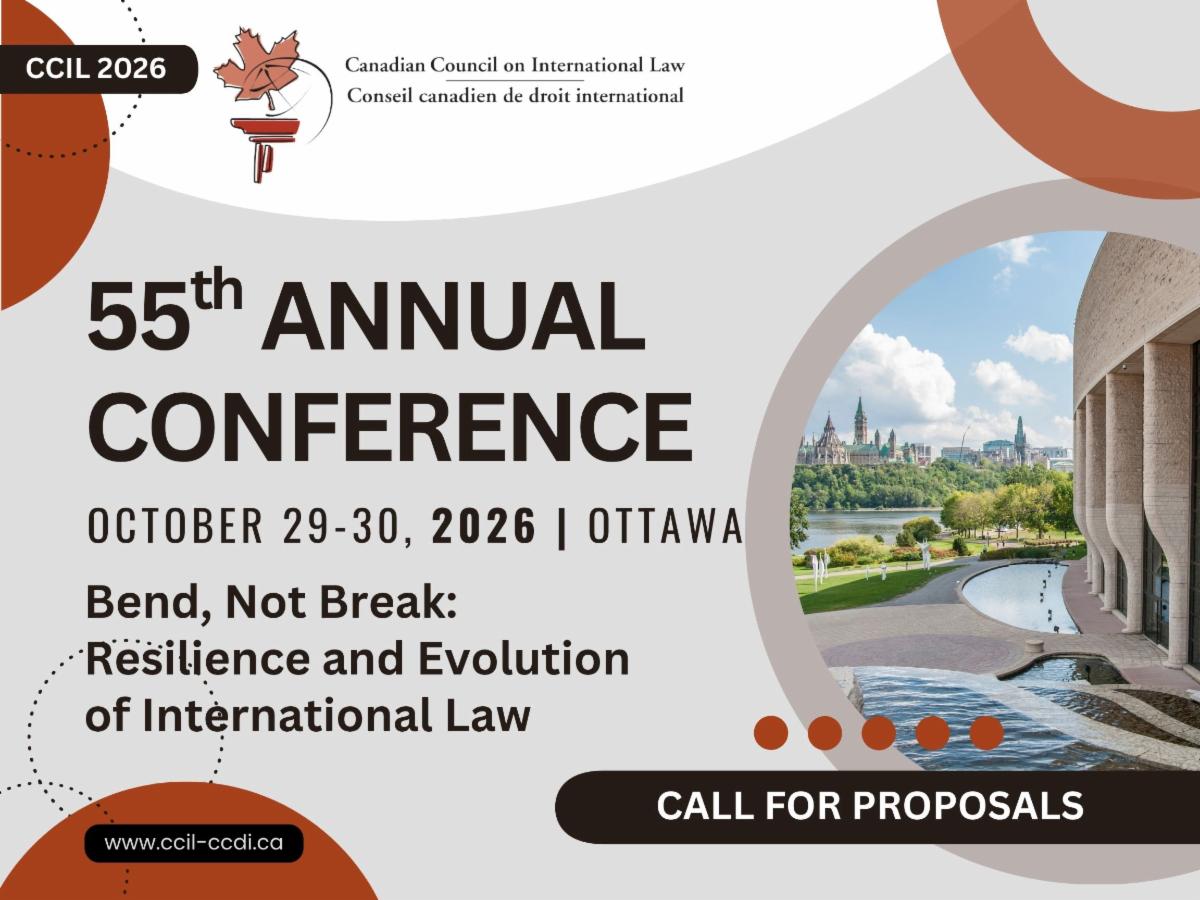
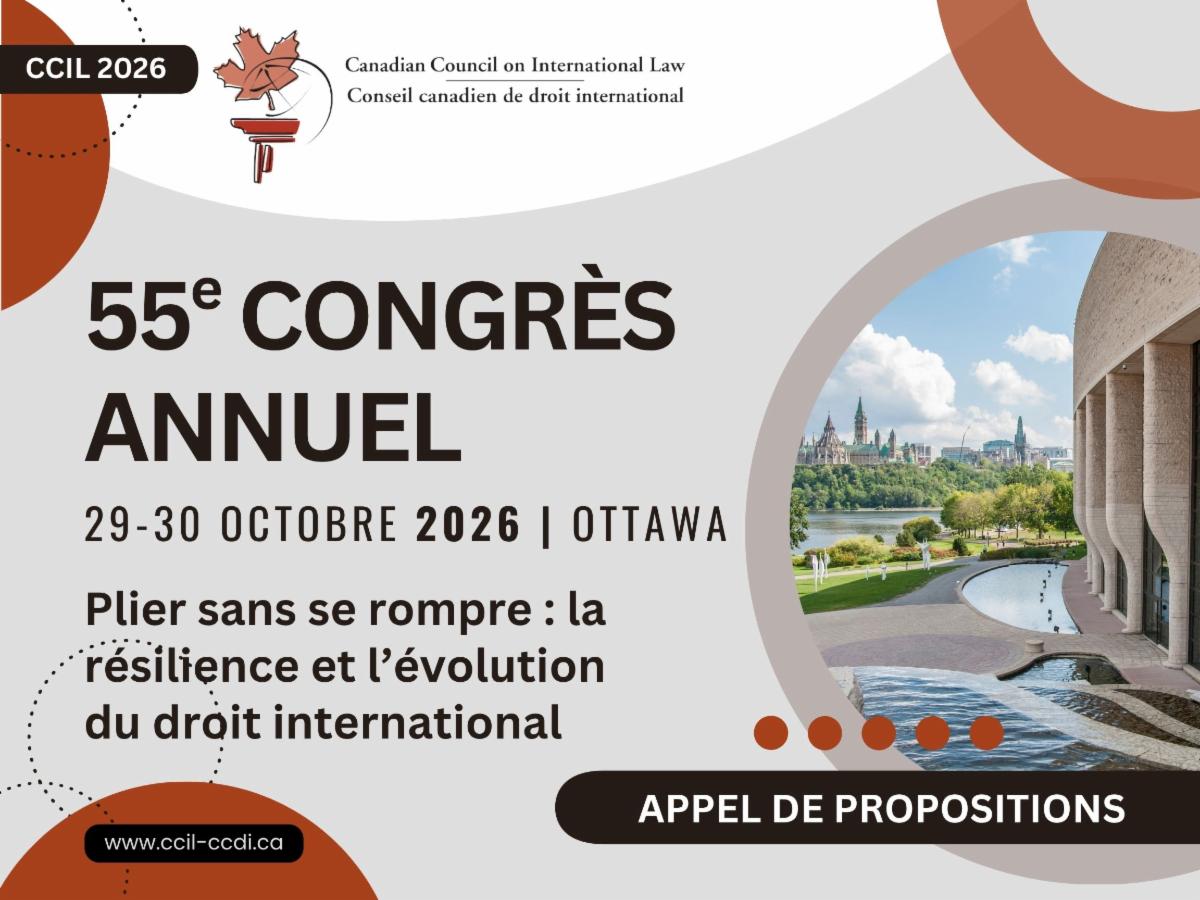
Preparations for the next CCIL conference are well underway under the leadership of Miriam Cohen and Tajesh Adhihetty. It is taking place in Ottawa on October 29-30, 2026, with the theme Bend, Not Break: Resilience and Evolution of International Law. The keynote speakers will be Pierre-Marie Dupuy, Professor Emeritus at Université de Paris Panthéon-Assas and the Graduate Institute of International and Development Studies in Geneva; Monica Hakimi, William S. Beinecke Professor of Law at Columbia University; Valerie Hughes, commercial dispute arbitrator and former Director of Legal Affairs at the World Trade Organization (WTO); and Olabisi D. Akinkugbe, Purdy Crawford Chair in Business Law and Professor at Dalhousie University’s Schulich School of Law. I encourage you to save these dates in your calendar, and I am looking forward to the enthusiastic response to the conference’s call for proposals.
In addition to continuing its close partnership with the ASIL through a session at its last annual meeting in Washington in April 2026, in partnership with the Canadian Yearbook of International Law, the CCIL is launching two new scientific cooperation initiatives, one local and one global. An initial mid-year meeting of the CCIL will take place at the University of New Brunswick Faculty of Law in winter 2027. The goal of this meeting is to take the CCIL outside of Ottawa and engage the community of international law scholars in the Atlantic region. The CCIL will also host the 4th World Meeting of Societies for International Law in Quebec City in spring 2027, in partnership with the SQDI, following previous meetings in Strasbourg (2015), The Hague (2019) and Lima (2023). The goal of this major event is to bring together national, regional and specialized international law societies from around the world to foster cooperation and advance common objectives. Given the current global situation and the upheavals facing international law, holding this prestigious meeting in Canada carries special significance and promises exciting opportunities.
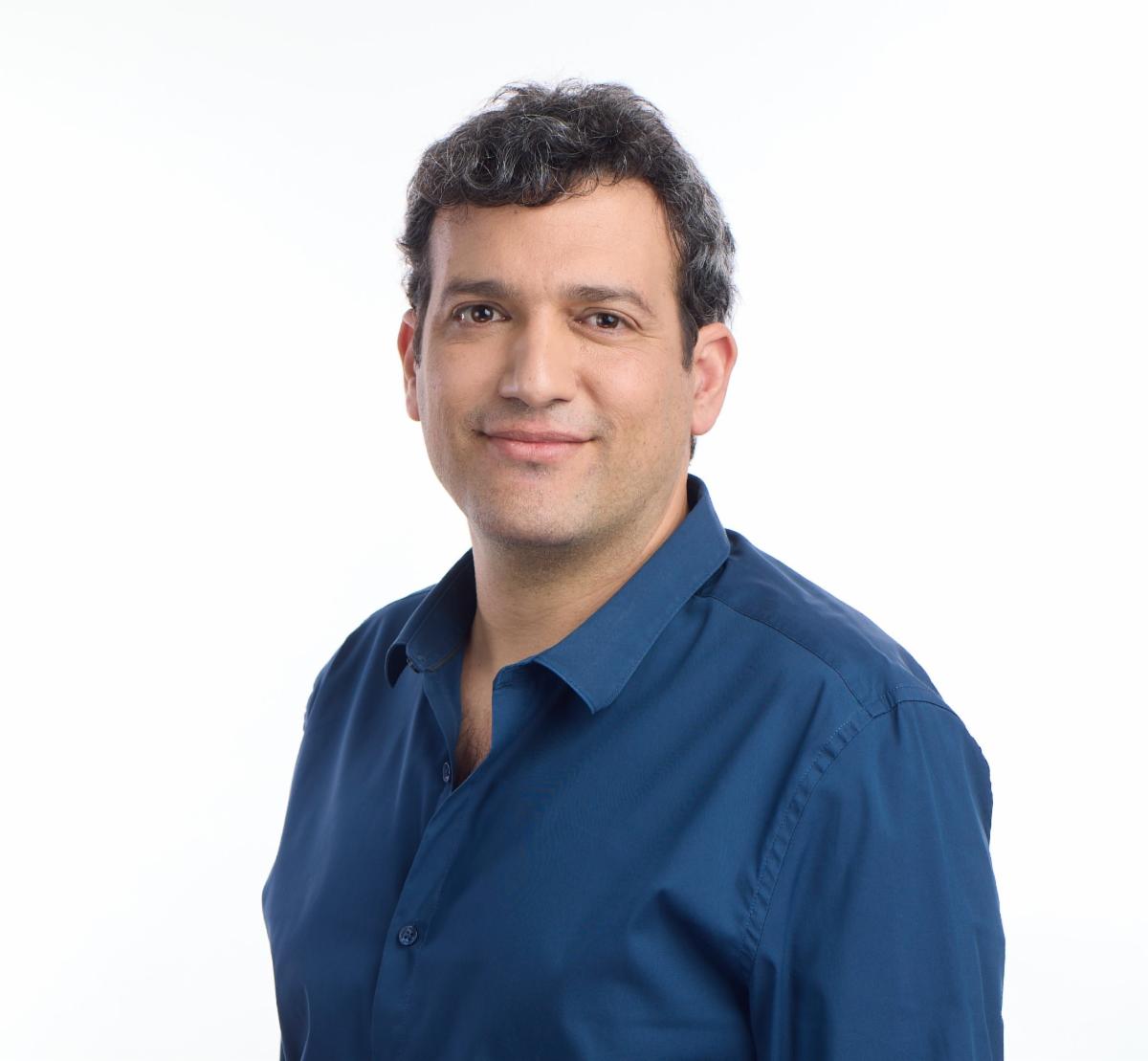
Charles-Emmanuel Côté
| |  | |
La détérioration des relations internationales se poursuit malheureusement en ce début d’année 2026, tout comme la remise en question – parfois frontale – du droit international par plusieurs acteurs ou observateurs de la scène mondiale. En plus des guerres en Ukraine et à Gaza qui continuent, les États-Unis ont enlevé le chef d’État en exercice du Venezuela tout en déclenchant avec Israël une guerre contre l’Iran. Prenant acte de la transformation de l’ordre international en cours, le premier ministre du Canada, Mark Carney, a prononcé un discours au Forum économique de Davos qui a eu un retentissement mondial. Le premier ministre s’est interrogé sur la disparition de l’« ordre international fondé sur des règles » et a appelé le Canada et les États attachés aux mêmes valeurs que lui à créer des institutions et des accords qui fonctionnent. En partenariat avec la branche canadienne de l’Association de droit international (ADI-Canada) et la Société québécoise de droit international (SQDI), le Conseil canadien de droit international (CCDI) a organisé le 25 mars dernier un webinaire sur les implications du discours de Davos pour le droit international. Cette première activité conjointe entre ces trois sociétés savantes s’imposait compte tenu des difficultés que traverse le droit international et de l’importance du discours. Elle nous a offert une vision contrastée et critique de la situation du droit international dans une perspective canadienne, non sans une pointe d’espoir.
Nous sommes également sortis inspirés et réénergisés de notre congrès annuel de 2025. Plus de 300 congressistes se sont réunis à Ottawa en novembre dernier pour explorer le thème des «Amis, ennemis et ennamis : engagement et représailles en droit international». J’ai pu poursuivre la conversation entre le CCDI et l’American Society of International Law (ASIL) lors d’une séance d’échanges avec son ancien président Peter Trooboff. Nos conférenciers d’honneur Lloyd Axworthy, Gabrielle Marceau et Jean-Marc Thouvenin, ainsi que tous les autres conférenciers, nous ont appelés à poursuivre notre soutien à la primauté du droit international et à imaginer de nouvelles approches et solutions aux nombreux défis auxquels il est confronté. J’aimerais remercier le comité organisateur et spécialement ses coprésidents Joan Kasozi et Tajesh Adhihetty pour leur travail infatigable qui a fait du congrès un succès retentissant.
Nous poursuivons en 2026 nos activités de soutien à la relève étudiante en droit international, avec l’organisation des finales nationales du concours de plaidoirie Jessup qui ont eu lieu à Ottawa en février et notre appui renouvelé au concours de plaidoirie Rousseau. Un protocole d’entente a été signé avec le Conseil des doyens et doyennes des facultés de droit du Canada (CDFLD) afin de permettre un engagement durable de notre part envers le concours Jessup. Des discussions sont aussi en cours avec le Réseau francophone de droit international (RFDI) afin de conclure une entente similaire concernant le concours Rousseau. La seconde bourse du CCDI en mémoire du professeur Armand de Mestral a été attribuée à Djelika Keita, pour lui permettre de suivre les cours d’été de l’Académie de droit international de La Haye. Enfin, les bourses John Peter Humphrey ont été octroyées à Didar Schwan, Ona Ohsen et Flore Siproudhis.
Les préparatifs du prochain congrès du CCDI vont bon train sous la présidence de Miriam Cohen et Tajesh Adhietthy et il se tiendra les 29 et 30 octobre 2026 à Ottawa, autour du thème «Plier sans se rompre : la résilience et l’évolution du droit international». Les conférenciers d’honneurs seront Pierre-Marie Dupuy, professeur émérite à l’Université de Paris Panthéon-Assas et à l’Institut de hautes études internationales et du développement de Genève, Monica Hakimi, William S. Beinecke Professor of Law à l’Université Columbia, Valerie Hughes, arbitre de litiges commerciaux et ancienne directrice des affaires juridiques à l’Organisation mondiale du commerce (OMC), ainsi qu’Olabisi D. Akinkugbe, Purdy Crawford Chair in Business Law et professeur à la Faculté de droit Schulich de l’Université Dalhousie. Je vous invite à mettre déjà ces dates à votre agenda et à répondre en grand nombre à l’appel à communications du congrès.
En plus de la poursuite du partenariat privilégié avec l’ASIL avec l’organisation d’une séance lors sa dernière rencontre annuelle à Washington en avril 2026, en collaboration avec l’Annuaire canadien de droit international, le CCDI lance deux nouvelles initiatives de coopération scientifique, l’une locale et l’autre globale. Une première rencontre de mi-année du CCDI aura lieu à la Faculté de droit de l’Université du Nouveau-Brunswick à l’hiver 2027. L’objectif de cette rencontre est d’amener le CCDI à l’extérieur d’Ottawa et de mobiliser la communauté des juristes internationalistes dans la région de l’Atlantique. Le CCDI sera par ailleurs l’hôte de la IVème Rencontre mondiale des sociétés pour le droit international, à Québec, au printemps 2027, en partenariat avec la SQDI, après les rencontres de Strasbourg (2015), La Haye (2019) et Lima (2023). Cet événement majeur a pour but de réunir les sociétés de droit international nationales, régionales et spécialisées du monde entier afin de favoriser leur coopération et la poursuite d’objectifs communs. Avec la situation mondiale et les bouleversements que connaît actuellement le droit international, la tenue de cette rencontre prestigieuse au Canada revêt une importance très particulière et est aussi porteuse de promesses.
Charles-Emmanuel Côté
| | |
CCIL Awards and Scholarships |
Prix et bourses du CCDI
| |
Public Sector Lawyer Award |
Prix de juriste du secteur public
| |
2025 Recipient | Lauréate de 2025
| |
| | The Canadian Council on International Law (CCIL) is delighted to announce that Sylvie Scherrer has been honored with the 2025 Public Sector Lawyer Award. This prestigious award, in recognition of significant contribution or service in the field of public international law by a public sector lawyer, was presented to Ms. Scherrer on November 14 during the CCIL Annual Conference. Read more... | Le Conseil canadien de droit international (CCDI) est ravi d’annoncer que Sylvie Scherrer s’est vu décerner le Prix pour un juriste du secteur public 2025. Ce prix prestigieux, en reconnaissance des services ou la contribution considérable d’un juriste du secteur public dans le domaine du droit international, a été remis à Me Scherrer le 14 novembre lors du congrès annuel du CCDI. En savoir plus.. | | | |
CCIL Scholarly Paper Award |
Prix de l'essai juridique
| |
2025 Recipients | Lauréats de 2025
| | | | |
The CCIL would like to congratulate David Hughes and Yahli Shereshevsky as the recipients of the 2025 Scholarly Paper Award for their article “State-Academic Lawmaking”, Published in the 2023 issue of the Harvard International Law Journal; 2023 | Issue 2, Volume 6. David Hughes is a Lecturer at Trinity College, University of Toronto and Yahli Shereshevsky is an Associate Professor at the University of Haifa, Faculty of Law.
The CCIL Scholarly Award recognizes the work of Canadian scholars of international law, and specifically scholarly papers that make a substantial contribution to the international law literature.
| |
Le CCDI souhaite féliciter David Hughes et Yahli Shereshevsky, lauréats du Prix de l'essai juridque de 2025 pour leur article intitulé « State-Academic Lawmaking », publié dans le numéro de 2023 du Harvard International Law Journal ; 2023 | Numéro 2, Volume 6. David Hughes est chargé de cours au Trinity College de l'Université de Toronto et Yahli Shereshevsky est professeur associé à l'Université de Haïfa, Faculté de droit
Ce prix récompense le travail des chercheurs canadiens en droit international et plus particulièrement les articles qui apportent une contribution importante à la doctrine en droit international.
| | |
2026 CCIL Scholarly Book Award |
Prix du livre savant du CCDI de 2026
| |
Call for Submissions
To recognize the work of Canadian scholars of international law, CCIL conducts a biannual competition for scholarly books that make a substantial contribution to the international law literature. Any member of CCIL may submit a book published during the two calendar years prior to the year of the award. Thus, books eligible for the 2026 award will be published in 2024 or 2025.
Deadline to submit: May 30, 2026
Visit the CCIL website for submission guidelines.
| | |
Appel à soumissions
Dans le but de reconnaître le travail des chercheurs canadiens en droit international, le CCDI organise un concours une fois tous les deux ans pour reconnaître les livres savants qui apportent une contribution importante à la doctrine en droit international. Tout membre du CCDI peut soumettre un livre publié au cours des deux années civiles précédant l'année du prix. Ainsi, les livres éligibles au prix 2026 seront publiés en 2024 ou 2025.
Date limite: le 30 mai 2026
Consultez le site du CCDI pour connaître le processus de soumission.
| | |
2026 John E. Read Medal |
Médaille Jean E. Read de 2026
| |
Call for Nominations
The CCIL is now accepting nominations for the 2026 John E. Read Medal.
The Read Medal is awarded to Canadians (including permanent residents of Canada), who have made a distinguished contribution in fostering the development, better understanding, or application of international law. The Read Medal is also awarded to other individuals who have made an outstanding contribution in fostering the development, better understanding, or application of international law in fields of special interest to Canada.
The Read Medal is awarded by the CCIL to commemorate the life and work of John Erskine Read, Q.C., a distinguished Canadian lawyer and the only Canadian judge elected to the International Court of Justice.
Deadline extended to May 15, 2026
Visit the CCIL Website for details on the nomination process.
| | |
Appel à nominations
Le CCDI accepte maintenant les nominations pour la Médaille John E. Read 2026.
La Médaille Read est décernée aux Canadiens et canadiennes (y compris les résidents permanents du Canada) qui ont apporté une contribution éminente à la promotion du développement, à une meilleure compréhension ou à l’application du droit international. La Médaille Read est également décernée à ceux et celles qui ont apporté une contribution exceptionnelle à la promotion du développement, à une meilleure compréhension ou à l’application du droit international dans des domaines intéressant particulièrement le Canada.
La médaille John E. Read est une reconnaissance par le CCDI pour commémorer la vie et l'œuvre de John Erskine Read, c.r., éminent avocat canadien, et le seul juge canadien à avoir été nommé à la Cour internationale de Justice.
Date limite prolongée au 15 mai 2026
Consultez le site du CCDI pour connaître le processus de mise en candidature.
| | |
John Peters Humphrey Fellowship |
Bourses d'études John Peters Humphrey
| |
2026 Recipients | Lauréates de 2026
| | The CCIL congratulates the 2026 John Peters Humphrey Fellowship Recipients | Félicitations aux lauréates de la bourse d'études Humphrey 2026 | | | |
Ona Oshen
PhD Candidate | Candidate au doctorat
Osgoode Hall Law School, York University
Proposed Program of Study | Projet d'étude
“Responsible Artificial Intelligence: Appraising the Prospects for a Binding Norm under International Law”
| | | | |
Didar Shwan
PhD Candidate | Candidate au doctorat
Osgoode Hall Law School, York University
Proposed Program of Study | Projet d'étude
“Captive Bodies as Archives of the Colonial Encounter: Women and Slavery in the History of International Law”
| | | | |
Flore Siproudhis
DCL Candidate | Candidate au doctorat
McGill University | Université de McGill
Proposed Program of Study | Projet d'étude
"Dehumanisation as strategic narrative in contemporary warfare: challenges for international law"
| | |
Honourable Mention | Mention honorable
Charlie Sauvourel
DCL Candidate, McGill University
Candidate au doctorat, Université McGill
Chika Maduakolam
PhD Candidate | Candiate au doctorat
Faculty of Law of Graduate Studies, York University
| | | |
Bourse du CCDI en mémoire d’Armand de Mestral |
CCIL Scholarship in memory of Professor Armand de Mestral
| |
Lauréate de 2026 | 2026 Recipient
| |
| |
Djelika Keita
Doctorante à l’Université du Québec à Montréal (UQAM) | PhD candidate at the University of Quebec at Montreal (UQAM)
Sujet de thèse: « L'effectivité juridique de la ZLECAf dans la régulation économique régionale : analyse critique en droit international économique ».
Thesis topic: "The legal effectiveness of the AfCFTA in regional economic regulation: critical analysis in international economic law ».
| | | | |
La bourse du CCDI en mémoire du professeur Armand de Mestral, d’une valeur de 2200 €, est attribuée à une personne étudiante qui souhaite s’inscrire à la session de cours d’été de l’Académie de droit international de La Haye (session de cours de droit international public ou de droit international privé).
The CCIL scholarship in memory of Professor Armand de Mestral worth €2,200 is awarded to a student who wishes to enroll in the summer courses at The Hague Academy of International Law (either the Public International Law or Private International Law courses).
| |
Concours de plaidoirie Charles-Rousseau |
Charles Rousseau Moot Court Competition
| |
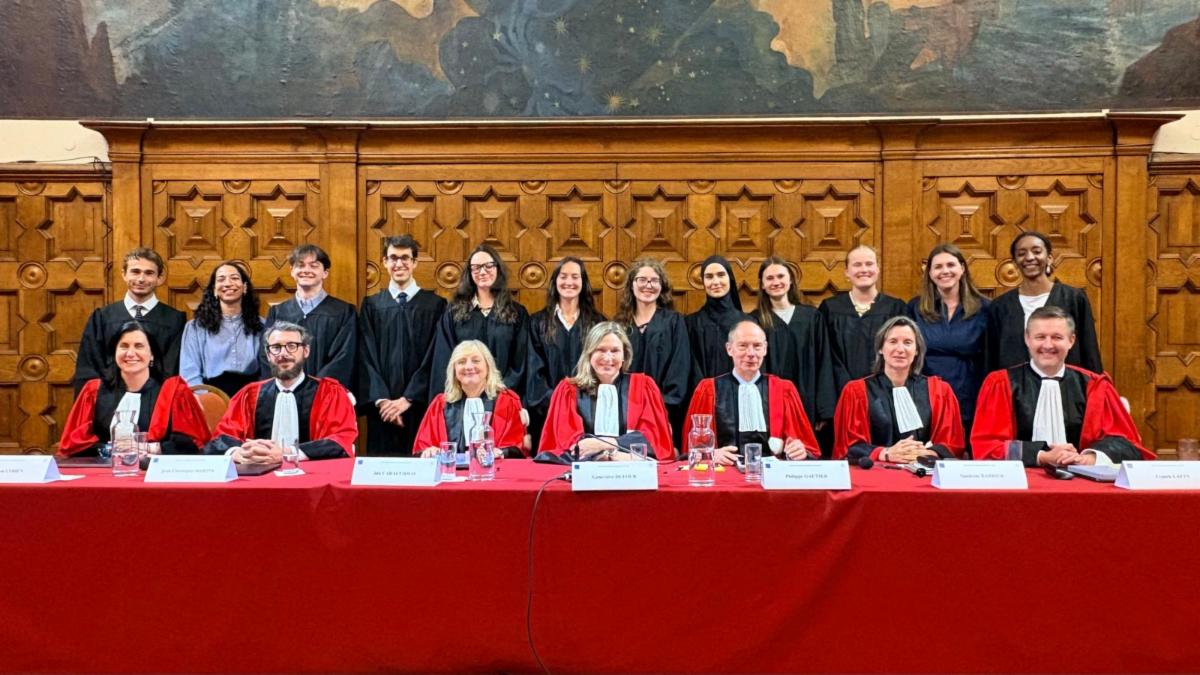
Remise du Prix du CCDI à la 41e édition du concours de plaidoirie Charles-Rousseau
Le Prix du CCDI récompensant les équipes demi-finalistes au concours de plaidoirie Charles-Rousseau a été remis à l’Université Laval et à l'Université Paris I Panthéon-Sorbonne par Miriam Cohen, Vladyslav Lanovoy et David Pavot, lors du banquet de clôture qui a eu lieu à Nice le 10 mai 2026. Lors de la remise du Prix, ces derniers ont rappelé que le professeur Charles Rousseau a reçu la médaille Read en 1984 lors du congrès annuel du CCDI. C’est à l’occasion de son séjour au Canada que la décision de créer un concours de plaidoirie de droit international public de langue française en son honneur a été prise. Un protocole d’entente a récemment été conclu par le CCDI avec le Réseau francophone de droit international (RFDI) afin de soutenir le concours Charles-Rousseau. Le Prix du CCDI pour les équipes demi-finalistes a été créé à cette occasion.
Pour plus de détails sur le palmarès de la 41ème édition du concours, voir : https://www.rfdi.net/edition-en-cours/.
| | |
CCIL Prize Awarded at the 41st Charles Rousseau Moot Court Competition
The CCIL Prize, awarded to the semi-finalist teams of the Charles Rousseau moot court competition, was presented to Université Laval and Université Paris I Panthéon-Sorbonne by Miriam Cohen, Vladyslav Lanovoy and David Pavot at the closing banquet held in Nice on May 10, 2026. During the presentation of the Prize, they recalled that Professor Charles Rousseau received the Read Medal in 1984 at the CCIL annual conference. It was during his stay in Canada that the decision was made to create a French-language public international law moot court competition in his honour. A memorandum of understanding was recently signed by the CCIL with the Réseau francophone de droit international (RFDI) to support the Charles Rousseau competition. The CCIL Prize for the semi-finalist teams was created on this occasion.
For more details on the winners of the 41st edition of the competition, see: https://www.rfdi.net/edition-en-cours/.
| |
CCIL 2026 Annual Conference |
Congrès annuel du CCDI de 2026
| | |
Call for Proposals
The CCIL Conference Organizing Committee welcomes proposals in relation to specific fields of international law, including (but not limited to) health, human rights, trade and investment, environment, climate justice, sustainable development, Indigenous rights, security, humanitarian law, criminal justice, accountability and dispute resolution.
The theme of this year’s conference is Bend, Not Break: Resilience and Evolution of International Law. It seeks to challenge both the supposed post-mortem of the international legal order since 1945 and the notion that it no longer resonates with certain states and peoples worldwide. The conference will test the extent to which the international legal order can adapt to new challenges without sacrificing its foundations. We will gather subject-matter experts - including practitioners, scholars, diplomats, and government officials - to discuss the significant shifts at play, their impacts, and how those effects might be mitigated, exploited, or resisted. The menu for this year’s conference will undoubtedly include the rules restraining the use of force and conduct during armed conflicts, agreements on climate change management, norms on trade and tariffs, and traditional international alliances and power balances.
NOTE: Please note that this is not a call for individual presentations. All presentations must be given in person. We are unable to accommodate virtual presentations. Please consult the submission form for criteria.
DEADLINE TO SUBMIT: Monday, May 18, 2026, 11:30 PM (ET)
|
Appel de propositions
Le comité organisateur du congrès du CCDI sera heureux de recevoir des propositions relatives à des domaines particuliers du droit international, notamment (mais pas exclusivement) la santé, les droits de la personne, le commerce et les investissements, l’environnement, la justice climatique, le développement durable, les droits autochtones, la sécurité, le droit humanitaire, la justice pénale, la reddition de comptes et la résolution des différends.
Cette année, notre congrès s’axera sur la symbolique du roseau (Plier sans se rompre : la résilience et l’évolution du droit international). On y cherchera à contester tant le présumé bilan de l’ordre juridique international établi en 1945 que la notion que celui-ci a perdu tout son sens pour certains États et peuples partout dans le monde. On évaluera également la mesure dans laquelle on peut adapter cet ordre à de nouveaux défis sans renoncer à ses principes. Nous réunirons des sommités du domaine - juristes, spécialistes, diplomates, représentants et représentantes du gouvernement, etc. - pour parler des bouleversements significatifs qui entrent en jeu, de leurs effets, ainsi que de la manière d’atténuer ces derniers, d’en tirer parti ou encore de s’y opposer. Au menu cette année, on trouvera sans doute des sujets comme les mesures restreignant le recours à la force, les règles de conduite dans le cadre de conflits armés, les accords de gestion des changements climatiques, les normes en matière de commerce et de droits douaniers, de même que les alliances internationales traditionnelles et l’équilibre du pouvoir.
REMARQUE : Veuillez noter qu'il ne s'agit pas d'un appel à présentations individuelles. Toutes les présentations doivent être faites en personne. Nous ne sommes pas en mesure d'accepter des présentations virtuelles. Veullez consulter le formulaire de soumission pour plus de renseignements et pour connaître les critères.
DATE LIMITE DE SOUMISSION : lundi le 18 mai, 2026 à 23h30 HE
|
| | |
CCIL Activities and Outreach |
Activités et rayonnement du CCDI
| |
Twelve Canadian law schools compete in the 2026 Canadian Rounds of the Philip C. Jessup International Moot Court Competition in Ottawa
The 2026 Canadian Rounds of the Philip C. Jessup International Moot Court Competition took place in Ottawa from February 19 -21. The moot problem was “The Case Concerning the Gordian Gorge”.
The National Administrator, Maggie MacDonald, welcomed 12 law schools, over 70 volunteer judges and more than 30 student volunteers from across Canada.
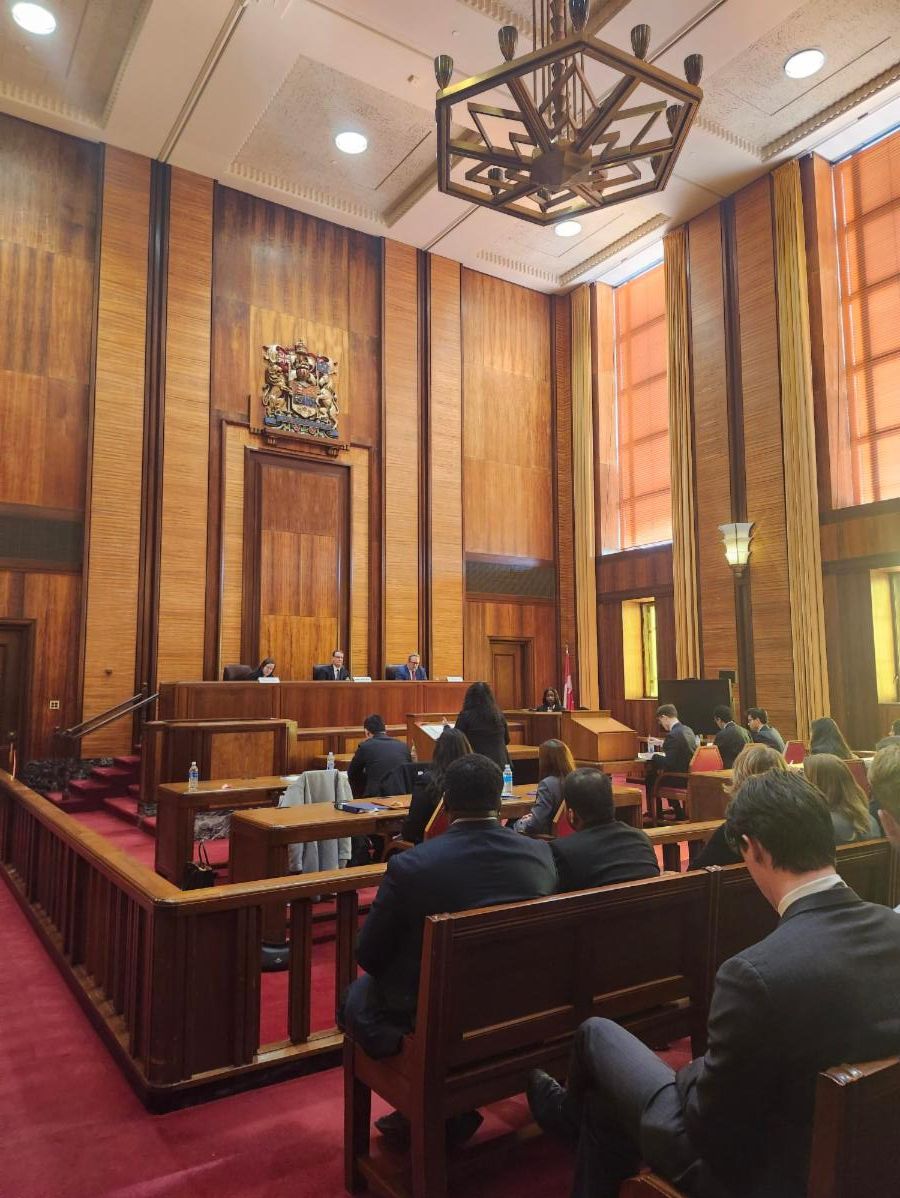
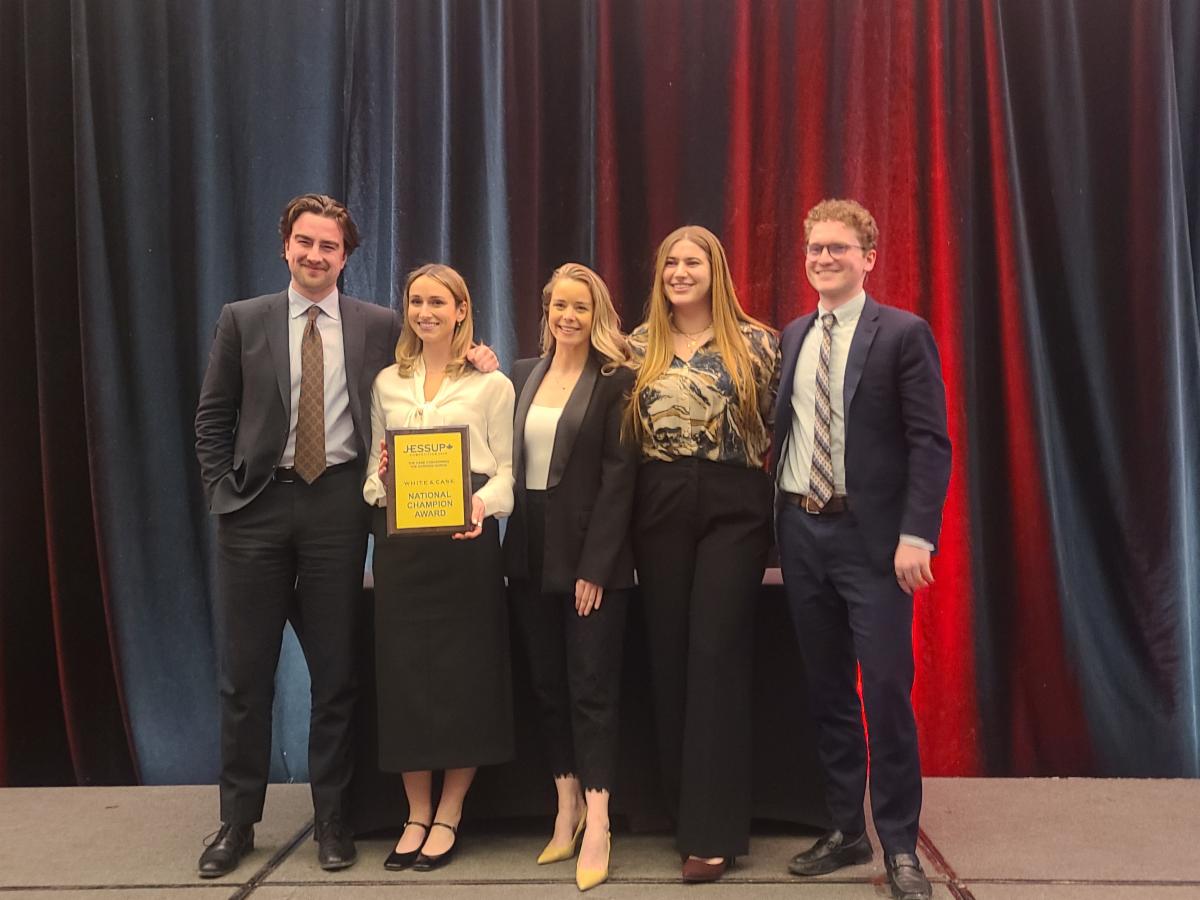
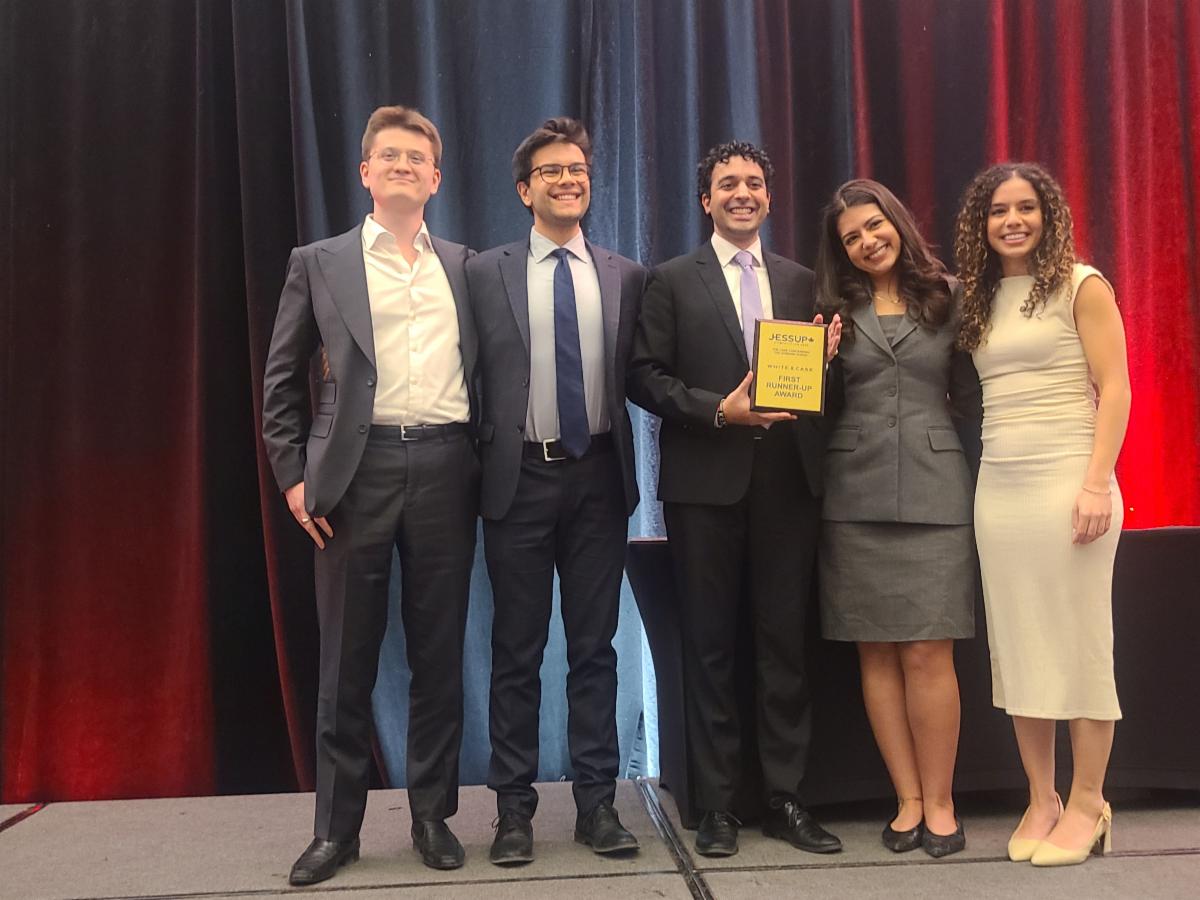
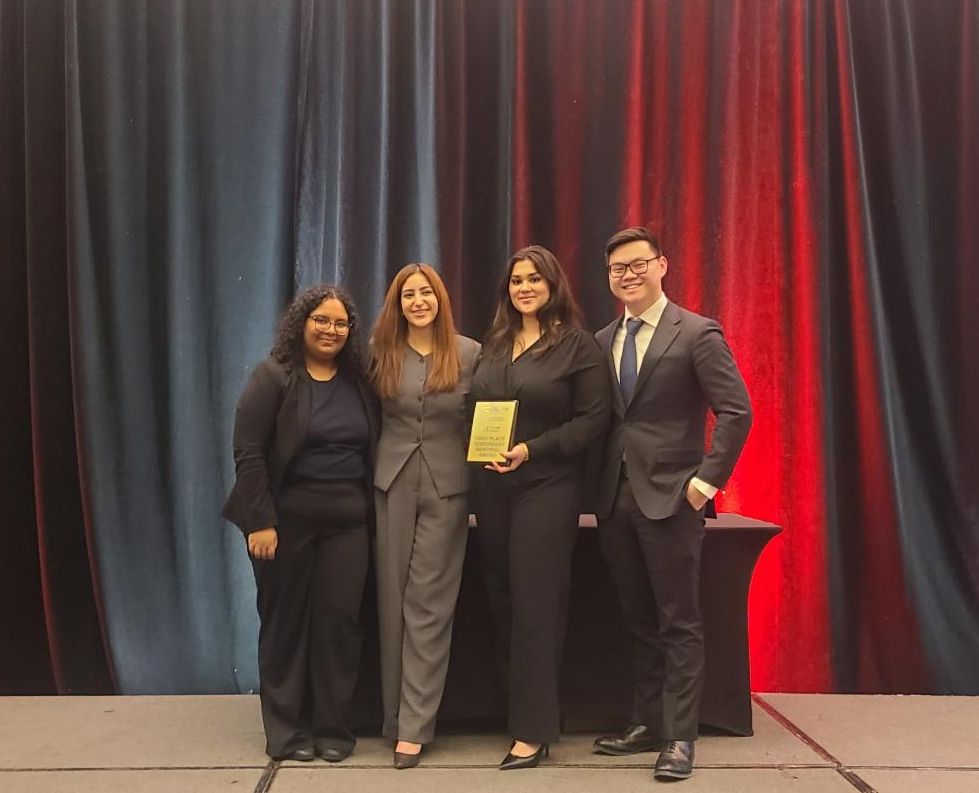
In the Canadian final rounds the Common Law Section of the University of Ottawa met the University of New Brunswick and Osgoode Hall – York University met University of Toronto. uOttawa and Osgoode triumphed in their final rounds, with uOttawa being named as the national champion. Along with third place finalist, University of Toronto, all three schools represented Canada at the International Rounds in Washington D.C. which concluded on April 4, 2026
In Washington, Osgoode advanced from the preliminary rounds ranked fourth in the world. Osgoode ultimately made it all the way to the quarterfinals before they were defeated by Ateneo de Manila University (Philippines) who advanced to the Championship round.
Canada won memorial awards – Osgoode’s memorials ranked 8th in the world while Toronto’s ranked 20th. Toronto also won the top respondent memorial at the international rounds. Canada also had two speakers place in the top 50 in the world. Nikesh Mehta-Spooner ranked 21st and Patrick Weston ranked 48th after the preliminary rounds (both are from Osgoode)
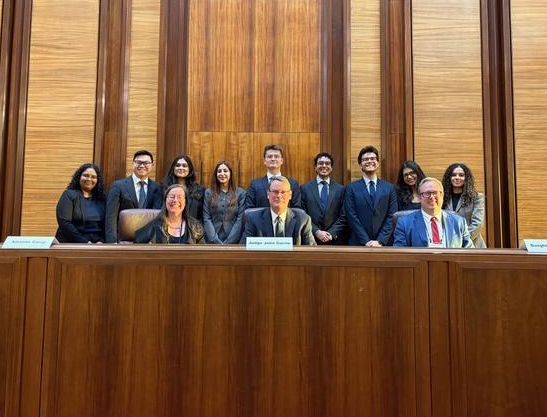
This year students participating in the Canadian final rounds had the privilege of being judged by ad hoc judge of the International Court of Justice, his Excellency John Currie. Judge Currie was joined by the authors of this year’s Jessup problem, Dwight Newman and Michelle Biddulph, making for two difficult final benches.
Congratulations to all the competitors for their hard work.
| | |
Douze facultés de droit canadiennes participent aux épreuves canadiennes du Concours de plaidoirie en droit international Philip C. Jessup de 2026 à Ottawa
Les Épreuves canadiennes de 2026 du Concours de plaidoirie en droit international Philip C. Jessup se sont tenues à Ottawa du 19 au 21 février. L'affaire fictive était intitulée « The Case Concerning the Gordian Gorge ».
L’administratrice nationale, Maggie MacDonald, a accueilli 12 facultés de droit de partout au Canada, plus de 65 juges bénévoles ainsi que plus de 30 étudiantes et étudiants bénévoles.
Lors des rondes finales canadiennes, la Section de common law de l’Université d’Ottawa a affronté l’Université du Nouveau-Brunswick, tandis qu’Osgoode Hall (Université York) s’est mesurée à l'Université de Toronto. L’Université d’Ottawa et Osgoode Hall ont remporté leurs joutes respectives, avec l’Université d’Ottawa étant sacrée championne nationale. Aux côtés de l’Université de Toronto, qui a terminé troisième, ces trois facultés ont représenté le Canada lors des épreuves internationales à Washington D.C., qui se sont conclues le 4 avril 2026.
À Washington, Osgoode s'est qualifiée dès les rondes préliminaires en se classant quatrième au niveau mondial. Osgoode a finalement atteint les quarts de finale avant d'être battue par l'Université Ateneo de Manille (Philippines), qui s'est qualifiée pour la finale.
Le Canada a remporté des prix dans la catégorie des mémoires – les mémoires d'Osgoode se sont classés 8e au niveau mondial, tandis que ceux de Toronto ont pris la 20e place. Toronto a également remporté le prix du meilleur mémoire dans la catégorie des mémoires lors des épreuves internationales. Le Canada a aussi vu deux orateurs classés parmi les 50 meilleurs au monde. Nikesh Mehta-Spooner s'est classé 21e et Patrick Weston 48e à l'issue des épreuves préliminaires (tous deux sont issus d'Osgoode).
Cette année, les étudiants et étudiantes participant aux épreuves finales canadiennes ont eu le privilège d’être évalués par un juge ad hoc de la Cour internationale de Justice, Son Excellence John Currie. Le juge Currie était accompagné des auteurs de l'affaire Jessup de cette année, Dwight Newman et Michelle Biddulph, formant ainsi deux bancs de finale redoutables.
Félicitations à tous les participants et participantes pour leur travail acharné.
| | | |
Photo credits / crédits photos: Amanda Garay, Maggie MacDonald and/et Intertask.
Final Rounds: Supreme Court of Canada |
Rondes finales : Cour suprême du Canada
| | |
Back/en arrière : Osgoode Hall (York University/Université York) and/et University of Toronto/Université de Toronto.
Front/en avant : Amanda Garay, John Currie, and/et Dwight Newman.
| | |
Awards Reception |
Réception et remise de prix
| | |
National Champions | Champions nationales
University of Ottawa Common Law Section |
Université d’Ottawa Section de common law
| | |
Runner Up | Deuxième place
Osgoode Hall – York University |
Osgoode Hall – Université York
| | |
2nd Runner Up | Troisième place
University of Toronto |
Université de Toronto
| | |
Thank You | Merci
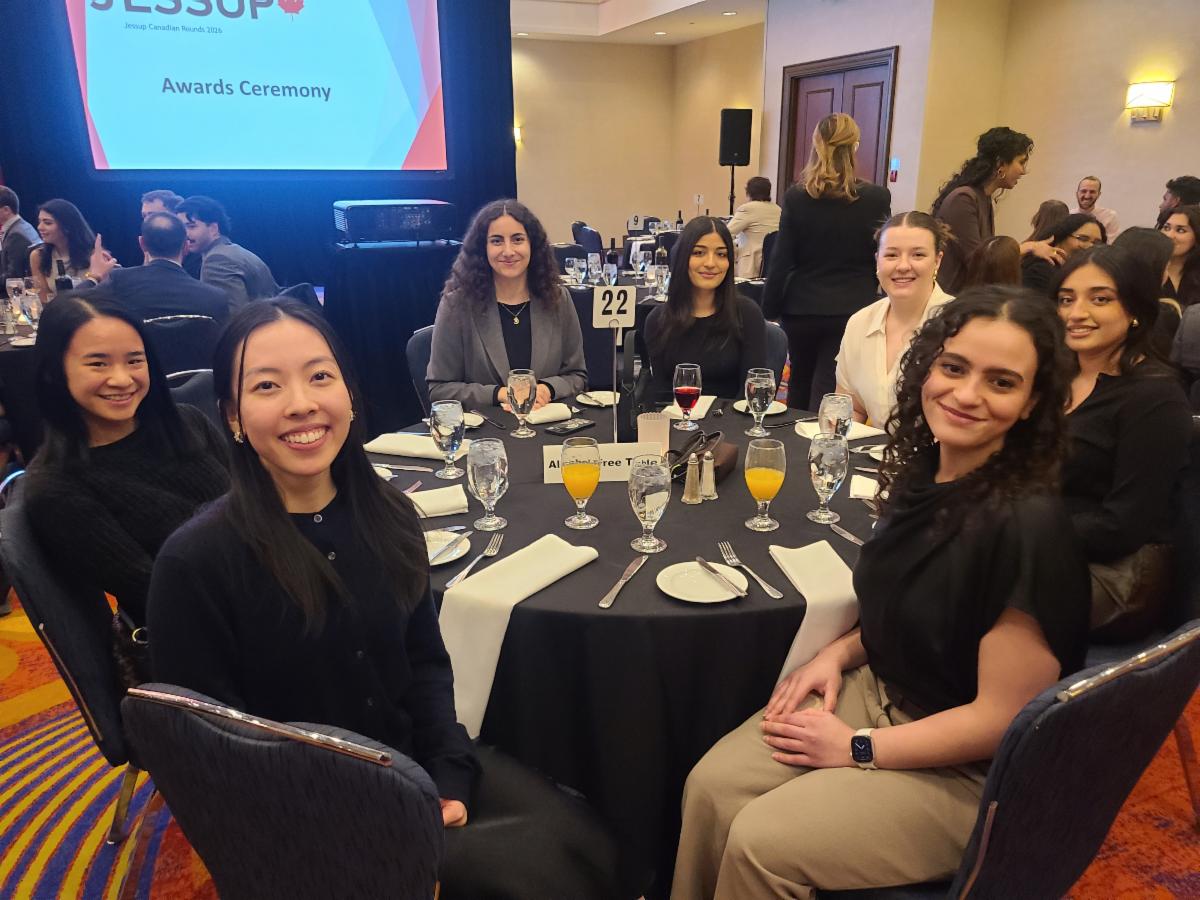
Our Student Volunteers |
Nos étudiantes et étudiants bénévoles
| |
Publications and Resources |
Publications et ressources
| |
Joint Webinar - Prime Minister Carney’s Davos Speech: Implications for International Law
On Wednesday March 25 2026, the Canadian Council on International Law (CCIL), the International Law Association of Canada (ILA-Canada) and the Quebec Society of International Law (SQDI) presented a joint webinar looking critically at Prime Minister Carney’s Davos speech. Our expert panelists discussed whether international law is facing a rupture or a transition and the implications for its study and practice.
The recording of the webinar is now available (in the original language presented).
|
Webinaire coinjoint - Le discours de Davos du premier ministre Carney: quelles conséquences pour le droit international?
Le 25 mars dernier, l’Association de droit international du Canada (ADI-Canada), le Conseil canadien de droit international (CCDI) et la Société québécoise de droit international (SQDI) ont présenté un webinaire conjoint jetant un regard critique sur le discours de Davos du premier ministre Carney. Nos conférenciers se sont interrogés sur la question de savoir si le droit international connait une rupture ou une transition et sur les conséquences pour son étude et son application.
L'enregistrement du webinaire est désormais disponible (dans la langue originale présentée).
| |
Panelists | Panélistes
-
Olabisi D. Akinkugbe, professor | professeur, Dalhousie University, Halifax
-
Joanna Harrington, professor | professeure, University of Alberta, Edmonton
-
Valerie Hughes, trade dispute arbitrator | arbitre de conflits commerciaux, Ottawa
-
Chimène Keitner, professor | professeure, University of California, Davis
-
René Provost, professor | professeur, McGill University | Université McGill, Montréal
-
Gib van Ert, KC | c.r., lawyer | avocat, Olthuis van Ert, Ottawa, Vancouver
Moderators | Modérateurs
-
Miriam Cohen, Vice-President | vice-présidente, SQDI
-
Charles-Emmanuel Côté, President | Président, CCIL | CCDI
-
Oonagh Fitzgerald, president | présidente, ILA-Canada | ADI-Canada
|
| | |
Call for Submissions
The Canadian Yearbook of International Law, Canada’s leading peer-reviewed international legal journal, invites submissions of articles, notes and comments, in English or in French, that advance critical thinking in all areas of public or private international law.
Submissions for each annual volume are encouraged by 31 January (although submissions may be considered at any time as the Yearbook has a rolling acceptance policy and publishes online throughout the year until each annual volume is filled). Detailed submission instructions are available at the following link: Submission Instructions.
The Yearbook awards, from time to time, the Charles B Bourne Article Prize to the author of an article published in the Yearbook that makes an outstanding contribution to international law. The prize was established in honour of Charles B Bourne, founding editor-in-chief of the Yearbook from 1963 to 1992. The prize comes with an award of CDN$2500 as well as a US$250 voucher for Cambridge University Press publications.
| | | |
Appel à soumissions
L’Annuaire canadien de droit international, la principale revue de droit international à comité de lecture au Canada, invite la soumission d’articles, de notes ou de commentaires, en français comme en anglais, qui mettent de l’avant une pensée critique dans tous les domaines du droit international public ou privé.
La soumission de textes est encouragée avant le 31 janvier pour inclusion dans le volume couvrant l’année qui vient de se terminer (bien qu’il soit possible de soumettre à tout moment, car l’Annuaire suit une politique d’acceptation continue et publie en ligne tout au long de l’année jusqu’à ce que chaque tome annuel soit complet).Consultez les consignes pour la soumission de textes ici: Protocole pour la soumission de textes.
L’Annuaire décerne périodiquement le Prix d’article Charles B Bourne à l’auteur d’un article publié dans l’Annuaire qui constitue une contribution exceptionnelle au droit international. Le prix a été institué pour saluer la contribution de Charles B Bourne à titre de rédacteur-en-chef fondateur de l’Annuaire entre 1963 et 1992. Le prix est accompagné d’une bourse de 2500$CDN et d’un bon d’achat de 250$US de Cambridge University Press.
| | |
“Why International Law Is Still the World’s Best Defence”
Should we permit the foundations of international law to erode, the world would slip once more into anarchy and chaos.
By Fatou Bensouda and Sam Sasan Shoamanesh
8 Mar 2026
Aljazeera OPINION
In a period increasingly marked by the resurgence of unilateral aggression, open challenges to the prohibition on the use of force, and a growing willingness by states to test or bypass established legal constraints, we examine the mounting pressures on the international legal and institutional architecture constructed in the aftermath of World War II.
The piece traces a concerning trajectory: the gradual erosion of the prohibition on the unlawful use of force, the weakening of international justice mechanisms, and a broader shift toward a more transactional global environment in which power increasingly operates with fewer normative and institutional restraints.
The article argues that—despite its imperfections—an international order anchored in the principles of the United Nations Charter and international law remains the most credible safeguard against a return to unrestrained power rivalry, coercive aggression, and impunity in times of conflict. It also highlights the risks posed by the selective application of international law and the politicisation of justice.
In that context, the piece underscores the importance of principled and consistent stewardship of international law.
Read article...
| | | | Posted in the language provided. Note: Any opinion expressed does not reflect any endorsement by the CCIL. / Affiché dans la langue dans laquelle l’information a été fournie. N.B.: Les opinions exprimées n’engagent pas le CCDI. | | |
Opportunities in International Law |
Opportunités en droit international
| | | Posted in the language provided. / Affiché dans la langue dans laquelle l’information a été fournie. | |
The Hague Academy in International Law - Winter Courses
Public and Private International Law
Next session: January 11-29, 2027 - Registration Open
Registration for the 2027 Winter Courses will be open from 1 May to 1 October 2026 for full fee applicants, and from 1 May to 31 July 2026 for scholarship applicants
The Academy’s Winter Courses, introduced in 2019 and held at the Peace Palace, form one of the pillars of its academic activity. Like the Summer Courses, they offer in-depth instruction in both Public and Private International Law, but are delivered in a single three-week session. These courses are intended for students and practitioners who already possess a solid foundation in international law and wish to deepen their understanding of the discipline.
Read more...
Académie de droit international de La Haye - Cours d'hiver
Droit international public et droit international privé
Prochaine session : 11 au 29 janvier 2027 - Inscriptions ouvertes
Les inscriptions pour les cours d'hiver 2027 seront ouvertes du 1er mai au 1er octobre 2026 pour les candidats aux places payantes et du 1er mai au 31 juillet 2026 pour les candidats aux bourses
Proposés depuis 2019, les cours d’hiver de l’Académie, organisés au Palais de la Paix, constituent l’un des piliers de son activité académique. Comme les cours d’été, ils sont structurés autour d’un enseignement approfondi en droit international public et privé, mais se déroulent sur une seule session de trois semaines. Ces cours s’adressent aux étudiants et praticiens disposant déjà de bases solides en droit international et souhaitant approfondir leur compréhension de la discipline.
Plus...
| | | |
Call for Submissions: 2026 Rosalyn Higgins Prize
The Law & Practice of International Courts and Tribunals now invites submissions for the 2025 Rosalyn Higgins Prize.
The Rosalyn Higgins Prize is an annual prize which awards EUR 1.000 of Brill book vouchers and a one-year LPICT subscription to the author of the best article on the law and practice of the International Court of Justice, either focusing solely on the ICJ or with the ICJ as one of the dispute settlement mechanisms under consideration. The winning article will also be published in LPICT and made freely available online for ninety days to maximize its dissemination.
Deadline: 15 May 2026
More information can be found here: https://brill.com/fileasset/downloads_products/18287_LAPE_2025_Rosalyn_Higgins_Prize_CfP.pdf.
| | | | |
CCIL Newsletter |
Bulletin du CCDI
| |
Contributions
The CCIL Newsletter is published bi-annually to share information about developments and activities in the field of international law in Canada and elsewhere.
The CCIL invites submissions on current issues or recent developments in international law from law students, academics and legal practitioners. Submissions may summarize a significant case or award or provide editorial commentary. Submissions should be between 500-1,500 words, and sources referenced should be hyperlinked in the body of the text.
Please send your submission by email to the CCIL Secretariat at:ccil-ccdi@intertaskconferences.com
| | |
Contributions
Publié deux fois par année, le Bulletin du CCDI contient des renseignements relatifs aux développements du droit international et aux activités se rapportant à ce domaine au Canada et ailleurs
Le CCDI invite les étudiants en droit, les universitaires et les praticiens du droit à soumettre leurs observations sur les questions d'actualité ou les développements récents en droit international. Les soumissions peuvent résumer un cas ou un prix important ou fournir des commentaires éditoriaux. Les soumissions doivent comprendre entre 500 et 1 500 mots, et les sources référencées doivent être liées par un lien hypertexte dans le corps du texte
Veuillez transmettre votre soumission au Secrétariat du CCDI par courriel à : ccil-ccdi@intertaskconferences.com
| | | |
|
CCIL Secretariat | Secrétariat du CCDI
M205-851 Industrial Avenue | Ottawa, ON K1G 6M8
Tel./Tél: 613-238-4075 ext/poste 7226
www.ccil-ccdi.ca
| |
| | | |