Photo by Kellen McCluskey | | |
Maryland Department of Natural Resources (DNR) has designated October 16–20 its first-ever Science Week, with a focus on the data and science used for decision making. You may or may not know it, but there's a lot of science happening at the Arboretum!
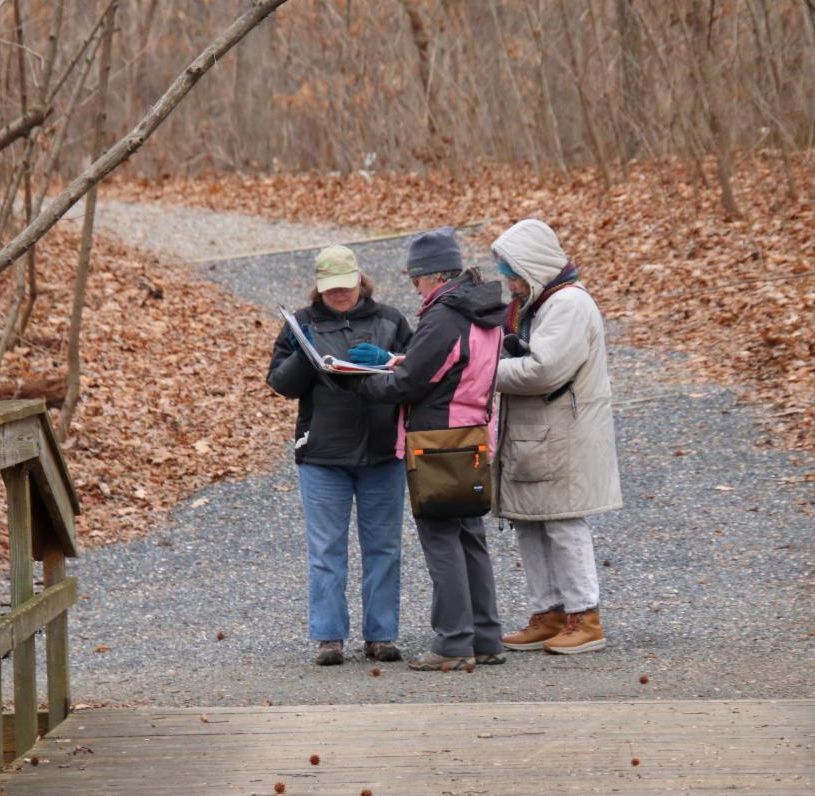
The Arboretum phenology group logged more than 6,000 observations in 2022. What is phenology? Most simply put, it's the study of seasonal changes as observed in plants and animals and how those changes are impacted by climate. Phenology considers biological events such as leaf flush, flowering, or nesting over time to better understand how these cycles are shifting from year to year.
| | |
This year, the phenology group joined an additional campaign for redbuds, a nationwide effort to understand the impacts of climate change on redbud phenology. Their primary questions are: 1) When do redbud trees flower and fruit across the tree's range? 2) How does the timing of these events vary across geography and elevation? and 3) Has the timing of flowering and fruiting advanced in recent years? This effort is led by Dr. Jorge Santiago-Blay of the National Museum of Natural History and Penn State York, as well as the USA National Phenology Network.
| | |
The Arboretum's phenology group comprises five core members: Trish Hargrove, Marilyn Reedy, Nancy Stewart, Vivian Stacy, and Pat Sommers. The program originated with our 2017–18 Chesapeake Bay Conservation Corps member, Blake Steiner, and volunteer Marilyn Reedy. For more information about volunteering with the group, contact Assistant Director Jenny Houghton.
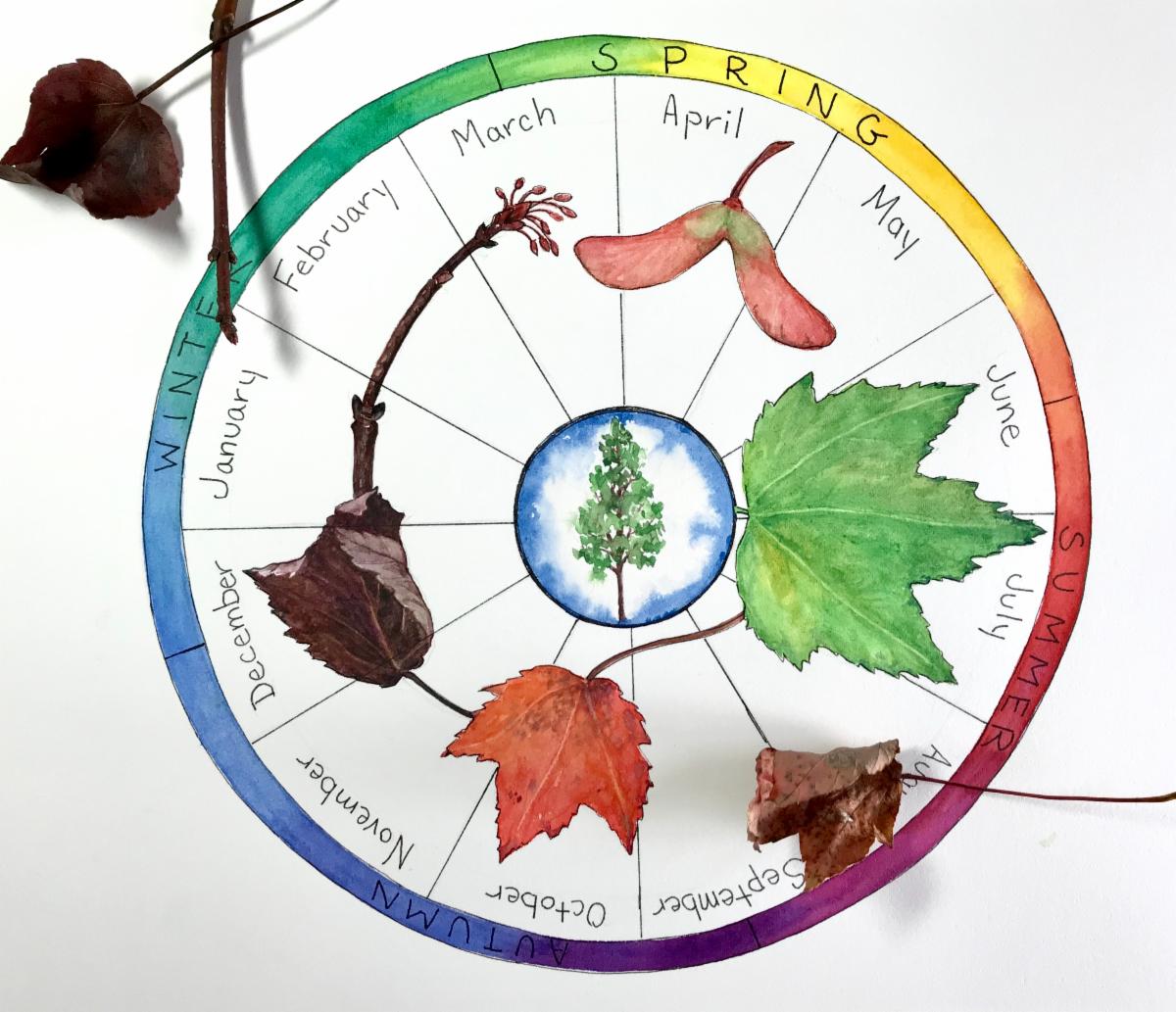
If you're interested in a visual exploration of phenology, join next week's Illustrated Phenology Wheel program. Under the guidance of Kelly Sverduk, you'll learn to create a circular calendar where you can record observations of the natural world. Click here to learn more and to register.
| |
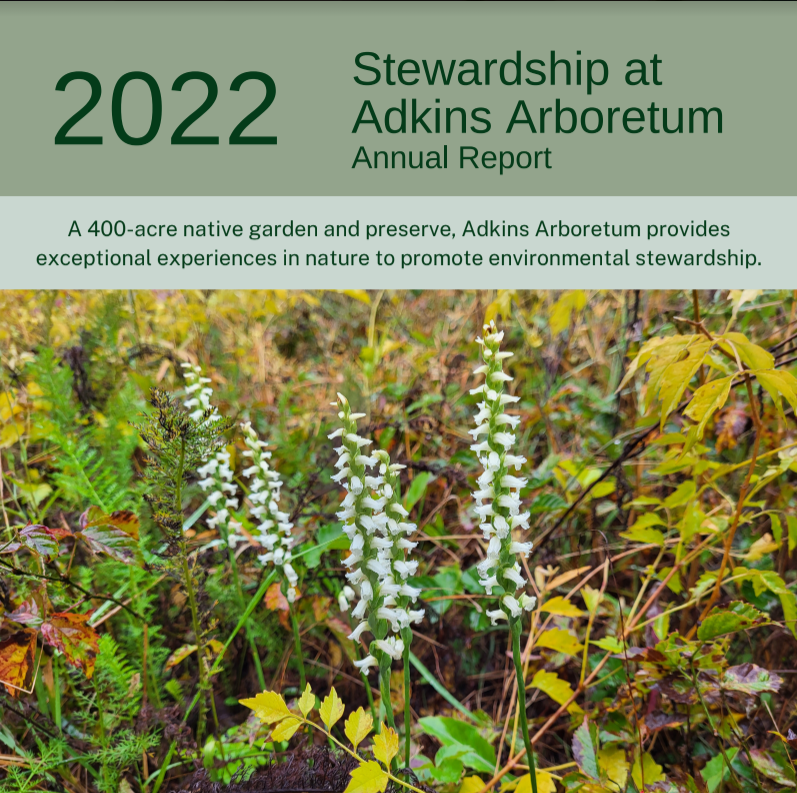
10 acres of meadow burned...42,870 square feet of invasive plants removed by staff...665 volunteer hours dedicated to grounds and gardens...72 bluebird fledglings...6,004 phenology observations reported...and much more.
Check out the 2022 Stewardship Report to learn more about the science and management work done last year at the Arboretum.
| | | |
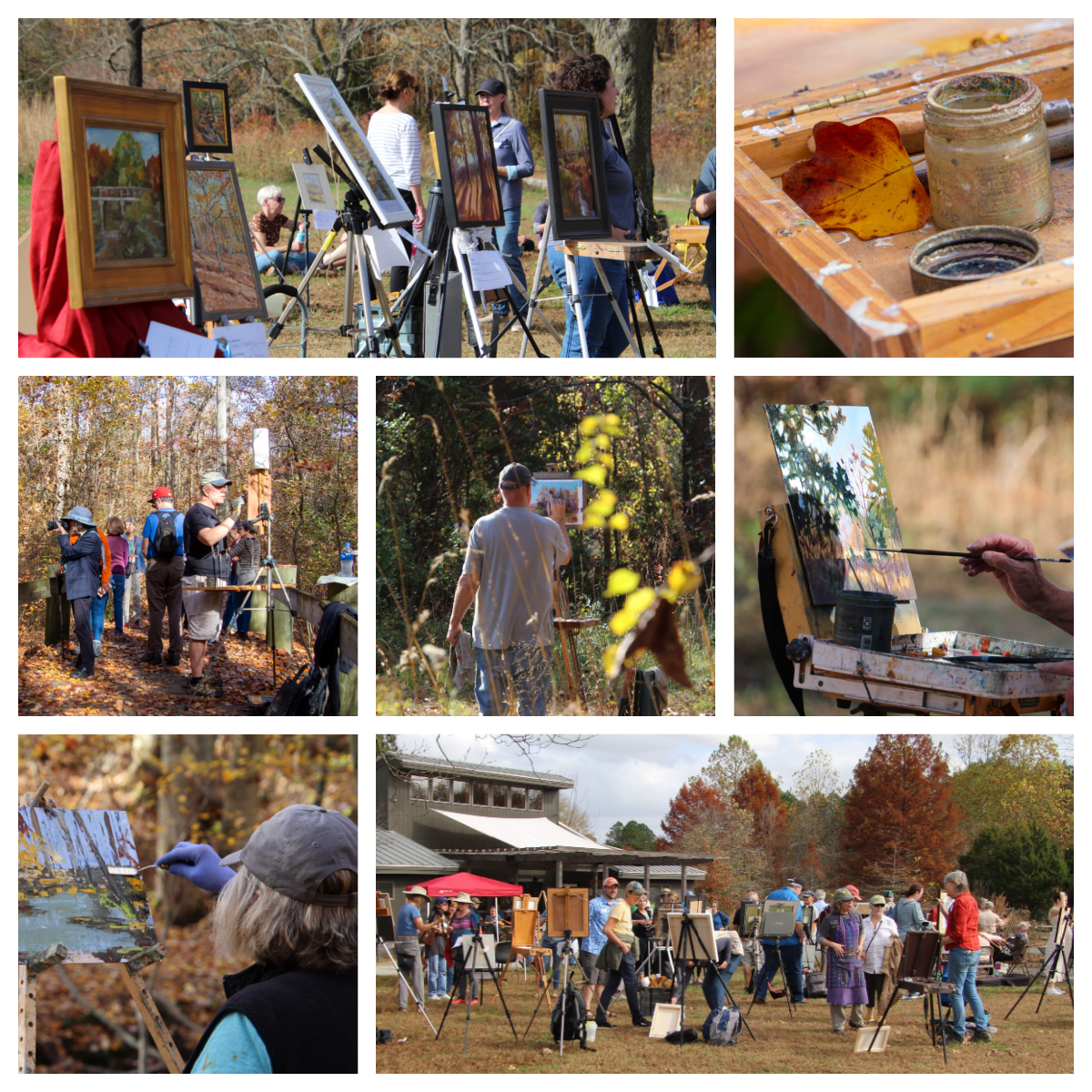
Join us to celebrate nature, art, and a beautiful fall day at the second annual Plein Air Adkins on Saturday, November 4.
During this one-day plein air paint-out, artists will paint whatever inspires them at the Arboretum in the morning and then exhibit and sell their work in the afternoon. The judge, Alison Barry, was first-place winner at last year's Plein Air Adkins. She has lived in Southern Maryland for the past 10 years, painting subjects that spark her interest and present a challenge. Plein Air Adkins is open to any artist who wishes to participate. Artists may register in advance by clicking here or on the day of the event. The artist registration fee is $20.
Observers are invited to watch the artists work and to enjoy the grounds, live music, and food and beverages for sale. This is also a wonderful opportunity to buy original art on the day it's created! Admission for observers is free in honor of our members. Click here to register.
More information about the day, including the most current list of participating artists, can be found here. We hope to see you!
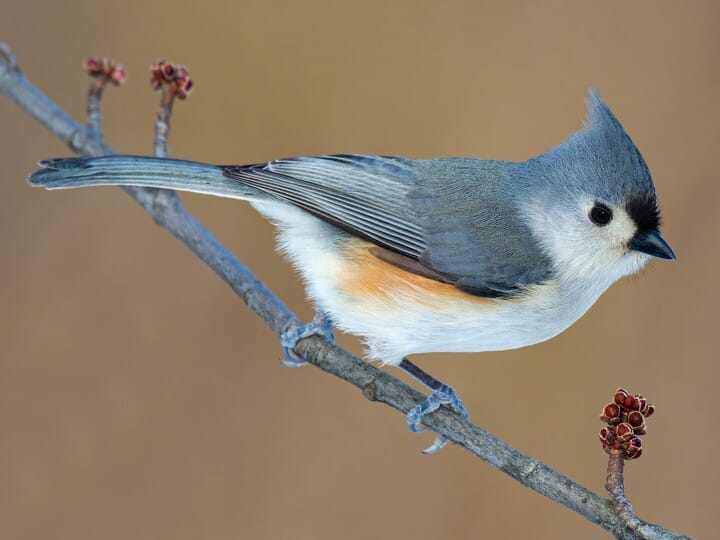
| | Photos by Kellen McCluskey | | A Brainy Bird, a Blinking Bird, & a Mystery | | The Tufted Titmouse is the fifth most common bird at feeders in Maryland and is also a common resident at Adkins. Its sweetly whistled song...peter peter peter...is common early in spring and all summer but slows down in fall in winter. It is a small bird, about 6 inches, but it looks bigger because of its big black eye against a white background and its crest. | | |
The Tufted Titmouse's name derives from the Old English words "tit" and "mase," basically meaning "small bird." The word "mase" eventually became obsolete, and this part of the name morphed into the familiar word "mouse."
During the summer, the Titmouse prefers caterpillars but will eat anything that flies, hops, or crawls. At feeders, they prefer black oil sunflower seed and peanuts, and they are particular about the seeds they choose. If it is too small, it gets tossed to the side. The seed needs to be just right. In preparation for winter, they will cache seeds in the nooks and crannies of bark and under leaves. I favor cute with its big eyes and big attitude that exudes smarts.
A study published in Science Magazine in September appears to confirm that the Tufted Titmouse does have a bigly brain. Scientists tested 214 birds from 23 species, including 19 wild-caught species. They devised tests to assess the birds' vocal learning and cognitive abilities, including problem solving. The Titmouse learns around 63 vocalizations throughout its life and was number one in the flock in problem solving. By comparison, the Brown-headed Cowbird learns only about nine different vocalizations and was much slower at problem solving. Scientists continue to learn that being called a birdbrain is a compliment.
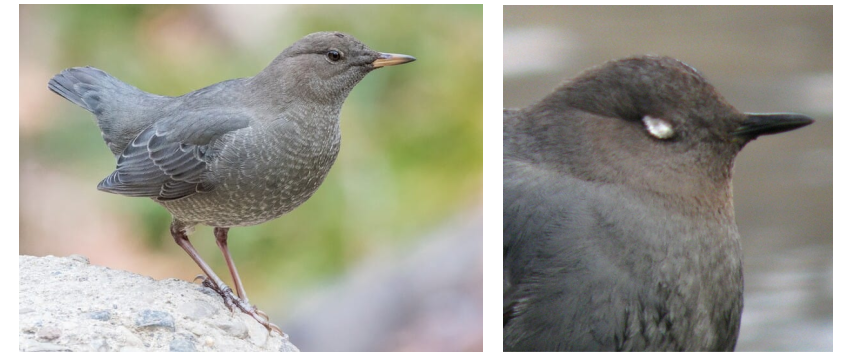
My wonderful wife and I spent last week visiting my son in Oregon. He took us to his favorite sites to view volcanoes, lava fields, forests, waterfalls, breweries, and birds. I had hoped to see the American Dipper in action, and I wasn't disappointed. Dippers are the only aquatic songbird in the U.S. Son Jim knew where to find them, and I got to watch them searching for food in water and doing the dipsy-dos that they do. (Watch videos here and here.) He has a picture of a Dipper that I thought showed its nictitating membrane covering the eye. I was wrong.
| | |
Left: American Dipper. Photo by Jeff Cooper, courtesy of All About Birds.
Right: Dipper blinking its upper eyelid. Photo by David Sibley, courtesy of Sibley Guides.
| | |
Birds have an upper and a lower eyelid like we do, but they also have a third eyelid called a nictitating membrane. This eyelid sweeps across the eye horizontally to keep the eye moist and provides protection against wind, dust, and hazards. The white in the Dipper photo is really its upper eyelid during a blink. Amazingly, the eyelid is covered with tiny white feathers, demonstrating that the Dipper is one of the few bird species with feathers on the upper eyelid. Watch this fascinating "look into my eyes" video of an owl blinking its upper eyelid and its nictitating membrane.
My wife, Kathleen, is a voracious reader and a huge murder mystery fan. For the past nine years, she has done a monthly presentation at the Queen Anne's County Library of the mysteries she has read from different genres and authors. She will be at the Arboretum on Tuesday, November 14 to thrill the crowd with her discussion of murder mysteries set in the great outdoors. If you're a fan of mysteries. I urge you to consider coming for Crime and a Cuppa. You will have a great time.
Please contact me at wlsngang@verizon.net if you have any questions.
Jeobirdy Answer: This is the definition of "nictitating."
Jeobirdy Question: What is blinking?
Jim Wilson
Birder/Arboretum volunteer
| | | | |