|
City will use $25M in federal funds as incentive for developers to build affordable and downtown housing projects
Grants of up to $60,000 per unit could soon be available to support new housing construction in Winnipeg, with a key goal to attract affordable and downtown units...
Gillingham said triggering more affordable housing construction is a top priority. And the top-up for deeply affordable projects outside of the downtown area can help ensure lower-rent homes aren’t overly concentrated in the city’s core. Read more
| | |
The Winnipeg Housing Accelerator Fund capital grant program will fund projects in the following categories:
Downtown market projects grant: Up to $25,000 per unit for projects located downtown. At least 10 per cent of total units must meet CMHC mortgage loan insurance criteria, meaning rent would be priced at 30 per cent of median renter income in the area for at least 10 years (currently $1,100 per month).
Affordable housing projects grant: Up to $35,000 per unit for projects with at least 30 per cent of all units rented at affordable rates for at least 20 years. Those rents would need to amount to less than 80 per cent of the median market rent for the area (under CMHC) or match Manitoba government affordable housing rental rates. (The latter provincial rate would offer a monthly rent of $704 per studio apartment without utilities.)
Affordable downtown housing grant: Up to $60,000 per unit for downtown projects with at least 30 per cent of units being affordable for at least 20 years. Affordability would again be based on charging less than 80 per cent of the median market rent for the area or matching Manitoba government affordable rental rates.
Deeply affordable housing outside downtown (top-up) grant: Up to $15,000 per unit top-up for projects with deeper affordability levels that are located outside downtown. (This could be added to projects that qualify for the affordable housing projects grant). Projects would require a written commitment from a government or other “acceptable” organization to provide operating funding for at least five years, but ideally up to 20. At least 50 per cent of total dwelling units must have rents geared-to-income or operate as permanent supportive or transitional housing for “priority populations,” including people experiencing homelessness. Read more
Application Deadline: Friday, July 12, 2024 at 4 p.m. CDT
| | |
Webinar - Winnipeg's Housing Accelerator Fund Grants
MNPHA is partnering with the City of Winnipeg to host a webinar on the Housing Accelerator Fund Grants. Join us to ask questions and learn more about the funding.
Tuesday, June 11, 10:00am-11:30am
| | |
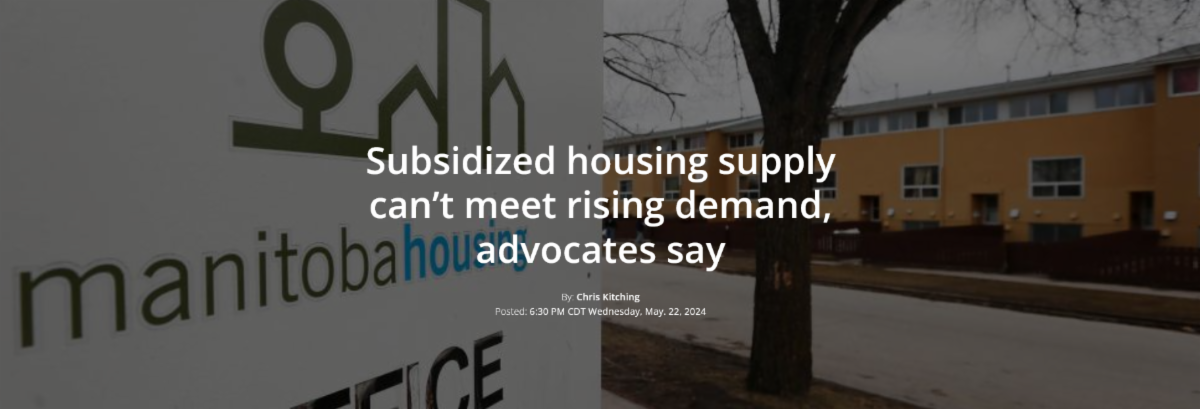
Manitoba Housing’s wait list has grown even though vacancies have been slashed by the hundreds this year, signalling a rising need for publicly subsidized rental units, advocates told the Free Press. The NDP government is facing calls to significantly add more homes for people on lower incomes to keep up with demand amid housing and homelessness crises.
“There is increasing need, because the cost of housing in the private market has grown,” said Christina Maes Nino, executive director of the Manitoba Non-Profit Housing Association. “We need to repair and build to catch up with demand.” Manitoba Housing’s wait list had 6,079 applicants Tuesday, up from 5,822 on Jan. 1, a provincial spokesperson said. It is up from 5,423 in February 2023, but down from more than 9,000 in 2020.
Shauna MacKinnon of the Right to Housing Coalition said wait-list numbers can be off, because some applicants may find housing elsewhere and not remove themselves from the queue, or some people in need may not join a list. “What we do know is the wait lists continue to be long, which suggests there is a high need,” she said. Manitoba Housing applicants submit requests for specific areas or buildings they want to live in. Priority is given to those with the highest needs. Read more
| | |
CMHC research on systemic barriers in housing
Systemic barriers in the housing system intersect in many complex and multiple ways, with compounding effects for some populations already experiencing vulnerability. This research used a systems approach to identify barriers holistically across the entire housing ecosystem.
Key findings:
- The main systemic barriers to accessing affordable shelter are insufficient income and wages to keep pace with shelter costs.
- For those who are housed, the main barriers for remaining stably housed include the lack of system supports, such as mental health supports, housing and financial advice and guidance, employment services, language support services, social workers, and other auxiliary services like nursing; and safety and security barriers
- Barriers experienced in rural and urban geographies are housing costs and income and wages, competition for limited units, supply diversity, lack of infrastructure, and transportation
Read more
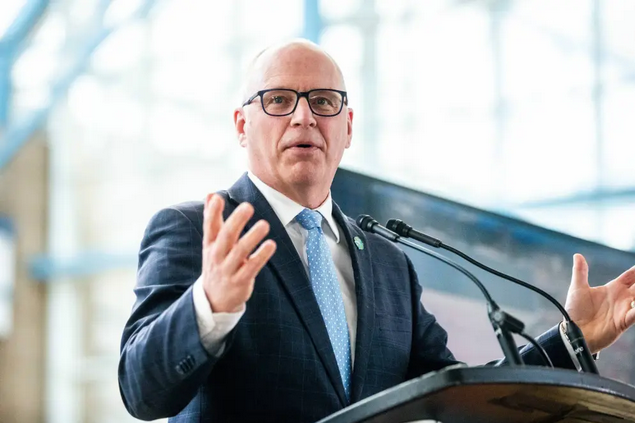
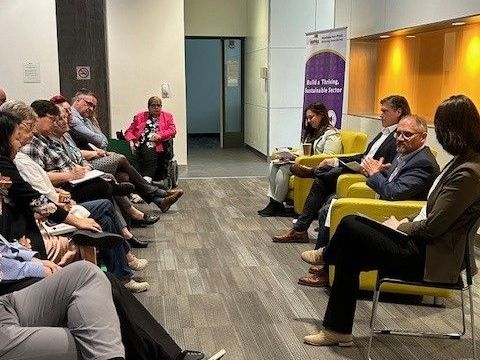
| | Opening Message from Bernadette Smith, Minister of Housing, Addictions and Homelessness. | |
Key things to know about Minister Smith’s vision for housing:
1. Minister Smith’s personal experiences of living in public and non-profit housing informs her own vision for social housing. She now has the opportunity to provide the opportunity to those who need it, and she and her government want to do more each year, working in partnership with many including the private sector, other levels of government, community organizations, and the non-profit housing sector.
| | |
2. The long-term solution to homelessness includes housing, and not just housing. We need to “do housing different.” There must be a system of support to keep people in community.
3. Housing is love and housing is care. Housing is a space of warmth and changes peoples’ lives. Minister Smith extended many thanks and uplifted the work being done on the ground by those working and volunteering in non-profit housing; they are doing the heavy lifting.
4. We need to invest in what we have and protect what we have. Boarded up and vacant buildings are not acceptable. The government has a responsibility to continue to invest, maintain, and support what we have.
5. Minister Smith would like to see more mixed-income projects, so that people see their neighbours doing well and see the opportunity for themselves. She would also like to see people move out of Manitoba Housing, potentially into market units or non-profit housing with rent supports. Manitoba Housing should have the supports and services for those in the highest need.
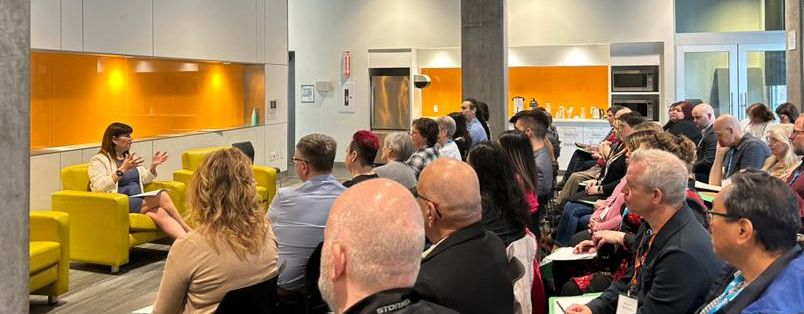
| | Community Housing with Councillor Rollins (Winnipeg), Mayor Funk (Steinbach), Mayor Fawcett (Brandon). | |
Messages from Mayors and Municipal Leaders
1. Collaboration is key. Unless all levels of government work together, change can’t happen.
| | |
2. Municipalities are being leaned on to take on housing, but they don’t have the financial resources of other levels of government. When asking for municipal support, know who ‘owns the policy’ and speak to the right level of government.
3. Some municipalities are just learning how they can be active in housing while others are active champions and advocates, in addition to using their policy and funding levers. Smaller cities could benefit from the ear of the provincial government a bit more, and non-profits can work with their municipal leaders to use their shared influence.
4. There is recognition that the permit process needs to be streamlined; permits and codes are important for accessibility and liability – they therefore should not simply be waived. The Housing Accelerator Fund is an opportunity for Winnipeg and Brandon to change these processes.
| | |
Housing Day holds meeting with elected officials
Manitoba needs more affordable housing. Clear communication between decision makers and advocates could help meet the need. Janet Stewart spoke with Brandon Mayor, Jeff Fawcett, while on his way to the Housing Day gathering. Fawcett shares what he's learned from MNPHA and how non-profit housing has benefited the City of Brandon. Listen Now
| | |
MNPHA Members meet with each of Manitoba’s provincial caucuses to discuss the Priorities for Community Housing and how non-profit housing is a solution for the end of chronic homelessness.
Priorities for Community Housing: An Affordable Home for All Manitobans
1. Repair and modernize community housing through a $1.5b capital funding program over 10 years. Include a repair, modernization, and development program designed by and for Indigenous-led housing organizations.
2. Provide consistent, long-term funding for support within community housing. In independent living, this should be through tenant support coordinators at an average ratio of 1/100 units. For populations such as older adults and people at risk of homelessness with additional support needs, higher levels of staffing through operating funding is needed.
3. Create 10,000 additional units of community housing over the next 10 years.
4. Work with the non-profit sector as the preferred partner in delivering Manitoba’s social and affordable housing through adequate operating funding, co-development of programs, and sector support.
Download the Priorities for Community Housing here
| | |
Presenting: Supportive Seniors Housing in Rural Communities at the Building Partnerships Conference
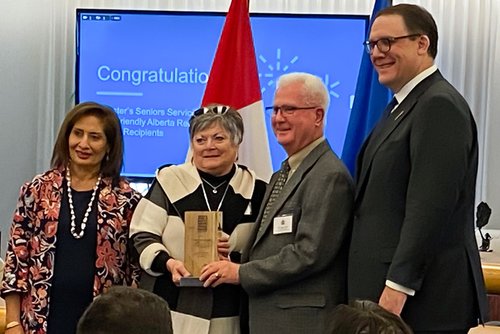
Green Acres Foundation is a non-profit seniors housing provider that has been getting rave reviews from its community in Lethbridge, Alberta. They were voted "The Best of the Best" in seniors housing and services in by the citizens of Lethbridge.
Green Acres Foundation was recognized by the Province of Alberta with the Minister’s Seniors Service Award in the Nonprofit category. “Green Acres Foundation exemplifies community-based solutions for elder abuse by offering safe housing for seniors experiencing or at risk of mistreatment”.
CEO Dawna Coslovi will be presenting on Supportive Seniors Housing in Rural Communities at our conference in Brandon October 21 -22. Learn more
Registration opens in August
| | |
Webinar - Winnipeg's Housing Accelerator Fund Capital Grant Incentive
MNPHA is pleased to present an online webinar with members of the City of Winnipeg Housing Accelerator Fund Team to discuss the recently launched Housing Accelerator Fund Capital Grant Incentive program. Join members of the team to learn about the program and have an opportunity to ask questions about the upcoming intake.
The Housing Accelerator Fund Capital Grant Incentive program will provide grants directly to developers to create more housing. This first round will focus on affordable housing projects and projects Downtown, with $25 million available. Projects must be creating new housing and demonstrate the ability to secure a building permit within one year of approval.
Tuesday, June 11, 10:00am-11:30am
Zoom Webinar
| |
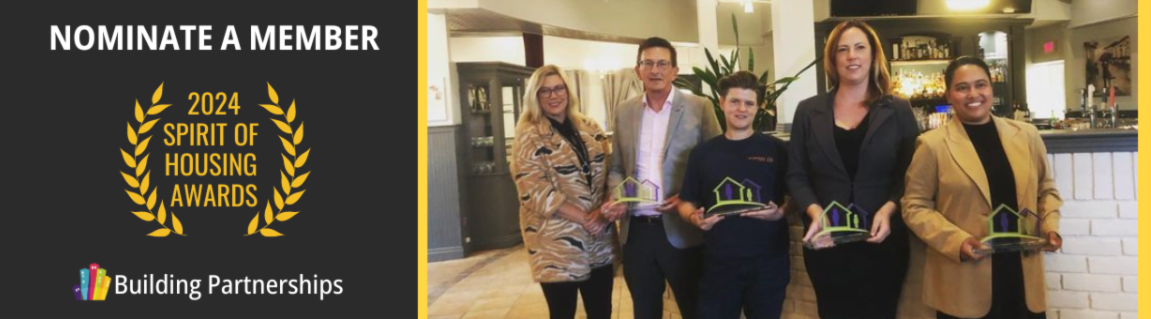
Nominate someone you know who has the Spirit of Housing
Spirit of Housing Awards recognize and reward individuals (staff, board members and tenants), groups and non-profits who have made an outstanding contribution to the quality of non-profit housing.
We work together with our members to promote housing excellence through the MNPHA Awards. The 2024 awards will be presented at the MNPHA Building Partnerships Conference on October 21st in Brandon, Manitoba.
| |
Diversity, Equity, and Inclusion with Achieve Centre for Leadership
Diversity, equity, and inclusion (DEI) aren’t just buzzwords – they are essential components of a healthy, successful workplace. Embracing DEI in your organization means supporting all aspects of a person such as race, religion, gender, etc., as well as deeper parts of an individual’s character like values, personality, and preferences. This workshop helps you identify the existing diversity in your organization so you can recognize potential gaps and become aware of ways that you can build a more equitable and inclusive work environment. You will learn tips, strategies, and gain practical tools for creating a workplace culture where everyone can thrive.
Wednesday, July 3, 9:00am to 4:00pm cdt
Online Virtual Register here
| |
Housing Professionals Mentorship Program: Mentees wanted!
The CHRA Housing Professionals Mentorship Program (HPMP) connects today’s leaders in community housing with the leaders of tomorrow. Canada’s community housing sector is in a period of transformation; HPMP is working to help strengthen and build sustainability into the sector.
HPMP's facilitated mentoring relationships and programming help mentees learn how to manage their career development - an essential skill for housing professionals.
New (or newish) to housing? Join HPMP as a mentee and:
- develop your career in housing
- enhance your leadership skills
- build your network and community
- learn from industry experts
Applications close August 6th Learn more
| | |
Unveiling enhanced funding for affordable housing projects
The Green Municipal Fund’s (GMF) Sustainable Affordable Housing (SAH) initiative, is excited to announce significant updates to its funding offerings, designed to further enable affordable housing providers across Canada. These enhancements include increased grants for plans and studies, an improved financing mix for new developments featuring a 60% grant and 40% loan, and continuing to reward energy efficiency for retrofit capital projects but with an additional 10% grant. This comprehensive update aims to facilitate the development of more sustainable, energy-efficient housing solutions, reinforcing our commitment to supporting communities in achieving their affordable and sustainable housing goals.
Discover how these changes can benefit your next project.
| |
Manitoba Safe and Healthy Home for Seniors
Seniors aged 65 and older and family members who have seniors living with them can apply for funding of up to $5,000 ($6,500 in rural and remote areas) to help fund basic home adaptations that are essential for daily living. Applicants can apply for a grant every three years, to a lifetime maximum of $15,000. To be eligible, the applicant must have a combined household income of $60,000 or less.
The funding can be put toward the cost of essential accessibility solutions and could include:
- adaptations that increase safety, like grab bars, bathtub safety rails and increased lighting; or
- accessibility improvements for daily activities, such as zero-threshold showers and widening doorways.
Unfortunately adaptations to rental properties aren't eligible.
Applications are available here or by calling 1-866-906-6006
| | |
Security Rebate to Improve Safety
The Manitoba government is offering a $300 rebate for homeowners and small business owners to purchase security equipment. Upgrades eligible for a rebate include security cameras, alarm systems, motion detectors, reinforced doors or windows, anti-graffiti film, paints, security gates, pull-down protection shutters and permanent security fencing. Ongoing subscriptions or monthly fees for existing alarm systems are not eligible. Only equipment associated with the alarm is covered by the rebate. Any purchase made after Sept. 1, 2023, is eligible to receive the $300 rebate. The application system for the rebate will launch this June and applications will be reviewed on a first-come, first-served basis. Manitobans with multiple homes or business locations in the province will only be eligible to apply for one location. Learn more
| |
From the Ground Up: Safe Healthy Communities for All program
The Manitoba government is investing $12.5 million to launch the From the Ground Up – Safe Healthy Communities for All program, which will focus on the revitalization of high-needs neighbourhoods throughout Manitoba and community infrastructure and initiatives to support poverty and crime reduction efforts.
Grants under the program will support initiatives in the areas of community capacity building, community economic development, well-being and recreation, and housing and safety co-ordination supports.
Under the program, applicants can apply for funding under the following three streams:
- Community Renewal Initiatives;
- Community Spaces; and
- Healthy, Safe, Connected Children and Youth.
To learn more and apply for the From the Ground Up program, visit www.gov.mb.ca/grants/.
| |
Canada Greener Affordable Housing Program
Canada Greener Affordable Housing provides low-interest loans and grants for deep energy retrofits. Multi-unit (5+) residential can access the program if they target at 70% reduction in energy consumption and an 80% reduction in greenhouse gas emissions. Applications for retrofit funding are accepted on a continuous basis until the available funding have been fully committed. Learn more
| | |
Pest Control Grant Program
Grants are available for non-profits to address pest infestations in two streams. The first stream is for non-profit organizations that require financial assistance to undertake education, treatment, and prevention activities required to eliminate pests. The second is the Homelessness Support stream which supports groups working with tenants for whom managing pests is a barrier to acquiring or maintaining housing. The program receives applications on an ongoing basis until the program budget is fully committed. Learn more
| | |
Fund Development Manager
The Fund Development Manager is critical to Jubilee’s ongoing success and has a management responsibility focused on capital growth and investment management. The Fund Development Manager will work well in a team environment and be capable of working remotely, with little oversight and ready to meet for in person meetings with team members, partners, and clients as required. The Fund Development Manager will ensure that all available opportunities for raising funds (grants, donations and investments) are successfully explored, managed, and grown, contributing to the financial viability and overall sustainability of the organization. Read more
| | |
Kinew Housing hiring Executive Director
Kinew Housing is Indigenous led and is located in the City of Winnipeg. The Executive Director ensures the efficient and effective management of Kinew Housing Inc. rental properties and is responsible and accountable for all property management functions and activities including maintenance of units and grounds; leasing; vacancy management; tenant relations. The Executive Director will perform these duties and responsibilities in accordance with Kinew Housing Inc.’s project Operating agreement, Manitoba Housing, MHRC, The Residential Tenancies Act and the Residential Tenancies Branch. Read more
| | |
|
Manitoba Non-Profit Housing Association | www.mnpha.com
social@mnpha.com I (204)797-6746
| |
| | | |