|
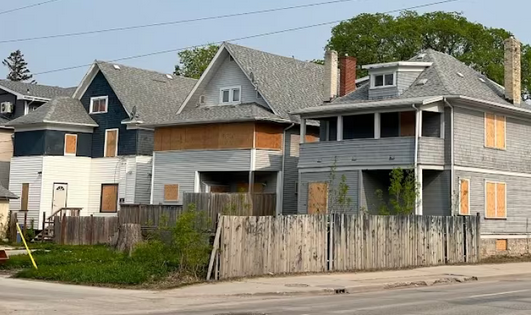
Kinew wants to expropriate derelict building and turn them into social housing
Winnipeg has around 750 derelict properties on it watch list and a shortage of housing at the same time. The Manitoba government is looking at ways to turn derelict buildings into new housing.
Expropriating buildings from problem landlords — and fixing them up — would help the NDP government meet its target of eliminating chronic homelessness within eight years, Premier Wab Kinew said in a year-end interview. "Cities and municipalities do have expropriation powers … but if there's more that's required, we're open to that," Kinew said. The province won't be able to build housing quickly enough or in a cost-effective enough way to meet housing needs, he said. "One of the easier ways for us to move forward on adding to the housing stock, as it pertains to getting people out of bus shacks and out of encampments, is to find an existing hotel or an existing apartment building that's maybe not fit to be lived in right now, but with six months and a more modest investment, could be." Read more
| | |
More housing coming, but will it be affordable?
The city of Winnipeg’s housing market is getting a $122-million boost, but experts say the need for more affordable housing is still not being met.
Winnipeg said the funds come from the federal government’s housing accelerator fund, and will go into incentives and programs expected to fast-track more than 3,000 new housing units, including 900 affordable units.
In order to get the money, the city had to make changes to its zoning rules. Jino Distasio, an urban geography professor at the University of Winnipeg, said those changes are good news for new development. “We all have to remember (that) yes, we can build housing,” Distasio said. “But we have to make sure that families and households can afford that housing.”
Christina Maes Nino, executive director for the Manitoba Non-Profit Housing Association, said that there are still gaps that need filling and that 900 units “will not be enough.” She said she’s optimistic, though, because “it will be more than what’s been done in a long time.” But the city is missing the mark a bit, she said. “It’s the rental housing for low-income folks where we really need to focus supports, because those folks are not being met by the market.” Maes Nino said the biggest group in need are single, employed people making minimum wage who can only afford up to $900 in rent monthly, adding that single women with children are over represented in this demographic. Manitoba needs about 10,000 units over the next 10 years to meet that demand, she said. Watch the interview
| | |
Have Your Say in the 2024 Budget
The 2024 Manitoba budget engagement has started. The engagement includes a survey, and will continue throughout January and early February with town hall meetings.
Help ensure that #MBBudget2024 meets the needs of Manitobans. Take the survey, attend engagements, submit your recommendations, and share with others who would like to see Budget 2024 support our sector.
Community housing, which is housing that is owned by government, by a cooperative, or by a non-profit, is both a social good and an economic necessity. The 2024 budget is an opportunity for the provincial government to invest in community housing to achieve economic efficiencies and growth, to end chronic homelessness in Manitoba through housing with appropriate supports, and to preserve the legacy of housing that has been created in our province.
The Manitoba Non-Profit Housing Association's budget submission will include our members' three priorities:
1. Repairs and Capital Funding
It is critical that community housing stock is maintained to continue providing good quality homes for Manitobans. To this end, we recommend the government provide $1.5 billion in funding over ten years, with a stream of financing developed for and by Indigenous-led housing organizations. It would cost at least four times more to replace this housing if it were lost. The funding is most critical for those with operating agreements set to expire in the next 5 years.
2. Supports within Community Housing
Community housing is more than a door and four walls, it delivers home, community, and stability. To prevent eviction, reduce social isolation, and provide resource connections for tenants to build healthy and safe communities, we recommend a target of 1 tenant support worker per 100 units, in addition to an increasing amount and diversity of supportive housing for seniors and people at risk of homelessness.
3. New Housing Development
The provincial government must create 10,000 affordable, community-owned (non-profit, cooperative, and public) units over ten years to meet the current need.
A recent report by Deloitte, commissioned by the Canadian Housing Renewal Association and partners, concluded that investments in community housing boost productivity and economic growth without contributing to inflation. It recommends that Canada aim to achieve the OECD average share of community housing, 7%. In Manitoba, achieving this target would lead to a 3.5% to 5.8% increase in productivity, and a $0.9-$2.2 increase in GDP.
A long-term strategy on community housing will be necessary to achieve this ambitious target. While developing the strategy, the 2024 budget can immediately begin to achieve an increase in community housing through:
- Following through on the commitment to remove the PST from new rental builds, following the model of the Rental Construction Tax Credit.
- A continuous proposal development program so non-profit groups can build the capacity necessary to develop a pipeline of community housing projects.
- Develop a housing acquisition fund modeled off British Columbia’s Rental Housing Protection Fund to allow non-profits to purchase existing housing to protect and/or increase the affordability of existing units, including (but not limited to) vacant and derelict buildings.
- Continue to provide funding for new community housing development by supporting operations and capital gaps for those receiving funding through the National Housing Strategy.
Manitoba's bold goal of ending chronic homelessness in two terms is an inspiration for all those working in housing, and will require collaboration, innovation, and persistence to maintain what has been built while creating even more effective solutions.
| | |
Spirit of Community Award Winner
Efficiency Manitoba has received the Spirit of Community Award as part of the Manitoba Non-Profit Housing Association 2023 awards ceremony. This recognition award honours an organization whose significant support and committed partnerships have contributed towards building a thriving, sustainable non-profit housing sector in Manitoba.
Efficiency Manitoba offers the opportunity, support, and resources to hire an energy efficiency advocate to create and implement community energy efficiency plans with guidance from their energy experts.
In 2022, Efficiency Manitoba provided a grant from their Innovation Fund of $187,500 for an energy retrofit study on Bethel Place. These plans help communities lower their overall energy consumption by taking part in Efficiency Manitoba’s programs for energy efficiency upgrades. These improvements also help to enhance accessibility, air quality and thermal comfort for residents. Planning for improvements keeps buildings, like Bethel Place’s operating costs as low as reasonably possible. These systems may involve improving or replacing ventilation systems, windows and doors, lighting; adding of passive energy systems; or adding insulation where it makes economic sense.
The energy efficiency advocate helps foster a culture of conservation in the community, empowering its citizens to participate in energy-saving initiatives. With rising energy costs and aging buildings, energy improvements are a smart way to continue providing affordable housing into the future. Learn more
| | |
MNPHA Staff Changes
Idorenyin Mbang has moved into the position of Coordinator of Events and Member Services. He'll oversee the mentorship program and developing partnerships that are of value to members.
Idorenyin's email address is changing from info@mnpha.com to membership@mnpha.com.
Jo Dworschak's email address is changing from membership@mnpha.com to social@mnpha.com she's continuing her position as Education and Communications Coordinator.
| | |
The Rent Relief Fund Program Expands
The Rent Relief Fund has several milestones in 2024, including steps to reduce barriers for participants. They’ve launched a new database system that helps report on the program outcomes and advocate for improved eviction prevention measures in Manitoba. RRF is incorporating three new team members to reduce participant response time and increase repayments to the program. This includes our new Office Coordinator Carleigh. She will be splitting her time between RRF and MNPHA. Her contact information is 204-222-2181 or officecoordinator@mnpha.com. In Spring 2024 they’ll be opening an accessible office space so participants can meet them in person.
The Rent Relief Fund also established its first access site within the Brandon Neighbourhood Renewal Corporation (BNRC). We have valued the relationship developed with the BNRC and appreciate the support their organization has provided to Rent Relief Fund participants. They’re also now attending the Millennium Library once a month to provide program information to individuals. This has been an excellent venue to connect with a diverse demographic within Winnipeg’s downtown.
Moving forward their goal is to strengthen the program’s relationship with property managers across the sector to help stabilize tenancies. If you would like additional information on the Rent Relief Fund and how it may be able to help stabilize tenants in your buildings, please feel free to reach out for additional information! Learn more
| | |
MNPHA Board Training 2024
This course is for those who serve (or are considering serving) on a non-profit housing board as a director/board member. Building Boards is an online, self-guided training delivered via Google Classrooms. Registrants can access the courses for February to April. Become a more effective and knowledgeable Board Member with this essential training. You’ll learn:
- Creating sustainable operating budgets
- Efficient, mission-focused meetings
- Board governance
- Succession planning
- Overseeing operations
- Bylaws and legal requirements
- Understanding financial reports and audits
- Board-Management working relationships
This training program consists of approximately eight hours of videos, reading, and assignments in small segments. A certificate of completion can be provided.
| | |
Members Breakfast Club
We are so grateful for the success of Breakfast Club. Both the Winnipeg and Brandon events sold out and were a huge success for our members. Developed as an opportunity for members to network and share information, we continue Breakfast Club into 2024 with a focus on networking as well as collective problem solving of issues the attendees are facing with their non-profit housing associations.
Skip your regular routine. Join us for a stress-free start of your day with breakfast. Let's connect with coffee, conversations, and a great meal.
Thursday, February 15th from 8:30am - 10:00am
Wood Tavern in the Norwood, 112 Marion Street, Winnipeg
| | |
Five Good Ideas for Succession Planning
Leadership transitions are the most vulnerable period during an organization’s tenure. And they are notorious for creating tremendous anxiety among staff, board members, donors, and volunteers, especially if it’s a long-tenured leader.
Why? Is it because it’s rushed? There isn’t buy-in from all the necessary decision-makers? The wrong people are running the show? There’s no plan?
Five Good Ideas
- Don’t wait: The average Executive Director (ED) tenure is six years, and the search can take four to seven months minimum.
- Plan for a two- or (gasp!) three-year intentional process: Enough talk about what happens if the ED accidentally disappears. EDs don’t care to think about accidentally disappearing.
- Don’t call it succession planning: Let’s call it “organizational readiness” and reduce anxiety.
- Invest in board leadership: What will the board do when the person in charge is the one who is leaving?
- Hold your outgoing ED accountable: Build a list of high-level program priorities for the ED.
Learn more from Maytree
| | |
Webinar - Talking Housing Affordability and the Missing Middle
Canada is in the midst of an ongoing housing crisis with homeowners and renters alike feeling the effects. Join CHRA and the Canadian Real Estate Association as they discuss the "missing middle”, how a lack of supply is part of what landed Canada in this crisis, and how increasing supply is part of the solution.
Tuesday, January 23rd from 12:00pm - 1:00pm on Zoom. Register here
| |
CIH Canada Training: Toolbox+
This training will focus on increasing affordable housing development knowledge through learning about key components of the development process. Through participation in this training you will also be given access to project tools and resources created by Toolbox+ to support your affordable housing project.
February 20, 21, 27, and 28, 2024 | 12:00 PM – 2:00 PM (ET) on Zoom. Register here
| | We list all the funding opportunities, including the ongoing funding on mnpha.com | | |
Canada Summer Jobs grant program
CSJ aims to help young Canadians (aged 15 to 30 years) develop the skills and gain paid work experience to successfully transition into the labour market.
The objectives align with the Youth Employment and Skills Strategy and are as follows:
- provide quality work experiences for youth
- respond to national and local priorities to improve access to the labour market for youth who face unique barriers
- provide opportunities for youth to develop and improve their skills
This program provides wage subsidies to employers from not-for-profit organizations and the public sector, as well as private sector organizations with 50 or fewer full-time employees, to create quality summer work experiences for young people . Applications are due by January 10, 2024 at 11:59pm (pst) Read more
| |
NICHI - Funding Applications Open for Indigenous-led housing
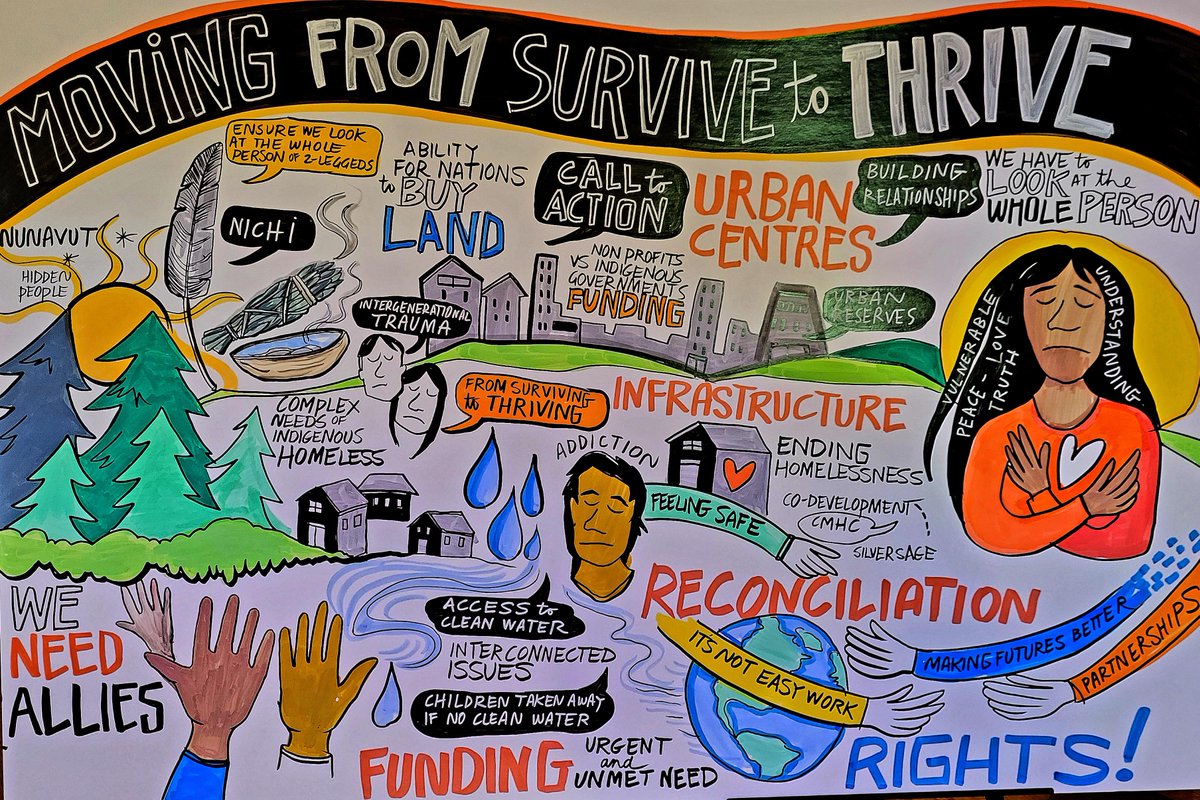
In recognition of the need for immediate action, the federal government and NICHI announced funding of $281.5 million from Budget 2022 to address the critical need for safe and affordable urban, rural and northern Indigenous housing projects. This funding will be delivered through a call-out for Expression of Need to identify and select projects that address the urgent and unmet housing needs of Indigenous Peoples living away from their traditional communities. Deadline to apply is January 12th. Learn more
| |
Canada Greener Affordable Housing Program
Canada Greener Affordable Housing provides low-interest loans and grants for deep energy retrofits. Multi-unit (5+) residential can access the program if they target at 70% reduction in energy consumption and an 80% reduction in greenhouse gas emissions. Applications for retrofit funding are accepted on a continuous basis until the available funding have been fully committed. Pre-retrofit funding for activities such as energy audits, energy modelling studies and building condition assessment reports required for a retrofit funding application are open now. Learn more
| | |
Pest Control Grant Program
Grants are available for non-profits to address pest infestations in two streams. The first stream is for non-profit organizations that require financial assistance to undertake education, treatment, and prevention activities required to eliminate pests. The second is the Homelessness Support stream which supports groups working with tenants for whom managing pests is a barrier to acquiring or maintaining housing. The program receives applications on an ongoing basis until the program budget is fully committed. Learn more
| | |
Kinew Housing hiring Executive Director
Kinew Housing is Indigenous led and is located in the City of Winnipeg. The Executive Director ensures the efficient and effective management of Kinew Housing Inc. rental properties and is responsible and accountable for all property management functions and activities including maintenance of units and grounds; leasing; vacancy management; tenant relations. The Executive Director will perform these duties and responsibilities in accordance with Kinew Housing Inc.’s project Operating agreement, Manitoba Housing, MHRC, The Residential Tenancies Act and the Residential Tenancies Branch. Read more
| | |
Chief Executive Officer to Lead SAM Management Forward
Reporting to the SAM Board of Directors, the Chief Executive Officer will support the Board in developing and implementing the strategic vision and direction for the organization. As a visionary leader who thrives at the 30,000-foot level, you are an accomplished and experienced change agent who maximizes performance through organizational growth. Known for your problem-solving abilities, you also bring a strength of knowledge in finance and systems to the role. Read More
| | |
|
Manitoba Non-Profit Housing Association | www.mnpha.com
membership@mnpha.com I (204)797-6746
| |
| | | |