California SB 1006: From Policy Signal to Action on Advanced Conductors
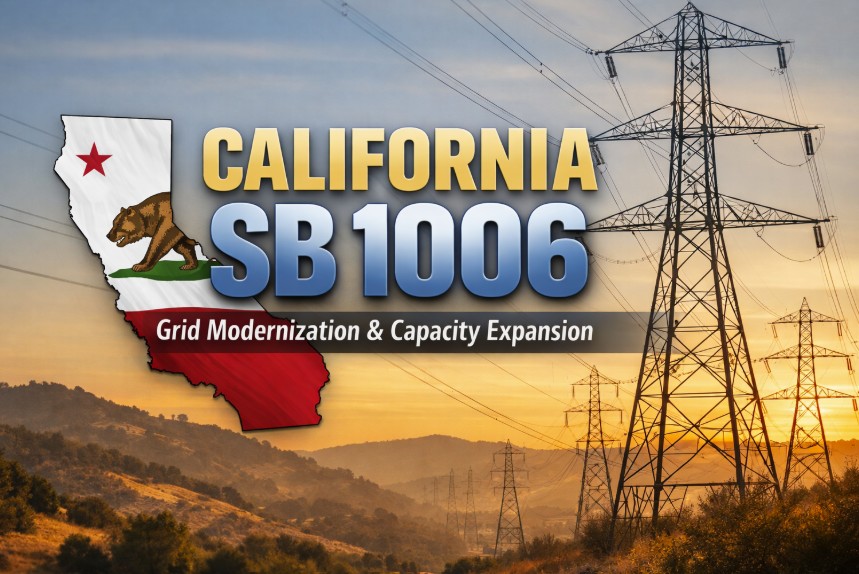
When California enacted SB 1006 in September 2024, it sent a clear signal: incremental transmission upgrades are no longer enough. The law directs CAISO transmission owners to systematically evaluate reconductoring existing lines with Advanced Conductors and deploying grid-enhancing technologies as faster, lower-cost alternatives to traditional new-build transmission. The premise is simple but powerful - California cannot afford to wait decades for new corridors when substantial capacity is already embedded within existing rights-of-way. By embedding reconductoring directly into formal transmission planning, SB 1006 moves Advanced Conductors from “optional” to essential.
Early results confirm the scale of the opportunity. In response to SB 1006, utilities have already identified more than 65 transmission projects suitable for reconductoring, with Southern California Edison, San Diego Gas & Electric, and Pacific Gas & Electric all highlighting Advanced Conductors - and specifically ACCC® Conductor - as proven solutions for relieving thermal constraints, reducing congestion, and accelerating capacity delivery. For CTC Global, SB 1006 does not validate a new concept, but a solution with more than two decades of operating history. The remaining challenge is execution: moving from studies to action, and deploying reconductoring at the pace California’s grid now demands. Read the full blog to explore how SB 1006 is turning policy into real-world transmission capacity.
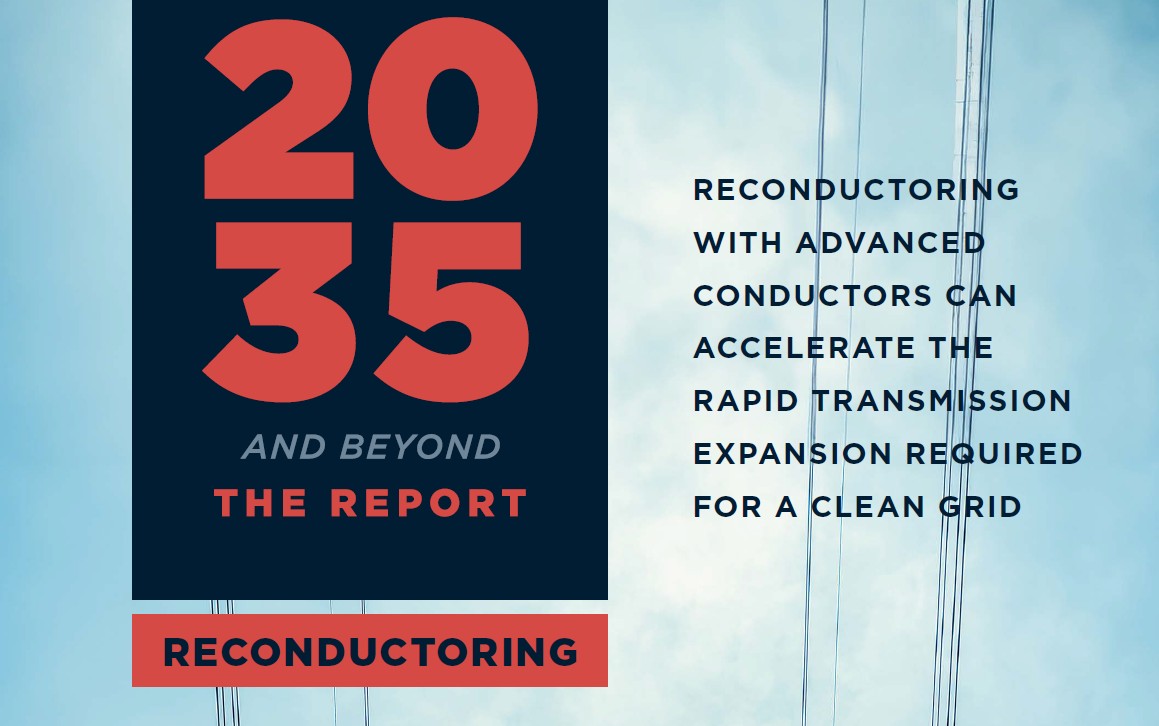
| | | | Nearly Two Years On: Why the Case for Advanced Conductors Is Even Stronger Today | Nearly two years after the release of GridLab and UC Berkeley’s landmark 2035 reconductoring reports, the central conclusion has only grown more urgent: transmission, not generation, is the limiting factor in the clean energy transition. With load growth accelerating, congestion costs rising, and new line development still constrained by permitting and siting hurdles, reconductoring with Advanced Conductors has proven to be one of the few solutions capable of scaling fast enough to matter. This article revisits the original findings, examines what has changed since their publication, and explains why Advanced Conductors have shifted from a promising strategy to an essential pillar of near-term transmission expansion and long-term grid planning. | | | | Corrosion is one of the most persistent and underestimated threats to overhead transmission lines, especially in coastal, agricultural, and industrial environments where chemical exposure is continuous and unavoidable. Since 2004, ACCC® Conductor has fundamentally changed how utilities manage this risk by eliminating steel entirely from the load-bearing core and replacing it with a non-metallic, corrosion-immune composite. With more than 20 years of operating experience, over 200,000 kilometers installed across 65+ countries, and proven performance in some of the world’s most chemically aggressive environments, ACCC® Conductor has demonstrated durability at a scale no alternative technology can match. Its corrosion resistance is not dependent on coatings or protective assumptions - it is inherent by design. Read the full article to understand why ACCC® Conductor has become the global benchmark for corrosion resistance in overhead transmission. | | | | Why Pew’s Analysis of Advanced Transmission Technologies Matters - and Why States Are Acting Now | Pew Charitable Trusts’ recent analysis highlights why Advanced Transmission Technologies - especially Advanced Conductors and other Grid-Enhancing Technologies - have become practical, near-term solutions for meeting rapidly growing electricity demand. By translating complex grid concepts into clear policy guidance, Pew helps explain why states such as California are now requiring these technologies to be evaluated in transmission planning. With proven deployments delivering capacity, reliability, and wildfire-risk benefits on much faster timelines than new lines, the report underscores a growing reality: advanced transmission is no longer optional. Read the full article to see how states are turning this insight into action. | | | | |
2 ACCC® Projects Recently Energized
75 ACCC® Projects Under Construction
41 ACCC® Projects Scheduled to Start
1,450+ ACCC® Projects Completed
| | 400 kV Transmission Line | Peloponnese, Greece | | |
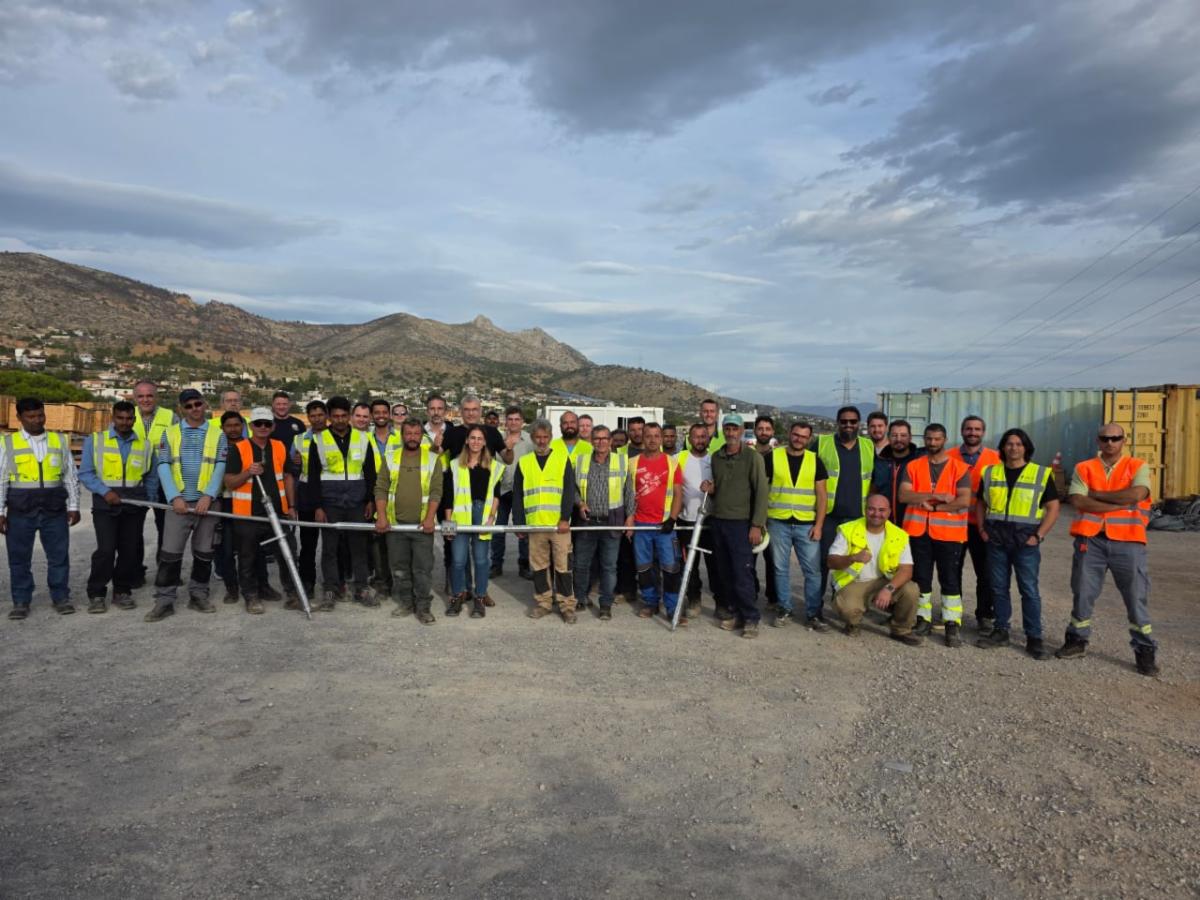
Construction has begun on Europe’s first ACCC® Conductor re-inspectable 400 kV transmission line, a landmark project designed to optimize and strengthen Greece’s national power grid in the Peloponnese region between Korinthos and Koumoundorou. The 80-km double-circuit line - approximately 95% built on new towers - will deploy 1,200 km of ACCC® Cardinal Conductor supplied by Midal, with hardware and fittings provided by TAG India. Construction activities will be supervised by Greece’s transmission system operator, IPTO, ensuring the highest standards of execution and quality, with the Joint Venture Metlen S.A. – Atermon S.A. playing a central role in delivering the project.
At the heart of the project is the ACCC InfoCore® System, an advanced solution that makes the conductor’s composite core fully inspectable before, during, and after installation, and throughout its service life. This re-inspectability introduces an unprecedented level of transparency for asset owners and operators, setting a new benchmark for transmission infrastructure in Europe. By combining increased capacity, reduced sag and losses, lower CO₂ emissions, and lifecycle inspection capability, the Korinthos–Koumoundourou line not only modernizes the Greek grid but also establishes a compelling model for future high-performance, resilient transmission projects across the region.
| | | | |
NASEO 2026 Energy Policy Outlook Conference
Feb 3-6 | The Fairmont, Washington, DC
| CTC Global policy leaders will be in attendance at the NASEO 2026 Energy Policy Outlook Conference, held February 3–6 at The Fairmont in Washington, DC. This annual forum brings together state energy officials, policymakers, and industry stakeholders to discuss priorities shaping U.S. Energy Policy and Infrastructure Planning. The conference provides a valuable opportunity to engage in thoughtful dialogue on transmission planning, grid reliability, and the role of proven technologies in supporting state and regional energy objectives. CTC Global looks forward to participating in these discussions and connecting with colleagues focused on advancing a resilient and efficient power system. | | | | |
NARUC Winter Policy Summit
Feb 8-11 | The Westin Washington DC City Center
| CTC Global policy leaders will be in attendance at the NARUC Winter Policy Summit, taking place February 8–11 at the Westin Washington DC City Center. The Summit convenes state utility commissioners, regulators, and industry stakeholders to discuss key regulatory and policy issues affecting the nation’s energy and utility sectors. The event offers an important forum for thoughtful exchange on transmission planning, grid reliability, and cost-effective approaches to modernizing infrastructure. CTC Global looks forward to engaging with participants and contributing to informed discussions on the evolving policy landscape. | | | | |
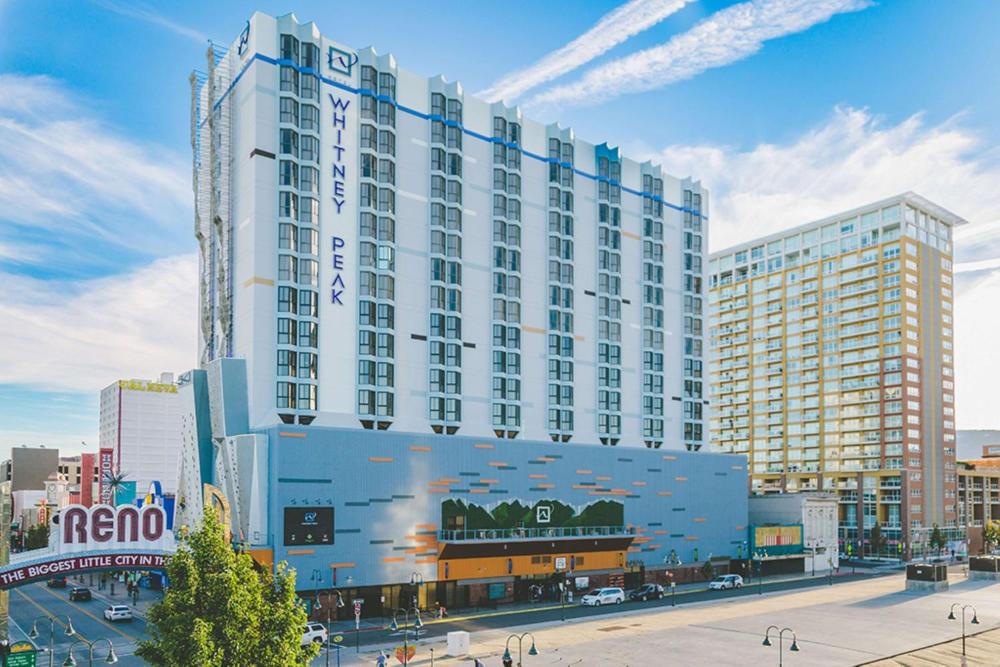
EUCI - Wildfire Mitigation for Utilities Conference
Feb 24-25 | Reno, Nevada
| CTC Global will participate as a sponsor at the EUCI Wildfire Mitigation for Utilities Conference, taking place February 24–25 in Reno, Nevada. This national forum brings together utility leaders, policymakers, engineers, and risk management professionals to address the growing challenges associated with wildfire prevention, mitigation, and grid resilience. The conference provides an important opportunity to examine practical, cost-effective strategies for reducing wildfire risk while maintaining system reliability and safety. CTC Global looks forward to engaging with industry peers and contributing perspectives on proven transmission solutions that help utilities strengthen their wildfire mitigation efforts at scale. | | | | |
Infraday Texas Conference
March 3-4 | Austin, Texas
| CTC Global will be participating in the 7th Infraday Texas Conference (Advancing Innovative, Resilient, Efficient Infrastructure Projects in Texas), taking place March 3–4 in Austin, Texas. This regional policy forum convenes public and private sector leaders, infrastructure owners, and project developers to explore innovative solutions that advance resilient and efficient infrastructure across the state. The event offers a timely platform for dialogue on regulatory frameworks, financing mechanisms, and best practices that support modernization of critical energy and transmission systems. CTC Global looks forward to engaging with stakeholders and sharing insights on technologies and strategies that help build a stronger, more reliable infrastructure future for Texas. | | | | Bloomberg & Goldman Sachs: When the Grid Becomes a Bottleneck | The warning signs for the U.S. power grid are no longer subtle - and they are now coming from the heart of global finance. Recent reporting by Bloomberg, informed by analysis from Goldman Sachs, makes clear that surging demand from artificial intelligence, data centers, and electrification is on a collision course with a transmission system that simply has not kept pace. This article argues that the growing risk to reserve margins and reliability is not fundamentally a generation problem, but a grid delivery problem - one rooted in decades of underinvestment, aging conductors and slow modernization. As demand accelerates and extreme weather intensifies, the grid itself is becoming the bottleneck, and the question is no longer whether action is needed, but whether utilities, regulators, and policymakers will move fast enough to unlock the capacity that already exists. | | | | NARUC Releases New Wildfire Workbook for Utility Regulators | The National Association of Regulatory Utility Commissioners (NARUC) has released its new Wildfire Workbook for Utility Regulators, recognizing that wildfire risk - once viewed as a Western U.S. issue - has become a national challenge for electric utilities and regulators alike. The workbook provides commissions with a practical compilation of policies, regulatory approaches, and considerations being used today to address wildfire risk, with a focus on utility risk management, grid hardening, operational practices, cost recovery, and financial resilience - while deliberately avoiding one-size-fits-all “best practices” so states can apply solutions suited to their unique conditions. | | | | |