The content in this preview is based on the last saved version of your email - any changes made to your email that have not been saved will not be shown in this preview.


A Book Talk and Discussion on

The Social Roots 

of Authoritarianism


with author

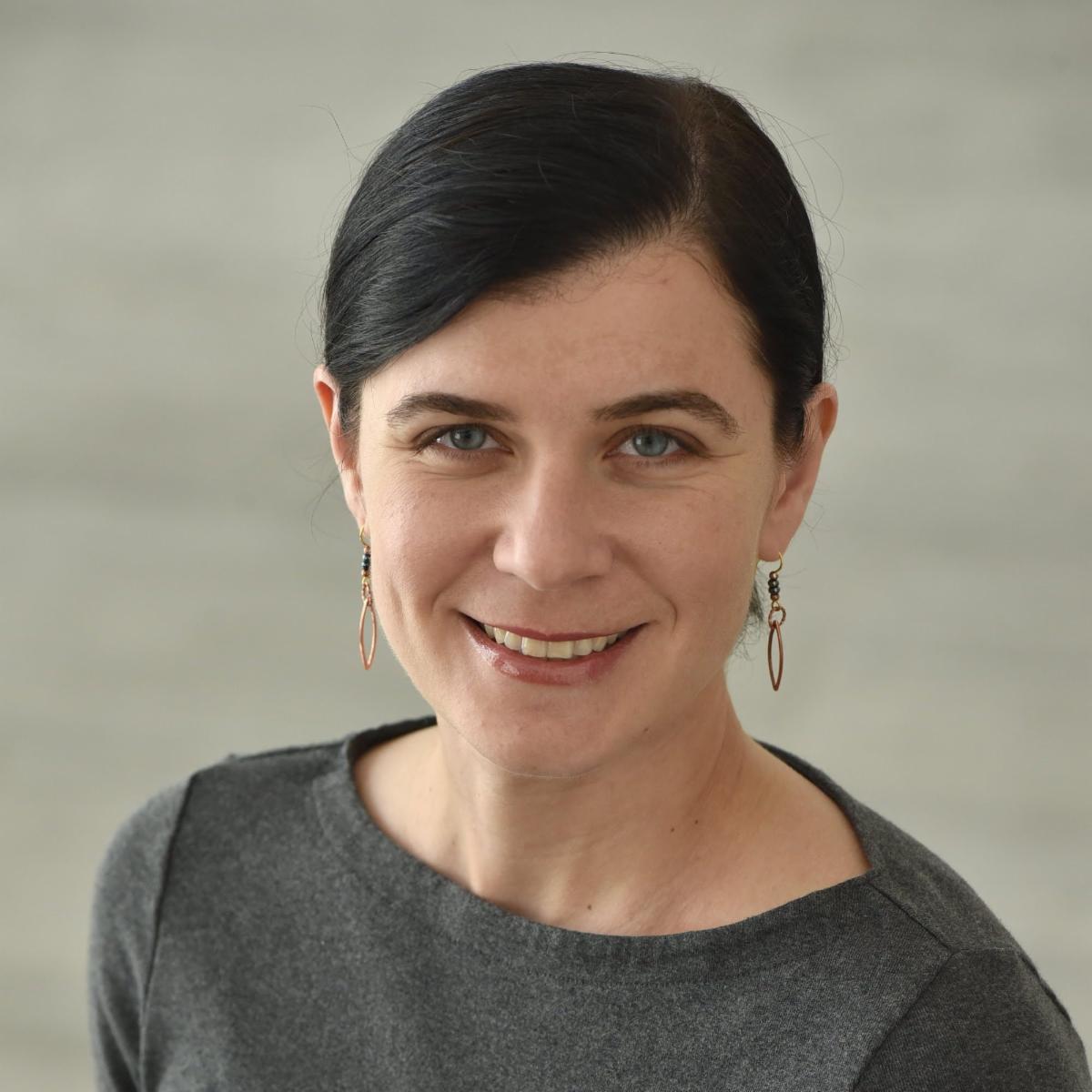
Natalia Forrat


moderated by

David Szakonyi

Wednesday, April 22, 2026

3:00-4:00pm


Elliott School of International Affairs

1957 E St NW | Washington, DC 20052

Voesar Conference Room | Suite 412 (4th Floor)

Why do citizens cooperate with a state that mistreats them? And why does that cooperation look so different from one place to the next?


In The Social Roots of Authoritarianism (Oxford University Press, 2024), Natalia Forrat offers a new framework for understanding how authoritarian power works at the grassroots level. Drawing on fieldwork across four Russian regions, she identifies two distinct models of authoritarianism rooted in how societies view the state. Where people see the state as their collective team leader, regimes consolidate through social conformity and solidarity. Where they see it as an outsider, regimes rely on clientelist bargains and transactional loyalty. These aren't just different flavors of the same thing — they produce fundamentally different political machines, electoral control patterns, and implications for what democratization would require.


Forrat’s theory challenges the use of conventional categories of competitive politics to understand authoritarianism. She shows that when a group bond between citizens and the state is present, state-society relations are driven not by competition among different groups seeking to use state resources to their advantage but by the collective pursuit of a just state and the conflict between this ideal and the reality of a repressive state. For democracy practitioners, the book carries an important implication: because different types of authoritarianism lack different elements of democracy, support efforts may need to set different goals and target different institutions depending on the kind of authoritarian society they are engaging with.

Author

Natalia Forrat is a lecturer at the University of Michigan. Her research focuses on authoritarianism, the state, state-society relations, and social movements. She is the author of The Social Roots of Authoritarianism (Oxford University Press, 2024); her other research has appeared in Comparative Politics, Post-Soviet Affairs, and publications by Freedom House. In the past, she was a pre- and postdoctoral fellow at Stanford’s CDDRL, Kellogg Institute at the University of Notre Dame, and Weiser Center for Emerging Democracies at the University of Michigan.

Moderator

David Szakonyi is Associate Professor of Political Science at George Washington University, co-founder of the Anti-Corruption Data Collective, and Co-Director of PONARS Eurasia. His research focuses on corruption, clientelism, and political economy in Russia, Western Europe, and the United States. His book — Politics for Profit: Business, Elections, and Policymaking in Russia (Cambridge University Press, Cambridge Studies in Comparative Politics, 2020) — examines why business people run for elected political office worldwide, how their firms perform as a result, and whether individuals with private sector experience make different policy decisions. Other research looks at the effectiveness of anti-corruption campaigns, employers mobilizing their employees to vote, and nepotism under authoritarian rule. His investigative work has been published in the Washington Post, Foreign Policy, the Daily Beast, and the Miami Herald, among other outlets. In addition, he is a Research Fellow at the International Center for the Study of Institutions and Development at the Higher School of Economics in Moscow.

This event is on record and open to the media.

The Institute for European, Russian and Eurasian Studies (IERES)
Elliott School of International Affairs, George Washington University
1957 E Street, NW / Suite 412 / Washington, DC 20052
Tel (202) 994-6340 / Fax (202) 994-5436 / Email ieresgwu@gwu.edu