Center for Law, Brain and Behavior
Year in Review: 2022
| |
| |  |
CLBB has continued to dynamically evolve during 2021-2022. We completed the transition to a full-time executive director position following the remarkable three-year tenure of my predecessor Dr. Francis Shen. We added distinguished persons to our Advisory Board and accomplished professionals to our Affiliated Faculty. We built or strengthened relationships with the Federal Judicial Center, Northwestern University’s Pritzker School of Law, Northeastern University School of Law, innovative youth-serving agencies, legal and judicial educators, policy institutes, and advocacy groups, and the Office of the District Attorney in Suffolk County, Boston.
CLBB’s unique mission is to bring neuroscience to law and public policy. Neuroscience is a
powerful tool to prevent crime and reduce recidivism, improve outcomes of those who are court-involved,
and afford greater community safety. It’s a powerful tool to protect vulnerable elders
against exploitation and maltreatment while also recognizing their dignity and autonomy. It’s a
powerful tool to shield asylum-seekers from injustice and suffering arising from deeply flawed ideas
about human memory and trauma. It’s a powerful tool to give young people a chance to redeem
themselves after a thoughtless, reckless, or even catastrophic act.
While we have had clear impact in each of these program areas, our challenge is to take them to
scale. Each day brings new inquiries from judges, attorneys, legal and judicial educators, law school
faculty, criminal justice advocates and policy-makers seeking information and assistance. As we are
still staffed mostly by volunteers, we can respond only to the carefully selected requests and
opportunities. As a result, an important achievement of the past year has been to plan for the
expansion of our capacity through a formal fundraising campaign.
This endeavor, titled the Neuroscience for Justice Campaign, has begun to show early successes from engaged Advisory Board members, other friends of CLBB, and foundations who have shown confidence in CLBB and the proposals we have submitted. These early successes will provide CLBB the resources to implement transformational reforms and to contribute more fully to criminal justice and social
equity. With increased charitable and foundation support, we can translate and disseminate neuroscience findings and their pragmatic application to law and public policy. We will do so by educating more judges,
providing tool kits for practicing attorneys, begin planning in earnest for implementation of creating an open access digital library of actionable neuroscience, and launching and evaluating innovative pilot reform projects with community partners, and continuing our ongoing initiatives specifically in Aging Brain (Elder Protection) and Juvenile/Young Adult Justice.
I continue to be honored to have been given the charge to advance the mission established by our founders and co-directors Dr. Judith Edersheim and Dr. Bruce Price and to see these program initiatives begin to move towards fruition. To succeed, your guidance and participation will continue to be crucial. Thank you for your commitment to the CLBB mission. Together, we will help bring about a more reasonable, humane and equitable justice system for all through the application of neuroscience.
| | | |
Juvenile And Emerging Adult Justice
CLBB released a White Paper on the Science of Late Adolescence in January 2022. Its findings are relevant to legal and policy issues for late adolescents including age of adult criminal prosecution, Miranda rights and false confessions, sentencing and community supervision, conditions of confinement, appeals, resentencing, and parole.
Thus far, the White Paper has been downloaded more than 3,500 times and is being used or will be used in trial/appellate cases or legislative reform initiatives in 11 states. CLBB’s first White Paper is a model for “translational science” geared to legal and judiciary communities.
| | | |
Solitary Confinement
CLBB provided research and consultation to The Sentencing Project in a lawsuit against the Virginia Department of Corrections regarding the use of prolonged isolation in solitary confinement, often referred to in the state as “restorative housing”. Efforts by the Department to sharply limit the legislatively mandated study stalled progress and the matter is back before the legislature. The inquiry into the impact of this practice is anticipated to proceed, increasing the likelihood that lengthy solitary confinement will be curtailed. As of 2018-2019, 7,000 prisoners in Virginia were placed in isolation at some point during the year.
| | | |
Trainings For Judges
CLBB conducted three-day in-person seminars on neuroscience and the law for federal judges and probation and pretrial officers in partnership with the Federal Judicial Center (FTC). From 2016-2019, 173 court personnel in 32 districts from 26 states and 2 territories participated. The program included follow-up webinars and individual consultations to help attendees apply the new knowledge in pre-trial, trial, and post-trial situations. CLBB also provided on-site individual consultations with the judiciary in districts in five states. Following the suspension of this Science in the Courtroom series during COVID-19, the FJC and CLBB are planning to resume the series as early as Fall 2023.
| | | |
Amicus Briefs
CLBB filed or joined 17 Amicus Briefs between 2016-2022, including 6 in United States Supreme Court cases, 5 in state Supreme Courts, 1 in the United States Court of Appeals 5th Circuit, and 1 in British Courts of Appeal.
These briefs have resulted in improved sentencing practices, revised trial procedures, and just outcomes in individual appeals. In Texas, for example, the State Appeals court granted a stay of execution and an order for a retrial of a prisoner in July two days before her scheduled execution. That same month in Michigan, the Supreme Court barred mandatory life without parole for persons committing offenses at age 18 or under.
| | | |
Expert Testimony
CLBB leadership presented neuroscience-based testimony to state legislative committees in Rhode Island and Massachusetts about abolishing life without the possibility of parole, classifying fetal alcohol spectrum disorder as a “disability,” and raising the age of adult culpability past 18.
Earlier this summer, the Massachusetts Superior Court Judicial Court relied on expert testimony from CLBB’s Executive Director Dr. Robert Kinscherff and three other experts about age and brain development to rule that it is unconstitutional to automatically sentence people under 21 to life in prison without the possibility of parole. This case is now before the Massachusetts Supreme Judicial Court with oral arguments scheduled for early February 2023.
| | | |
Training the Next Generation of Lawyers & Scientists
CLBB taught and mentored 43 research assistants and interns since 2019. They have included undergraduate and graduate students from schools around the country who are destined for or enrolled in law school, medical school, or master’s and doctoral programs in neuroscience. They have also included law students and graduate students in neuroscience or bioethics. Their time with CLBB has given them knowledge and hands-on experience with the intersection of brain science, behavioral and social sciences, law, and public policy. During 2021-2022, CLBB also partnered with the Petrie Flom Center at Harvard Law School to support a Senior Fellow in Law and Applied Neuroscience and our first International Senior Fellow in Law and Applied Neuroscience. CLBB leaders also serve as mentors in the department of Psychiatry at Mass General and at Harvard Medical School’s Program in Bioethics.
| | | |
Demonstration Project: Alternatives To Incarceration Of Young Offenders
CLBB is partnering with the Suffolk Country (Massachusetts) District Attorney’s Office to dismantle the “cradle to prison pipeline” through a pre-arraignment diversion program for persons aged 18 to 25 years. Guided by dual concerns for avoiding injustice and advancing public safety, the goal of this diversion program is to identify young offenders likely to benefit from social, educational, vocational behavioral health or other services to support rehabilitation and positive young adult development and engagement in the community. The details of this “shelf-ready” project are under discussion and review by the DA's Office and CLZBB in anticipation of pilot implementation in 2023. The project is designed to yield a reliable path to decreasing mass incarceration of poor and/or minority youth, lower unacceptably high recidivism rates, and avoid the negative long-term collateral consequences of prosecution and prison time.
| | | |
Global Education In Law And Neuroscience
CLBB is collaborating with the United Nations Institute for Training and Research (UNITAR) and The University of Maastricht in the Netherlands to develop a curriculum for worldwide audiences of attorneys, judges, policy makers, and legislators to inform and reform legal policies and practices through the application of neuroscience. Former CLBB Executive Director Francis Shen, who is now affiliated with the Program in Bioethics at Harvard Medical School, will also serve as a faculty member for this training series.
| | | |
White Paper On Aging And Elder Fraud
CLBB is developing a comprehensive summary for trust attorneys, private sector fiduciaries, and probate and family court judges to educate and help them strengthen measures to protect elders from financial exploitation and abuse. Joined by senior financial sector leaders, CLBB scholars are developing actionable definitions of decisional capacity and cognitive impairment, and undue influence with the goal of crafting draft regulations, policies, and procedures that support professionals with fiduciary duties for their financial clients to properly discharge those duties, thereby protecting financial assets while also balancing that protective duty with the autonomy of the elder client. This project demonstrates the sophistication and multidisciplinary capabilities of CLBB as it draws upon expertise in neuroscience, neurology, geropsychology, geriatric medicine, criminology, cognitive psychology, business and securities law, disabilities law, and elder law. It will analyze cases of maltreatment/exploitation of elders and elaborate a “supported capacities” model to balance elders’ need for protection with safeguards of their autonomy.
| | | |
Decision–Making Capacities Of Children
In recent months, CLBB has been developing a legislative briefing with the National Association of Counsel for Children on legally relevant decisional capacities of children up to age 18. The goal of this science-based briefing document is intended to bring about legislation that will expand children’s access to attorneys to represent them in cases of child abuse, suspension and termination of parental rights, and custody in high-conflict divorce proceedings. It will also serve as a training document for attorneys representing children to sharpen skills for developmentally aligned communications with children that will bring their “voices” to court and administrative proceedings that will fundamentally shape their futures.
| | | |
Pilot Project: Involvement Of Fiduciaries In Elder Protection
CLBB is currently designing a first-of-its-kind collaboration with investment advisory firms in response to rising numbers of cases of financial exploitation, fraud, and undue influence of elders – and particularly those with dementia or Alzheimer’s disease. Working hand in hand with fiduciaries, the project will develop practices and resources to identify suspected cases of maltreatment/exploitation of elders, clarify the legal and ethical duties of fiduciary professionals, and develop and test reasonable measures for fiduciaries to discharge these responsibilities. An Elder Protection Summit is being planned for Winter 2023 to bring together financial, legal, medical, behavioral health, elder protection, and other professionals to plan the collaborative project and to identify potential participants among financial investment, trust and advisory firms.
| | | |
CLBB & Petrie-Flom Center at Harvard Law School | Feb 9, 2022
The U.S. Supreme Court landmark case of Roper v. Simmons (2005) barring execution for crimes committed prior to age 18 launched a line of cases extending Eighth Amendment protections for juveniles. These cases clearly established that children are not little adults. The April 2021 SCOTUS decision in Jones v. Mississippi appears to signal a shift from federal constitutional cases to litigation and legislation among the states. This has prompted vigorous debate about how science should inform criminal law and policy regarding late teens and emerging adults and sharpens ongoing controversy about how developmental science is or should be applied to those under 18.
This panel surveyed the current landscape of cases and legislation focused on crafting developmentally aligned frameworks for responding to misconduct by younger adolescents, late adolescents (ages 18 – 20) and emerging adults (21 – 25), including “raising the age” of full criminal culpability past age 18. The contributions of neuroscience to informing a developmentally aligned jurisprudence for late adolescents and emerging adults was also reviewed.
Panelists included Carmel Shachar, Executive Director, Petrie-Flom Center, Honorable Jay Blitzman (ret.), CLBB Affiliated Faculty and Lecturer, Harvard Law School, Northeastern Law School, and Boston College Law School, Lael Chester, JD, Director of the Emerging Adult Justice Project at Columbia University’s Justice Lab, and Stephanie Tabashneck, PsyD, JD, Senior Fellow in Law and Applied Neuroscience, CLBB and the Petrie-Flom Center.
| | | |
CLBB & Boston Society of Neurology, Neurosurgery, and Psychiatry | Feb 10, 2022
Dr. Judith Edersheim and Dr. Robert Kinscherff presented a lecture entitled “Neuroscience in the Service of Justice” at the BSNNP.
| | | |
MGH FTD Unit Community Webinar Series | Feb 11, 2022
Do you have questions about legal and financial considerations after a diagnosis of dementia? Have you thought about the role that an attorney can have as a member of your care team? Do you know the steps you can take to protect yourself and your vulnerable loved one in the face of financial scams?
Katie Brandt joined for a conversation with Dr. Judith Edersheim and Dr. Bruce Price to discuss how families can recognize legal and financial threats and take action to protect their loved ones living with a diagnosis of dementia.
| | | |
CLBB & Petrie-Flom Center at Harvard Law School | Feb 22, 2022
How can family law support parents and their children when a parent has a substance use disorder? One in eight children live in a home with a parent with a substance use disorder. Most of these children are under the age of five. This discussion examined innovations in family law contexts, such as divorce, child custody, and care and dependency cases, that promote safety and recovery while emphasizing compassion and support for parents. Topics of discussion included family drug court interventions, interventions for mothers with opioid use disorder, integrated family medical and behavioral care, and implications for policy. Panelists were Carmel Shachar, Executive Director, Petrie-Flom Center, Hon. Beth A. Crawford (Ret.), First Justice, Franklin County Probate and Family Court, Massachusetts (Former), Davida Schiff, MD, Director, Perinatal and Family-based SUDs Care at Massachusetts General Hospital and Assistant Professor of Pediatrics, Harvard Medical School, and Stephanie Tabashneck, PsyD, JD, Senior Fellow in Law and Applied Neuroscience, CLBB and the Petrie-Flom Center
| | | |
Dubai Neurology Hybrid Congress | February 25-27, 2022
Dr. Bruce Price presented at the 2nd Dubai Neurology Hybrid Congress, held in Dubai Festival City, UAE. Dr. Price spoke at the Dementia Session in a lecture titled “Alzheimer Disease: A Neuropsychiatric Syndrome?” Workshops at this conference included topics on movement disorder and Parkinson’s, dementia and Alzheimer’s disease, headache management, multiple sclerosis, stroke, and epilepsy.
| | | |
CLBB & Petrie-Flom Center at Harvard Law School | March 31, 2022
In Commonwealth v. Eldred, the Massachusetts Supreme Judicial Court held that a court may order a defendant who is addicted to substances to remain drug free as a condition of probation and that if a defendant tests positive for an illegal substance, the defendant may be found in violation of his or her probation. Attorney Lisa Newman-Polk, who litigated Eldred, discussed the legal landscape regarding the criminalization of addiction. Dr. Alexander Walley contextualized substance use disorder as a medical illness. Dr. Stephanie Tabashneck led a discussion on the implications of criminalizing substance use disorder. Panelists included Carmel Shachar, Executive Director, Petrie-Flom Center, Lisa Newman-Polk, lawyer and licensed certified social worker, Alexander Walley, Professor of Medicine, Boston University School of Medicine; Director, Addiction Medicine Fellowship Program; Co-Director, Fellow Immersion Training Program in Addiction Medicine; Associate Director, Faster Paths to Treatment Addiction Urgent Care Clinic; and Medical Director, Opioid Overdose Prevention Pilot Program, Massachusetts Department of Public Health, and Stephanie Tabashneck, PsyD, JD, Senior Fellow in Law and Applied Neuroscience, CLBB and the Petrie-Flom Center
| | | |
CLBB & Petrie-Flom Center at Harvard Law School | April 20, 2022
The legalization of cannabis has raised significant questions for law and public policy. In this public event, neuroscientist Dr. Yasmin Hurd explored the science of cannabis, CBD, and the future of substance use disorder treatment. Dr. Stephanie Tabashneck moderated a discussion and audience Q&A about the implications for law and policy. Panelists included Carmel Shachar, Executive Director, Petrie-Flom Center, Yasmin Hurd, PhD, Ward-Coleman Chair, Translational Neuroscience, Professor Psychiatry and Neuroscience, and Director, Addiction Institute, Icahn School of Medicine at Mount Sinai, and Stephanie Tabashneck, PsyD, JD, Senior Fellow in Law and Applied Neuroscience, CLBB and the Petrie-Flom Center
| | | |
The Petrie-Flom Center at Harvard Law School | May 17, 2022
Advances in the scientific understanding of addiction have important implications for treatment, policy, and the law. In this panel, Dr. Eden Evins discussed addiction neuroscience, prognosis, and treatment. Dr. Stephanie Tabashneck then led a discussion on the role of addiction science in judicial and legal decision-making at the intersection of science and the law. Panelists were Carmel Shachar, Executive Director, Petrie-Flom Center, Eden Evins, M.D., Director, MGH Center for Addiction Medicine and Cox Family Professor of Psychiatry, Harvard Medical School, and Stephanie Tabashneck, PsyD, JD, Senior Fellow in Law and Applied Neuroscience, CLBB and the Petrie-Flom Center
| | | |
The Petrie-Flom Center | October 27, 2022
Neuroscience is playing a key role in legal decisions about children and young adults serving life sentences. The US Supreme Court relied upon research on adolescent brain development to bar execution and limit sentences of Life Without Possibility of Parole for crimes committed under age 18. However, the U.S. Supreme Court case Jones v. Mississippi (2021) shifted the battleground from federal constitutional protections to protections afforded by state constitutions—with mixed results to date. This panel examined the latest neuroscience in the context of emerging case law. Panelists included Carmel Shachar, Executive Director, Petrie-Flom Center, Leah Somerville, Professor of Psychology and Director, Affective Neuroscience and Development Laboratory, Harvard University, Stephanie Tabashneck, PsyD, JD, Senior Fellow in Law and Applied Neuroscience, CLBB and the Petrie-Flom Center
| | | |
CLBB | November 3, 2022
On November 3rd, Dr. Joel Dvoskin and Dr. Adam Haar Horowitz presented on the neuroscience of solitary confinement and its current uses and abuses in the American correctional system. This session was moderated by CLBB Executive Director Robert Kinscherff, PhD, JD.
| | Noteworthy Research and News | | CLBB leadership participated in several other ventures relating to neuroscience and its application to the law. | | | |
Innocence Project | April 25, 2022
CLBB Chief Science Officer Dr. Lisa Feldman Barrett recently consulted with the Innocence Project on the case of Melissa Lucio, who was sentenced to death in Texas and had a pending execution date of April 27, 2022. Dr. Feldman-Barrett reviewed testimony given at Ms. Lucio's trial in which law enforcement claimed to be able to discern Ms. Lucio's "guilt" from her facial expressions made during her interrogation.
Dr. Feldman Barrett explained in a declaration that neuroscientific research now shows that it is impossible to "diagnose" emotions, let alone guilt or innocence, from facial expressions or bodily movements. In April, the Texas Court of Criminal Appeals stayed Ms. Lucio's execution for further litigation on her innocence claims
| | | |
Dr. Robert Kinscherff Provides Testimony to the Committee on the Judiciary of the Rhode Island Senate
Center for Law, Brain and Behavior | April 2022
CLBB Executive Director Robert Kinscherff, PhD, JD provided testimony to the Committee on the Judiciary of the Rhode Island Senate regarding a bill that would abolish the sentence of Life Without Possibility of Parole. Dr. Kinscherff briefed the Senators on developmental social sciences and neuroscience relevant to justifications for sentences (general and specific deterrence, incapacitation, punishment, and rehabilitation). The briefing was received with considerable interest by the Senators. Proponents of the bill, including the Sentencing Project, are optimistic that the bill will receive a favorable vote and recommendation by the Committee. This testimony followed his briefing during Winter 2022 before members of the Rhode Island House on this issue.
| | | |
"Judges, Mindfulness, and the Brain" Presentation
Federal District Judges New Jersey Retreat | Fall 2022
CLBB Director Dr. Judith Edersheim presented a “Judges, Mindfulness, and the Brain” Talk at the Federal District Judges New Jersey retreat at the invitation of Judge Esther Salas, a former attendee and now facilitator in our Annual Federal Judicial Center Workshop on Science Informed Decision Making.
| | | |
Journal of Medical Internet Research | 2022
CLBB Faculty Members Dr. Francis Shen and Dr. Justin T. Baker, Dr. Benjamin Silverman, and other thought leaders convened an interdisciplinary expert stakeholder workshop in May 2020. From that discussion emerged an Ethics Checklist to promote careful design and execution of research with a particular focus on deep phenotyping psychiatric research.
| | | |
Des Moines Register | September 13, 2022
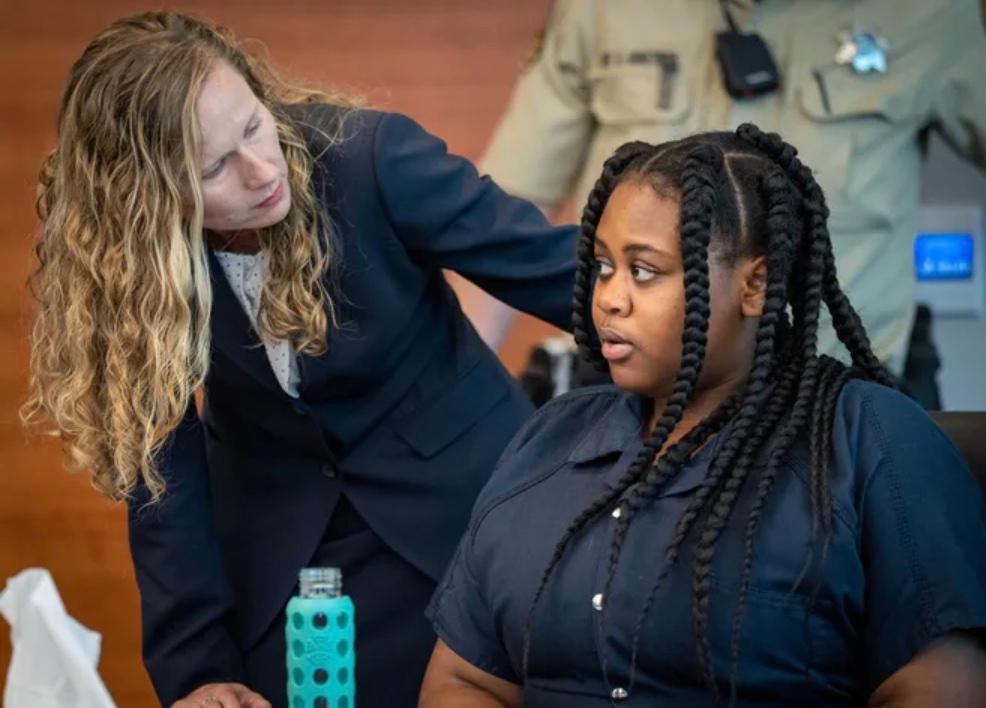
Pieper Lewis, a sex trafficking victim from Des Moines who pled guilty in the fatal stabbing of her alleged rapist, will not go to prison. CLBB Executive Director Dr. Robert Kinscherff evaluated Lewis in 2021 and 2022 at the request of her attorneys. He testified in the sentencing hearing saying that Lewis committed a "major offense” while she was a juvenile. While viewing her entirely as a victim can be helpful in addressing her current needs, she also needs to learn how her youthful vulnerability was exploited and how the decisions she made contributed to her exploitation so she does not stumble back into the life that led to her involvement in sex trafficking and Brooks' death.
| | | |
Unanimous Recommendation for Commutation from Massachusetts Parole Board
Ramadan Shabazz, a Black military veteran, was 21 years old at the time of his crime where he and another man committed an armed robbery that caused the deaths of two people. He had recently returned from serving his country in Vietnam while struggling with Post-Traumatic Stress Disorder and a severe substance use disorder. He is an ideal candidate for commutation to a parole-eligible life-sentence. He is 73 years old, and he has spent more than half a century in prison as a model prisoner with no record of violent or aggressive behavior either before or after his crime. He is deeply remorseful, and he has expressed that remorse consistently throughout the years. Senior Fellow in Law and Applied Neuroscience Stephanie Tabashneck testified at Mr. Shabazz’s hearing on late adolescent neuroscience, the relationship between PTSD and drug addiction, and the psychosocial effects of racism. Mr. Shabazz is one of only three people for whom the Massachusetts Advisory Board of Pardons has recommended commutation in a decade. The decision was unanimous. This is a step in a process that brings the matter to whoever is Governor for a final decision. Without the forensic psychology report, they would have seen Mr. Shabazz differently, this is a reminder that expert work matters in adolescent/late adolescent criminal and parole cases.
| | | |
Michigan Supreme Court Opinions Issued Bars Mandatory Life Without Parole For Persons Committing Offenses at Age 18
The Michigan Supreme Court issued groundbreaking opinions based on scholarly contributions concluding that mandatory LWOP for 18-year-olds violates the Michigan Consitution. For People v. Poole and People v. Parks, CLBB Executive Director Dr. Robert Kinscherff reviewed the drafts and signed the amicus briefs filed as titled Amicus Brief by Neuroscientists, Psychologists, and Criminal Justice Scholars.
| | | |
American Bar Association Criminal Justice | November 1, 2022
CLBB Faculty and Retired Judge Jay Blitzman wrote about how the Supreme Court has established from a constitutional perspective that children are not little adults. Relying in part on psychological research regarding the maturational arc of adolescence and fueled by brain imaging, the Supreme Court has abolished the juvenile death penalty, juvenile life without parole in nonmurder cases, and mandatory juvenile life without parole in murder cases, and that age is a key factor in juvenile interrogations. However, applying developmental science and the mantra that children are not little adults to practice is the challenge.
| | | | |