From the desk of the WCS President & CEO:
Second Chance for a Fresh Start in Life
America was founded on providing second chances. Pilgrims who traveled to America in the early part of the 17th Century were seeking a second chance at economic prosperity. They undertook perilous travel to a new world, braving untold elements and land to pursue a fresh start, a new beginning, and the possibility of a better life. This fundamental belief remains a major driver in our country and appropriately underscores the importance of why April is proclaimed as “Second Chance Month.” A month that we recommit to helping people create a new beginning in their lives after a period of incarceration, returning to our communities and looking for a fresh start. Our nation has long been vexed with problems associated with criminal activities. Modern views, theories, practices, and systems related to criminal justice can be traced back to the 1960’s with the enactment of the Omnibus Crime Control and Safe Street Act of 1968 and the creation of the Law Enforcement Assistance Administration (LEAA).
The LEAA was superseded by the Office of Justice Programs, which provided grant funding for criminology and criminal justice research much of which focused on the social aspects of crime. Some of the underpinnings of the LEAA also ushered in a louder voice for law and order as we began to see increases in violent crimes in the 1960s, ‘70s and ‘80s. We also saw dramatic increases in incarceration rates as politicians and legislators leaned more heavily on incarceration and punishment versus rehabilitation. A trend that has only begun to abate over the last 15 years, as incarceration rates begin to slowly decline, even though the United States still has the highest incarceration rate in the world. Re-committing to addressing the social aspects of crime continues to be increasingly important along with providing a second chance for those who are swept up in circumstances that increase the likelihood of criminal behavior. Most justice involved people are not born criminals and their first career choice is not to be a life-long criminal. Addressing and ameliorating the circumstances that increase the likelihood of criminal activity such as residing in high crime communities, poor education, behavioral health needs, socioeconomic status, unemployment and racism, will reduce the likelihood of justice system involvement.
Just as importantly, we must also remain committed to one of the principal reasons the United States has flourished, and that is creating a future of possibilities and hope for formerly incarcerated people, by providing a second chance for a fresh start in life. Let’s stop practices of denying formerly incarcerated people and those under community supervision access to voting privileges, adequate housing, occupational licensing, safety net programs, and employment opportunities that will greatly improve their prospects for a second chance at living a dignified and respectful life.
| |
 | |
WCS Employees Practice Self-Care Through Art
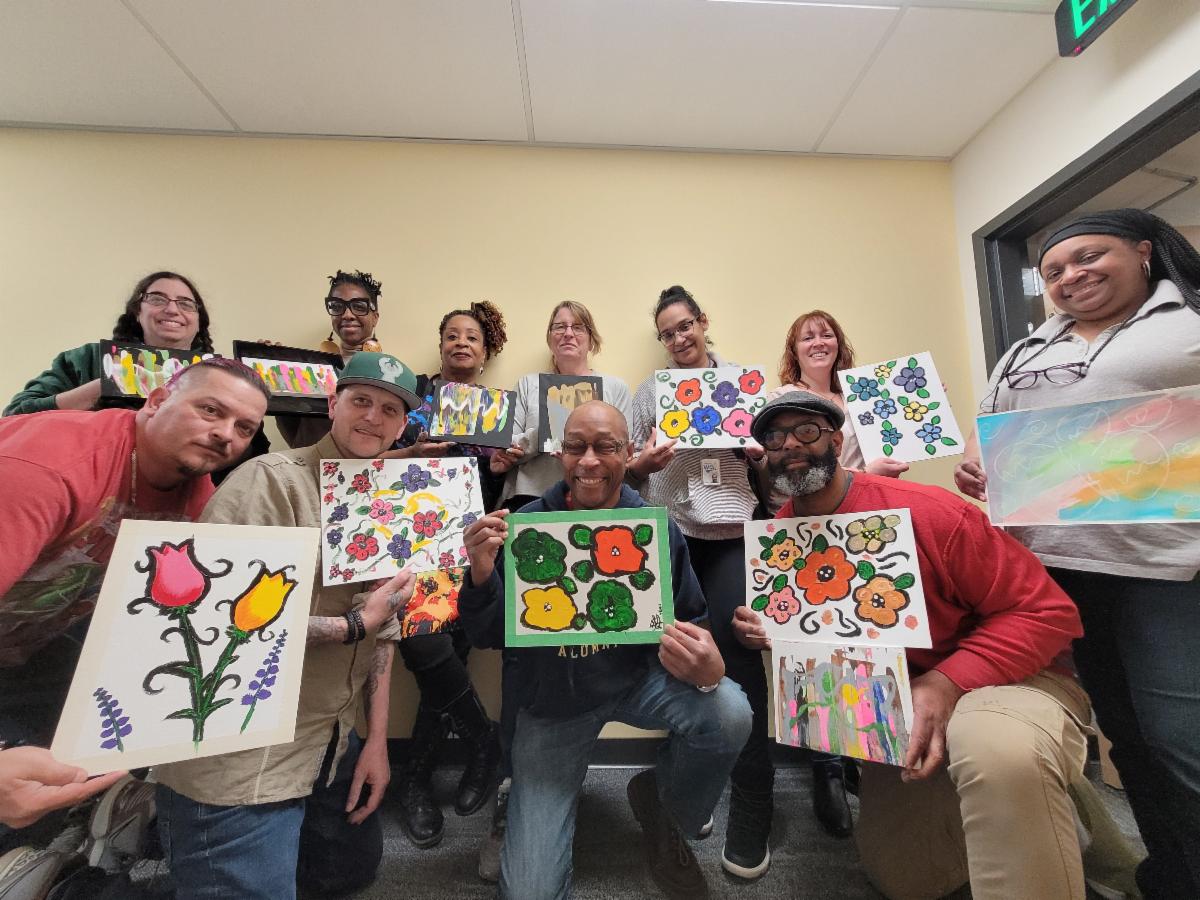
WCS employees participated in an art workshop that cultivated camaraderie, creativity, and confidence in their individual abilities. Human Resources Coordinator Melva Darrough, who is also a visual artist and led a similar class in 2022, offered instruction to the 10 employees who came to the April 1 workshop at the WCS Wisconsin Avenue Campus building. In just two hours, the employees created crayon resist art, abstract flowers, and squeegee art. Darrough taught with a calming voice accompanied by smooth jazz music, which she says helps create an atmosphere supportive of self-expression and relaxation. In addition to learning how to create these forms of art, participants also realized how practicing art can be a form of self-care because it has the ability to help improve mental health.
Art can be deeply personal, so it’s no surprise participants cited varying benefits to the event. One participating WCS employee who had an interest in arts and crafts for years said she not only learned new techniques, but she also got to meet some coworkers she had previously interacted with only via email or phone. Another employee who was timid when it came to creating art said she has become more willing to explore her creative capabilities after taking both classes led by Darrough. She also agreed that WCS events such as the art workshop serve as a great opportunity to interact with coworkers that one might otherwise not have. These takeaways also point to the workshop’s success in promoting inclusivity though celebrating both the similarities and differences of those participating in the event.
| | WCS Earns Important Nonprofit Accreditation | |
| | |
WCS has gained Commission on Accreditation of Rehabilitation Facilities (CARF) accreditation for its Bakari Center Residential Care Center (RRC) program. WCS earned the three-year accreditation by passing a comprehensive review and meeting CARF’s guidelines for service and quality—proof that WCS is committed to providing the best results for the people it serves. Externally, accreditation demonstrates to stakeholders WCS’ dedication to greater efficiency, fiscal responsibility, and quality service. WCS worked closely with Jamie Wyble, a CARF consultant who shared his wealth of knowledge and experience. Jamie was instrumental in helping the WCS team prepare for the CARF survey and throughout the 3-day survey process.
Established in 1966, CARF International is an independent, nonprofit accreditor of health and human services. It accredits a variety of programs and services committed to the aging community, behavioral health, children, and youth, continuing care retirement communities, employment, medical and vision rehabilitation, and opioid treatment.
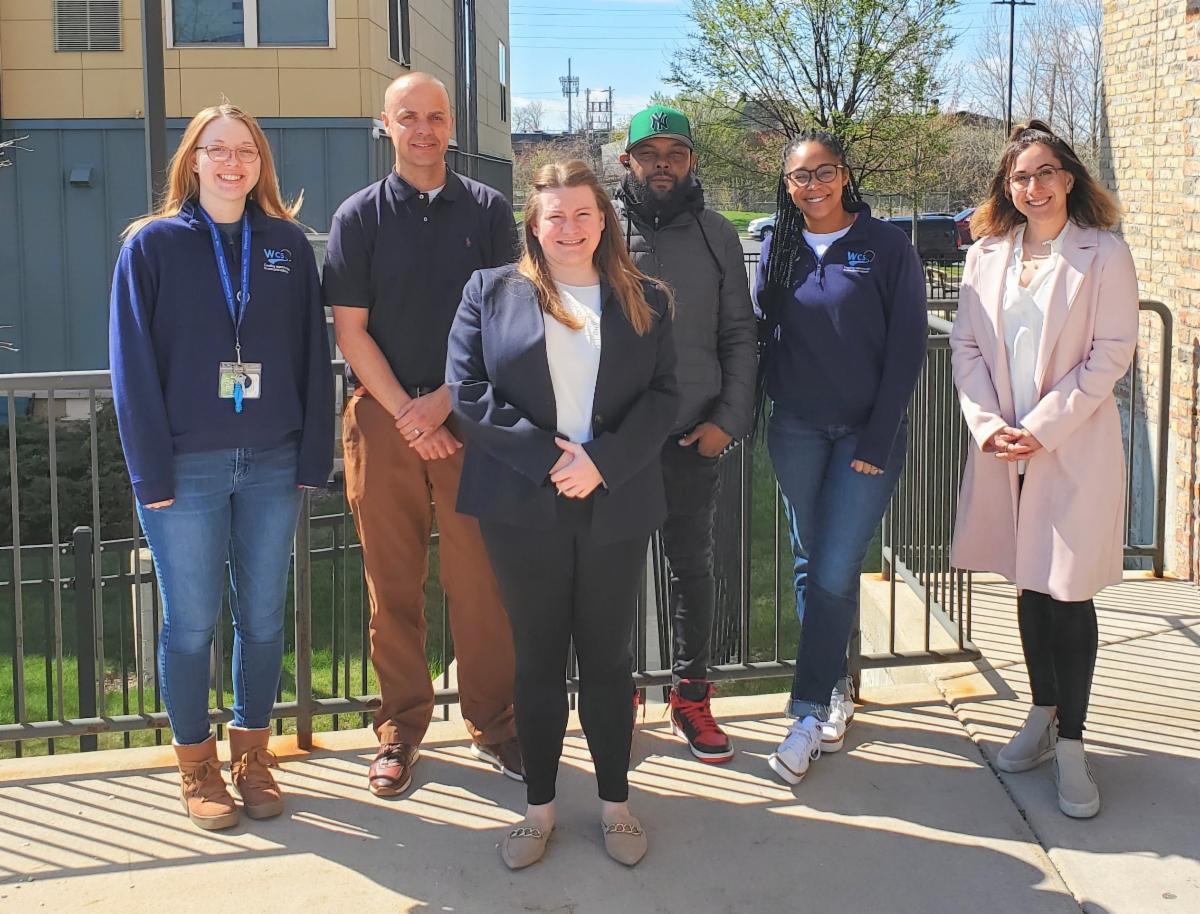
| | Staff who were instrumental in the accreditation, pictured from left to right: Kayla Rearden, Quality Assurance Support Specialist; Chad Meinholdt, Vice President of Behavioral Health Services; Tiffany Wilhelm, Program Director; David Lee, Lead Youth Treatment Specialist; Winter Kowalski, Clinical Supervisor; Sarah Forcey, Quality Assurance Coordinator. Not pictured: Alexis Townley, Nurse; Clarence Johnson, President & CEO; Shana Anderson, Performance & Quality Improvement Director; Matt Knitter, Facilities Maintenance Director; Kris Radeztsky, Vice President of Finance/CFO; Lori Sheets, Human Resources Director; Sara Carpenter, Vice President of Court & Community Reintegration Services; Dwayne Marks, Vice President of Operations. | |
Looking People to Join the WCS Team!
Are you a dedicated, hard-working, and caring individual? Why not work at WCS and become part of the team in one of the following positions:
Lead Case Manager - Kenosha County Intoxicated Driver Intervention Program
Contribute your supervisory and case management experience to a great cause by working as a Lead Case Manager for the Kenosha County Intoxicated Driver Intervention Program (IDIP). This position involves tracing supply and equipment needs, monitoring participants’ payment of fees, supervision of student interns, upholding the integrity of alcohol and drug testing activities and being the WCS IDIP program contact for the Kenosha County Sheriff’s and officials. Case manager duties involve monitoring defendant bail conditions as ordered by the court, conducting and recording random breathalyzer tests and urinalysis, providing program orientation for participants, keeping of participant records, and more. Qualified candidates will have a bachelor's degree in criminal justice, social work, or a related major; at least two years of case management experience and one year of program supervision and coordination experience; knowledge of the criminal justice system; familiarity with OWI laws; effective communication skills; and good judgement.
Recovery Navigator - Hub and Spoke Health Home
Make a positive difference in people’s lives as a Recovery Navigator for Hub and Spoke Health Home, a groundbreaking program model serving people with significant substance use and co-occurring mental health needs. The Recovery Navigator will collaborate with individuals to develop personalized comprehensive care plans, organize recovery monitoring/meetings, and update care plans. Additionally, the Recovery Navigator will ensure people receive quality care from the team, spokes, and community service providers by advocating for their needs. The ideal candidate will be committed and skilled at engaging people through a strength based, trauma-informed, person-centered, and culturally intelligent approach. They will be committed to serving people with substance use and co-occurring needs. Candidates must possess a high school diploma or GED/HSED and have experience serving people with substance use needs. A bachelor’s degree in social work psychology, nursing, or social services is preferred.
| |
Wisconsin Community Services, Inc.
3732 West Wisconsin Avenue, Suite 320
Milwaukee, WI 53208
Phone: 414-290-0400
Fax: 414-271-4605
Wisconsin Community Services, Inc. (WCS) advocates for justice and community safety, providing innovative opportunities for individuals to overcome adversity.
WCS is a 501(c) 3 non-profit agency that provides services in southeastern Wisconsin.
WCS has been serving the community successfully for over 110 years.
| | | | |