Message from the Director | |
Remember this?
It opened my fall message back in October, and April 27th is right around the corner!
As this is our most ambitious capital campaign since our founding in 1971, let me review the upcoming highlights.
April 27th, 12-4PM: Campaign opening celebration outdoors at Willard featuring a welcome to our supporters and members by our Board of Trustees sharing the exciting news about Willard's expansion.
The expansion includes the addition of a multi-use building to display Willard's forthcoming gift, the Charles N. Grichar Collection of Horology, including Willard Clocks, E. Howard & Co. astronomical regulators, over 300 fine pocket watches and over 100 timekeepers for the wrist.
The April 27th celebration will also include live outdoor music, activities for the kids, visits from dignitaries, (short) speeches, and food/ beer trucks! (Who doesn't like a food truck?), tours of the original homestead will go on through the day as we bring Simon Willard's story to life.
| |
Check out the Director's Message, Fall 2023 edition of the Pendulum for more details about this exciting project. This work will take a minimum of five years once funding is arranged. A timed schedule will release additional Grichar funding as needed up to and through the build, but first...
Willard needs to raise approximately $1.8 million to increase our present endowment to $5 million. Mr. Grichar will then contribute $1 million to the endowment and commence preparations with architectural renderings of the new building (within walking distance to our cherished homestead) which will include: a fully ADA accessible structure with gallery space for the Grichar Collection, a conservation studio for teaching and work on the collections, a horological library (5,000 volumes already donated), an auditorium, offices and spaces for curatorial work on the combined collections of Willard House and Mr. Grichar. A timed schedule will release other Grichar funding as the project requires up to and through the build.
This collection will dazzle the new-comers to horology, the lovers of 18th century Willard material and show where the Willard dynasty led horology throughout the 19th and into the 20th century.
| |
What Will Happen to Our Beloved Willard House and Collection?
Practically Nothing!
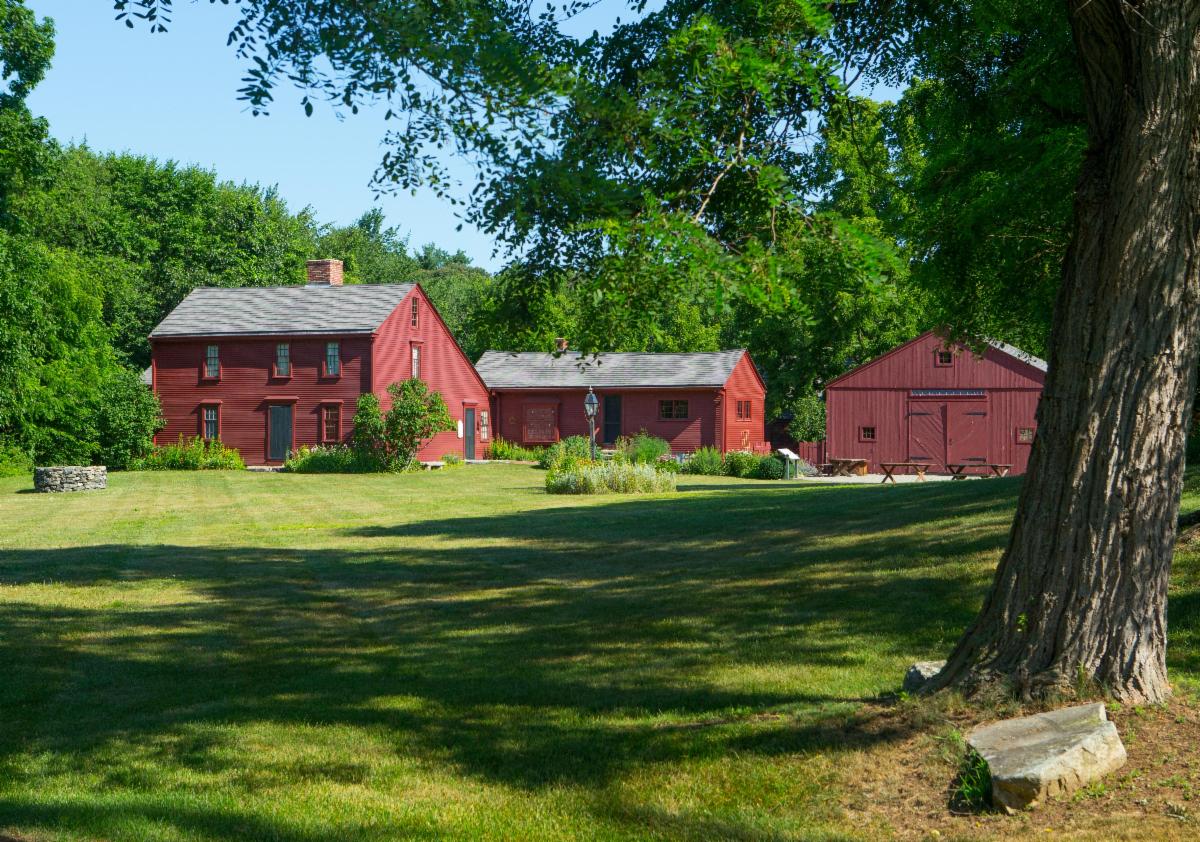
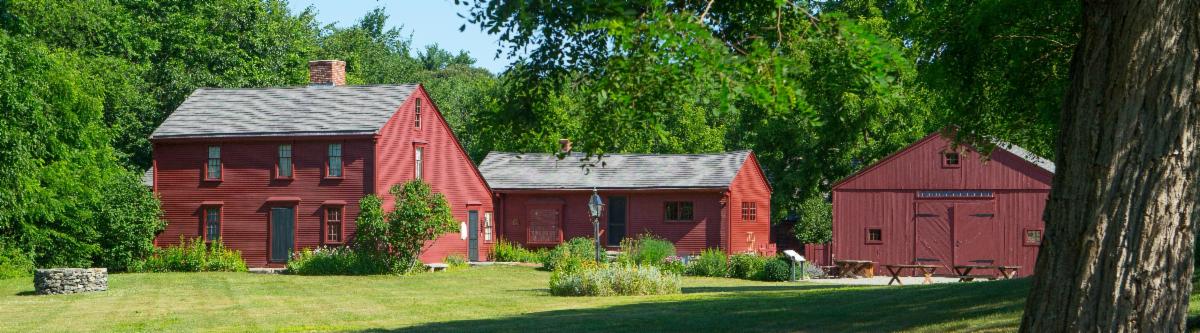
Except, that which will improve our care and curation of the present collection. The Trustees of the Willard House and Clock Museum consider the present museum buildings and footprint to be sacred and are devoted to its place in horological landmarks. Tours, events and group visits will continue as usual.
| |
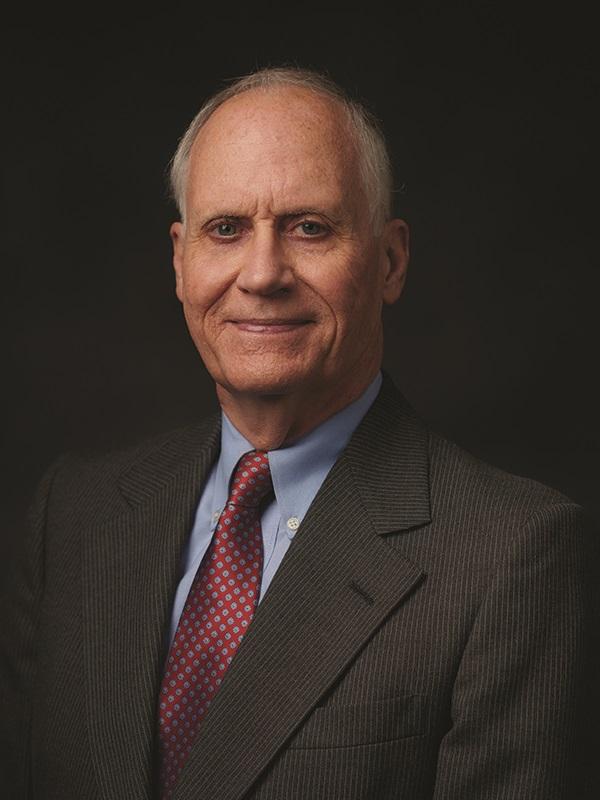
Museum Benefactor, Charles N. Grichar
Houston, Texas
Museum Trustee and Treasurer, Charles N. Grichar of Houston, Texas has been interested in horology since his dad, Frank, would bring young Charles to work with him at the Southern Pacific Rail Road where the young Charles saw his first impressive astronomical regular. A 35-year collecting adventure brought over thirty of these rare precision regulators into his collection along with another fifty examples from an earlier era made by the Willards and their circle. For its category of precision clocks by Edward Howard and handmade clocks from the Willard circle, the Charles Grichar collection is among the best in the world.
| |
 | |
Let's Talk About Happy Endings
Supporting The Field of Horology
Willard’s Board of Trustees, mandated with fiduciary responsibilities for the museum, are strongly committed to planning the financial future for The Next 50-Years and towards that end, want to triple the corpus (the money invested) of the current endowment over the next five years. To do this will require hard work, generosity and a demonstration of the importance of preserving the Willard homestead, workshop and acreage, as well as communicating the importance of teaching the forgotten science of horology and its solitary role in nearly every scientific discovery ever made.
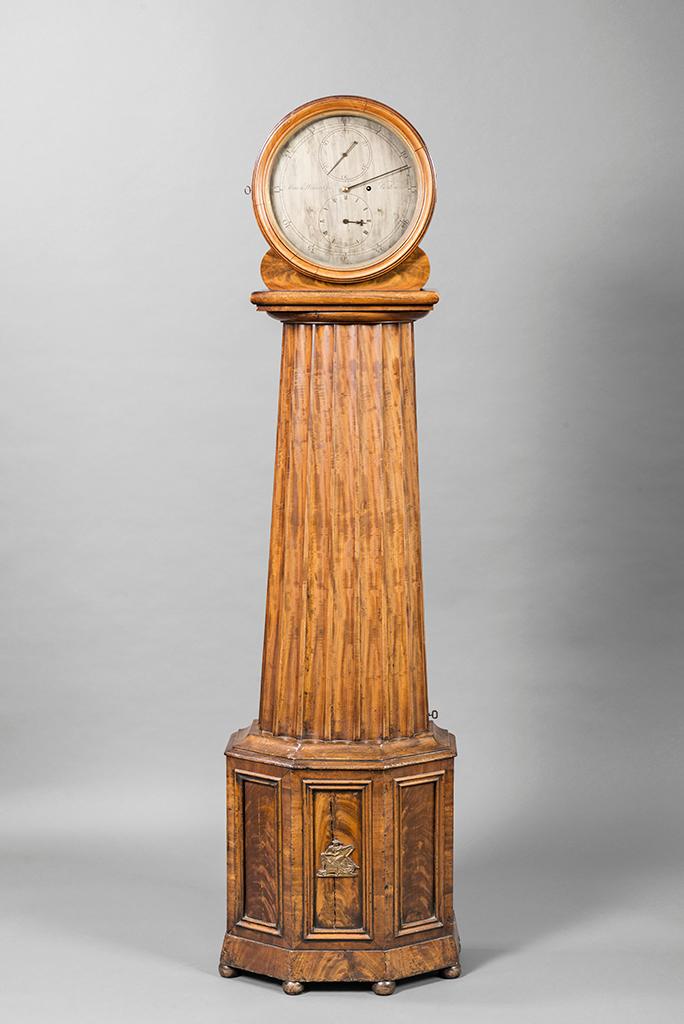
The world-class Edward Howard astronomical regulators in the Grichar Collection exist from an exciting period of horological history which can be traced to the Willard clockmakers. Let us not forget that Edward Howard of Boston, famed maker of precision regulators was trained by Aaron Willard Jr. He also had major influence from Simon Willard Jr., the maker of this interesting regulator from the Grichar Collection now on display at the Museum.
Future meetings of the Trustees and discussions among our membership will determine the final growing plan. I hope you will plan to join us on this journey.
| |
Executive Director,
Willard House and Clock Museum
robert@willardhouse.org
| |
Welcome David G. Gow Memorial Scholarship
Recipient, Patrick Mont
The annual nationwide scholarship program dedicated to professional careers in clockmaking
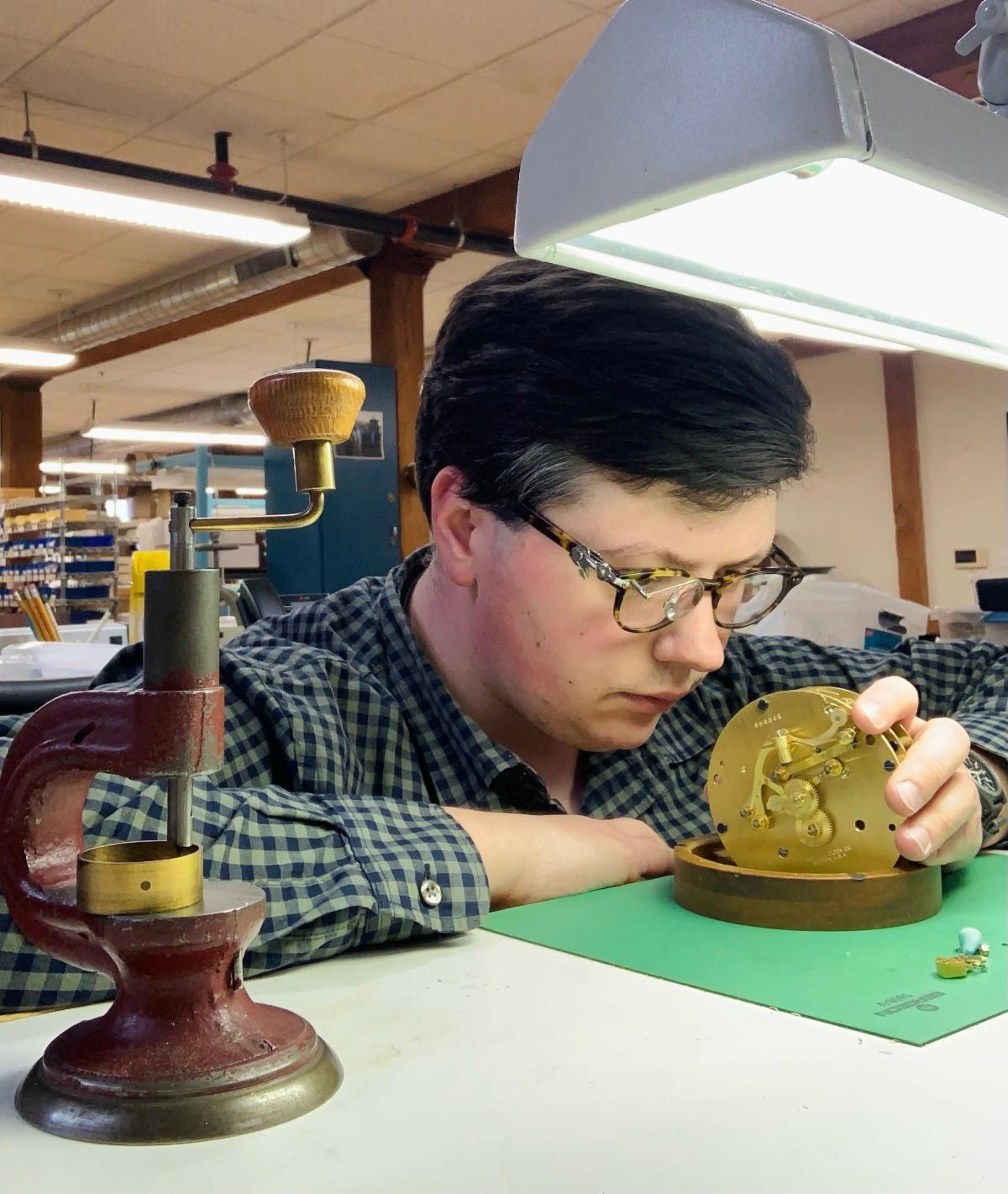
2023 scholarship recipient, Patrick Mont, explained that the scholarship enabled him to purchase necessary clockmaking tools and reference books while providing funding for essential additional courses.
Next Application Deadline:
November 4, 2024
2024 Award Release:
December 16,2024
| |
| | |
Willard Lost Long-time Trustee and Friend, John C. Losch at age 91
The Willard House Board of Trustees and staff sadly report the passing of former trustee, John Losch (1932-2024) of Holliston, Massachusetts. For over 25-years, John sat on the Board of Trustees at Willard offering his help guiding the museum to be a national center of Willard clock excellence. John joined Paul J. Foley to write Simon Willard Patent Alarm Timepieces, an in- depth study of Willard lighthouse clocks which became and immediate best seller. John is credited with many scholarly articles and lectures on clock repair and restoration within NAWCC Chapters while teaching at the NAWCC School of Horology for several years while organizing the program.
John led a very full life with horology, old cars, intellectual conversations and politics. He began his clock career working in the E. Howard Clock Factory in the early 1950's, later worked for the dean of clockmakers of that era, Hjalmar Olsen of Watertown who encouraged the gifted young clockmaker to pursue private practice.
Harvard University was one of his first private clients. Working as keeper of the impressive clocks and scientific instruments collection there led John to the magnificent Joseph Pope Orrery which traced the paths of all the six known planets when the instrument was finished in 1787! ( The 7th, Uranus was discovered just a few months too late to be included in the construction.) The magnificent John Ellicott, Philadelphia four-faced clock now at the Smithsonian also was the recipient of his skills during a complete overhaul while the clock was still privately owned in Boston. Most clockmakers shudder while simply trying to find access to the mechanical elements of this complicated clock.
Among his impressive accomplishments, John is also credited with Willard's quarterly-print publication, The Pendulum. John served as the editor and writer throughout, until the publication went into a digital format. Writing for both the novice and expert readers alike, John willingly shared his immense love of horology with everyone. Thank you John, Godspeed to your next project and Rest in Peace dear friend.
To read more about the life of this wonderful man, click below:
| |
Research Corner
Special Contributor, Trustee Paul J. Foley
| |
New Image:
Aaron Willard's Compound
For decades, two images of Aaron Willard’s Boston home and “Manufactory” on Boston Neck have been known. Recently a new third image has been discovered.
In July 1792 clockmaker Aaron Willard (1757-1844) bought land in Boston on the west side of Washington Street “on the Neck” only a few hundred feet from the City of Boston / Roxbury line (1). He built a wooden three-story federal style house and barn on this property. The lot was 100 feet wide on Washington street and 300 feet deep on a lane later to be named Lenox Street. This property has been frequently referred to as Aaron’s “compound”. The house was completed in 1794 as noted in the Boston Tax Records of that year… “for House just finished” (2). In May 1804 the Firewards of Boston granted Aaron a permit “…to convert his Barn into a work shop for finishing Clockwork…”( 3)
| |
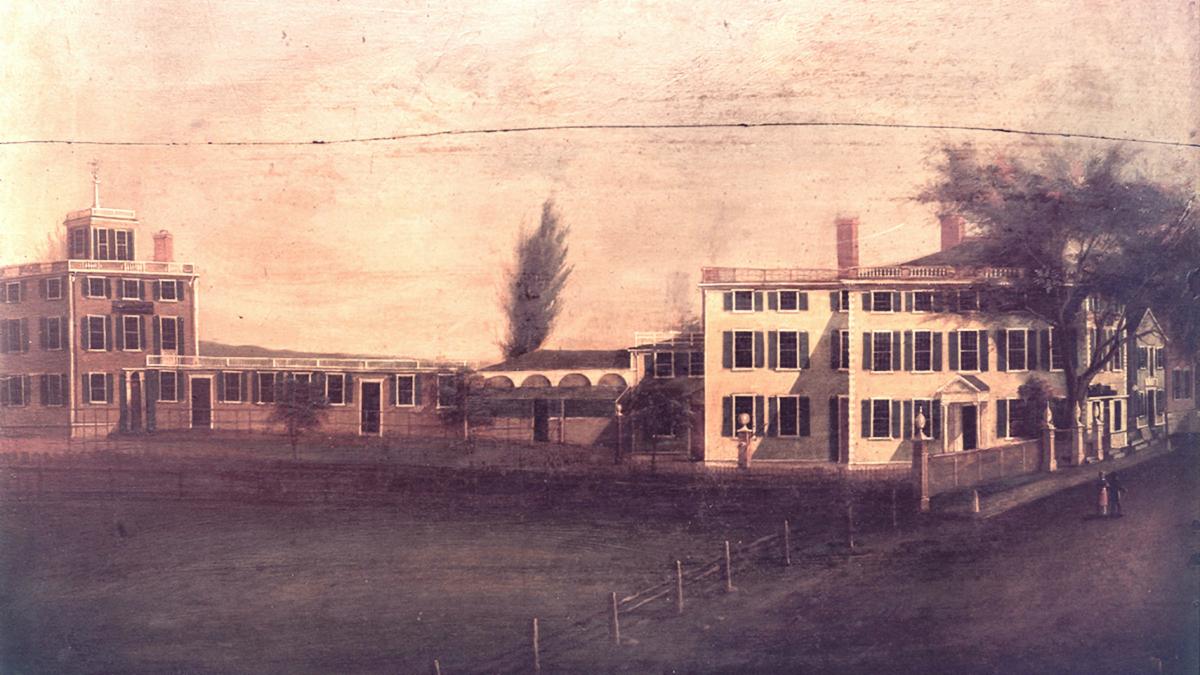
A house portrait was painted by John Ritto Penniman (1782-1841) about 1805. This well-known image is still owned by a family descendant. This illustration depicts a large yard with a three-story wooden mansion house with gable end towards the street, faux decorative cornerstones, a long conservatory to the rear that connects the house to the two-and one-half story manufactory in the back. Note the prominent fence posts ornamented with large carved finials and the square cupola and spire on the roof of the shop located to the rear of the property.
A description of this property was published in 1889 by W. L. Elliot, a frequent correspondent to the Boston Globe. In October of that year the Globe published his column “Musings in Boston Streets” where he reminisced about earlier Boston landmarks. His remarks about Aaron’s property are interesting and revealing:
“Fifty years ago there stood upon this land the mansion house, shop and conservatory of Aaron Willard, the most noted of the famous family of clockmakers, whose specialty was “timepieces” so called, which have always retained popularity. The house was commodious and comely, and the shop in an ell, comported well with its environment.
Both of these presented broad fronts to the street, standing back the width of the dooryard. Adjoining these was the conservatory, running to Lenox street, which was then but little more than a lane. This greenhouse contained rare plants and flowers, for which there was much call, it being almost the only place in town or vicinity where they were raised for sale. From the curbstone fronting the entrance to the shop rose a post adorned with a clock, having two faces protected by glass shades which served as a time regulator for the passers as well as for the neighborhood. This identical clock may be seen today [1889] projecting from the second story front of a home on Washington street, opposite Ruggles street Roxbury” (4).
| |
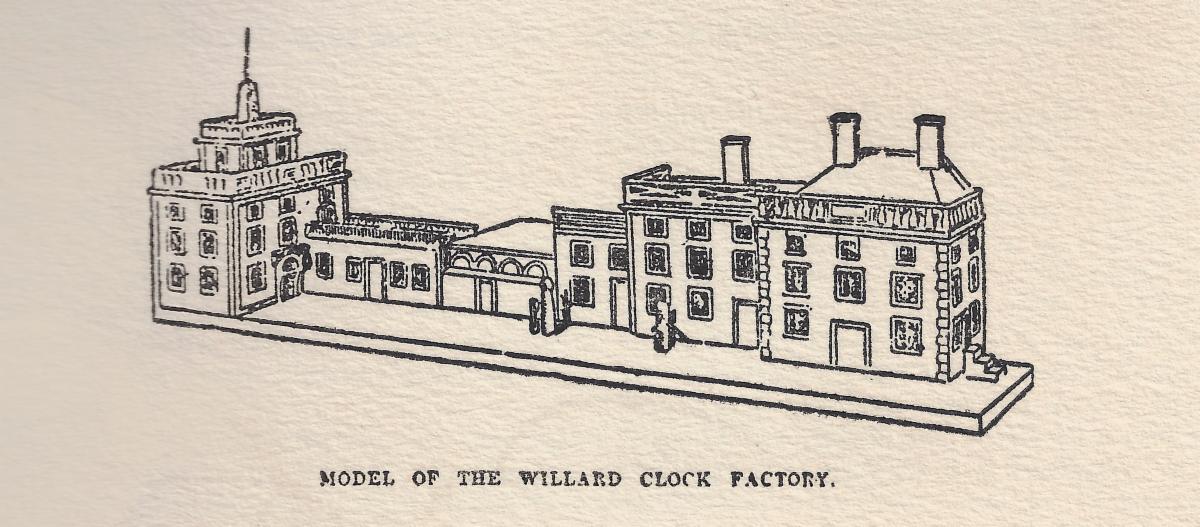
In John Ware Willard’s (JWW) 1911 history Simon Willard and his Clocks he illustrates a line drawing of a model of Aaron’s compound (5). Since it was not mentioned he was likely unaware of the Penniman house portrait pictured above. JWW does inform us that the model was made by Aaron’s son cabinetmaker Henry Willard (1802-1887) and for many years stood on a pole on Henry’s farm in Canton, MA (6). Henry’s cabinetmaking shop was located inside the “manufactory” building.
Where JWW obtained the line drawing is unknown. He either didn’t know its source or chose not to reveal that it had been published 23 years earlier by the Boston Globe.
In December 1888 the Globe published a long general interest article on “Old Clocks" (7). It was an overview of American clockmaking advancements and manufacturing progress. This article contained a brief history of early wood and brass movement clocks in this country. They illustrated this article with a few line drawings of Willard style clocks and the “Model of the Willard Clock
Factory.”
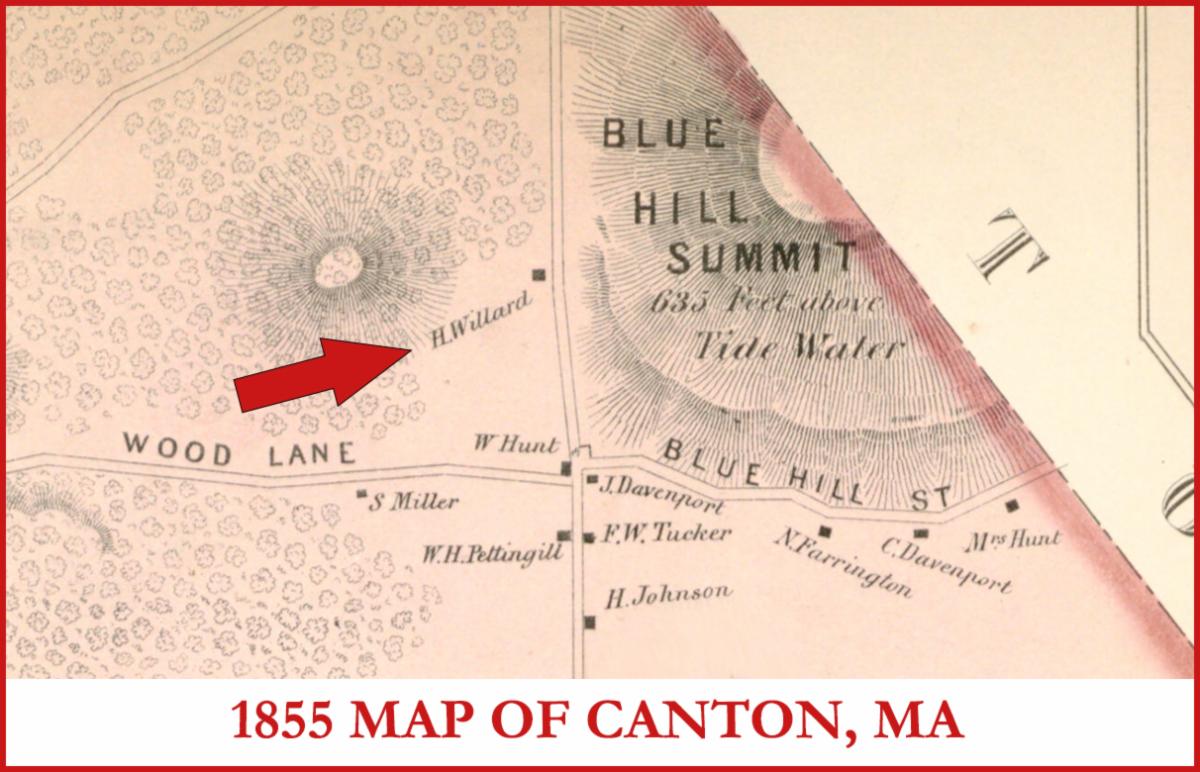
This article was written by Maybin W. Brown. (1856-1924) Maybin was for many years a news editor at the Boston Globe and he also wrote general interest articles for the paper. Maybin explained that the drawing was of a wooden model nearly 18 feet long that for half a century had hung outside Henry’s house in Canton, MA at the foot of the Blue Hill Observatory. It was made by Roxbury cabinet and clock-case maker Henry Willard. (1802-1887). In addition to cabinetmaking Henry ran a farm in Canton.
| |
Maybin advised that he was in possession of this model and he intended that it be presented to the Bostonian Society for preservation as a historical artifact. Maybin did not inform his readers that the reason he possessed the model was that his great-great grandmother Emily W. Brown (1819-1908) (8) was married to John J. Brown (1809-1878) an apprentice of clockmaker Aaron Willard and she had lived for many years in the Willard mansion. Unfortunately, Maybin was killed on April 15, 1924 in a commuter rail accident. The fate of the model is unknown (9).
In 1846 Aaron’s heirs sold their interest in Aaron’s compound (10 ). The property changed hands a few times with plans to sub-divide it but the house was still standing in the mid-1860s (11).
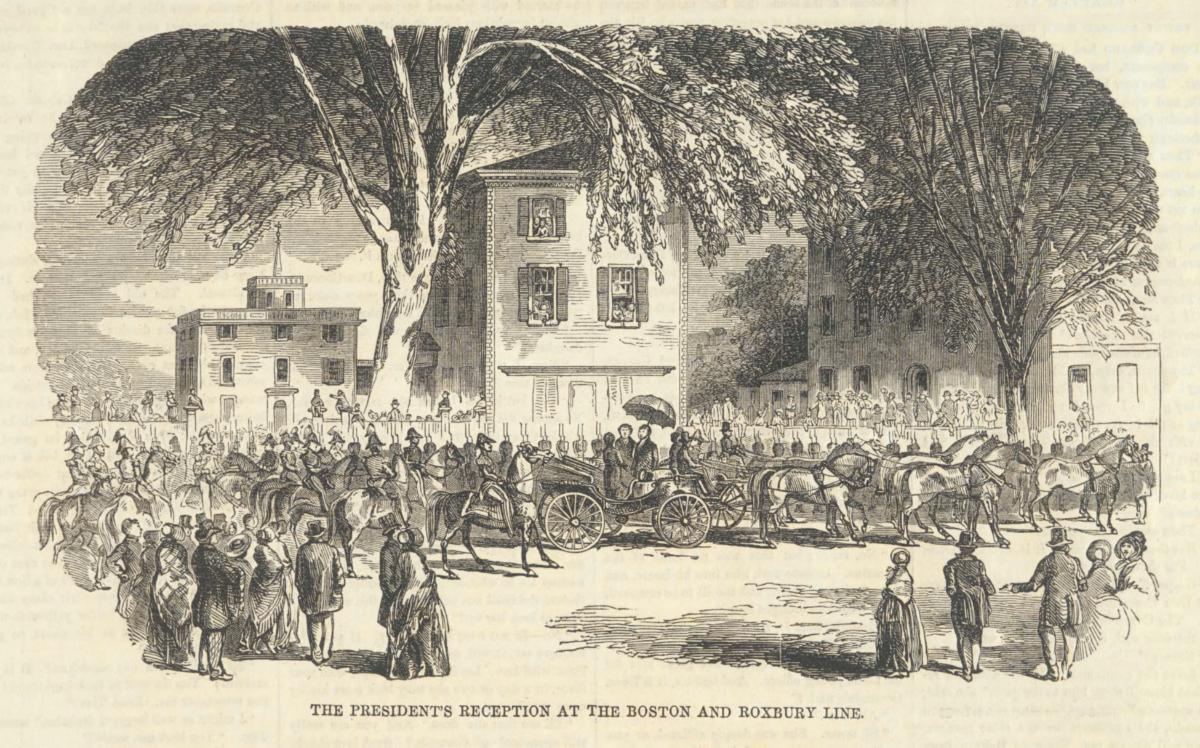
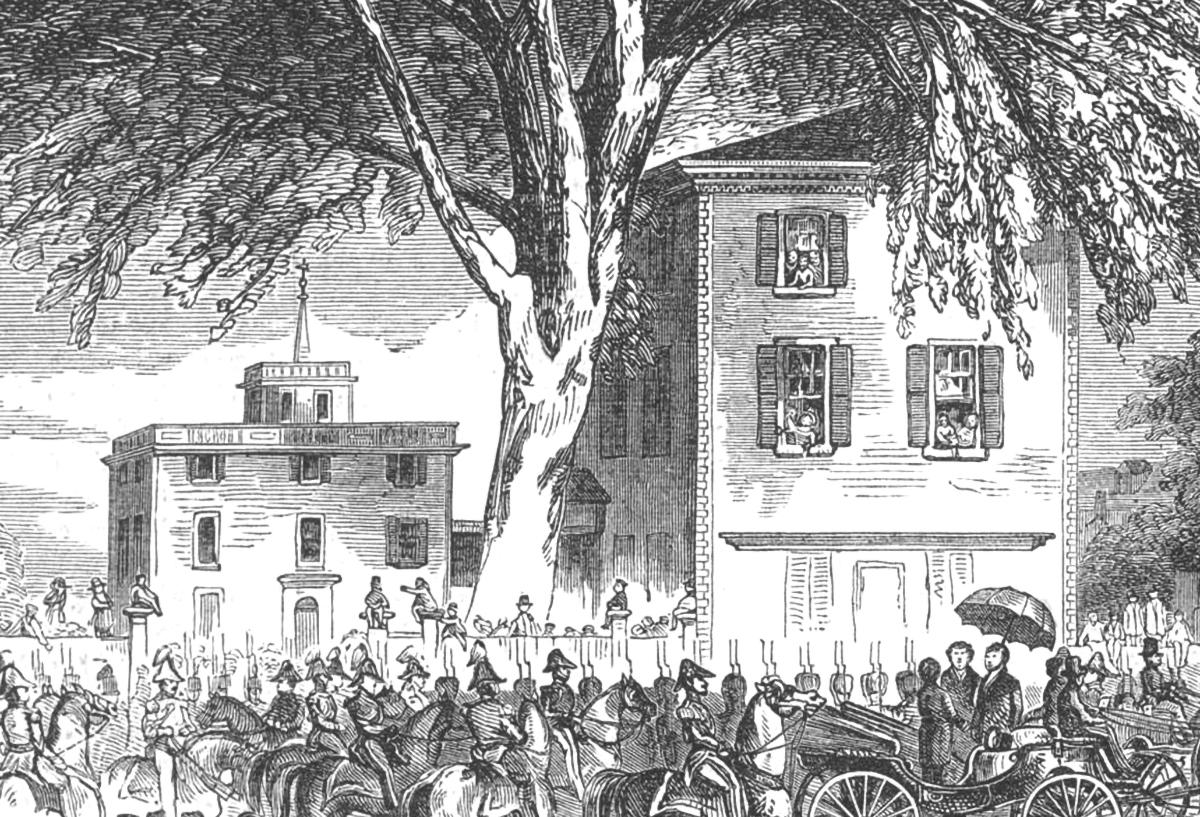
A third recently discovered view of Aaron’s compound was published in 1851 in Gleason’s Pictorial.
| |
Gleason’s was one of the first illustrated weekly literary magazines. Its numerous illustrations made it a very popular magazine. Although it was a national publication it was started in Boston and contained many Boston area scenes and serialized stories.
| | Boston hosted the three-day “Great Railroad Jubilee” September 17-19th, 1851to celebrate the completion of railway lines with Canada and the West as well as increased Ocean steamboat commerce. This three-day celebration climaxed with a dinner on Boston Common for 3,600 invited guests and was attended by President Willard Fillmore, Canada’s governor general, and dignitaries from all over the country. On September 17th large crowds gathered to welcome President Fillmore at the city line and escort him to Revere house. | |
Gleason’s Pictorial sent out a number of their artists to record these events. One of them covered the President’s welcome at the city line and the large crowds who turned out for the event (12). While the artist concentrated on the crowds, if one looks behind them one can see the outline of the three-story Willard house with gable end facing the street, faux stone corners, and prominent fence posts with carved finials. In rear the old “Manufactory” building with square cupola and center spire can be clearly seen.
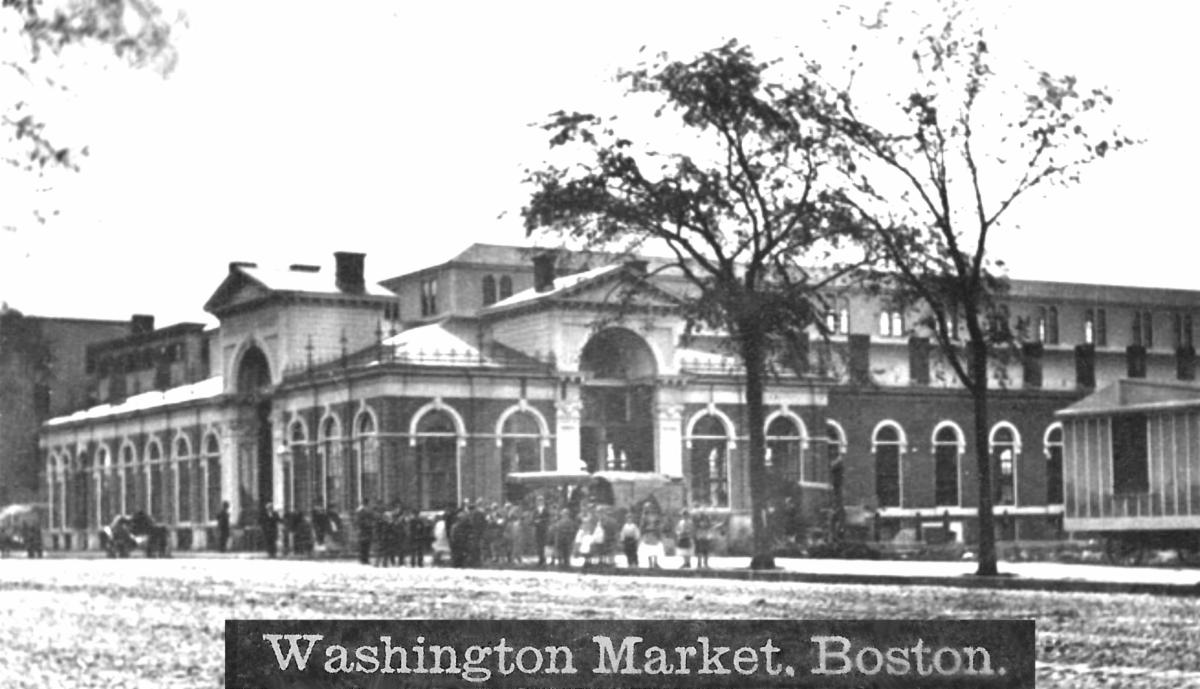
In 1860s William Evans (1811-1876) a prominent Boston developer and building contractor purchased the property at the corner of Washington and Lenox streets and in 1870 he built a substantial market building of brick and granite construction on the site of Aaron’s Compound.
| |
Endnotes:
1 Suffolk Deeds, Book 173, pp. 220-221.
2 Boston Tax Taking Books 1794.
3 Foley, Paul J. Willard’s Patent Time Pieces: A History of the Weight-Driven Banjo Clock 1800-1900, Roxbury Village Publishing,
Norwell, MA, 2002.
4 Boston Globe, October 14, 1889, p. 4.
5 JWW, p. 89.
6 JWW, p. 99.
7 Boston Globe, December 28, 1888, p.5)
8 Boston Globe, June 13, 1908. p. 3; August 27, 1908, p. 3.
9 Boston Globe, April 14, 1924, p.4.
10 Suffolk Deeds, Vol. 570, p. 228, Vol. 571, pp. 207-08.
11 Boston Fire Insurance Maps
12 Gleason’s Pictorial Drawing Room Companion. Boston 1851, November 15, 1851, Vol. 1, No. 20, p. 308.
| | Willard Launches A Pollinator Meadow Project | |
Willard House & Clock Musuem is launching a three-year project to transform nearly and acre of its grounds to a walkable Pollinator Meadow.
Below are the highlights:
- 50 species of native plants, flowers, and trees.
- A publically-accessible walking path through the meadow.
- Future features include benches and sundials.
| |
Join us at the museum on Saturday, March 16th, 10:00 AM to 2:00 PM for Volunteer Day to prepare the meadow.
Make new friends. Learn about native plants and pollinator meadows. Order breakfast or lunch from our food truck vendor.
| |
April 27th 12PM-4PM: Outdoor Open House to celebrate the Kick-Off of Willard's Capital Campaign, Music, Food Trucks, Tours, Kids Activities...
Free Admission April: Take a tour. See what's happening at the museum.
Stargazing Lawn Party: Details to follow.
Antique Car Lawn Event: Details to follow.
| |
Museum Winter Hours:
Open Thursday- Saturday
Tours: 10:30am and 2:00pm
Large groups by appointment only
Sunday - Wednesday and
all national holidays: Closed
| |  |
Museum Fees:
Members FREE
Adults $10
Seniors 60+ $9
Kids 13 plus: $6
Kids 12 and under: FREE
Veterans and First Responders: FREE
| | |
Thank You
Sponsors and Donors
The Willard House and Clock Museum is very grateful for the generous support of the following corporate and personal donors. At Willard, we try very hard to maintain a high level of programming throughout the year and without outside support, this would not be possible.
If you or your business wishes to support the programs, donations of any size are welcomed and go to continued and new events here at Willard.
|
If you would like to learn more about special events or customized corporate or foundation programming, please contact: Robert@willardhouse.org Thank you.
|
Corporate Sponsors
Annie’s Garden
Fuller Foundation
Country Bank
Millbury National Bank
Post Road Art Center
Thermalogic Corporation
Webster First Federal Credit Union
Wegmans
UniBank
United Airlines
Partners
Corporate Donors
Clock Folks of New England
Country Bank
Fuller Foundation
Gaudette Insurance Agency
Homeland Bank
Savers Bank
Sandra Liotus Lighting Design, LLC
Schmitt Horan & Company
UniBank
Thomas J. Woods Insurance Agency
Wellfleet Osprey Photography
Worcester Sound & Lights
Wegmans
Exhibition Donors: Musical Clocks
David Croll
James & Marylou Hawkes
Edward W. Kane & Martha Wallace
John & Marjorie McGraw
Scott R. Talkington
NAWCC Chapter Donors: $500
Chapter 3 Chicagoland
Chapter 8 New England
Chapter 28 Lake Erie
Chapter 83 Peace Pipe
Chapter 133 Western Electric
| |
Donors
Life Members $500 +
| |
Robert Ain
Wayne & Susan Andrews
William Anderson
Mildred Bean **
Gordon Bethune
Marie Bender
Wendy Brown
Larry** & Betty Chelmow
Denise & Robert C. Cheney
Fred Clough
Raymond Cobb
David Croll
Dana Cranmer
Mark & Dianne Davidson
Dana Davignon Jr.
David DeGhetto
Nancy Druckman
Jeremy Dubois
James Dutton
Karen Eisenhauer
Kenneth & Patricia Elovitz
Kathy Fitzgibbon
Ralph & Leeda Fletcher
William & Joyce Fletcher
Paul J. Foley
Bruce Forman
Michael Friedman
Robert Frishman & Jeanne Schinto
Lee Gaudette
Jodie Gerulaitis
George Goolsby
David** & Barbara Gow
Charles N. Grichar
Claire & Jay Haggerty
Thomas Hansen
Donald Hare
James & Marylou Hawkes
Robert Hendrickson
Beaton Hogwood
Ken Hogwood
Dr. Wayne Hooper
Howard Hyle**
Richard Irwin
Randi Isaacson
Edward W. Kane & Martha Wallace
Judith King
Matthew & Anna Keiter
| |
William Kerr
Matthew Koskinen
Sandra Liotus
Albert & Barbara MacDonald
Stephanie Maurer
John & Marjorie McGraw
William Miller
Mike Morison
Robert Nanovic
Richard Newman
David Newsom **
Bernice Norton **
Albert & Barbara MacDonald
Sean & Anne Margaret Padgett
Natalia Pavlova
Diana Pearson
Rosemary Picard
Ralph Pokluda
Mark Purdy
Arthur Richmond
Doug Rinearson
David & Susan Roberts
Lee & Jane Robinson
Dr. Roger & Imogene Robinson **
Ralph Robinson
William & Karen Robinson
Ann Sargent
Richard Saul
Bradford Schlapak
Terry Seaks
Janet Spanknebel
Joseph Seremeth
John Stephens
Gary Sullivan
Marie Bender
Scott Talkington
Dr. James L. Telfer
Gerald Tiemens
Sumner Tilton
Gilbert Tyler
Greg Wilde
David Willard
Peter & Shirley Williams
George Whitman
John Wood
Jack Woods
Peter Wunch
Dean Ziegenbien
**Deceased
| |
Clocks For Kids Program Donors
David Hagberg
Richard Saul
Steven Sandborn
Granite State Timekeepers, Chapter 189, NAWCC
************
Museum Staff
Robert Gierschick - Development Director
Beverly Snow - Program Coordinator
Anna Keiter - Finance Manager
Sarah Mullen - Administrative Assistant
Natalia Pavlova - Registrar
Board of Trustees
Dr. Wayne Andrews - President
Sumner Tilton, Jr. - Vice-President
Charles N. Grichar - Treasurer
Robert C. Cheney
Ralph Fletcher
Paul J. Foley
Katherine F. Grant
Jane Robinson
Lee Robinson
Gary Sullivan
Dr. James L. Telfer
Trustees Emeritus
Larry Chelmow**
Richard Currier**
Arthur Richmond
John Losch
Advisory Board
Susan Bastian
Robert C. Cheney
Louis F. Genatossio
Robert Gierschick
Tim Kness
Dave Myers
**Deceased
| |
Please support the historically important
Willard House & Clock Museum
11 Willard Street, North Grafton, MA
508-839-3500
-The Center of Early American Clockmaking-
WHCM is a 501(c)(3) non-profit museum
| | | | |