Conserving Chihuahuan Desert Grasslands
Tamaulipan Brushlands
and the Laguna Madre of Tamaulipas
| |
Field season is in full swing for RGJV staff and partners! In this issue, Jesús Franco provides an inspiring look at La Paloma Ranch, a long-term South Texas GRIP collaborator. Jeff Bennett, working closely with Philip Boyd of Dixon Water Foundation, marshalled contractors to assemble brush weirs along Alamito Creek (see photos at bottom), and we anticipate more collaboration with the Borderlands Research Institute as the Alamito Creek Conservation Initiative gets off the ground. Rebekah Rylander managed several teams in south Texas to continue grassland monitoring begun in 2022, and added monitoring teams in west Texas to collect grassland, aquatic/riparian, and songbird data.
Just as exciting, we have two new board members! Please welcome Audubon Texas Executive Director Lisa González, who will be occupying the established Audubon seat on the board most recently held by Romey Swanson. She has an impressive background and her experience will be a great asset to our partnership. You can read more about Lisa on the Audubon Texas website. Also, please join me in welcoming Manuel de Leon to our board! Manuel is the new State Wildlife Biologist for NRCS in Texas, taking over for Russell Castro, now that Russell has retired. I had the pleasure of meeting Manuel briefly during our visit to the NRCS state office in Temple, and I look forward to his input as a valued new board member!
Cordially,
Karen Chapman
Rio Grande Joint Venture Coordinator
Banner photo by Jeff Bennett
| |
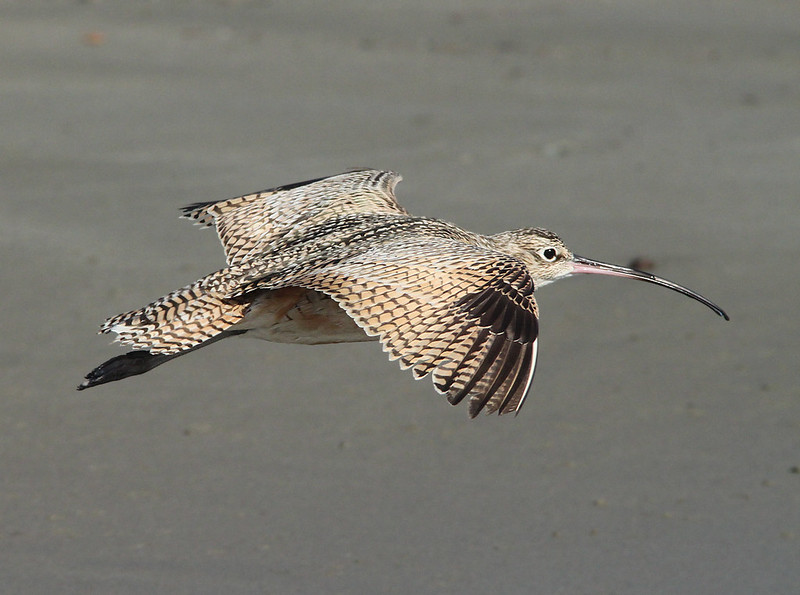
Photo: Long-billed Curlew, a Chihuahuan Desert Priority Bird, by Alan Schmierer
Management Board Meeting in Mexico
The RGJV Management Board will meet at the end of August in Durango, Mexico. Attendees will get to hear updates on all major RGJV initiatives, receive presentations from prospective board members, and enjoy visits to both Rancho el Ojo and Laguna de Santiaguillo, a Ramsar site and Important Bird Area/critical wintering site for migratory and aquatic birds. | |
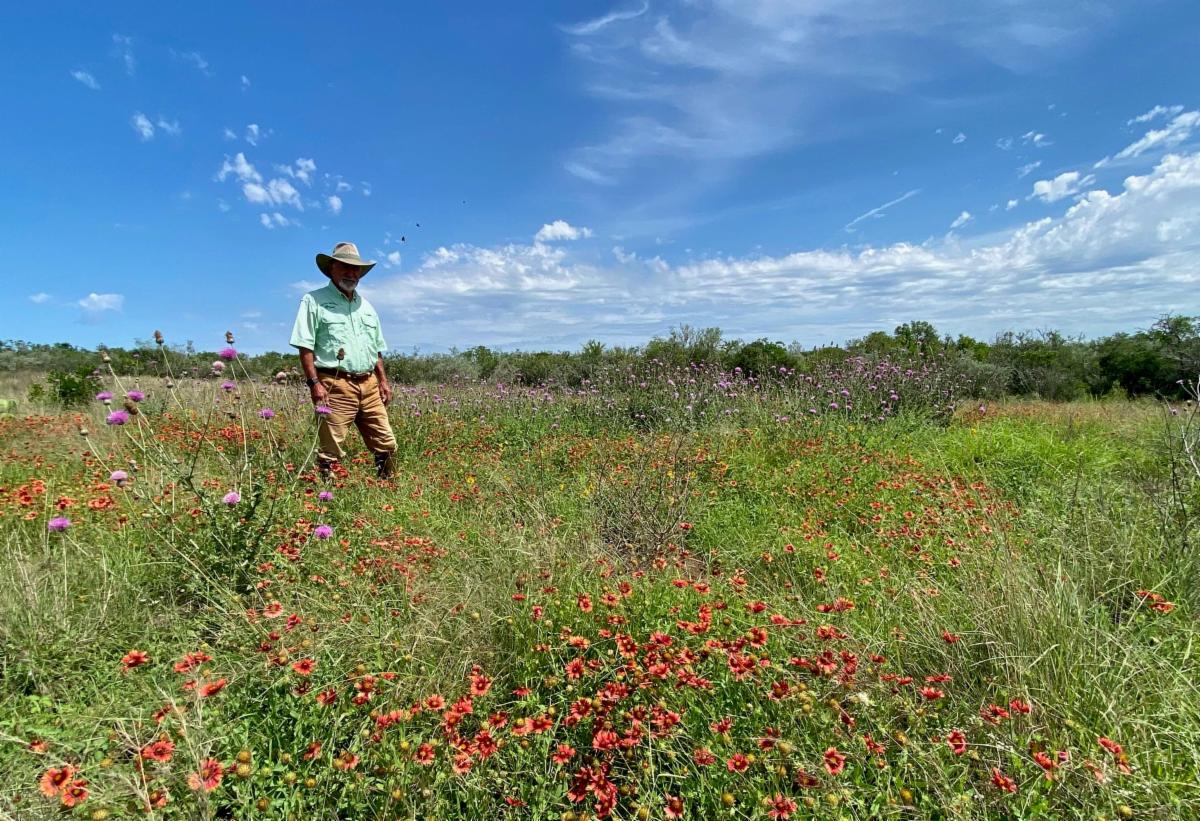
Photo: Scott Holt at his La Paloma Ranch, by Jesús Franco
STX GRIP Restoration: Focus on La Paloma Ranch
Even before stepping off the golf cart it is hard not to be impressed by the vast abundance and diversity of wildflowers and native grasses that dominate the previously brush-encroached land in front of us. Scott Holt, owner of La Paloma Ranch in Duval County is one of the longest-term landowners to participate in the STX GRIP program. His dedication to birds, grassland habitat restoration, and land stewardship is inspiring. Seven+ years after the application of the initial brush management practices, the labor, time, and dedication that has gone into maintaining the improved habitat is more than evident: we see birds and pollinators galore! Sure, timely rain can make just about any project look good, lighting up the place in an explosion of green. But don’t let that fool you here; the near total absence of brush regrowth within the treatment areas seven years later is the best proof that appropriate land management practices and good land stewardship, prompted by economic incentives and good technical advice, can turn degraded wildlife habitat around for the long term. | |
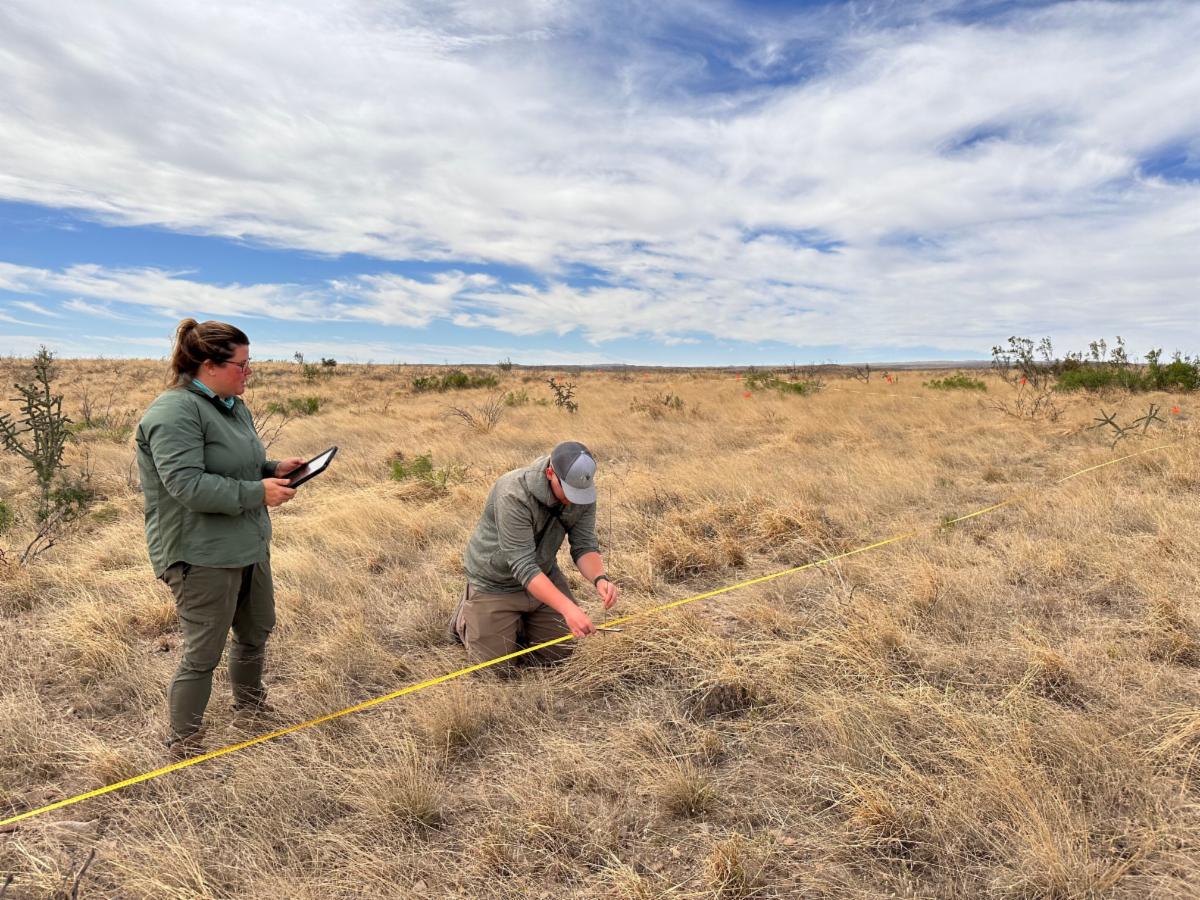
Photo: Grassland monitoring in Hudspeth County, west Texas, by Rebekah Rylander
RGJV’s 2023 Monitoring Program Expands to West Texas, Second Year in South Texas
During the spring and summer of 2023, the Rio Grande Joint Venture’s science coordinator Rebekah Rylander initiated the joint venture’s first season of monitoring in west Texas and second season of monitoring in south Texas. The 7 treatment sites surveyed in west Texas were on private properties involved with the Chihuahuan Desert Conservation Partnership (CDCP), and the 14 treatment sites that were surveyed throughout south Texas were on private properties enrolled in the Grasslands Restoration Incentive Program (GRIP). Both programs (led by Jeff Bennett in west Texas and Jesús Franco in south Texas) restore and improve native grassland habitats throughout the region with the goal to increase breeding and wintering grassland bird populations that are currently in decline.
| |
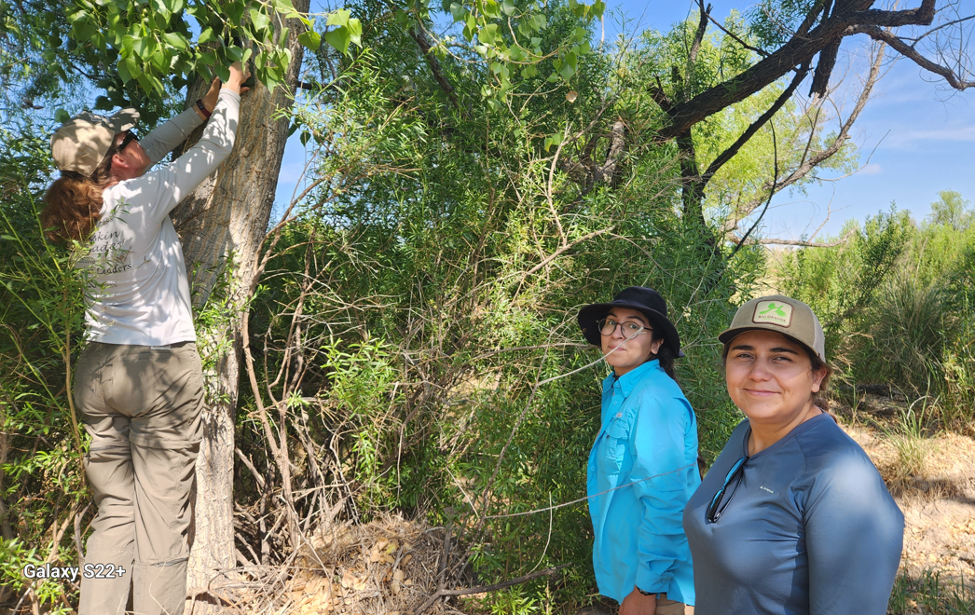
Photo: Dr. Maureen Frank deploys an Autonomous Recording Unit while PNE staff assist, by Jeff Bennett
Cross-border Collaboration in the Chihuahuan Desert
RGJV Habitat Restoration Hydrologist Jeff Bennett hosted biologists from Pronatura Noreste (Monterrey, Nuevo León) and Fundación Jimulco (Torreón, Coahuila) on a field study to share information on stream assessments and restoration techniques. Patricia Carrillo, Lizeth Alvarez, and Juan Castañeda traveled to west TX as a continuation of cross-border coordination and cooperation in the conservation of arid-land streams. They visited stream sites where brush weirs have been installed to slow flows, deposit sediment, and reconnect annual flows with disconnected floodplains. In addition, the binational team conducted monitoring surveys to establish current conditions. Dr. Maureen Frank, of the Borderlands Research Institute, assisted with sharing protocol for deploying Autonomous Recording Units (ARUs) that record bird songs and potentially can inform researchers about habitat use by birds.
Home to 446 species of birds, 3,600 species of insects, more than 1,500 plants, and 75 species of mammals, the Chihuahuan Desert regions of Texas and Mexico provide a unique opportunity for binational collaboration towards protecting this diverse and ecologically rich region. Partnerships like this are critical in ways that will benefit the people, the landscapes, and the wildlife on both sides of the border.
| |
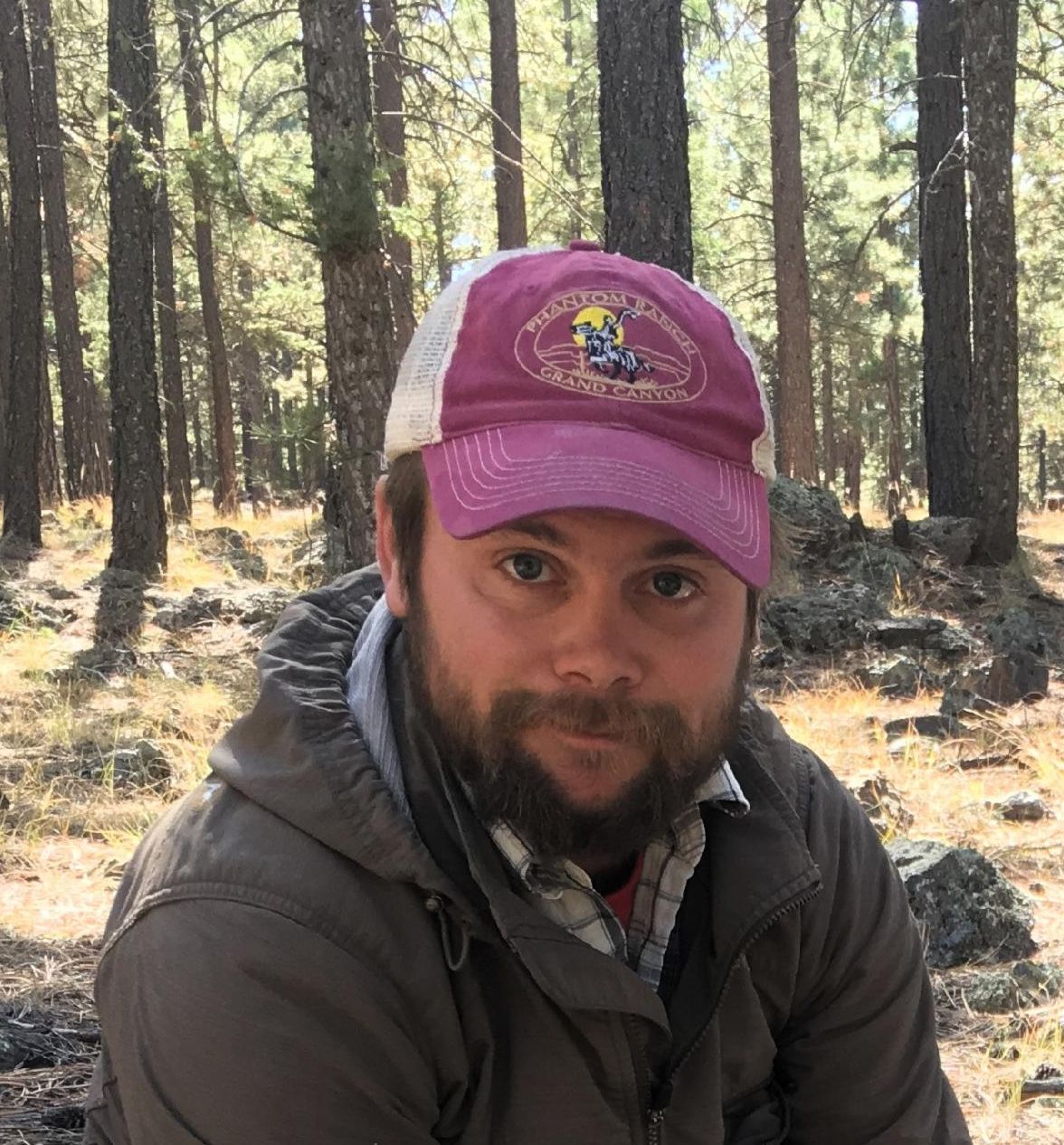
Photo: Price Rumbelow
Increasing capacity for Conservation Delivery:
Meet Price Rumbelow
Price is our new Conservation Delivery Specialist, and he will officially begin work August 1. He holds a B.S. in Biology and Natural Resource Management and an M.S. in Range and Wildlife Management from Sul Ross State University. Price comes to us from Texas Parks & Wildlife Department where most recently he was the Habitat Conservation Specialist for 19 state park units in the Trans-Pecos region. His varied background includes projects on important game and non-game species including mountain lion, black bear, peregrine falcon, and Mexican spotted owl among others. He has participated in numerous habitat management initiatives, including stream restoration projects in Big Bend Ranch State Park with the RGJV. He will be working directly with Jeff Bennett on grassland habitat enhancement and restoration as well as instream and riparian restoration projects, primarily on private lands. The RGJV is grateful to Texas Parks & Wildlife and the Dixon Water Foundation for supporting this position, and to the Borderlands Research Institute for their partnership in securing project funding.
| |
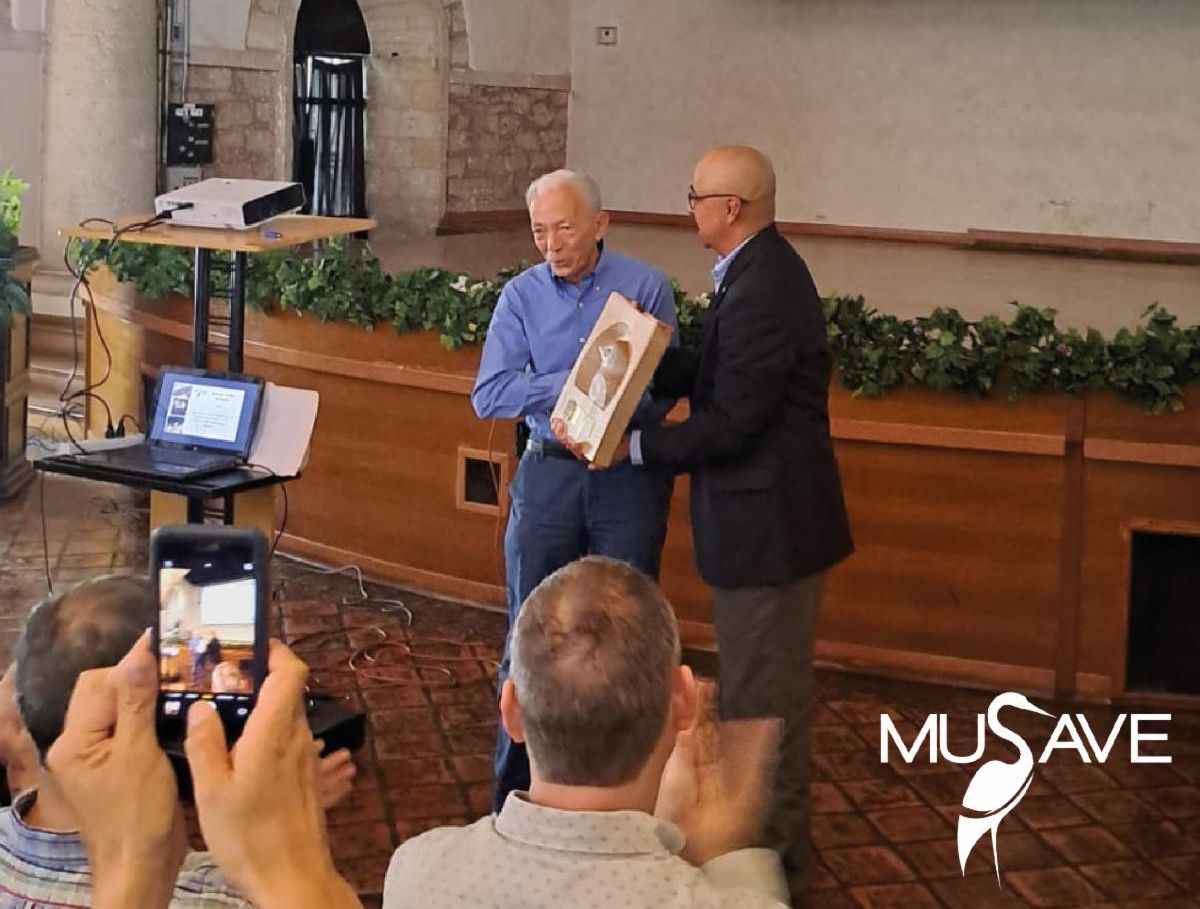
Photo: Jesús Franco presents the award, by MUSAVE
Museo de las Aves de México Receives Partners in Flight 2022 Public Awareness Award
On June 3, 2023, Jesús Franco, of the RGJV and American Bird Conservancy presented, on behalf of Partners In Flight (PIF), the 2022 PIF Public Awareness Award to the Museo de las Aves de México (MUSAVE) in the City of Saltillo. The PIF Award category for Public Awareness honors an individual or group that contributes significantly to increasing the public’s awareness and appreciation for birds, their habitats, or the need for conservation.
| |
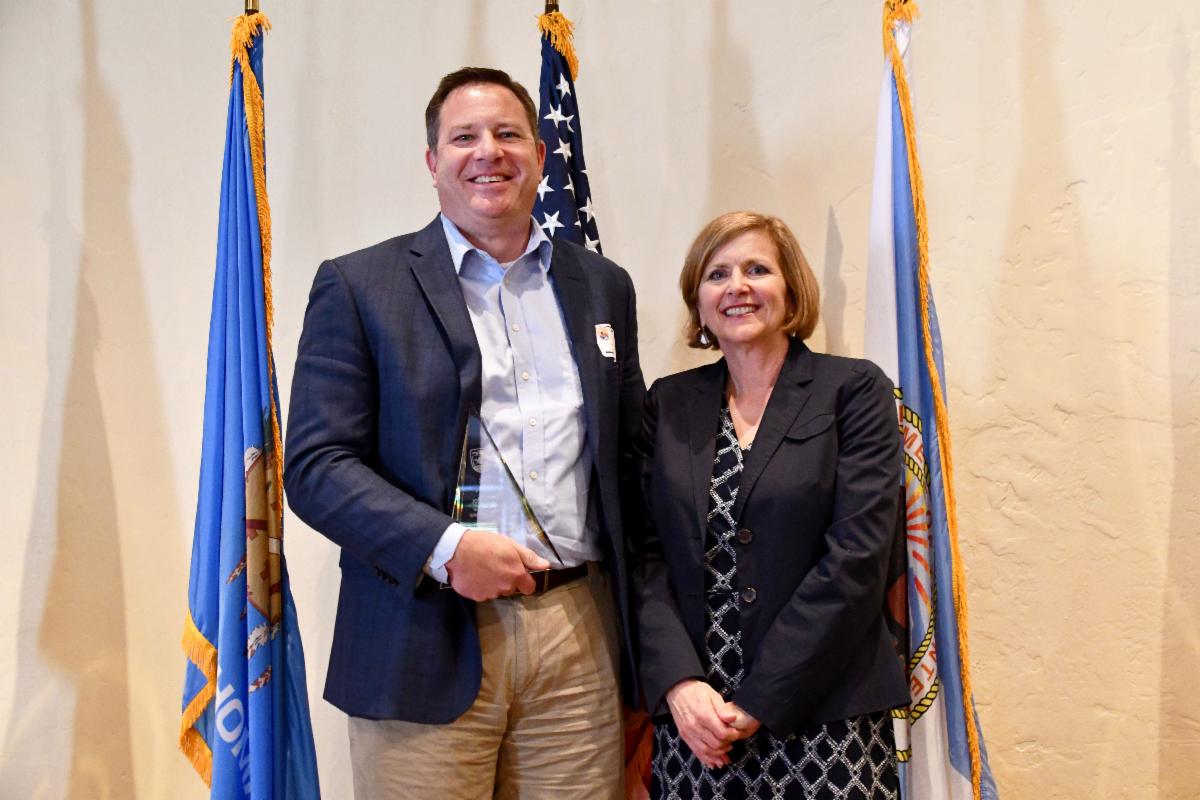
Photo: Jeff Raasch receives his award, by USFWS
RGJV Chair Jeff Raasch Receives USFWS Conservation Partnership Program Leader Award
Jeff Raasch of Texas Parks and Wildlife Dept. (TPWD) is, for the second time this year, recipient of an award recognizing his excellence in advocating for and participating in partnerships! As the U.S. Fish and Wildlife Service (USFWS) states, "There is no stronger advocate or contributor to Migratory Bird Joint Ventures (MBJVs) regionally or nationally than Jeff Raasch. Jeff played an instrumental role in the initial establishment of the Rio Grande and Oaks & Prairies JVs through TPWD years before they were recognized or funded by the USFWS." He currently serves as Management Board chairperson for three JVs (including the RGJV); serves on the board of another; and liaises with another. Jeff has also been a leader for the MBJVs nationally, serving as the JV representative to various multiple-agency conservation initiatives at the federal, regional, and state levels. All RGJV staff and management board members can attest to Jeff’s valuable guidance and leadership over the years, and we know this award is very much deserved. Congratulations, Jeff!
| |
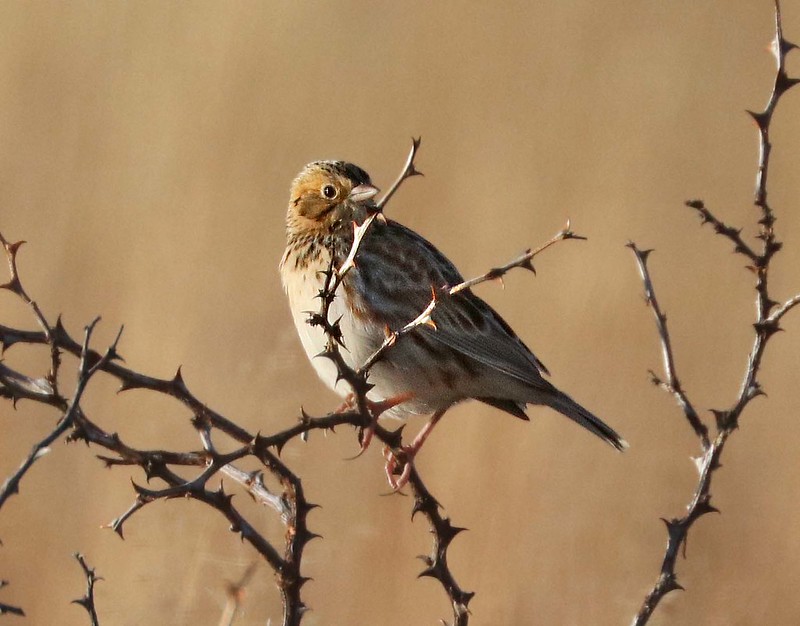
Photo: Baird's Sparrow, a species that will benefit from Conservation of Critical Grasslands in Durango, by Alan Schmierer
RGJV Partners Approved for Neotropical Migratory Bird Grants in the RGJV Geography
• The project Conservation of Critical Grasslands in Durango II from Pronatura Noreste, A.C. will benefit 12 grassland bird species, particularly Baird’s Sparrow, a species that is in danger of extinction and has an action plan for the reestablishment of its populations at a continental level. This species spends the winter in the Grassland Priority Conservation Areas (GPCAs) Cuchillas de la Zarca and Malpais. In this second phase of the project, alliances between local partners will be strengthened to continue sustainable management of grasslands, thus ensuring permanence of habitat for migratory birds and ranching, which is one of the main productive activities of the State of Durango.
• The project Recovery of Grassland Birds in Two GPCAs II from Organización Vida Silvestre, A.C. will focus on the conservation of two Grassland Priority Conservation Areas (GPCAs) that are home to populations of 29 priority species of high regional or continental conservation interest. They will work with a rancher network to (1) protect habitat long-term through Private Conservation Agreements on 9,667 hectares; and (2) improve grassland ecosystems through the implementation of a Regenerative Grassland Management Strategy.
• The project Comprehensive Management of Grassland Corridors in Valles Centrales from Pronatura Noreste, A.C. will benefit Long-billed Curlew, Mountain Plover, Sprague’s Pipit, Chestnut-collared Longspur, Thick-billed Longspur, Lark Bunting, Baird’s Sparrow, Swainson’s Hawk, Ferruginous Hawk, Grasshopper Sparrow, and Loggerhead Shrike. The threats that affect priority grassland areas vary greatly in their nature, dimension, and scope. Therefore, to increase the resilience of the Valles Centrales (VACE) region and reduce its vulnerability to these threats, Pronatura Noreste and partners will adopt a conservation approach based on comprehensive management of the watershed to seek a balance between economic activities, society, and the landscape. Partners will protect 27,428 acres in key grassland corridors with legal mechanisms to prevent agriculture expansion into grasslands. Pronatura Noreste will also implement management activities impacting 5,250 acres and will reduce desertification on 12,555 acres by implementing soil restoration efforts. The project also includes monitoring, research, and training components.
• The project Reduction of Threats of Priority Neotropical Migratory Birds, Altiplano Potosino III from Organización Vida Silvestre, A.C. will benefit Mountain Plover, Long-Billed Curlew. Sprague’s Pipit, Ferruginous Hawk, Burrowing owl, Horned Lark, Savannah Sparrow, Lark Bunting, and Loggerhead Shrike in the Grassland Priority Conservation Area (GPCA) “El Tokio”, San Luis Potosí, which is critical grassland bird wintering habitat. As vegetative cover has declined by more than 90% over the last 30 years, the project focuses on: (1) improving the habitat in 15,008 hectares through regenerative grassland, soil and water conservation practices, as well as training and community projects; (2) protecting and managing habitat in 15,185 hectares through a mixture of legal tools such as Private Conservation Contracts for 15 years, Conservation and Management Units for 20 years (registered with the National Agrarian Registry); and (3) a research program to monitor grassland species through automated radio-telemetry and to evaluate the ecology of grassland birds throughout their wintering range.
| |
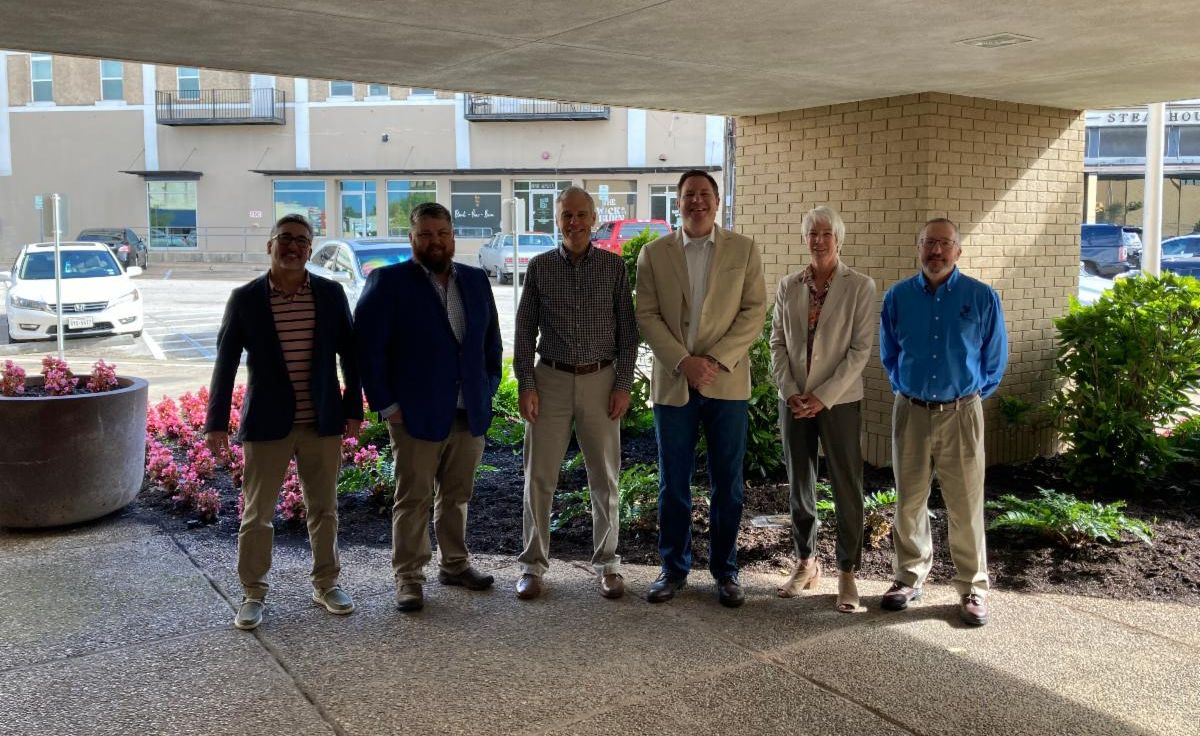
Photo: Texas Joint Venture Coordinators and TPWD staff meet with NRCS
Texas Joint Ventures Meet with NRCS State Leaders
Four of the five Texas JV Coordinators, along with Jeff Raasch and Will Newman of Texas Parks & Wildlife met with NRCS Texas state level leadership on May 24th, including State Conservationist Kristy Oates and Deputy State Conservationist Shaun Anderson to discuss innovative conservation partnership opportunities. The meeting helped initiate relationships among Joint Venture and NRCS staff and solidify a commitment to continue exploring opportunities for future collaborative work in shared priority areas, and for further partnership among the Texas JVs around conservation delivery projects.
| |
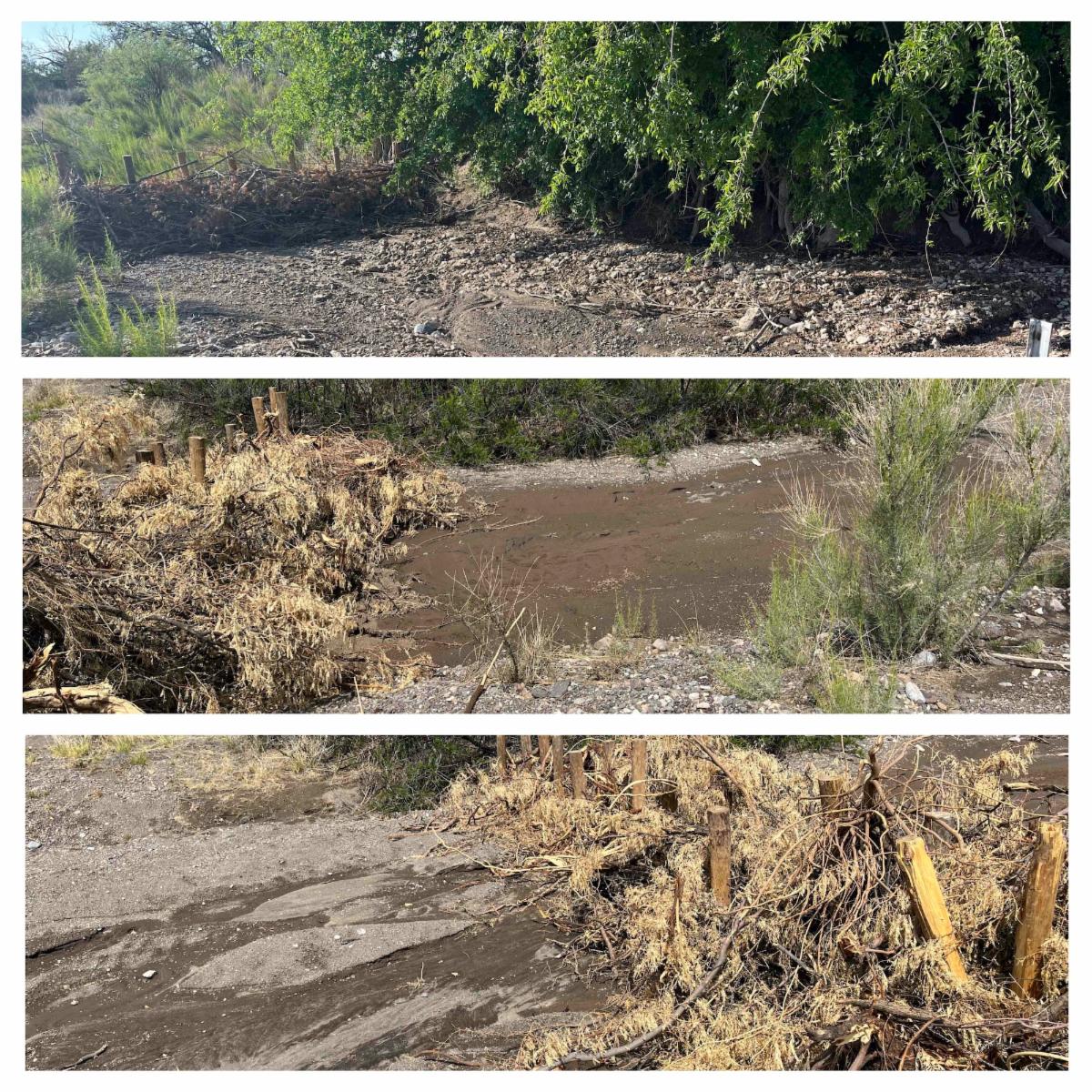
Photos by Philip Boyd, Dixon Water Foundation
Alamito Creek Conservation Initiative: process-based restoration in action!
Top photo: A recently completed brush weir on Alamito Creek, hand constructed by RGJV and Dixon Water Foundation staff. Brush weirs are intended to slow flood flows and increase recharge. Because flood levels are impossible to predict, we know that this is a temporary structure and hope that it lasts 3 to 5 years. Similar structures placed in Cienega Creek in 2020 are still functioning.
Middle photo: The brush weir is holding water after a storm, as it was designed to do!
Bottom photo: The brush weir has slowed the flow of water downstream of the structure. Slowing water allows percolation into the soil and water table as well as silt deposition that can rebuild eroded stream beds.
| |
The Rio Grande Joint Venture sincerely thanks our supporters
The US Fish & Wildlife Service
Texas Parks & Wildlife Department
ConocoPhillips
National Fish & Wildlife Foundation
The Dixon Water Foundation
Horizon Foundation
American Bird Conservancy
| |
Rio Grande Joint Venture
Coordinator Karen Chapman
KChapman@abcbirds.org
| |
Did someone send you this email?
| | | | |