|
ESA2025 is right around the corner and I'm looking forward to seeing many of you there next week. If you're attending make sure to join the EFI Social @ Sobo Kitchen on Tues and the EFI oral session Thurs AM.
I also want to thank EFI's new African chapter for hosting this year's EFI short course. I had a great time in Cape Town and really appreciate how much the staff, students, and lead organizer (Jasper Slingby) made me feel welcome and at home. Excited to see what AEFI has in store in the future!
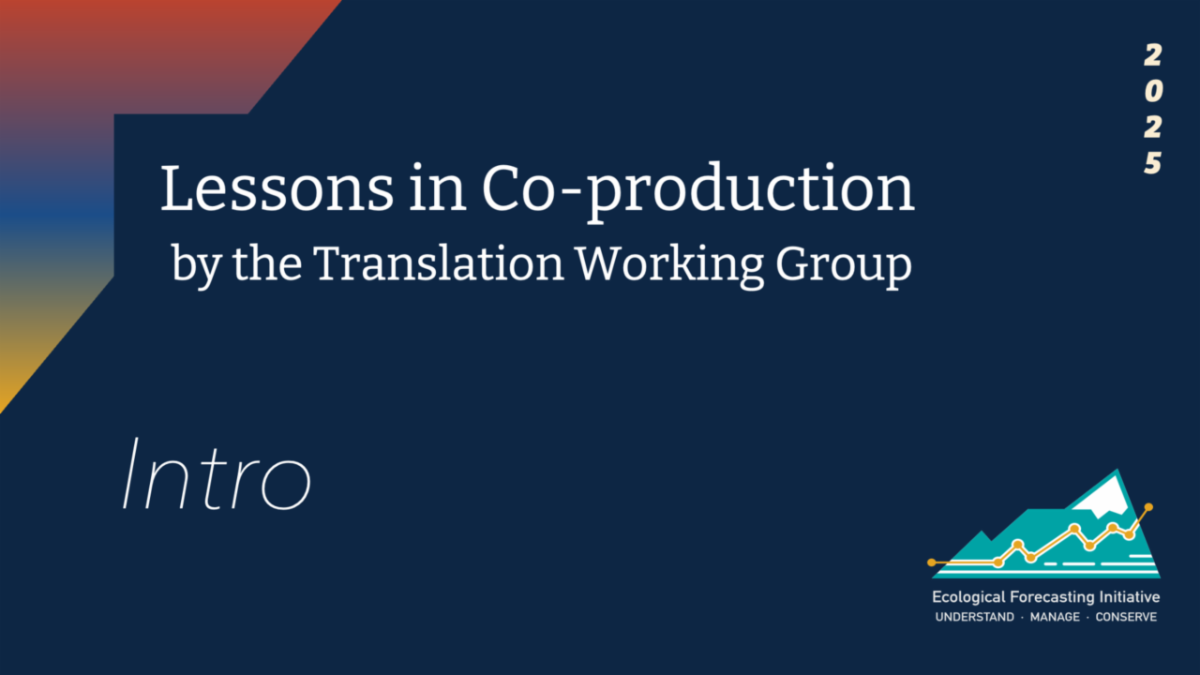
Thanks also to EFI's Translation and Actionable Science WG for an exciting new Tutorial on Co-production and Engaged Science.
As always, this is just the tip of the iceberg on what EFI's been up to, and what we have planned for the rest of the year, so please check out all the other meetings, conference sessions, webinars, special issues, book clubs, forecast challenges, and job postings listed below.
| | EFI at the Ecological Society of America Conference | |
EFI is excited to connect with individuals in the broader community at ESA in Baltimore next week!
If you are going to ESA, be sure to add the sessions and presentations below to your schedule. Additional forecasting-related presentations and other presentations by those in the EFI community are available and will be updated as needed in this EFI blog post.
If your ESA presentation is not included in the blog post, send it to info@ecoforecast.org.
EFI Social
Join the group at Tulsi's Sobo Kitchen & Bar, just a short 15-minute walk from the Convention Center on Tuesday, Aug 12, 7:00-9:00pm.
EFI Name Badge Tags
We will again have EFI badges that can be attached to the ESA name tags for individuals who are part of the Ecological Forecasting Initiative community. Find Mike Dietze during the Conference or at the Social to get a badge and look for others with the green badge!
| |
Organized Oral Session - Ecological Forecasting for Research and Decision Making
Thursday, August 14 at 8am-9:30am; Location Hilton Key 6
Contributed Oral Session - Back and Forecasting in Ecology
Thursday, Aug 14 at 1:30-3:00pm; Location BCC340
Workshops
Building Data Science Skills in the Classroom Using Ecological Forecasting
Tuesday, August 12, 8-9:30am; Location Hilton Holiday 3
Data science skills, such as wrangling, graphing, analyzing, and visualizing large datasets, are increasingly required for careers both within and beyond ecology. Within ecology, data science tools and approaches are evolving rapidly with the development of high-frequency sensor networks and other “big data” technologies, application of machine learning methods, and emergence of highly quantitative sub-disciplines such as ecological forecasting. As a result, ecologists must continually learn (and teach!) new data science skills throughout their careers, necessitating development of strong quantitative literacy and reasoning skills in ecology students. In this workshop, participants will explore an open-source, modular curriculum that aims to reduce the barrier to entry to data science and modeling skills - such as generating an ecological forecast or training a machine learning model - for both ecology students and instructors. The Macrosystems EDDIE program includes 1-3 hour learning modules that introduce skills such as formatting, visualizing, and interpreting high-frequency data; building ecological models; quantifying model uncertainty; and generating ecological forecasts for both aquatic and terrestrial ecosystems. We will work through module materials together and discuss pathways for integrating new data science, modeling, and forecasting approaches into both our teaching and research.
An Introduction to the NEON Ecological Forecasting Challenge: A Hands-On Example Using Ground Beetle Abundance and Richness
Tuesday, August 12, 11:45 AM – 1:15 PM EDT; Location Hilton Holiday 1
The Ecological Forecasting Initiative Research Coordination Network (EFI-RCN) has created a forecasting challenge (https://ecoforecast.org/efi-rcn-forecast-challenges/) for participants to forecast five different themes (aquatic ecosystems, terrestrial ecosystems, tick populations, phenology, and beetle communities) of publicly available data published by the National Ecological Observatory Network (NEON, https://data.neonscience.org). The overall objectives of the challenge are to develop a community of practice for ecological forecasting, develop standards, build tools and cyberinfrastructure to facilitate forecasting, and create a platform for visualizing and evaluating forecast performance. These resources are openly available to anyone who is interested in learning about, creating, and/or using ecological forecasts. In this workshop we provide an overview of the theme focusing on forecasting ground beetle abundance and richness across NEON terrestrial sites. The workshop will include code-along instructions to help participants create and submit a relatively simple forecast to the EFI RCN NEON forecasting challenge platform, and how to interpret metrics of forecast skill. Our goal is to provide a foundation that participants can build upon to create more sophisticated predictions about ecological communities, and use the EFI RCN resources in future forecasting applications.
| | |
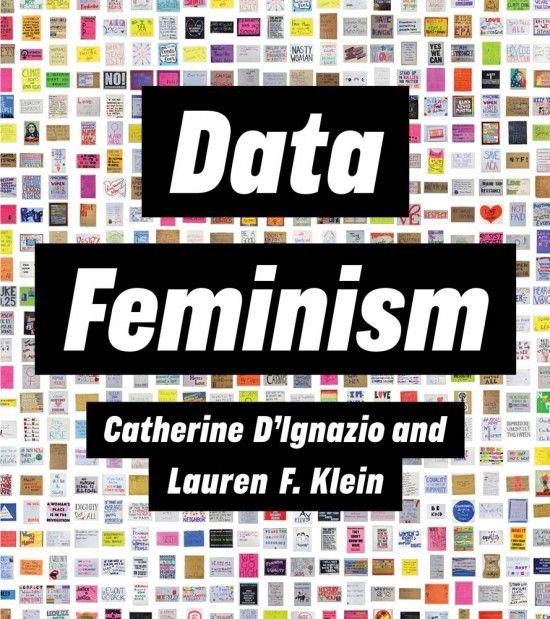
The DEI working group hosted the 2025 book club in June and July to read and discuss Data Feminism by Catherine D'Ignazio and Lauren F. Klein.
Suggestions from book club participants about ways to incorporate ideas from the book in EFI activities are compiled in this living document. Suggestions include considering the context of the data collected and all the people involved in the process of creating forecasts, and continuing to consider data ethics and justice for forecasts. Additional resources that were shared during the book club, and a compendium with links to sources and animations for the figures in the book, are also in the living document.
If you were unable to join the book club, you can find the book wherever books are sold, as an audiobook, and online for free at https://data-feminism.mitpress.mit.edu/.
| | The African EFI Chapter Forecasting Short Course in Africa | | |
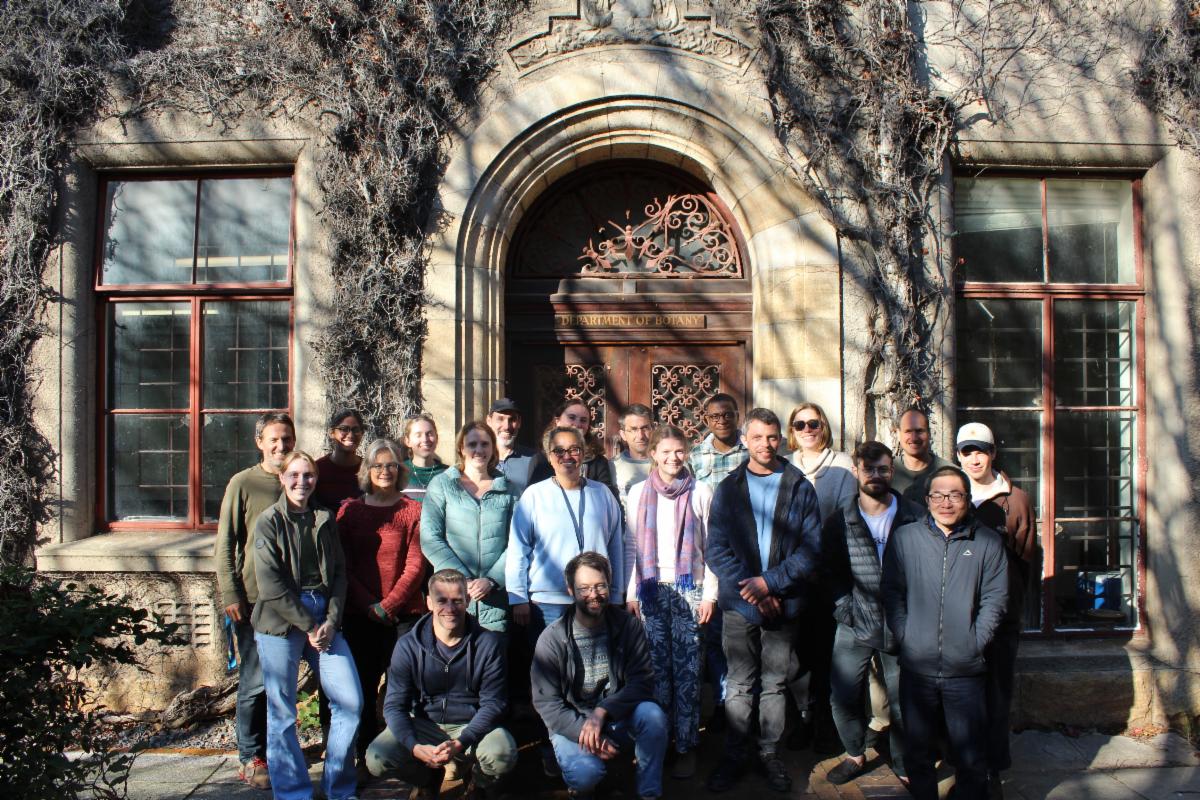
Ecoforecast Africa ran its inaugural training event in Cape Town, South Africa, 21-25th July. The short course on iterative near-term ecological forecasting included 25 participants from South Africa, Kenya, Nigeria, Zimbabwe, Japan, Switzerland and the USA, including students, academics, decision-makers and consultants from several universities, conservation agencies, NGOs and environmental consultancies. The course was hosted by the Department of Biological Sciences and the Centre for Statistics in Ecology, the Environment and Conservation (SEEC; https://science.uct.ac.za/seec) at the University of Cape Town and funded by the University of Cape Town Visiting Scholars Fund and the South African Environmental Observation Network (SAEON; www.saeon.ac.za). Demonstration datasets were drawn from SAEON’s Jonkershoek long-term ecological research site (fynbos.saeon.ac.za) and the Coordinated Waterbird Counts and BIRDIE projects.
The course aimed to introduce participants to the various components of making an iterative near-term ecological forecast. Participants were taught how to generate a forecast from a simple model that makes use of more than one data stream, how to categorize and estimate the uncertainties in the model, propagate this uncertainty into the forecast, assess the performance of the model and discern ways to reduce uncertainty in the next iteration of the forecast. They should also be able to assess and critique forecast data products and scientific publications about ecological forecasts, and understand how such forecasts can be used to inform decision making. All course materials are available through the Ecoforecast Africa website at https://ecoforecast.africa/events/past/course_2025/.
Where too from here for Ecoforecast Africa?
The foundation phase of the African EFI chapter is focused on growing awareness, membership and representation across the continent. With the next online community call planned for late August, key agenda items include planning further training events, arranging special sessions for upcoming international conferences that are to be held in Africa and developing a perspective piece on the needs and opportunities for near-term ecological forecasts in Africa. If you think this is for you, please sign up at ecoforecast.africa/join!
| | Tutorials on Co-production and Engaged Science | | |
Understanding how to engage with stakeholders and the use of co-production was one of the key translation needs identified in short interviews with EFI community members and summarized in the 2023 blog post "Translation Needs for the EFI Community" (see point #2 in the post). To meet this need, the Translation & Actionable Science EFI working group has been creating short YouTube videos to give an overview of the why, what, who, when, how, and barriers to engaging with interested parties, stakeholders, and end users of forecasts. Each overview also provides snippets from interviews with EFI community members and teams that exemplify a range of ways such collaborations have taken place.
The tutorial on "What is co-production and what are its diverse forms?" has now been released with the introductory, why, and when tutorials. Additional tutorials will continue to be rolled out as they are finalized and approved by the interviewees. All released tutorials can be viewed on the EFI webpage: https://ecoforecast.org/engaged-research-tutorials/ OR this EFI YouTube Channel Playlist: https://www.youtube.com/playlist?list=PLmpgJtGjCb06MMmdT6nplmjhND6lBLXhq
| | EFI & ESA Statistical Method Seminar Series | | |
EFI is co-hosting the fifth round of the Statistical Methods webinar series with the Ecological Society of America Statistical Ecology Section. Presenters will provide an overview of an R or Python package with advice about common pitfalls or stumbling blocks.
Details and links to register for the calls will be added to the webinar page:
https://ecoforecast.org/workshops/statistical-methods-seminar-series/
| | |
Introduction to Continuous-time Movement Modeling for Animal Tracking Data Christen Fleming (University of Central Florida)
September 8, 2025 at noon US ET
Register at: https://bit.ly/4lRRbGl
Animal tracking datasets often come with substantial autocorrelation and location error that render classical analyses invalid and cause differential biases. Continuous-time stochastic-process methods offer a solution to these challenges.
This workshop will provide beginners with an introduction to important movement ecology concepts, as well as hands-on experience using the award-winning “continuous-time movement modeling” (ctmm) R package package to apply advanced statistical methods to tracking data.
Participants will learn how to:
- Fit continuous-time movement models,
- Interpret model parameters,
- Perform home-range analysis,
- Estimate habitat suitability,
- Perform path reconstruction.
| | Oceania Ecological Forecasting Initiative (OEFI) Chapter | | |
The July 2025 OEFI call focused on brainstorming ideas for a horizon scanning manuscript to identify emerging trends, knowledge gaps, and future priorities for the Oceania community.
Follow-up information about the manuscript, tasks, and next steps will be shared with the OEFI listserv.
The next community call will be 24th September.
OEFI is also hosting a session on "Ecological forecasting: Advancing ecological theory and management in Oceania with near-term forecasts" in the Environment and Ecology stream at the MODSIM conference to be held 30 November - 4 December 2025. Submissions for 7-page full papers or 1-2 page abstracts will close on 15th and 27th August, respectively.
Details and previous seminar recordings are available on the OEFI webpage
https://ecoforecast.org/oceania-ecological-forecasting-initiative/. Invitations for future events are sent to the OEFI email listserv, which you can sign up for here.
| | European Ecological Forecasting Initiative (EEFI) | | |
A recording of the EEFI Community Call on 11th June to share activities in progress and upcoming opportunities to build and gather feedback from the European ecological forecasting community is available at: https://youtu.be/OxkBqcfsgnQ
If you are interested in helping to guide the EEFI Chapter activities, the EEFI Steering Committee is collecting expressions of interest through 8th August for a new cohort of Steering Committee members. Find details at: https://euro-ecoforecast.wordpress.com/eefi-steering-committee/
The EEFI monthly seminar series has been on hiatus over the summer; it will start back up in September. In the meantime, the group hosted two conference sessions in June: a session on “Perspectives and Challenges in Biodiversity Forecasting” at the SIBECOL conference in Pontevedra, Spain, and a session on “Ecological Forecasting for Integrated Science: Advances and Applications” at the eLTER Science Conference in Tampere, Finland.
The group is looking forward to hosting future conference activities, including a lunchtime workshop at the British Ecological Society meeting in Edinburgh, Scotland, in December 2025, a workshop at The International Biogeography Society in Aarhus, Denmark, in January 2026, and the ANdiNa VIII Workshop in June 2026 in Nerín, Spain.
Find additional details about EEFI happenings at https://euro-ecoforecast.wordpress.com.
| | Canadian Ecological Forecasting Initiative | | |
The Canadian Ecological Forecasting Initiative (CEFI) Steering Committee has been busy working to develop a system to sign up new CEFI members and look forward to roll that out soon!
The Steering Committee is looking to recruit someone from an non-profit organization in order to have the Steering Committee reflect multiple perspectives (academic, government, for profit, and NGO) on the needs for ecological forecasting in Canada and future CEFI activities.
Finally, EFI2026 Conference plans and funding continue to be pursued and the group looks forward to sharing more information in the following months as plan develop further.
More details about CEFI are available at https://canadianefi.ca/.
| | Working Group Calls and Summaries | | |
The Working Groups are open for anyone to join at any time. Email EFI to be added to the mailing lists or Slack channels for these groups.
Polls will be sent in August to the working group email lists and on Slack to schedule monthly calls for September to December 2025.
-
Theory - Tuesday at 2pm US ET on August 5
-
Translation & Actionable Science - Wednesday at 2pm US ET on August 6
-
Education and Diversity & Inclusion - are meeting jointly for the summer on Mondays at 1pm US ET. The next call is August 18
-
Cyberinfrastructure/Methods - Monday at 11am US ET on August 18
-
Student & Early Career Association (EFISECA) - Monday at 1pm US ET on August 25
| | |
EFI Steering Committee
Over the last two calls, the Steering Committee has continued to focus much time on discussing options for potential fiscal sponsorship for EFI. They have also discussed upcoming EFI conference plans, heard a new working group proposal, deliberated on reaching out to a potential funding agency, and weighed in about updates on the Stats seminar series. The group will have an extended call in August to prioritize Strategic Plan activities that this Steering Committee cohort wants to focus on.
Ecological Forecasting Initiative Student & Early Career Association (EFISECA)
This month, EFISECA members read and discussed the 2025 paper Understanding Data Uncertainty by Bokulich and Parker, and discussed how different methods of thinking about uncertainty played out in our own research. Additionally, the group thought about how discussions of uncertainty change based on the discipline and goals of individual research. In future meetings, the group will follow up on more examples of how uncertainty is discussed and reported across the EFI community.
Theory & Synthesis
The Theory working group followed up on the Predictability of Nature working group held at the EFI2025 Conference in May. A subset of the group spent extended time in July to further develop three figures and case studies for a manuscript on how forecasts contribute to an interdisciplinary conceptualization of ecological predictability.
Translation & Actionable Science
The introduction, "Why", "When", and "What" tutorials of connecting with partners and forecast users are now public. The "Who" tutorial is close to being ready for review by interviewees, and the "How" tutorial is in development. The group is in the initial stage of a new project to explore the unintended consequences of forecasts. A call is open for co-chair nominations with a vote during the September working group call.
Education and Diversity, Equity, and Inclusion
As mentioned above, the DEI working group hosted a book club to read and discuss Data Feminism in June and July. In June and July, the Education and DEI working groups met jointly and made progress on a blog post highlighting the ideas that were developed during the "EFI University for Everyone" working group at the EFI2025 Conference in May.
Methods & Tools and Cyberinfrastructure
The Cyberinfrastructure and Methods working group discussed the broad interest in the EFI community to learn more about the ins and outs of developing forecasting workflows, particularly using the NEON Forecasting Challenge workflow example. The group also talked about ideas for creating recorded material to share with the EFI community that couldn't attend the workshop at the EFI2025 Conference on the spatial forecast of post fire recovery using MODIS LAI. In the meantime, you can find the html version of the tutorial here and the GitHub repository here.
| | Call for Papers - AGU & ESA Special Collection | | |
Ecological Forecasting in the Earth System - This joint special collection between AGU and the Ecological Society of American focuses on the emerging field of ecological forecasting, which involves predicting the future states of ecosystems. The issue welcomes contributions that use novel methodologies (e.g., machine learning, process-modeling, uncertainty quantification, forecast evaluation, digital twins, inverse modeling), interdisciplinary approaches (e.g., integration with decision science, computer science), real-time data integration (e.g., data assimilation, measurements and monitoring to support forecasting), and multi-forecast synthesis to enhance the accuracy, uncertainty representation, applicability, and equality of ecological forecasts.
Accepted submissions to the following journals will be included in the special collection.
AGU Journals: Journal of Geophysical Research: Biogeosciences; Journal of Geophysical Research: Machine Learning and Computation; Water Resources Research; Journal of Advances in Modeling Earth Systems
ESA Journals: Ecology; Ecological Applications; Ecological Monographs; Ecosphere; Frontiers in Ecology and the Environment; Earth Stewardship
Submission deadline: October 31, 2026. Find details HERE.
| | |
New EFI Members
Eli Horner - North Carolina State University
Jonathan Pye - Ocean Tracking Network
Chris Terry - University of Oxford
Meghna Krishnadas - National Centre for Biological Sciences
Zackary Pryde - Anthesis South Africa
Vernon Visser - SEEC, University of Cape Town
Jessica Howard - Stellenbosch University
Jess Devine - University of Cape Town
Nicola van Wilgen-Bredenkamp - SANParks
Jessica Prevôst - University of Cape Town
Mara Baudena - National Research Council, Institute of Atmospheric Science and Climate
Collins Matiza - University of Cape Town - African Climate Development Initiative
Sarah Frances Visser - University of Cape Town
Lerusha Naidoo - University of Cape Town
Philip Faure - BirdLife South Africa
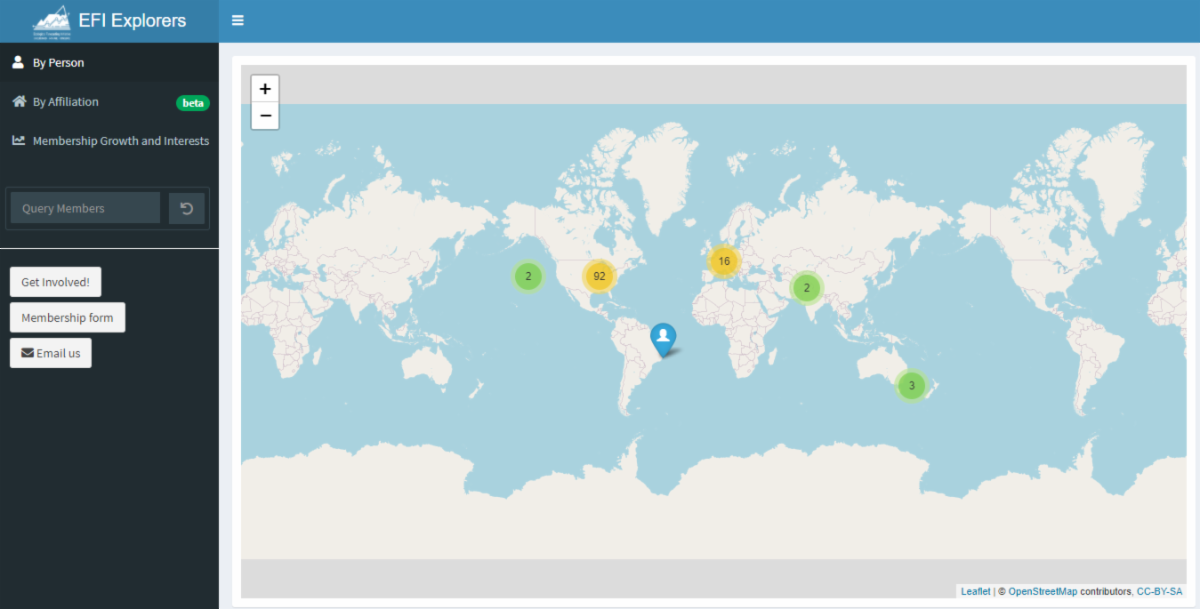
The EFI Members page provides a directory of the 350 EFI members and a map showing the general location of EFI members. EFI membership is free, allows individuals to be elected to the EFI Steering Committee and cast a vote in the Steering Committee elections, and demonstrates a commitment to the field of ecological forecasting. If you are not already a Member you can sign up here.
| | |
EFI Logos
The EFI logos are available for people to use in presentations.
| | |
EFI Slack Group
The EFI Slack Group provides an outlet for the group to share ideas and conversations on the day-to-day timescale. This is a great resource for real-time updates and discussions for Working Groups, the NEON Ecological Forecast Challenge, new papers, job postings, and funding opportunities.
Email EFI to request access to the Slack Group.
#funding and #jobs Channels
As a reminder, you can post and view funding and job opportunities to the EFI Slack. If you are not on Slack, you can still share opportunities by emailing the information to info@ecoforecast.org.
Funding opportunity -
Job postings
-
Environmental Data Science Fellow and Research Scientist I at the Consortium of Universities for the Advancement of Hydrologic Science, Inc (CUAHSI). Applications accepted starting today, August 4.
-
Postdoc at Boston University. Mike Dietze and Shannon LaDeau are recruiting a postdoc to work on forecasting zoonotic tick-borne disease risk using ecological and remote sensing data. See details on Slack. Application due date August 18, rolling thereafter.
-
Postdoc at Rensselaer Polytechnic Institute. Kevin Rose is recruiting a postdoc to work on hydrological modeling to understand watershed impacts on lake water quality for the Jefferson Project. See details on Slack. Application review begins August 1.
-
Postdoc at Cornell University. Dan Katz is recruiting a postdoc to develop models of airborne pollen concentrations using remote sensing, field data, and other spatial datasets. See details on Slack.
-
Postdoc at the USGS Powell Center. The postdoc will work closely with a USGS Powell Center working group synthesizing data on metals in freshwater environments to gain an understanding about the role of essential metals in river and stream ecosystems. See details in Slack. Applications received by August 15 will receive full consideration.
-
Postdoc with Skogforsk, the Forestry Research Institute of Sweden. Develop models for the dynamics of understory vegetation and/or optimize forest management to meet various objectives. Application deadline is August 31.
-
Senior Environmental Scientist at California Department of Forestry and Fire Protection (CAL FIRE). See details on Slack. Final Filing Date on August 12.
-
Lead Project Scientist at SECORE International, Inc. Coordinate, implement, and advance international research collaboration on coral restoration with SECORE and the Australian Institute of Marine Science (AIMS). Application review begins August 1, rolling thereafter.
-
Programmer in Ecological Modeling at the University of Bonn. Work with a team focused on mechanistic biodiversity modelling across spatiotemporal scales and levels of organisation by combining ecological and eco-evolutionary models with field work and data analyses to understand and predict biodiversity dynamics. Starting date: as soon as possible.
-
Canada Excellence Research Chair in Cold Ecosystems Conservation at Laval University. See details on Slack. Application deadline is September 15.
| | |
Shop for EFI Gear
You can get your own shirt, magnet, notebook, and more from the EFI Store, https://ecoforecast.threadless.com/. Proceeds generated from the sale of products will be used to support EFI awards and activities. We have kid-size shirts and baby onesies for all those future ecological forecasters!
| |
-
August 10-15, 2025: EFI session at Ecological Society of America Conference (ESA; Baltimore, USA)
-
August 12, 2025: EFI social at ESA at Tulsi's Sobo Kitchen & Bar from 7-9pm
-
August 15, 2025: 7-page full paper submissions for MODSIM closes
-
August 27, 2025: 1-2 page abstract submission for MODSIM closes
-
September 8, 2025: Statistical Methods Seminar: Introduction to Continuous-time Movement Modeling for Animal Tracking Data. Register at: https://bit.ly/4lRRbGl
-
September 10, 2025: EEFI monthly seminar
-
September 24, 2025: OEFI virtual call
-
October 8, 2025: EEFI monthly seminar
-
November 12, 2025: EEFI monthly seminar
-
November 20, 2025: OEFI virtual call
-
November 30 - December 4, 2025: OEFI-hosted session on “Ecological forecasting: Advancing ecological theory and management in Oceania with near-term forecasts” in the “Environment and ecology” stream at the 26th International Congress on Modelling and Simulation (MODSIM25; Adelaide, Australia).
-
December 10, 2025: EEFI monthly seminar
-
June 8-12, 2026: Improving Predictions in Ecology: Can complex problems get away with simple solutions? ANdiNa VIII Workshop (Nerín, Spain)
| | | | |