Spring/Summer 2024 Newsletter – Vol. 127 | |
President's Greeting
Dear ACASA Members,
I write to you one week after our spring webinar for which over 100 people signed up to attend. I want to thank Amanda Maples for bringing the participants together and managing the program. I also wish to thank our arts administrator Caroline Bastian Retcher for her behind-the-scenes work making sure everything went smoothly. And of course, I must thank the presenters for their insights on repatriating works of African cultural heritage: Robin Cooper and Jennifer Rigsby from the Newfields Museum in Indianapolis, Purity Kiura at the National Museums of Kenya, Erica Jones at the Fowler Museum, UCLA, and Kwasi Ampene from Tufts University. I hope it was a valuable experience for our membership. As we begin planning for next year’s Fall and Spring webinars, please do feel free to reach out to any of the ACASA board members if there are burning issues that you would like us to take up.
Preparations for the Triennial Symposium in Chicago are coming to a head. The response to the call for proposals was impressive and we will have a total of 68 panels (and three more at Museum Day), with around 330 presenters from around the world. We have made our best efforts to assist as many as possible to attend in person: we are offering about $60,000 total in travel grants and have brought on Ethiopian Airlines as the official conference carrier to receive reduced fares from the continent. Ultimately, we understand that for one reason or another, be it expense or obtaining visas or otherwise, that not all will be capable of attending in person. With that in mind, we have revised our room reservations to radically expand the number of hybrid-capable panels. All of this is to say that we are excited at the breadth of participation, and we are doing our utmost to maintain that breadth through to the end. In addition to the main portion of the conference, Museum Day is shaping up to be an extraordinary experience. Please note that Museum Day is not just for museum professionals. All members, whether museum professionals or otherwise, are welcome to participate in Museum Day!
In other developments since the winter newsletter, the proposed revisions to the bylaws were approved by membership and subsequently published to the ACASA website. Our DEAI statement is being finalized now and we look forward to presenting that to membership at the Triennial. The CCRBP has been working hard to complete their guidelines in time for the Triennial as well.
Finally, please do turn your attention towards voting for our next board members. We have an impressive list of nominees for the five openings on the board; you’ll find voting information and candidate details at the bottom of this email. I wish to thank Ashley Stewart, Karen Von Veh, and Ndubuisi Ezeluomba for their work on the nominating committee to make sure that we have such an impressive list. As a reminder of how this works, elections are for the board in general and not for specific positions. The newly-elected board members will receive specific positions after joining the board. The board will also identify the next VP/Incoming President from amongst the new board members; a decision that will be ratified by a vote of the ACASA membership.
As the board will guide our organization going forward, it is imperative that we vote for those that we feel will be best able to do so.
Best wishes and I look forward to seeing you all in Chicago,
Mark DeLancey
| | | Fall 2024 Newsletter Submission | | |
DEADLINE: 15 September 2024
(to be published late September/early October)
The online form is written in English; form instructions are also available in French and Portuguese! All members are kindly asked to use the online form accessible via the "submit your news" button.
Want to share something before the next newsletter? Contact the Social Media Editor directly.
| | |
Follow us and join the conversation on social media! | |
| |
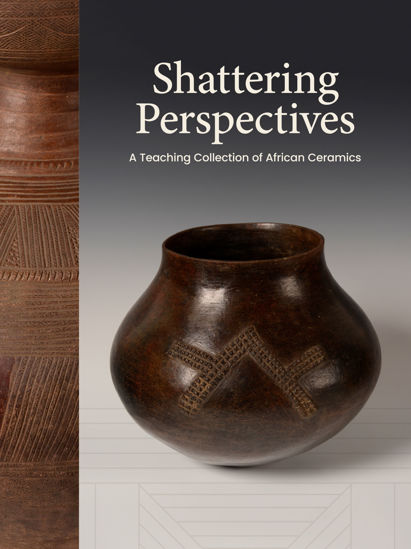
Shattering Perspectives: A Teaching Collection of African Ceramics
ed. David M. M. Riep, PhD.
This publication accompanied a collaborative, student-generated exhibition exploring ceramic arts from across the African continent through vessels and objects from the permanent collection at the Gregory Allicar Museum of Art at Colorado State University. Curated by David M. M. Riep, Shattering Perspectives featured nearly 200 objects created by artists from across the African continent. The catalog includes essays by Riep, Patricia Coronel, and Del Harrow, in addition to student contributions on each of the objects featured in the exhibition.
Available in print
Image: Shattering Perspectives: A Teaching Collection of African Ceramics. ed. David M. M. Riep, PhD
| | |
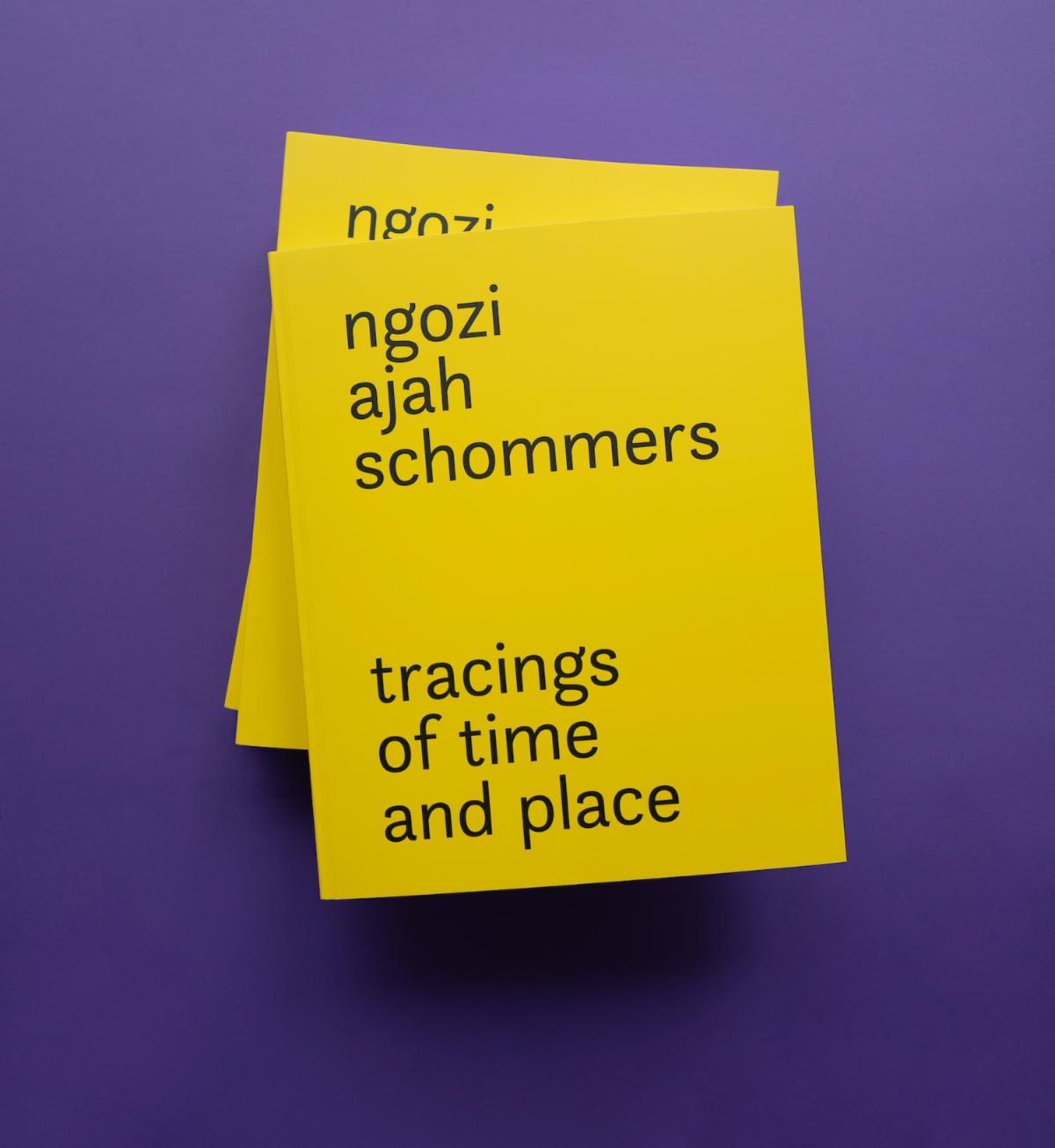
ngozi ajah schommers: tracings of time and place
ACASA member Bukola Oyebode-Westerhuis is pleased to announce 'tracings of time and place' (2023), presenting the critical narratives, materials and techniques in the work of Nigerian-German artist Ngozi Ajah Schommers. Schommers began her studio practice over fifteen years ago and works with drawing, installation, cut-out painting, sculpture, photography and performance. The book opens with forewords by Rajkamal Kahlon and Elliot Barnes and features text contributions by Kea Wienand, Joseph L. Underwood, Paula Callus, Bukola Oyebode, Wura Natasha Ogunji and Tobias Peper. The subjects examined include Schommers’ recurring interest in different conceptions of womanhood and how she addresses Igbo hair heritage in a deconstructive approach that diverges from colonial history and the Western gaze.
There is also an analysis of how the technical processes, fragmented bodies and forms in her work relate to the narratives.
ngozi ajah schommers: tracings of time and place is co-published by TSA Ideas Lab & bo-art projects (Lagos & Amsterdam).
Please contact Bukola Oyebode-Westerhuis for how to get a copy.
Language: English & Deutsch | ISBN: 978-90-9037266-2 | Softcover, 256 pages
Image courtesy of TSA Ideas Lab
| | |
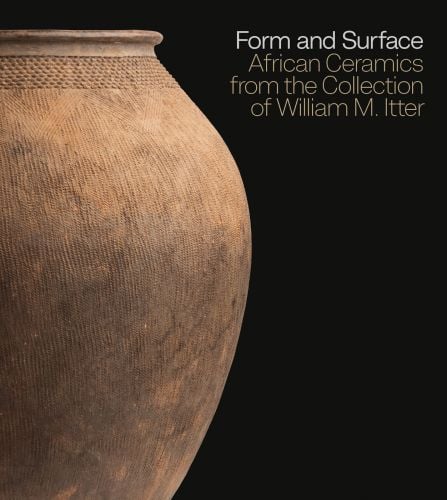
Form and Surface: African Ceramics from the Collection of William M. Itter
The Sidney and Lois Eskenazi Museum of Art at Indiana University recently co-published Form and Surface: African Ceramics from the Collection of William M. Itter with Scala Arts Publishers. ACASA member Allison J. Martino (Laura and Raymond Wielgus Curator of the Arts of Africa, Oceania, and Indigenous Art of the Americas at the Eskenazi Museum of Art) is the lead author. This volume highlights one of the most significant collections of African ceramics in the United States, and explores ceramics in relation to cross-cultural exchange, cultural diversity, embodiment, temporality, and spirituality. Form and Surface received the 2024 Midwest Art History Society (MAHS) Catalogue Competition Award for Outstanding Thematic Exhibition Catalogue.
Please contact Allison with any questions about this publication.
Website
ISBN: 978 1 78551 209 4
Pages: 192
| | |
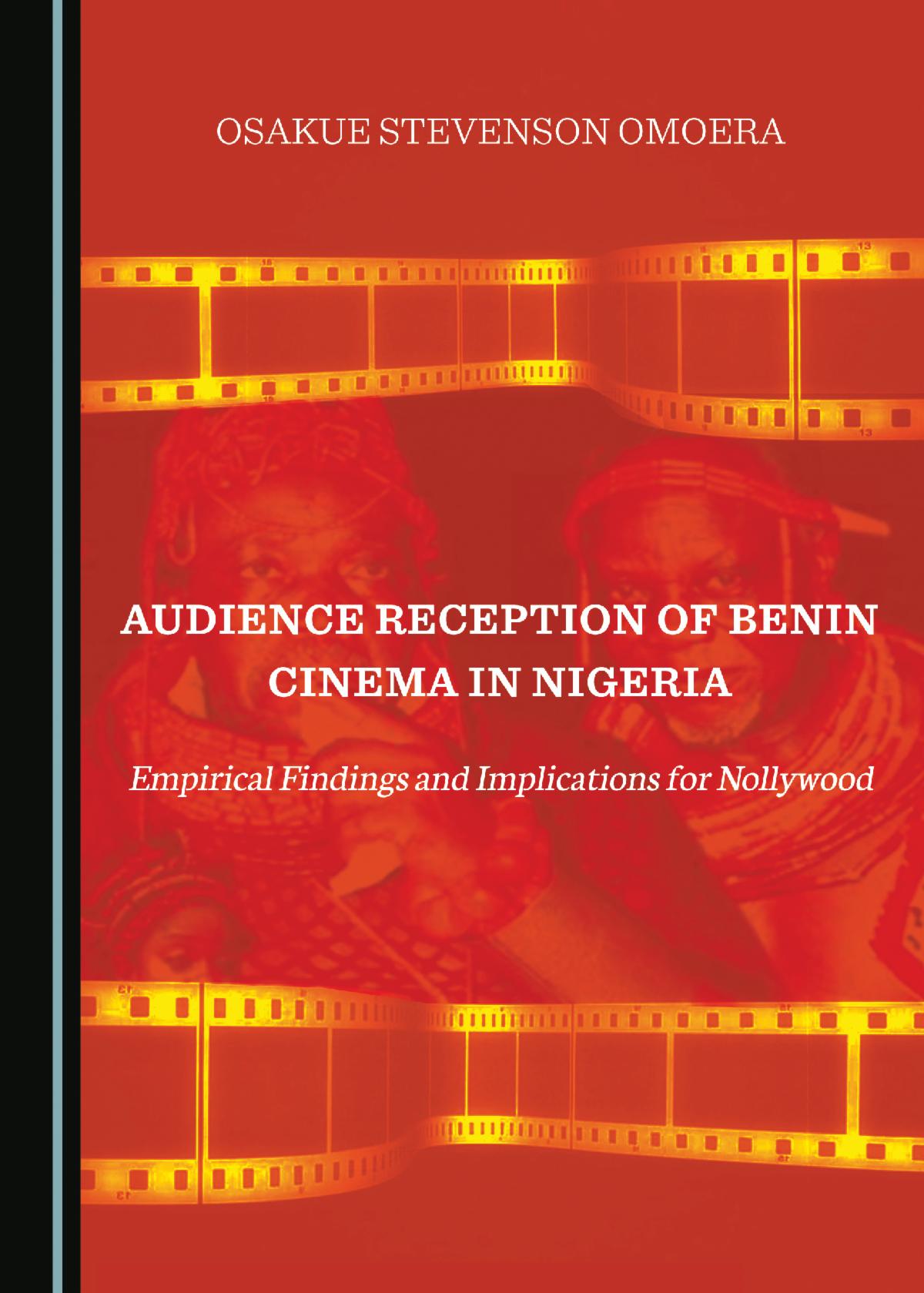
Audience Reception of Benin Cinema in Nigeria: Empirical Findings and Implications for Nollywood
Written by ACASA member Osakue Omoera, this book signposts Benin (Edo) cinema as one of the vibrant new frontiers in the performing arts of Nigeria, underscoring it with critical empirical evidence. It is among the pioneering studies in this area of media production in African indigenous popular culture. In a very concrete sense, Benin cinema is a contemporary visual encyclopedia of the Benin people and culture that can be used to consolidate the relevance of indigenous language films in Nigeria as a potential tool for national integration and international cultural diplomacy. The book interrogates the Benin-speaking audience’s reception of Benin films in Nollywood, providing accounts ranging from its history to robust filmography, which is largely not captured in present African film and media literature. Undergraduate and postgraduate students of film, theatre arts, mass communication, cultural studies, and African Studies will find it an invaluable companion. Film and media studies scholars, global Nollywood practitioners, cultural archivists, and organizers of film festivals and book fairs will also find it useful.
Available here
Image: Use of filmstrip and the sleeve of iconic Benin film, Ikoka directed by Peddie Okao
| | |
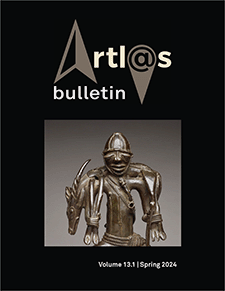
African Art and Evidence
African Art and Evidence, a special issue of Artl@s Bulletin (Volume 13, Issue 1, Spring 2024), guest edited by ACASA members Susan Elizabeth Gagliardi and Constantine Petridis, with contributions by Imogen Coulson, Julie Hudson, and Sam Nixon; Carlee S. Forbes and Erica P. Jones; Stephen A. Fọlárànmí; Caitlin Glosser; Joanna Gardner-Huggett; Margaret Nagawa and Taga F. Nuwagaba; and Kathryn Simpson. Published with generous support of the Clark Art Institute Research and Academic Program.
African art specialists have repeatedly recognized that very little exact detail accompanies the so-called historical or traditional arts of Africa that they study. As scholars including historian Jan Vansina and anthropologist Wyatt MacGaffey have observed, interpretations of African arts tend to rely on speculation rather than irrefutable information. When documentation does exist, any effort to stay true to the evidence demands careful consideration of the circumstances of that documentation.
This issue of Artl@s Bulletin hopes to fuel readers’ own reflections on evidence and history, and to spark dialogue on what evidence is, why it matters, and how one might use it in order to tell histories, including histories where absences have prevailed.
Website
| | |
"The Great Mosque of Kilwa: An Architectural Lodestone"
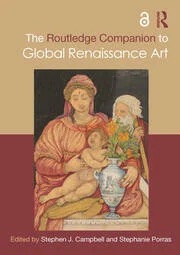
Janet Marion Purdy contributed a chapter, “The Great Mosque of Kilwa: An Architectural Lodestone,” to the Routledge Companion to Global Renaissance Art. The essay ( includes discussion of the unique materials and designs of Kilwa coral architecture, and elucidates the long and complicated layered histories, ebbs and flows of wealth, and alternating rises and declines of power as the rulers and conquerors of Kilwa sought to dominate prolific trade in the Swahili coast region over the centuries.
The full volume is open access and will be a useful and important resource for researchers, educators, and students working in art history, visual culture, material culture, and Renaissance studies. The companion examines the global Renaissance through object-based case studies of artistic production from Africa, Asia, the Americas, and Europe in the early modern period. The international group of contributors takes an art historical approach characterized by close analysis of form and meaning as well as function, and a focus on questions of cross-cultural dialogue and adaptation.
Chapter = 20 pages, 8 illustrations
eBook ISBN9781003294986
Chapter link
Full volume link
| | |
iNgqikithi yokuPhica / Weaving Meanings: Telephone Wire Art from South Africa
Museum of International Folk Art – Santa Fe, New Mexico 17 November 2024–November 2025)
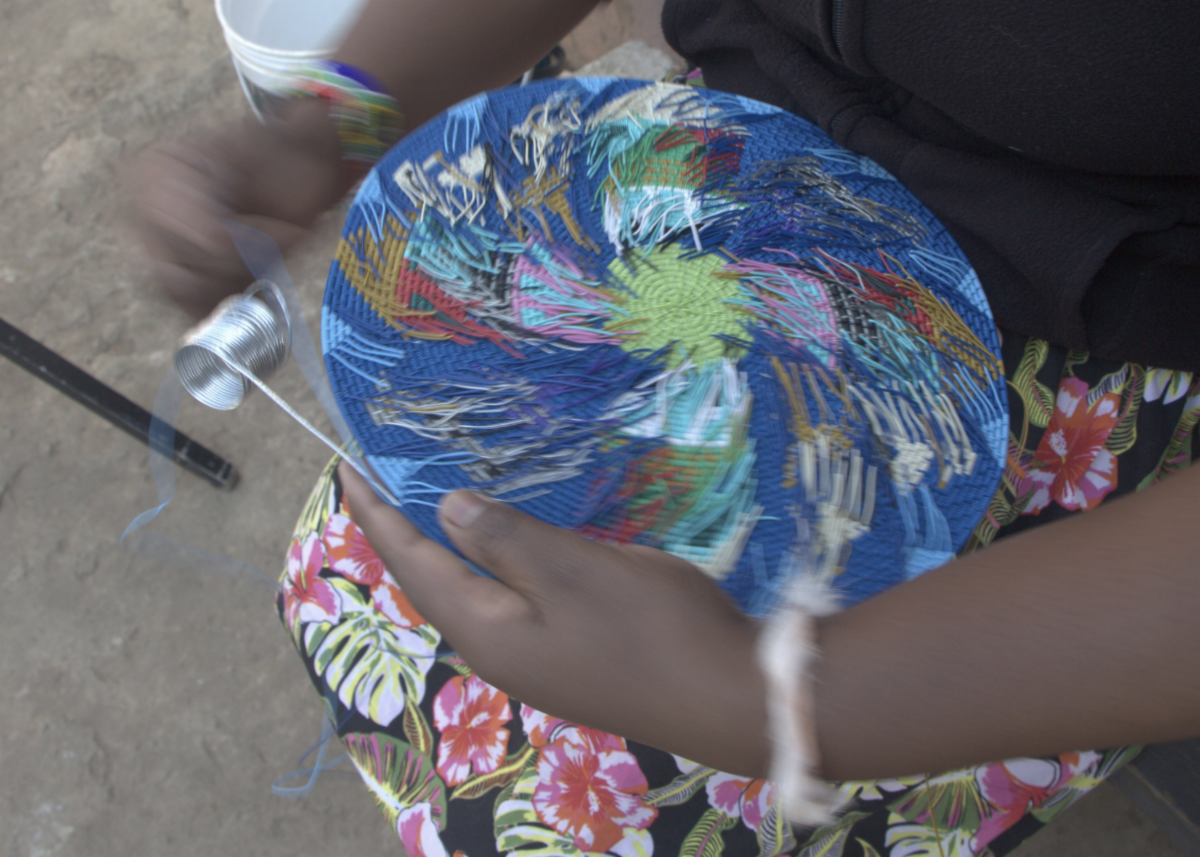
ACASA member Dr. Elizabeth Perrill, a specialist on Zulu ceramics, theories of craft, and femme and non-binary artists’ roles in modernisms and contemporary art market structures is Lead Curator for iNgqikithi yokuPhica / Weaving Meanings: Telephone Wire Art from South Africa, opening at the Museum of International Folk Art in Santa Fe, New Mexico (17 November 2024–November 2025). Foregrounding artists’ voices, Weaving Meanings shares histories of the wire medium in Southern Africa, from 16th century uses as a material of prestige to tour-de-force geometric artworks created today. From beer pot lids (izimbenge) to platters, vessels to sculptural assemblages, this exhibition speaks to the continued development and significance of South African telephone-wire weaving, in KwaZulu-Natal and in global markets.
Website
Image: Nobuhle Maphumulo Demonstrating Hardwire Weaving, Siyanda, KwaZulu-Natal, South Africa, July 2023. Photo Credit, Elizabeth Perrill.
| | |
Africa & Byzantium
Cleveland Museum of Art, 14 April–21 July 2024
Africa & Byzantium considers the complex artistic relationships between northern and eastern African Christian kingdoms (Aksumite Empire, Nubia’s Christian Kingdoms, & the Ethiopian Empire) and the Byzantine Empire from the fourth century CE and beyond. Together, these great civilizations created their own unique arts while building a shared visual culture across regions linked by the Mediterranean and Red Seas, Nile River, and Sahara Desert.
Co-organized by the Cleveland Museum of Art & the Metropolitan Museum of Art, this international loan exhibition includes more than 160 works of secular and sacred art from across geographies and faiths. Lent from collections in Africa, Europe, and North America, many works have never been exhibited in the US. Most were made by African artists or imported to the continent by powerful rulers of precolonial kingdoms and empires. The art and faith of these historical kingdoms—including Christianity, Judaism, and Islam—resonate with many worldwide today.
Curated by ACASA board member Dr. Kristen Windmuller-Luna with research assistance from Helina Gebremedhen, CMA’s presentation highlights contemporary faith and heritage communities linked to these historical artworks.
Website
video preview below
| | |
Ethiopia at the Crossroads
Peabody Essex Museum, 13 April–7 July 2024
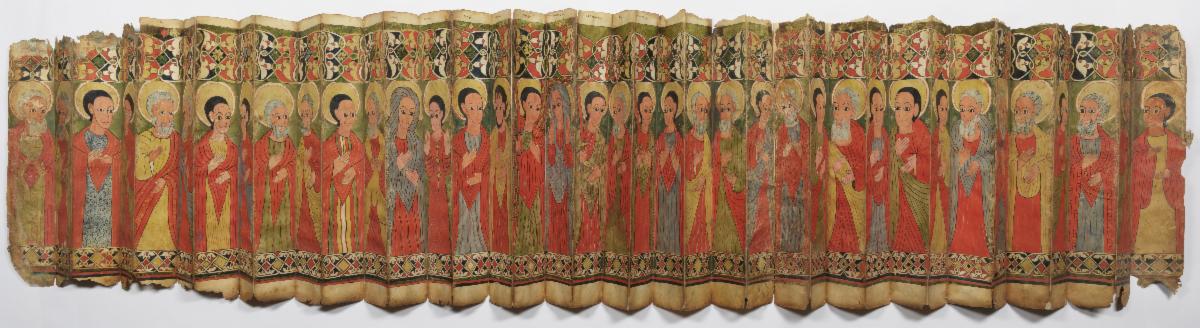
Traveling to the Peabody Essex Museum, the Walters Art Museum presents an extraordinary exhibition celebrating the artistic traditions of Ethiopia from their origins to the present day. Ethiopia at the Crossroads will be the first major art exhibition in America to examine Ethiopian art in a global context. Curated by ACASA member Christine Sciacca, Ethiopia at the Crossroads presents these objects as representative of the nation’s notable history and demonstrates the enormous cultural significance of this often-overlooked African nation through the themes of cross-cultural exchange. The exhibition features more than 225 objects drawn from the Walters’ world-renowned collection of Ethiopian art augmented with loans from American, European, and Ethiopian lenders. Visitors will see historical works of Ethiopian art including coins, painted icons, illuminated manuscripts, and metalwork and carved wood crosses of various scales side by side with works by contemporary Ethiopian artists Wosene Worke Kosrof, Aïda Muluneh, and Elias Sime.
An illustrated catalogue (391 pages, 281 color images), edited by Christine Sciacca, Curator of European Art, 300–1400 CE, and published by the Walters, will accompany the exhibition, along with a robust schedule of programs.
Website
Image: Folding Processional Icon in the Shape of a Fan (Detail), Ethiopia, late 15th century. Museum purchase with funds provided by the W. Alton Jones Foundation Acquisition Fund, 1996
| | |
Africa Rising: 21st Century African Photography
Fitchburg Art Museum, MA
2 March 2024–28 February 2025
50 images by 33 photographers from 17 countries represent a sampling of current work by both established and emerging artists in the permanent collection of the Fitchburg Art Museum (FAM). Multiple themes overlap and recur: reclaiming or reasserting identity in the aftermath of colonialism, loss and trauma, environmental exploitation and degradation, female empowerment, otherness, Afro-futurism. Underlying these themes, however, is a steadfast commitment to changing the pessimistic narrative about Africa presented in the Western media. The artists provide a continuing narrative of affirmation in their work, stunning in its beauty and power, and delivered with compassion, social concern, even anger, but also with wit, humor and hope. Acquisition of photographs and curation of the exhibition was overseen by ACASA member Jean Borgatti, FAM’s consulting curator of African, Oceanic, and Native American Art.
Exhibition and expansion of FAM’s collection have been generously supported by grants from the Genevieve McMillan-Reba Stewart Foundation. Go to our website for details and updates.
Image: Mario Macilau (Mozambiquan, b.1984) FAK YOU, from the series Growing in Darkness, 2012–2015, FAM 2021.67
| | |
Afropolitan: Contemporary African Arts at NOMA
New Orleans Museum of Art
Now on view
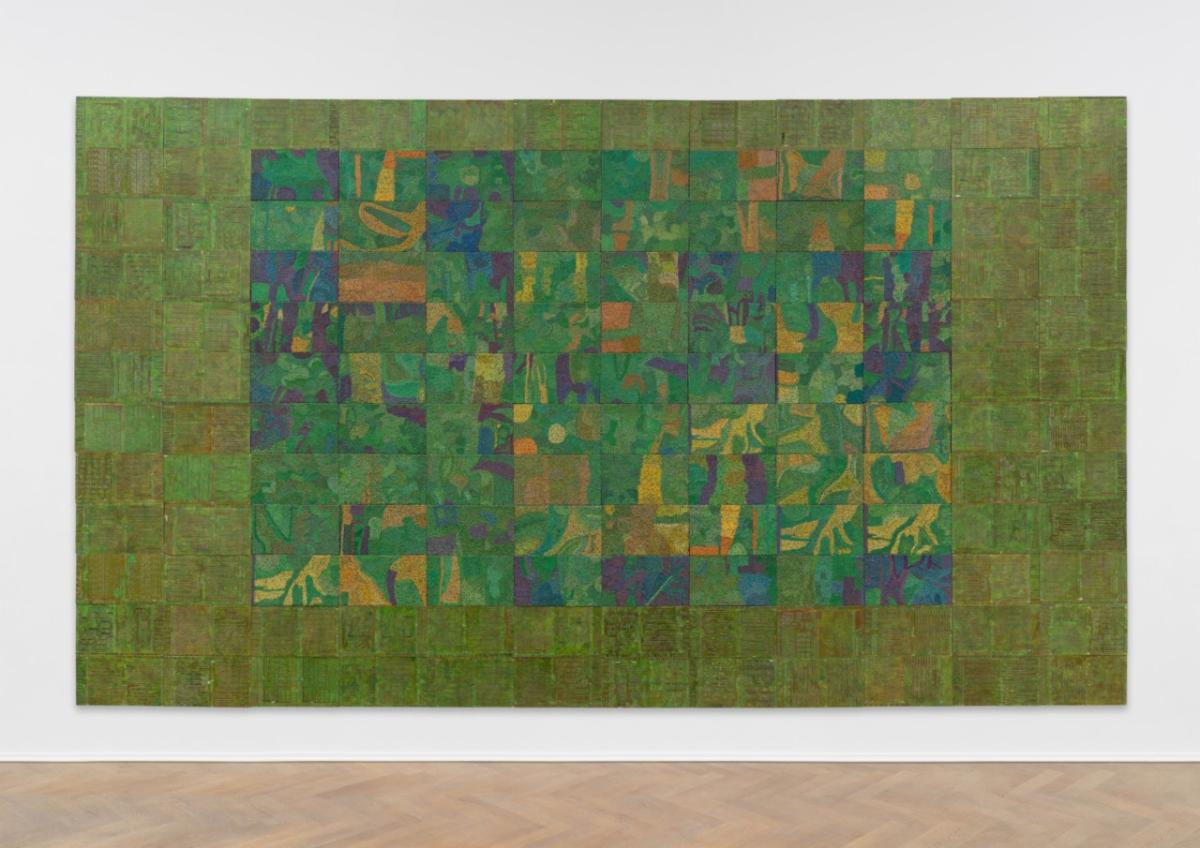
The New Orleans Museum of Art presents Afropolitan: Contemporary African Arts at NOMA, an exhibition that highlights some of the most pioneering African artists of the twentieth and twenty-first centuries in the museum’s collection. Organized by ACASA member Dr. Amanda M. Maples, NOMA’s Françoise Billion Richardson Curator of African Art, Afropolitan features recent acquisitions by contemporary African artists juxtaposed with significant figures of the pre- and post-independence period, and reflects important art schools and workshops on the continent. Featured artists include Elias Sime, Theophilus Nii Anum Sowah, Seydou Keïta, Frédéric Bruly Bouabré, Tayo Adenaike, and Serge Attukwei Clottey.
Website
Image: Tightrope: Behind the Processor #2. 2022. Elias Sime. Wall piece made from woven electrical wires, circuit boards, and other components on panel. Incoming Museum Purchase, E-2023-6. Photo: Courtesy of the artist and James Cohan Gallery
| | Jobs, Fellowships, & Internships | | |
Curatorial Specialist, Fowler Museum at UCLA
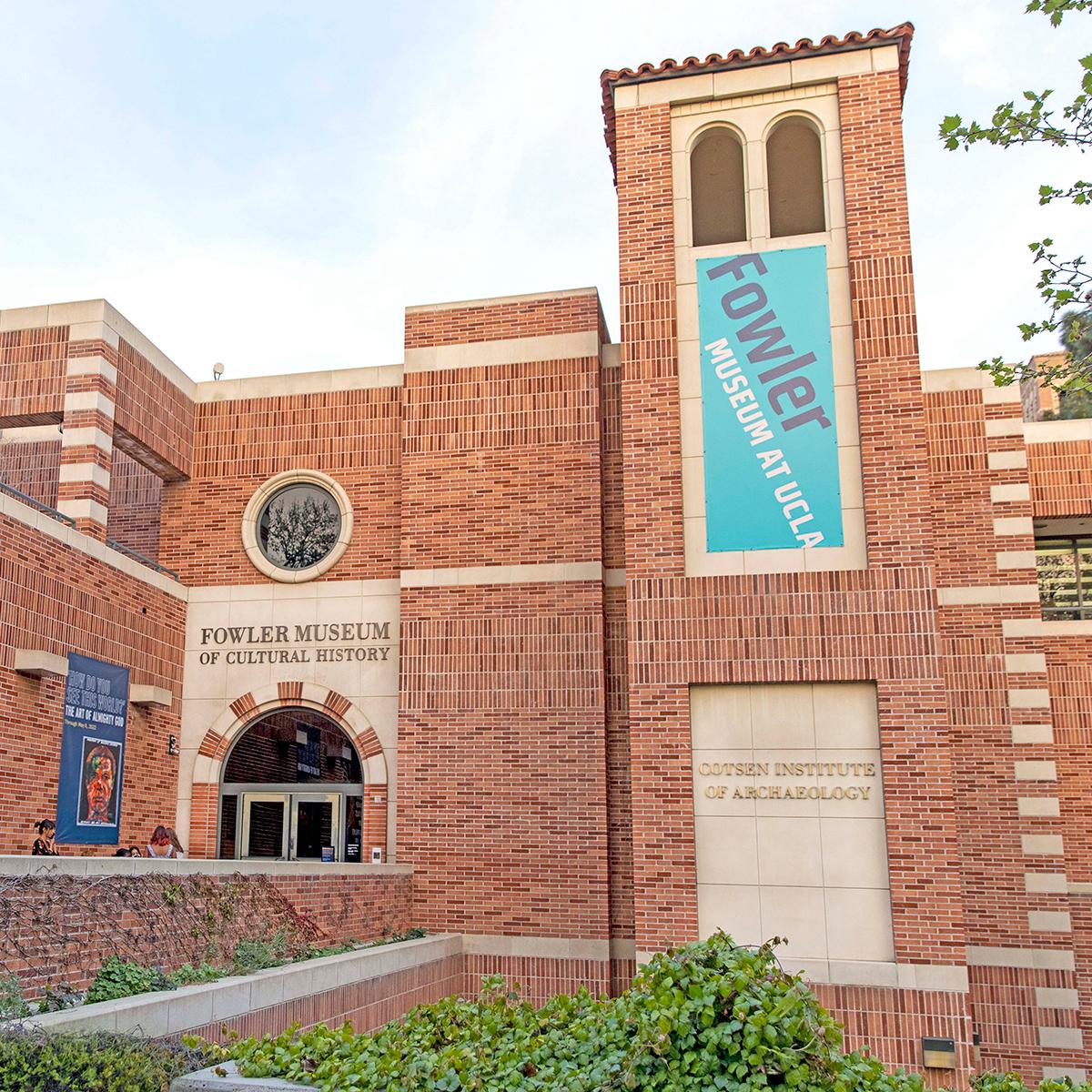
The Fowler Museum at UCLA seeks a Curatorial Specialist to participate in a collaborative interdisciplinary research project devoted to a recently acquired collection of African Art objects. The Fowler Museum at UCLA is pleased to offer a full-time, 18-month position dedicated to researching this collection in collaboration with the Collections and Registration Specialist also working on this project. Under the direction of the Senior Curator of African Arts and Manager of Curatorial Affairs, they will research the roles, meanings, materiality, and provenance histories of a large donation of African Art objects.
Website
Image courtesy Fowler Museum
| | |
Roslyn Adele Walker, PhD––ACASA member and formerly Senior Curator of the Arts of Africa, the Americas, and the Pacific and the Margaret McDermott Curator of African art at the Dallas Museum of Art (DMA) from 2003-2023––was named Curator Emerita. During her 20-year tenure at the DMA, Dr. Walker acquired 400 works of African art and spearheaded the 2015 renovation and reinstallation of the Arts of Africa Galleries. A 40-plus-years museum veteran, Dr. Walker organized over 38 exhibitions over the course of her career, including the groundbreaking Olowe of Ise: A Yoruba Sculptor to Kings (1998), the first catalogue raisonne of a tradition-based African artist, and The Power of Gold: Asante Royal Regalia from Ghana (2018), the first exhibition dedicated to the royal regalia of the Asante people in nearly 30 years.
| | Ysolde Gendreau, ed., Research Handbook on Intellectual Property And Moral Rights (Edward Elgar, 2023), which includes member John Peffer's chapter, “'Maybe he thought I was dead.' A tale of moral rights and image ethics in South Africa,” has been awarded the IPKat Book of the Year 2023 Award in the category “Intellectual Property Law Book of the Year”. | | ACASA member Rachel Kabukala will be returning to The Nelson-Atkins Museum of Art as Associate Curator, African Art after pursuing her PhD, and following a prior position as a Curatorial Assistant at the Nelson-Atkins. | | ACASA board member Dr. Kristen Windmuller-Luna gave the Annual Boshell Family Lecture in Archaeology at the Dallas Museum of Art in May 2024. Her lecture entitled Becoming Christian Together: Arts of Ethiopia, Nubia, and Byzantium is available to watch here. | | ACASA Board Elections 2024 | | |
Voting for new members of the Board of Directors is open through 1 July 2024. ACASA members in good standing (with active memberships) are eligible to vote. Election results will be communicated via membership email.
Five elected candidates will serve for an approximately 3-year term as Members-at-Large (ending Triennial 2027). The Election will be presided over by President Mark DeLancey, with election nominating committee members Ashley Stewart, Endy Ezeluomba and Karen von Veh. The current board will additionally appoint a President–Elect/VP from the elected candidates (to be ratified electronically by the membership) who will succeed Paul Basu as President at the end of his term of office (ASA 2025).
For more information regarding the structure and duties of the board, please consult the by-laws.
Position Description
- Members-at-large are full members of the ACASA Board of Directors. Duties include: attending meetings and participating in board deliberations; serving on committees as needed; and fulfilling vacant board member roles or other duties as assigned.
- Empty board positions looking to be filled include Vice President/President-Elect, Incoming Treasurer, Secretary, Newsletter Editor, and Social Media Editor.
You can find the candidates’ statements, CVs, and the link to the voting portal here: https://www.acasaonline.org/2024-acasa-board-nominees/
ACASA Board Candidates 2024–2027
- Olayemi Tosin Ajayi
- Mathias Fubah Alubafi
- Michelle Apotsos
- David T. Doris
- Djibril Drame
- Amanda M. Maples
- Allison Martino
- David Mbuthia
- John W. Monroe
- Kgomotso Moshugi
- Ruth Sacks
- Majula Swareh
- Tukufu Zuberi
| |
Board Candidate Information
(Alphabetical Order)
| | |
Olayemi Tosin Ajayi
Statement:
It is an honor to be considered for this position, and I am excited about the opportunity to contribute to the Council’s mission and goals. As a seasoned academic and media consultant with a strong background in art, design, and publishing, I am confident that my skills and experience make me an ideal candidate for this role. My extensive experience in writing, editing, and reviewing scholarly articles, as well as my expertise in graphic design and visual communication, will enable me to effectively review and enhance the quality of the ACASA newsletter. Moreover, my passion for African studies and my commitment to promoting academic excellence and cultural understanding align with the Council’s objectives. I am eager to bring my expertise and enthusiasm to the Board and work collaboratively with other members to advance the Council’s mission. Thank you for considering my nomination. I look forward to the opportunity to serve ACASA and contribute to its continued success.
Short Biography:
Yemi Ajayi is a lecturer at the Federal Polytechnic, Ilaro, and imparts his expertise in Graphics, Robotics, Digital Art, and general art-related courses. He holds various leadership roles, including Departmental Examination Officer, Special Adviser to the Head of Department, Teaching Staff Secretary, and Patron to the National Association of Art and Design Students. Ajayi’s influence extends internationally as a vital member of the Editorial and Advisory Boards for the International Journal of Arts and Humanities in the United Kingdom, where he actively participates in decision-making and scholarly contributions. Ajayi is a natural leader, teacher, and counselor and has given numerous seminars, workshops, and conferences as a keynote and guest speaker. His commitment to academic progress is evident through his role as a research reviewer for international conferences. Ajayi is a published author and poet and has contributed to international and national journals, book chapters, and evocative poetry.
Link to four-page CV
Mathias Fubah Alubafi
Statement:
I am writing to express my interest in the position of vice president of the Arts Council of the African Studies Association (ACASA). Reading about the work of ACASA and participating in some of their activities over the years, have convinced me that I have the professional experience and academic qualifications that will enable me to make a strong contribution to ACASA’s efforts in strengthening the study and dissemination of information on the Arts of Africa. As a board member of ACASA, I would be particularly interested in engaging with the work of the current board members on production and dissemination of research findings on topical issues on art and museums in Africa to a wider audience, especially the less privilege on the African continent who do not have access to the wonderful work the association is doing. I am enthusiastic about taking the work of ACASA to these areas and other parts of the continent that are unaware of ACASA and its work on African art. I would be excited to create awareness about ACASA and its work to researchers and scholars living and working in Africa and to encourage them to join the association. I will also work closely with the other board members to lobby for funding that will allow us to continue to invite and sponsor less privileged researchers, artists, leaders of African art institutions and museums to ACASA events, such as the Triennial. It is my belief that my work speaks to the work of ACASA. I will also work closely with the board to grow ACASA membership beyond the current figures.
Short Biography:
Mathias Fubah Alubafi is presently a senior research specialist (for humanities) at the Human Sciences Research Council in Pretoria, South Africa, a position they have held since 2014. Alubafi has been working as coordinator of humanities-related projects at the HSRC since 2017. They were one of the HSRC-Africa focus committee members from 2017 to 2020 and worked closely with committee members and African partners in facilitating the signing of MoUs for the HSRC and various African institutions. Alubafi is also a Research Ethic Committee member at the HSRC, and their role is to review funding applications that have been approved and provide advice about the interests of participants before the projects are implemented. Alubafi is an editorial Board member for the African Historical Review and is responsible for reviewing submissions on African History, art, museums, and cultural heritage and providing advice on critical issues to ensure the Journal meets its objectives. Alubafi has contributed to major exhibitions such as Object Biographies (March – October 2015) at the Berlin Ethnological Museum, and the Cameroon Grassfields Exhibition at the Humboldt Forum. Back in Cameroon, Alubafi sits on the Advisory Committee Board for palace museums in the Bamenda Grassfields.
Link to four-page CV
Michelle Apotsos
Statement:
I am very interested in the possibility of serving on the board of the Arts Council of African Studies Association. As an organization, ACASA plays an important role in facilitating dialogue between makers and scholars both on and off the continent. Thus, in my theoretical capacity of a member of ACASA’s board, I hope to support the continuity of these productive discourses as ACASA moves into the future. I feel that my administrative experience in conjunction with the professional networks I have fostered over the years through my scholarly foci both illustrate and support this claim. Further, I would like to register my interest in participating in new and/or ongoing conversations as they relate to ensuring robust representation of both continent-based scholars as well as emerging scholars and artists in the context of publications, conference participation, and/or organizational administrative structures supporting the mission of ACASA. I would also like to begin organizational discussions with regards to what it means to be an ethical scholar in the contemporary period and the types of “best practices” that we can encourage towards ensuring that scholarship undertaken within the context of non-US and non-European spaces is non-extractive and mutually beneficial to all stakeholders involved.
Short Biography:
Michelle Apotsos is currently serving my final year as both chair of the Art History Department at Williams College and treasurer of the Islam in Africa Studies Group (IASG). Apotsos has served on collegiate committees ranging from the Committee on Educational Affairs to the Campus Environmental Advocacy Committee, and is currently an evaluative panelist for the British Museum’s Endangered Material Knowledge Program. In addition to participating in various symposia and conferences over the years, Apotsos has been a research fellow at the University of the Free State (Bloemfontein, South Africa) as well as a research associate in the Department of Art History and Discourse of Fine Arts at the University of Cape Town (Cape Town, South Africa). Apotsos conducted fieldwork in Ghana, Mali, Ethiopia, Tanzania, South Africa, and Senegal.
Link to four-page CV
David T. Doris
Statement:
I’m honored and grateful to be nominated to ACASA’s Board, for which—if I may—I would like to be considered especially for the role of either Social Media Manager or Newsletter Editor. Those venues are intriguing sites of connection for all of us, wherever we are on the planet. In the daily flow of social media and in the less frequently published newsletters, ACASA members represent themselves to each other and to the world, together creating an organizational Identity that is at once unified and extraordinarily diverse, and always surprising. In the name of transparency, I must admit: my own strengths tend toward the creative rather than the administrative. Before delving into a full-time academic career, I was a musician, and spent some years in the advertising business, where I worked as a creative copywriter rather than, say, an account executive. Such remains my inclination to this day. So, regarding any role I might play as an ACASA Board member, I would be most excited to participate in generating programs that embrace novel possibilities for enhanced communication and
creative growth. In the first century CE, author Pliny the Elder wrote in his Historia Naturalis, “Something new is always coming out of Africa.” Today, more than two millennia later, it’s still true; we in ACASA have the privilege to commit ourselves daily to fostering and translating all that newness for new audiences in each new historical moment. Communication is key. If I can help in some small way, I would like that very much.
Short Biography:
David T. Doris (PhD Yale 2002) is Associate Professor of African Art and Visual Culture at the University of Michigan. His scholarly interests include theories of cross-cultural interpretation, conceptions of an “anti-aesthetic” in African contexts, the phenomenology of “power objects,” the representation of Africa and its peoples in world’s fairs, theme parks, and other commodity spectacles. He maintains a special focus on the art and culture of the Yorùbá people, both in southwestern Nigeria and in the Diaspora. His PhD dissertation, written under the mentorship of Robert Farris Thompson, received ACASA’s 2004 Roy Sieber Memorial Award for Outstanding Dissertation in African Art History; currently, he serves as Chair of ACASA’s Sieber Dissertation Award Committee. He has been a Fulbright Scholar in Nigeria; an Ittleson Fellow at the Center for Advanced Study of the Visual Arts; a Smithsonian Post-Doctoral Fellow at the National Museum of African Art; a Residential Fellow at the Getty Research Institute, and has curated two exhibitions of African Art. His book, Vigilant Things: On Thieves, Yoruba Anti-Aesthetics, and the Strange Fates of Ordinary Objects in Nigeria(University of Washington Press, 2011), addresses the moral, ethical, and aesthetic roles of assemblages of “useless” and discarded objects in contemporary Yorùbá culture. In 2012, Vigilant Things received the African Studies Association’s Melville J. Herskovits Award (now known as the ASA Best Book Prize), presented for “the most important scholarly work in African studies published in English during the preceding year.” His current book project is provisionally titled, A Natural History of Immortality: on the Art & Obscurities of the Ancient & Venerable Ògbóni Society of Honored Elders. He considers his work a sort of object-focused pataphysical ethnography.
Link to four-page CV
Djibril Drame
Statement:
As an independent scholar, I have been documenting graffiti in Senegal for the last 20 years, as a visual artist I have been practicing for the last 15 years and curating art for the last 10 years. I do believe that I will be à good fit to bring more diversity and inclusion. I do believe in freedom, peace, love, all races and gender are equals.
Short Biography:
Djibril Drame has been creating visuals for over 20 years. He has worked in the Senegalese Government, been a freelancer in the United States, and is an acting producer, art director, communicator, and art curator. Drame is currently the director of Sabali, Inc. in Dakar.
Link to CV
Amanda M. Maples
Statement:
I bring to the nomination three years of service to ACASA as the Social Media Editor on its Board of Directors, and nineteen years of experience working with African arts, primarily in university and museum settings. In addition, I have taught at the university level, supervised and mentored students and interns, developed and managed conferences and databases, directed and managed a major internationally traveling exhibition, worked with living African artists as well as historic materials, and have delivered numerous scholarly and public lectures. I am committed to academic research and writing for both scholarly and general audiences. I also strongly believe in making African arts research widely available and accessible, not only to academic audiences, but to the general public. My recent work advocates for ethical museum practices, particularly in regards to provenance and field research, collaborative projects, and the equitable circulation of objects globally. My ability to multi-task, write for multiple audiences, and serve in other capacities as an editor and a secretary make me an ideal candidate to continue my service on ACASA’s Board of Directors.
Short Biography:
Amanda M. Maples is Françoise Billion Richardson Curator of African Art at the New
Orleans Museum of Art. She has taught university courses in African arts and served in curatorial and scholarly capacities at the North Carolina Museum of Art, Stanford University’s Cantor Arts Center, the Yale University Art Gallery, the National Museum of African Art, Smithsonian Institution, the High Desert Museum, and UC Berkeley’s Hearst Museum of Anthropology. Maples has served as the Dialogues editor for the journal African Arts since 2020, and has curated a range of exhibitions on historical and contemporary African arts. Her scholarship explores urban and contemporary masquerade, decoloniality, jewelry and self-fashioning, museum policies, collecting practices, and restitutions. Maples holds a Ph.D. in Visual Studies from the University of California, Santa Cruz.
Link to four-page CV
Allison Martino
Statement:
I am eager to become more involved with ACASA during the next three years and am honored to have been nominated to serve on the ACASA Board of Directors. Collaboration is central to my curatorial work with academic art museums and I would bring that collaborative spirit to my involvement with the ACASA board. I am happy to serve in any of the board positions that will become open; I am most interested in contributing as secretary or newsletter editor. I am also keen to pursue opportunities to strengthen ACASA’s professional development programming, particularly ones related to current curatorial issues as well as mentorship and training for young scholars entering the field.
Short Biography:
Allison Martino been working as the Laura and Raymond Wielgus Curator of the Arts of Africa, Oceania, and Indigenous Art of the Americas at the Eskenazi Museum of Art, located at Indiana University in Bloomington, since 2020. At the Eskenazi Museum, Martino initiated and developed a provenance research project for the collection that they oversee. This project has become a priority for Martino’s work and signals their commitment to ethical stewardship. Martino designed this provenance project to include graduate student researchers, as Martino prioritizes student training in critical issues facing the field today. Previously, Martino held curatorial appointments at the University of Michigan Museum of Art and Bowdoin College Museum of Art, and also taught courses on African art and visual culture at both Michigan and Bowdoin.
Link to four-page CV
David Mbuthia
Statement:
I am interested in serving as a member of the ACASA board because I believe in and would like to contribute to ACASA’s mission of “promot[ing] greater understanding of African material and expressive culture in all its many forms, and encourage[ing] contact and collaboration with African and Diaspora artists and scholars.” In so doing, I will be able to promote the well fare and appreciation of African material and immaterial culture in different aspects. Given a chance in the board, I will do my best to promote the understanding of African Art and heritage in general. I will do my best in whatever role the board allocates me.
Short Biography:
David Mbuthia has worked in the heritage field for the last 24 years having worked at the National Museums of Kenya for 21 years and two years at the National Heroes Council. Mbuthia holds a PhD in Heritage Management, an Msc. in Applied Ecology and Conservation, a postgraduate certificate in Museum Public Programming, and a Bsc. (Hons) in Environmental Studies. Mbuthia’s experience in heritage management includes policy, researching, monitoring, interpretation, exhibitions, and programming for different audiences, including school groups, youth groups, community groups, special needs groups, and vulnerable groups. Mbuthia is innovative with strong skills in leadership, teamwork, developing partnerships, fundraising and report writing. Mbuthia highly appreciates socio-cultural as well as perspective diversity and inclusivity. Mbuthia has worked with African cultural materials and expressions at local national and international level. He has participated in many national and international exhibitions and public programmes dealing with African Arts. Mbuthia has several publications in the field of heritage management with some dealing with the topic of African Art and the search for relevance by museums in Africa.
Link to four-page CV
John W. Monroe
Statement:
In my opinion the great virtue of ACASA, and of African art studies more generally, is its interdisciplinarity. The groundbreaking work that scholars and curators in this field produce is unique in its creative openness, not only to a wide variety of methodological approaches, but also to an ongoing questioning of foundational assumptions: the difference between the “universal” and the “particular,” “tradition” and “modernity,” “art” and “craft” – indeed, the very nature of “art” itself.
The two Triennials I’ve attended, in 2012 and 2017, have been among the most engaging, intellectually rich conferences I have ever taken part in; they have also been by a substantial margin the most welcoming. One of the pleasures of doing research in this field is the opportunity it provides to enjoy the company of so many generous, enthusiastic colleagues.
For that reason, I’m honored and humbled to be nominated to stand for election to the ACASA board. If I were to be elected, I would look forward to contributing to the next Triennial, to committees the board chooses to organize, and to the ongoing development of the field. My current service on the Rubin Award Committee and the MNAA subcommittee of the CCRBP have given me a clear sense of both the intellectual dynamism of the field and the strong ethical commitment ACASA members bring to their work. It would be my pleasure to be able to support these endeavors further from a position on the board.
Short Biography:
John Warne Monroe is a Professor of History at Iowa State University. He is author of two books, both published by the Cornell University Press. The second, Metropolitan Fetish: African Sculpture and the Imperial French Invention of Primitive Art, received the Arnold Rubin Outstanding Publication Award at the 2021 Triennial. It was also one of five finalists for the CAA’s 2021 Charles Rufus Morey award. Research for the book, which took him to both France and Senegal, was funded with major grants from the George A. and Eliza Gardner Howard Foundation and the National Endowment for the Humanities (NEH).
John was originally trained as a cultural historian with a focus on nineteenth and twentieth-century France. His professional engagement with African art studies began in the mid-2000s, when an encounter with the Stanley Collection at the University of Iowa Museum of Art inspired him to turn his love of historical African art into the basis for a new research project. During the 2005-2006 academic year, John held a Curatorial Fellowship at the museum, working closely with the late Chris Roy. Since then, John has immersed himself in the scholarly literature on African art and material culture, beginning a research journey that continues today.
In his position at Iowa State, where he has been employed since receiving his Ph.D. from Yale University in 2002, John has been active in professional and institutional service. He has served two three-year terms on the Executive Council of the Western Society for French History, where he was on prize and conference programming committees; has done stints on three journal or book-series editorial boards; and regularly peer-reviews manuscripts for journals and university presses.
Link to four-page CV
Kgomotso Moshugi
Statement:
My desire to serve on the ACASA board stems from a deep-rooted conviction in the value of the arts. While I am a recent member to ACASA, I firmly believe that the organization is pivotal in preserving, promoting, and protecting the arts of Africa and the diasporas, broadly conceived. It is clear that the organization serves as a crucial network for advocacy and advancing arts discourses and practices, giving a necessary voice and presence to African ideas and ideals embodied in various works. The board’s focus on Africa acknowledges the profound and rich art heritage of the continent and its potential to continuously yield meaningful insights that enrich art knowledge and experiences. I am eager and ready to dedicate myself to contributing to this work. I am excited to share my unique experiences pertaining to the cultural value chain and creativity as a system of artistic, cultural, and socio- economic activities to further the ACASA board deliberations and the organization as a whole.
Short Biography:
Kgomotso Moshugi is a musician who has more recently also become a university scholar of the arts with a journey in the art world spanning over twenty years. Moshugi has worn multiple hats during this period, whether as a team member, team leader, practitioner, creator, or administrator. This diverse blend of roles, at times born out of necessity and at others out of moments of passion, has shaped their understanding of art ecologies. Moshugi has seen that for the arts and study of the arts to thrive, creation and dissemination often require mediated interventions. Since 2013, Moshugi has expanded their research horizons through pursuing a PhD and appointment to the teaching faculty at the University of Witwatersrand in Johannesburg, South Africa. Moshugi combines conventional qualitative tools with creative and artistic approaches. Their current research and teaching focus on cultural policy and management, with attention to factors that influence the contexts in which creators practice the art, as well as the sustainability of those contexts.
Link to four-page CV
Ruth Sacks
Statement:
I am honoured to be nominated as a board member for ACASA and eager to serve as
webmaster or newsletter editor. As a practising artist and published academic in African Studies, I bring experience in implementing and running interdisciplinary activities between contemporary art and academic activity (which can involve managing the project website). If elected, I would encourage ACASA to strengthen mentorship and support for emerging African artists and curators, alongside academics, to develop their Africa-based projects into scholarly publications. I came to academia from a career as a South African visual artist who had participated in major international exhibitions dealing with the representation of Africa (such as the 2007 African Pavilion at the Venice Biennale). This experience led me to probe African positions from a theoretical point of view, as is evident in my scholarly publications, including my recent monograph dealing with Congolese visual culture and the city of Kinshasa. My research on the Congo and in my hometown of Johannesburg also led to a body of artworks, parts of which have been exhibited in Europe as well as the African continent. While lecturing in the Visual Art Department at the University of Johannesburg, where I hold a senior position, I have developed strong collaborative connections to other African institutions, particularly in Kinshasa and Lagos (where my new research lies). I am an active member of the African Studies Association and the Lagos Studies Institute as well as ACASA and a Research Associate at the Wits Institute for Social and Economic Research (University of the Witwatersrand).
Short Biography:
Ruth Sacks is a Senior Lecturer at the University of Johannesburg (Faculty of Art, Design and Architecture), where she has held a position in History and Theory of Art (Visual Art Department) since 2021. Sacks obtained a PhD through the interdisciplinary African centre WiSER (the Wits Institute for Social and Economic Research) in 2017, where she was a doctoral fellow. Her first academic monograph, Congo Style: From Belgian Art Nouveau to African Independence, was published by Michigan University Press in 2023 and other publications include a chapter in the edited volume Planetary Hinterlands: Extraction, Abandonment and Care (Palgrave Macmillan, 2024). Sacks has recently been invited to give guest seminars at the Africa Institute in Sharjah (May 2024); MESAAS (Middle Eastern South Asian and African Studies Institute), Columbia University, in New York (December 2023); and CIVA Museum & Archive in Brussels (September 2023). Sacks has exhibited widely as an artist and recent exhibitions include Style Congo: Heritage and Heresy at CIVA Museum & Archive (Brussels, 2023), whose curators include Congolese artist Sammy Baloji, and Overwhelmed at the UJ Gallery (Johannesburg, 2023). She was a co-director of the large-scale community arts project Response-ability in inner city Johannesburg (2020-1) and has organised international conferences such as Médiation passée, présente et future at the Kinshasa Academy of Arts (2016).
Link to four-page CV
Majula Swareh
Statement:
I am grateful to have been nominated to serve on the Board of Directors of the Arts Council of the African Studies Association. As an up and coming scholar in the field of African Studies, I am deeply interested in the work of ACASA and the possibility of engaging with interdisciplinary African Art scholars, where “scholar” is defined beyond western academic categorizations. My extensive background in African cultural studies, combined with my professional experience in museums and cultural institutions, makes me well-suited for these roles and will be helpful in supporting ACASA’s mission to facilitate interdisciplinary exchange and promote the diversity of African arts. As a member of the ACASA Board of Directors, I am eager to contribute to ACASA’s goals, enhance its visibility and access, and expand its reach.
Short Biography:
Majula Swareh is the Special Assistant to the Director at the National Museum of African Art, and has actively contributed to interdisciplinary storytelling and the development of dynamic programs that nurture visionary engagements within the public space. Swareh’s academic foundation, with a master's degree in African Cultural Studies, complements their practical experience in project management, program development, and community outreach, both on the African continent and internationally. Additionally, Swareh’s contributions to the Mellon Foundation-funded African Museology Project, particularly in restitution and regenerative knowledge production, highlights their commitment to ethical practices in cultural heritage. Swareh’s professional experience also includes managing initiatives focused on Diversity, Equity, and Inclusion at Represented Collective, where Swareh successfully created a professional development curriculum. This role, along with their work at the National Center for Arts and Culture in The Gambia, has equipped them with skills in project management, grant writing, and team coordination, all of which are essential for effective board service. These experiences have deepened Swareh’s understanding of the complexities and richness of African artistic expressions. Swareh will also be presenting on African Literature, Film and sites of memory in the ICMEHMORI Conference in Kigali, Rwanda in July.
Link to four-page CV
Tukufu Zuberi
Short Biography:
Dr. Tukufu Zuberi is the Lasry Family Professor of Race Relations, and Professor of Sociology and Africana Studies at the University of Pennsylvania, and the Lead Curator of the Africa Galleries at the Penn Museum. His administrative responsibilities have included being chair of graduate programs and departments, directing several difference centers, and working with senior administrators to enhance the excellence of the student body and faculty. He was the founding Director of the Center for Africana Studies at the University of Pennsylvania. He curated several exhibitions and filmed in many of the major museums in the US on the hit series PBS History Detectives, and has visited the major museums in Latin America, Europe, and Africa. Zuberi has curated myriad exhibitions and published numerous books and over 100 articles and reviews.
Link to four-page CV
| | |
With global membership, the Arts Council of the African Studies Association (ACASA) promotes greater understanding of African material and expressive culture in all its many forms, and encourages contact and collaboration with African and Diaspora artists and scholars.
ACASA is a 501(c)(3) tax-exempt organization.
| | | | |