|
Livanta’s recently updated IPRS was informed by completed HWDRG reviews. The prior years of completed HWDRG reviews provide data supporting evidence-based sampling. This approach uses historical data to identify diagnosis-related groups (DRGs) most likely to be paid in error. The details of the methodology are described below.
Livanta extracts all eligible HWDRG adjustments from the CMS claims database each month. Each claim is prioritized for sampling according to its CMS Region, representative frequency, and clinical likelihood of an improper payment. This prioritization process generates an improper payment risk score used to guide sample selection.
Samples are assessed at the stratum (risk score) level to ensure statistical independence and representativeness in both information content and typical values. This sample validation process, using statistically valid quality assurance tests, firmly establishes the reliability and validity of the results found from the samples.[1]
[1] Allen, M. & Yen, W. (1979). Introduction to Measurement Theory 1st Edition, p. 75. ISBN-13: 978-0818502835.
Sampling Prioritization Scores
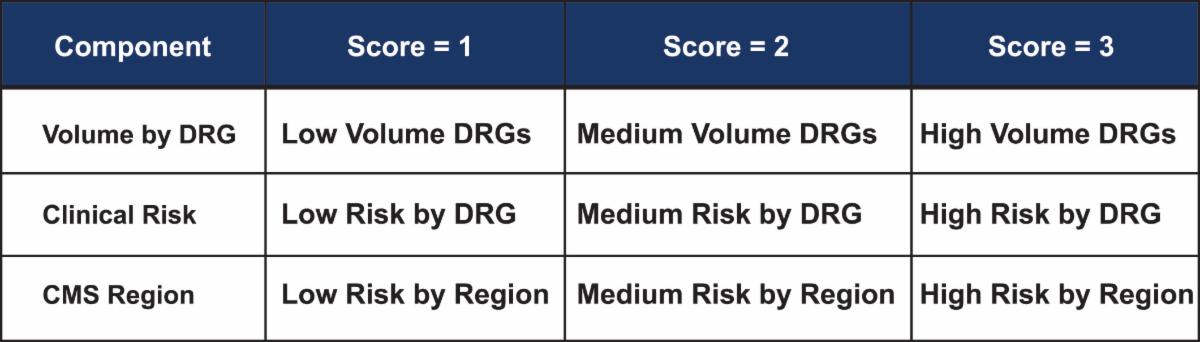
In keeping with its IPRS, Livanta applies a three-part prioritization scoring methodology to HWDRG claims, given that a sufficient number of eligible claims are available for any given month to conduct sampling. The three components that are individually scored are volume, clinical risk of improper payment, and cost for each HWDRG adjusted claim. The individual scores are added together to assign a risk weight for each HWDRG claim eligible for sampling. Claims with higher computed risk scores are sampled at a higher rate than lower risk-score claims. The individual risk score components are analyzed and adjusted as needed based on ongoing review outcomes.
Table 1: HWDRG Compensatory Score
|