|
MARINERS DEPEND ON SCI.
SCI DEPENDS ON YOU.
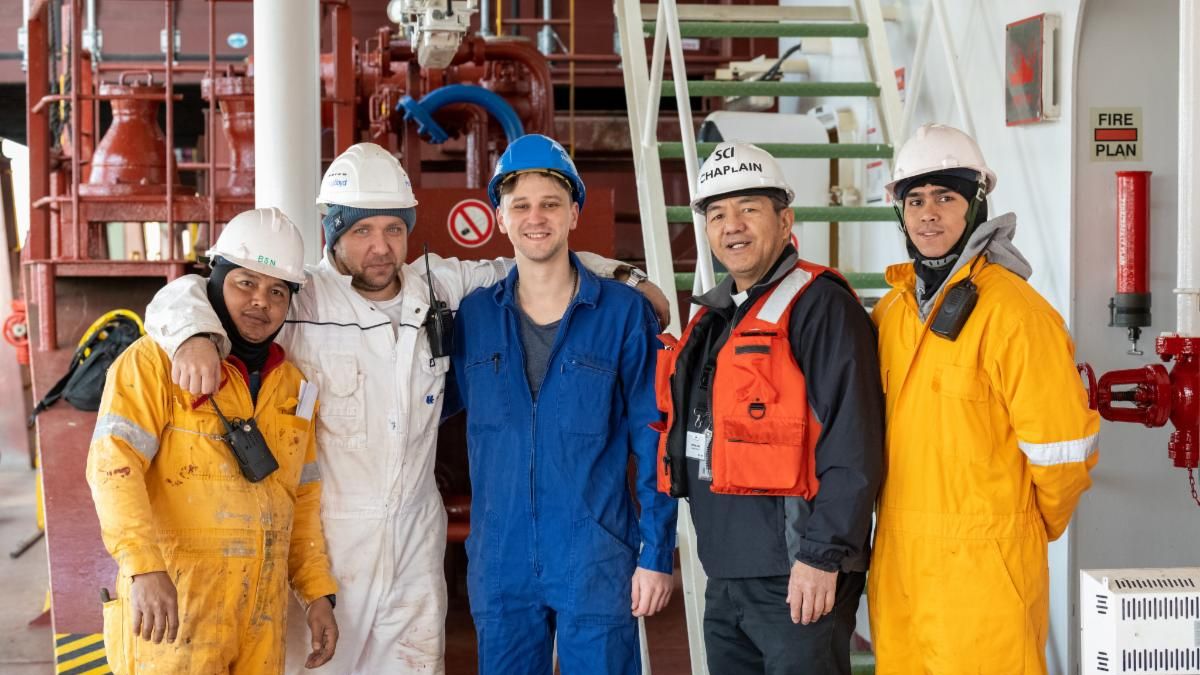
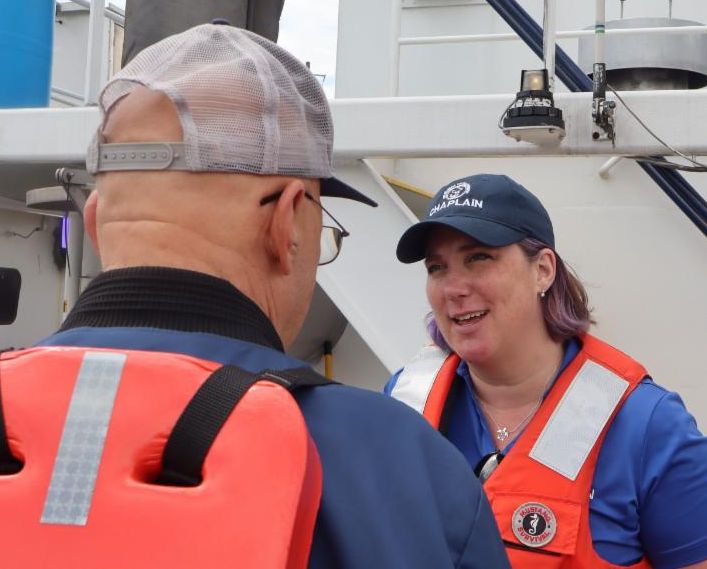
| | SCI Chaplain, the Rev. James Kollin (second from right), visits with seafarers aboard a ship docked in Port Newark. | | |
IN THIS ISSUE – May 2026
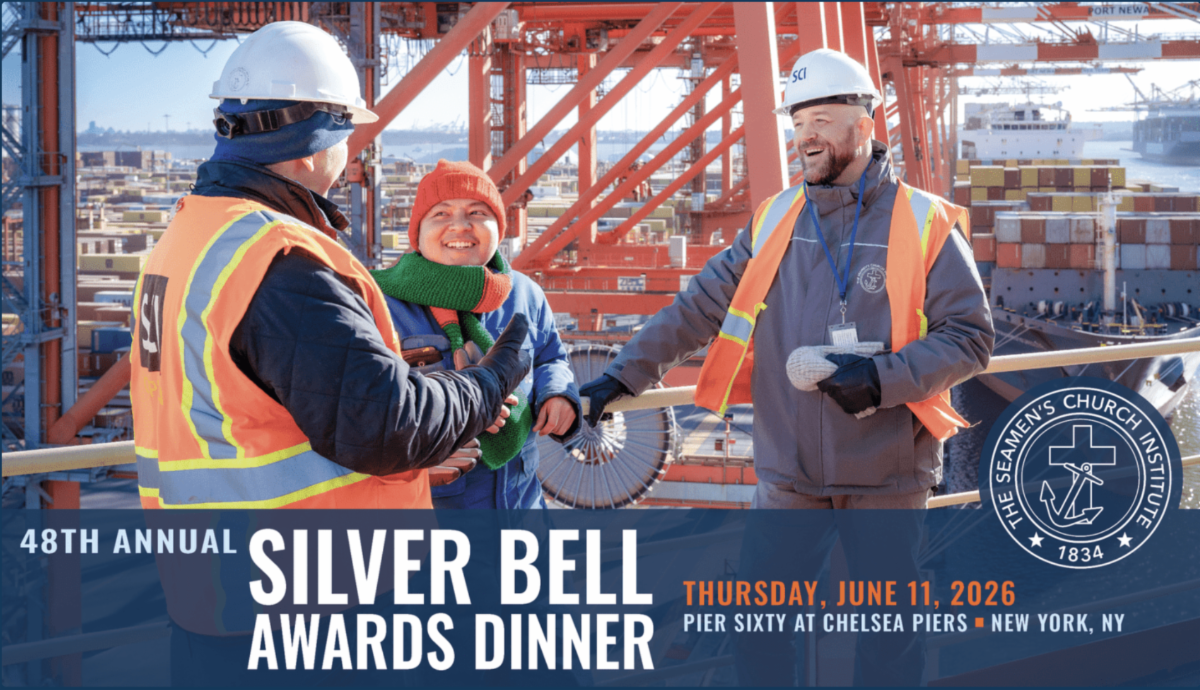
- 48th Annual Silver Bell Awards Dinner—Save the Date
- SCI's President & Executive Director Leads Seafarers’ Welfare and Maritime Ministry Training in Malmö
- SCI IMX Panel Adds Additional Maritime Wellness Expert
- Center for Mariner Advocacy: Elevating Seafarers’ Voices at the IMO
- Closing the Gaps: Training Mariners to Use a Layered Approach for Safer Navigation
- “Hey, Chaps—Can We Talk?”: Starting the Conversation for Mental Health Awareness Month
-
SCI Chaplains Return to SUNY Maritime’s Summer Sea Term Aboard TS Empire State VII
- Requests: Necessities, Warmth, and Morale at Sea
- Strengthening Community Connections at PNCT’s Ribbon-Cutting Event
- 2026 Life Saving Benevolent Association Awards
- SCI's Patterson Elected to Young Shipping Professionals of New York Leadership Board
- From the Archives—Jeanette Park and the Voices That Endured
| | THANK YOU TO OUR CORPORATE SPONSORS | | |
PLEASE JOIN US
Thursday, June 11, 2026
6:00 p.m. - Registration and Cocktail Reception
7:30 p.m. - Dinner & Awards
Pier Sixty, Chelsea Piers, New York, NY
HONORING
Silver Bell Award
John C. Wobensmith
Chairman & Chief Executive Officer, Genco Shipping & Trading Limited
Lifetime Achievement Award
Linda L. Fagan, USCG, ADM (retired)
27th Commandant, United States Coast Guard
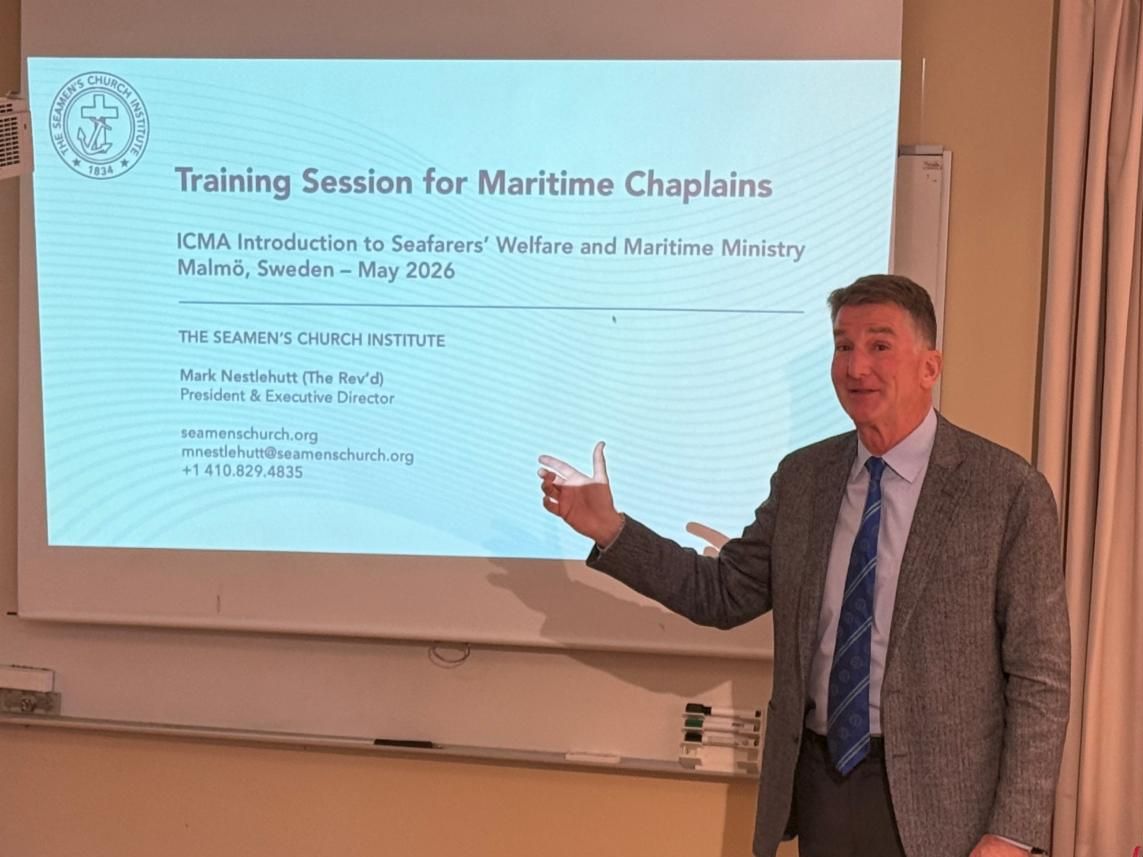
| | SCI's President & Executive Director Leads Seafarers’ Welfare and Maritime Ministry Training in Malmö | SCI's President & Executive Director, the Rev. Mark Nestlehutt, presents on mariner advocacy and MLC, 2006. | |
SCI’s President & Executive Director, the Rev. Mark Nestlehutt, is in Sweden this week teaching on the Maritime Labour Convention, 2006 (MLC, 2006) at the International Christian Maritime Association’s annual Introduction to Seafarers’ Welfare and Maritime Ministry training hosted this year by the Malmö Seafarers’ Center.
This course serves as training for maritime chaplains, ship visitors, and others who work with seafarers. This year's ICMA class brings together 18 students from New Zealand, South Africa, Belgium, Germany, the Georgian Republic, Sweden, Canada, the U.S., England, and Northern Ireland.
The five-day training covers the mission and practices of maritime ministry, the history and models of maritime ministry, and mariner advocacy and MLC, 2006, as well as presentations by the ITF, Sailors’ Society, German Seamen’s Mission, and various faculty from the World Maritime University in Malmö.
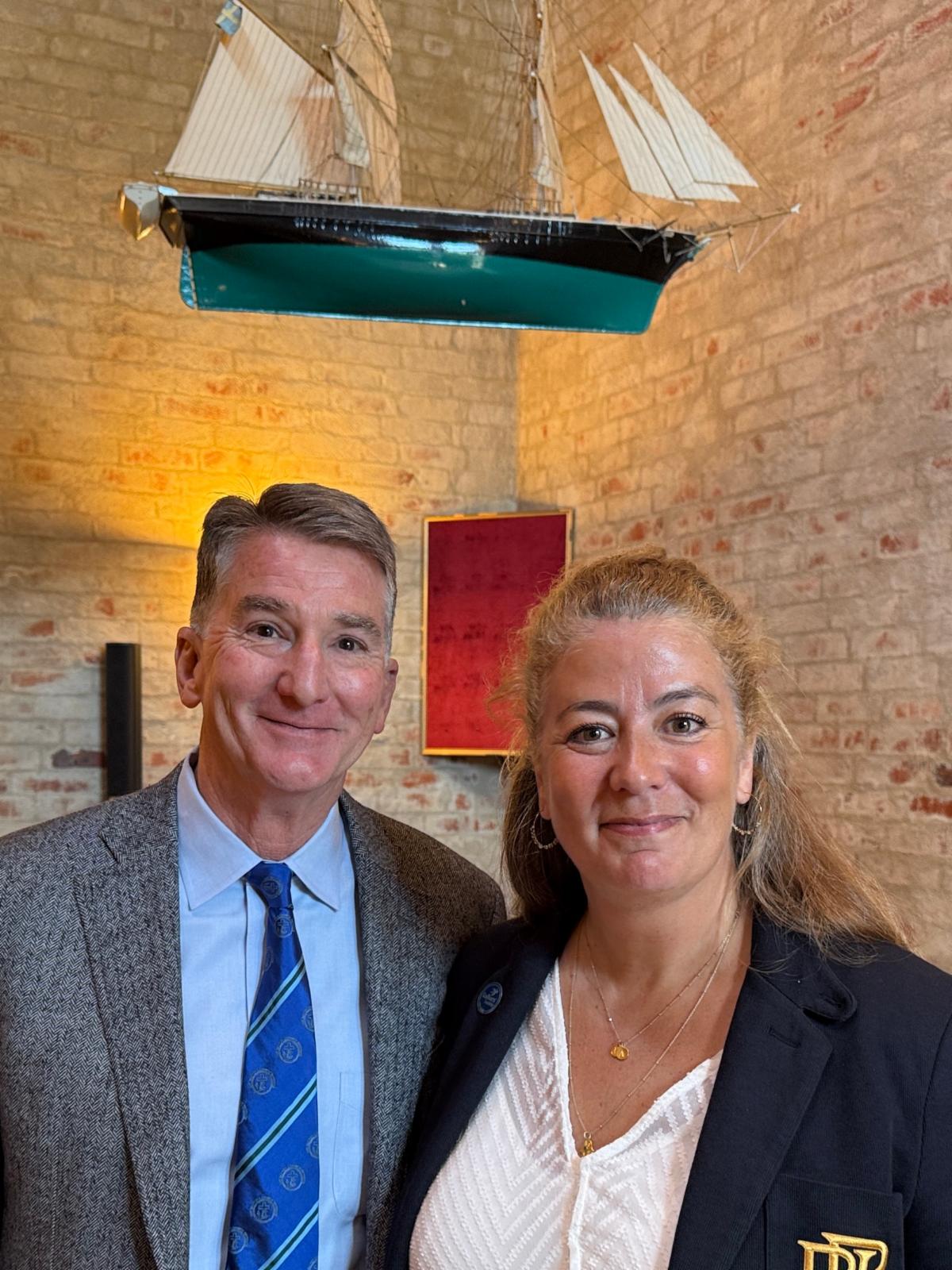
| The Rev. Mark Nestlehutt, with colleague Sara Baade, CEO of Sailors’ Society. Mark currently serves as Chair of ICMA’s Board of Trustees, and Sara is the immediate past Chair. | | SCI IMX Panel Adds Additional Maritime Wellness Expert | | |
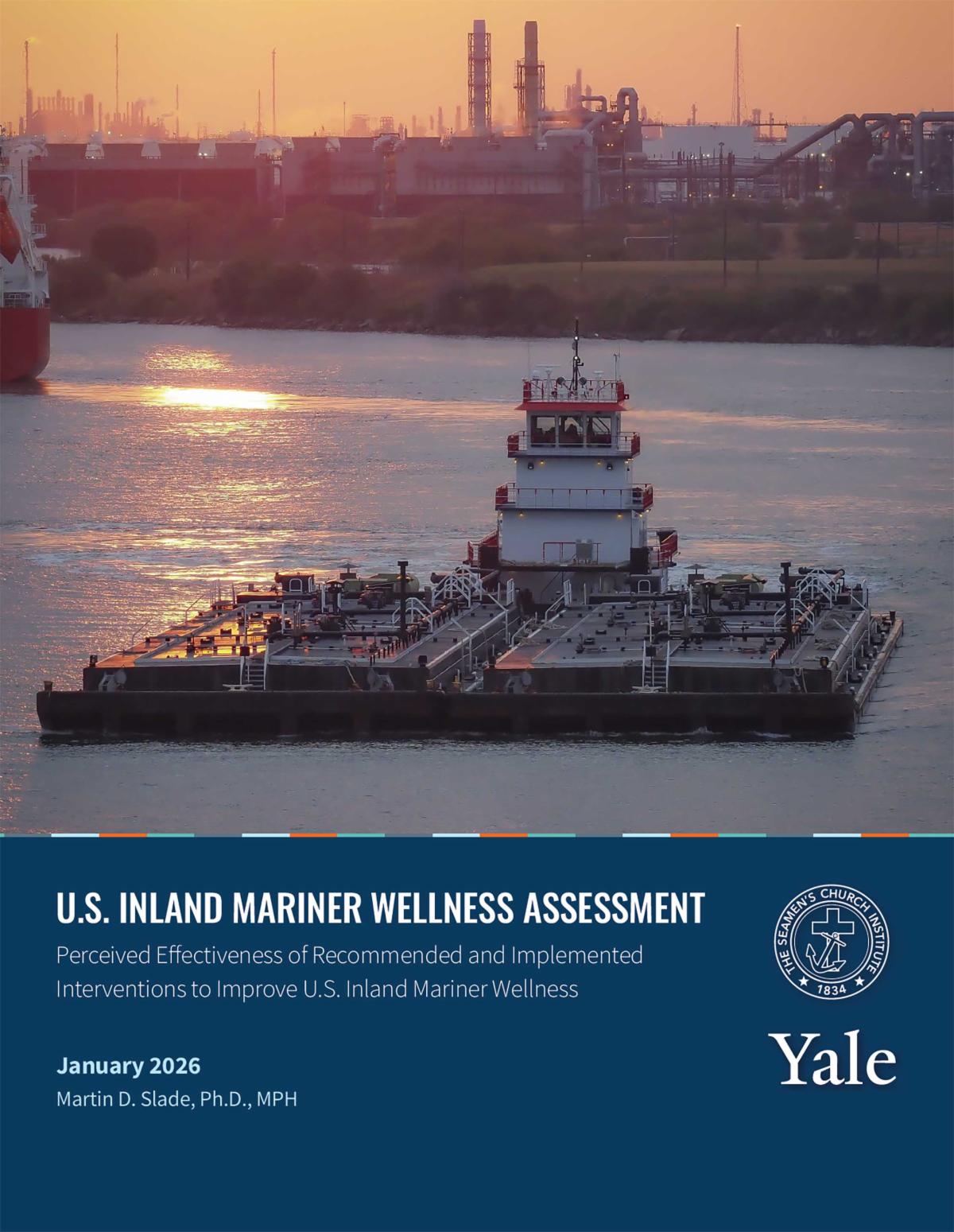
SCI is looking forward to bringing together inland and coastwise maritime leaders on the third day of the Inland Marine Expo in Nashville (May 27 to 29) for an important conversation on mariner health and well-being. The panel will center on SCI’s recently released “U.S. Inland Mariner Wellness Assessment” and explore the topic, “From Recommendations to Results—Examining What Has and Has Not Worked with Mariner Wellness.” The discussion will focus on both practical steps that can support mariners today and the longer-term changes needed to strengthen wellness across the inland maritime industry in the years ahead.
Moderated by the Rev. Mark Nestlehutt, SCI’s President & Executive Director, the panel will feature Kelly Clapp of Ingram Barge Company, the Rev. Grace Pardun of SCI, Troy Remy of Canal Barge Company, and Dr. Martin Slade of Yale School of Medicine. Joining the conversation as a new panelist is Dr. J. Kyle Turnbo, MD, a healthcare leader specializing in family, preventive, and occupational medicine. Dr. Turnbo, President & Medical Director of HealthWorks Medical, LLC, also serves on the National Merchant Mariner Medical Advisory Committee, which advises the U.S. Coast Guard and Department of Homeland Security, and is a member of SCI’s Mariner Wellness Steering Committee.
| | Center for Mariner Advocacy: Elevating Seafarers’ Voices at the IMO | |
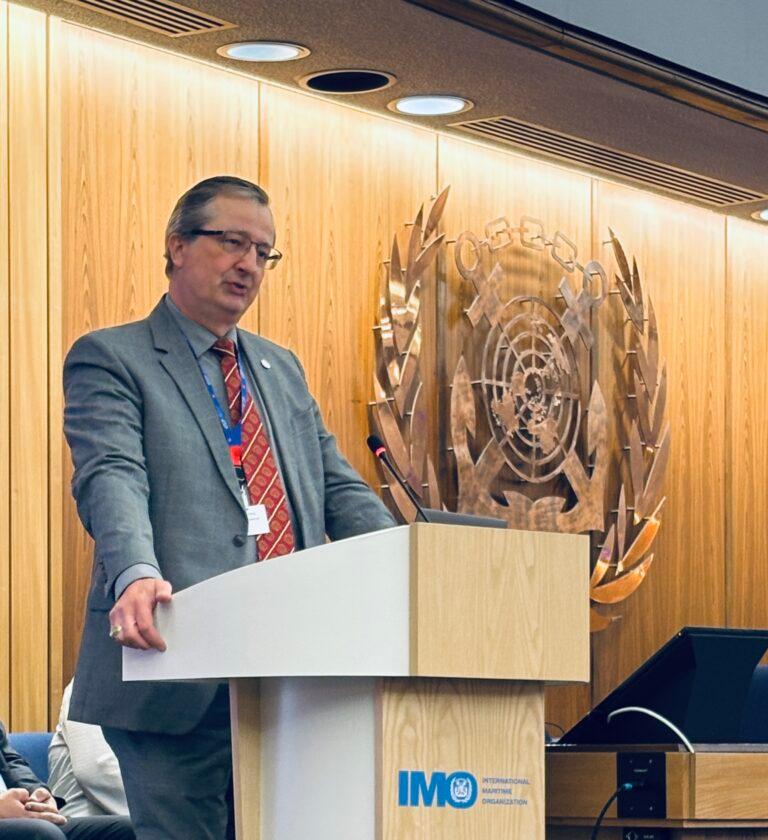
At a recent session at the International Maritime Organization (IMO), maritime welfare leaders delivered a clear message: seafarers need more than regulation—they need real, human support.
Hosted by the International Christian Maritime Association (ICMA), the discussion highlighted the critical role of welfare organizations working directly with seafarers in ports around the world. While international frameworks provide essential protections, they cannot fully address the day-to-day realities mariners face.
Representing the Seamen’s Church Institute, Phil Schifflin, Esq., Director of SCI's Center for Mariner Advocacy, emphasized the growing loss of shore leave. For seafarers who live and work aboard vessels for months at a time, the inability to step ashore is not a minor issue—it is a serious and escalating mental health concern.
Speakers also pointed to emerging challenges, including the pressures facing the first generation of “digital seafarers,” as well as the ongoing crisis of abandonment. Welfare teams continue to respond to crews left unpaid, undersupplied, and stranded, cases that remain alarmingly frequent and demand urgent, coordinated action.
The takeaway was clear: protecting seafarers requires collaboration across governments, industry, and welfare organizations. For the Center for Mariner Advocacy, this work is central—ensuring that seafarers’ voices are heard and their rights upheld, both in policy and in practice.
| | |
Closing the Gaps:
Training Mariners to Use a Layered Approach for Safer Navigation
| | |
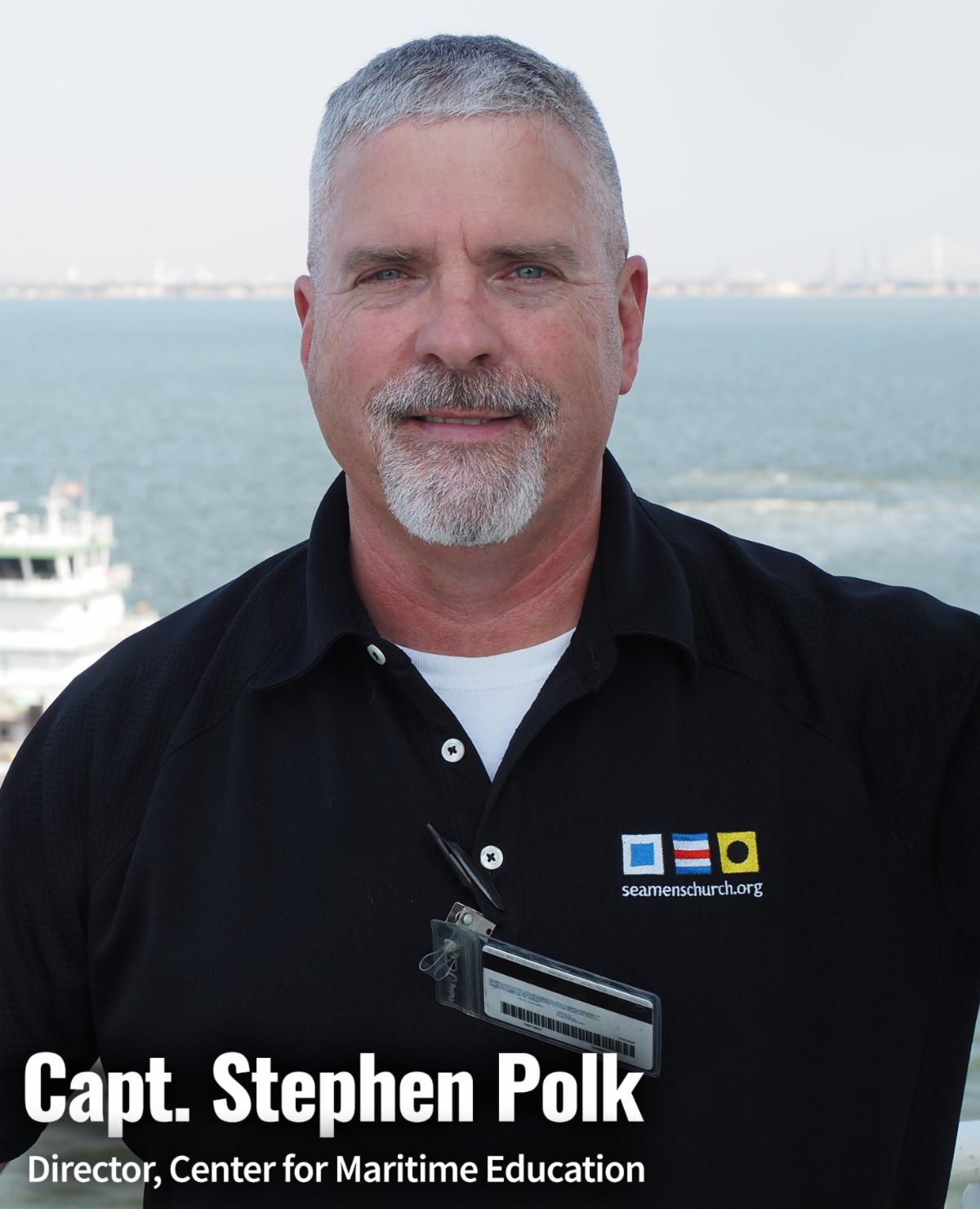
By Capt. Stephen Polk
Director, Center for Maritime Education
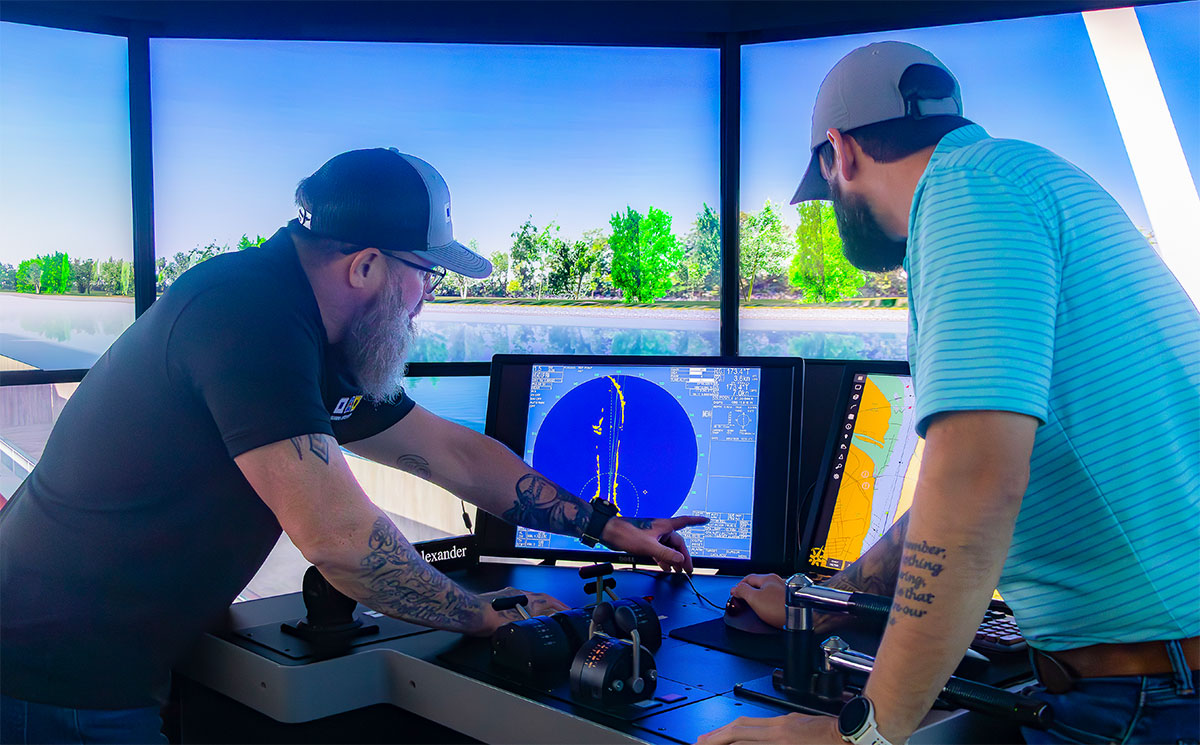
Every safe voyage depends on more than a single tool; it depends on how well a watchstander builds a complete picture using all available information. In today’s busy and complex waterways, when vessels find themselves in close-quarter situations, the difference between a near miss and a collision is often measured in seconds. Training mariners to use a layered approach, where each system supports and verifies the others, gives them the situational awareness and time needed to recognize risk early and act decisively.
At the Seamen’s Church Institute’s Center for Maritime Education, we emphasize that safety on the water requires commitment and proactive effort. It is built on discipline, sharp situational awareness, and the ability to bring all available tools together rather than treating them as stand-alone solutions. Yet it’s common for watchstanders to fall into the habit of relying too heavily on a single source of information, whether that’s radar, the Automatic Identification System (AIS), or visual observation. Each tool is valuable, but none is complete on its own. When used in isolation, they can leave gaps, and it’s within those gaps that risk tends to build. At CME, we see the most effective mariners as moving beyond reliance on any one system. They understand how each tool contributes to the broader picture, combining them to form a clear, accurate, and reliable understanding of the situation around them.
When I reflect on my own personal experience in the U.S. Navy Reserve and with the Naval Coastal Warfare Group, this lesson was reinforced early. In port security and escort operations, we never assumed that one system would give us everything we needed. Equipment could fail, data could be wrong, and conditions could change quickly. The only way to stay ahead of a threat was to build layers—overlapping sources of information that confirmed, supported, and sometimes challenged one another. That same mindset applies directly to navigation in the wheelhouse.
Radar is often the starting point, but it only becomes truly effective when it is used actively. The “Running CPA” method—introduced by Capt. John Moyle and more widely known at SCI as the “Equivalent Systematic Observation” (ESO) technique—turns radar into a practical decision-making aid. By carefully watching how a contact’s bearing and range change over time, a mariner can quickly recognize whether risk is developing. If the bearing stays steady while the range decreases, the situation demands attention. That realization, made early, creates time to think, communicate, and act before the situation becomes critical.
AIS adds another layer to the overall picture by providing insight into a vessel’s identity and purpose, such as who it is, where it’s going, and how fast it’s moving. This helps watchstanders interpret how an encounter is developing and apply the Rules of the Road—recognized navigation rules that govern how vessels interact—with greater confidence. However, AIS is only as dependable as the data entered into it, and not all vessels transmit it. For that reason, it should never be relied upon alone. It must always be verified against radar information and visual observation.
One of the most valuable features within AIS is the use of vectors, especially relative vectors. While true vectors show how vessels are moving over the ground, relative vectors reveal something more important for collision avoidance by showing how those vessels are moving in relation to you. They make developing risk easier to recognize and help a watchstander understand how changes in course or speed will influence the situation.
Then there are target trails, a tool that is often overlooked but incredibly powerful. Trails show where a vessel has been, turning movement into something visible and immediate. In busy or confined waters, short trails allow a watchstander to quickly recognize direction, speed, and maneuvering behavior without needing to interpret numbers or wait for calculations. Even when AIS data is missing or unreliable, trails continue to tell the story.
Individually, each of these tools has limitations. Radar can be affected by weather or improper setup. AIS depends on human input and proper configuration. Automated tracking systems can lag or introduce errors. But when they are used together, those limitations begin to cancel each other out. One system verifies another. One fills in what another cannot provide. This is where true situational awareness is built; not from any single piece of equipment, but from the deliberate combination and assessment of all of them.
The effectiveness of wheelhouse technology ultimately rests on the training, discipline, and judgment of the mariner behind it. When radar, AIS, target trails, and visual observation are used together as layered tools, well-prepared watchstanders gain the clarity and time needed to make sound, safety-focused decisions. At the Center for Maritime Education, this approach reflects SCI’s broader commitment to mariner safety and safe navigation, and continues to guide our work with maritime partners across the industry.
| | “Hey, Chaps—Can We Talk?”: Starting the Conversation for Mental Health Awareness Month | | |
by the Rev. Grace Pardun
SCI Supervisory Chaplain, Ministry on the River
A deckhand called out as I was passing through the galley, “Hey, Chaps! Can I talk to you for a sec?”
“Absolutely!” I responded as we stepped out to the deck locker. “What’s going on?”
The mariner began to share how tough things had been at home. “It’s a relief to be out here on the boat,” he said. “It’s so much easier. I don’t know; it seems like I can’t do anything right. She’s always upset with me about something. The kids are always getting into something. I am here, on the job, and I don’t know what to do.”
We stood there for a while, giving him the space to share what had been weighing on him. He opened up as I listened and asked a few questions along the way. By the time we wrapped up, there was a noticeable sense of relief—he seemed a bit lighter, a bit more at ease. At the same time, it was clear he was carrying a lot, both at work and at home. We agreed to stay in touch and check in again when he had more time to talk.
In my experience, it is these simple moments—those “Hey, Chaps, can I talk to you?” moments—that mark the beginning of support. For many mariners, that first step can be the hardest.
Within the maritime industry, the Seamen’s Church Institute partners with maritime companies to encourage mariners and seafarers to assist with and prioritize their mental health. In this industry, mariners often seem to minimize what they're going through. They might compare themselves to others who seem to have it worse, or tell themselves, “It’s not a crisis—I just need to toughen up.” Sometimes, embarrassment or the stigma of lacking toughness gets in the way of asking for help. Other times, they want help but are unsure where to turn.
Even when support exists, accessing it can be challenging. Many companies offer Employee Assistance Programs (EAPs) with free or reduced-cost counseling. There are still real hurdles—therapists may not have openings for months, or they may be licensed in only one state, which can make access difficult for mariners working across state lines. On top of that, finding time can be a challenge in itself. Between the demands of work and home life, carving out space for counseling and maintaining it consistently can feel overwhelming. And when we do start looking for solutions, it’s easy to fall into a single-solution mindset. While therapy is incredibly valuable—especially when emotional struggles, anxiety, trauma, or depression begin to interfere with daily life, relationships, or work, it isn’t the only support available.
It’s also important to remember that there are meaningful ways to support your mental health alongside professional care. Mental well-being can be shaped by adopting and prioritizing things like: caring for your physical health through better sleep, improved nutrition, and regular exercise; staying connected to people who make you feel supported and understood; setting healthy boundaries around phone use and social media; and nurturing your inner or spiritual life through practices like mindfulness, meditation, or prayer. While these approaches are not a substitute for professional help, they can gently support you in managing distress and building resilience over time. Move at your own pace: start with small steps and choose what feels manageable. This can make it easier to sustain these changes in the long run and support mental well-being.
However, as chaplains, we understand that when you’re in the middle of distress, even small steps can feel out of reach, if they come to mind at all. Please remember, you don’t have to go through it alone. Perhaps take a cue from that deckhand. Sometimes all it takes is reaching out and asking, "Can we talk?" That simple phrase is like the bat signal for SCI chaplains. We will drop everything to listen. That’s what we do.
Since 1949, May has been recognized as Mental Health Awareness Month in the United States. It’s an opportunity to reduce stigma and encourage people to seek support when they are struggling. National organizations like Mental Health America (MHA) and the National Alliance on Mental Illness (NAMI) lead this effort, and within the maritime industry, organizations like the Seamen’s Church Institute partner with inland maritime companies to reinforce the importance of mental health for mariners and seafarers. No matter what a mariner is facing—challenges at home, navigating an Employee Assistance Program, or simply needing someone to talk to—they don’t have to handle it alone. They don’t need all the answers. They just need the willingness to reach out.
SCI’s Chaplains are available 24/7/365 to provide confidential support. Call 800-708-1998 or email mor@seamenschurch.org—we’re here for you.
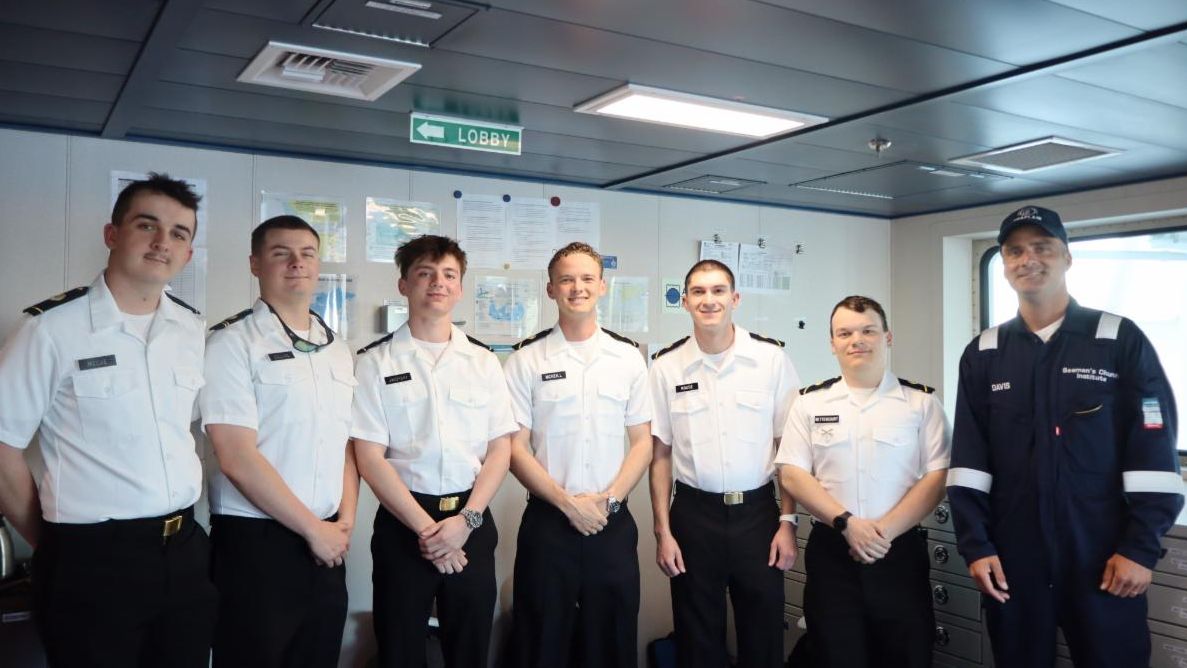
| | SCI Chaplains Return to SUNY Maritime’s Summer Sea Term Aboard TS Empire State VII | | SCI Chaplain, the Rev. Geoff Davis (far right), joins cadets in the training bridge of the TS Empire State VII. | |
On May 12, the Training Ship Empire State VII departed Fort Schuyler to begin SUNY Maritime College’s Summer Sea Term (SST), with SCI Chaplain the Rev. Geoff Davis joining cadets and crew for the first leg of the voyage. This marks Davis’s second year participating in the program, and he is thrilled to once again support cadets during this important stage of their maritime education and professional development.
The SST is a cornerstone of the academic experience for cadets pursuing U.S. Coast Guard licenses at SUNY Maritime College. Combining classroom learning with real-world shipboard operations, the program immerses cadets in the daily responsibilities and challenges of life at sea.
SCI is honored to continue its longstanding partnership with SUNY Maritime by providing chaplaincy support during the SST. Davis will later be relieved by SCI Chaplain, the Rev. Bill Allport, marking the sixth consecutive summer that SCI Chaplains have served aboard during SST voyages.
By joining cadets at sea, SCI Chaplains provide a consistent pastoral presence, offering encouragement, guidance, and support during what is often one of the most formative and demanding experiences of a cadet’s maritime career. SCI extends its sincere gratitude to SUNY Maritime College for welcoming our chaplains aboard and allowing us to accompany and support the next generation of maritime professionals.
Click here to see more photos from the depature.
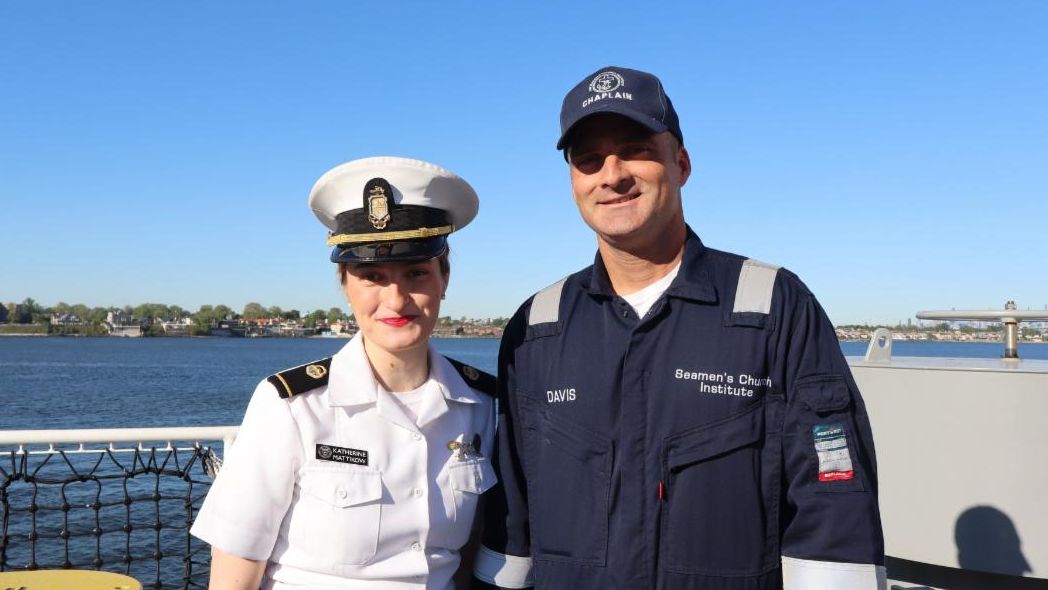
| | Cadet Katherine Mattikow and SCI Chaplain, the Rev. Geoff Davis, aboard the TS Empire State VII shortly before departure. | | Requests: Necessities, Warmth, and Morale at Sea | | |
By Michelle McWilliams, LSW
SCI Chaplain, ISC
From the February Quarterly Activity Report
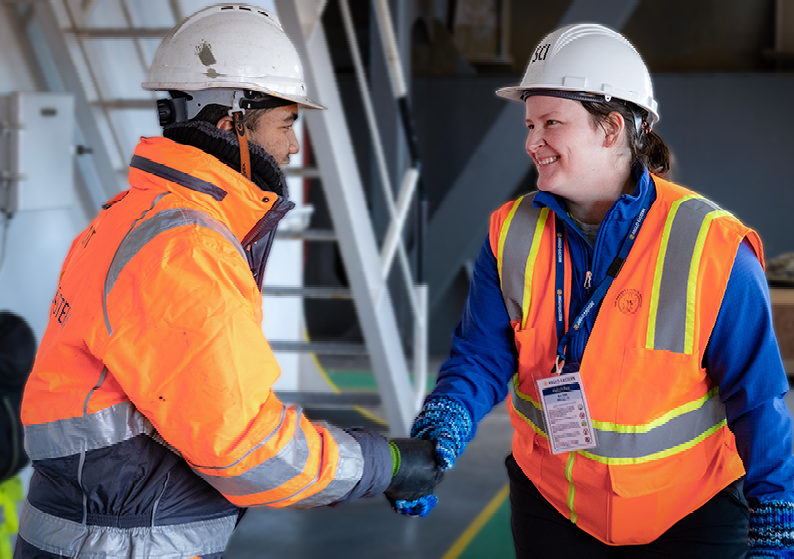
Over the past month, I have been able to fulfill a number of requests from crew members while visiting ships. My guiding principle in responding to these requests is discretion rooted in practicality and feasibility; whether something can be done within time constraints and whether it is truly essential. Shore leave, or the lack of it, often plays a significant role as well. The requests I receive typically fall into three categories: necessities, warmth, and morale. Some needs are easier to meet, particularly because our office maintains an inventory of donated new items such as gloves. During the winter months in Port Newark, many crew members struggle with the cold, especially when their gloves become wet on deck.
One meaningful encounter took place aboard the MSC Bridgeport during a routine check-in. After answering several questions from the crew, only Vedika, a female seafarer, and I remained. I sensed she wanted to ask something, but hesitated. She finally asked, “Could you get me some napkins?” Since she had been denied shore leave, she explained she would otherwise get them herself. After a moment, I realized what she meant and reassured her that I could help. I asked a few clarifying questions, exchanged WhatsApp information, and left to gather the items.
Vedika shared that she had hoped a seamen’s center would come aboard, as she felt uncomfortable asking male crew members for help, especially being the only woman on the ship. With only two U.S. ports remaining and a month-long voyage ahead, this was a genuine necessity. I was able to provide her with a discreetly packaged supply sufficient for several months. When she later messaged me to say, “I got the sanitary pads; I am really grateful to you. Thank you so much. It really means a lot.” The impact of that moment, woman to woman, was deeply powerful.
Another request came from Ephraim, an able seafarer from Côte d’Ivoire working on deck aboard a French-flagged research vessel. Noticing he wasn’t dressed warmly enough, he asked if I could help him find hoodies for layering. After discussing his size and budget, I visited a local store and coordinated with him via WhatsApp to find two sweatshirts within his price range. When I delivered them, he repeatedly expressed his gratitude and even sent a follow-up thank-you message a week later.
The final request focused on morale. Ahead of a ship visit, I learned that none of the 18 crew members aboard had visas, leaving them unable to go ashore after a long journey from Asia and weeks of hard work in port. They were hoping for a small morale boost, and food was the most common request. After coordinating with the third officer, we settled on a simple McDonald’s order that was practical and manageable. I made the arrangements, transported the meals carefully, and delivered them to the ship later that afternoon. The excitement and appreciation from the crew were unmistakable.
During that visit, I also had the opportunity to engage in deeper conversations with several crew members, some of whom expressed interest in having Mass on board. I later connected them with Father James Kollin to explore that possibility during their next call to Newark.
Often, these requests, small as they may seem, shape how crew members choose to reach out in the future. What may feel minor to us can mean a great deal to someone living and working at sea.
As an SCI Chaplain, I am grateful to serve as a conduit of care, not only by listening to concerns and offering spiritual support, but also by taking concrete action that can positively impact a crew member’s time onboard.
| | Strengthening Community Connections at PNCT’s Ribbon-Cutting Event | | |
On April 29, ISC Director Matt Morse proudly represented SCI at a ribbon-cutting ceremony hosted by PNCT to celebrate the opening of new maintenance facilities designed to support members of the International Longshoremen’s Association.
During his remarks, PNCT President and CEO James Pelliccio graciously recognized SCI’s work within the port community. Morse also used the occasion to strengthen relationships throughout the port by connecting with ILA leadership, local longshore workers, PNCT executives, and state officials.
“SCI’s vital work depends on maintaining a visible and meaningful presence within our local community,” Morse said. “Participation in events like this increases that visibility and creates opportunities to build authentic connections, deepen our understanding, and foster relationships that are both impactful and lasting. SCI sincerely thanks PNCT for including us in this successful event, and for recognizing our contributions to the community we are proud to serve.”
| | |
“Courage is not the absence of fear, it's taking action in spite of it.”
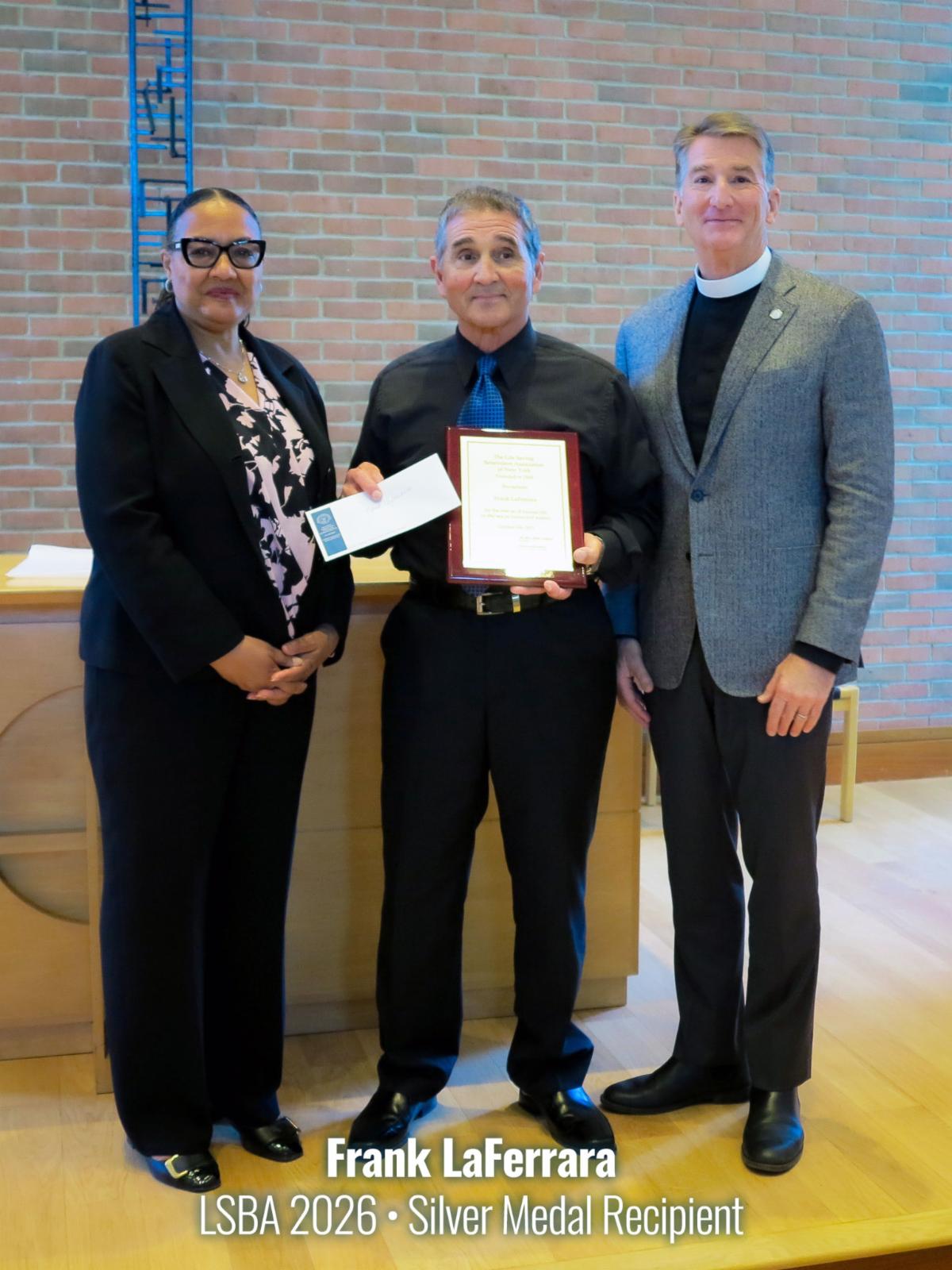
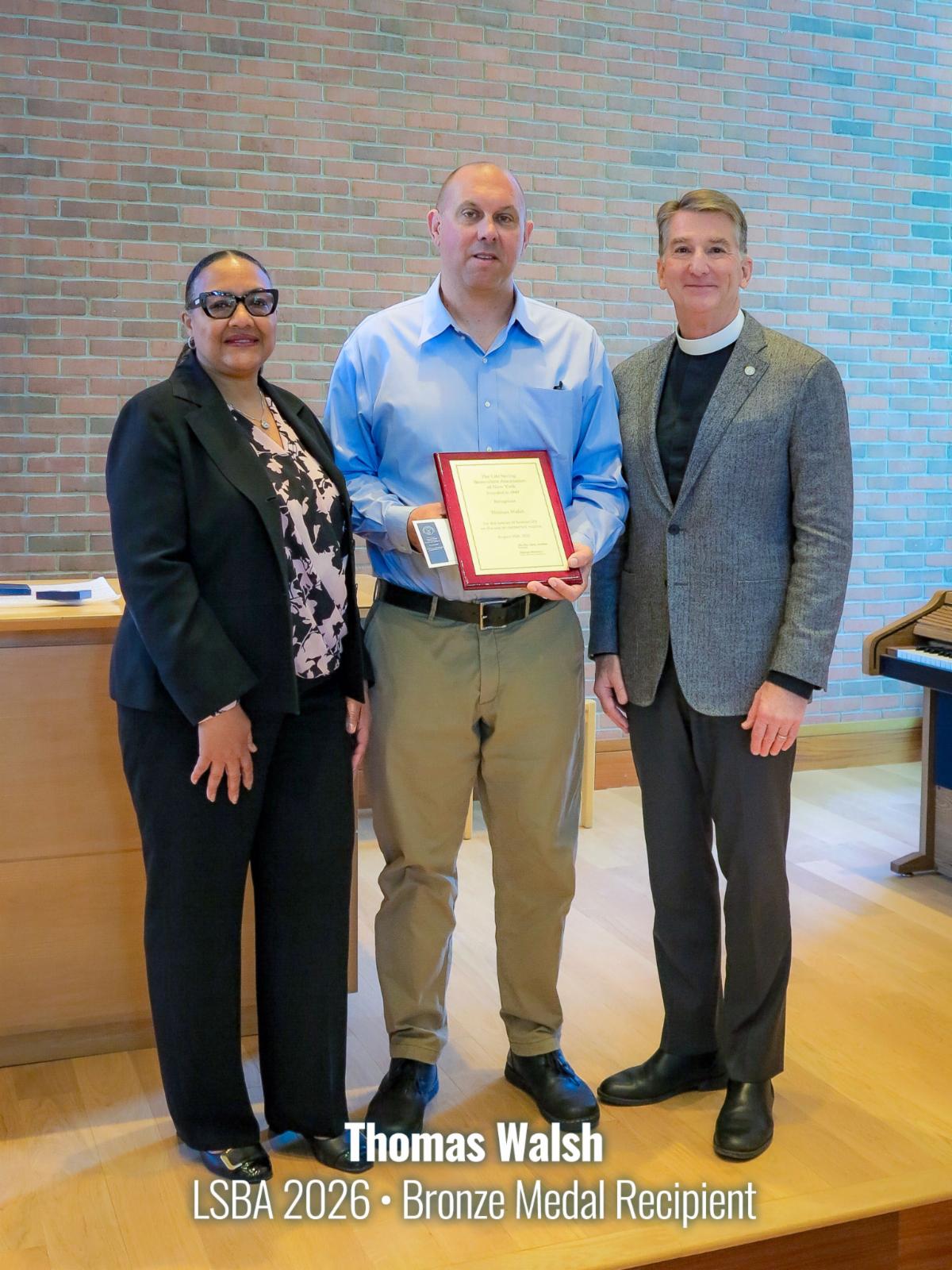
On May 12, 2026, at the International Seafarers’ Center in Port Newark, New Jersey, the Life Saving Benevolent Association (LSBA) recognized this year’s honorees for extraordinary acts of bravery. In keeping with its awards criteria “for the rescue of human life on the sea or connected waters”, the LSBA awarded medals to Thomas Walsh and Frank LaFerrara (who shared the above quotation upon receiving the award) for their heroic efforts.
Founded in 1849, the LSBA is administered by the Seamen’s Church Institute. Presenting the awards were SCI President and Executive Director and President of the LSBA, the Rev. Mark Nestlehutt, along with SCI Director of Finance and Operations and LSBA Treasurer, Leslie O’Neal.
To learn more about the heroic actions of this year’s recipients and nominees, view the brief video of the awards presentation.
| | SCI's Patterson Elected to Young Shipping Professionals of New York Leadership Board | | |
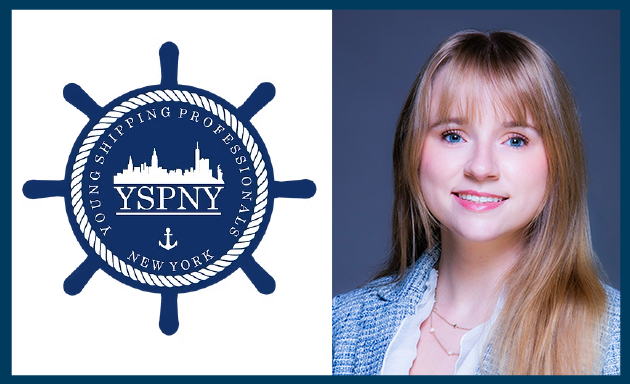
Recently, SCI’s Communications Coordinator, Bridgit Patterson, was appointed to the leadership board of Young Shipping Professionals of New York (YSPNY).
YSPNY is a professional network dedicated to connecting the next generation of New York’s maritime industry through opportunities for networking, professional development, and industry engagement. The organization hosts a range of events throughout the year, including educational talks, panel discussions, and social gatherings designed to help young maritime professionals build relationships and advance their careers.
In her new leadership role, Bridgit will support the organization’s communications efforts and, as secretary and head of events, will lead the group's initiatives focused on events and networking opportunities.
| | Jeanette Park and the Voices That Endured | | |
This historic view captures Jeannette Park outside SCI’s iconic 25 South Street showing the Merchant Marine Memorial bandshell (1922) and, to the left of the bandshell, the Third Avenue Elevated with a train snaking between South Ferry and Hanover Square.
On May 7, 1915, the city reeled from the news that the Lusitania had been torpedoed. As insurance executive Charles Ives, waited on the Hanover Square platform, an organ grinder on the street below began playing “In the Sweet By and By,” and voices from all walks of life joined together, humming, whistling, and singing in a moment of shared grief and resolve.
Ives, who was also a respected composer, later immortalized that scene in his orchestral work: “From Hanover Square North, At the End of a Tragic Day, The Voice of the People Again Arose.”
It is a reminder that even in moments of uncertainty, collective voices and resilience endure.
| | |
Engage in the Conversation
If you received this newsletter as a forwarded email from a friend or colleague, or regularly receive our emails and would like a complimentary subscription to our print magazines, please click on the button below to complete an online subscription form.
| | | | |