|
MARINERS DEPEND ON SCI.
SCI DEPENDS ON YOU.
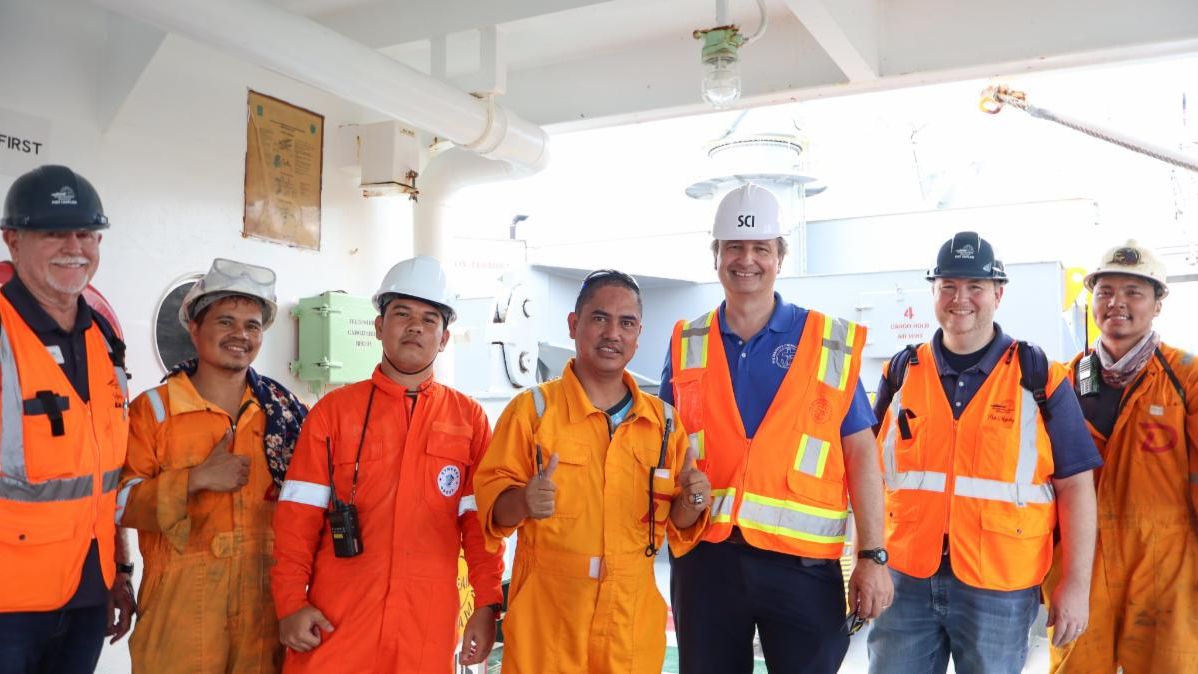
| | Director of SCI's Center for Mariner Advocacy (CMA), Phil Schifflin, Esq. (third from right), joins members of Global Maritime Ministries to visit with seafarers in the Port of New Orleans. | | |
IN THIS ISSUE – September 2025
- 2025 SCI Mountain Challenge: Support Our Competitors
- CMA Director Presents at Gulf Intracoastal Canal Association (GICA) Annual Seminar
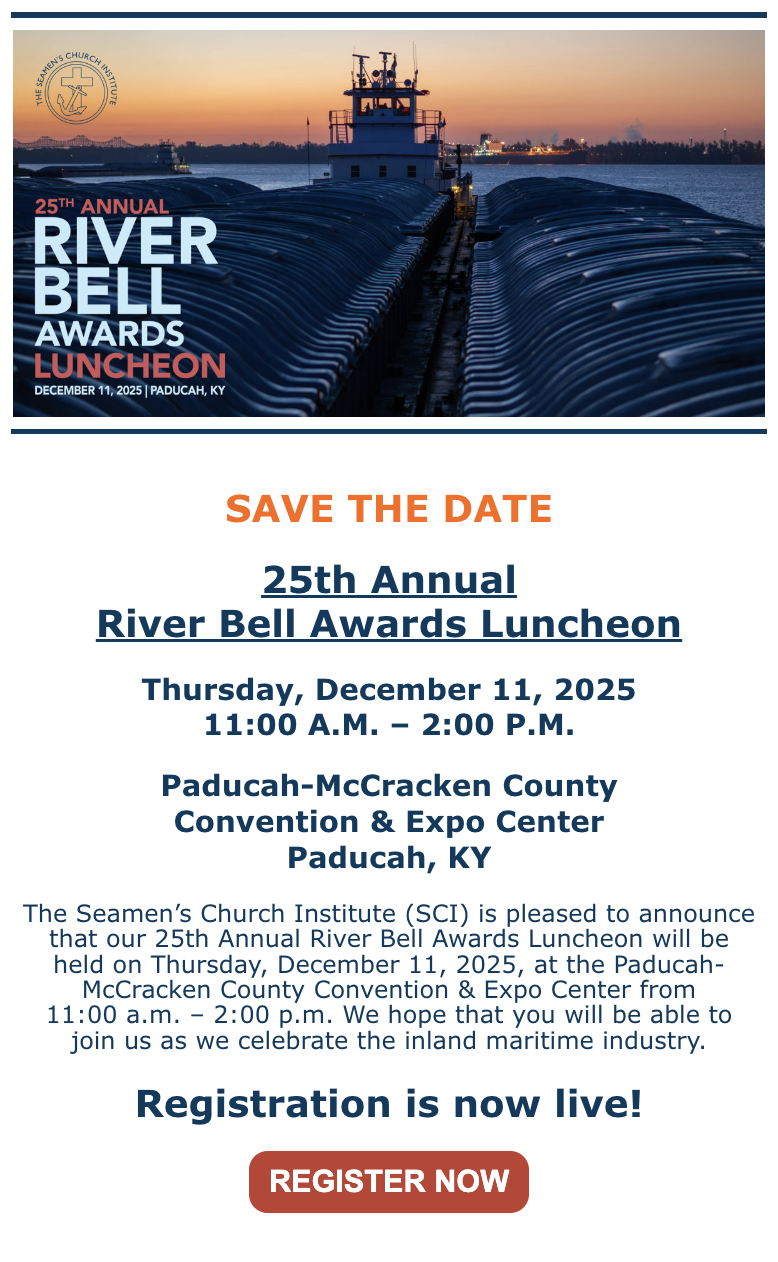
- 25th Annual River Bell Luncheon—Save the Date
- With UTO Grant from The Episcopal Church, SCI Strengthens Chaplaincy for Mariners in Need
- No Mariner Stands Alone: Suicide Awareness Month
- When Mariners Call, We Respond—Together
- CME Brings Maritime Professionals Together for Integrated High-Impact Training
- Advancing Maritime Safety: SCI Hosts Buffalo Marine Service for Specialized Training
- CME Launches New Microsite
-
Creating Joyful Opportunities for Connection at Sea
- From SCI Archives—SCI’s Legacy of Innovation and Public Engagement
| | THANK YOU TO OUR CORPORATE SPONSORS | | |
SUPPORT A TEAM • SUPPORT AN INDIVIDUAL
Help Them Win the Philanthropy Challenge
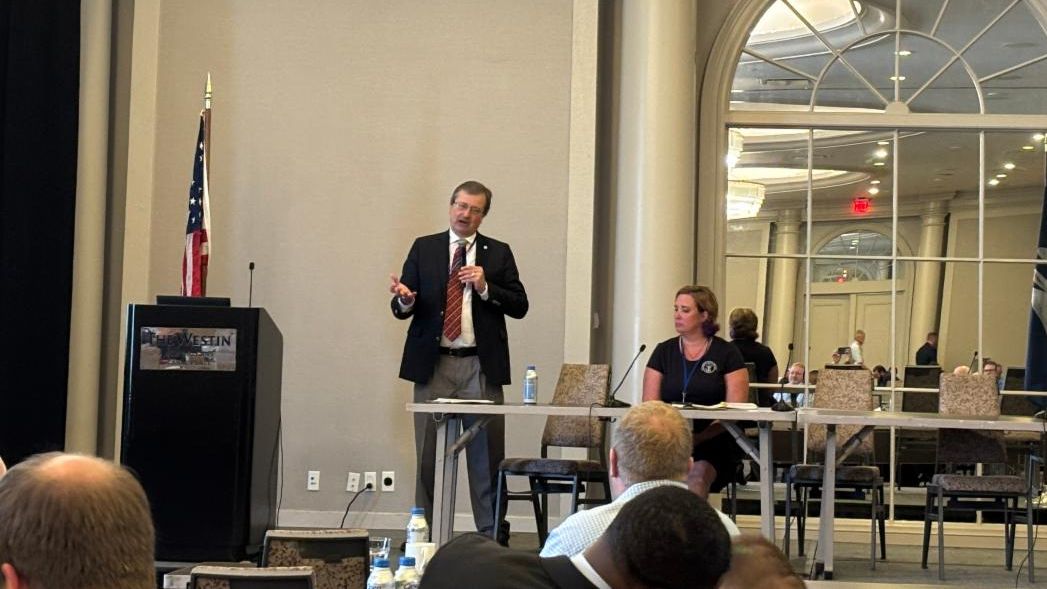
| | CMA Director Presents at Gulf Intracoastal Canal Association (GICA) Annual Seminar | | Director of SCI's Center for Mariner Advocacy, Philip C. Schifflin, Jr. Esq. (left), presents at the GICA conference in downtown New Orleans, joined by SCI Supervisory Chaplain, Ministry on the River, Upper Mississippi & Ohio River, the Rev. Grace Pardun (right). | | |
by Philip C. Schifflin, Jr., Esq.
Director of SCI's Center for Mariner Advocacy
At the Seamen’s Church Institute (SCI), we have always prioritized the wellness of mariners—both their physical health and their mental well-being. As Director of SCI’s Center for Mariner Advocacy, I regularly advocate for policies and practices that strengthen mariner wellness. Recently, I had the opportunity to present some of these initiatives, particularly focused on inland mariners, at the Gulf Intracoastal Canal Association (GICA) Annual Seminar.
At the GICA seminar, I shared the results of a joint study conducted by Yale University and SCI. This study reviewed existing academic literature and included interviews with inland marine industry executives, with the goal of identifying wellness initiatives that had been tried and evaluating their effectiveness.
The findings revealed that, while various initiatives have been attempted, none have been notably successful. Most showed only marginal results. A particularly important insight from the interviews was that executives are eager to invest in mariner wellness but feel there is no clear roadmap for implementing or scaling effective programs. To me, this signals opportunity: if we can collectively develop such a roadmap, there is a strong willingness to adopt it.
The study also highlighted cultural barriers. Many mariners themselves place limited value on wellness initiatives, making it difficult to achieve meaningful improvements without their buy-in. Thus, changing cultural perceptions will be a critical first step. Another key finding was the need to strengthen the existing “culture of care,” not only for mariners but also for their families. Such a culture would include efforts to improve communication, leadership training, nutrition, fatigue management, and access to mental health care.
The presentation was well received, generating strong engagement during the Q&A session. These discussions underscored the need for continued collaboration to develop practical, scalable approaches to improving mariner wellness, and, importantly, to better integrate health and well-being into the very culture of maritime professionals, both on vessels and shoreside, with particular focus on mental health.
| | With UTO Grant from The Episcopal Church, SCI Strengthens Chaplaincy for Mariners in Need | | |
The Seamen’s Church Institute (SCI) has received a $45,000 grant from The Episcopal Church’s United Thank Offering to launch I Sea You: Equipping Chaplains to Support the Physical, Emotional, and Spiritual Needs of Mariners Marginalized by Sea Blindness. Mariners move nearly 90% of global goods, yet they often remain unseen and unsupported—a condition SCI calls “Sea Blindness.” This initiative seeks to change that by preparing chaplains to meet mariners’ unique needs, especially in moments of crisis or loss.
The project will unfold in two phases: first, a research study to define the competencies most essential for maritime chaplaincy, and then the development of a trauma-informed continuing education curriculum grounded in that research. Leading the effort is the Rev. Dr. David Fleenor, an Episcopal priest and chaplaincy expert. As SCI President and Executive Director, the Rev. Mark Nestlehutt notes, this is “about more than training; it is about deepening our presence with mariners and ensuring they know they are never alone.”
Read the full article on the Episcopal News Service here.
| | No Mariner Stands Alone: Suicide Awareness Month | | |
September is Suicide Awareness Month—a time to come together in solidarity, reflection, and support. At the Seamen’s Church Institute, we are deeply committed to walking alongside mariners, especially in moments of struggle and uncertainty. We recognize the unique challenges mariners face and the importance of ensuring that no one faces these challenges alone.
For mariners who may be struggling, SCI offers a 24/7 crisis hotline at 800.708.1998. This vital lifeline connects mariners directly with Chaplains and Chaplain Associates who are ready to listen, support, and walk alongside them.
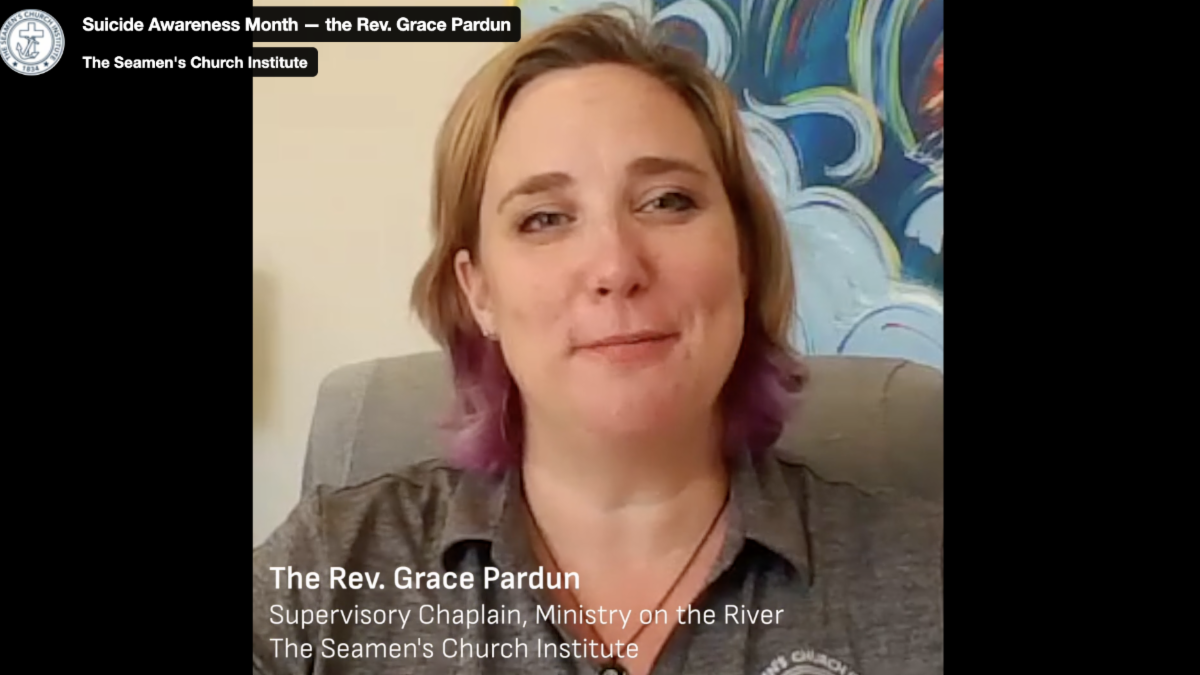
In this video, the Rev. Grace Pardun, SCI Supervisory Chaplain, Ministry on the River, shares a message of hope. For Suicide Awareness Month, she reminds us all that—even in the most difficult times—together, we can ensure that no mariner walks through darkness alone.
.
SCI’s Ministry on the River also provides specialized trainings, including ASIST (Applied Suicide Intervention Skills Training) and SafeTALK, equipping mariners and their communities with the knowledge and tools to recognize warning signs and respond with care.
Working together—shipmates, families, communities, and supporters—is vital. This month and every month, SCI affirms our commitment to raising awareness, fostering open conversations, and reminding every mariner: help and hope are always within reach.
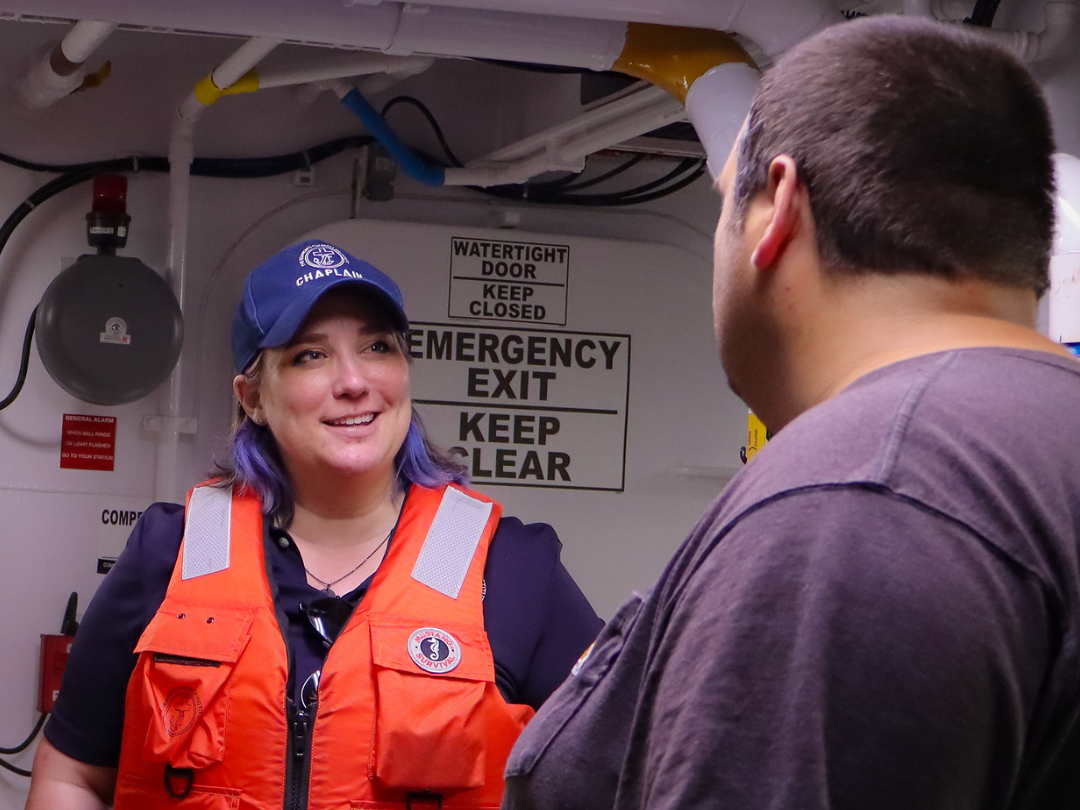
| | When Mariners Call, We Respond—Together | | SCI Supervisory Chaplain, Ministry on the River, Upper Mississippi & Ohio River Region, the Rev. Grace Pardun, visits with a mariner in Houston, Texas. | | |
by the Rev. Grace Pardun
Supervisory Chaplain, Ministry on the River, Upper Mississippi & Ohio River Region
From the September 2025 Quarterly Activity Report
I was in the midst of serving on a panel discussion at the Gulf Intracoastal Canal Association (GICA) conference when my phone went off. “Excuse me,” I whispered as I stood up to walk out of the room. There was no way that I was going to mute or ignore the call; it was SCI’s Ministry on the River (MOR) emergency line.
Along the rivers and Gulf coast, we readily share and promote our crisis line, 800-708-1998, with mariners and maritime operators. It’s the line mariners call when in distress, companies call when critical incidents happen, and the general maritime community calls when they aren’t sure which chaplain they need to get a hold of. We can go weeks without that line going off. But then, all of a sudden, the hotline gets hot, and our team is deploying to boats all over, calling on the support of Chaplain Associates when our Chaplains can’t get there fast enough.
During that conference in New Orleans, learning from our industry’s best and brightest, I received calls about a helicopter attempting to fix powerlines when it crashed into a barge below; a captain who had a heart attack in the galley of the boat while unloading groceries; and a company requesting a Service of Last Watch for a long-time mariner. Of course, the conference takes a back seat—it was time to contact our Ministry on the River team and coordinate responses.
I believe I am like most pastoral caregivers; I am in this line of work because I want to help. I want to be there when someone is having a really bad day. I want to be their comfort when they cry and their hearts break. I want to be the one to provide resources, support, peace, and hope when everything looks terrible. And at times when there are multiple incidents like this, I hate missing opportunities to serve our mariners. I hate not being able to be there for all of them all at once. I can also confidently say that SCI’s entire chaplain corps—staff Chaplains and Chaplain Associates alike—are all wired exactly like I am.
In that moment in New Orleans, I recalled when I first started here at SCI and found myself in a similar situation. I lamented to SCI’s President and Executive Director, the Rev. Mark Nestlehutt, “But I want to be there!” and he calmly said, “I know you do. And we have Chaplain Associates for this.”
His words resonated with me in this moment, too. There are times when I can not be the responding chaplain for multiple incidents. In fact, doing my job well as MOR’s Supervisory Chaplain means at times finding and coordinating with the right person to respond to these events. I had a Chaplain Associate who is good in times of crisis and challenging scenes respond to the helicopter crash. This allowed me to schedule a time where I could connect with the crew who had saved their captain from a heart attack in the days following the incident. And another of our Chaplain Associates, seasoned and effective with ceremonies, I deployed to do the Service of Last Watch.
It is such a privilege to serve mariners. But even more, it is such a privilege to serve mariners together. The gift of collaborating with an entire team ensures that the care that we are able to provide is much more effective than if I just tried to do it all alone. We couldn’t do this ministry without our Chaplain Associates, and for their service and presence I am so grateful.
| | CME Brings Maritime Professionals Together for Integrated High-Impact Training | | |
Recently, the Center for Maritime Education (CME) in Houston was honored to welcome HWCG LLC, AET’s Mooring Masters, and Riben Marine, Inc. for an intensive, hands-on simulator training session. This collaboration brought together a diverse team of maritime professionals to our simulators to tackle complex operational scenarios in a highly realistic, controlled environment.
The training covered challenging environmental conditions such as tandem and side-by-side mooring maneuvers, precise approach and departure protocols, and critical failure recovery procedures. Participants also validated vessel flowback protocols and identified opportunities for improved safety and efficiency.
“This session blended technical precision with practical application, delivering immersive learning that simply isn’t possible without advanced simulator capabilities,” said CME Director Capt. Stephen Polk. “It showcased one of our strengths: the ability to incorporate complex requests into realistic exercises across several simulator bridge stations.”
Complex operations like these are where CME excels. Our team integrates client objectives into realistic, mariner-led training that challenges participants while sharpening their skills. Like our clients, we are deeply committed to mariner safety, and bringing maritime professionals together for accurate simulator-based training is central to fulfilling that mission.
| | Advancing Maritime Safety: SCI Hosts Buffalo Marine Service for Specialized Training | | |
|
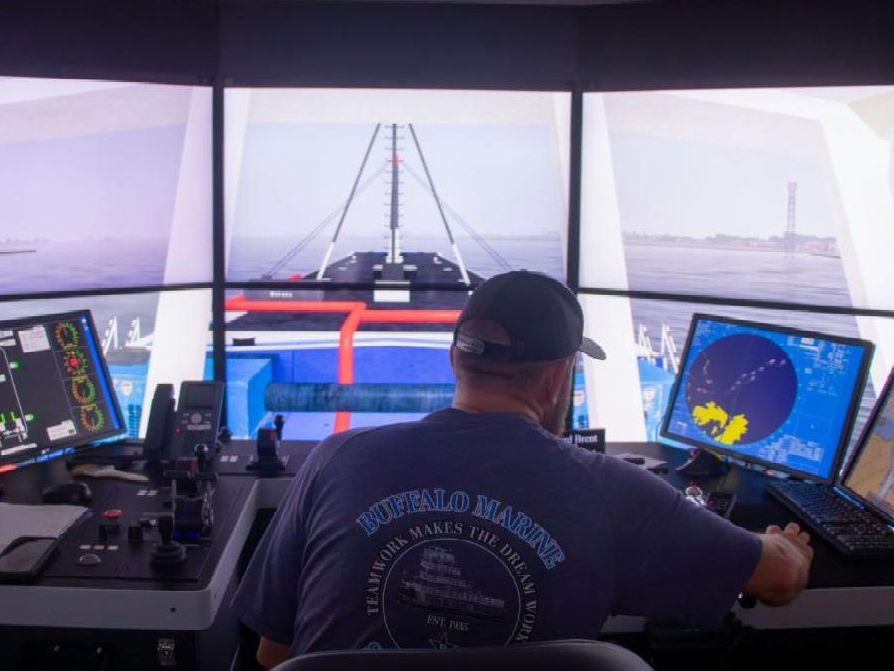
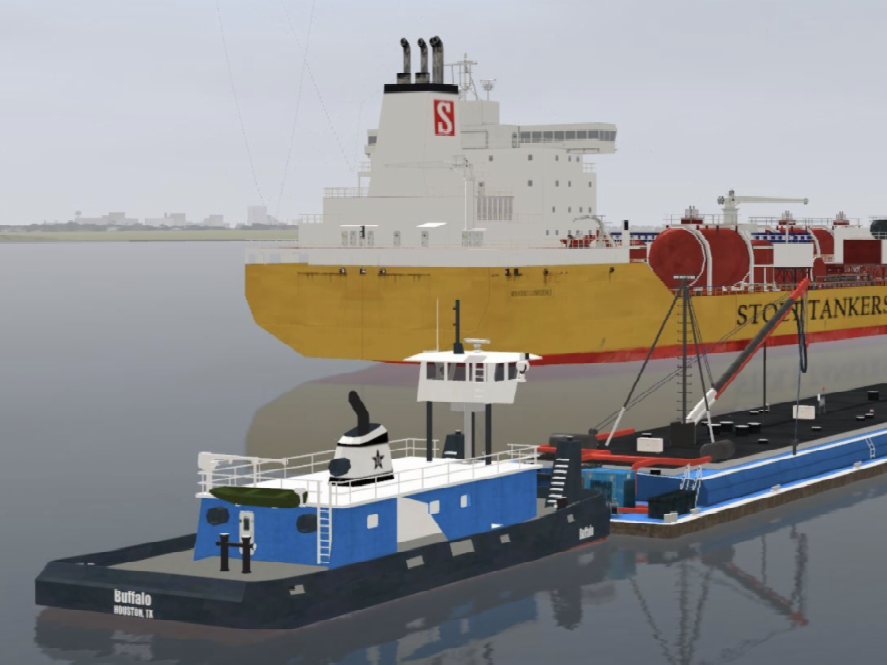
The Seamen's Church Institute’s Center for Maritime Education in Houston, TX, recently had the privilege of hosting Buffalo Marine Service Inc. for advanced simulator training. Focused on their bunkering operations, the training was tailored to enhance the skills of the company’s wheelhouse personnel and reinforce best practices on the water. Photos captured during the sessions offer a behind-the-scenes look at the valuable work being done.
At SCI, we recognize that the future of the maritime industry depends on regular investment in training. By offering access to cutting-edge simulation technology and expert instruction, CME helps to ensure a stronger, safer maritime sector. On this occasion, we were proud to partner with Buffalo Marine Services in advancing maritime safety and fostering professional growth. We share in their dedication and their unwavering commitment to safety and excellence on the water.
| | CME Launches New Microsite | | |
The Seamen’s Church Institute is excited to announce the launch of a dedicated microsite for its Center for Maritime Education (CME).
As a core mission area of SCI, CME is fully committed to supporting the personal and professional needs of mariners and seafarers. With a focus on enhancing mariner safety, improving vessel operations, and fostering safer maritime environments, CME stands as a vital pillar within SCI’s larger mission.
The new microsite streamlines access to CME resources, initiatives, and updates—all in one place—highlighting its critical role in shaping a safer and stronger maritime community.
Stay tuned as we continue to expand CME’s impact and share the important work being done in service to mariners worldwide.
| | Creating Joyful Opportunities for Connection at Sea | | |
by the Rev. Dr. Bill Allport
Chaplain, International Seafarers’ Center, Port of New York & New Jersey
From the September 2025 Quarterly Activity Report
For many of us, summer is a time to slow down and enjoy cherished moments with family. For seafarers, however, that reality is often out of reach. Their work keeps them away from loved ones for months at a time, with little opportunity for connection. At SCI, we Chaplains strive to provide companionship in the midst of their isolation, and every so often, we have the privilege of helping bridge the distance between seafarers and their families. This summer has given us some truly joyful opportunities to do just that. For this report, I am providing three such moments we were delighted to be a part of.
| |
Family Long Missed
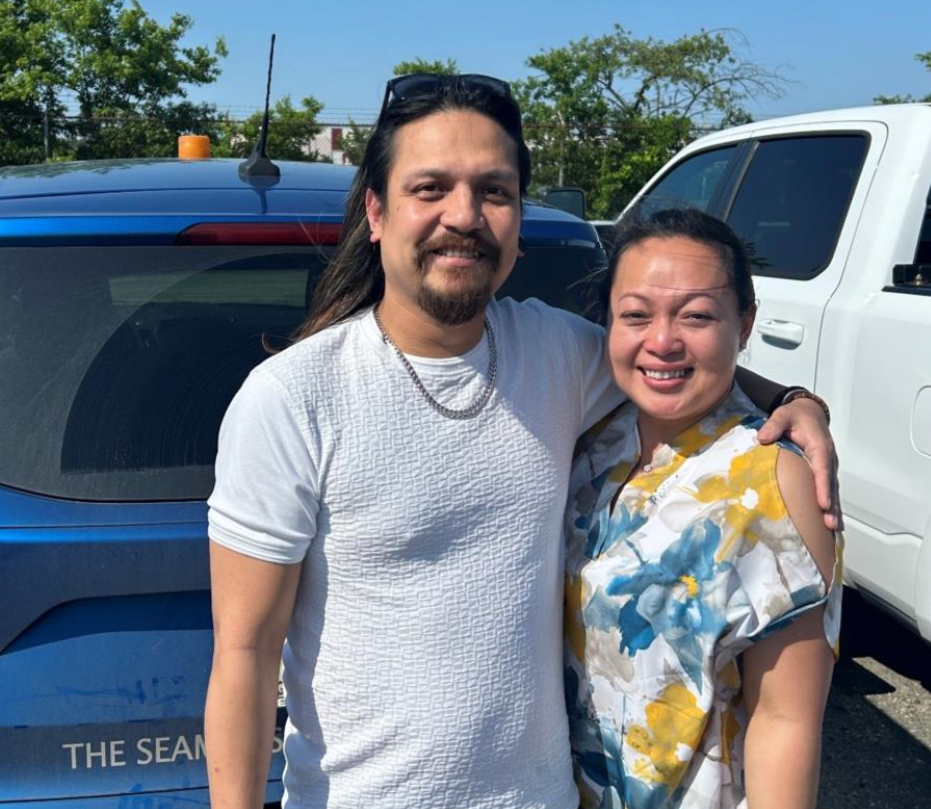
We were contacted at the ISC with a request for assistance as the CMA CGM Jean Gabriel arrived at Global Terminal in Bayonne, NJ. The chief cook had a nephew who had immigrated to the United States and built his life here. He had raised his nephew, but the two had not seen each other in more than ten years. With his ship now in port, we were able to help him and his wife reunite with his uncle—a long-awaited and deeply moving connection.
| |
Family Brings Life to a Crew
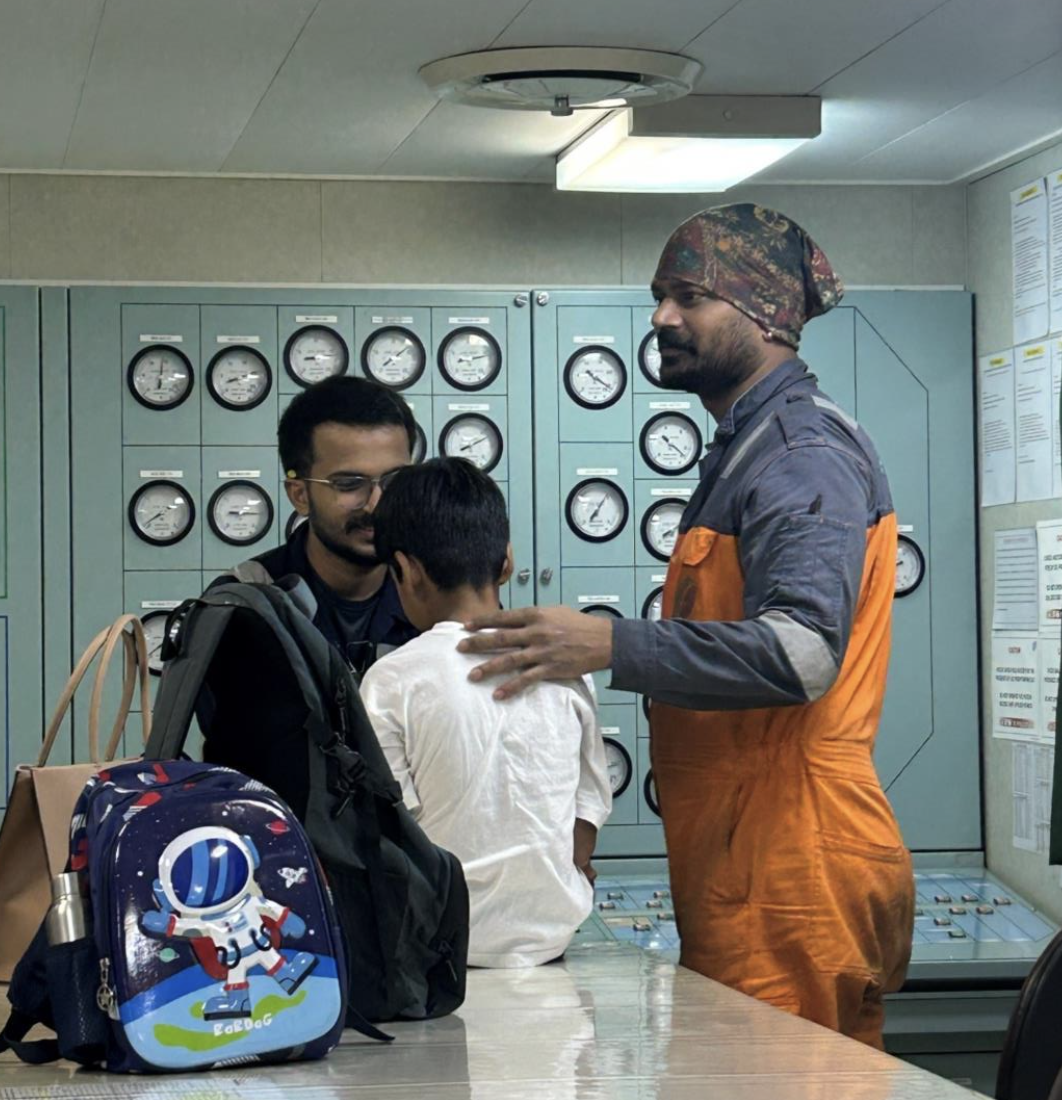
This summer, I visited the One Monaco at Global Terminal in Bayonne, NJ, as the vessel prepared for its transit to Asia. During my visit, I had the pleasure of meeting the families of the Chief Engineer and Second Engineer, who were traveling alongside the crew for part of the journey.
As the families prepared to depart, there were touching moments as the crew and their seafaring loved ones exchanged farewells. While it is not common for families to accompany seafarers during a portion of their contract or a specific voyage, when ship companies make this possible, it brings a welcome change to life on board. The presence of families introduces warmth, tenderness, and a refreshing dynamic to the shared life of the crew. It also opens the door to meaningful conversations with families about their experiences during the voyage.
| |
From Gettysburg to the Sea
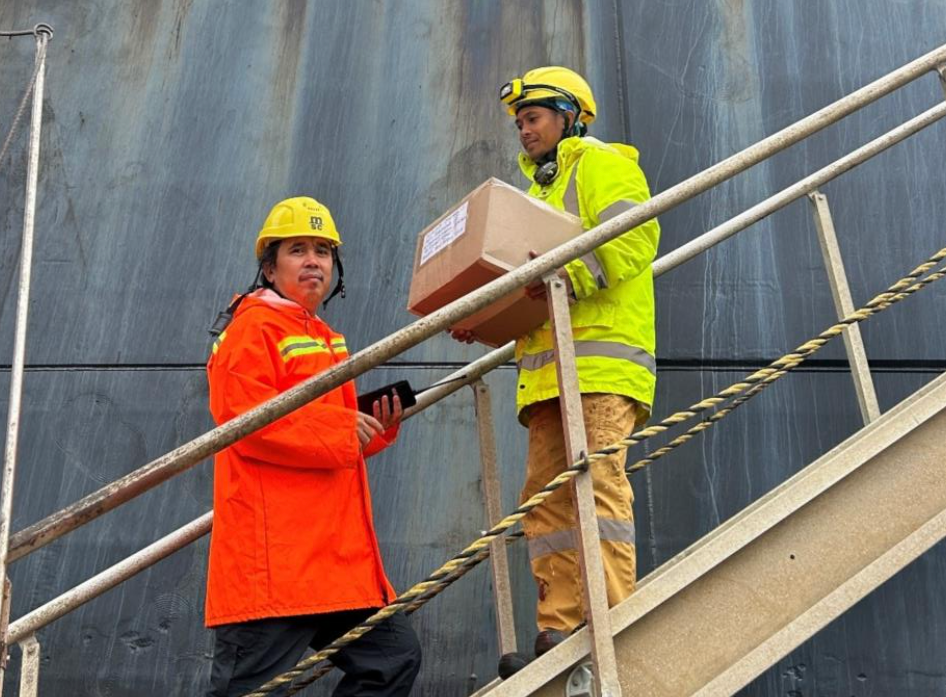
Among the many packages delivered through the ISC this summer was one that stood out: a box, hand-addressed to a crew member of the MSC Aldebaran III. While most packages we handle are online orders facilitated by SCI, this one was a personal gift sent from Gettysburg, Pennsylvania.
Early on a Monday morning, with the assistance of security at PNCT Terminal, I was able to board the vessel just minutes before the gangway was raised for departure. The two crew members who received the package joked with me, saying, “You almost got a trip to Canada!” They were thrilled to accept the delivery and eager to pass it along to their colleague.
| | SCI’s Legacy of Innovation and Public Engagement | | |
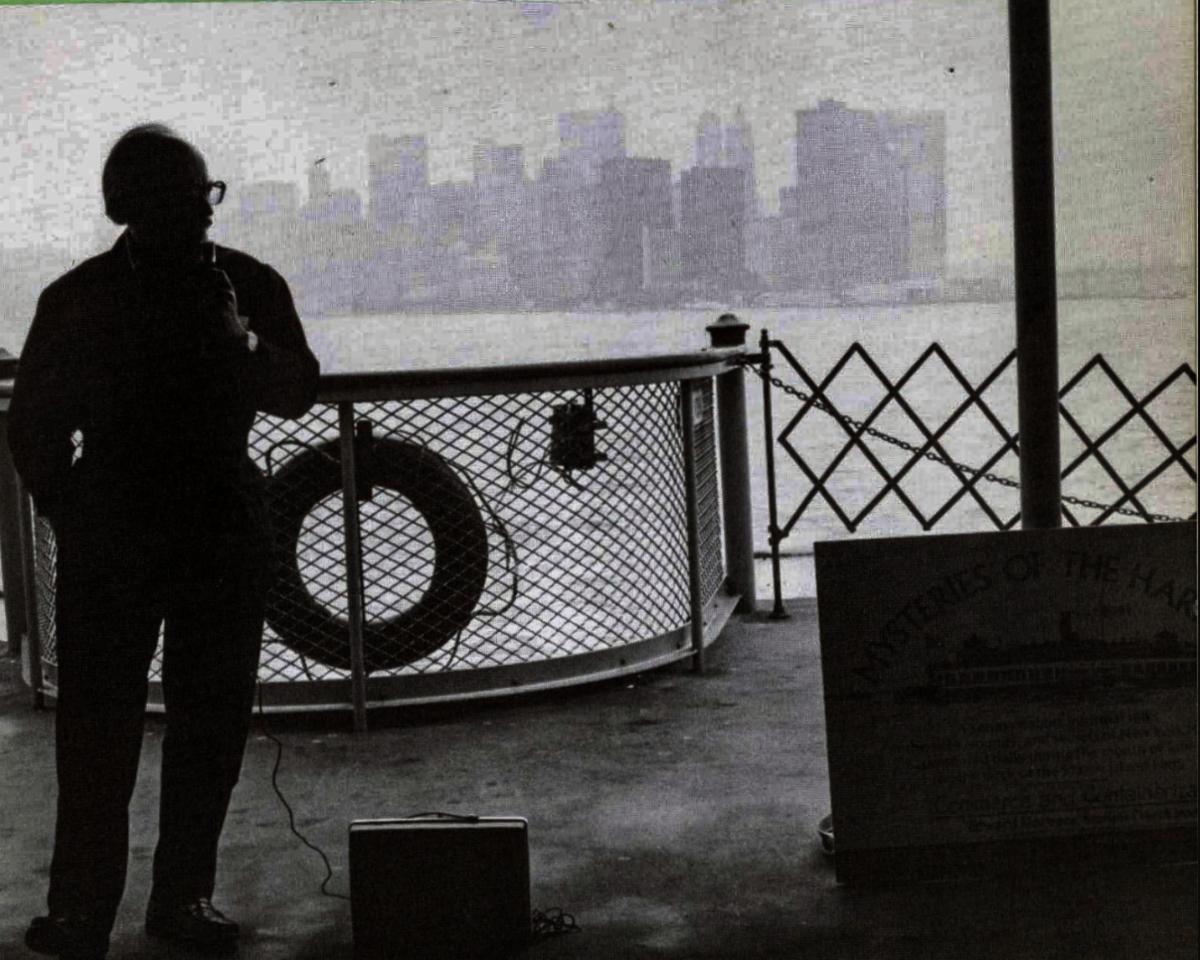
50 years ago, SCI took the lead in reconnecting New Yorkers to their working waterfront. As shipping shifted in the 1960s–70s, SCI responded in two ways: launching cutting-edge simulators for maritime professionals (a legacy we continue today through our Center for Maritime Education) and raising public awareness through education in nautical science, maritime policy, and the arts.
In this photo, Edward Norberg, senior lecturer at SCI's Roosevelt Institute, gives a public lecture on “Commerce and Containerization” aboard what appears to be a Kennedy-class Staten Island Ferry—an innovative moment in making maritime work visible as vessels disappeared from daily city life.
| | |
Engage in the Conversation
If you received this newsletter as a forwarded email from a friend or colleague, or regularly receive our emails and would like a complimentary subscription to our print magazines, please click on the button below to complete an online subscription form.
| | | | |