Rhode Island Local Technical Assistance Program | | |
Updates from Rhode Island LTAP
- Winter Safety
- 11th Edition MUTCD Available
- Upcoming Training
- Available On-Demand Courses
| |
Rhode Island Municipal Road & Bridge Fund Program
| |
Upcoming Observances & Safety Events
- January
- National Radon Action Month
- National Passenger Safety Week
- February
- American Heart Month
- Burn Awareness Week
- March
- Vehicle Safety Recalls Week
| | |
|
Happy New Year to our Local Agencies and Partners!
It was wonderful to see so many of you in person again this past year. Whether it was your first time in a class hosted by the Rhode Island LTAP or your tenth, we thank you for joining us in 2023.
As we look forward to the rest of 2024, we want to take this opportunity to remind you that classes hosted by the Rhode Island LTAP, whether virtual or in-person, are offered to our Rhode Island municipal and tribal partners at no cost. Our goal is to help you do your job more effectively, efficiently, and equipped with the appropriate knowledge. The Rhode Island LTAP at the Rhode Island Department of Transportation sponsors these learning opportunities so that more of your budget can remain focused on the work needing to be completed in your communities.
There are great learning opportunities planned for 2024 and just a small number are listed below. Is there a specific training that your local road agency needs? Complete the RI LTAP Training and Technical Assistance Request Form and email it to dot.RILTAP@dot.ri.gov.
Remember too that the handheld sign retroreflectometer is now available for loan. You can sign up to borrow the equipment using the Retroreflectometer Online Request Form.
Thank you to each of you for your commitment to improving our local road network, reducing collisions and fatalities, and protecting our vulnerable road users. Your work is one of the biggest assets to each and every one of our Rhode Island communities.
Cheers to the New Year ahead and may our collective efforts full of collaboration and growth lead to unparalleled accomplishments!
| | | | Updates From Rhode Island LTAP | |
|
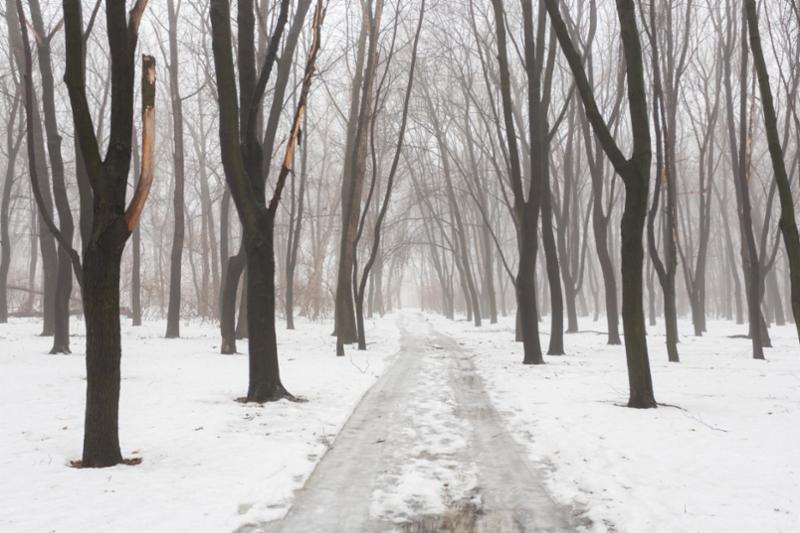
During the winter, bad weather including snow, sleet, slush, freezing temperatures, and even heavy rain can present challenges. Slippery roads, sidewalks, other surfaces, and winds can create hazardous conditions both on and off the roadway. Just as it is during the heat of the summer, it is imperative that everyone recognizes the dangerousness of winter weather and takes precautions to prevent injuries, illnesses, and fatalities.
Make sure your vehicle has an emergency kit including:
- First aid kit
- Portable phone charger
- Extra clothing including hat, coat, mittens, blankets
- Consider keeping a complete change of clothes including underwear if you will be working outdoors
- Windshield scraper
- Flashlight with extra batteries
- Water and non-perishable food (i.e., granola, food bars, crackers/pretzels, Gatorade powder, honey)
- Small shovel
- Cat litter or sand to help move tires on ice and/or road salt to melt ice
- Hazard sign or other reflective materials
- Jumper cables
Hypothermia and Frostbite
Know the signs of and treatments for cold-related illnesses such as hypothermia and frostbite. Both hypothermia and frostbite require medical care.
Hypothermia happens when your body temperature gets lower than what is needed to be healthy and work properly. If you notice any of the below signs, take the person's temperature and if it is below 95℉, get medical attention immediately!
Hypothermia can cause:
- Shivering
- Exhaustion
- Confusion
- Fumbling hands
- Drowsiness
- Memory loss
- Slurred speech
Frostbite happens when skin tissue is damaged from freezing temperatures. If you see signs of hypothermia or frostbite, get to a warm room and call for medical help.
Frostbite usually happens on:
- Nose
- Ears
- Cheeks
- Chin
- Fingers
- Toes
Symptoms include:
- Loss of feeling and
- Loss of color (white or grayish-yellow skin)
Find more information about the signs, symptoms, and first aid for hypothermia and frostbite by visiting the CDC's Prevent Hypothermia & Frostbite page and check out the RI LTAP's Cold Stress Everyday Safety Talk.
1. U.S. Department of Labor
2. Rhode Island Department of Health
| | | |
|
Manual on Uniform Traffic Control Devices (MUTCD)
New 11th Edition Available
| |
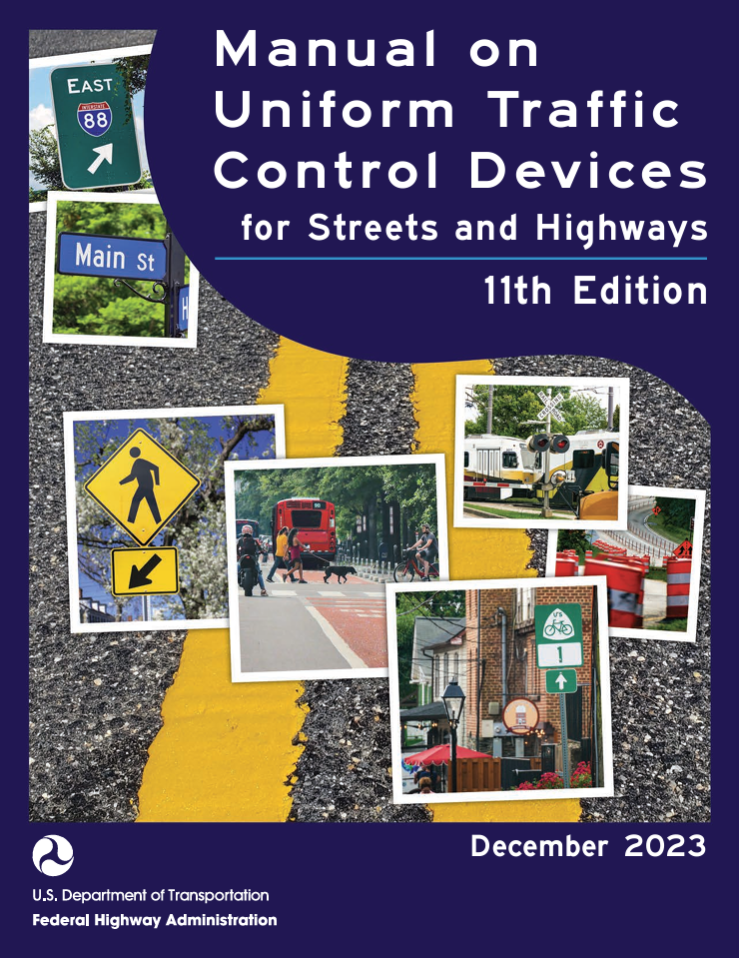
The newest 11th Edition of the Manual on Uniform Traffic Control Devices (MUTCD) is now available. On December 19, 2023, the final rule adopting the 11th Edition of the MUTCD was published in the Federal Register. This newest edition includes updates to improve safety for pedestrians, bicyclists, and all road users as well as help drivers find EV charging stations and encourage new innovations to improve travel.
Supplementary documents that detail the new content of the 11th Edition of the MUTCD, dated December 2023, and how the contents differs from the previous version (September 2009 Edition with August 2022 updates) can be found in the Rulemaking Docket. The Federal Register notice provides additional detailed information about the major changes from the 2009 Edition.
The 11th Edition of the MUTCD can be viewed in its entirety in PDF format on the Federal Highway Administration's website by going to the 11th Edition of the MUTCD, December 2023 page.
1. Federal Highway Administration
2. National Archives
| | | |
|
Upcoming Training
Seats are now available to our municipal partners for the below Winter 2024 classes. These live classes are a mix of in-person and virtual.
To enroll in any of these courses or if you have questions, please contact the Rhode Island LTAP at dot.RILTAP@dot.ri.gov. Be sure to include the participant's name, email address, and job title.
Is there a training or technical assistance you're interested in, but haven't seen advertised? RI municipalities can now request training and/or technical assistance through Rhode Island LTAP. Just complete this Request Form and email it to us.
| | | | | Customer Service
Virtual
Fridays
January 5, 12, 19, 26, &
February 2, 2024
9 am - 12 pm | Dealing with
Challenging People
- Lunch & Learn -
Virtual
Wed., February 14, 2024
12 pm - 1 pm | CPR & First Aid
In-Person
Date Pending
8 am - 12 pm | | Environmental Factors in
Construction and
Maintenance
In-Person
March 5 - 6, 2024
8 am - 4 pm | Conflict Management
for Employees
- Lunch & Learn -
Virtual
Wed., March 13, 2024
12 pm - 1 pm | Bridge Management
Systems (BMS) Workshop
In-Person
March 26 - 28, 2024
8 am - 4 pm | | Conflict Management
for Managers
- Lunch & Learn -
Virtual
Wed., April 10, 2024
12 pm -1 pm | Flagger
In-Person
Wed., April 17, 2024
8 am - 12 pm | Plan Reading
In-Person
Date Pending | | |
|
Available On-Demand Courses
There are currently over 460 courses available for our Rhode Island LTAP partners in the RI Learning Center, the State's Online Learning Management System. See the list below for a sampling of new courses!
If you are interested in viewing these or other available on-demand courses in the RI Learning Center, and you are a Rhode Island municipal employee or elected official, or are an FHWA employee contact us at dot.RILTAP@dot.ri.gov to set up an account.
- Everyday Safety Talks (Tailgate Talks)
- Implicit Bias
- Ethics Awareness for the Transportation Industry
- Stormwater One: Awareness
- AASHTO Technical Training Solutions - SICOP - Winter Operations
- Anti-Icing/RWIS: Introduction to Anti-icing and Winter Maintenance
- Anti-icing/RWIS: Winter Road Maintenance Management
- Anti-icing/RWIS: Winter Roadway Hazards & the Principles of Overcoming Them
- Anti-icing/RWIS: Weather Basics
- Anti-Icing/RWIS: Weather & Roadway Monitoring for Anti-icing Decisions
- Anti-Icing/RWIS: Computer Access to Road Weather Information
- Blowing Snow Mitigation
- Equipment Maintenance
- Performance Measures for Snow and Ice Control Operation
- Proper Plowing Techniques
| | | |
Rhode Island Municipal Road & Bridge Fund
Program Update
| | |
The program provides funding to municipalities for repairs and rehabilitation to municipally owned roads, sidewalks, and bridges. To be considered for funding, infrastructure must be already existing on a local public way and bridges must be on the State Bridge Inventory.
All 39 municipalities are participating, with 622 individual projects approved by RIDOT in the program. These projects include sidewalk repairs, mill and overlays, chip/crack seals, regraveling, and full roadway reclamation.
When the program was enacted, it included $20 million of state funding leveraged against $40 million from municipalities for a total of $60 million. As the program got underway, municipalities increased their match amounts to stretch the program even further than originally anticipated, resulting in approximately $74 million in total planned expenditures.
Through December of 2023, the program has signed agreements and issued state purchase orders with 25 municipalities. These agreements allow projects and reimbursements to commence as soon as the municipality is ready. Several projects were completed in late fall/early winter, representing repairs to 37 lane miles of locally maintained roadway. Reimbursements checks are already flowing back to cities and towns, including approximately $600,000 during the last quarter.
| | | Upcoming Observances & Safety Events | | |
| National Radon Action Month | |
January is designated by the Environmental Protection Agency (EPA) as National Radon Action Month with the goal to raise awareness of and ways to take action against radon.
Radon cannot be seen, smelled, or tasted, but it could still be present at dangerous levels in homes, schools, and other buildings. According to multiple studies, radon is the leading cause of lung cancer deaths among non-smokers in the United States. It claims approximately 21,000 Americans annually. Exposure is preventable and radon testing and any required fixes can help prevent exposure. All are urged to check their homes, schools, and other buildings for radon.
What can you do during radon action month? You can:
- Test your home, request your schools and workplace be tested
- Spread information about radon risks and ways to prevent exposure
- Encourage others to learn about radon and radon testing
For more information, see the resources below.
Excerpts from: U.S. EPA and NACCHO
| |
Learn More
.
United States Environmental Protection Agency (EPA)
.
National Association of County and City Health Officials (NACCHO)
| | | | | |
National Passenger Safety Week
January 21 - 27, 2024
| |
Beginning in 2023, the National Highway Traffic Safety Association (NHTSA) added National Passenger Safety Week to its national campaign calendar. The week-long campaign is now an ongoing event recognized during the last week of January. National Passenger Safety Week focuses on empowering passengers to speak up for their safety.
Roadway fatalities are rising at an alarming rate. Preliminary estimates released this fall estimate that Rhode Island experienced an almost 50% increase in collision fatalities through September 2023 compared to the first nine months of 2022. On average, 30-40% of Rhode Island’s traffic fatalities are the result of an impaired driver. Just telling people to drive safely is not enough. More needs to be done, and we can do more.
The goal of National Passenger Safety Week is to focus on passengers, not just the drivers. Passengers must be empowered to speak up, have courage to step in, and to play a more active role in their own safety as well as the safety of others when endangered by a reckless driver.
Each of us has a choice. By speaking up, passengers show they care about the lives of their families, friends, and strangers. During National Passenger Safety Week everyone is reminded to choose safety by intervening.
For more information, see the resources below.
| |
Learn More
.
National Center for Rural Road Safety
.
Rhode Island Department of Transportation
|
Additional January Observances
- Home Office Safety and Security Week
- January 8 - 14, 2023
| | | | | |
February is American Heart Month and it serves as a time to pay extra attention to understanding, preventing, and treating heart disease. American Heart Month reinforces the importance of heart health as well as the need for additional research. Heart disease is the leading cause of death in the United States, but a lot can be done to protect the heart.
Heart disease, in most cases, is preventable with the adoption of a healthy lifestyle. This includes maintaining a healthy weight, eating healthier foods, getting enough physical activity and sleep, controlling cholesterol and blood sugar, not smoking, treating high blood pressure, and reducing stress. Focusing on your heart health can help you avoid severe illness. When you take care of your heart, it can also serve as an example to those around you, encouraging them to do the same.
For more information, see the resources below.
Excerpt from: American Heart Association
| |
Learn More
.
American Heart Association
.
National Heart, Lung, and Blood Institute
| | | |
| |
Burn Awareness Week
February 4 - 10, 2024
| |
National Burn Awareness Week, observed during the first full week of February, is an opportunity to share burn awareness and prevention messages in the community. This year, National Burn Awareness Week is observed February 4-10.
According to the National Burn Association, most fire-related injuries are burns, and approximately every 60 seconds someone in the United States sustains a burn injury serious enough to require treatment. This year, spread awareness during National Burn Awareness Week to prevent flammable liquid burn injuries. Visit the American Burn Association’s National Burn Awareness web page for burn prevention fact sheets, graphics, and proclamations.
For more information, see the resources below.
Excerpt from: American Burn Association and International Association of Firefighters
| |
Learn More
.
American Burn Association
National Fire Protection Association
International Association of Fire Fighters
| | | | | |
Vehicle Safety Recalls Week
March 4 - 10, 2024
| |
Vehicle Safety Recalls Week focuses on the importance of checking for recalls and getting any recalls that have not ben addressed, fixed immediately. Because hundreds of recalls are issued each year, it’s important to check for open recalls at least twice per year on personal as well as fleet vehicles. Some recalls are updated to a more significant status such as being upgraded to a “Do Not Drive” warning.
How can you check for recalls on your personal or fleet vehicles?
1. Locate the Vehicle Identification Number (VIN)
- Look for the 17-character VIN on the lower left of your car's windshield, or on the label inside your driver side doorjamb; You may also review your vehicle’s registration or car insurance documents to locate your VIN
2. Search NHTSA
3. Follow steps in an open recall
- If there is an open recall, it’s critical to immediately get the vehicle repaired at a local dealership; Remember these repairs are free so be sure to follow all steps in the open recall.
In addition to checking for vehicle recalls, it’s also important to check for other vehicle-related equipment recalls such as tires or car seats at NHTSA.gov/Recalls. If any vehicle-related items are recalled, the manufacturer is required to fix the issue through repair, replacement, or refund. National
For more information, see the resources below.
Excerpt from: NHTSA and NSC
| |
Learn More
.
National Traffic Highway Safety Administration (NHTSA)
National Safety Council (NSC)
|
Additional March Observances
- Brain Injury Awareness Month
- Flood Safety Month
- National Ergonomics Month
- Workplace Eye Wellness Month
- National Drug and Alcohol Facts Week
- March 18 - 24, 2024
- National Poison Prevention Week
- March 18 - 22, 2024
- National Cleaning Month
- March 24 - 30, 2024
| | | | | |