End of Summer Announcements | | |
Partners, colleagues, and friends,
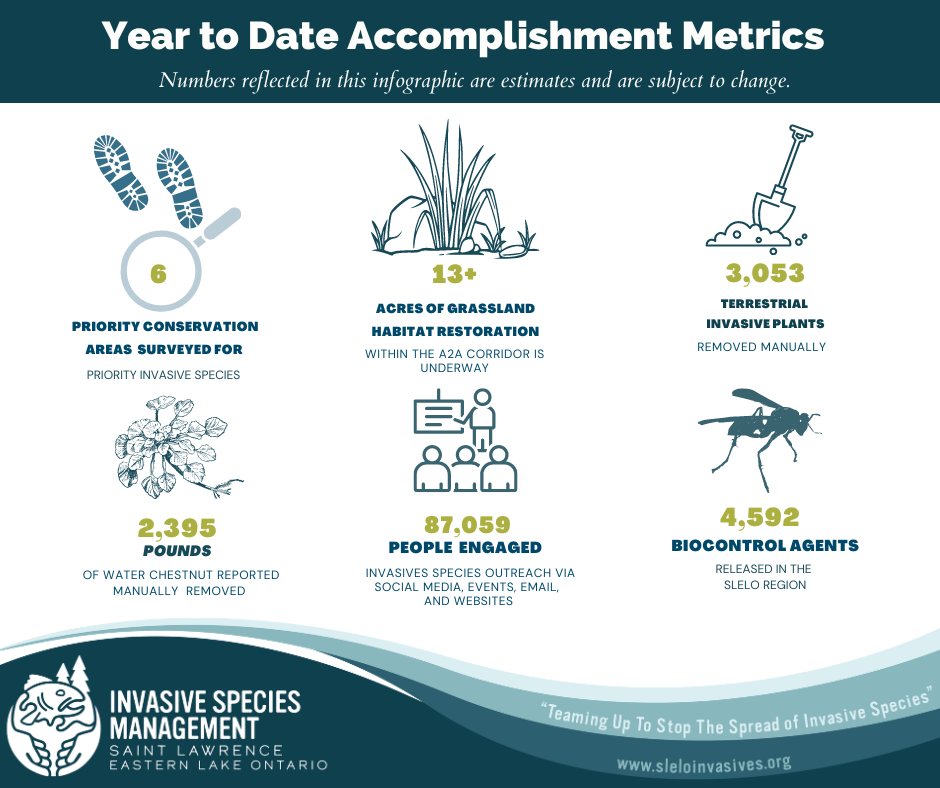
It’s been a very productive season with multiple conservation projects underway. Aside from dodging high water levels, monsoons, and humidity, our team has been engrossed in delivering programs and projects designed to lessen the impacts of invasive species. We’ve been busy with everything from conducting early detection surveys and releasing biocontrols to planning ecological restoration initiatives and engaging with the public. We have also had many volunteers aiding with biocontrol monitoring (Hypena moths and parasitoid wasps), and invasive plant removal efforts. Kudos to everyone who has volunteered this field season, your efforts help create more resilient lands and waters. As you read through Team SLELO’s brief updates below, please be assured that there is much more taking place—all of which serves to benefit people and nature!
~Rob Williams
SLELO PRISM Director
| | |
Calling All Partners!
The next SLELO PRISM Partner Meeting is scheduled for October 16th. This will be an in-person opportunity to exchange updates and progress on the invasive species and conservation front. Mark Your Calendars! Location TBD. Reach out to rwilliams@tnc.org for details.
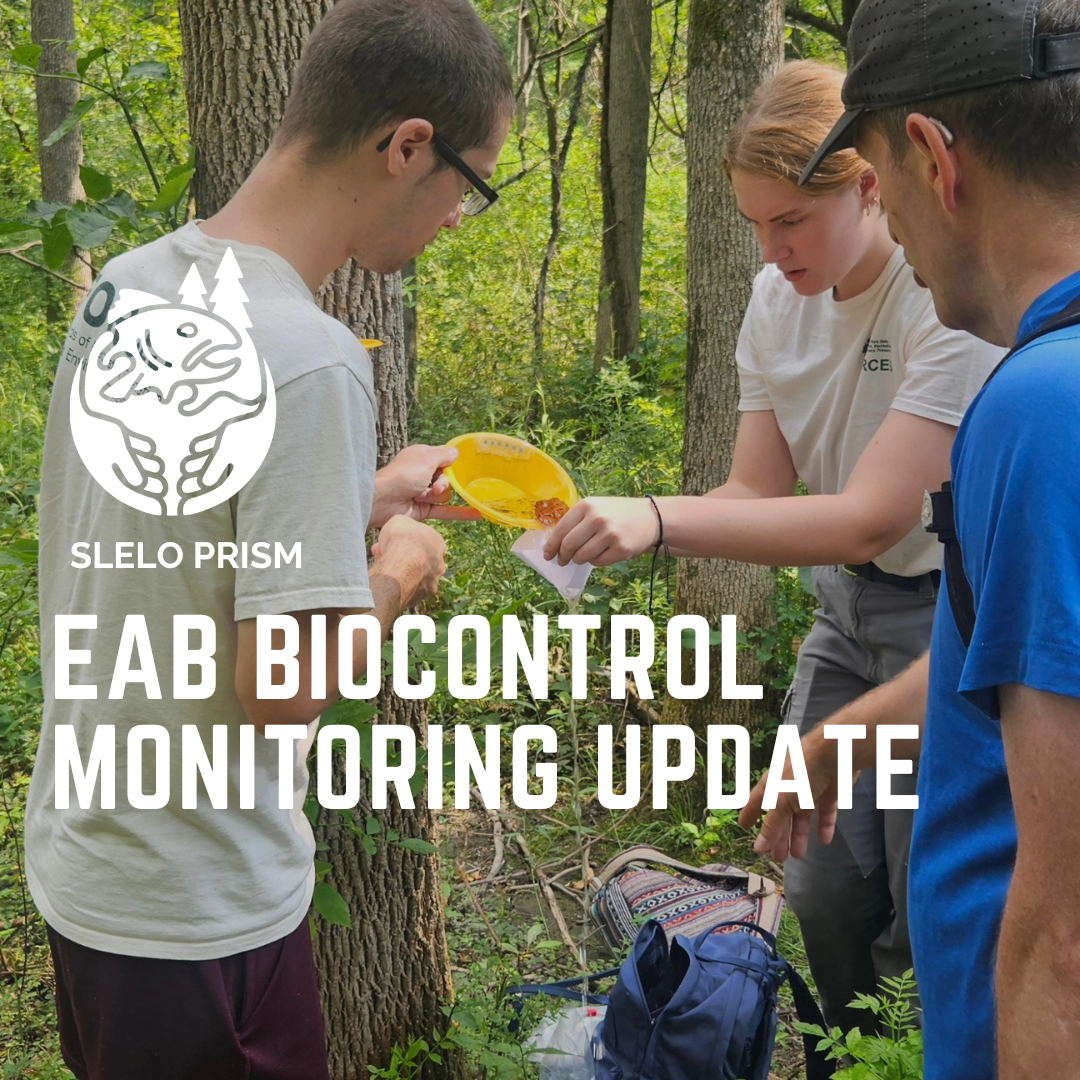
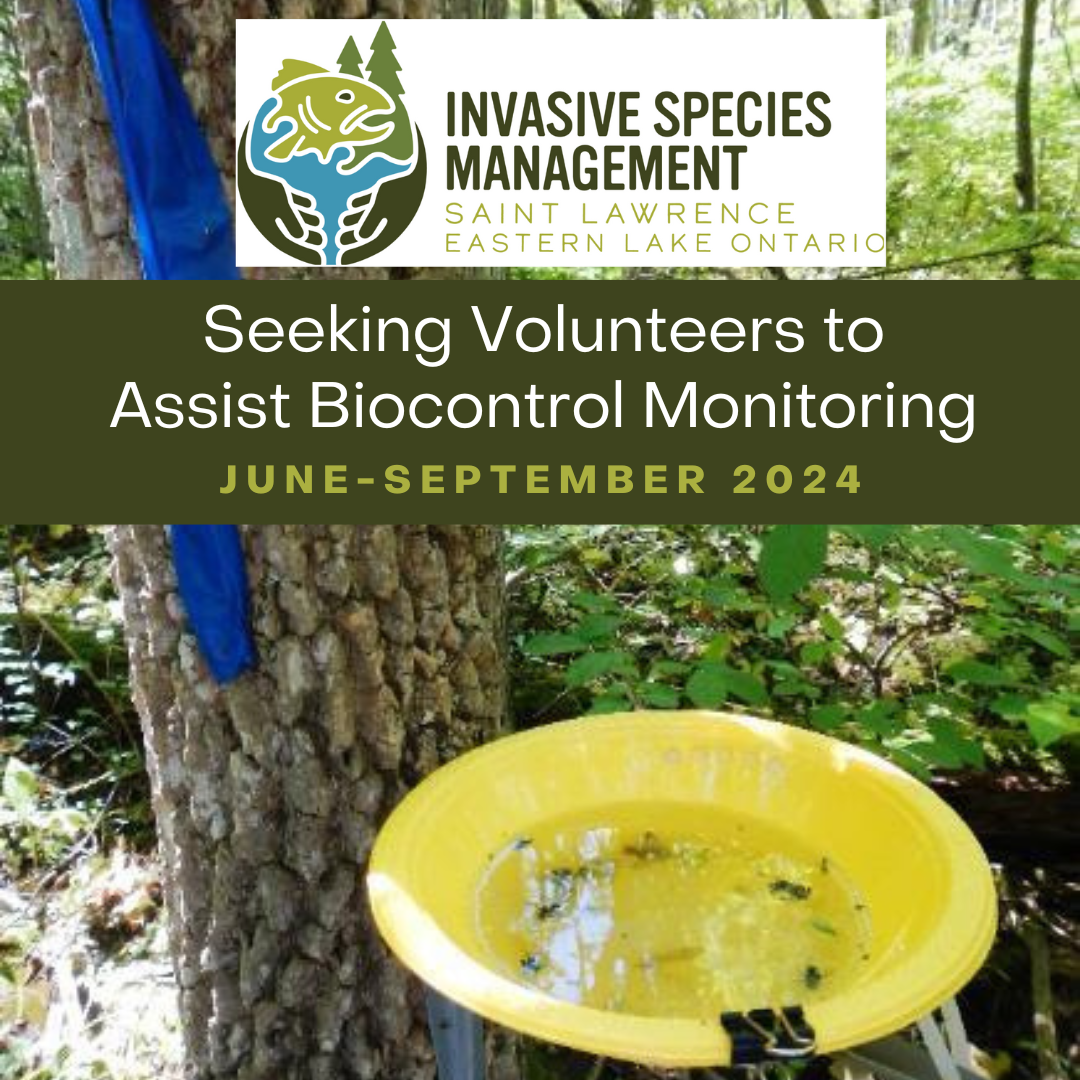
| | | | What's in Those Pan Traps? | This summer, volunteers joined team SLELO to assist with the deployment and weekly monitoring of yellow pan traps designed to determine if three parasitoid wasps (Oobius agrili, Spathius galinae, and Tetrastichus planipennisi) have become established at release sites. These wasps have been deployed as part of an effort to naturally suppress populations of the invasive emerald ash borer. | | Each week, insects caught in the pan traps are collected and brought to a lab at SUNY Oswego Rice Creek Field Station, where volunteers use microscopes to view the specimens. Any insects suspected to be parasitoid wasps are placed in a vial and sent monthly to a USDA lab in Massachusetts for verification. So far, we have found 54 insects that we believe to be EAB parasitoid wasps. The monitoring project will continue weekly through September 25th and will start again in June of next year. Sign up to join us! | | | | |
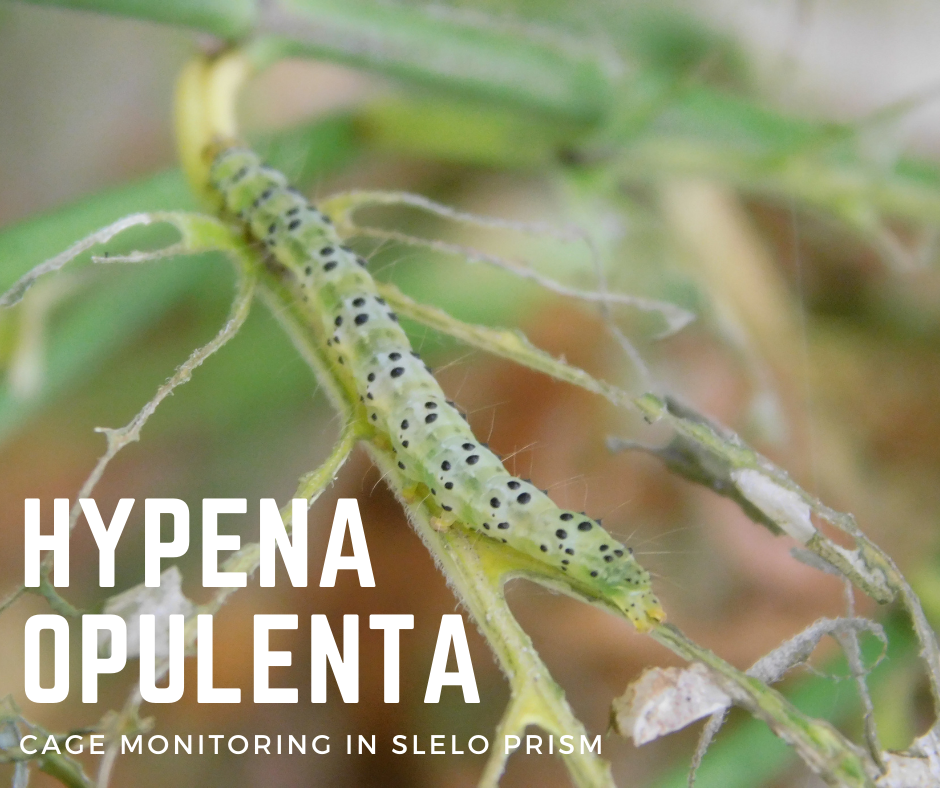
This year, we again released Hypena opulenta moths at Grenadier Island and Wehle State Park. We observed excellent emergence this year and are considering new release sites for 2025.
| | |
Two cages were set up at each site on May 20th; on May 28th, 75 adults and 75 pupae were placed in the cages at each site. The cages are used to increase and monitor the mating success of Hypena moths. A total of 325 larvae were placed about 10 feet from the cages at each site. Cages are monitored weekly for the presence and quantity of larvae produced.
We've learned that heavy shade is key to successful emergence, as cages placed in open fields in the past have resulted in low or no larvae production. Currently, all four cages are placed in high-shade areas; three are in forested areas and one is in a field under a tree with wide low branches.
One cage at Wehle State Park and one cage at Grenadier Island were removed after the 1st generation of larvae defoliated 85% and 90% of the swallowwort foliage respectively. The other two cages produced lower numbers of larvae and were kept up to give time for a second generation of larvae to be produced. These cages were removed in August with 100% defoliation in the cage on Grenadier Island and 30% defoliation in the cage at Wehle State Park. The establishment of Hypena moths is still being determined by trail surveys conducted by Wehle Park Staff and SLELO PRISM at Wehle State Park, and volunteer surveys by residents on Grenadier Island. Learn more about our biocontrol efforts.
| | | | |
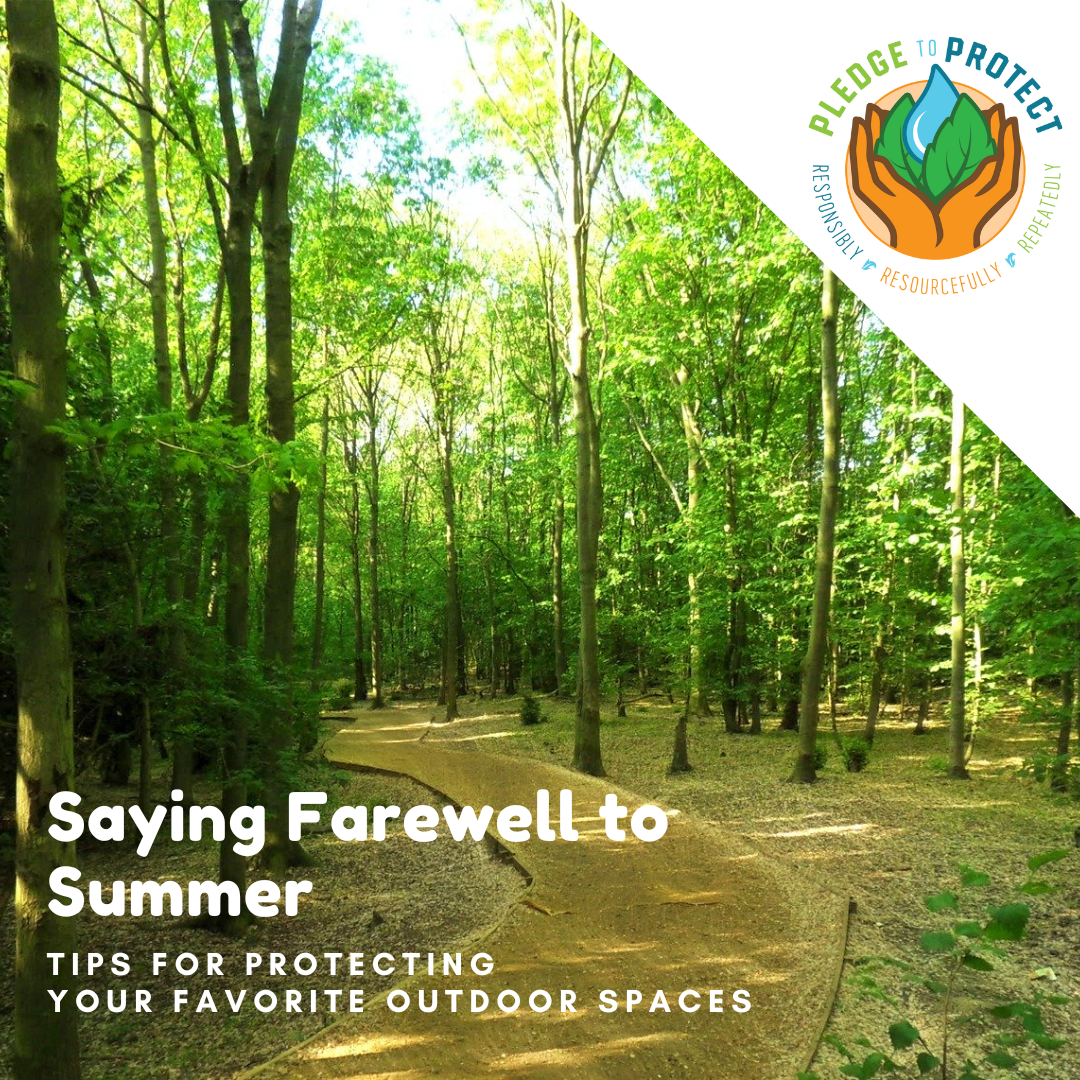
As summer draws to a close, it’s the perfect time to reflect on the wonderful memories made in your favorite outdoor spaces and to take action to protect them for future enjoyment. Whether you’re a gardener, hiker, or boater, check out our latest Protector's Blog. This issue provides practical tips for safeguarding your beloved natural areas from invasive species like jumping worms (Amynthas spp.), and the longhorned beetle (Anoplophora glabripennis). It's also packed with resources and tools to support your conservation efforts!
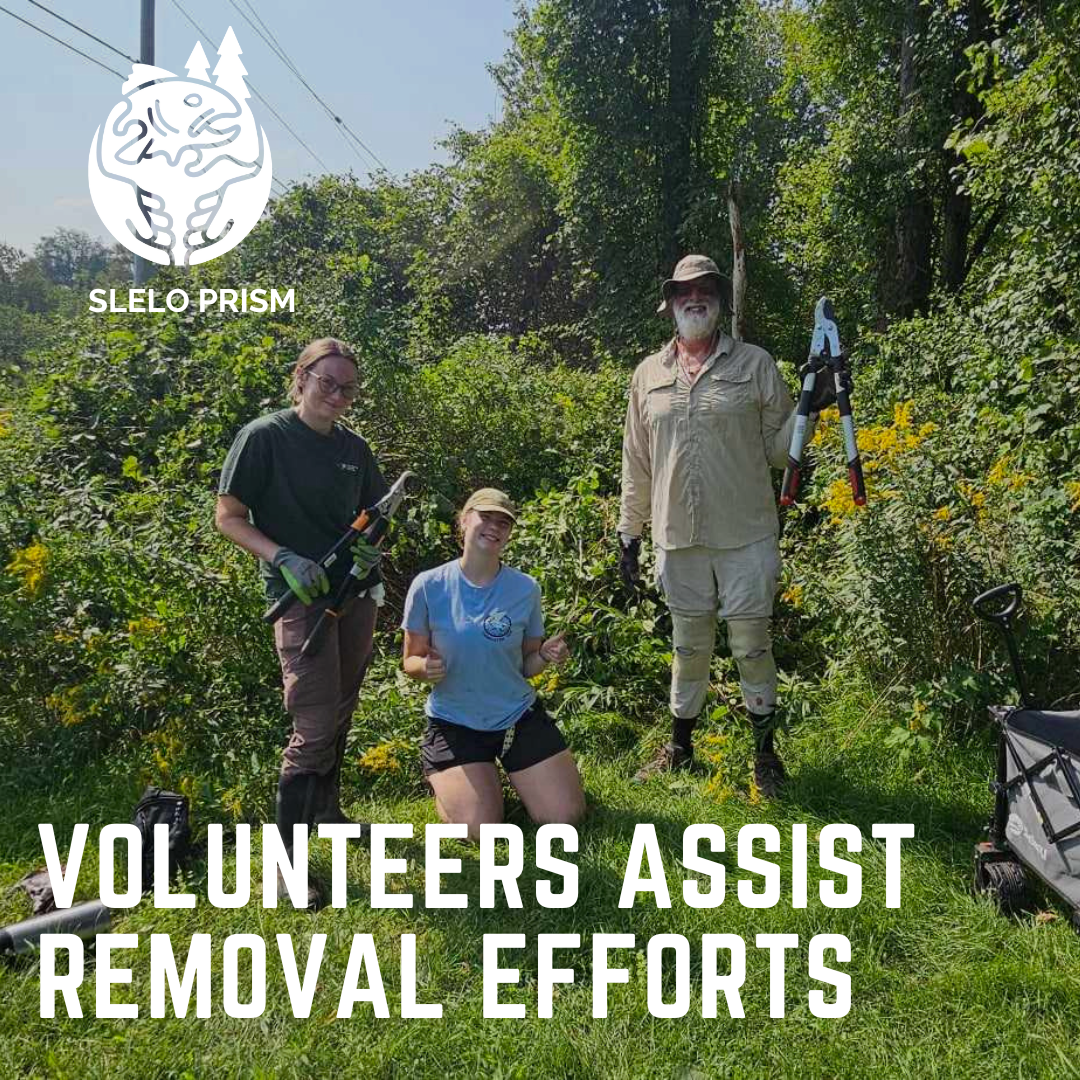
| | | | Let's give a huge shout-out to all the volunteers and Student Conservation Association members with Parks who helped remove invasive species this field season! Together we removed 2,365 pale swallow-wort stems, 688 yellow iris stems/rhizomes, 290 pounds of water chestnut, and cut back small populations of invasive bittersweet (Celastrus orbiculatus)! These manual efforts help to protect important habitats in our region while reducing the use of chemical treatments. If you'd like to join these efforts, sign up to become one of our volunteers and you'll be invited to join us as opportunities arise! Sign up to be a volunteer on our website. | | | | |
Protect Waters
This opportunity is best for those who enjoy spending time on the water or who own waterfront property. Participants adopt a waterbody to monitor for the presence of aquatic invasive species and report observations to NYiMapInvasives. Training and resources are available.
Learn More
| | | | |
Protect Lands
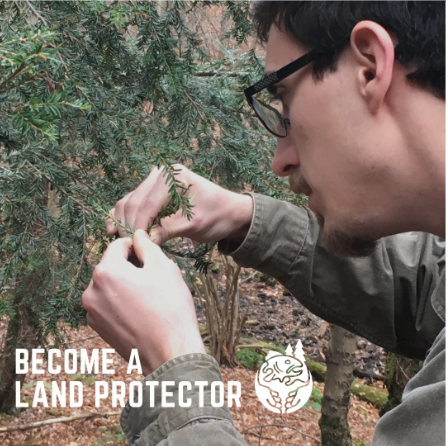
This opportunity is best for those who enjoy hiking, and spending time in forests or who own land. Participants learn to recognize and report priority invasive species to NYiMapInvasives, and survey their favorite hiking trails and forested areas. Training and resources are available.
Learn More
| | | | Assist Biocontrol Monitoring | |
Assist an emerald ash borer biocontrol monitoring program occurring on Wednesdays at 10 AM now through September, 25th at the SUNY Oswego Rice Creek Field Station. No experience is necessary, and guidance will be given.
Volunteer With Us!
| | | | |
Learn of events and volunteer opportunities hosted by our partners as well as SLELO offerings. Win prizes by participating!
- Saturday, September 28th, 8:30 AM-4 PM: Salmon River Fish Hatchery Open House. A volunteer is needed to staff an info table; those interested should contact, megan.pistolese@tnc.org.
View More Opportunities
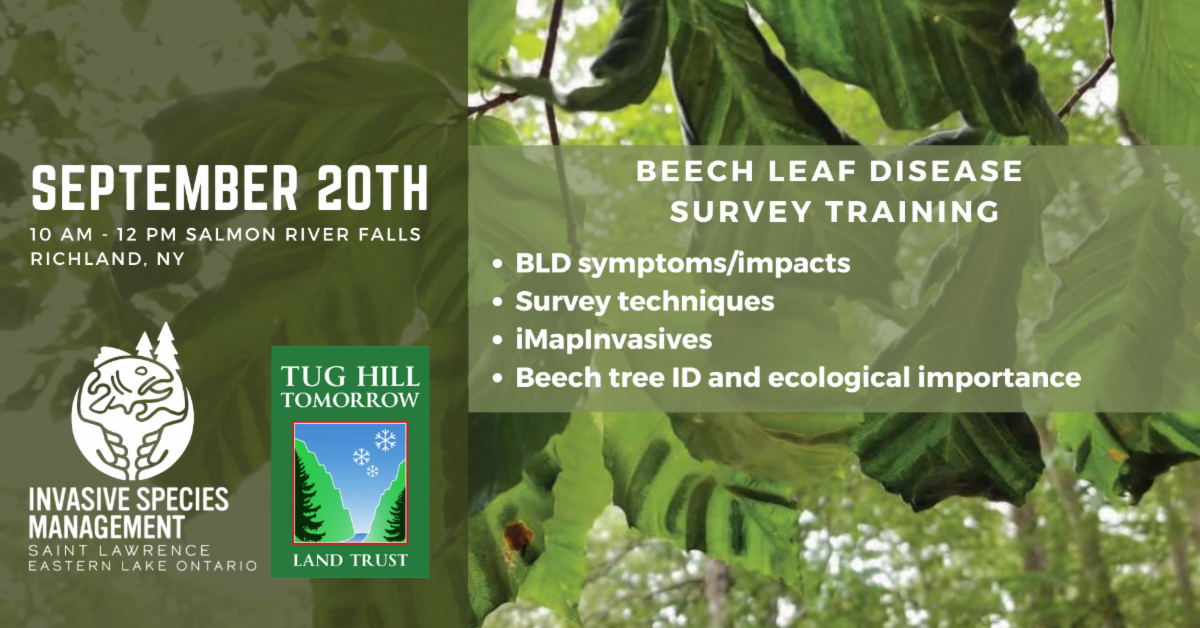
| | Join us on Friday, September 20th from 10 AM- 12 PM at the Salmon River Falls UMA for a guided beech leaf disease (BLD) survey training. Participants will learn how to survey for BLD and report observations. This event is hosted in collaboration with the Tug Hill Tomorrow Land Trust. | | The 2025 World Conference on Ecological Restoration (SER 2025) will be in Denver, Colorado from Sep. 30 – Oct. 4, 2025. The Society of Ecological Restoration (SER's) World Conference is an exciting and inspiring biennial gathering of global experts in ecological restoration making it the premier venue for those interested in being active members of the global restoration community. | | |
- The North American Invasive Species Management Association 32nd Annual Conference will be held September 30th-October 3rd, 2024, in Montana! Get Details.
| | | | |