|
Oneida, Oswego, Jefferson, Lewis, St. Lawrence Counties:
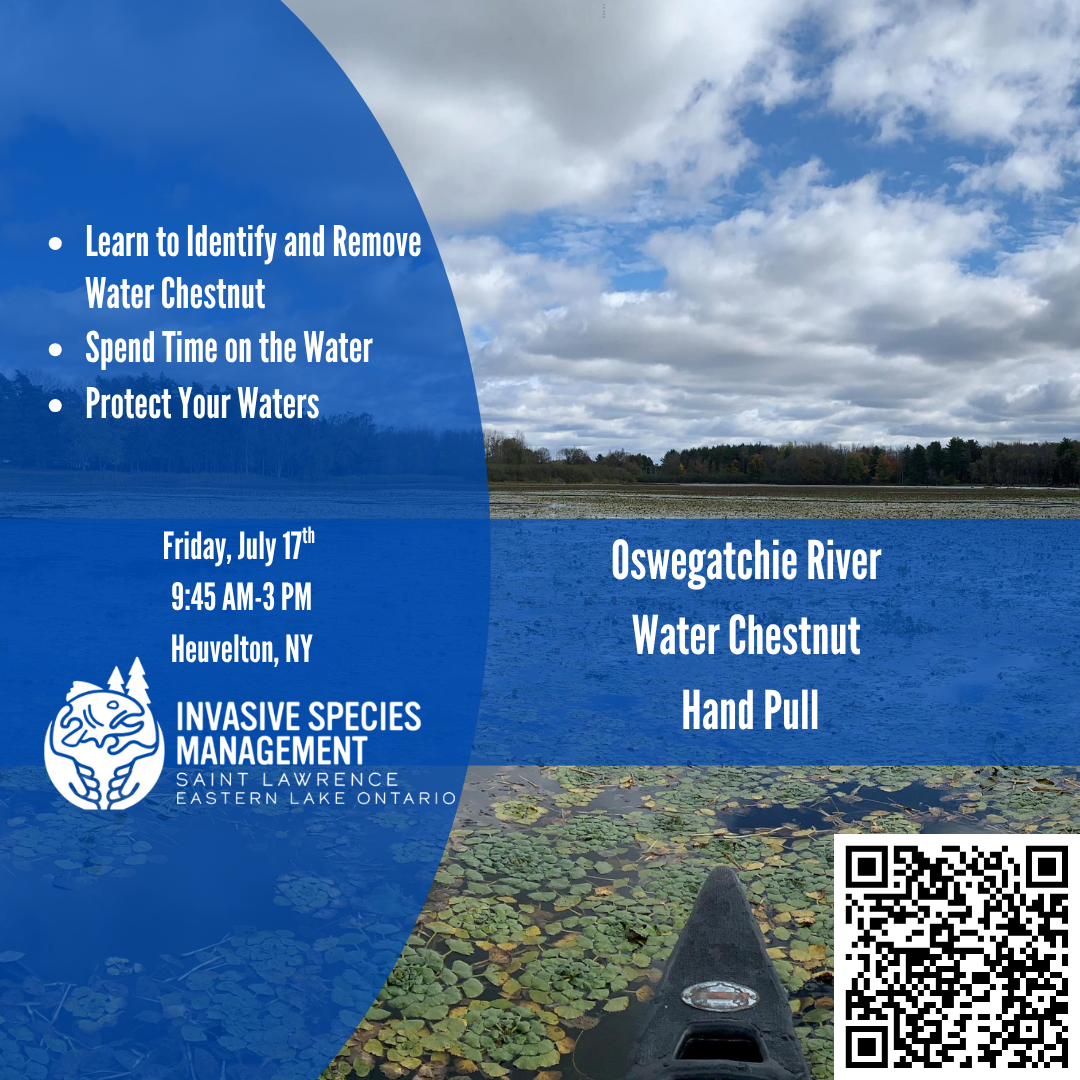
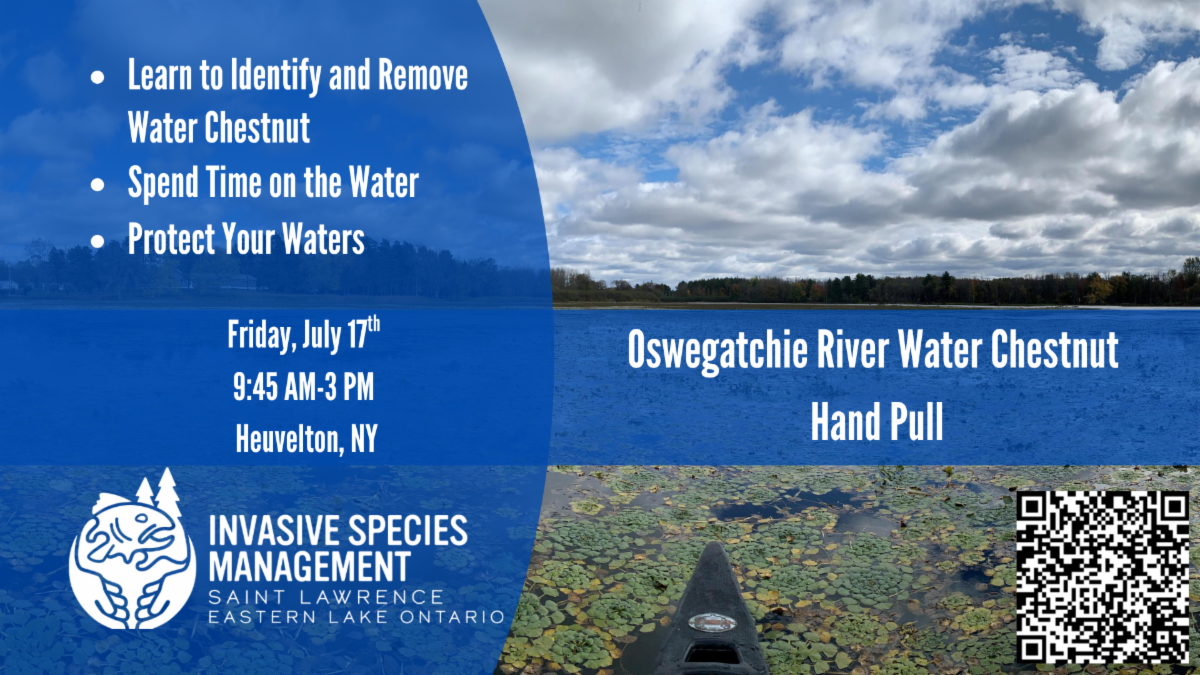
Make a difference in your community by participating in a volunteer effort to remove water chestnut from the Oswegatchie River near the Village of Heuvelton on Friday, July 17th, from 9:45 AM to 3:00 PM.
This event welcomes all participants, regardless of experience! To attend, you'll need to register, so please make sure to sign up early to secure your spot. Limited kayaks and canoe seats may be available for use upon request. Don't miss this fantastic opportunity to enjoy time on the water while contributing to the health of our environment.
Water chestnut is an invasive aquatic species with significant environmental and economic impacts. It forms thick, dense floating mats that crowd out native aquatic vegetation, restrict recreational activities, and reduce shoreline property values. It's hard, pointy seeds can puncture tires or cause injuries if stepped on. If left unmanaged, the infestation of water chestnuts in the Oswegatchie River could spread to nearby waterbodies like Black Lake.
By volunteering, you’ll help protect our beloved Oswegatchie River and its surrounding ecosystems while enjoying a rewarding and fun day outdoors!
Register today, and be part of this meaningful effort to keep our waterways thriving!
If you're interested in joining this event, please register by July 15th online at rebrand.ly/OswegatchieWaterChestnut or contact the SLELO PRISM Education and Outreach Coordinator at megan.pistolese@tnc.org, 315-522-1258. Information about this event can also be found on the SLELO PRISM website and Facebook Events page.
This effort is being supported by SLELO PRISM, The Black Lake Association, NYS Office of Parks Recreation and Historic Preservation, NYS Department of Environmental Conservation, Indian River Lakes Conservancy, Save The River, Thousand Island Land Trust, the Cornell Cooperative Extension of St. Lawrence County, Jefferson & St. Lawrence County Soil and Water Conservation Districts, the Village of Heuvelton Fire Department, the Village of Heuvelton, the City of Ogdensburg Fire & Rescue, Brookfield Energy, the town of Morristown, the Chippewa Bay Fish and Game Club, St. Lawrence Waterfowlers, St. Lawrence Valley Sportsman Club, St. Lawrence Federal Credit Union, Comprehensive Weed Control of Northern New York, and many volunteers.
|