|
Can Public Credit Schemes Improve Access to Finance for Small Businesses? Evidence from Indonesia
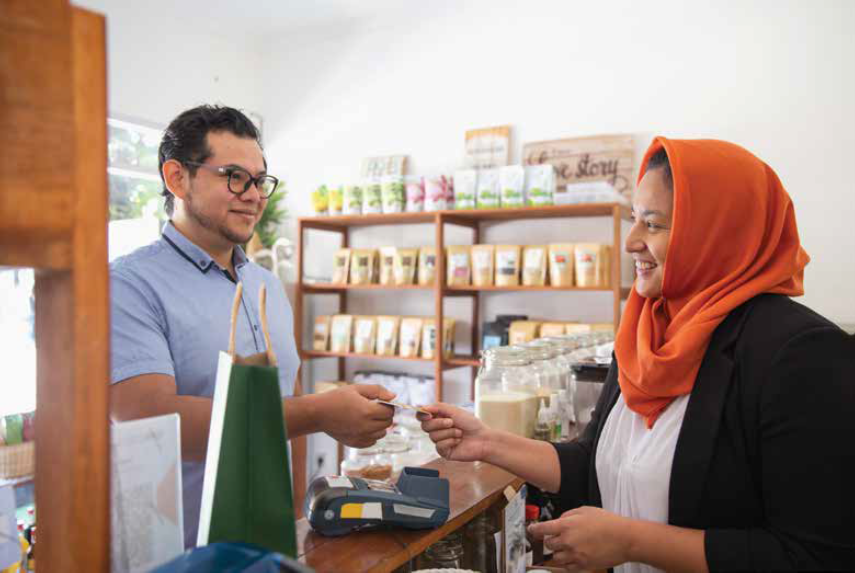
EAPGIL partnered with the Finance, Competitiveness, and Innovation Global Practice at the World Bank to study one of the world’s largest public business support programs, Indonesia's People’s Business Credit (Kredit Usaha Rakyat, KUR). The study shows that subsidized credit can enable firms to access formal credit for the first time and boost financial inclusion. However, subsidized credit does not alleviate longer-term credit constraints by serving as a stepping stone to unsubsidized commercial credit in this context. Despite targeting borrowers without collateral, in practice, borrowers were required to provide substantial collateral, limiting women’s access to the loans. Following the initial findings of the study, the government introduced policy reforms to support graduation from the program to commercial lending and to eliminate collateral requirements for the smallest loans. Consequently, women now represent approximately half of KUR borrowers, and over half of borrowers were graduating to larger KUR loans or commercial lending.
| | |
Online and On Point: How Can We Help Female Entrepreneurs in Indonesia Digitize?
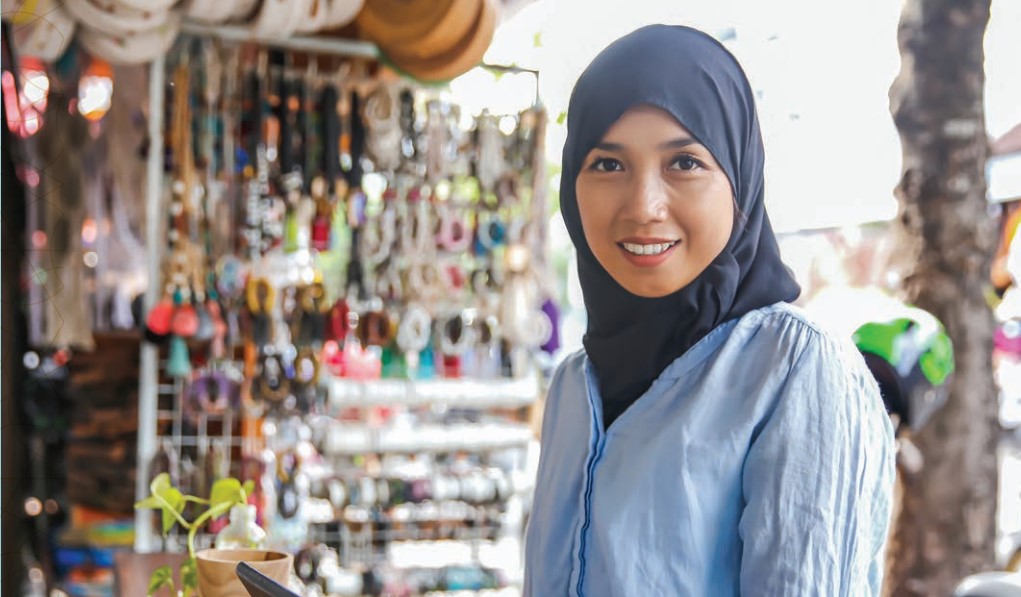
Digital technologies, such as digital payments or social media, have the potential to boost business growth. However, female entrepreneurs face barriers to digital adoption. EAPGIL partnered with the Finance, Competitiveness, and Innovation Global Practice at the World Bank and the Indonesian civil society organization Kumpul to study a program designed to help female entrepreneurs adopt digital technologies and grow their businesses. The program combined online training through self-paced modules, online group mentoring, and business-to-business connections. The program design incorporated a number of best practices, including bundling components together, adopting a funneling approach more customized support to a subset of more committed firms, and using incentives to motivate program completion. Women who enrolled in the program were using several good business practices and digital tools already. However, the intensity of digital technology adoption among the entrepreneurs varied by age, education level, business size, managerial practices, and networking. The case study sheds light on women’s experiences with the program and makes recommendations for future programs that support women in harnessing digital technologies for their businesses.
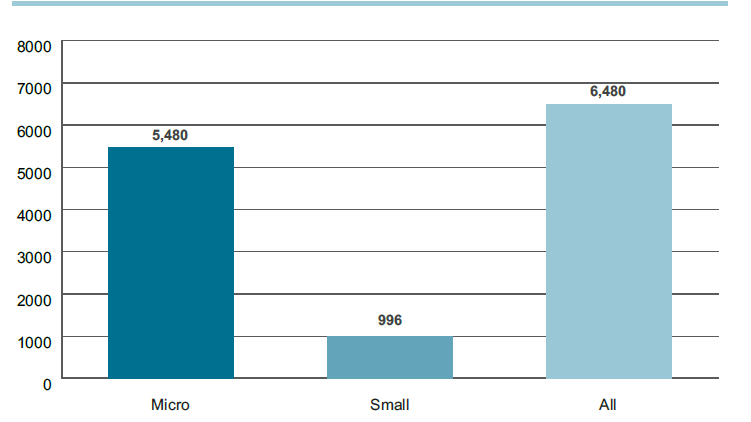
| | A joint study by EAPGIL and the Finance Competitiveness and Innovation Global Practice measured the economic cost of women’s unequal opportunities in entrepreneurship. Most of the cost is driven by gender gaps between existing men- and women-owned businesses within the same sector and size (the intensity gap), which was estimated at Rp 6.48 trillion (US$426 million) in 2015. | | |
Enterprising Women: Toward Equal Business Opportunity in Southeast Asia
Using household and firm-level data, EAPGIL quantified gender gaps in entrepreneurship in Southeast Asia and found that gender gaps vary by the scale of the enterprise. Women are as likely as men to run microbusinesses, but they earn lower profits. Women are less likely than men to own small and medium enterprises, but if they do, gender gaps in business performance are not statistically significant in most countries. The report shows that gender gaps in entrepreneurship are linked with women’s lower levels of inputs, including hired labor, time for own labor, capital, and skills. These inputs are in turn shaped by preferences and constraints that arise from gender norms, market failures, and institutions. Policies that can address these challenges are identified based on a review of global evidence.
| | |
Against the Challenges: Stories of Female Entrepreneurs in Cambodia and Vietnam
To better understand the constraints that female entrepreneurs in Southeast Asia face, EAPGIL worked with qualitative researcher and videographer, Pingann Oung, to document the stories, triumphs, and challenges women in Cambodia and Vietnam encountered in opening and running their businesses. Their stories highlight how gender norms influence women’s ability to start a business and how norms, attitudes, and stereotypes pose challenges for business growth. Despite challenges with financial management, access to loans, business registration, and taxes, the entrepreneurs demonstrate resilience, passion, and dynamism.
| | |
Can Boosting Savings and Skills Support Female Business Owners in Indonesia? Evidence from a Randomized Controlled Trial
An EAPGIL impact evaluation tested the relative effectiveness and cost-effectiveness of supply-side incentives to promote agent banking savings accounts, business and financial literacy training for female entrepreneurs, and the combination of the two in 401 villages in East Java, Indonesia. Although there were only small positive effects on women’s adoption of branchless banking services, both interventions increased women’s profits. The business training intervention increased profits by improving business practices, boosting savings, increasing business assets, and increasing women’s decision-making power.
| | |
EAPGIL Lead, Hillary Johnson, presented at several events in November, including:
- A side event for the Asia-Pacific Regional Review of Beijing+30: Feminist Finance: The Key to Unlocking Private Sector Innovation for Gender Equality
- A joint World Bank Group, Asian Development Bank, Ministry of Finance of Japan, and Japan International Cooperation Agency event: Investing in Gender Equality for a More Resilient and Dynamic Asia and the Pacific: The Role of Multilateral Development Banks and Development Partners
- A panel discussion on Low Fertility in East Asia at Georgetown University
| |
East Asia and Pacific Gender Innovation Lab wishes you a happy holiday season!
| | About East Asia and Pacific Gender Innovation Lab | | Part of the East Asia and Pacific Office of the Chief Economist, EAPGIL carries out impact evaluations and inferential research to generate evidence on what works in closing gender gaps in assets, economic opportunities, and agency, and how closing these gaps can help achieve other development outcomes. Ultimately, EAPGIL seeks to increase the welfare of women and men in East Asia and the Pacific by promoting the uptake of effective policies and programs identified based on evidence. We gratefully acknowledge funding from the Umbrella Facility for Gender Equality (UFGE) to carry out this work. EAPGIL is supported by UFGE in partnership with the Australian Department of Foreign Affairs and Trade. UFGE has received generous contributions from Australia, Canada, Denmark, Finland, Germany, Iceland, Ireland, the Netherlands, Norway, Spain, Sweden, Switzerland, the United Kingdom, the United States, the Bill and Melinda Gates Foundation, and the Wellspring Philanthropic Fund.
| | | | |