East Asia and Pacific Gender Innovation Lab | |
Why Do People Move? A Data-Driven Approach to Identifying and Predicting Gender-Specific Aspirations to Migrate
International labor migration has significant economic returns – in 2021, remittances received in the East Asia and Pacific region amounted to US$ 117.58 billion. Identifying the push and pull determinants of migration, including gender-specific factors, is important for understanding how migration can increase growth and development. However, empirical work is often constrained either by the scarcity of detailed migration data, or if data is available, by the difficulty of determining what variables to include in the analysis.
Leveraging rich household data from Indonesia, a new EAPGIL study utilizes two machine-learning models to analyze the drivers of interest in migration among Indonesian men and women. Machine learning makes it possible to select top predictors of migration without specifying a theoretical model beforehand. The Random Forest and LASSO Stability Selection algorithms used in the study determined variables with strong predictive powers common to both genders, as well as gender-specific predictors. For example, while factory worker acquaintances abroad explain interest in migration among both genders, knowing Indonesian domestic workers abroad is a predictor for women only.
Understanding the gender-specific push and pull factors may provide important information to policy makers for establishing the profile of potential migrants, thus facilitating the design and types of interventions most relevant to them.
| |
Why do Indonesian Men and Women Choose Undocumented Migration? Exploring Gender Differences in Labor Migration Patterns
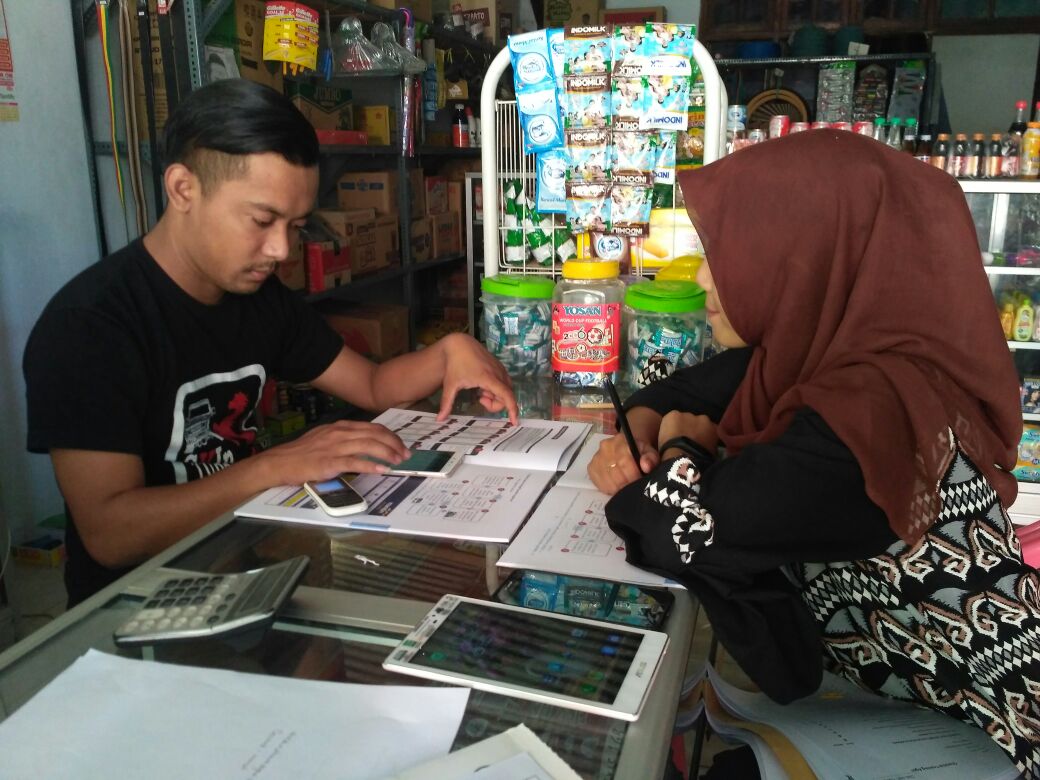
EAPGIL used rich migration data from the impact evaluation of the Indonesian government's Desmigratif project (focused on promoting documented migration) to explore why women are more likely to choose an undocumented migration route.
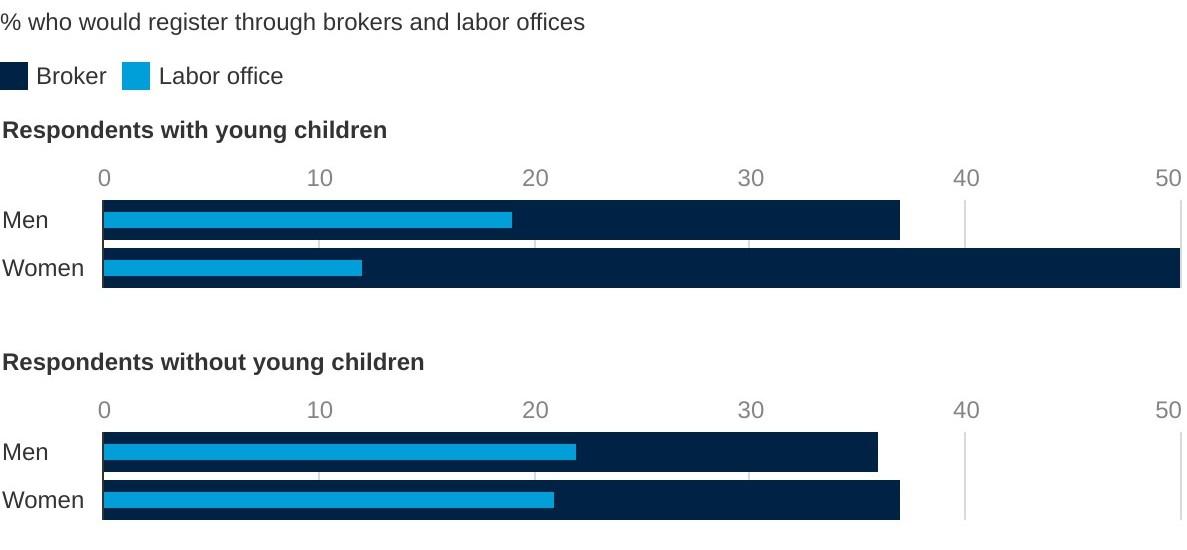
The analysis suggests that childcare responsibilities and domestic work may contribute to women’s susceptibility to undocumented migration – documented migration is a complicated and long process, which could deter time-constrained women from going through official migration channels.
EAPGIL distilled several policy implications of these findings, including (i) the need to disseminate information about migration with a gender focus, (ii) the benefits of simplifying and shortening the formal documentation process, and (iii) the importance of making information accessible through diverse channels to reach a wider audience, such as SMS campaigns and "edutainment" interventions.
| |
GRAPH OF THE MONTH:
THE UNEQUAL DISTRIBUTION OF CARE AND DOMESTIC WORK AFFECTS MIGRATION PATTERNS
| | Women are more likely to choose the undocumented migration option (broker) only when they have children | | Source: Indonesia's Safe Migration Survey (ISMS) 2018 | |
Elizaveta Perova presented EAPGIL research on the impact of childcare on firm productivity at the Gender-Sensitive Recovery and Resilience in Asia Conference organized by the Yale Economic Growth Center and the Asian Development Bank Institute. The conference took place on March 9-10, 2023 in Tokyo, Japan. Recordings are available on the event page.
| | About East Asia and Pacific Gender Innovation Lab | | Part of the East Asia and Pacific Office of the Chief Economist, EAPGIL carries out impact evaluations and inferential research to generate evidence on what works in closing gender gaps in assets, economic opportunities, and agency, and how closing these gaps can help achieve other development outcomes. Ultimately, EAPGIL seeks to increase the welfare of women and men in East Asia and the Pacific by promoting the uptake of effective policies and programs identified based on evidence. We gratefully acknowledge funding from the Umbrella Facility for Gender Equality (UFGE) to carry out this work. EAPGIL is supported by UFGE in partnership with the Australian Department of Foreign Affairs and Trade. UFGE has received generous contributions from Australia, Canada, Denmark, Finland, Germany, Iceland, Ireland, the Netherlands, Norway, Spain, Sweden, Switzerland, the United Kingdom, the United States, the Bill and Melinda Gates Foundation, and the Wellspring Philanthropic Fund.
| | |