East Asia and Pacific Gender Innovation Lab
wishes you a joyful holiday season!
| |
LATEST FROM EAPGIL:
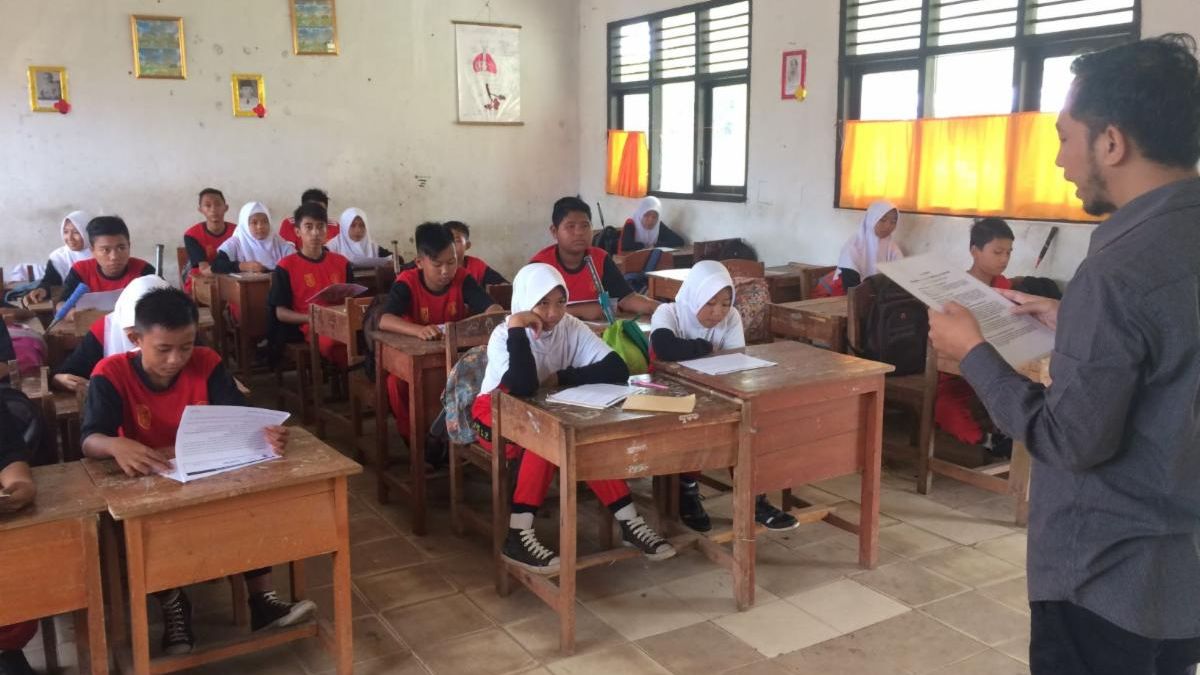
High aspirations for the future motivate youth to strive for and achieve better outcomes. However, the influence of perceived constraints on the motivational power of aspirations is unclear. Do high aspirations always motivate, or only when expected constraints seem surmountable? A new EAPGIL paper explores this question through a gender lens, using a large, cross-sectional survey of adolescent students in Indonesia.
We find key differences in boys’ and girls’ aspirations and expectations, which may affect educational attainment and performance. For example, girls have higher aspirations than boys but are less likely to expect to achieve them. Girls are also more likely to cite economic constraints to reaching their educational aspirations. Follow the link to our paper to find out more about how both male and female Indonesian students could benefit from programs that both boost aspirations and address psychological and economic constraints.
| |
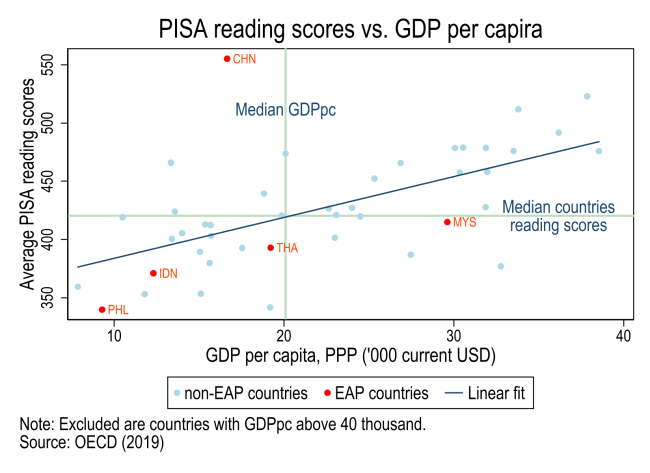
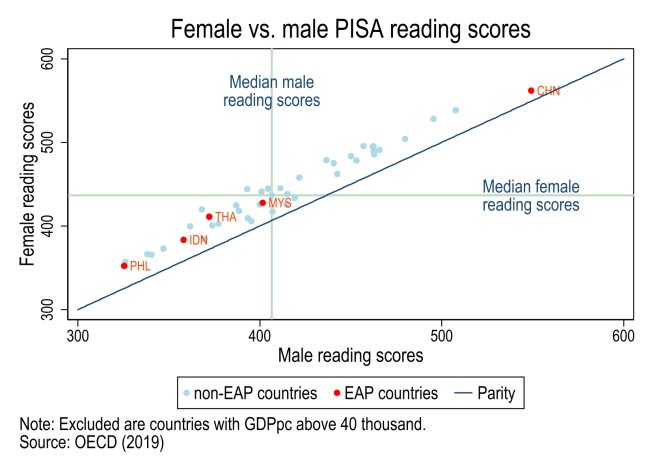
PISA (Programme for International Student Assessment) reading scores are available for 5 EAP countries: Indonesia, Malaysia, Philippines, Thailand and China. In all these countries, except for China, students’ scores are below the global median and levels expected for the countries’ GDP. However, girls outperform boys in all 5 countries.
| |
Launch event for Enterprising Women: Toward Equal Business Opportunity in Southeast Asia
| |
EAPGIL and the Office of the East Asia and Pacific Chief Economist launched the report Enterprising Women: Toward Equal Business Opportunity in Southeast Asia at a virtual event on November 29, 2022.
Visit the report page to view a recording of the event, read the report, and view a photojournalism book and a documentary film about women entrepreneurs in Cambodia and Vietnam.
| | About East Asia and Pacific Gender Innovation Lab | | Part of the East Asia and Pacific Office of the Chief Economist, EAPGIL carries out impact evaluations and inferential research to generate evidence on what works in closing gender gaps in assets, economic opportunities, and agency, and how closing these gaps can help achieve other development outcomes. Ultimately, EAPGIL seeks to increase the welfare of women and men in East Asia and the Pacific by promoting the uptake of effective policies and programs identified based on evidence. We gratefully acknowledge funding from the Umbrella Facility for Gender Equality (UFGE) to carry out this work. EAPGIL is supported by UFGE in partnership with the Australian Department of Foreign Affairs and Trade. UFGE has received generous contributions from Australia, Canada, Denmark, Finland, Germany, Iceland, Ireland, the Netherlands, Norway, Spain, Sweden, Switzerland, the United Kingdom, the United States, the Bill and Melinda Gates Foundation, and the Wellspring Philanthropic Fund.
| | |