| |
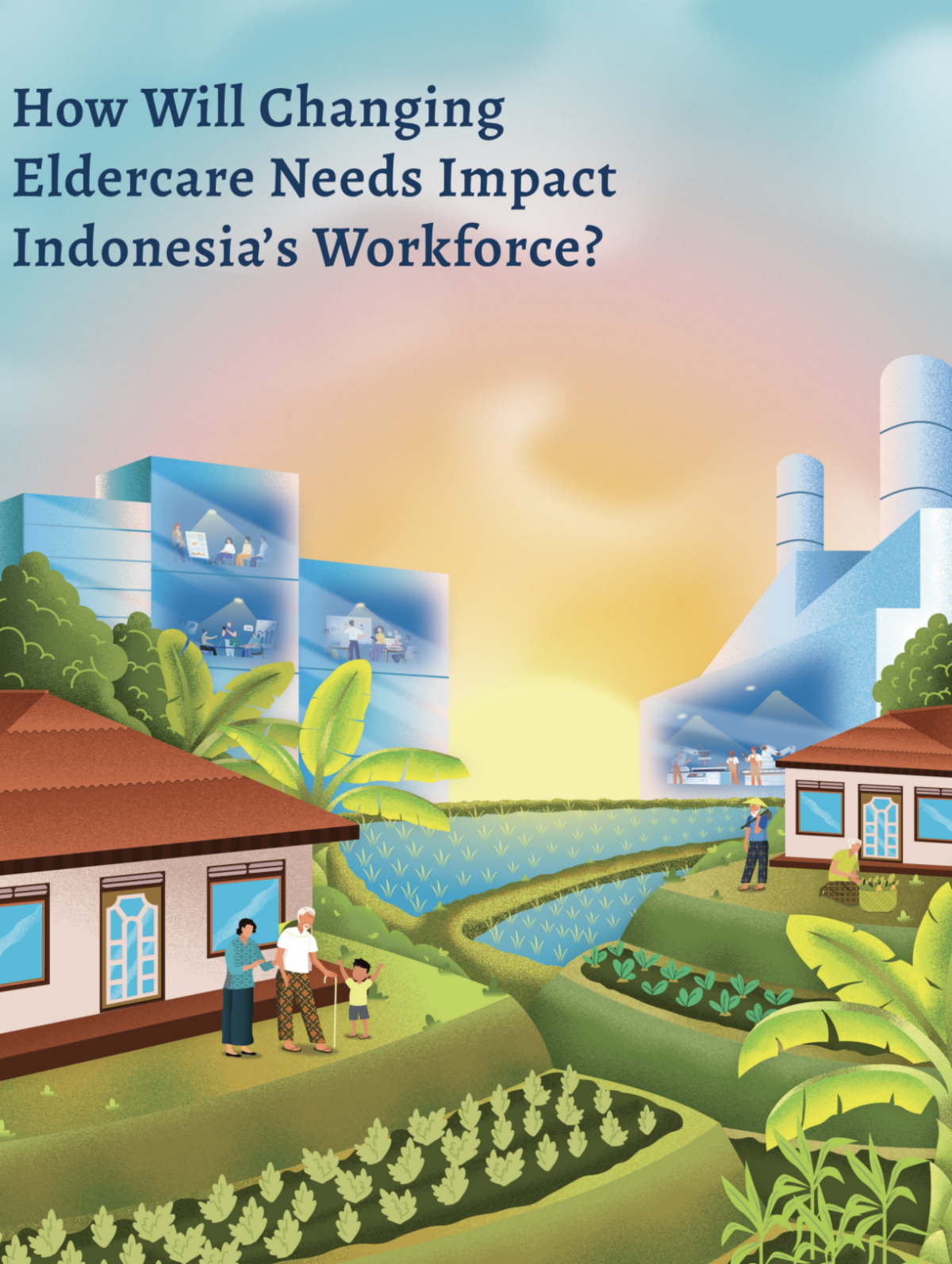
How Will Changing Eldercare Needs Impact Indonesia's Workforce?
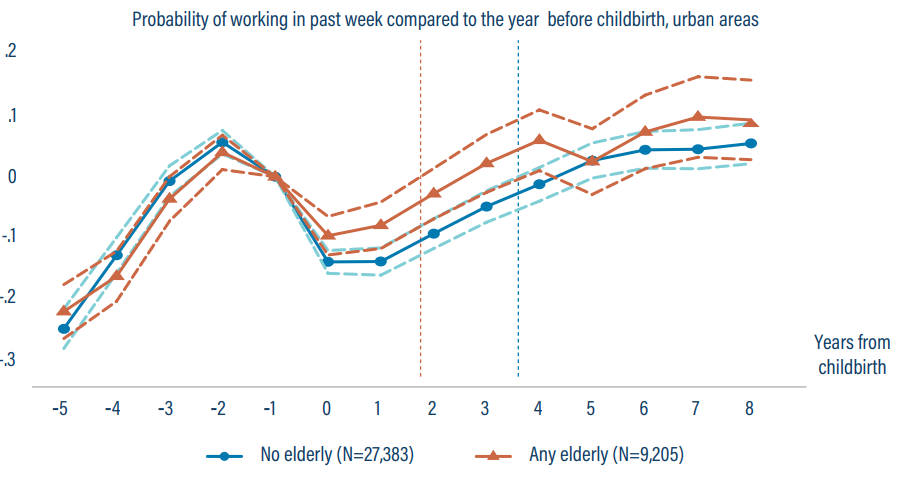
A new report by EAPGIL in collaboration with the Social Policy Unit examines the impacts of Indonesia’s aging population on eldercare needs, family based care systems, and labor markets. While poor and vulnerable elderly have higher care needs, they receive fewer hours of care and lack adequate savings and access to social safety nets. Elderly Indonesians rely heavily on employment incomes and continue working into old age, often in precarious employment, primarily as self-employed workers in the agricultural sector. Elderly household members also play a dual role in the care economy: grandparents’ childcare support enables mothers to return to work more quickly but at the same time eldercare responsibilities reduce women’s working hours. While Indonesia has taken important steps to integrate eldercare needs into the national agenda, there is a need for systemic evaluations of the current programs and policies to ensure the effective improvement of the care ecosystem.
| | | |
To Have It All? Career and Family of College-Educated Women in an Emerging Economy
A new EAPGIL working paper analyzes the career and family decisions of Indonesian college-educated women across birth cohorts from the 1950s to the 1990s. Drawing on 38 years of Labor Force Survey data and five rounds of the Indonesia Family Life Survey, the paper reveals a growing polarization among younger cohorts where college graduates increasingly either delay marriage to remain in the labor force or exit the labor force altogether after marriage. Women born in the 1990s are 58 percentage points more likely to be working while unmarried, but 44 percentage points less likely to be working while married, as compared to those born in the 1950s. Two main forces drive this divide: educated women are increasingly entering demanding, male-dominated professions, while a broader shift toward conservative gender norms, particularly among young men, makes combining career and family harder. The findings suggest that increasing female representation in high-skilled occupations may not be sufficient for gender equality amidst persistent traditional gender norms.
| | |
When Does Decision-Making Reflect Agency? Evidence from Rural Philippines
Decision-making is often used as a proxy for agency, the ability to set goals and act on them, although there are several theoretical and methodological critiques of this approach. Using unique data from the rural Philippines, an EAPGIL research paper empirically tests the extent to which different aspects of agricultural decision-making are correlated with the Relative Autonomy Index, a measure of agency that has been validated for use in lower-income countries. Being a decision-maker (as asked in common survey questions) is only weakly related to the RAI for women, and not at all for men. Having input into decisions and, to a greater extent, the ability to make personal decisions if desired are strongly associated with the RAI for both genders. The quantitative and qualitative data indicate that these concepts better capture the ability to make choices in line with one’s personal goals, while being a decision-maker instead reflects being responsible for the outcome or managing the execution of a task, often in the face of limited options. The findings caution against focusing on being a decision-maker as a sole indicator of agency and have practical implications for conceptualizing and measuring agency.
| | |
Blog Post: Five Ways Evidence is Unlocking Women's Economic Participation
The Umbrella Facility of Gender Equality (UFGE), a World Bank Group multi-donor trust fund, supports the WBG jobs agenda by generating knowledge, evidence, and data that informs country policies. The UFGE 2025 Annual Report highlights five areas where evidence from the Gender Innovation Labs translated into action to expand women’s economic participation globally.
| | INTERNATIONAL WOMEN'S MONTH EVENTS | | |
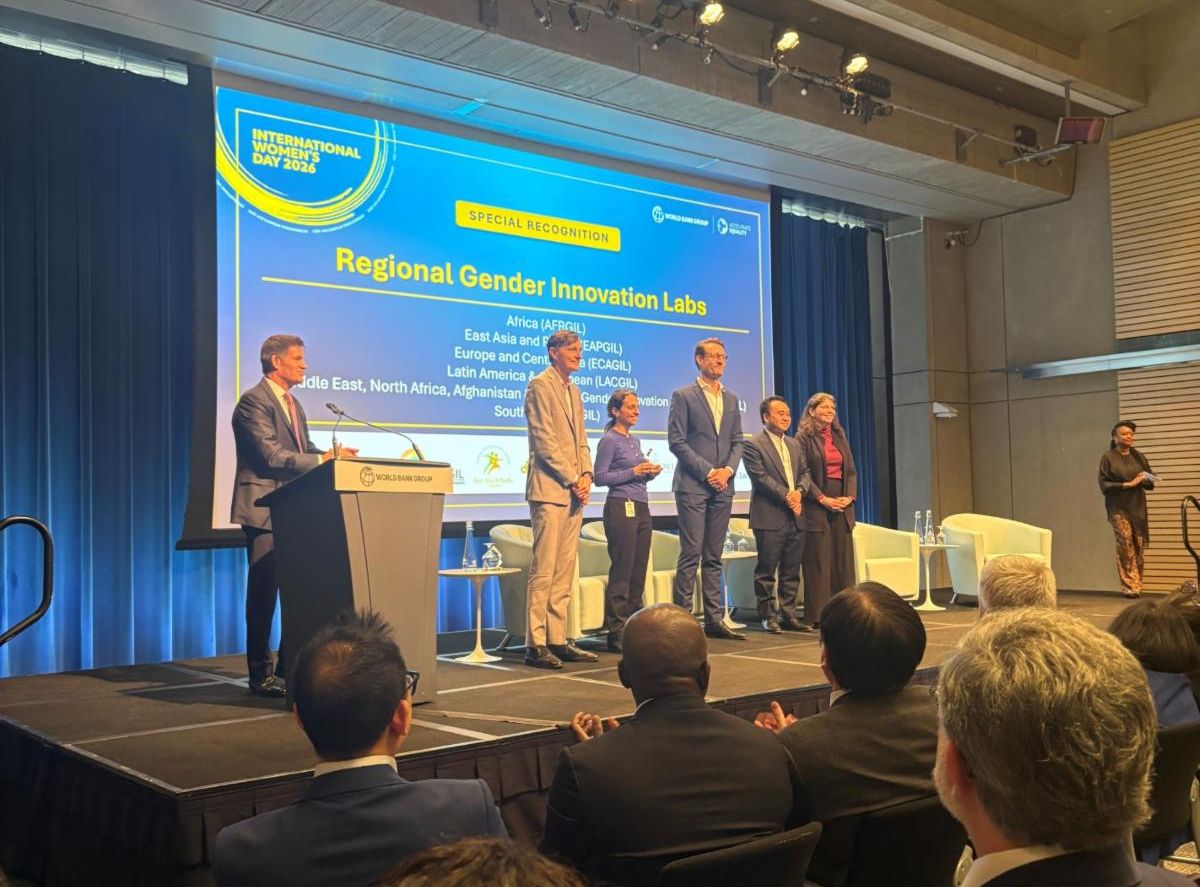
- The six regional Gender Innovation Labs jointly received a Special Recognition from the World Bank's Gender Director for their contribution to advance knowledge for policies and solutions at an International Women's Day event on March 5th.
- EAPGIL economist Forest Jarvis led a session at the World Bank Manila office on Wednesday, March 11 introducing a new study on the care economy in the Philippines, with discussant comments from the Philippine Commission on Women and Invest in Women Philippines.
-
Papers by EAPGIL and SAR GIL economists will be presented at the ADB Institute's 6th Annual Forum on Expanding Women's Participation in the Economy, to be held next week in Tokyo.
- Evidence from the GILs on what works to prevent gender-based violence will be presented on Thursday, March 26 at 10AM EST as part of the GBV Learning Series. Click here to RSVP and add the event to your calendar.
| | About East Asia and Pacific Gender Innovation Lab | | Part of the East Asia and Pacific Office of the Chief Economist, EAPGIL carries out impact evaluations and inferential research to generate evidence on what works in closing gender gaps in assets, economic opportunities, and agency, and how closing these gaps can help achieve other development outcomes. Ultimately, EAPGIL seeks to increase the welfare of women and men in East Asia and the Pacific by promoting the uptake of effective policies and programs identified based on evidence. We gratefully acknowledge funding from the Umbrella Facility for Gender Equality (UFGE) to carry out this work. EAPGIL is supported by UFGE in partnership with the Australian Department of Foreign Affairs and Trade. UFGE has received generous contributions from Australia, Canada, Denmark, Finland, Germany, Iceland, Ireland, the Netherlands, Norway, Spain, Sweden, Switzerland, the United Kingdom, the United States, the Bill and Melinda Gates Foundation, and the Wellspring Philanthropic Fund.
| | | | |