|
Collaborating for the Advancement of Interdisciplinary Research in Benign Urology
View as Webpage
| | CAIRIBU COMMUNITY COLLABORATION AWARDS | | |
FINAL ANNOUNCEMENT AND REQUEST FOR APPLICATIONS
DEADLINE: 4/20/2026 by 11:59 PM Central Time
ELIGIBILITY: Investigators currently or previously engaged with a CAIRIBU initiative or event and/or affiliated in some way with a CAIRIBU U54 or P20 Center or CAIRIBU K12 Urology Program
APPLICATION REQS: 6-page research strategy + specific aims page; budget, biosketches, and description of CAIRIBU Collaboration Award research goals you will meet
Applications related to any aspect of urology research are sought (no clinical trials). Proposals creating new collaborations between clinicians and scientists or that build and expand the field are particularly sought. Projects may request up to $120,000 total costs for 1 year. All proposals will be reviewed. Full application details HERE. Project start and end dates are 6/01/2026 to 7/01/2027.
Full details available on the CAIRIBU website funding page HERE
| | |
New NIH-Wide Strategic Plan, 2027-2031
Comments and suggestions requested
Respond on submission site - link HERE
Deadline for comments: Sat., May 16
Open to all - scientists, clinicians, patients, advocates, professional societies, research administrators, NIH staff, and the public at large
IT IS UP TO US TO REQUEST EXPANSION OF UROLOGY RESEARCH FUNDING TO IMPROVE THE HEALTH OF PATIENTS WITH GENITOURINARY DISEASES AND CONDITIONS
NIH is developing a new Strategic Plan for Fiscal Years 2027-2031 and seeks input from the public. The new plan is based on the prior NIH-wide plan for fiscal years 2021-2025, available on the CAIRIBU website HERE. The proposed strategic plan framework is below:
-
RESEARCH AREAS: Advance foundational knowledge of human health and disease; prevent disease and promote health across the lifespan; and advance and optimize interventions, treatments, and cures
-
RESEARCH CAPACITY: Develop and sustain an interdisciplinary research workforce; and build, improve, and sustain research resources and infrastructure
-
RESEARCH OPERATION: Enhance scientific stewardship and decision-making; and foster transparency and accountability to improve public trust in science
The first public hearing was in March. Consider joining the 2nd public webinar to hear NIH leadership present the high-level framework for the new plan, Wed., April 8, 2:30-3:30 PM Eastern Time. Q&A will follow. Registration required; space for submitting a question or response to be addressed during the webinar is available at registration.
| NIH Discontinues Kidney and Urological Systems Function and Dysfunction (KUFD) Study Section | |
Two new standing study sections will be established in the coming months - one for kidney research and one for urology. In the interim, reviews will occur through 2 parallel Special Emphasis Panels: (1) Urological Systems Function and Dysfunction (KUDS83); and (2) Kidney Physiology and Development (KUDS82)
| |
NIH Implements Changes to Domestic Subawards
Effective June 1, 2026, per NOT-OD-26-062, all prime recipients are required to obtain NIH prior approval when adding a new domestic subaward to a project post-award, when the arrangement was not originally a part of the peer-reviewed and approved application. The new prior approval requirement is intended to ensure that NIH is aware of all subaward activities for each NIH project. Requests must be submitted in the eRA Commons Prior Approval Module using the “Other Request” type.
| |
Forecasted RFA for George M. O'Brien Urology Centers
The National Institute of Diabetes and Digestive and Kidney Diseases (NIDDK) forecast anticipates announcing a Request for Applications (RFA) for the George M. O'Brien Urology Cooperative Research Centers Program in April 2026 with a TENTATIVE July 2026 application due date and projected start date of 2/01/2027. Total program funding is estimated to be $5.3 million. Up to 5 awards may be available. NOTE: This is a forecast and has not yet been published as a request for applications. See forecast HERE.
| CAIRIBU AT THE 2026 UTIGA AND AUA MEETINGS | | |
UTIGA 2026, Apr 9-11 (Nashville, TN). The primary organizer this year of the annual meeting of the Urinary Tract Infection Global Alliance - the 6th Clinical and Scientific Advances in Urinary Tract Infections meeting - is Maria Hadjifrangiskou, PhD (PI of a prior CAIRIBU P20 Urology Center). In addition to Dr. Hadjifrangiskou, the list of CAIRIBU-affiliated investigators @ UTIGA 2026 includes:
- Douglass Clayton, MD; Jonathan Schmitz, MD; Allyson Shea, PhD; Chad Vezina, PhD; Xingtong Dong, PhD; Kathryn Patras, PhD; Ashlee Earl, PhD; Megan Behringer, PhD
AUA 2026, May 15-18 (Washington DC). CAIRIBU Community investigators and trainees participate in the annual American Urological Association meeting in significant numbers. This year is no different. GO HERE for a list of CAIRIBU-affiliated investigators at the AUA meeting - note that the list is growing. As accepted abstracts are published, this list will be updated.
| |
|
Symposium for non-cancerous basic and translational urology research
WHEN: Sat., May 15 at AUA meeting
TIME: 7:30-11:30 AM | 1:00-3:00 PM
Co-directed by Kristina Penniston, PhD, RD (University of Wisconsin-Madison and CAIRIBU Interactions Core PI) and Jindan Yu, MD, PhD (Emory University and SBUR Vice President)
Multiple scientists will present their research within 3 sessions: BPH, comorbidity-associated genitourinary disorders, and urothelial dysfunction.
-
CAIRIBU Community investigators presenting science: Teresa Liu, PhD (St. John Fisher University, prior UW-Madison K12 Scholar); Kimberly Keil Stietz, PhD (UW-Madison Urology O'Brien Center); Michael Odom, PhD (Duke University, prior K12 Scholar); Ajinkya Limkar, MD/PhD candidate (UW-Madison Urology O'Brien Center); Aruna Sarma, PhD, MHA (University of Michigan CAIRIBU KUroEpi Program, Co-PI); Bernadette Zwaans, PhD (Oakland University, Corewell Health - Co-PI of prior CAIRIBU Urology P20 Center); Jonathan Pollack, MD, PhD and Amy Dobberfuhl, MD, MS (Stanford University Urology O'Brien Center); Cathy Mendelsohn, PhD (Columbia University Urology O'Brien Center, Co-PI); Douglas Strand, PhD (UT Southwestern, Project Leader in the UW-Madison Urology O'Brien Center); and Laura Pascal, PhD (University of Pittsburgh, prior Urology O'Brien Center)
Panels of urologists will follow each session to engage in discourse about cross-disciplinary communication and collaboration, critical knowledge gaps, and moving progress more quickly from the bench to the bedside.
-
Urologist panelists affiliated with the CAIRIBU Community include: James Brooks, MD (Stanford University Urology O'Brien Center, PI); Lenny Ackerman, MD, PhD (UC Los Angeles, CAIRIBU Urobiome Research Interest Group); Michael Chancellor, MD (Oakland University, Corewell Health, Co-PI of prior CAIRIBU Urology P20 Center); Rose Khavari, MD (Houston Methodist - prior recipient of a CAIRIBU Collaboration Award); Quentin Clemens, MD (University of Michigan CAIRIBU KUroEpi Program, Co-PI); and Giulia Ippolito, MD, MS (University of Michigan. prior K12 Scholar)
| | OPPORTUNITIES FOR CAIRIBU LEADERSHIP AND ENGAGEMENT | |
CAIRIBU Urobiome Research Interest Group Summer Camp
What is it? Three virtual events this summer - June 26, July 17, and August 21 - aimed at enhancing the research capacity of trainees and early-stage investigators (ESI) involved in urobiome research
BENEFITS OF PARTICIPATING. Trainees who participate will: (1) practice presenting posters, (2) receive guidance on designing figures and how to develop a robust scientific question, (3) learn about effective science communication, and (4) hear about career options across academia, industry, and government. Complete the interest form HERE and watch for an official invitation to register - some sessions will require you to submit materials (posters, figures, etc.) in advance.
| |
Publish Your Urobiome Research
Following is a message from Nicole De Nisco, PhD (UT Dallas), leader of the CAIRIBU Urobiome Research Interest Group and editor at the journal, mSystems...
Are you studying the microbiology of urologic systems and looking for an excellent open access non-profit journal that gives back to the community? Look no further! mSystems, published by the American Society for Microbiology, is the preeminent journal in microbial systems biology. mSystems welcomes submissions from researchers who focus on the microbiome, genomics, metagenomics, transcriptomics, metabolomics, proteomics, glycomics, bioinformatics, and computational microbiology. Our knowledgeable academic editors facilitate a fair peer review and a streamlined decision process (less than 30 days on average).
Nicole De Nisco, PhD
Editor, mSystems
| CAIRIBU COMMUNITY EVENTS & ACTIVITIES | | |
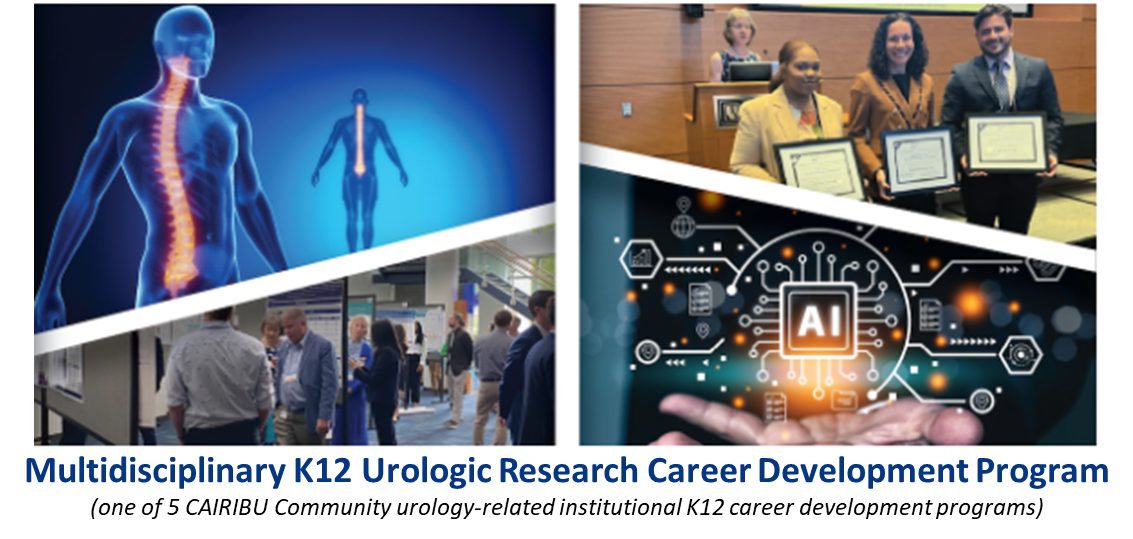
Annual Symposium of the Duke University Multidisciplinary Urologic Research K12 Institutional Career Development Program
Friday, April 17, 2026, Duke University
8:00 AM to 2:30 PM - Registration is free
Posters and presentations by trainees and invited speakers will address urogenital pain and effects of obesity on urogenital conditions
Invited speakers include Quentin Clemens, MD (University of Michigan CAIRIBU KUroEpi Program, Co-PI) and Kyle Woods, MD (University of Alabama at Birmingham, prior CAIRIBU P20 Urology Center)
| | |
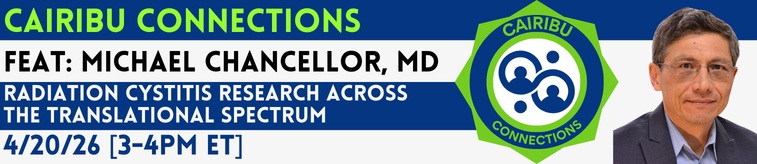
CAIRIBU Connections - Promoting connections across fields and disciplines
Dr. Michael Chancellor, urologist and Professor at Corewell Health William Beaumont University Hospital and Director of the neurourology program, will discuss radiation cystitis and his journey from research in animal models through development and validation of a new therapy, ending with FDA approval and partnership with the Radiation Cystitis Foundation to establish a patient registry and strengthen regulatory engagement.
WHEN: Monday, April 20
TIME: 3:00 PM Eastern (2 PM Central | 12 PM Pacific)
ZOOM LINK: When time to join, go HERE
| | Dr. Chancellor has expertise in stem cell and tissue engineering and drug discovery. He was one of the first urologists to use botulinum toxin to treat lower urinary tract dysfunction. Dr. Chancellor's discovery in cellular therapy led to a multicenter North American trial using adult autologous muscle-derived cells to treat stress urinary incontinence. He is also a pioneer in local drug delivery using liposomes to treat bladder diseases. Don't miss this event. | | |
CAIRIBU ARCTICS Community Forums, April 8 and May 13
Presenters include:
Marvin Langston, PhD (CAIRIBU K12 Alum, now at Stanford University); Michael Odom, PhD (CAIRIBU K12 Alum, now at Duke University); Petra Popovics, PhD (CAIRIBU K12 Alum, now at Virginia Health Sciences at Old Dominion University); Teresa Liu, PhD (CAIRIBU K12 Alum, now at St. John Fisher University); Acacia White, PhD (postdoc, UW-Madison); Sonia Fargue, MD, PhD (University of Alabama at Birmingham); and Michael Neugent, PhD (CAIRIBU Urobiome Research Interest Group, UT Dallas)
| |
TRAINEES!!! A "bonus" CAIRIBU ARCTICS Community Forum will feature Donald DeFranco, PhD (University of Pittsburgh and a co-investigator in the prior CAIRIBU Urology O'Brien Center there)
During his highly successful research career spanning >30 years, Dr. De Franco has significant mentoring and trainee development experience. Don't miss this opportunity to gain insight as to how you can maximize your time as a trainee.
WHEN: Tuesday, May 5
TIME: 1:00 PM Eastern (12 PM Central | 10 AM Pacific)
TOPIC: Making the Most of Your Research Trainee Experience
Zoom link to join is available HERE
Prior CAIRIBU ARCTICS Community forum recordings are HERE
| | |
CAIRIBU K12 Scholar Seminars, April 9, May 14, and June 11
CAIRIBU K12 Scholars are making an impact! Upcoming presenters include: Lindsey Felth Tanaka, PhD (CAIRIBU K12 Program at UW-Madison); Jennifer Hammel, PhD (CAIRIBU K12 Program at Duke University); and Marcela Ambrogi, PhD (CAIRIBU K12 Program at UW-Madison)
Prior CAIRIBU K12 Seminar Series recordings are HERE
| |
CAIRIBU Graduate Student Seminars, April 15, July 15, and October 21
Support graduate students' research! Presenters include: Jamisha Francis, MSc (mentor, Maria Hadjifrangiskou, PhD, Vanderbilt University); Samantha Ye, Leuna Sen, and Jenna Simpson (mentor, Nicholas Steers, PhD, Columbia University); Audra Crouch, PhD and Andrew McGlynn, DVM (mentor: Vanessa Hale, PhD, DVM, Ohio State University)
| | |
Uro-Lit Live Discussions, April 22 and May 27
Keep up with the urology research literature! Presenters include: Eva Raphael, MD, MPH (UC San Francisco); Vanessa Hale, DVM, PhD (Ohio State University); Matthew Grimes, MD and Madi Taychert (UW-Madison)
| |
Need help keeping up with the literature?
View the latest "Have You Read This" on the CAIRIBU website. Follow publications of CAIRIBU investigators and trainees. UPDATED MONTHLY. Includes investigators at Urology O'Brien Centers and P20 Centers, Urology K12 Programs, and in CAIRIBU Research Interest Groups.
Download the table as a Google spreadsheet or Microsoft Excel file. Filter and sort it by author, topic, keywords, or other search terms.
| CAIRIBU RESEARCH INTEREST GROUPS | |
CAIRIBU Urobiome Research Interest Group (RIG), April 17 and May 15
Presenters in April are: Xintong Dong, PhD (UT Dallas) and Kymora Scotland, MD, PhD (UC Los Angeles). The May event will feature a strategic discussion about advancing urobiome research and will address potential research collaborations, grant applications, consensus papers, and other small group activities.
In addition... CAIRIBU Urobiome RIG "summer camp" events occur in June, July, and August. See above for description, dates, and mechanisms for participation.
Recordings of prior CAIRIBU Urobiome RIG presentations are HERE
| |
CAIRIBU Uro-Aging Research Interest Group (RIG), April 27 and June 22
The April presenter is Maria Florian-Rodriguez, MD (UT Southwestern). The June event will center around a strategic discussion for advancing uro-aging research
Recordings of prior CAIRIBU Uro-Aging RIG presentations are HERE
| |
CAIRIBU BPH Research Interest Group (RIG), May 6, June 10, July 8, August 12, Sept 9 (more TBD)
NEW!!! This group will connect investigators and clinicians who are engaged or interested in studying benign prostatic hyperplasia (BPH). This is an interdisciplinary initiative involving basic and translational scientists as well as clinicians. This RIG will stimulate knowledge exchange, new ideas, strategic visioning, and transdisciplinary research collaborations in BPH research.
Participate in the kick-off "meet and greet" with prostate researchers and clinicians. Wed., May 6, 7:00 PM Eastern (6 PM Central | 4 PM Pacific); Zoom link available HERE
The CAIRIBU BPH RIG is currently spearheaded by Kazumi Taguchi, MD, PhD (University of Alabama at Birmingham), who is working with CAIRIBU Interactions Core staff to build this RIG. Plans currently are to meet virtually at 7:00 PM Eastern Time (6 PM Central | 4 PM Pacific) on 2nd Wednesdays of the month for a mix of presentations, discussions, and literature reviews.
Contact CAIRIBU@urology.wisc.edu for calendar invite if you don't already have one
| Other new CAIRIBU Research Interest Groups in the works include a Uro-Immunology RIG and a Patient Engagement in Research RIG. Stay tuned for more information about both and for how to get involved. | | |
The CAIRIBU Interactions Core has expanded the search for urology research funding. to include professional societies, foundations, and industry. Spearheaded by Theo Ng, CAIRIBU Interactions Core administrative coordinator, watch for the first "CAIRIBU Funding Bulletin," a dedicated roundup of new and ongoing research funding announcements sent right into your in box (due out mid April).
Below are a few recent research funding announcements. More announcements are on CAIRIBU website HERE.
Spinal Cord Injury Research on the Translational Spectrum Grants; sponsor: Craig H. Neilsen Foundation. Applications are sought that target a system or function affected by spinal cord injury or its sequelae (including urology-related) during the acute or chronic injury period. Projects should demonstrate novelty, high scientific merit, and potential for substantial impact on treatment and care. Meaningful incorporation of people with lived experience in the development and management of the research is encouraged. Up to 2 yrs funding will be provided for preclinical studies; human subjects research may receive up to 3 yrs. Maximum total cost is $400,000; budgets may not exceed $200,000 in any year (10% max for indirect costs). PIs must be independent investigators at any stage of their research career. [LOI Deadline: 5/22/26; full application deadline: 11/12/26]
Clinical Repurposing Research to Impact US Veterans/Military; sponsor: Cures Within Reach. Up to $75K (including required institutional match) for clinical repurposing trials from US-based research institutions using already approved treatments to address unmet and high-priority medical needs of US veterans and/or active US military, such as mental health, post-traumatic stress disorder (PTSD) and brain injuries. Additional $5K-$15K available for approved community engagement costs. [LOI due 5/29/26]
Broad Pragmatic Studies PCORI Funding Announcement, Cycle 2 2026; sponsor: PCORI. Up to $12m to support patient-centered comparative clinical effectiveness research (CER) projects. Relevant special area of emphasis includes management of urogynecological and pelvic pain, though submissions are not limited to this topic. [LOI due 4/28/2026]
Human Tissues and Organs for Research Resource (HTORR) Pilot Award Program; sponsor: National Disease Research Interchange. Awards cover all costs associated with obtaining up to ~10 human biospecimens to be used in a pilot study, including tissue preservation reagents and shipping costs, for an award period of up to 24 months. Preliminary data generated are expected to be used in subsequent grant application(s) to at least one supporting NIH institute by the end of the 2-yr project period. Eligible individuals must be ESIs or established investigators transitioning to using human biospecimens. [Application Deadline: 5/1/26]
Resource-Related Research Projects for Development of Models and Related Materials for Studying Human Health and Diseases; sponsor: NIH (Office of Research Infrastructure Programs). (R24 Clinical Trials Not Allowed). RFA-OD-25-010 seeks grant applications aimed at developing, characterizing, or improving research models of human health and diseases; developing biology-based approach methodologies applicable to human health and diseases; or improving access to information about or generated from the use of models of human disease. Models and related biological materials must be broadly applicable to the scientific interests of at least two NIH Institutes or Centers and must evaluate diseases and processes that impact multiple organ systems. Applications must describe need and potential impact of the proposed resources on the research community across a range of scientific disciplines. Awards are for 4 yrs with chance for renewals. Standard NIH due dates for LOIs and applications apply. [Expires 09/29/2028]
BRAIN Initiative: Research Resource Grants for Technology Integration and Dissemination; sponsor: NIH (relevant ICs include NIA, NICHD, NINDS). U24 Clinical Trial Not Allowed. RFA-NS-27-001 supports efforts to disseminate resources for integration into neuroscience research practice. Resource(s) should be relevant to the goals of the BRAIN Initiative, shared broadly with the neuroscience community, and address compelling needs of neuroscience researchers that are otherwise unavailable or impractical in their current form. Relevant to research pertaining to brain-bladder connections. Open to any career stage; duration <5 yrs. [Expires 10/7/2028]
Research Grants in Clinical Informatics; sponsor: NIH (National Library of Medicine). R01 Clinical Trial Optional. PAR-26-042 supports research on design, implementation, and evaluation of clinical informatics tools and methods that enable data-driven discovery, promote evidence-based decision-making, and support personalized and precision health care. Ideal projects will transform raw and heterogeneous health data into actionable knowledge, develop innovative tools, and implement practical applications with broad clinical applications. Open to any career stage; budget <250 K directs/yr; duration <4 yrs. [Expires 3/6/2029]
Advancing Bioinformatics, Translational Bioinformatics and Computational Biology Research; sponsor: NIH (National Library of Medicine). R01 Clinical Trial Optional. PAR-26-040 supports projects that drive groundbreaking innovation and advance development in bioinformatics, translational bioinformatics, and computational biology. Supports creation and implementation of cutting-edge methods, tools, and approaches that transform the biomedical data science landscape. Of particular importance: leverage transformative technologies - such as artificial intelligence, machine learning, and large-scale computational platforms - to extract actionable knowledge. Open to any career stage; budget <250 K directs/yr, duration <4 yrs. [Expires 3/6/2029]
| | | | |
Kristina L. Penniston, PhD, RD
PI, CAIRIBU U24 Interactions Core
(U24-DK127726)
penn@urology.wisc.edu
Dept. of Urology, University of Wisconsin School of Medicine and Public Health, Madison, WI
| | |
George M. O'Brien (U54) Urology Cooperative Research Centers Program
- University of Wisconsin-Madison (2014-2019 and 2019-2024)
- Columbia University (2014-2019 and 2020-2025)
- Stanford University (2021-2026)
Multidisciplinary Urologic Research (KURe) Career Development Programs (K12)
- Duke University
- University of Wisconsin-Madison
- Stanford University
Urological Epidemiology (KUroEpi) Institutional Research Career Development Programs (K12)
- University of California San Francisco-Kaiser Permanente Northern California
- University of Michigan
-------------------------------------
Tracy Rankin, PhD, MPH, NIDDK KUH Deputy Director and Program Director, oversees CAIRIBU-affiliated K12 Institutional Career Development Programs
| |  | |
FORWARD P20 Urology Centers
- Mayo Clinic Rochester (2022-2025)
- Duke University (2022-2025)
- Children's Hospital of Philadelphia (2024-2027)
- Endeavor Health System (2024-2027)
CAIRIBU Interactions Core (U24)
-
PI, Kristina Penniston, PhD, RD
-
Research Program Coordinator, Mariana Coughlin, MS
-
Website, Digital, and Organizational Management, Muen Wang, BS
-
Administrative Support, Theo Ng, BS
-
Research Intern, Anna Barrett, BS
-
Social Media, Isaac Yang, BS
-
Student researcher, Edison Chiu
-
Student researcher, Raffael Ho
-
Student researcher, Ruben Mendes
-
Student researcher, Steven Lee
----------------------------------
NIDDK Program Officers who oversee the CAIRIBU Interactions Core and the U54 Urology O'Brien Centers:
| | Links to websites for current CAIRIBU Centers and Programs are on the CAIRIBU website HERE | | |
Collaborating for the Advancement of Interdisciplinary Research in Benign Urology
CAIRIBU is a community first formed around NIDDK-funded U54 and P20 Urology Centers and K12 Institutional Career Development Programs whose overarching objectives are to address gaps in knowledge related to epidemiology, etiology, development, progression, and expression of non-malignant urologic conditions and to train the next generation of leaders in urology research. The CAIRIBU Interactions Core is the central coordinating body for the CAIRIBU Community and for all collaborative-minded investigators and trainees studying genitourinary diseases.
| | | | |