The content in this preview is based on the last saved version of your email - any changes made to your email that have not been saved will not be shown in this preview.

MCH Digest

January 2026

View as Webpage

Kicking Off the Year with the New MCH Housing Priority

By Kate Jankovsky, Childhood Adversity Prevention Manager


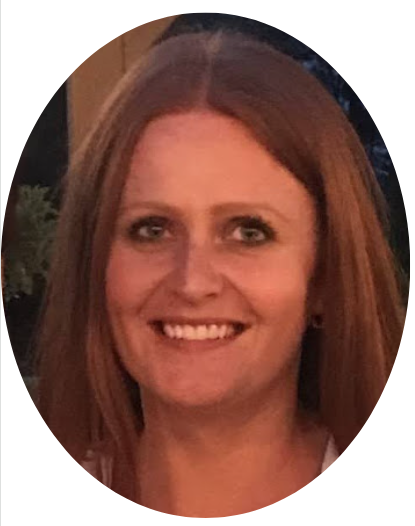
New year, new priority, new priority lead! My name is Kate Jankovsky (she/her), Childhood Adversity Prevention Manager. I lead the new MCH housing priority. I’m lucky to know many of you from my previous role managing the Colorado Child Fatality Prevention System for close to a decade. From that experience, I know that you are all creative and dedicated people who care deeply about your communities and this state, and it’s an honor to spend more time with you in this new capacity. 


I’m currently filled with a lot of excitement and anxiety about the year ahead. I bet many of you are too. I’m excited to kick off the new year of MCH Digests, and it’s tempting to write to you about setting new intentions, committing to big resolutions, doing more, reaching beyond, etc. As we all know, the needs and sense of urgency have never felt greater to grind like we always do in public health. However, this year, I’m going to follow the lead of writer and advocate Suleika Jaouad, who writes about rejecting the notion of resolutions in Against resolutions on Substack. Jaouad’s writing on the journey that led her to reject resolutions in favor of rituals inspired me deeply. While I recommend reading, I want to share this passage with you as a ritual-based approach to the new year and to our new work on housing:


Rather than control, rituals are relational. They create atmosphere. They offer rhythm and containment. Where resolutions depend on willpower - a finite resource, especially in times of illness and uncertainty - rituals build scaffolding. They don’t ask us to muscle through. They anchor us in time, place, and meaning. 


Jaouad invites readers to join the 30-day journaling project with these simple instructions: “The only instruction is to show up, to take the lapses in stride, to keep going.” As someone who has not journaled since my diary was covered in stickers and sealed with a small heart lock and key, I’ve recently stumbled back upon the power of journaling to process, clear my busy mind, and set priorities. Let me know if you want to participate in the 30-day journaling project with me. As I think Jaouad would appreciate, I will be starting it this week, late but ready and committed to the daily ritual of it all. 


What does this have to do with our MCH housing work? I am bringing this same focus on rituals to the housing priority work. Instead of asking you to commit to the impossible and stretch yourself even more impractically thin, setting lofty (and admirable) goals to solve housing crises in your communities, I’m asking you to please consider being in a learning and growing space with me. To borrow Jaouad’s words, I want to “build scaffolding” for this work “anchor[ed] in time, place, and meaning.” I am also applying this approach to our state-level housing work. Because we knew that we could not take on the whole world of housing and that so much work is already being done, we are starting by building partnerships and learning about the housing work happening in our own house, so to speak. We are convening CDPHE colleagues across the spectrum of public health work: lead, radon, interpersonal violence, substance misuse, injury prevention, built environment, climate and health, maternal and child health, etc. to start with what feels both grounding and manageable. 


I don’t have all the answers, but I commit to a ritual of humbly learning along with you about what the role of state and local public health in housing work is, should, and could be in Colorado; “to show up, to take the lapses in stride, to keep going.” 


Join me? Please reach out if you want to talk or hear more about the work so far: kate.jankovsky@state.co.us. We know that the housing issues across the state are great, but with intention and ritual, our dedication to this work will be greater.


Kate

""

Events

CPHA Health Advocacy & Policy Summit - Roots of Change: Building Health Policy from the Ground Up. February 7, 2026. CSU Spur, 4777 National Western Dr, Denver, CO. Register for the Health Advocacy & Policy Summit.


AMCHP 2026. March 7 - 10, 2026. Washington, DC. Early bird registration is open.


Culture of Data. April 15 - 17, 2026. Registration for Culture of Data is now open.


Public Health in the Rockies. September 22 - 24, 2026. Save the Date.

Training

Tax Credit Webinar

The 2026 tax season is nearly here! Many Colorado families with children are eligible to receive tax credits - money back in their pockets. People do not need to earn a lot to receive these credits. Tax credits support healthier Colorado children, families, and communities and many Colorado families miss out on claiming their refund.


Get Ahead Colorado will be hosting a webinar to launch the 2026 Tax Season on January 29th 2026 11 a.m. to 12:15 p.m. Join us to hear from local and state partners as we prepare to reach Colorado families who can benefit from tax credits, free tax filing, and other tools and resources. Fill out this form to receive zoom log in information closer to the webinar date.


Visit and share our campaign websites Get Ahead Colorado and Hacia Adelante Colorado to learn more about free tax filing and what credits you may be eligible for with the Tax Credit Calculator.

""

LPHA Corner

Early Childhood Mental Health Consultants and Home Visiting Partnership in Boulder County

As part of their MCH work under the Social Emotional (soon to be Perinatal Wellbeing) priority, Boulder County Public Health (BCPH) now offers bilingual (Spanish-English) infant and early childhood mental health consultation (IECMHC) across three early childhood nurse home-visitation programs. 


IECMHC at BCPH strengthens public health nurse home-visitor (NHV) capacity by increasing providers’ knowledge base of peripartum, infant, and early childhood mental health. This occurs through monthly topic and case-based learning, as well as joint home visits with nurses for families experiencing peripartum or infant mental health concerns. Through IECMHC service provision NHVs are evidenced to be better equipped to identify, understand, and respond to the social-emotional needs of infants, young children, and their caregivers.


IECMHC at BCPH aims to normalize peripartum mental health care by increasing access to screening, culturally responsive psychoeducation, and provision of supportive resources and referrals related to social, emotional, and mental wellbeing for families at risk. The team provides tailored assessment and guidance to caregivers on postpartum mental health, coping strategies, thereby strengthening referral pathways and follow-up with community mental health providers. In this way, IECMHC helps expand families’ access to timely and coordinated mental health supports that promote long-term social-emotional wellbeing. Amazing work, Boulder! 

Workforce Development

Workforce Development Menu of Services

Curious about what learning opportunities and supports we have housed in our own MCH program? The Workforce Development Team has developed a menu of services that provides descriptions of these opportunities that are readily available to state and local MCH staff.

icon of certificate letter

Grants and Other Funding

Community Traffic Safety Mini-Grant, Due January 30, 2026

CDPHE and the Colorado Department of Transportation (CDOT) invite applications for the 2026 Community Traffic Safety Mini-grant Initiative. This funding opportunity aims to support communities to implement data-informed, evidence-based approaches to address traffic safety issues for populations impacted by serious injury and fatal crashes. Priority will be given to first-time grantees and projects that focus on reducing serious injury and fatal crashes for young people/young drivers; older people/older drivers; and non-motorists, including pedestrians and bicyclists. There is $30,000 total available funding through a reimbursement model. Applicants are able to request a minimum of $5,000 and maximum of $10,000 for project funding. Project activities must be completed by September 30, 2026. Please review the 2026 Community Traffic Safety Grants Information Sheet for more details, including how to apply. All application materials must be submitted electronically via the Google Form application no later than 11:59 p.m. on January 30, 2026.

""

Newsletters

Human Impact Partners News

Colorado Children’s Campaign KidsFlash Blog

Family Matters Newsletter

Public Health Foundation E-News

Our Voice: Colorado’s Early Childhood Newsletter

Maternal Wellness Newsletter

Want to read past MCH Digests?

Archived MCH Digests

The Title V Maternal and Child Health Program (MCH) works with statewide partners and local public health agency representatives to improve the health of Coloradans using population-based and infrastructure-building strategies. Our mission is to optimize the health and well-being of mothers and children by employing primary prevention and early intervention public health strategies.


This project is supported by the Health Resources and Services Administration (HRSA) of the U.S. Department of Health and Human Services (HHS) under the Colorado Maternal and Child Health Block Grant 6 B04MC45202. This information or content and conclusions are those of the author and should not be construed as the official position or policy of, nor should any endorsements be inferred by HRSA, HHS or the U.S. Government.

State of Colorado Accessibility Statement