A Roundup of Recent Ulster County Business-Related News, Views, and More
May 29th, 2025
| | |
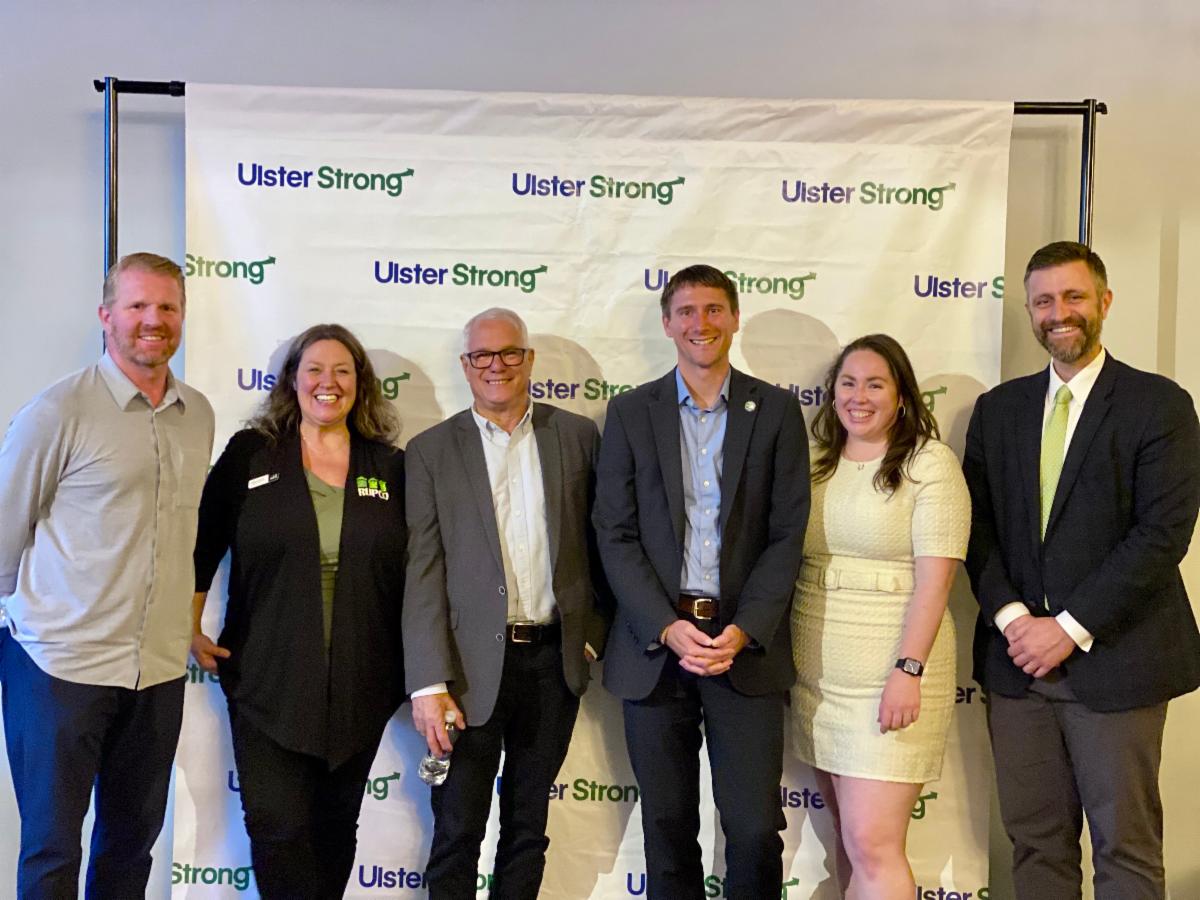
Ulster Strong Housing Summit held at the Senate Garage in Kingston on May 15th.
May has been a busy month for Ulster development news, and Ulster Strong contributed to some of it when we hosted another successful and very informative Housing Summit at the Senate Garage in Kingston. Our moderator and guest panelists did an excellent job of not just talking big picture and needs, but delved deep into real challenges to building local, and cited specific recommended solutions to get more affordable housing on market, both in urban and rural areas of our county.
This edition of the Ulster Strong Business Bulletin is filled with insightful articles covering local development and business news. We'll let you get right to it!
| | |
This newsletter includes the following:
An Ulster Strong Housing Summit Review With Video Link
Film and Television Productions Breathe Life Into Our Communities
Whither the Workforce:
Behind the scenes of Ulster County manufacturing powerhouses Fair-Rite and Elna Magnetics
DATA BITES
QUICK BUSINESS NEWS UPDATES
Real Estate Heats Up for Spring
Uncertain Times Make Uncertain Market
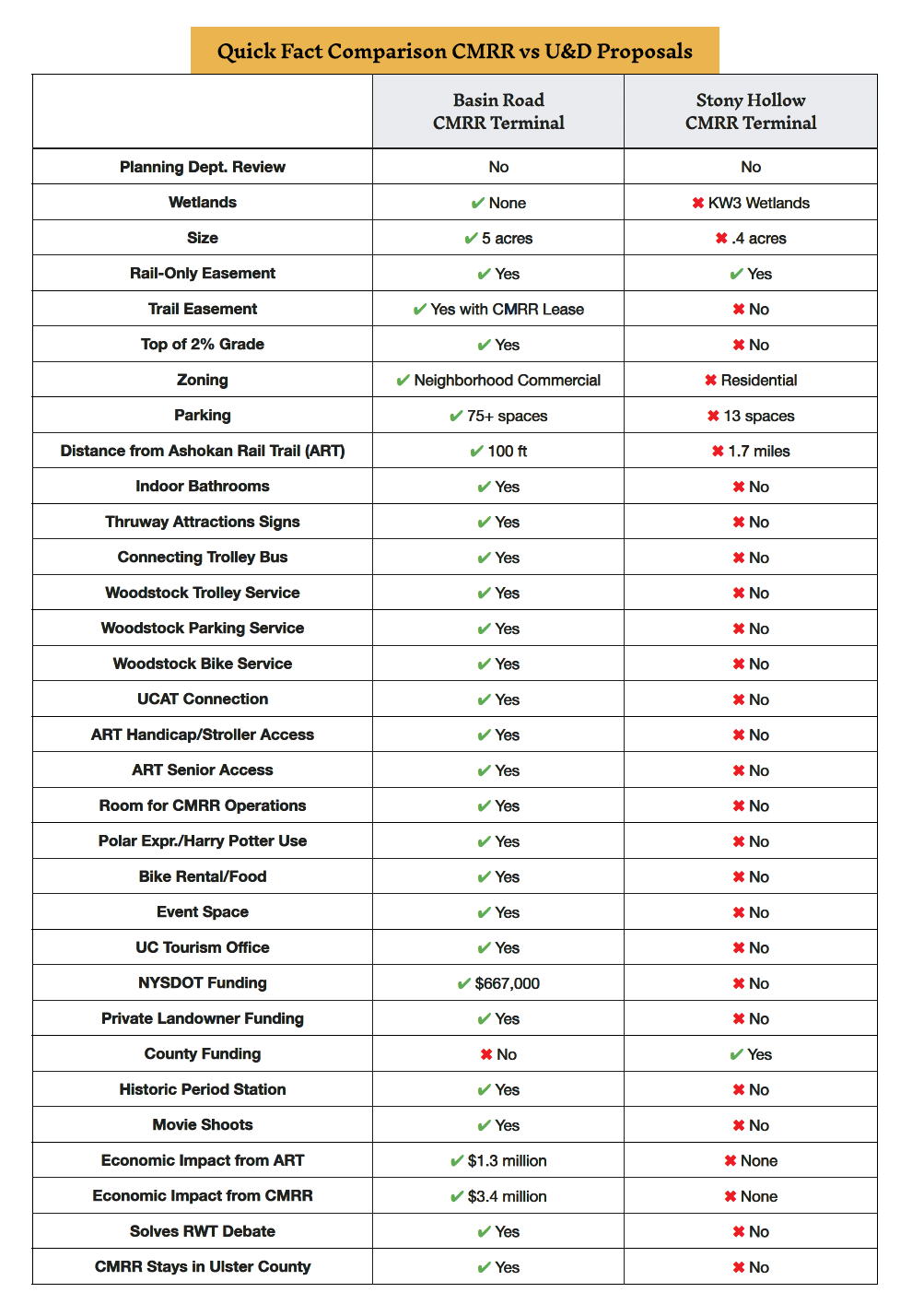
COMPARISON
Catskill Mountain Rail Road Basin Road Terminal Proposal vs
Collins 'Compromise'/Stony Hollow Terminal Proposal
Ulster County IDA
Summit
| |
Ulster Strong Housing Summit Review
By Kingston Wire:
When It Comes to Affordable Housing, Obstacles Are Many and Solutions Difficult
Republished in full with permssion by Kingston Wire,
written by Steve Ellman
| | |
KINGSTON - A healthy slice of Ulster County's business and civic leadership gathered at the Senate Garage in Uptown Kingston yesterday to talk about the county's housing crisis and what can be done about it. To hear the participants — one and all speaking with the appearance of genuine passion — the crisis is well-documented, the stumbling blocks are many and solutions are if not right at hand, in the air.
Hosted by business alliance Ulster Strong and moderated by Adam Bosch, CEO of local non-profit think tank Hudson Valley Pattern for Progress, the meeting centered on a panel discussion featuring Kingston Mayor Steve Noble, Town of Olive Supervisor Jim Sofranko, RUPCO Senior Vice President of Housing Programs & Solutions Faith Moore (apt name!) and Whitestone Development Partners CEO Tom George, whose company is involved in five Hudson Valley multi-family projects including a controversial proposed development in the Town of Ulster.
Bosch kicked off the event with a presentation running down the very bleak numbers regarding affordability. Among them were 1) for the first time, all counties in the Mid-Hudson region have a median home price in excess of $300,000; 2) in the last five years average home prices in Ulster are up almost 90 percent (though just 5.5 percent in this year's first quarter); 3) in the past 15 years rent has gone up almost double what renter wages have; and 4) bottom line — the median-earning family in Ulster County falls short of qualifying for a mortgage on the median priced home by about $150,000.
What's driving the supply/demand imbalance that helps fuel the crisis? “It has nothing to do with population growth,” Bosch said. “This region has been stuck at 2.5 million people for the past 30 years. What it has everything to do with is the shrinking size of the average family.”
As he explained, “How it plays out in Ulster County, population from 2010 to 2023 is essentially flat, but the average size of the household shrinks by a 10th of a person. That doesn't sound like a lot, but when your denominator is 182,000 people, it forces a demand for more than 3,000 additional housing units. So just by shrinking the average size of the family, you need about 3,300 additional homes here in Ulster County.”
Additionally, Bosch noted, “Here in Ulster County, the number of people working from home has gone from 5,300 in 2016 to 12,800 today. One out of every seven people who live in Ulster County work from home. And what that means is we have a whole group of people who are our neighbors now, who are taking up housing stock in our county but do not work in our county.”
On a more optimistic note, Bosch lauded Ulster for its efforts, calling us “at worst, the second-most aggressive county when it comes to housing in this region. And you can make an argument that it's really, at scale, tied for first place ...We're the only county that has a housing trust fund with a mechanism to replenish the fund every year. We're the only county with a housing smart communities initiative.”
Mayor Noble picked up on that tone, touting his city's work. “We want to be able to make sure that our developers are supported from the very beginning,” he said. “The minute they call my office and say, 'Hey, Steve, we want to build a couple dozen housing units,' I'm like, 'Great. Let's talk about it. Here's my new zoning code. These are all the regulations that you don't have to follow here that you may have to follow another place. This is the easy onboarding process that our planning department has, a brand-new uploading website that you can put all of your applications on. Here's my director of housing initiatives, you can talk through the intricacies of the zoning code ... Clarity is what I think people need when they're deciding, are they going to invest in Poughkeepsie or Beacon or Kingston.”
Town of Olive Supervisor Sofranko described the benefits his rural community gained from joining the county's Housing Smart Communities Initiative, enabling the town to hire a planner to analyze “the demographics of the town, the geography of the town, locating parcels with criteria as to what might be better in what part of town and what part of our town has infrastructure, what town part of our town has planned infrastructure.” Beyond that he cited the town's crackdown on short-term rentals and its encouragement of accessory dwelling units via zoning changes.
Whitestone Development Partners CEO George offered a corporate homebuilder's view. “We are constantly looking at mitigating the risks of projects,” he said. “That is, the cost of land, the risk of timeline to get projects approved. Mitigating costs like, is there infrastructure there? ... We're looking at land prices. We're looking at what is the rent in that market, opposed to the next town down. What is the vacancy rate?”
As ever, money is key, according to George. “Right now, we're not in a great market for affordable construction costs, which are going through the roof,” he said. “And people are asking about affordability. Well, we can only build these things if we can get the rent that's supported. Interest rates are going up. Banks are lending less money. Five years ago, they're lending 75 percent of the cost of a project. Now they're lending 55 percent of the cost of projects. That means there's more equity, more of our money. [If] we're going to get investors, that's more costly money. So all those dynamics are impacting the ability to get projects online fast now.”
George also took a shot at regulatory hoops, environmental ones in particular, something which Bosch also talked about. “If we have to start calling attorneys before we leave the room, or start talking about who's going to represent you at this application,” George said, that’s a red flag for him. “I shouldn't have to have an attorney to represent me at a planning board meeting, because you either want the project or you don't. It's going to be contentious from day one if we're talking about getting attorneys involved. I've walked away from many, many cities and towns and wherever else. It's just not going to work here ... Don't use SEQRA [New York's State Environmental Review Act] as a weapon against us. Because, you know, housing is not a major environmental issue. It's just not. I'm not trying to build in the middle of the Hudson River.”
Ironically or not, George had no time to linger after the summit. He had to get to Ulster Town Hall for a meeting on environmental review of Whitestone's proposed project there, where it was made known that the project had been scaled down from a proposed 280 to 200 units. Fire code issues.
| | |
Film and Television Productions Breathe Life Into Our Communities
By: Lisa Berger, Director of Ulster County Tourism & Office for Film
| | |
As the Ulster County Film Commissioner, I’ve seen firsthand how film and television productions breathe life into our communities. Thanks in large part to New York’s Film and TV Production Tax Credit program, productions have revitalized local economies, created jobs, supported small businesses, and showcased the beauty of our region to the world.
But without robust incentives, we risk losing these vital economic benefits to neighboring states eager to lure productions away. That’s why I strongly support Governor Hochul’s proposal to extend and enhance New York’s existing film tax incentive to ensure productions – and jobs – remain right here in Ulster County.
Located halfway between New York City and Albany, Ulster County is particularly well-positioned to benefit from film production. The arcadian small towns of the Hudson Valley and Catskills regions, combined with our diverse natural landscapes, provide authentic and visually compelling backdrops for filmmakers. And when productions filmed here become commercially successful, the downstream economic impact of tourism and subsequent productions brings outsized benefits for our local communities.
Take for example the recent cameo of Ulster County’s very own Phoenicia Diner in the second season of Apple TV’s workplace thriller Severance. Serving as the setting for the fictional Pip’s Bar and Grille, this beloved eatery long frequented by locals and visitors to the Catskills alike has already attracted new tourism both to the diner and to Ulster County. In just the last three years, our county has seen an influx of tourism driven by fans wishing to see the original sets of films and TV shows like A Quiet Place, Pretty Little Liars: Original Sin, House Hunters, The Bride, Smile 2 and many others.
When productions come to Ulster County, they bring jobs and economic opportunity for our neighbors and communities. From the construction crews who build film sets to the caterers who feed hungry production staff, our local businesses thrive when production is in full swing. The ripple effect is significant—hotels, restaurants, hardware stores, and mom-and-pop shops see an influx of business, sometimes during their slowest seasons. For many of these establishments, a single film production happening in town can make the difference between profit and loss for the year.
The production industry also provides high-paying, unionized jobs that allow New Yorkers to stay and work here; beyond the actors and directors we hear most about, they employ thousands of electricians, drivers, makeup artists, costume designers and more. In Ulster County – thanks in large part to New York State incentives – we’re doing our part to train the next generation of production industry professionals. For instance, StockadeWorks, a workforce development training program, gives local Ulster County residents the tools, training and connections they need to work in the industry. Paying special attention to recruit people from underrepresented backgrounds, programs like these allow Ulster County residents and their jobs to stay right here in our local communities.
Some critics have argued that the tax credits are a government-subsidized program to benefit Hollywood elites located thousands of miles from our state. However, these arguments rarely consider the full ecosystem of local small businesses and jobs directly and indirectly supported by a strong film and production industry. In New York, the tax credit program has been a catalyst for growth, ensuring that our state remains a premier destination for film and television production. Scaling back these incentives would be a costly decision to send jobs and revenue across state lines.
The choice is clear: either we invest in film production and reap the economic rewards, or we stand by and watch as other states capitalize on our missed opportunities. New Yorkers should recognize that supporting film tax incentives is an investment in our neighbors, our local businesses, and the economic health of our communities. We must continue to advocate for competitive film tax incentives to ensure Ulster County and all of New York state remains a thriving hub for this dynamic industry.
| | |
Whither the Workforce
Behind the scenes of Ulster County manufacturing powerhouses Fair-Rite and Elna Magnetics
by Zac Shaw for Ulster Strong
| | |
There’s a material woven into the fabric of modern life — essential to our electronics, ever-present in our daily routines — yet most people have no idea it exists or how it works. But here in Ulster County, manufacturing experts with multi-generational experience use the material to produce components that are critical in practically every electronic device sold.
The material is ferrite, a magnetic ceramic made from iron oxide mixed with other metals, used to suppress high-frequency noise in electronic circuits and components. Two companies at the center of ferrite-based manufacturing have lived in Ulster County for decades: Fair-Rite in Wallkill, NY and Elna Magnetics in Saugerties, NY. Both are leaders in their industry – Fair-Rite is in fact the largest supplier of ferrite material components in the entire country. Our modern world simply could not function or exist without the contributions of these longtime local manufacturers.
Demand for ferrite-based products has only increased over time and shows no sign of stopping. Learning about the history of the ferrite industry in Ulster County is fascinating on its own, but in speaking with the leaders of these companies, one gets a unique behind-the-scenes look into how the manufacturing sector helps drive the local economy, what challenges it has faced and is facing, and how manufacturing can survive and even thrive in an area more known for its tourism and a world that’s rapidly changing.
For Fair-Rite President Rachael Parker, magnetic ceramics has always been a family business. Founded in 1952 by her father Richard Parker, the company has survived countless economic tides and continues to dominate their industry in America. She emphasized that Fair-Rite’s continued success is largely due to their team of uniquely skilled workers.
“We have over a hundred employees in Wallkill,” Parker said. “We have a facility in Southern Illinois, and we have about 12 to 15 employees there. We also have a manufacturing facility in China, and that has about a hundred employees as well.”
Fair-Rite’s masterful and critical move to offshore some manufacturing to China kept it competitive, and by keeping the most critical parts of the business in the U.S., they leaped over many pitfalls that other companies were not as smart to avoid.
“China has always been the go-to,” she said, “but there’s a lot of dangers with China that I don’t think people appreciate. They don’t respect IP [intellectual property]. They work six days a week, ten hour days. We wouldn’t do that. And there’s always that inherent risk if it’s a communist country – they give but they can take away.”
Given the recent tariff activity, Elna Magnetics Vice President James Ferraro also has China on his mind. His company moved to Saugerties from Woodstock in 2009 with 38 employees. As another national leader in ferrite product manufacturing, Elna runs many tens of thousands of square feet of manufacturing and warehouse space in Saugerties, along with a small distribution center in Southern California.
“The majority of ferrite comes out of China,” he said. “None of our suppliers that we get our raw material from make any product in this country. Ferroxcube in Poland is our largest supplier by far. We're their second largest customer in the world in terms of dollars purchased. So we pay a 10% tariff on that, and we're the importer of record. Everybody else makes their product in various other European or Asian countries, either India or China.”
What has been the impact of the recent trade war and Trump tariffs on local manufacturers?
“It’s affecting us from the point of view that it’s time consuming,” he said. “I have another meeting after this call to discuss tariffs again and where we're at… it's a scramble right now. Customers are trying to get under the wire, asking ‘Is my product tariffed? Can I take it earlier? Is it not tariffed?’ It's affecting us from the point of view that it's creating work. We have not seen a degradation in business yet. I'm not sure that's not coming. I think the summer's gonna be slow, just my opinion.”
Both Ferraro and Parker saw potential in recent trade policy changes to bring jobs and manufacturing back into the country, but it remains one of the industry’s biggest challenges to find skilled workers to train on the manufacturing floor, particularly in the Hudson Valley.
“We've always had an issue finding a certain skill level of worker,” Parker said. “Decades ago you would be able to find toolmakers everywhere, and now it's really dwindled down. All of our equipment is pretty old. I mean, Fair-Rite’s been around for over 75 years. A lot of our equipment is older than I am. So finding people to work on that equipment or can set that equipment up has been the challenge.”
Parker acknowledged the added difficulty of attracting employees to a business that’s “not as sexy as some of the other businesses in the area,” but both Parker and Ferarro agreed that the pendulum on manufacturing jobs may be slowly swinging back in their favor, with respectable salaries and a sense of job security that are becoming harder to find in America.
“I think we're slowly changing the stigma that manufacturing is nasty, dirty, menial work.” Ferraro observed. “We have some really highly compensated hourly manufacturing employees. It's not this underpaying, unrewarding type of work.”
Ferraro is very active in workforce development, sitting on several committees in the area.
“The northern tip of Ulster County down to the New York City line, both sides of the river are crying the same story. They can't find people. It's a problem,” he said.
Though Elna Magnetics offers training opportunities, Ferraro said they have had limited success sourcing local tradespeople due to an ever-shrinking workforce. He somewhat surprisingly cites temp agencies as a more effective recruiting tool for developing long-term employees.
“We still get letters that land on my desk – move to Virginia, move to the Carolinas, do this, do that. And you know, the offers are enticing,” Ferarro said.
“But part of the problem that we have – and I use the word problem loosely – no one really knows what it is that we do and people aren't walking the street with knowledge of how to machine ferrite. So if we were to pick up and move somewhere, replacing our employee base would be almost impossible.”
While recent developments by business and political leaders are promising, Ferraro said there’s still the chicken-and-egg problem of trying to grow or locate a business in Ulster County when finding workers is a significant issue.
“With iPark 87, we had a conversation yesterday in our Workforce Development Board meeting – if a 500- or a 1,000-person employer comes into the area, that'd be wonderful,” he said. “I don't look at employers moving in as competition. I look at it as a benefit because it increases the employment base and helps everybody have more access to people. But if a 1,000-person employer comes into iPark, where are they gonna hire these people? You know, I can't hire one or two people. How are you gonna hire a thousand? So that's part of the problem.”
Or, as Parker put it, “If you don't have the manufacturing, you don't have the people to train to do the manufacturing.”
Despite the inherent challenges of finding local talent, both business leaders said their love of the area and desire to live and work there with their families was a driving factor behind making manufacturing work in Ulster County.
“I grew up here and I was born and raised here, it's just a beautiful area with a strong sense of community,” Parker said. “It’s still a small town. I'm happy to see that Wallkill went through a bit of a transition – there were a lot of businesses that went out and now I see this revitalization happening. I see that throughout the Hudson Valley and throughout Ulster County.
“I'm a big believer in faith, and God writes in crooked lines. Whatever's happening, it's all for a better good. And I just trust in that. Just have faith and be kind. Trust in what's happening.”
For Ferraro, the fight to improve the county’s workforce is similarly personal.
“I run two businesses here in the county and I have two very young kids who I'd like to see be successful locally,” he said. “If their future takes them somewhere else because a job opportunity ends them in Texas, then I wish them well. But I want them to have the opportunity to stay here should they want to and not be forced to leave.”
The general reticence to develop new businesses and industry exhibited by many area residents (the ‘not in my backyard’ mentality) is frustrating to Ferraro because it doesn’t account for the future.
“I could take the position: I have a house. I have a business, I have a job. I have a full workforce right now, so I don't care. But it's being shortsighted for everybody else who maybe can't afford a house or can't find a job that allows them to afford a house. I think if we want the next generation to want to stay and make their mark on the area, we're not really showing them that we're opening the door to have that opportunity if we're not willing to do anything.”
| | |
|
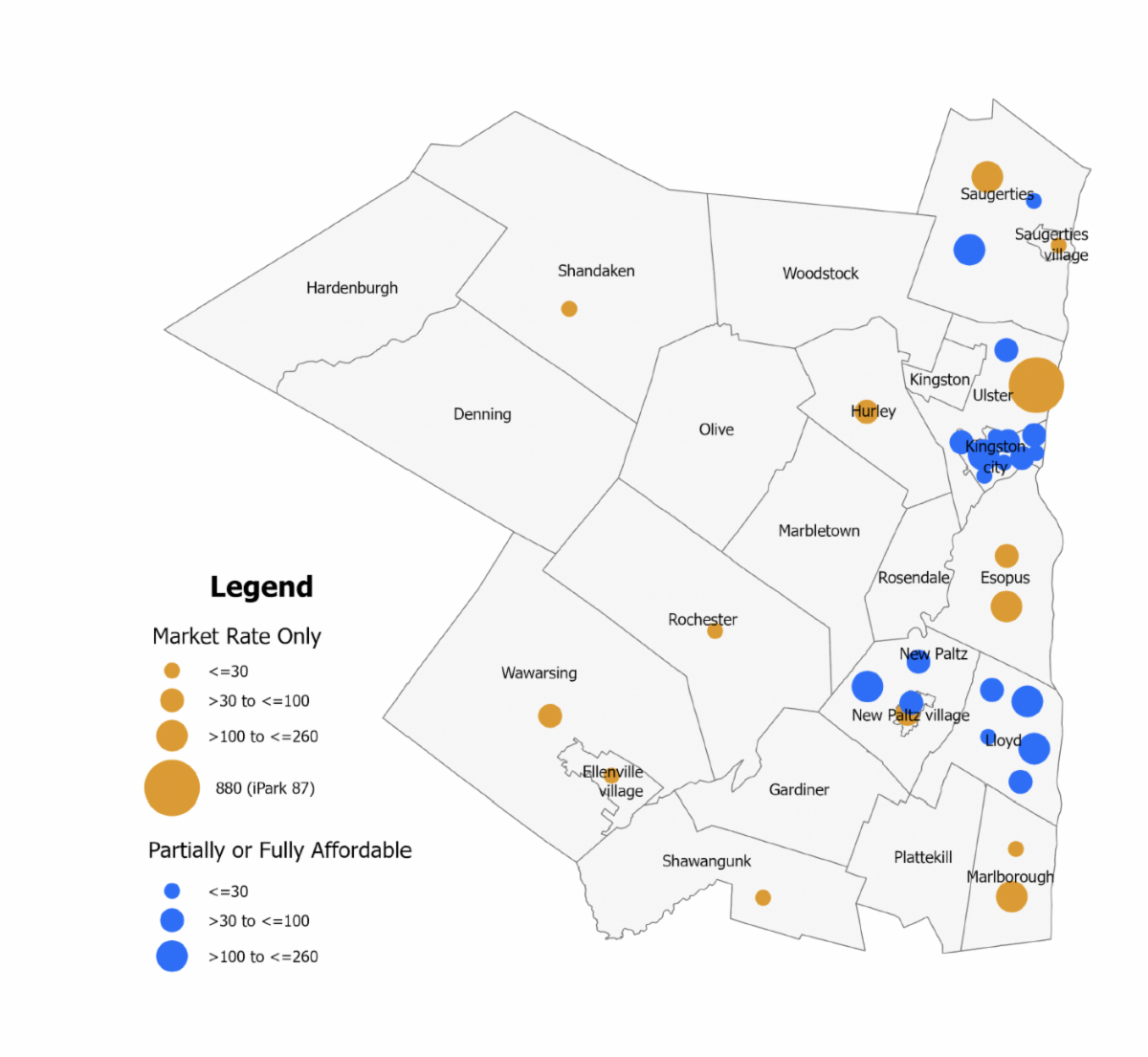
Ulster County's Housing Development Pipeline
Ulster County has a strong but tentative housing
development pipeline.
• About 3,000 units built, under construction, approved
or pending land-use approvals
• About one-third of those are recently completed or
under construction
• About 700 are approved and facing capital or other
difficulties
• About 1,300 are under review or otherwise pending
• Other projects are waiting just outside the planning
boards’ doorsteps
VIEW SLIDESHOW ON THE ULSTER HOUSING CRISES BY ADAM BOSCH OF PATTERN FOR PROGRESS - CLICK HERE
(Source:Pattern for Progress)
| | | |
Please support local independent journalism by subscribing
Local news is a business - it not only creates jobs and supports families, it's also an essential lever to a healthy democracy. Please consider subscribing to a local paper/news source so Ulster doesn't end up a 'local news desert' like too many communities have become across the US.
| | | QUICK BUSINESS NEWS UPDATES | | |
(Daily Freeman)
Plans for a 250-megawatt Terra-Gen lithium-ion rechargeable battery electricity production plant on Hurley Avenue are expected to include community benefits packages based on effects to the municipality.
The potential funding was discussed during an hour-long interview Wednesday, May 21. A company official declined to reveal its negotiating position two weeks after submitting a $250,000 application fee for development of the 12-acre facility on the site of the former John A. Coleman Catholic High School.
“That’s a conversation that we really haven’t gotten into with the supervisor and the municipality just yet,” Terra-Gen Vice President Mark Turner said. “I don’t want to get in front of what the supervisor in the town (is) thinking. We haven’t started on that yet, and I don’t want to upset them or say anything that’s inaccurate.”
The 711-acre parcel once eyed for a luxury resort near Belleayre Mountain is likely headed for commercial, residential and mixed-use development, according to Thomas Dolan, founding partner of the Boston-based real estate firm now marketing the property.
The land long associated with the ambitious yet unrealized Belleayre Resort at Catskill Park, was the vision of entrepreneur Dean Gitter, who passed away in December 2018. The project, developed under Crossroads Ventures, faced years of regulatory and legal challenges before being shelved.
Now, Dolan says the future of the western Ulster County land lies in reimagining it for broader economic potential. “We are still working through some of these details,” Dolan told Mid-Hudson News in a written statement. He noted that he is reviewing hundreds of documents tied to prior approvals across 26 parcels of the property, located in the heart of the Catskills.......
The site, nestled near the state-run Belleayre Mountain Ski Center, has long been seen as a keystone for regional development. With the property now up for sale, its future remains uncertain, but the vision has clearly shifted from resort to revitalization.
(Daily Freeman)
DENIED! Multi-family housing in the middle of the village, where there is walkability to all amenities. How can we get to YES?
Village officials are ending a proposed land swap with a developer who is seeking easy access for the proposed 167-unit Country Meadows apartment complex in exchange for property that could have been used for a new village salt shed.
Mayor Bill Murphy announced the end of consideration for a trade on Monday during a Village Board meeting.
“This land swap issue has caused so much disruption, I’ve even told the Planning Board (to) deny it,” he said.
(Mid Hudson News)
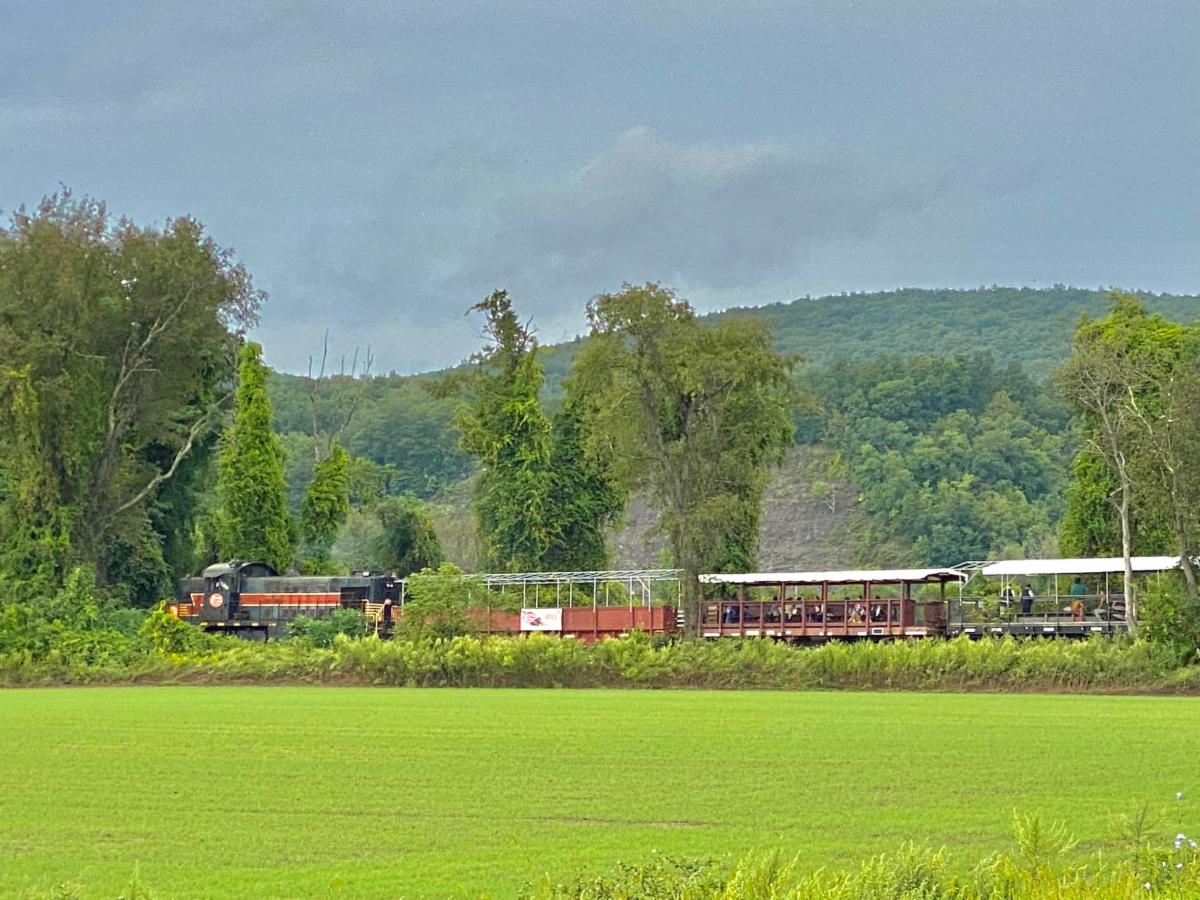
"In an unexpected new development in the continuing struggle between the Catskill Mountain Railroad and local trails enthusiasts, one of the railroad's strongest allies in county government has resigned — citing unspecified “pressures” — from the committee tasked with helping to resolve the dispute. Central to the matter is the use of an undeveloped portion of former railroad corridor that could, potentially, link a trail in the City of Kingston with the Ashokan Rail Trail.
The Legislature's Ulster & Delaware Advisory Committee has, as its name suggests, only advisory power. But it has proven to be an effective persuader; its current majority has a prickly relationship with CMRR honcho Ernie Hunt.
Still, Legislator Herb Litts (R-Esopus/Lloyd), the committee’s vice chair, has consistently spoken up for, at least, joint use of the corridor, brandishing his engineering credentials to question the results of outside consultants' feasibility studies.
Litts also happens to be an employee of Greenman-Pedersen, Inc. (GPI), an engineering consulting firm that had been retained by trails advocate Open Space Institute to assist in a feasibility study of the disputed corridor. That study found a side-by-side rail and trail connection from the Ashokan Rail Trail to Kingston would cost four to five times greater than trail only."
(New York Times)
The largest single taxpayer in the Catskills is New York City.
To protect its drinking water — 90 percent of which comes from Catskills watersheds — the city spent nearly three decades accumulating 156,350 acres of forest and fields. It’s an area larger than all the land in Brooklyn, Queens, the Bronx, and Manhattan combined.
The idea was to keep human and agricultural waste out of the drinking water, so that the city could get a waiver on filtering it from the Environmental Protection Agency. Filtration would have been prohibitively expensive: an estimated $8 billion to build the facilities, and $500 million annually to maintain them.
Instead, the city and a group of Catskills communities negotiated an agreement that secured the EPA waiver. The city would fund local water-quality projects, like the construction of sewage treatment plants, but it would also be allowed to solicit and purchase properties to protect the water supply. Beginning in 1997, the city spent $518 million to assemble a vast patchwork of parcels, mostly in the northern half of the mountains....
Now the buying spree is over.
Last fall, the city quietly agreed to wind down most of the so-called Land Acquisition Program (it will keep the land it has already purchased). An independent review of the program by the National Academies, commissioned by the city’s Department of Environmental Protection, had concluded that the majority of further land purchases would be of little benefit, since most of the available properties contribute little pollution to the water supply.
Official warns tax increase may be needed if trend doesn’t reverse
(Daily Freeman)
Sales taxes in the city have ridden wild swings over the past few months to a 4% decline, and the city’s comptroller warned that if the decline continues, the city may need to raise taxes next year to plug the hole.
City Comptroller John Tuey told the Common Council’s Finance and Audit Committee last week that sales taxes have been like a yo-yo this year, with sales tax revenue plummeting 22.59% in February, before bouncing back up 12.64% in March, according to the latest statistics for this year. He added that compared to last year at this time, revenues are down $200,000, or 4%, putting the city’s 2025 sales tax budget at risk. “This is something we’re really going to have to keep an eye on,” he said.
“We had budgeted $180,000 over last year, a 1% increase,” he told lawmakers.
| | |
Real Estate Heats Up for Spring
Uncertain Times Make Uncertain Market
(Shawangunk Journal)
| | |
That lack of inventory is a fundamental factor in the market for the entire Hudson Valley. Spring is also the point where people who want to sell a property, who have sat on it through the winter are likely to test the market and see what offers they might get.
Ulster County is pegged, countywide, at around $405,000 for an average house. On the high end – think mansions and anything in Woodstock, it’s $1 to $2 million, of course. Lowest end, well, there are still $200,000 places. However, one trend reported by realtors is that buyers today usually do not want to have to do a lot of repairs or put in new boilers and wells. Understandable in times of inflation and tariffs.
Sullivan County is lower priced, averaging $300,000 to $350,000. Orange, closer to the city and just within commuting distance commands a slight premium with an average price of $430,000. That’s not as much difference as you might expect between it and Ulster, which seems to be a trend in the past few years, as many movers have been leapfrogging Orange for Ulster.
Ulster County has been the center of attention for a few years now, and that has raised prices which may cool the market down. Remains to be seen, but that is the general tone of market reports this week everywhere.
How long a property stays on the market, therefore, is simply not predictable.
| | |
COMPARISON
Catskill Mountain Rail Road Basin Road Terminal Proposal vs
Collins 'Compromise'/Stony Hollow Terminal Proposal
| | |
Ulster County IDA
Summit
| | |
Join the Ulster County IDA and UlsterCounty CRC for an inspiring evening focused on economic development, innovation, and opportunity. Learn how the UCIDA plays a critical role in driving job creation and building a vibrant, prosperous future for our community. JUNE 5th, 5-7:30pm at THE HUDSON HOUSE AND DISTILLERY at 1835 RTE 9W WEST PARK, NY 12493.
Panelists:
Eddie MoranUlster County Historian
Peter CriswellChair of the Ulster County Legislature
LaMar Hill Executive Director of NY Design
Laura Nordstrom Ulster County Director of Housing and Homelessness
Partners at Empire State Development Mid-Hudson Regional Office
Hear from Expert Speakers on Key Economic Development Topics
Join us at no Cost - Enjoy Light Refreshments, Networking and Conversation.
Click here to secure your seat or sign up on our website.
| | |
Ulster Strong is a non-profit advocating a pro-growth agenda that balances good jobs and investment opportunities with the environment and sustainability.
ULSTER STRONG SUPPORTS
Adding good-paying jobs;
Diversifying the local economy so it’s more resilient;
Encouraging new investment;
Balancing the environment with local economic needs;
Growing local tax base to support community services including schools, infrastructure and emergency services;
Updating planning and development procedures to be more
transparent and timely.
MEMBERSHIP INQUIRIES
| | Our Company | Contact Us | FAQs | Privacy Policy |
| | | |