A Roundup of Recent Ulster County Business-Related News, Views, and More
December 31st, 2025
| | |
Happy New Year's to all! May your holidays be joyful and your new year's forecast be bright. We invite you to take a watch of our 2025 Ulster Strong video recap. We've been busy. And the local challenges are growing.
Most distressingly, our local middle class is shrinking - either forced to move away or unable to keep up with costs and increasingly dependent on government programs. The reasons are multifaceted, but generally our middle class can't keep up because of the lack of better-paying jobs, enough housing for all, rising taxes and fees, and a growing anti-business sentiment that makes doing business locally unnecessarily difficult. And while many local officials and political candidates publicly profess their support of local economic development (see Ulster Strong's candidate survey results on our prior month's newsletter), little in the way of action has taken place. It's not that Ulster County can't do so - it has in the past with promotions, commercial space lease and sale marketing, prospects tours, facilitating financing, and much more. But that has all but stopped, and frustratingly, one consequence is the squeezing out of our middle class. We believe that a thriving middle class is dependent upon a thriving business climate, and vice versa.
Lots of important local economic news this edition - enjoy! and See you in the New Year!
| | |
This newsletter includes the following:
iPark 87 officials blame Ulster County for lack of tenants at town of Ulster site
Saugerties Town Board reevaluates Winston Farm project due to water issues
Valley Forged - Behind the scenes of the Hudson Valley Economic Development Corporation
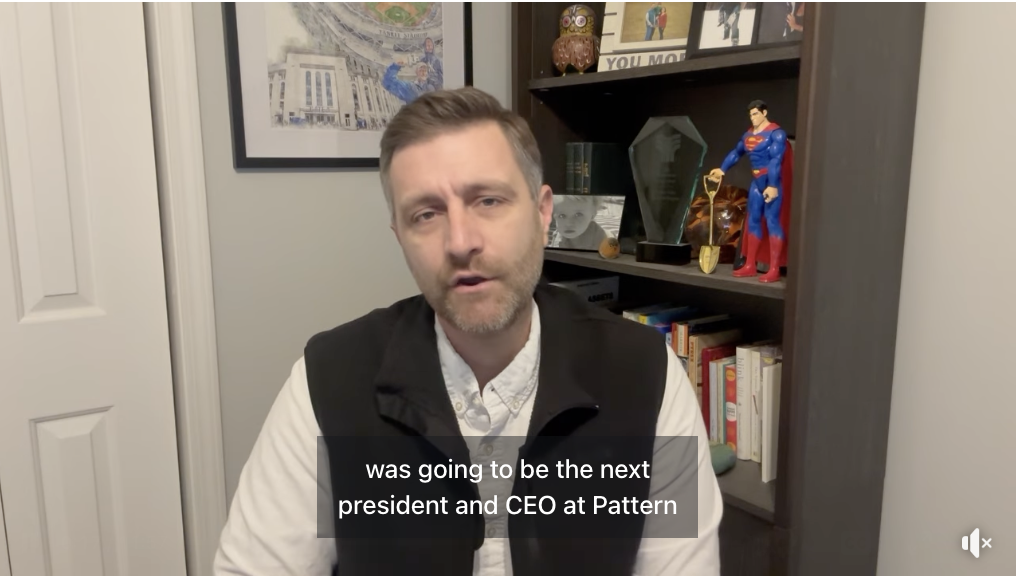
Adam Bosch announces his departure as CEO of Pattern for Progress - gives thank-you message and notes highlights of work
Kingston Common Council votes to continue rent control under ETPA
Kingston’s new Midtown Business Alliance president strives to guide a dynamic neighborhood through a growth surge
As pandemic housing boom fades, some Hudson Valley sellers are left waiting
QUICK BUSINESS NEWS UPDATES
| | |
iPark 87 officials blame Ulster County for lack of tenants at town of Ulster site
(Daily Freeman)
| | |
NOTE: National Resources didn't just stop paying their taxes - they were in the middle of a grievance process to contest the assessed value - an ability every property owner has. National Resources wouldn't just 'give back' the West Campus of the former IBM site after putting in so much money, as they are now offering, if they didn't believe they were cutting their losses on the project. Remember, once the county takes it back, local taxpayers are again on the hook for taxes and costs of maintenance.
National Resources Inc. clapped back against claims by Ulster County and the Economic Development Agency that the company has rejected efforts to address the outstanding debt it owes on the former TechCity site.
In a statement on Monday, the Connecticut-based real estate company said it has offered to return the property to the county because the county has failed to attract tenants to the site, which the company said was integral to the project’s success.
The company’s statement came in response to news that the Ulster County Economic Development Alliance had voted to reclaim ownership of the site’s west campus through a “deed-in-lieu-of-foreclosure process.”
In an email to the Freeman, Alliance Chairman Greg Simpson said the decision was made following “months of sustained efforts by the Board to work with National Resources to address outstanding debt on the property.”
National Resources Inc. purchased the west campus property for $6.8 million in 2023. Simpson said National Resources hasn’t made a single mortgage payment on the property.
In its statement, the company said the “genesis of the most recent economic redevelopment efforts for the former IBM East and West Campus in Ulster, New York was based upon a public-private partnership among i.Park, Ulster County, UCEDA and other interested parties, including the Town of UIster.”
Since purchasing the Tech City site, the company said it has invested over $40 million into the property, cleaned up long-standing environmental problems, and filled 150,000 square-feet of commercial space.
“Given the extent of the foregoing work by i.Park, it is time for Ulster County to hold up its end of the bargain and deliver tenants to the site.”
| | Saugerties Town Board reevaluates Winston Farm project due to water issues | | |
Housing or Parks? Does Ulster need another park? or more housing? or how about both? Many opponents of the Winston Farm housing development are championing instead a 'Central Park in Saugerties' instead of building housing, right beside Exit 20 off the Thruway.
The debate continues with more studies, funded by opponents of the proposed development, presented to the town board. If we are ever to resolve the housing crises, we need to find ways to build more housing. NYS has under-built housing since 2008 and the pressure continues to build as seen in affordability.
"Despite the efforts of the developers and owners of the 840-acre Winston Farm, new information about water is still being considered by the Saugerties Town Board as it reviews an evolving project that could have significant impacts on the lives of local residents.
Last month, the Saugerties town board heard a presentation by hydrologist and geologist Paul Rubin, president of Tivoli-based HydroQuest. His study focused on groundwater supply and drought protection, and covered centuries of history and how that might relate to the present and future."
| | |
Valley Forged
Behind the scenes of the Hudson Valley Economic Development Corporation
by Zac Shaw for Ulster Strong
| | |
At a moment when many employers say they can’t hire fast enough and many residents struggle to find affordable housing, one question keeps coming up in boardrooms and planning meetings across the Hudson Valley. How are these projects actually going to get built?
“The Hudson Valley Economic Development Corporation (HVEDC) is a regional economic development organization dedicated to advancing the long-term prosperity of the Hudson Valley,” said Mike Oates, president and CEO of HVEDC. “Our mission is to attract, retain, and grow businesses while strengthening the region’s communities and quality of life.”
Oates described his agency’s work as regional by design, collaborative by necessity. “We fulfill that mission by working collaboratively across county lines with businesses, local governments, educational institutions, and community partners to market the region, support strategic development projects, and ensure the Hudson Valley remains competitive in a rapidly changing economy,” he said.
For many business owners, the most immediate value is the friction that HVEDC can reduce. Oates said the organization often plays a connector role between private timelines and public systems. “HVEDC serves as a connector and facilitator,” he said. “We help businesses navigate site selection, workforce development, incentives, and regulatory processes, often acting as a single point of contact across multiple jurisdictions.”
He stressed that the job is not only about B2B networking. “We work closely with local, county, and state governments to align economic development priorities, promote smart growth, and support projects that deliver real community benefits,” Oates said. “Our role is often behind the scenes, helping to bring the right stakeholders together to move projects forward efficiently and responsibly.”
That behind-the-scenes role matters because the Hudson Valley’s most attractive qualities can also make projects harder to execute. The region is not a blank slate. It has long-established town centers, historic districts, protected open spaces, and intense local engagement. In many communities, growth is both desired and feared, occasionally in the same sentence.
Oates said HVEDC’s approach starts with a long-term view of what “growth” should mean here. “Our vision is a Hudson Valley that offers strong economic opportunity without sacrificing the qualities that make the region special,” he said. “That means encouraging development that is sustainable, well-planned, and community-centered, supporting good jobs, vibrant downtowns, housing options for all income levels, and environmental stewardship.”
Oates agrees that the idea that residents must choose between business development or quality of life is a false choice. “We believe economic growth and quality of life are not competing goals,” Oates said. “When done right, they reinforce one another.”
His message is aimed at more than large developers. It is also aimed at small and mid-sized businesses that depend on the same conditions, like housing stability, reliable infrastructure, and a workforce that can stay local. Oates said those conditions are now central to competitiveness. “Businesses want to grow here, but they need certainty, speed, and a workforce that can afford to live locally,” he said, echoing what many local business leaders have been saying in recent years.
“The Hudson Valley is experiencing strong opportunities across a diverse set of industries, including advanced manufacturing, life sciences, clean energy, logistics, tourism and hospitality, and technology,” Oates said, highlighting a trend toward diversifying the local economy’s inputs and outputs.
Tourism and hospitality, he argued, are not just about hotels and restaurants. They also generate secondary demand for contractors, suppliers, service firms, and retail. “In tourism and hospitality, investments such as the continued success of Mohonk Mountain House and the development of the Wildflower Resort in Ulster County demonstrate the region’s growing appeal as a year-round destination that combines natural beauty, wellness, culture, and accessibility to major metropolitan markets,” he said. “These projects not only support local jobs but also drive demand for complementary businesses across the region.”
Oates sees promise in technology as a driving force for economic development. “The Hudson Valley is emerging as a hub for next-generation innovation,” he said. “IBM’s quantum computing efforts in the region have helped position the Valley at the forefront of advanced research and commercialization, while the growing importance of artificial intelligence and cybersecurity is creating new opportunities for startups, established firms, and workforce development partnerships.”
He linked those sectors to a simple strategic advantage that businesses of any size can see: People want to live here. “These sectors are drawn here by our highly educated workforce, strong academic institutions, and proximity to New York City’s financial, media, and research ecosystems,” Oates said. “These opportunities exist because of the Hudson Valley’s strategic location, quality of life, transportation infrastructure, and a collaborative regional approach to economic development.”
Of course, employees need affordable places to live, and many areas of the Hudson Valley have seen skyrocketing rents and home prices combined with low vacancy. The supply isn’t meeting the demand, so Oates and team are tackling the issue head-on. “Housing is another critical area of our work,” he said. “We are engaged in numerous workforce housing projects throughout the region, recognizing that housing availability and affordability are essential to economic competitiveness.”
He said the work requires coordination between public policy and private capital, and it cannot be solved one municipality at a time. “These efforts span multiple counties and involve close coordination with local governments and private developers to align housing supply with job growth,” Oates said.
He also pointed to mixed-use models as a way to connect jobs, services, and daily life. “In Dutchess County, we are also excited about the expansion of the Bellefield project,” Oates said. “It continues to be a strong example of mixed-use, transit-accessible development that supports both economic activity and quality of life.”
Oates added another development effort that has drawn regional attention from the business community. “We are also working to bring high quality jobs to iPark87 in partnership with National Resources,” he said.
Those projects, he suggested, illustrate why the organization spends so much time on process, relationships, and sequencing. The deals that look straightforward on paper can become complicated quickly once they enter public view.
“Like many regions, we face challenges related to housing affordability, workforce availability, infrastructure capacity, and regulatory complexity,” Oates said. “Addressing these challenges requires coordination, long-term planning, and honest conversations about trade-offs, something HVEDC works to facilitate every day.”
For developers and business leaders, the trade-offs often show up as community opposition that feels inconsistent. Communities may support new housing in principle while rejecting specific housing proposals. They may support clean energy goals while opposing particular projects or sites. Oates said that pattern is not a reason to dismiss communities. He said it is a reason to engage differently.
“Early, transparent, and genuine engagement is critical,” Oates said. “Developers who involve communities early in the process, before plans are finalized, are far more likely to build trust and address concerns constructively.”
He said acceptance rises when the conversation is framed around outcomes, not only design. “Clearly explaining not just what is being built, but why it matters, who benefits, and how impacts will be mitigated can make a significant difference,” Oates said.
He also argued that developers do better when they treat planning documents as signals, not obstacles. “Successful projects also tend to align closely with local plans and priorities,” Oates said. “They treat community input as an asset rather than an obstacle.”
Oates’ closing message was a call for earlier engagement with HVEDC, before a company is stuck reacting to delays or confusion. “The Hudson Valley is a region of opportunity, but success here depends on collaboration and a long-term perspective,” he said. “HVEDC is here to help businesses and developers understand the landscape, build partnerships, and move forward in ways that benefit both their projects and our communities.”
He emphasized timing and openness. “We encourage anyone considering investment in the region to reach out early,” Oates said. “Our team is always happy to start a conversation and help chart a path forward.”
He returned to the theme that the work is often invisible precisely because it is designed to smooth the path. “Our role is often behind the scenes,” Oates said, “helping to bring the right stakeholders together to move projects forward efficiently and responsibly.”
For more information visit, hvedc.com.
| | |
Adam Bosch announces his departure as CEO of Pattern for Progress - gives thank-you message and notes highlights of work
| | |
Changing the Guard at Pattern for Progress
(Kingston Wire by Jesse J. Smith)
NEWBURGH - The head of regional think tank Hudson Valley Pattern for Progress will step down to take a position with the New York City Department of Environmental Protection. Adam Bosch’s departure was announced in a press statement last week.
Established in 1965, Pattern has provided generations of elected officials, business and nonprofit leaders with data-driven analyses and policy prescriptions on population trends, economic development and other issues impacting the Hudson Valley. The nonprofit’s work has emphasized enhanced cooperation between local governments and a regional approach to issues like homelessness, declining public school enrollment and criminal justice. Locally, Pattern for Progress has partnered with Ulster County and the City of Kingston to produce reports and explore solutions to issues like vacant buildings, housing affordability and food insecurity.
Bosch, a former reporter for the Times Herald-Record, joined Hudson Valley Pattern for Progress as a researcher in 2012 before leaving for a post in the communications department at the New York City Department of Environmental Protection. He rejoined the think tank as president and CEO in 2022. Bosch is set to return to DEP in what the press statement called a “senior leadership role.”
In the statement, Pattern board Chairwoman Mary Beth Bianconi credited Bosch with “ground-breaking research and robust communication” and with developing a broader audience and wider recognition for the think tank’s efforts.
“When we consider Pattern’s goals, we focus on moving the dial, being an honest broker, and examining topics that are regionally significant,” Bianconi wrote. “Adam exceeded all expectations with respect to advancing Pattern’s mission.”
Pattern Vice President for Operations Robin DeGroat will handle day-to-day running of the organization while the board conducts a search for a new President and CEO. Bosch will remain as a special advisor during the transition period.
“I am proud that our work drove zoning and regional development decisions, influenced state programs on infrastructure and childcare and completely reshaped the regional conversation about housing,” Bosch wrote in the statement. “There are few nonprofits like Pattern in the United States. The Hudson Valley is fortunate to have an organization the provides objective research, develops strategic planning and convenes the region around issues that genuinely affect our quality of life.”
| |
Kingston Common Council votes to continue rent control under ETPA
(Daily Freeman)
| | |
NOTE: City of Kingston published a vacancy study this summer showing the vacancy rate was 7%. However, that study was ignored in the Common Council's deliberations.
Rent control protections under the Emergency Tenant Protection Act will continue in the city after the Kingston Common Council voted unanimously on Wednesday to continue a housing emergency declaration.
The Kingston Common Council voted 8-0 during a special council meeting to continue rent control protections under the Emergency Tenant Protection Act for all tenants currently covered, which applies to all buildings of six or more units constructed before 1974. A landlord’s group with an extensive history of litigation over the city over ETPA and the housing emergency declaration has vowed legal action against the city.
In their decision, lawmakers cited overwhelming evidence for continuing a housing emergency, including a 4.55% citywide vacancy rate found in a 2025 follow-up citywide vacancy study released to the public in August, and public comments speaking overwhelmingly in favor of continuing rent control at two-hour-plus hearings in November at City Hall and the Kingston Library.
| |
Kingston’s new Midtown Business Alliance president strives to guide a dynamic neighborhood through a growth surge
By Zac Shaw for HV1
| | |
A strong case can be made that Midtown Kingston is emerging as the most up-and-coming neighborhood in all of Ulster County, if not the whole of the Hudson Valley.
There are hundreds of new units of housing being built, including numerous commercial spaces integrated in mixed-use developments. New businesses are opening and relocating in Midtown at a steady clip. Kingston Bread + Bar, Free to Thrift, Kestrel Tavern, Hub Dispensary, Upstate Films, Total Wireless and the Freakout Spot record shop pop-up all opened this year. More are on the way.
Tubby’s, UPAC, West Kill Supply and Chromatic Studios supply a constant soundtrack as music venues, while marquee galleries and museums like CPW, Kingston Pop Museum and The International Museum of Dinnerware Design dish out a feast for the eyes. And speaking of feasts – the Midtown dining scene gives any major metropolitan neighborhood a run for its money, with numerous American, Latin and Chinese cuisine options alongside a globe-spanning selection that includes Japanese (Yasuda), Turkish (Masa), Spanish (Mirador), Caribbean (Top Taste and JJ Eva Spice), Indian (Calcutta Kitchens), and Italian (Frank Guido’s LIttle Italy). The list of exciting destinations is already long, and we haven’t even covered the coffee shops, breweries, bars, fast food, arts and community organizations and other small businesses.
New Midtown Business Alliance president Bill Cranston has a lot on his plate.
He’s also unusually well-positioned to tackle it all. Cranston is a Midtown resident and longtime Kingstonian who owns Boulevard Wine & Spirits at the corner of Greenkill Avenue and Route 32. His wife, Chef Oz, runs Masa Midtown, one of the neighborhood’s culinary anchors.
“I’ve been a Kingston resident most of my life,” he said. “I left for New York for opportunity, and I returned to Kingston for opportunity.”
He describes the neighborhood’s current moment as balancing the surge of growth with the challenges of income inequality and hosting a city sub-population in poverty and crisis.
“There’s a palpable energy in the streets,” Cranston said. “There’s a vibrant scene. There’s resiliency that we want to capture and build on. But it has its problems, too. We’re at a significant crossroads in the neighborhood right now, and there’s a strong belief that it could still go either way. There’s so much positive — so much good going on — and at the same time, a lot of the issues we’re seeing are humanitarian issues tied to a growing population in crisis. Addiction is a huge problem, and we need to face that head-on. You can’t ignore it.”
Cranston relayed the comments of a Midtown restaurateur he knows, who told him: “I can have a Rivian pull up and order $500 worth of takeout, and two minutes later, I can have a person in crisis come in looking for a hot cup of soup.”
“We don’t want the problem to just ‘disappear,’” Cranston continued. “We need to work collectively to help those people and help the community. We should not grow accustomed to walking by somebody on a bench, in crisis, and being okay with that. That needs to be addressed. It needs to be talked about. And agencies need to be held accountable in delivering the services to the people that need them.”
Cranston’s emphasis on “accountability” comes up repeatedly, and not only in conversations about social services. He uses the same word when talking about development, investment, and the kinds of businesses moving into Midtown.
“I think the Midtown Business Alliance can facilitate a level of accountability that any new investment coming in should be held to,” he said. “There needs to be accountability to the neighborhood. There’s a social responsibility for any new business to be involved in the community. A lot of things in this country are singularly profit-driven — and I’m not anti-capitalist, I’m a business person too — but it’s not just the restaurant and it’s not just the bottom line. It’s seeing a better neighborhood for everyone: for you, for me, for somebody who’s been here for generations, and somebody who just got here last week.”
The challenge, he said, is making sure the people who have been here all along don’t get treated as an afterthought when Midtown is being “rediscovered.”
“In that gold rush, we cannot just drown out the old voices and the old residents — the important people who have stuck it out and have been here a long time,” Cranston said. “If we’re going to do Midtown correctly, we need to give credence not only to residents, but to the businesses that were here prior — those are the people we have to make sure still have an equal voice at the table.”
Midtown’s biggest advantage, he argues, is that it remains an unusually mixed neighborhood by Hudson Valley standards, with different cultures, classes, and subcultures living close together. The goal isn’t to sand off that edge; it’s to keep it functional.
“I think Kingston needs to realize that it is a city,” he said. “That’s often part of the discussion. And in any city, you’re going to have different groups, different neighborhoods, different identities — including transplants. But that’s our resiliency: there are so many different backgrounds and it’s so diversified. That’s part of what makes it special.”
That dynamic vibrancy, he believes, has been overshadowed for too long by a Midtown narrative driven by crisis calls and bad headlines.
“When you hear the shots-fired reports or the people-in-crisis reports, for a long time that was all we were hearing about Midtown,” Cranston said. “It was the negative. It’s time to change the lens. It’s time to celebrate the vibrant scene and the resiliency and the incredible things that are going on. Midtown has historically had a neglected voice. It’s been looked down upon. Time’s up on that. We need to leave that behind. It’s an antiquated prejudice that doesn’t serve any purpose.”
Still, he doesn’t pretend the concerns are imaginary, or that the neighborhood’s visible street-level disorder hasn’t affected how people experience Midtown — including workers.
“We have an opportunity here to do this correctly — to help people and continue this economic boom,” he said. “But we can’t let helping people fall by the wayside. Because if we don’t help them, that population increases, and it has an adverse impact on the businesses. We can’t have employees feeling uncomfortable walking home from work after their shift is done.”
Cranston said he’s encouraged by what he described as more active, more engaged policing in Midtown, but he’s careful to say that enforcement is only one piece of a much larger problem.
“It’s great to see patrol officers out,” he said. “Engaging directly with the community matters — that’s community-oriented policing, and I do think there’s a place for that in Midtown. But the answer isn’t strictly a change in police strategy. There are ongoing good conversations about the issues facing Midtown, and I think the county needs to be more directly involved. We’re not here to say there isn’t a humanitarian issue. And we’re also not taking a ‘not in my backyard’ approach. These people need help.”
One concrete change he wants in 2026 is to make the alliance’s meetings more visible and more rooted in the neighborhood.
“Everyone knows organizational meetings can be stoic and boring,” Cranston said. “We’re going to bring the meetings to the businesses in Midtown. We’re grateful to Radio Kingston for hosting for the past year, but now we want to bring it to the businesses — each month, a different location, some of them not even brick-and-mortar. That way, people can engage with different businesses, different voices, and it feels real.”
He also described “Midtown mix-ups,” designed to function like a chamber-style gathering while staying local, informal, and practical.
“We want to get voices, resources, and organizations in Midtown in the same room at the same time,” Cranston said. “That creates a chance for Rondout Savings Bank to come in and talk about their Midtown capital loan program — low interest, no collateral — which is an amazing program for Midtown businesses and entrepreneurs who want to open here. I believe Ulster County is about to roll out a bridge-gap loan program. We want those entities to come and engage directly with Midtown businesses.”
Cranston also is actively working with other city neighborhoods to connect the dots on commerce. Until recently, each of Kingston’s business districts operated more or less in silos.
“Historically, there was animosity between the business districts,” he said. “Now that we’re in communication, it’s like — why was it ever like that? We’re actively engaging with the other districts and working together, because it’s better for everyone. There’s no reason a guest staying uptown shouldn’t travel through Midtown, spend money throughout the city, and benefit everyone. The sales tax revenue goes to the same place.”
For residents or business owners who want to weigh in, Cranston said he’s intent on keeping the alliance reachable and personal.
“We want to hear from people,” he said. “We’re still young. We were born out of frustration during COVID, and we have a long way to go. We won’t be successful if we don’t get more engagement from the community. And if you reach out, you’re not getting an operator — it’s going to be me, the president of the Midtown Business Alliance, talking to you.”
For more information, visit kingstonmba.org.
| |
As pandemic housing boom fades, some Hudson Valley sellers are left waiting
While some who bought in 2020 and 2021 are trying to sell at those prices, many are holding out for stability
(Times Union)
| | |
"While it isn’t out of the ordinary to see a listing linger for weeks or months, it does signify a shift from the frenzy at the height of buying in late 2020 and throughout 2021.
Realtors and real estate experts who spoke with the Times Union all agreed that the days of skipping inspections, settling for a home that doesn’t check off everything on your list, and coming in hot with higher offers appear to be largely over. Now, the Hudson Valley real estate market is in a waiting period as things rebalance and look a bit more like they did pre-pandemic."
Many buyers who purchased in 2020 and 2021 and are now commuting to the city more often or realizing that Hudson Valley living wasn’t for them are struggling to recoup the higher costs they incurred.
At the height of the pandemic, “people were just buying anything at any price … and as fast as possible,” Gomez said. “But the buyer market isn’t responding to that anymore.”
| | | |
Support local independent journalism by subscribing
Local news is a business - it not only creates jobs and supports families, it's also an essential lever to a healthy democracy.
Please consider subscribing to a local paper/news source so Ulster doesn't become a 'local news desert'.
| | | QUICK BUSINESS NEWS UPDATES | | |
(Daily Freeman)
The city is seeking developers to redevelop the municipal parking lot on North Front Street adjacent to Front Street Tavern.
Mayor Steve Noble’s office announced Wednesday, Dec. 3, that the city has issued a Request for Expressions of Interest (RFEI) for a partial or full redevelopment of the approximately 60-space paid municipal parking lot at 65-67 N. Front St. that occupies an approxmiately 0.7-acre site. Officials added the city is seeking submissions from “qualified respondents demonstrating the technical, design, and financial capacity to deliver a large-scale redevelopment.”
The Business Park, located at 370-384 Delaware Avenue, is a 107-acre campus, currently owned by the Kingston Local Development Corporation (KLDC). The Business Park opened in 1998 and was designed to attract four to five light industrial companies totaling 300,000 to 500,000 square feet. The buildout of the Business Park included the construction of a new road that serves the Business Park, in addition to water, sewer, and utility infrastructure. There are currently two active commercial tenants: Howmet Aerospace and Community Manufacturing Solutions. In 2024, the City of Kingston contracted Buro Happold to provide architectural and design concepts for potential housing and/or mixed-used development in the Kingston Business Park.
The City of Kingston and the KLDC are seeking submissions from qualified respondents demonstrating the technical, design, and financial capacity to deliver a large-scale mixed-use redevelopment through a multi-year phased approach.
The RFEI can be found here https://kingston-ny.gov/.../Request_for_Expressions_of...
Proposals are due February 13, 2026.
More about the Kingston Business Park and the study can be found at https://engagekingston.com/kingston-business-park
(Kingston Wire)
ELLENVILLE - Mayor Evan Trent mentioned at the November 24 village board meeting that he has been studying legislation adopted by the City of Kingston that deals with abandoned buildings. The law was adopted by the Common Council of the City of Kingston in 2016. It was adapted from a law that has been on the books in Port Jervis for a long time.
The essence of the law is that owners and mortgagees have obligations even when their property is abandoned. Letting a house or commercial building fall into ruins is simply not allowed. Owners of such property cannot escape their obligation to the municipality and community.
Kingston’s code essentially says that owners or mortgagees of vacant buildings have 30 days from the vacancy to ensure that the building “be maintained in good repair and be structurally sound and free from rubbish, garbage and other debris.”
Another interesting section of the Kingston code sets out what happens once a code enforcement officer files a certification of abandonment. Said notice has to be served upon the owner in person or posted in a conspicuous place on the property as well as mailed via registered mail to the owner’s last known address.
Failure to pay any fees shall result in said fee being charged as a municipal lien on the property or added to the tax roll as an assessment or levied as a special tax against the land on which the building sits, or even “shall be recovered in a suit of law against the owner.”
No escape in other words. No walking away from an unkempt building that has been neglected and is no longer habitable.
Introducing the topic at the meeting, Trent explained that it would create a “fee class” with a dollar amount tied to square footage of the abandoned property. Trent suggested that this would motivate owners to take action to either repair such buildings, or remove them entirely and sell the property.
(Times Union)
EAST GREENBUSH — Rensselaer County’s tax rate will drop again in 2026.
Republican County Executive Steve McLaughlin on Thursday signed off a $446 million budget proposal that will lower property taxes 9.1% due, in part, to hearty sales tax coffers.
That rate — $3.23 per $1,000 in assessed value — will be the lowest it has been since 1990. It follows a string of back-to-back property tax cuts totaling more than 40% from McLaughlin’s administration over seven years.
The county executive, who defeated Democratic challenger Tiffani Silverman by a 7.9 percentage point margin in a second reelection bid this year, expects sales tax will continue to help leverage the county budget as long as the economy doesn’t collapse. Sales revenue is projected to generate $125 million for the county in 2026.
“It’s just better than getting it out of property taxes, which is sort of static, right? 'Here’s your house and we’re going to tax it X amount of dollars,'” McLaughlin said. “So as long as the sales tax remains very strong, we’re good.”
| | |
Ulster Strong is a non-profit advocating a pro-growth agenda that balances good jobs and investment opportunities with the environment and sustainability.
ULSTER STRONG SUPPORTS
Adding good-paying jobs;
Diversifying the local economy so it’s more resilient;
Encouraging new investment;
Balancing the environment with local economic needs;
Growing local tax base to support community services including schools, infrastructure and emergency services;
Updating planning and development procedures to be more
transparent and timely.
MEMBERSHIP INQUIRIES
| | Our Company | Contact Us | FAQs | Privacy Policy |
| | | |