The content in this preview is based on the last saved version of your email - any changes made to your email that have not been saved will not be shown in this preview.

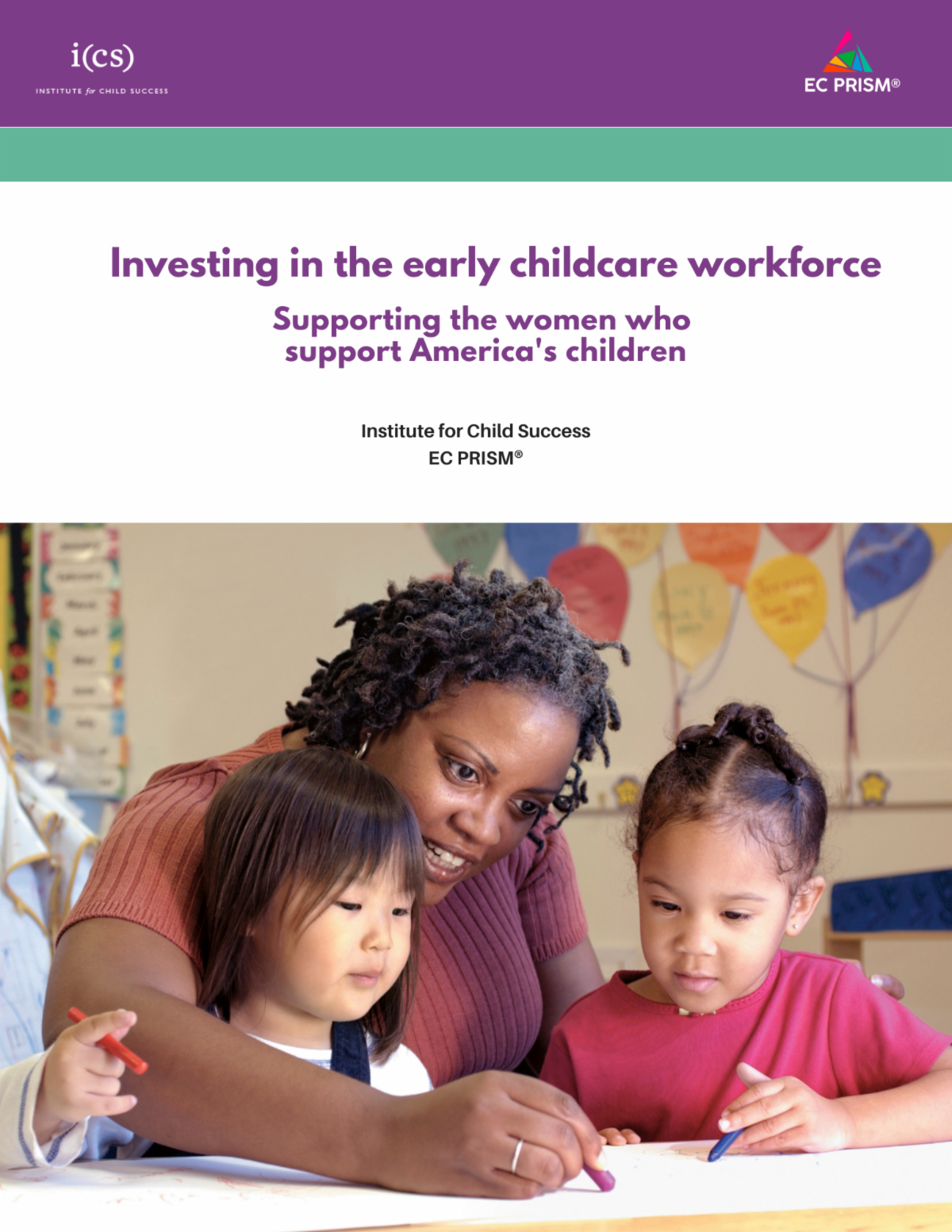
Women’s History Month & the early childcare workforce: Supporting the women who support American’s children

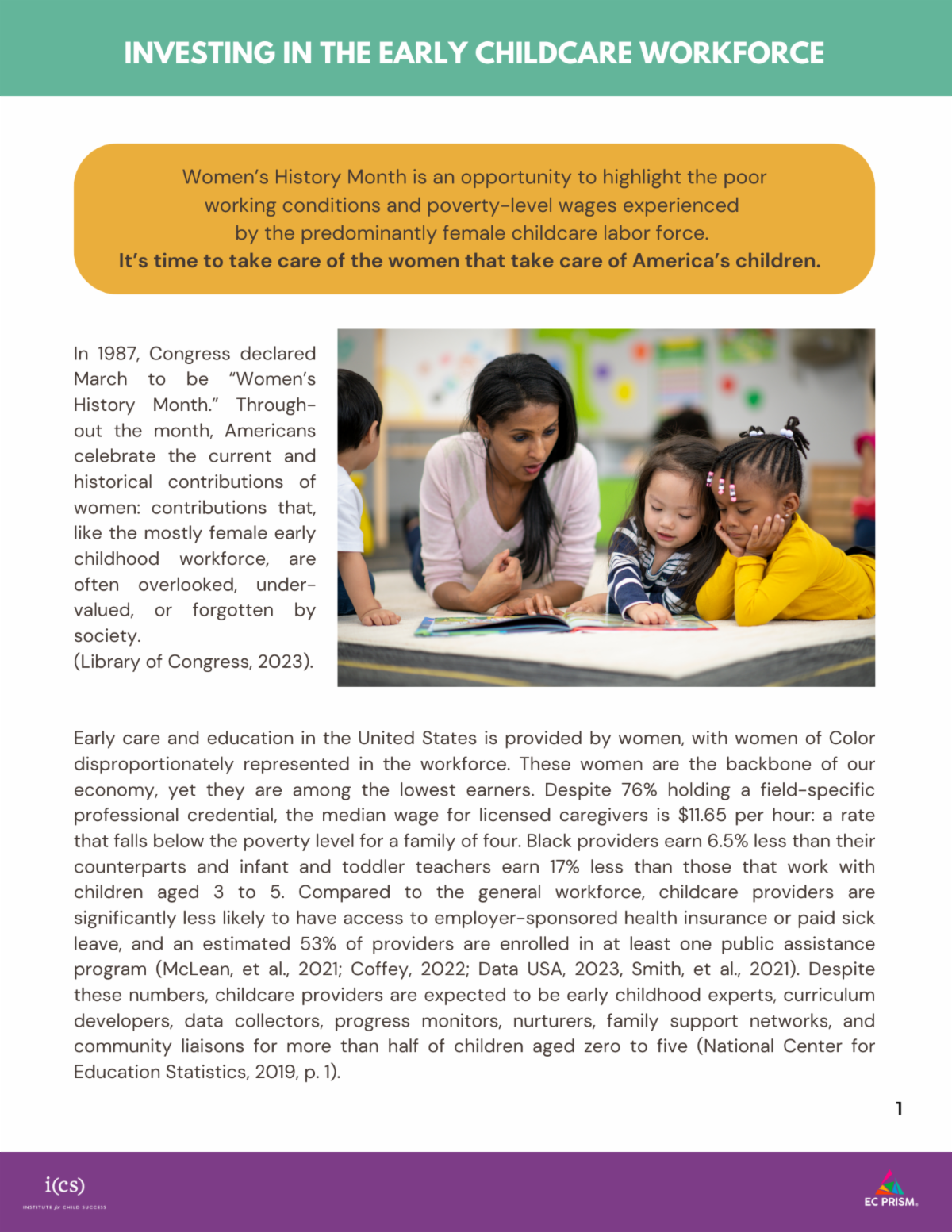
In 1987, Congress declared March to be “Women’s History Month.” Throughout the month, Americans celebrate the current and historical contributions of women—contributions that, like the mostly-female early childhood workforce, are often overlooked, undervalued, or forgotten by society. Early care and education in the United States is provided by women, with women of Color disproportionately represented in the workforce. These women are the backbone of our economy, yet they are among the lowest earners. Despite 76% holding a field-specific professional credential, the median wage for licensed caregivers is $11.65 per hour: a rate that falls below the poverty level for a family of four. 


Because of poor working conditions and poverty-level wages, childcare providers are leaving the field permanently. Directors and parents report empty, darkened classrooms, once full of laughter and learning, now closed due to staffing shortages. A report from the Center for American Progress estimates that between February 2020 and September 2022, the workforce lost 88,000 jobs, leaving approximately 460,000 families without care. 


For 36 years, Women’s History Month has celebrated women’s contributions to American society. To solve the childcare crisis, Americans will need to do more than issue proclamations, and the efforts we list below must persist well beyond March: 


1. We must invest in the women that care for America’s children—an investment that, economists and educators agree, will have significant financial and social returns.

2. Professional empowerment efforts must ensure that programs intended to professionalize the workforce don’t disenfranchise the field.

3. Keep the conversation going, to bring about policy change.

Report—Early childhood workforce: Supporting the professionals who support our families  

In this report, ICS reveals four key areas of critically needed support for the early childhood workforce:


  • Pay & benefits
  • Burnout 
  • Retention 
  • Safety


Read more to learn about how to address these challenges, both at the policy level and program level.

Fact sheet—Supporting the early childhood workforce 

Find key strategies to help alleviate the current challenges of the early childhood workforce, including:


  • Cultivating conditions to protect against burnout 
  • Peer support 
  • Virtual opportunities 
  • Professional development 
  • Safety considerations 

Early childhood workforce assessments on the IMPACT Measures Tool

From the Field

NAYEC early educators answer: "What is the current state of child care in America—and what would a significant investment in child care mean to you?"

Fourth Economy: Making the economy work for working families

Read Fourth Economy’s article to learn more about family-supportive economic development practices, including:


  • Access to quality, affordable child care 
  • Support for workers caring for adult family members 
  • Paid family and medical leave 
  • Inclusive career advancement and job training opportunities 
  • A fair and just living wage

Learn more about IMPACT

IMPACT is a suite of tools and resources to help support the measurement needs of the early childhood field, including the IMPACT Measures Tool®, a repository of early childhood and parenting measures. In addition to our Measures Tool, our IMPACT offerings also include educational content such as videos, articles, and practical tools, which you can explore on our Learn page.


For more information on using the IMPACT Measures Tool®, watch our tutorial video.

Keep in touch

Have questions about early childhood measurement? Know of an exciting innovation in this area? Let us know! Email us at ecprism@instituteforchildsuccess.org or reach out to us on social media at @ec_prism.

We would like to thank the Pritzker Children’s Initiative, Overdeck Family Foundation, Valhalla Foundation, the Heising-Simons Foundation, and the Brady Education Foundation for their generous support of the IMPACT project, which has made our work possible.

Twitter  LinkedIn  Facebook

Was this email forwarded to you? Subscribe to receive our newsletter!

View as Webpage