The content in this preview is based on the last saved version of your email - any changes made to your email that have not been saved will not be shown in this preview.

January/February 2026


View as Webpage

A Note from the Chair

Welcome to the latest edition of the Department of Economics newsletter! As we embrace the winter challenges, we're excited to share the latest news, updates, and stories from our community. Just around the corner, our Economics Policy Forum returns on February 5th with Yale health economist Zack Cooper discussing the pressing challenge of rising health care costs. This issue also showcases the breadth of our department's work—from Associate Teaching Professor Jill Dupree's immersive Rwanda Dialogue program to Associate Professor Bilge Erten's research on substance use treatment and intimate partner violence, and our six outstanding PhD candidates on the job market. You'll also find updates on upcoming events and recent news coverage of our department community. 


Warm regards,


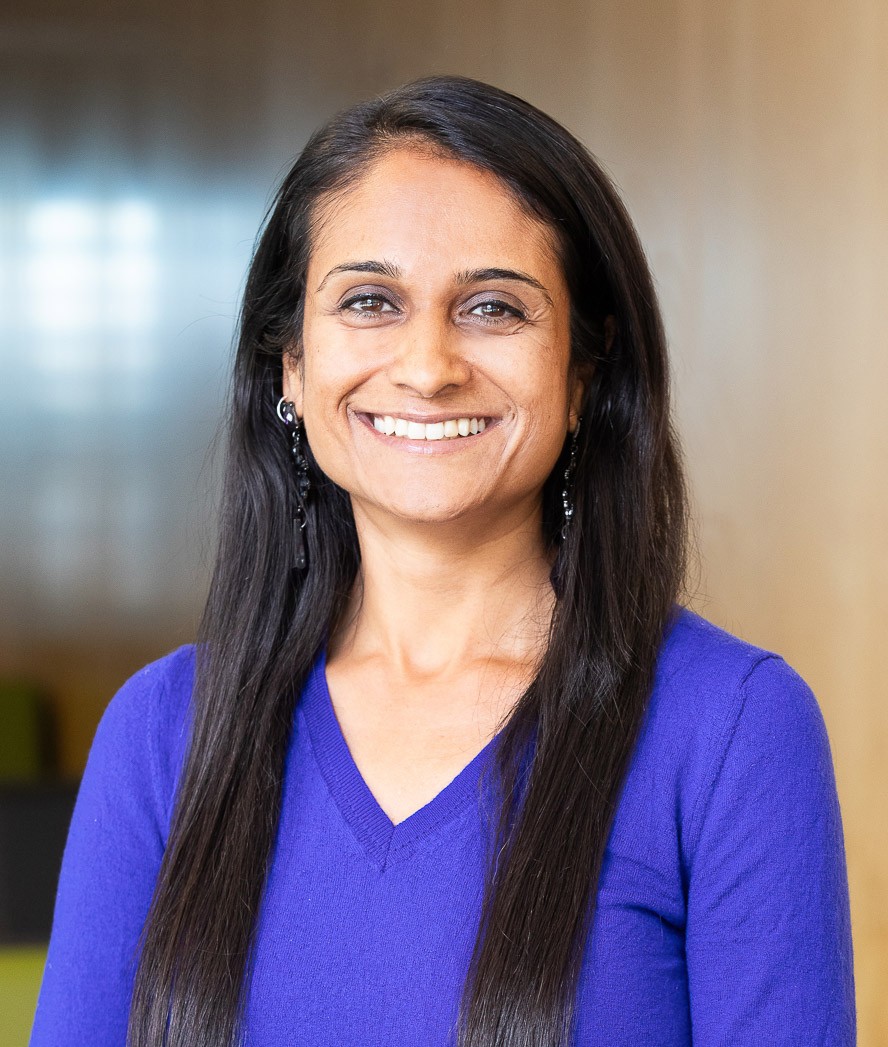
Asha Sundaram

Chair, Department of Economics


Bringing Critical Discussions to Campus


Economic Policy Forum


Since 2017, Professor John Kwoka has brought some of the nation's leading economic thinkers to Northeastern through the Economics Policy Forum—a speaker series that tackles pressing policy questions for a university-wide audience. The forum has hosted Nobel laureate Joseph Stiglitz, former CEA chairs Heather Boushey and Jason Furman, New York Times columnist Paul Krugman, former Labor Secretary Robert Reich, and Harvard Business School's Rebecca Henderson, among others.


The forum returns on Thursday, February 5, 2026, at 3:00 pm in Shillman 135 with Yale health policy expert and economist Zack Cooper presenting “Health Care Spending and the American Dream.” When health insurance costs $27,000 a year—as Cooper recently highlighted in a New York Times op-ed—it raises fundamental questions about whether the American Dream remains affordable. Cooper, Professor of Public Health and Economics at Yale University and Director of Health Policy at Yale's Tobin Center for Economic Policy, will examine what's driving health care spending growth and explore strategies for controlling costs. His research was instrumental in shaping the No Surprises Act of 2021, which protects consumers from unexpected medical bills.


To register, visit https://bit.ly/4qNHYkq

Read Cooper's recent NYT op-ed: $27,000 a Year for Health Insurance. How Can We Afford That?


Stay tuned for more speakers this semester! Visit the Economics Policy Forum page for updates on upcoming events.


A conversation with Associate Professor Bilge Erten


Understanding the Links Between Substance Use Treatment and Intimate Partner Violence


Associate Professor Bilge Erten's research tackles one of the most pressing public health issues: intimate partner violence. Her new working paper from the National Bureau of Economic Research, "From Treatment to Safety: The Role of Substance Use Treatment in Preventing Intimate Partner Violence," examines how expanding access to substance use treatment facilities affects rates of intimate partner violence across the United States. Using detailed data on treatment facility openings and intimate partner violence incidents from 1998 to 2019, Erten and her co-authors reveal important insights about the connection between health infrastructure and violence prevention. This research builds on her broader portfolio studying how policies—from opioid regulations to abortion restrictions—affect relationship violence and women's wellbeing.


What's the key finding from your new research on substance use treatment facilities and intimate partner violence?

More than 20 percent of women in the United States suffer from violence perpetrated by their intimate partners. Substance abuse is an important risk factor for intimate partner violence. In our new study, we examine whether the opening of new substance use treatment centers across US counties help reduce the risk of intimate partner violence. We find evidence that this is indeed the case, and that specifically instances of abuse where the perpetrator is suspected of abusing drugs decline in locates where new substance use treatments open. This suggests that investments in health infrastructure can have significant spillover effects in reducing violence against women.


Your research shows that expanding treatment access reduces drug-involved IPV but not alcohol-related IPV. Why is that distinction important?

We find that substance use treatment centers particularly increase treatment of drug-related disorders as they increase take-up of treatment from men for such disorders. While we see also some effect on alcohol-involved IPV, these are much smaller and not statistically significant. This could be partly because it is much harder to treat alcohol addiction whereas there are very effective solutions for treating addiction to certain drugs.


You've studied intimate partner violence from multiple angles—opioid policies, abortion access, and now treatment facilities. What connects these different research projects?

Our project funded by the National Institutes of Health focuses on spillover effects of policies targeting opioid abuse on intimate partner violence. Our papers on opioid policies as well as the new paper on substance use treatment centers try to understand whether public policies that aim to reduce supply of opioids and treat substance use disorders are effective in reducing the prevalence of intimate partner violence. All three papers have shown that this is in fact the way, but certainly we need more investments in this regard. Our other paper on abortion access shows that increasing restrictions on abortion services lead to an increase in intimate partner violence by increasing unwanted childbearing as well as creating additional stress and health risks for families that are exposed to increased restrictions. Hence, the study suggests that there can be negative consequences on relationship quality and women's wellbeing in locations where restrictions on abortion increase.


Professor Erten's research can be found on https://www.bilgeerten.com/research.


A conversation with Associate Teaching Professor Jill Dupree

Experiential Learning in Action: Rwanda Dialogue of Civilizations


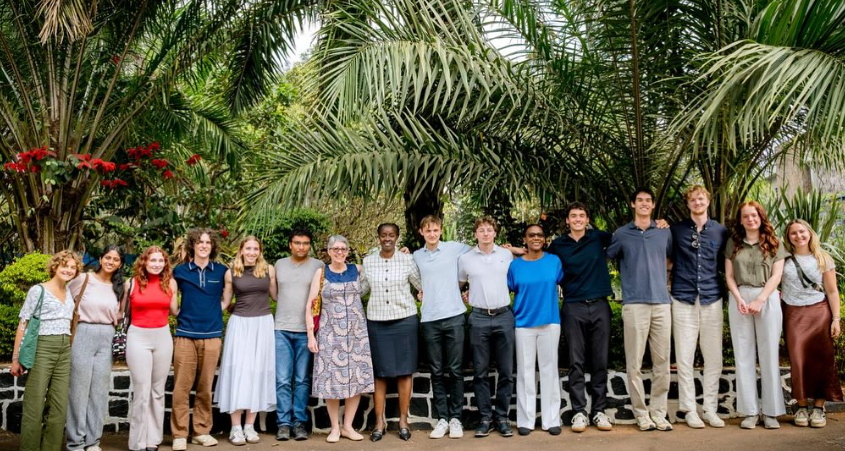
Associate Teaching Professor Jill Dupree's Dialogue of Civilizations course has taken students to Rwanda for month-long immersions in economic development and conflict resolution. Students don't just study theory—they have presented policy recommendations to government officials, partnered with the Ministry of Information Communication Technology and Innovation, worked with local NGOs, and traveled to remote villages to see development in action. They also grapple with Rwanda's difficult history: the 1994 genocide and the ongoing process of reconciliation.


You've now led the Rwanda Dialogue of Civilizations course three times. What has drawn you back to this program, and what makes Rwanda such a powerful setting for students to learn about economic development?

I return because I love Rwanda and its welcoming people. Rwanda offers unique opportunities for students to study economic development, thanks to an inclusive economic development plan that values participation and outside perspectives. The ARISE acronym — Accountability, Reliability/Results-oriented, Innovation/Integrity, Sense of urgency, Excellence — guides public and private organizations. Experiencing Rwanda promotes lessons in cultural awareness and humility, reminding us that economic development should fit the local community rather than imposing outside norms.


Students in your course got to do something pretty remarkable—present economic policy recommendations directly to Rwandan government officials and work with the Ministry of Information Communication Technology and Innovation (MINICT). How do you prepare students for that level of real-world responsibility, and what impact does it have on them?

Developing this experiential learning program is ongoing, and a few key lessons have emerged: set clear learning goals that align with partner organizations, communicate these goals to students, and equip them with relevant knowledge. Choose supportive partners, remain flexible, embrace unexpected insights, and incorporate reflection activities to reinforce learning. The program’s success is reflected in MINICT inviting us back and expressing interest in similar future initiatives. I can clearly identify students who have embraced this experiential learning opportunity through their increased confidence to try new opportunities and ability to talk or write clearly about the experience. I’ve learned that including personal reflection assignments is as important as the actual work product in assessing students on the program.


The course balances economic development work with learning about the 1994 genocide and ongoing reconciliation. How do you help students navigate these very different but deeply connected aspects of Rwanda's story? And what have you learned from teaching this course that's changed your own perspective?

Learning about the Genocide is a deliberate part of the trip schedule, including visiting genocide and historical sites and incorporating discussions with locals about their personal genocide stories. The primary first day activity is visiting the Genocide Memorial Museum in Kigali, which tells the history of events that culminated in the 1994 genocide, and some of how the country has worked to recover in the 30 years since. This is a difficult visit. We try to give the students the time they need to process what they see and hear. This past year, we followed the museum visit with a pottery studio experience where the students worked clay on pottery wheels, learning to make bowls, cups, and vases. They found the time with hands in clay and concentration helpful for absorbing what they learned at the museum.

For myself, I have learned that the genocide was not a traumatic event that lasted a few months in 1994 but was a violent climax in an ongoing process of colonization and decolonization that impacts economic development in ways that development theory does not consider. We must address the cultural and social upheaval inherent in the colonization cycle as an essential part of building the capacity for economic development. The biggest issue I see is building the trust we assume is present to allow the “invisible hand” of the market to do its magic.


Additional coverage: For more on the Rwanda Dialogue experience, see this Northeastern Global News article: Rwanda Dialogue Gives Northeastern Students Real-World Impact


Meet Our 2025-2026 Job Market Candidates


Six outstanding PhD candidates are on the job market this year: Peiran ChengDiana LiShenghao PengMuhammad ShabanpourTianyi Tao, and Ziyao Wang. Their research spans education policy, public health programs, crime and public safety, financial markets, industrial organization, and development economics. Using cutting-edge methods and novel datasets, these emerging scholars are already making important contributions to their fields. In a challenging job market, we're proud to showcase their research.


Peiran Cheng: 

Balancing Budgets, Limiting Access: The Impact of State Appropriation Cut on Public University Decisions

When state revenues fall during recessions, public universities face hard choices. Peiran Cheng's research reveals a troubling pattern: universities in states with strict balanced-budget requirements cut appropriations sharply during downturns, and those cuts translate directly into reduced enrollment, higher tuition, and a shift toward cheaper academic programs. Her findings show that budget rules designed to promote fiscal discipline may be limiting educational opportunity precisely when families need it most—raising important questions about how we fund public higher education in America.


Diana Li: 

Welfare Analysis of WIC Subsidy Program in the Infant Formula Market

The WIC program serves nearly 7 million women and children, but is it designed as well as it could be? Diana Li's research on the infant formula market reveals that eligible families who join WIC could double their purchasing power—yet many don't participate. Her analysis shows that simply expanding the variety of formula brands covered by WIC could increase benefits to current participants by 17%. In a program that already works well, Li identifies concrete ways to make it work even better for the families who depend on it.


Shenghao Peng: 

Evaluating the Impact of an Income Shock on Crime: Evidence from 2021 Child Tax Credit Expansion

When the 2021 Child Tax Credit expansion put cash directly into families' pockets, many hoped it would reduce crime in struggling communities. Shenghao Peng's research delivers a more nuanced answer: the payments had little impact on violent crime and only modest effects on property crime. His findings contribute to an important debate about whether cash transfers alone can address crime, or whether more comprehensive interventions are needed to improve public safety in disadvantaged areas.


Muhammad Shabanpour: 

Consumer Similarity and Predictable Returns

What if your local Target's stock price could predict Walmart's future returns? Muhammad Shabanpour discovered that firms serving similar customers are connected in ways Wall Street overlooks. Using geospatial data tracking millions of consumer visits, he built a map of these "consumer networks" and found that investors consistently underreact to news about connected firms. His research reveals a persistent market inefficiency—and a trading strategy that exploits it, earning 6-7% annual abnormal returns.


Tianyi Tao: 

How Does Consumer Price Sensitivity Shape Competition? Evidence from the Pet Food Industry

Walk into a pet supply store in an affluent suburb versus a working-class neighborhood, and you'll see different products at different prices. Tianyi Tao explains why: consumer price sensitivity doesn't just affect pricing—it fundamentally shapes which brands compete, how concentrated markets become, and whether stores stock national brands or cheaper private labels. Her findings have immediate implications for how regulators should think about retail mergers and competition policy.


Ziyao Wang: 

Non-neutral Technological Change in Chinese Manufacturing

As China transformed from a state-controlled to market economy, which firms drove productivity growth—and how? Ziyao Wang's research reveals that technological change in Chinese manufacturing was highly uneven: labor productivity soared 12% annually while gains in capital and materials lagged far behind. Incumbent firms drove most innovation, while new entrants specialized in using capital more efficiently. Understanding these patterns helps explain China's remarkable economic transformation and offers lessons for other developing economies.


Learn More

For complete information about our job market candidates, including their CVs, job market papers, research statements, and contact information, visit our Job Market Candidates page.


Upcoming Events


Thursday, February 5

Economics Research Seminar with Professor Andrew Ching

12:00 - 1:00 pm 

316 Lake Hall

jointly hosted with D'Amore-McKim School of Business - Marketing


Economic Policy Forum with Professor Zack Cooper

3:00 - 4:20 pm

135 Shillman Hall

To register, visit https://bit.ly/4qNHYkq


Thursday, March 19


Economics Research Seminar with Professor Tanika Chakraborty

1:35 - 2:45 pm 

316 Lake Hall


Thursday, March 26


Economics Research Seminar with Professor Giorgia Barboni

3:00 - 4:15 pm

316 Lake Hall


Interdisciplinary Seminar Series with Professor Mary Steffel

12:00 - 1:00 pm

Behrakis Health Sciences Ctr. BK 204


In the Recent News

TIME Magazine: Madhavi Venkatesan on how to be a conscious consumer in A Guide To Your New Year’s Climate Resolutions


“We're marketed to consume,” says Madhavi Venkatesan, founder and executive director of the non-profit Sustainable Practices. The majority of things people buy however, are not designed to last. “The perfect product is a planned obsolescence product.” she says. This just contributes to more waste.

Her Campus: Mindy Marks in Trump’s $100,000 H-1B Fee Sparks New Fears of a ‘Closed Door’ Era for US Universities


For Mindy Marks, an associate professor of economics at Northeastern, the logic is simple. 

“Econ 101 says that if you increase the price of anything, demand will fall,” she said. “The H-1B fees are no different; the costs are going to go up, and someone has to eat that cost. As a result, there will be fewer highly skilled international workers in the economy.”


Northeastern Global News: Economics student Edward Lopas in This world-class rower bounced from the boathouse to working the rails


The opportunity to do a co-op helped draw Lopas to Northeastern’s Boston campus from his hometown outside of Christchurch to join the university’s rowing team. He came to Northeastern fresh off representing New Zealand in the World Rowing U23 Championships in Bulgaria and has since become the Northeastern team captain.

Northeastern Global News: Shantanu Khanna in Government funding for AI jobs did not produce more jobs, research finds


Artificial intelligence is reshaping how companies operate, but it may not translate into more job creation, according to new research.


That’s a major takeaway from a recently published study co-authored by Northeastern University economics and public policy professor Shantanu Khanna. 


Questions/Ideas? 


If you have questions or ideas for our next edition, please contact Kathy Downey at k.downey@northeastern.edu.