The content in this preview is based on the last saved version of your email - any changes made to your email that have not been saved will not be shown in this preview.

June 15, 2023

NUCLEAR SAFETY | ABOUT | PROGRAMS | DONATE | SUBSCRIBE


Commemorating

the Closure

Ten years ago this month, SONGS shut down for good. We salute our collaborators.

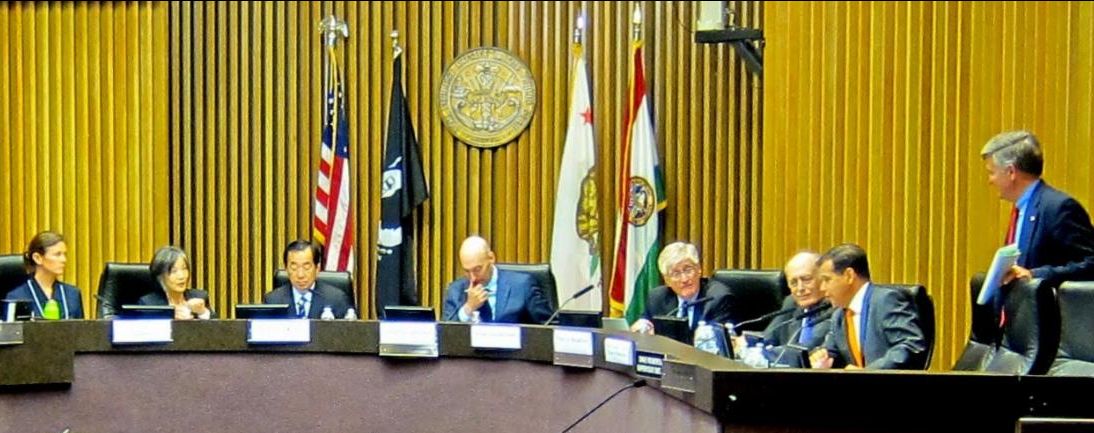
In June 2013 at the San Diego County Administration Center, the Samuel Lawrence Foundation organized talks to demand closure of the San Onofre Nuclear Generating Station. The talks included former Prime Minister Naoto Kan of Japan (third from left), who led the country during the Fukushima nuclear disaster. Days after the meeting, Southern California Edison announced SONGS would close permanently.

Ten years ago this month, a booming chorus of collaborators demanded that Southern California Edison retire the San Onofre Nuclear Generating Station for good.


Fraught with mechanical problems and a radioactive leak, the reactors had not generated electricity for nearly 18 months.


Our campaign was rewarded with news that the plant would be shuttered. Since then, we have pivoted to rally the community and pressure the utility and government officials to deal with the waste.


The spent nuclear fuel, 3.6 million pounds of it, is stranded 100 feet from the ocean.


SONGS is halfway through an 8-year, $4.5 billion decommissioning program that calls for the waste to stay behind after the last of the plant is demolished and hauled away.


While the federal government is promising action, no one knows how long the radioactive material will remain at the water's edge.


We'll keep the pressure on, just like we did in 2013, with your support and the outstanding work of our collaborators.


The 2013 campaign to close SONGS included: Cathy Iwane (Fukushima evacuee), Naoto Kan (former Prime Minister of Japan), Dr. Gregory Jaczko (former Chair of the U.S. Nuclear Regulatory Commission), Arnie Gundersen (Chief Engineer at Fairewinds Energy Education NGO), Peter Bradford (former NRC Commissioner), Dave Roberts (former San Diego County Supervisor), San Clemente Green and Friends of the Earth.

Experts: Nuclear is not the Answer to Meet Climate Goals


During Congressional briefing, panelists criticize costs, security risks and environmental impacts.

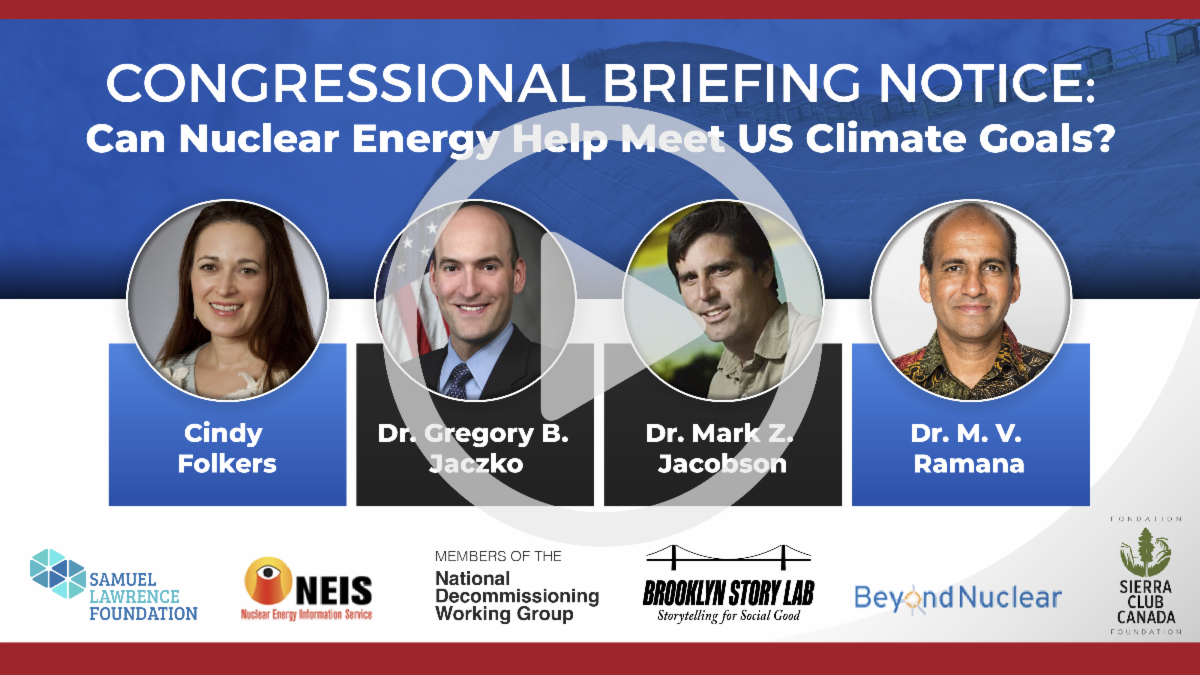
As part of our First Friday series of webinars, we are pleased to have hosted a Congressional briefing June 2 that explored whether nuclear power is viable as a source of climate-friendly electricity in the United States.


A panel of three experts — including two academics and the former Chairman of the Nuclear Regulatory Commission — concluded it is not.


During the 90-minute, public briefing to Congressional staffers, the panelists said nuclear energy is expensive and time-consuming to produce, poses numerous threats to public safety and is far from carbon-free.


“When we are talking about nuclear and climate change, there's a lot of challenges and difficulties with that as a solution,” said Dr. Gregory Jaczko, former chair of the NRC.


Jaczko, author of Confessions of a Rogue Nuclear Regulator, warned that the past is poised to repeat itself with massive government subsidies for reactors.


Beyond that, nuclear reactors are not economically competitive because they cost too much and take too long to build, said Dr. Mark Z. Jacobson of Stanford University. Jacobson’s new book is entitled No Miracles Needed: How Today's Technology Can Save Our Climate and Clean Our Air.


“If we have a technology that we can't even implement in 10 to 15 years, that means that technology is not going to help at all to try to solve the global warming problem,” Jacobson said during the briefing. 


By contrast, energy from renewable sources can reverse global warming, create jobs and prevent deaths caused by air pollution. Power from renewable sources can stabilize the grid throughout the world while using less and at a far lesser cost, Jacobson said. 


Dr. M.V. Ramana of the University of British Columbia said in his remarks that reactors are shutting down because of high operational costs and cheaper alternatives. He warned that small nuclear reactors are costly, produce deadly spent fuel and pose a security risk. 


Cindy Folkers of Beyond Nuclear moderated the talk.


This briefing was sponsored by the Samuel Lawrence Foundation with support from members of the National Decommissioning Working Group, Nuclear Energy Information Service, the Sierra Club Lower Hudson and Atlantic Chapters, Sierra Club Foundation and the Brooklyn Story Lab.


First Friday webinars are made possible by our donors and always are free and open to the public.

Granholm Visit Raises More Questions than Answers

If we can't find storage for the deadly waste, why are we continuing to develop nuclear energy?

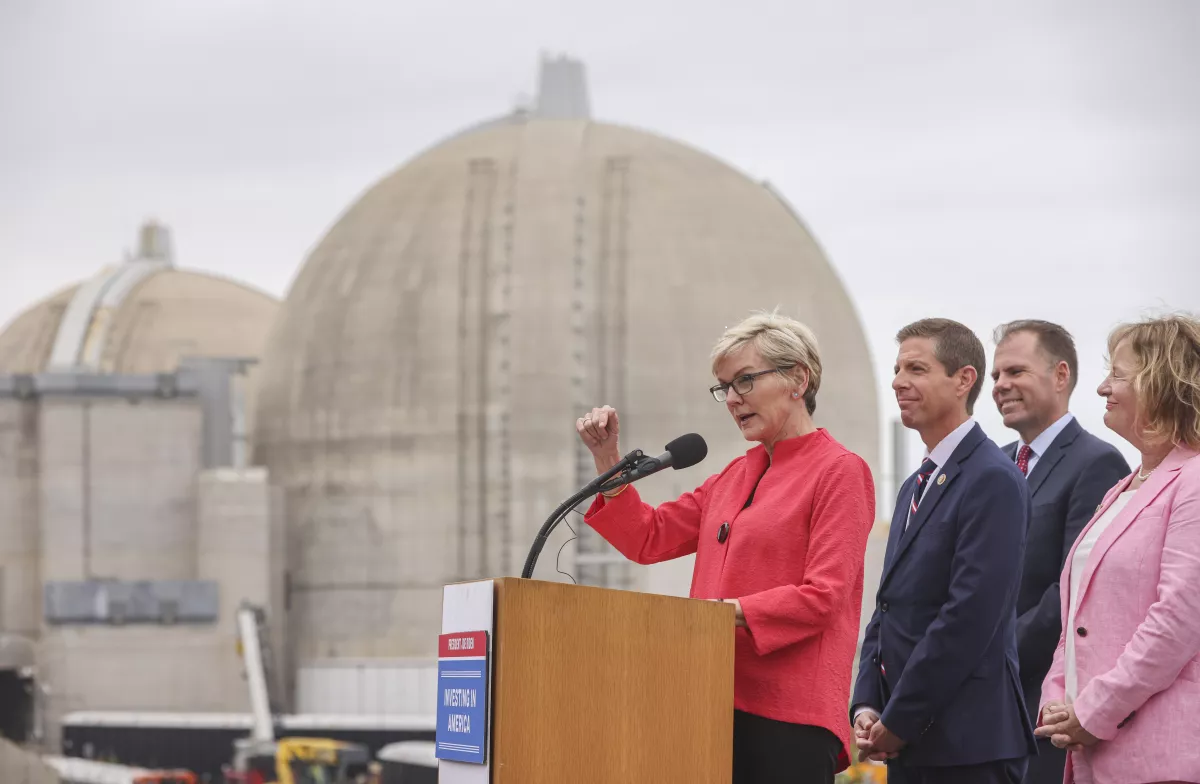
U.S. Department of Energy Secretary Jennifer Granholm. (Eduardo Contreras/The San Diego Union-Tribune)

When announcing that the Biden administration has committed $26 million to search for sites to store the nation's nuclear waste, U.S. Department of Energy Secretary Jennifer Granholm raised more questions than answers.


During a press conference June 9 at San Onofre, Granholm said the money would fund a national search to find communities willing to store spent nuclear fuel, including the 3.6 million pounds of deadly waste stored at the decommissioned San Onofre plant.


She didn't say where the storage sites might be. A San Diego Union-Tribune article states that governors from New Mexico and Texas have said no.


We wonder how the waste would travel great distances to arrive at the so-called consolidated interim storage sites and how the transportation would impact communities along the way.


The DOE estimates it could take 15 years to open the interim sites.


What does that mean for the permanent disposition of 89,000 metric tons of spent fuel piled up in 35 states? Will the federal government deliver on its obligation to open a permanent repository during our lifetimes?


Given the extraordinary challenges in dealing with radioactive waste, which can remain deadly for hundreds of thousands of years, why does the federal government continue support nuclear energy development?


While Granholm's speech covered the What — that's the easy question — we continue to puzzle over the Who, When, Where and, in the case of continued reliance on nuclear energy, the Why.


We appreciate the remarks and consistently strong advocacy of Rep. Mike Levin.


“We finally have a plan when it comes to spent nuclear fuel across the United States,” Levin said. “Now we’ve got to execute on that plan.”

Sign Up for Text Alerts

On World Ocean Day on June 8, SONGS operators discharged 140,000 gallons of irradiated water into the Pacific.

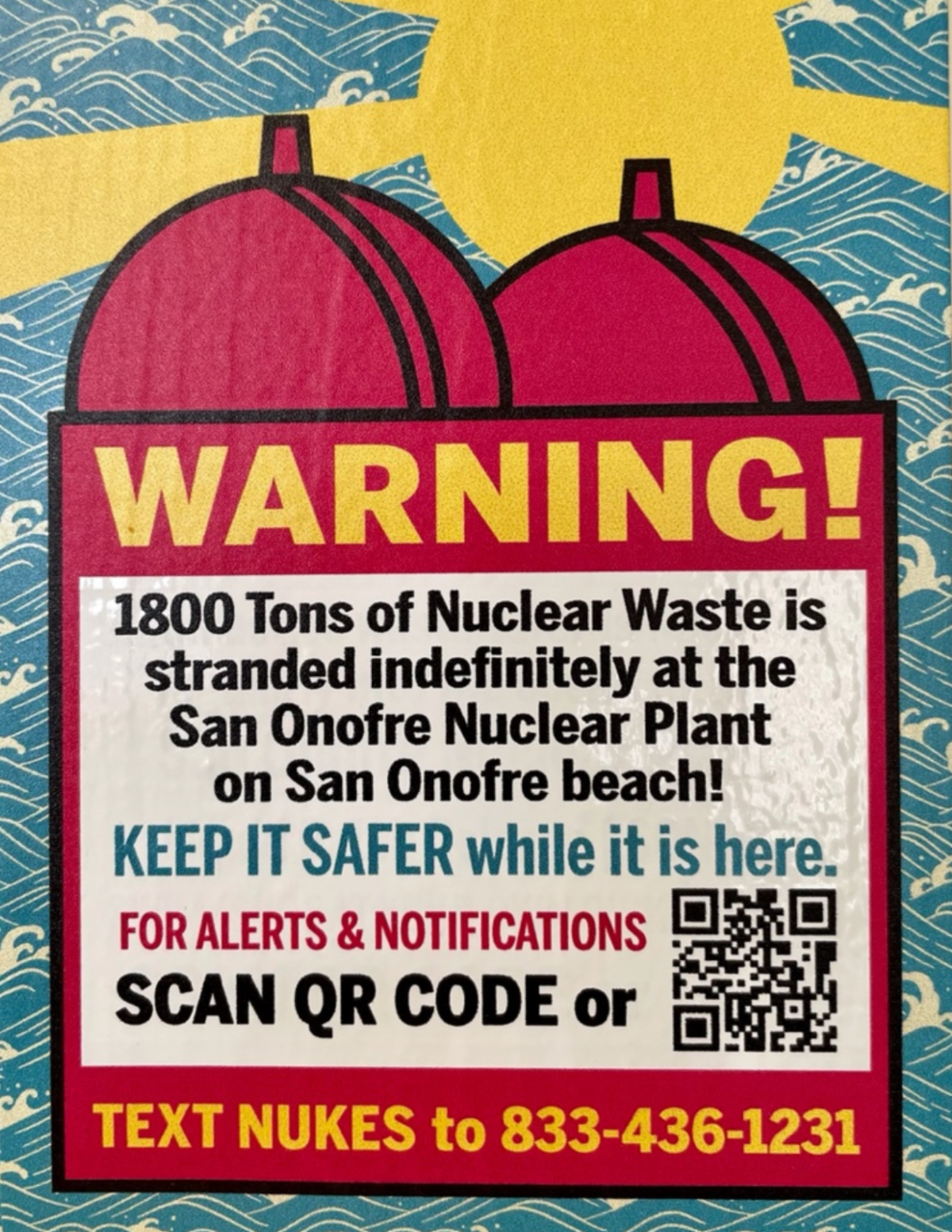
You can receive text alerts to stay on top of nuclear news from San Onofre.


The alerts notify recipients of important meetings and activities of advocacy groups. They also alert beachgoers to swim and surf at their own risk during discharges of radioactive water from the plant. Earlier this month, cell phones pinged with a notice that plant operators would release 140,000 gallons of irradiated water during a 25-hour period on June 8. The release happened to coincide with World Ocean Day.


To sign up, text NUKES to 833-436-1231.

Parting Shots

Our collaborators comment on nuclear energy.

In the latest post to his Hot Globe blog, Samuel Lawrence Foundation Senior Fellow Steve Chapple shows that nuclear power is dirty, dangerous, and way too expensive. 

In a short video, Stanford University Professor Mark Z. Jacobson explains that to solve the climate crisis, new nuclear energy is no help whatsoever.

Thank You!

Our programming is made possible by our sponsors and donors. Thank you!


      Copyright © 2023

    Samuel Lawrence Foundation

      All rights reserved.


   Our mailing address is:

     P.O. Box F, Del Mar, CA 92014, USA


Email us at:

admin@samuellawrencefoundation.org


Thank you for supporting the Samuel Lawrence Foundation. Your gift, of any size, makes our

programs and advocacy possible.

Click here to make a donation


Donate to SLF when you shop on Amazon


View this email as a Webpage

Facebook        Twitter        Instagram        YouTube        Email