|
October 5 - 2026 - 5 de octubre
View as Webpage
Click HERE to join our mailing list.
Register for our next meeting on Thursday, October 29, 2026
Get your tickets to the Latino Caucus
Hispanic Heritage Month Celebration HERE.
| | It’s time to stop the nonsense! | | |
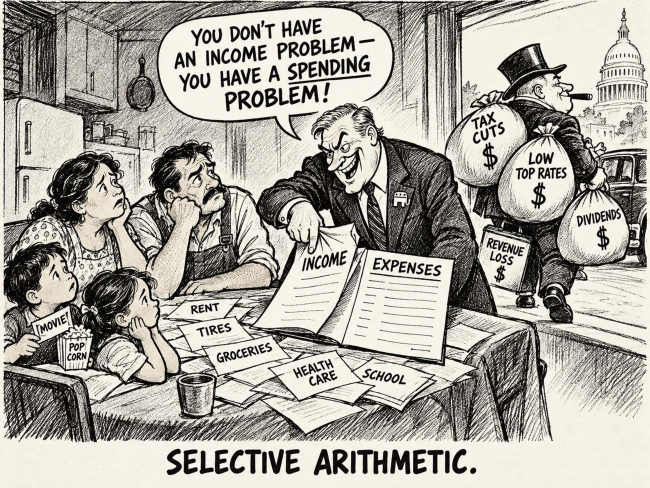
Meet Juan and Maria, a typical immigrant couple raising two American-born children who attend Fairfax County Public Schools.
Juan is a recent immigrant from El Salvador living in the United States under Temporary Protected Status (TPS). He works for a small plumbing company. Maria, a naturalized U.S. citizen from Honduras, works at Walmart.
Juan’s employer is too small to provide health insurance. Maria, like many part-time retail workers, is not scheduled for enough hours to qualify for benefits.
Maria stretches every dollar. She uses her Walmart employee discount and buys generic brands at discount stores such as Aldi.
Still, they are worried about making ends meet next year. Their rent will probably increase. Juan’s truck needs new tires. Gas and groceries have gotten so expensive. And Walmart recently cut Maria’s hours after hiring more part-time workers.
Last week they splurged and spent about $100 taking their children to see the new Toy Story movie. The kids shared popcorn and a drink. Juan and Maria went without.
Now Juan is thinking about earning extra money driving for Uber. Maria heard from a friend about a nighttime cleaning job at Inova Hospital.
Clearly, Juan and Maria have an income problem.
But what do Republicans call this?
“A spending problem.”
That argument has been repeated for decades. Ronald Reagan made it while promoting his tax cuts, arguing that deficits resulted from excessive government spending rather than insufficient revenue:
“We have big deficits because government lives too well and spends too much.”
Juan could save some money by not taking his children to a movie next month. But would anyone seriously claim that $100 is going to solve his family’s financial problem?
The same principle applies to the federal budget.
Federal discretionary spending represents only about 27% of total federal spending—and roughly 14% if defense is excluded. Cutting around the edges may save money, but it cannot by itself close a massive structural budget gap.
Yet we hear the same slogan again and again:
“We don’t have a revenue problem; we have a spending problem.”
Sometimes the phrase includes “wasteful government spending.”
Repeat a simple slogan often enough and eventually people stop asking whether the numbers actually support it.
When Was America “Great”?
Consider another famous slogan:
“Make America Great Again.”
Fine. Let’s look at the period from the mid-1950s through the mid-1960s—a time many Americans remember as one of expanding prosperity, enormous public investment and growing confidence in the country’s future.
America built the Interstate Highway System. Federally supported mortgages helped millions of families buy homes. The Salk vaccine helped defeat polio. The space program was preparing to send Americans to the moon. The United States was investing heavily in science, education, infrastructure and national defense.
And what was the top federal income-tax rate during much of that supposedly “Great” era?
More than 90%.
| | | Year | Top Tax Rate | Top tax Applied to Income Above | Equivalent Threshold | | 1952 -1953 | 92% | $200,000 | $2.52 million today | | 2026 | 37% | $640,600 | $51,251 in 1953 | | | |
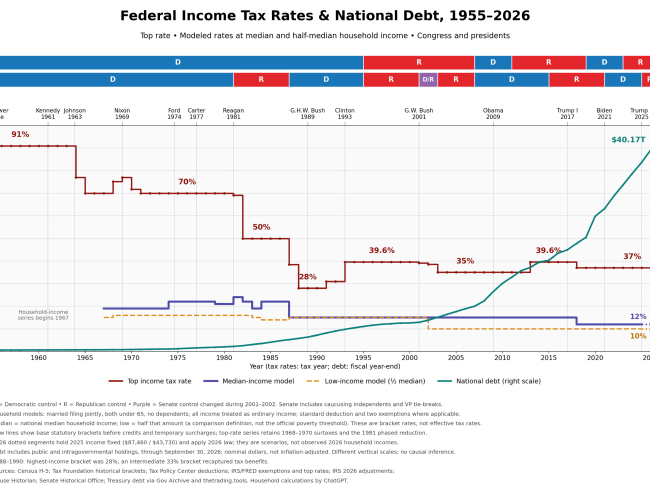
The top marginal tax rate has fallen dramatically—from more than 90% in the 1950s to 37% today.
At the same time, the national debt has climbed past $40 trillion.
| |
The top 10% have seen a 54-point decrease in tax rate (from 91% in 1955 to 37% today) while the rest of us have only seen a 7-point decrease! We have seen the national debt explode to more than $40 trillion. (Trump policies have contributed more than 1/4 of our debt—about $11 trillion.) | | | | |
That does not mean tax cuts alone created the national debt. Spending decisions, wars, recessions, entitlement programs, interest costs, emergency relief and policies enacted by both parties have all contributed.
But it is equally misleading to discuss deficits as though revenue has nothing to do with the equation.
A budget has two sides: spending and income.
Families understand that.
Businesses understand that.
The federal government is no different.
| | |
Consider the Walton Family
Now consider one of America’s wealthiest families.
The Walton family received roughly $3.3 billion in Walmart dividends last year, based on approximately 3.6 billion shares and dividends of about $0.9125 per share.
Under current law, the top federal rate generally applicable to qualifying dividends for extremely high-income taxpayers is about 23.8%, including the Net Investment Income Tax.
The comparison with 1952 requires an important qualification. The 92% rate was a marginal tax rate—it did not apply to every dollar of income. Federal law also contained an overall limitation that effectively capped individual income tax at about 88% of net income.
Using that 88% figure simply to illustrate the difference produces a striking comparison:
| | | Calculation | Today’s Rules (2026) | 1952 Rules,
Inflation-Adjusted | | Dividend income, in today’s dollars | $3.300 billion | $3.300 billion | | Rate used | 23.8% | 88% | | Estimated federal tax | $785.4 million | $2.904 billion | | Income remaining
after federal tax | $2.5146 billion | $396 million | | | |
That raises a provocative question:
Could a family reasonably live on $396 million a year instead of $2.5 billion?
And perhaps the more important question is: What happens to the money when high tax rates change economic incentives?
Where the Money Went
We should not pretend that every additional dollar would simply have been mailed to the Treasury.
That was not how the economy of the 1950s worked.
The Real Question
None of this means government spending should escape scrutiny. Waste should be eliminated. Programs should be evaluated. Taxpayer dollars should be spent efficiently.
But repeating “We have a spending problem, not a revenue problem” does not make the arithmetic disappear.
When expenses exceed income
When the highest marginal tax rates were extraordinarily high, companies and executives had less incentive to distribute enormous amounts of income at the top. Businesses had stronger incentives to reinvest earnings, expand operations, increase compensation, provide benefits and make capital investments.
Instead of asking only, “How much could government collect?” we should also ask:
How might different tax incentives change where corporations put their money in the first place?
Walmart employs roughly 1.6 million associates in the United States, the great majority of them hourly employees.
Imagine that instead of distributing billions more to shareholders, even part of that money went toward wages.
If approximately $2.9 billion were redirected toward Walmart’s U.S. hourly workforce, it would be enough to provide roughly $2,000 per worker.
Those workers would spend much of that money in their communities. They would also pay taxes on additional income. Some would need less assistance from programs such as SNAP.
That affects the federal budget too. So there are only three basic choices:
Cut expenses, increase income, or do some combination of both.
Juan and Maria understand that perfectly well.
If their income falls while rent, food, health care and transportation costs rise, nobody seriously tells them their only option is to stop taking their children to the movies.
They look for another job.
They ask for more hours.
They try to earn more money.
In other words, they address the income side of the budget too.
So the next time someone says, “We don’t have a revenue problem; we have a spending problem,” perhaps the response should be:
When America was supposedly “Great,” we collected far more revenue from those at the very top. If we really want to go back to “Great Again,” maybe we should remember that part too.
| | |
Editor’s note:
This is one in a series dispelling Republican myths like “Trump had the best economy” and "deport the worst of the worst."
The “Make America Great Again” era of the late 50’s and early 60’s was also one of cultural shifts from expanding access to health care for older Americans through Medicare and eligible low-income people with Medicaid, a rising pushback from African Americans and women, the explosion of television, rock ’n’ roll, Motown and the Beatles. For the first time television let us see the horrors of war in real time; music told us that young people had a different idea, and both confronted the injustices of segregation, discrimination against women and Latinos, widespread poverty, and unequal access to housing and education that excluded millions from its promises. It was a time of extreme conservative pushback to progressive ideas: America, love it or leave it!
| | | | |
We invite you to submit editorials and commentary on urgent social, political, and cultural issues. Share your insights and opinions to help shape the conversation—submit a 200-400 word article for consideration:
Latinos@FairfaxDemocrats.org!
| | |
|
Breaking News!
¡Noticias de última hora!
| | |
ICE Says It Can Detain Immigrants as Long as It Wants. Will the Supreme Court Agree?
Hundreds of federal judges have ruled against the administration’s “mandatory detention” policy, but the Supreme Court may soon have the final say.
| | |
By Lauren Villagran
Updated 12:20 p.m. 10.01.2026
On Oct. 1, the U.S. Supreme Court agreed to consider the government’s appeal in the case of Ricardo Aparecido Barbosa da Cunha, which could have major implications for the Trump administration’s deportation efforts. The Second Circuit Court of Appeals had earlier ruled that the government’s detention of the Brazilian immigrant without bond was unlawful. The Supreme Court has not yet set a date for oral arguments in the case.
| | MS NOW’s David Noriega reports from a Mississippi ICE lockup, where a man with no criminal record is trapped behind razor wire after a minor accident—while his wife prepares to give birth to their first child. | | |
Can the government detain immigrants indefinitely, without offering them a chance to see a judge?
The question has divided 11 different federal appeals courts and left immigrants languishing in detention. Now, it’s the Supreme Court’s turn to weigh in.
Tens of thousands of detained immigrants, most of whom have no prior criminal record, have challenged the government’s decision to hold them in custody without access to a bond hearing.
In the coming days, the Supreme Court will decide whether to consider the administration’s interpretation of a 30-year-old law, which Immigration and Customs Enforcement argues allows it to detain any immigrant indefinitely if they crossed the border illegally — even if it was years ago.
The policy, also known as “mandatory detention,” underpins President Donald Trump’s sweeping efforts to deport millions of people, experts say. But it’s also “really shocking in our legal system,” said Suchita Mathur, senior litigation attorney for the American Immigration Council, an immigrant advocacy and legal services provider.
“There is no other context in which the government can detain people inside the country endlessly, for no reason,” said Mathur, who serves as co-counsel on a case challenging the policy that is still pending in the Fifth Circuit Court of Appeals. “That is what the government is asking to do here.
”More than 500 federal judges have ruled against the Trump administration in some 20,000 mandatory detention cases over the past year, according to court records. Nine of the 11 federal appeals courts have issued rulings that found ICE’s interpretation of the law was overly broad, inconsistent with Congress’s intent and possibly unconstitutional. Two of the appellate courts sided with Trump, including the Fifth Circuit, which covers Texas, Louisiana and Mississippi, where thousands of immigrants remain locked up.
In a bond hearing, an immigration judge determines whether a noncitizen should be detained, or released after paying a fee akin to bail. Unlike in the criminal justice system, however, immigration courts aren’t independent; the judges are employees of the Department of Justice and can be hired and fired by the executive branch.
Previously, a Department of Homeland Security spokesperson told The Marshall Project that “being in detention is a choice” and urged “all illegal aliens to take control of their departure” by self-deporting. In a July email, the spokesperson said the agency is offering $2,600 and a free flight. In September, a spokesperson wrote in an emailed response that the department “is confident in its legal position regarding mandatory detention.”
“That is why DHS recently sought Supreme Court review of a decision from the Sixth Circuit,” which sided with a detainee against the government, the spokesperson said. “As our record in the U.S. Supreme Court demonstrates, the law is on our side.
”For the past 30 years, only migrants who had recently arrived at the border and immigrants arrested inside the country with certain criminal convictions could be held without a bond hearing. Everyone else was allowed to see an immigration judge, who would decide if they presented a danger to the community or weren’t likely to show up for their hearings; if they cleared that bar, the judge could order their release on bond. That’s how it has worked since 1996, when Congress last modified the nation’s immigration law.
In past administrations, including Trump’s first term, most detained immigrants without criminal records were eligible to be released on bond while they awaited the outcome of their petitions to stay in the country.
My Khanh Ngo, a senior litigation attorney for the ACLU, said that mandatory detention is now being applied to “a really diverse group of people,” including people married to U.S. citizens, and those who have applied for asylum or who were covered by Temporary Protected Status.
About 70% of immigrants in ICE detention in July had no criminal record, according to data released by the Deportation Data Project at UC Berkeley and UCLA. Immigrant advocates say the administration’s interpretation of the law has dramatically expanded the groups of people for whom it believes Fifth Amendment constitutional protections do not apply.
“De facto criminal policies that are extremely punitive are being applied to a whole range of immigrants,” said Nancy Morawetz, director of the Crimmigration Clinic at New York University School of Law. “You are putting them in jail. There is no date by which you expect to get out.”
● ● ●
Read the entire article HERE.
| | |
Democratic Party of Virginia
Central Committee Meeting
Fredericksburg, October 3, 2026
| | |
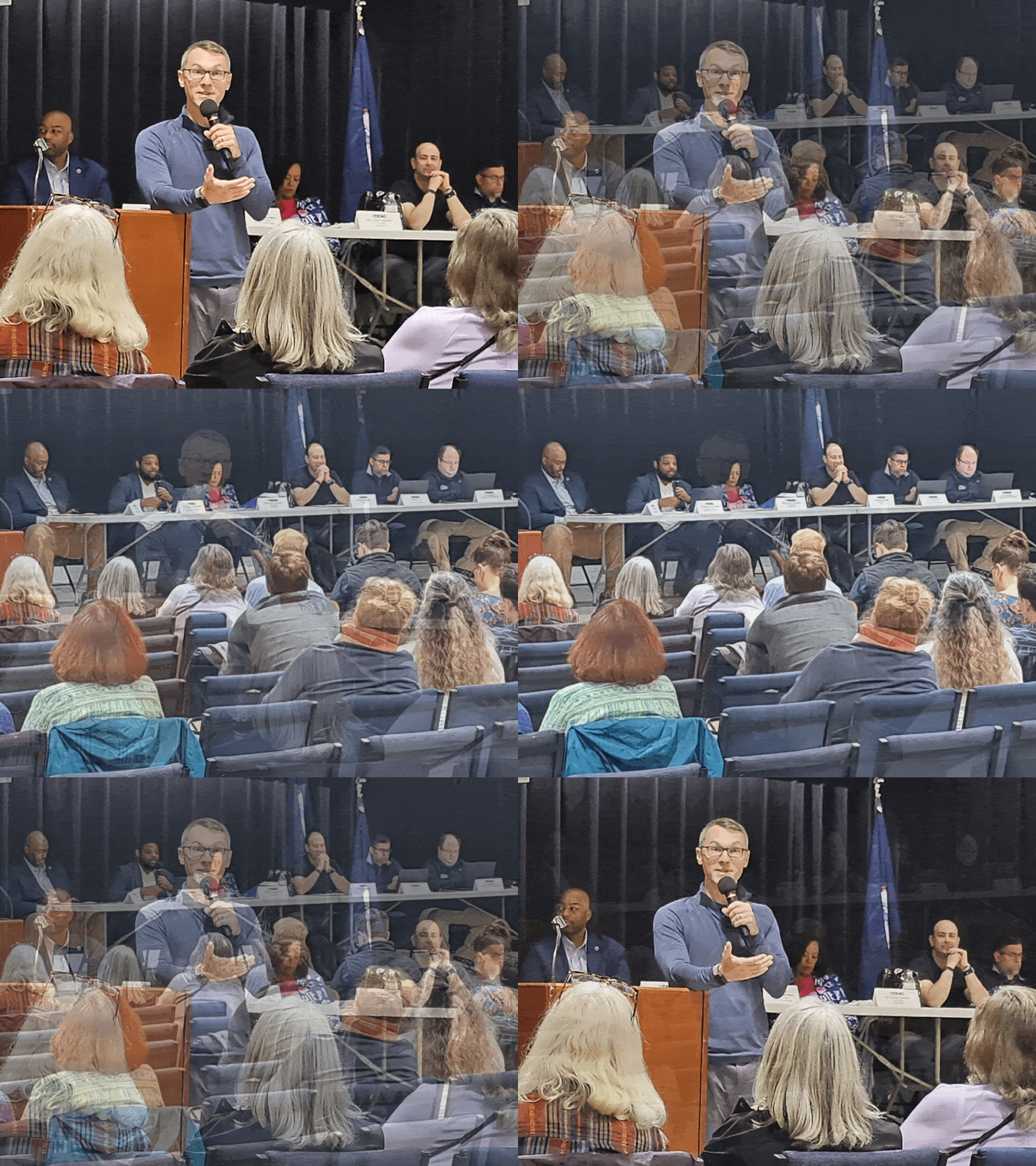
Rep. James Walkinshaw (D-VA 11) addressed the DPVA Central Committee Meeting in Fredericksburg this morning. "Corruption and the Affordability Crisis are connected," he said. Democrats must "hold the crooks accountable and pass a legislative agenda to bring costs down for the American people" when they gain the House majority. "It is more important than ever that we not only win these elections but we have an absolutely massive turnout." Amen to that!
Thanks to Russell Brooks for documenting this event.
| |
|
The Almost Annual Collis Warner Pig Roast
October 3, 2026
King George, VA
| |
Despite the rain, friends and families gathered at Rappahannock Bend Farm in King George County last Saturday for the 2026 Almost Annual Collis Warner Pig Roast.
Some of those joining Senator Mark Warner were Maryland Governor Wes Moore, Rep. James Walkinshaw and Virginia Secretary of Finance Mark Sickles.
| | |
The gathering brought together public officials, community members, and longtime friends for food, conversation, and fellowship—continuing a cherished tradition even under rainy skies.
Watch some notable comments about the FCDC Latino Caucus.
| | | |
Democratic Latino Organization of Virginia (DLOV)
Latino Leadership & Democratic Unity Reception
Friday, October 2, 2026
| |
DLOV held their Hispanic Heritage Month celebration at the Pancho Villa Mexican Restaurant in Fredericksburg.
The event was their Hispanic Heritage Month event co-hosted with the Democratic Party of Virginia (DPVA) and the VA-07 Democratic Committee to support DLOV-endorsed candidates ahead of the November election.
| | |
The 39th Hispanic Heritage Awards
Friday, October 2, 2026
available to stream on PBS.org and the PBS app.
| | Recorded at Orchestra Hall in Minneapolis, Minnesota (marking the first time the awards ceremony was held outside of Washington, D.C.) | | The event was hosted by comedian and actress Anjelah Johnson-Reyes with special musical performances by Los Tigres del Norte, along with numbers by Eladio Carrión, Mon Laferte, and Ximena Sariñana. | | Click to watch the show on PBS. | | |
The 2026 Honorees were:
-
The People of Minnesota: Humanitarian Award
-
Oscar D’León: Legenda Award
-
Mon Laferte: Social Justice Award
-
Eladio Carrión: Inspira Award
-
Ximena Sariñana: Music Award
| | |
The Realities of Reindustrialization
Sep 29, 2026
Coffee with Ken is a thought-leadership series built on one idea: the best conversations happen over coffee. Hosted by Ken Biberaj, each episode blends curiosity and candor, exploring timely topics across business, policy, innovation, and culture in a way that is smart, fun, and refreshingly human. From governors and CEOs to historians and entrepreneurs, Ken brings guests together for conversations that invite you to think, laugh, and look at the world a little differently.
| | On day one of the Farnborough International Airshow, Ken Biberaj sat down with three people rebuilding the industrial base from different sides of the table: J.P. Nauseef, President & CEO of JobsOhio; Carlos Del Toro, Former U.S. Secretary of the Navy; and David Arthurton, Managing Director of Combat Air UK & Europe at Anduril UK. | | |
Watch the episode here.
Carlos Del Toro, a Cuban-American, served as the 78th United States secretary of the Navy.
| | A state betting on aerospace. A nine-year-old defense company building factories on both sides of the Atlantic. A former Navy Secretary who spent four years trying to widen the supply base. | | The Format Is Back After Two Decades Away — and This Time, They’re Writing Protest Anthems | | |
When the Format‘s Nate Ruess and Sam Means took to the stage at Ohana Festival in Dana Point, California, over the weekend, they brought the thrill of nostalgia and something else, too. Alongside ‘00s hits like “Dog Problems” and “The Compromise,” the duo performed new tracks that confronted the social and political landscape of today.
Earlier this year, the band released their first album in 20 years, Boycott Heaven, a stark contrast to their past work. Their audience and the world around them had changed in those two decades since the Format released their LP Dog Problems, a brilliant power-pop ride through heartbreak and dysfunction that is beloved by many millennials (and has found a new audience with Gen Z fans).
| | An interview on Minnesota Public Radio | |
Listen to
"The Bar Is Set So Low"
| | |
After the Format announced their hiatus in 2008, Means continued to make music and released his debut album, 10 Songs. He also launched Hello Merch with his wife, Anita, creating merchandise for fellow artists like Elvis Costello and Sleater-Kinney. Meanwhile, Ruess linked up with Jack Antonoff, then of New Jersey indie rock band Steel Train, and former Anathallo member Andrew Dost to start a new band. After fun. dropped the chart-topping, Grammy-winning song “We Are Young” in 2012, Ruess once again swerved. The singer rolled out his solo album, Grand Romantic, three years later, went on tour, and then took a step back from the music industry. While he’d dip back every now and then, songwriting for Keith Urban and Pink, Ruess focused on his growing family and also picked up the guitar.
So why did Ruess and Means split at the height of their fame? “A thing that is really important to us in this band is we don’t do things unless we really want to,” Means says. “It has to feel right, and maybe at that time it just wasn’t.”
Ruess adds, “I stopped making music and started paying attention to the world. When you have kids, you start to look less at yourself and start looking at things around you. All I can think about is just all the bad stuff happening now, and so I just started to write about it.”
In 2020, Ruess and Means were ready to get back together for a run of reunion shows. “We came back at a time where we were both really kind of were itching to do it,” the singer adds. Those plans were swiftly nixed when Covid put the world on lockdown. Still, Means wanted to make a new album — but Ruess initially had no interest.
“We took a few years off, and sometime in that two years in between, I was like, ‘Huh, I’m starting to write music. It’s weird.’ So I called up Sam, and we got it back together,” says Ruess, before remarking, “And now we’re here, and it’s weird.”
In the new music they began making, Ruess aimed his pen at the current administration’s hostile immigration policies and tactics that have shaken communities in the U.S., as well as the humanitarian crisis in Gaza as Palestinians face severe food insecurity, mass displacement, and the breakdown of basic infrastructure as the death toll around them rises.
● ● ●
Read the entire article HERE.
100% of the proceeds from "The Bar Is Set So Low" will be distributed to:
+Women's Foundation of Minnesota's Immigrant Rapid Response Fund -
https://www.wfmn.org/funds/immigrant-...
+Immigrant Defense Network - https://immigrantdefensenetwork.org/
+Advocates for Immigrant Rights - https://aijustice.org/partners
+Latino Memphis - https://latinomemphis.org/
| |
Take Action - Tomar medidas | | |
Bilingual callers needed to reach out to Hispanic voters to help flip the Pensylvania Senate.
Join us Tuesdays from 6:30 to 8:30 ET on Zoom or call on your own time.
We'll provide the names, the numbers, and scripts in English and Spanish. Join us for the camaraderie, brief training, a chance to practice before calling, and any help you need. You provide your phone and personal snacks.
Let's give the Pennsylvania Democrats a Trifecta with Democrats controlling the PA Senate, House, and Governor for the first time since 1993, so they can
- Redistrict PA Congressional maps to counter Republican efforts across the country,
- Raise the minimum wage beyond $7.25 an hour, increase public transit, implement paid family and medical leave, and expand access to affordable housing.
- With 19 electoral votes Pennsylvania is the largest battleground state, so Democratic control is critical for upcoming 2028 elections.
Sign up HERE for Tuesdays evening calls or sign up HERE to call on your own.
Onward,
Mona and Rachel
Pennsylvania Team co-leads
| | |
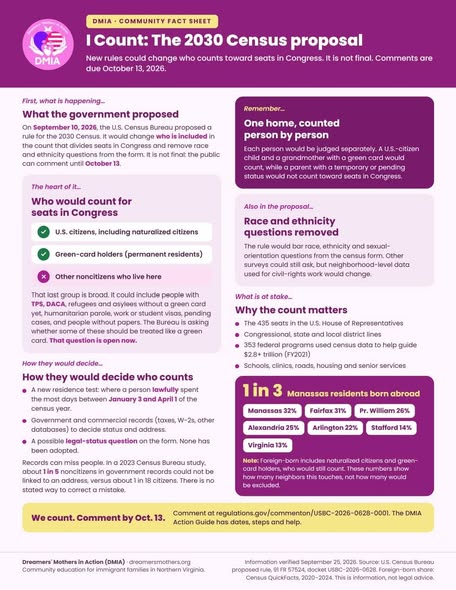
I Count: The 2030 Census proposal
A DMIA community fact sheet explaining a federal proposal
| | |
The September 10, 2026 Census Bureau proposal would:
- Count U.S. citizens and green-card holders toward congressional apportionment, while excluding other noncitizens, including many people lawfully living here under temporary statuses.
- Use administrative records to determine immigration status, with a possible legal-status question also under consideration.
- Remove race and ethnicity questions from the decennial census questionnaire and prohibit sexual-orientation questions. Other surveys, including the American Community Survey, could still collect those data. These changes are proposed, not final.
DMIA’s message is that these changes could diminish immigrant communities’ representation and the information available about their needs. The flyer also correctly distinguishes foreign-born residents from those who would be excluded: naturalized citizens and green-card holders would still count.
A Federal Register notice extends the public-comment deadline to November 2, 2026.
You can find the proposal and comment through Regulations.gov by searching USBC-2026-0628.
See the fact sheet HERE.
| |
Social Media - Redes sociales | | |
This is a great way to celebrate Hispanic Heritage Month!
Click below to see the post.
| | |
AFI Latin American Film Festival
Through October 7, 2026
AFI Silver Theatre and Cultural Center
8633 Colesville Road
Silver Spring, MD 20910
| | The AFI Latin American Film Festival is one of North America’s largest and longest-running showcases of Latin American cinema. Now in its 37th year, the festival is one of Washington’s top cultural events and features award-winning films, in-person conversations with filmmaker guests and exciting embassy-hosted parties. | | 2026 AFI Latin American Film Festival Trailer | | |
With the inclusion of films from Spain and Portugal, the festival celebrates Ibero-American cultural connections during National Hispanic Heritage Month.
Don’t miss your chance to see film-festival favorites, local box-office hits and debut works by promising new talents. Join a diverse audience of film lovers.
| | |
Annual Benefit
Wednesday, October 7, 2026
12:00 - 2:30 PM
Army Navy Country Club
1700 Army Navy Drive
Arlington, VA 22202
| | | |
Join Delegate Alfonso Lopez, Honorary Co-Chair of this year's Host Committee, at this important event.
Our immigrant community is increasingly under attack and in need of support, opportunity, and resources. Dream Project’s Annual Benefit is our moment to respond — celebrating what’s possible and investing in what comes next.
| | |
This year’s event features keynote remarks by Peter Schechter, Co-Founder of Immigrant Food and a distinguished diplomat, author, and global affairs commentator. Every dollar we raise expands the scholarships and mentoring we provide to immigrant students across Virginia — helping more young people access and complete higher education.
| | |
Free Movie Nights at 2700 Art Space
Celebrate National Hispanic Heritage Month with community-curated films highlighting Latin music in film.
Fridays October 9 & October 16, 2026
| |
6 - 9 pm
2700 Art Space
2700 S. Nelson St.
Arlington, VA 22206
Just across the street from Jennie Dean Park and near Shirlington Dog Park.
Free events
Bring chairs and picnic blankets. Come early for food, music, and community. Film screenings start at sunset (7pm).
Click HERE to see the schedule including:
Friday, October 9, 2026
Mambo Legends: The Music Never Ends
| |
Equal parts love letter and history lesson, Mambo Legends: The Music Never Ends provides a bridge for modern audiences to the golden era of Latin jazz in New York City in the early 1940s, when the Machito Orchestra fused the big band sound with the rhythms of Africa, Cuba, and Puerto Rico to create a new genre of music beloved around the world.
| | Hispanic Heritage Month Celebration | | |
Wednesday, October 14, 2026
6:00 – 8:00 PM
Springfield Mall
Springfield, VA 22150
Join the FCDC Latino Caucus for a joyful celebration of Hispanic Heritage Month! Come enjoy an evening of culture, community, music and fellowship as we honor the rich histories, traditions, and contributions of Latinos in Fairfax County and across our nation. Everyone is welcome—we hope to celebrate with you!
Space is limited, so get your tickets soon!
| | |
|
Hispanic Reading Room
Open House
Part of Hispanic Heritage Month; Live at the Library
Thursday, October 15, 2026
05:30 - 07:30 pm
Thomas Jefferson Building
Hispanic Reading Room
10 1st Street SE
Washington, DC 20540
The event is free, but tickets are required, and there may be special restrictions. Get tickets HERE.
In commemoration of Hispanic Heritage Month 2026, join librarians, specialists and curators for a drop-in Open House highlighting Library collections related to celebrations and cultural traditions observed by Latino communities across the United States.
| |
Visitors can explore collection displays, participate in family-friendly activities including trivia, Reading Room tours, papel picado crafts and learn more about Library resources and services.
| |
Live! At the Library:
Edmar Castañeda, harp
Thursday, November 05, 2026
8 - 10PM
Thomas Jefferson Building
Coolidge Auditorium (LJ-G45A)
Colombian-born Edmar Castañeda has emerged as the preeminent virtuoso of the jazz harp. With a singular technique that seamlessly blends bass lines, harmony, and melody, Castañeda brings unbridled attention to an instrument rarely heard in jazz, expanding its expressive possibilities. Rooted in the jazz tradition yet enriched by a wide range of global styles, his music is marked by brilliance, rhythmic vitality, and deep emotional resonance.
| |
Through innovation and a remarkable array of collaborations with leading figures across jazz and contemporary music, Castañeda has singlehandedly helped cement the harp’s place in the modern jazz landscape.
Tickets available Wed., September 2 at 10 AM
| | |
¡Puro Ritmo! The Musical Journey of Salsa
The National Museum of the American Latino
Until Thursday, November 26, 2028
Learn more HERE.
| |
The National Museum of the American Latino presents its second major exhibition on the origins of salsa music. From the streets of Havana to the dance floors of New York and beyond, ¡Puro Ritmo! explores how salsa evolved into a defining sound in the U.S. This bilingual exhibition traces salsa’s roots and rise through nearly 300 objects. Highlighting artists from Tito Puente and Celia Cruz to local legends and hidden pioneers, ¡Puro Ritmo! celebrates salsa as one of America’s great musical traditions.
| |
|
The 13th Annual Winternational Embassy Showcase
Tuesday, December 8, 2026
Ronald Reagan Building and International Trade Center
1300 Pennsylvania Ave NW
Washington, DC 20004
Free event
| |
Join us for our 13th Annual Winternational Embassy Showcase at the Ronald Reagan Building and International Trade Center, hosted by World Trade Center Washington, D.C., on Tuesday, December 8th. Gear up for a day filled with cultural exhibits, captivating performances, and an international experience you won't want to miss. Whether you are interested in cultural exploration or eager to experience a sense of home, save the date to explore Washington's Global Marketplace.
- Over 60 participating embassies and cultural organizations.
- Interactive displays highlighting traditional visual arts, handcrafts, tourism, and trade initiatives.
- Opportunities to view and sample authentic international cuisine and food products.
- Live traditional music, dance, and cultural presentations from global performance groups.
Includes Latin American embassies: Argentina ● Bolivia ● Chile ● Colombia ● Costa Rica ● Cuba ● Dominican Republic ● Ecuador ● Guatemala ● Haiti ● Honduras ● Mexico ● Panama ● Peru
Learn more HERE.
| | The Fairfax County Democratic Committee and the FCDC Latino Caucus do not endorse any candidates in a primary election. Candidates are listed for informational purposes only. | | | |
Did you miss a Meeting or want to keep up with important Latino news?
Our meetings and some news highlights are available on our YouTube Channel. Check it out.
| | |
|
Got a question or a comment? Want to get involved? Send us your comment or suggestion: Everyone is invited to get involved with the Latino Caucus.
Latinos@FairfaxDemocrats.org
| | | | | |
Latino Caucus
Fairfax County
Democratic Committee
Click HERE to join FCDC
www.FairfaxDemocrats.org
or HERE to join our mailing list
Maritza Zermeño — Chair
Ariana Espinoza — Secretary
| El Boletín Latino may contain limited portions of copyrighted works—such as short excerpts, quotes, images, video clips, news content, data or statistics—used under the fair use doctrine for purposes including commentary, criticism, news reporting, or scholarly analysis. | |
|
Paid for by the Fairfax County Democratic Committee, fairfaxdemocrats.org,
not authorized by any candidate or candidate's committee.
| | | | | | |