The content in this preview is based on the last saved version of your email - any changes made to your email that have not been saved will not be shown in this preview.

The Georgetown Lombardi Arts & Humanities Program


February 14, 2023 | Vol. LXXXV


View as Webpage

Browse previous issues

Happy Valentine's Day! Welcome to the Georgetown Lombardi Arts & Humanities Program (AHP) newsletter. In this week's issue we are pleased to spotlight AHP movement artist, Kaykay Kindy, who shares information about her online class, Accessible Yoga from a Wheelchair or Chair. We present a poem by Expressive Writing student Nikki Giovanni. Also, artist-in-residence, Jennifer Wilkin Penick provides a series of holiday images and a video of an inspiring activity.

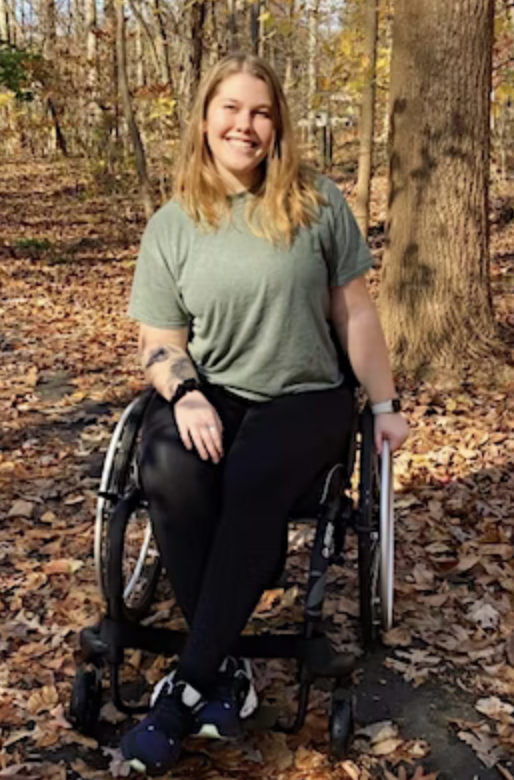
Kaykay Kindy offers Accessible Movement Class

Kaykay Kindy started working with AHP in 2017 and 2018 by offering yoga and stretch breaks to nurses and staff. Years later, after coping with her own chronic health issues, she re-imagined the role of artful movement in her own healing journey. Now, Kaykay teaches Accessible Yoga from a Wheelchair or Chair. The class, she says, was born out of her personal experience and, as she explains below, aligns with her mission to prioritize movement for people with disabilities, injuries, or chronic health conditions.

Could you tell us a bit about your background as a movement artist?

I started dancing when I was 12. This was around middle school. I struggled in my classes and didn't feel like I fit in with my peers. After school, I could go to dance, express myself, and be in a community. While in college, I found yoga as a form of stress relief and became certified. What's carried me throughout my life, in terms of movement, has been its connection to the mind. As someone who's struggled with mental health, movement has been a way for me to process anxiety and emotions that sometimes felt too big to handle. I learned, firsthand, that movement helps regulate the nervous system and expend stressful energy to come back to a place of calm.


What inspired you to bring wheelchair and chair yoga to the arts and humanities program?

In the summers of 2017 and 2018, I worked as a movement artist-in-residence with AHP. I taught yoga to the nurses and staff during their lunch and led stretch breaks throughout the hospital. A few years later, I started developing health issues and was saddened to find very few movement classes for people like me, with chronic pain, chronic fatigue, dysautonomia, and mobility limitations. Now, I am an ambulatory mobility aid user, meaning I can walk in certain limited capacities. Often I use my forearm crutches or my manual wheelchair to help me get around. Through my personal journey, I found the Accessible Yoga Association, an organization committed to bringing yoga to marginalized groups of people. I completed their certification program, became an Accessible Yoga Ambassador, and was inspired to bring a version of Accessible Yoga to the AHP. In my class, I aspire to create an environment where people with various forms of disabilities, injuries, or chronic health conditions, can not only feel welcomed and included but represented and prioritized.


Why is it important to create welcoming environments for movement?

One in four people in the U.S. has some form of disability. It could be physical, cognitive, psychological, or sensory. So, it’s important that we create trauma-informed and intentional spaces where everyone is seen and included.


What can people expect when they attend your online class?

We begin with grounding, centering, and breathing. As we explore mindful movement, I use invitational language. I give lots of options. I’ll say something like, “maybe you place your hands on your knees, maybe you place your hands on your stomach.” I also explain that each pose may look different or feel different depending on if you're in a chair, if you're in a wheelchair, or if you're on the couch. After the yoga poses, we'll go into guided relaxation. After 45 minutes, the class ends and there is time for students’ questions or thoughts. My hope is that participants leave class feeling at ease, in body and mind.

And I Have You


by Nikki Giovanni


Rain has drops

Sun has shine

Moon has beams

That make you mine

Rivers have banks

Sands for shores

Hearts have heartbeats

That make me yours

Needles have eyes

Though pins may prick

Elmer has glue

To make things stick

Winter has Spring

Stockings feet

Pepper has mint

To make it sweet

Teachers have lessons

Soup du jour

Lawyers sue bad folks

Doctors cure

All and all

This much is true

You have me

And I have you


Valentine's Day Inspiration from Jenn Wilkin Penick

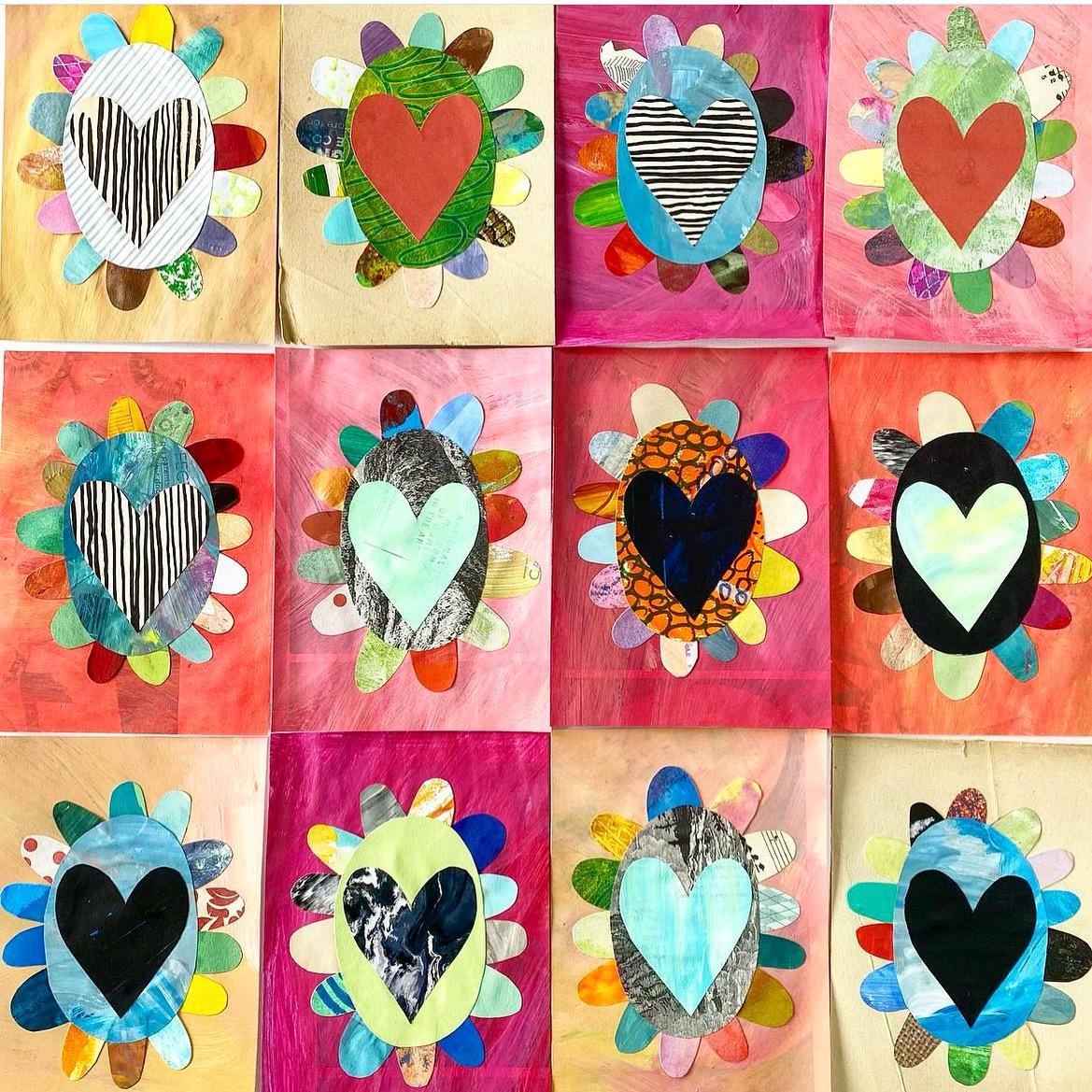
In AHP artist-in-Residence Jennifer Wilkin Penick's popular twice-weekly Creativity Jumpstart classes, she recommends that participants use whatever materials they have on hand in creating their response to her weekly creative prompt.


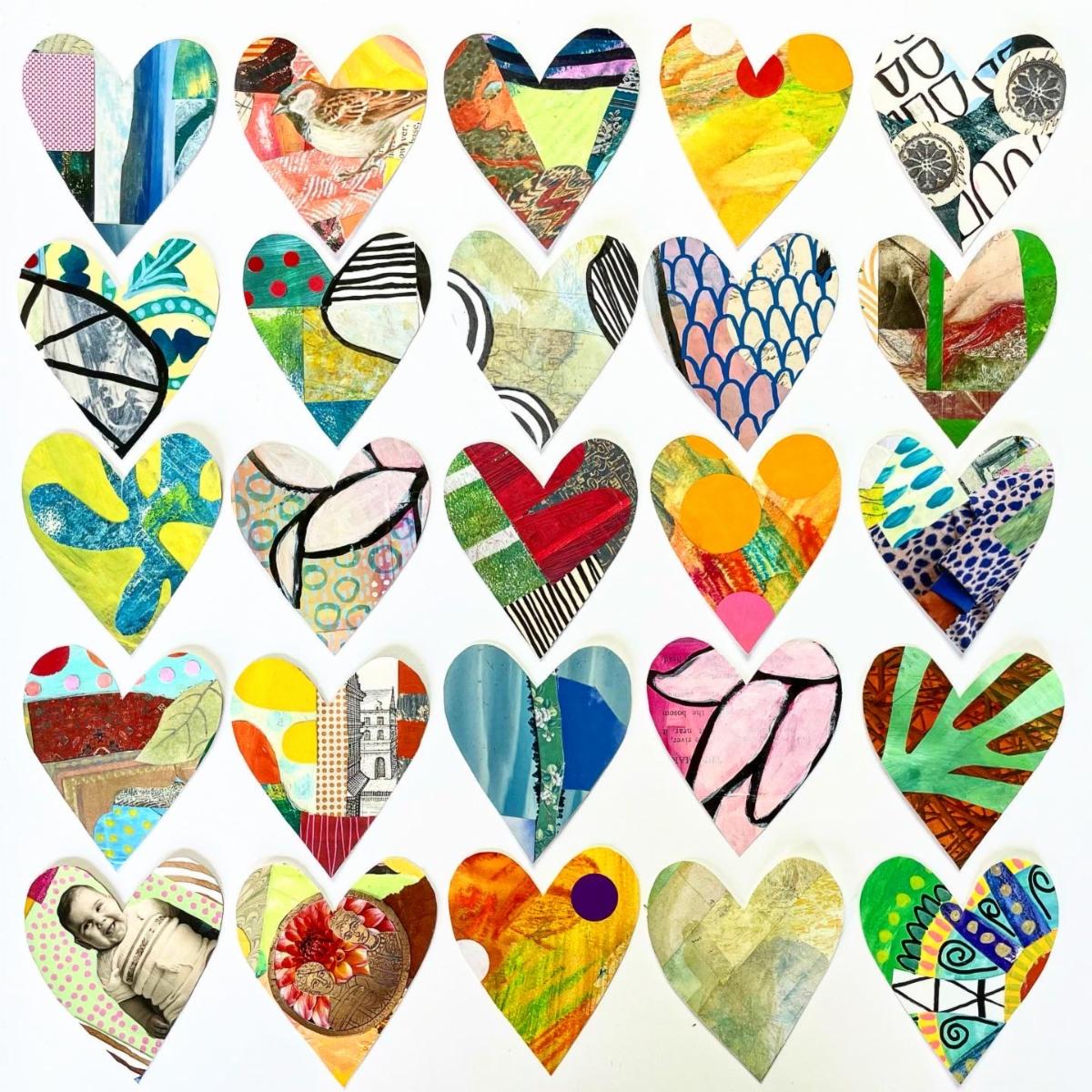
Jennifer often uses discarded or half-finished works of art as source material. She says that cutting old artwork into different shapes gives it new life. She calls these "Art Hearts," while one of her class participants coined the term "Unconventional Valentines". Whatever you choose to call them, they make simple and original valentines.


For those who don't have artwork that they are tempted to cut into hearts, Jennifer shares a video below in which she makes a letter-sized collage and then cuts new hearts from it.


The collage process is simple: glue interesting bits of paper taken from magazines, catalogs, etc. to a piece of paper. Consider using paint, marker or colored pencil for added interest. Trace your favorite heart shape on the back, cut them out, and glue the hearts to blank greeting cards!

The Georgetown Lombardi Arts & Humanities Program (AHP) promotes a holistic approach to healthcare for patients, caregivers, physicians, nurses, staff members, and students through the use of music, dance, expressive writing, and visual arts. These therapeutic modalities are normally provided throughout the MedStar Georgetown University Hospital in Washington, D.C., and online through Eventbrite courses. The AHP is a program of the Georgetown Lombardi Comprehensive Cancer Center.

Facebook      Instagram      Email      Web      YouTube

Copyright © 2022 Georgetown Lombardi Arts & Humanities Program, All rights reserved. You are receiving this message because you opted in on our site.