|
This Week in Primary Care
The Failing Healthcare System: Public and Private
--View as Webpage--
Across the country, families, clinicians, and safety-net systems are holding their breath. The impending expiration of enhanced ACA subsidies, combined with upcoming sweeping changes to Medicaid, will unravel coverage for millions. As these deadlines approach, the uncertainty alone is destabilizing, especially for children, low-income families, and the primary-care practices that serve them.
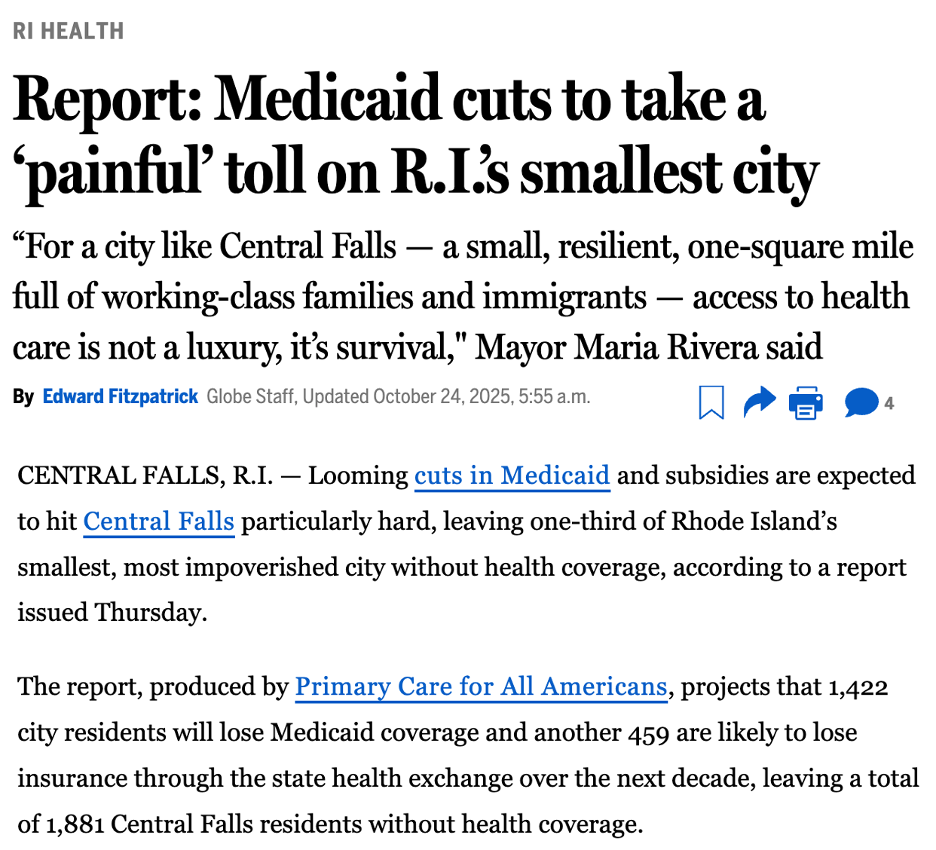
A recent report from the PC4AA Central Falls working group illustrates this looming disaster. Upcoming cuts to Medicaid and reductions in subsidies will have a devastating impact on Central Falls, RI., one of the state’s poorest and most densely populated cities. 1,422 residents will lose Medicaid coverage, and another 459 will lose insurance through the state exchange over the next decade. This is on top of an estimated 5,000–10,000 undocumented residents who already lack coverage.
In a Boston Globe article covering the report, local leaders emphasized that the numbers represent real families who will lose access to primary care, making it harder to manage chronic diseases, obtain preventive screenings, or receive early treatment. Mayor Maria Rivera called for urgent community action, highlighting Medicaid recertification efforts and expanded primary-care access as essential to keeping people healthy and out of emergency rooms.
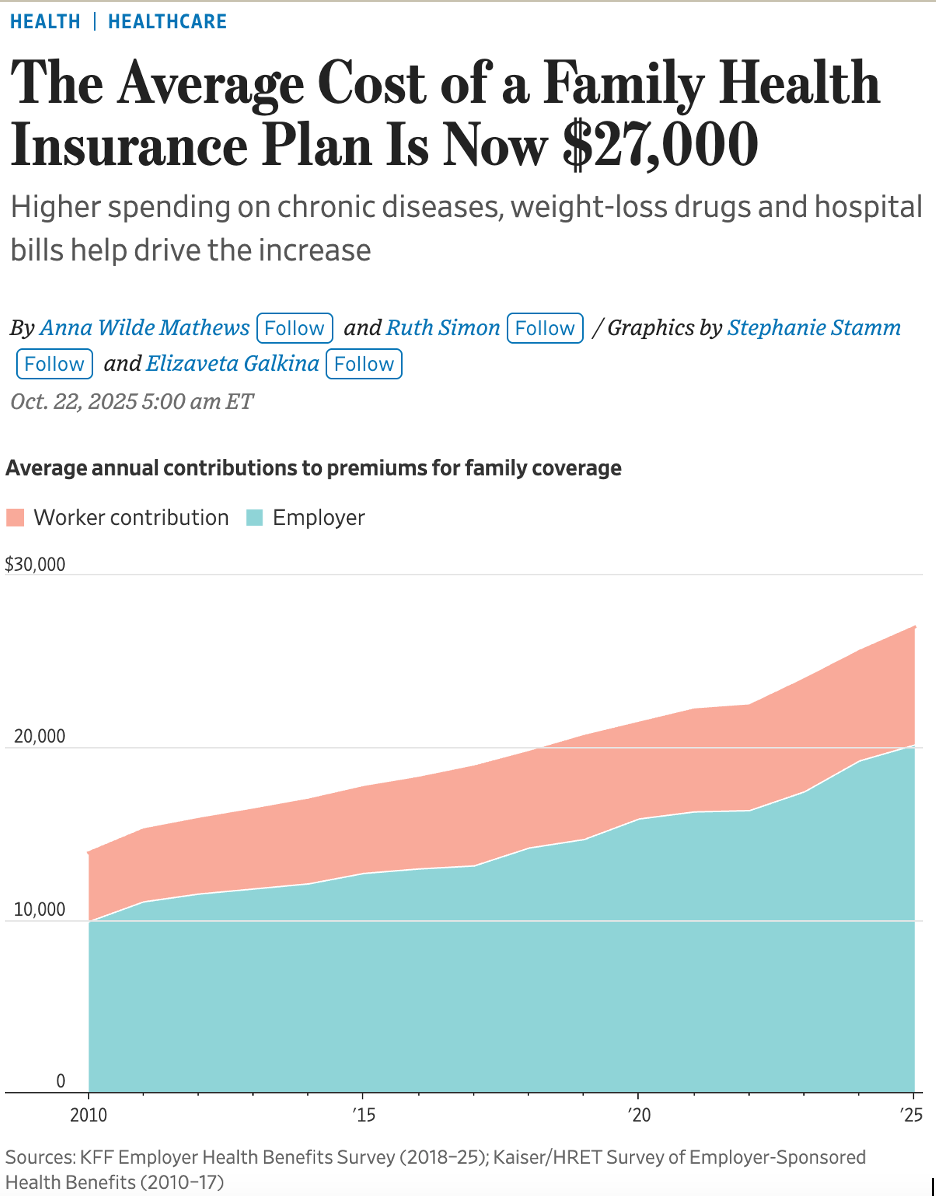
Meanwhile, a parallel crisis is occurring in the private sector. The cost of employer-sponsored health insurance rose for a third consecutive year in 2025, reaching nearly $27,000 for a family plan, according to a Kaiser Family Foundation (KFF) study covered in the Wall Street Journal. Premiums are rising faster than inflation. Rising costs are driven by higher overall healthcare spending, increasing hospital prices, more illness among working-age adults, and expensive new treatments. Small businesses are struggling; shifting costs to workers (higher premiums and deductibles), narrowing benefits, or dropping coverage entirely.
These Two Articles Point to the Same Solution: Primary Care for All Americans
The Central Falls report shows when public coverage erodes: primary care access disappears, and people are forced into emergency rooms with worse outcomes and higher costs. The employer-insurance article shows the flip side: even insured working families are being priced out as employer plans approach $27,000 per family. Wages and hiring are being stifled.
Despite affecting different populations, both stories reveal the same failure: the U.S. chronically underinvests in primary care. Central Falls is not an outlier; it is a warning. Without a national commitment to stable, primary care for all, healthcare costs will continue to rise while coverage shrinks. Investing in primary care is not just a moral imperative; it is the only sustainable way to protect families, wages, and community health.
That’s why Primary Care for All Americans is supporting local workgroups to organize in their communities, and state workgroups to pass enabling legislation. If you’re ready to join up with your neighbors, email admin@primarycareforallamericans.org to get connected.
|