|
This Week in Primary Care
The Investment Issue
--View as Webpage--
Chronic disease is the dominant driver of illness, disability, and healthcare spending in the United States. Conditions such as heart disease, cancer, diabetes, asthma, and chronic obstructive pulmonary disease account for the majority of deaths and a large share of national health care costs. Yet despite the scale of this challenge, the United States continues to underinvest in the one part of the health system best positioned to prevent and manage these conditions: primary care.
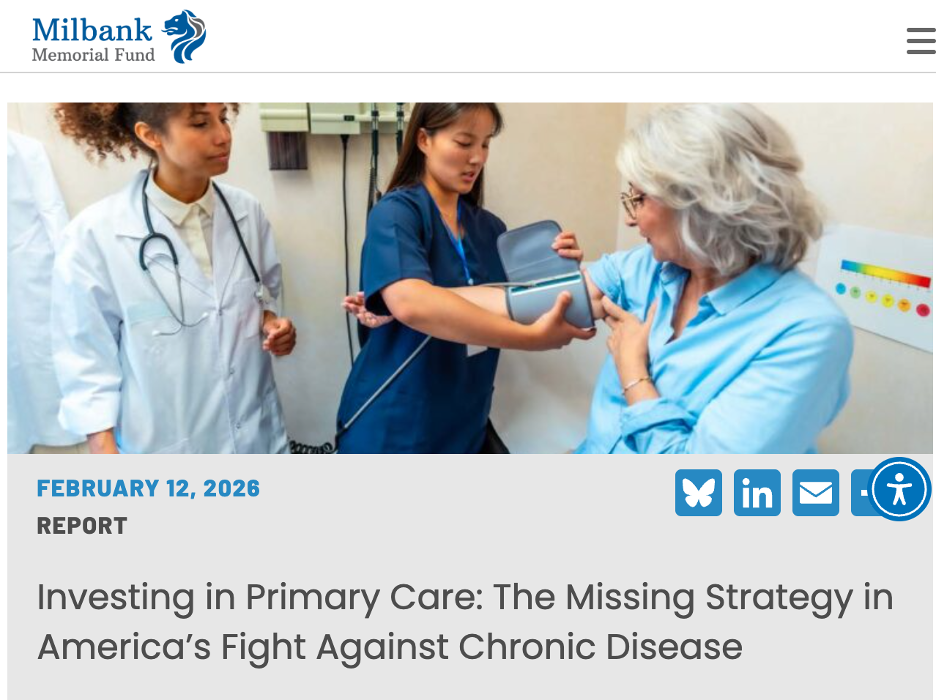
A new national report from the Milbank Memorial Fund confirms what clinicians and patients have long understood: people who have a regular source of primary care are far more likely to receive preventive services, less likely to require emergency or hospital care, and significantly less expensive to care for overall (see feature below).
These findings reinforce a central message of Primary Care for All Americans (PC4AA): strengthening primary care is one of the most effective strategies for improving population health, controlling costs, and building healthier communities.
First-contact, continuous, comprehensive, and coordinated, primary care is the front line of disease prevention. Primary care teams screen for risk factors, detect illness early, counsel patients on healthy behaviors, and coordinate care across the health system. Over 95% of adults with regular primary care received blood pressure checks, compared with 67.6% of those without. Cholesterol screening occurred in 89.2% of adults with primary care (56.7% for those without), and tobacco screening in 74.4% (48.6% for those without). Primary care also improved breast, colon, and cervical cancer screening rates.
The benefits of primary care begin early. Childhood is a critical window for establishing healthy habits and preventing future disease. Children with a usual source of primary care were far more likely to receive vision testing, counseling on injury prevention, screening for secondhand smoke exposure, and obesity prevention counseling. These services address some of the most common health threats facing children today, including asthma, obesity, and accidental injuries. For families, a trusted pediatrician or family physician provides more than episodic care; they support healthy development through a continuity relationship.
Primary care also plays a critical role once disease develops. Adults with chronic illness who had a usual source of primary care were 11% less likely to visit the emergency department and 20% less likely to be hospitalized. For children with chronic disease, the impact was even greater. Children with conditions such as asthma, diabetes, or epilepsy were nearly 50% less likely to require emergency or hospital care for conditions that could be treated in outpatient settings when they had a regular source of care.
These findings reflect the value of continuing, first-contact primary care relationships. Primary care clinicians monitor symptoms, adjust medications, coordinate specialists, and intervene early, preventing complications that would otherwise lead to costly acute care. Adults with chronic disease who had a usual source of primary care had nearly 54% lower total health care expenditures than those without one. For children with chronic disease, total costs were almost 40% lower when a regular primary care source was present. Many of these savings come from avoiding expensive hospitalizations, emergency visits, and preventable complications. In effect, primary care shifts the system from reactive medicine to proactive health.
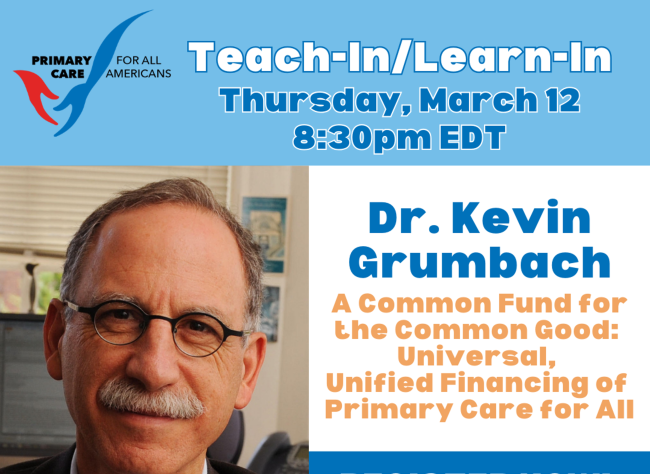
Despite these benefits, the United States invests remarkably little in primary care, as Dr. Kevin Grumbach discussed in last week’s Teach-In/Learn-In. In 2022, less than 5% of total health care spending went toward primary care, hampering the work, weakening the workforce, and leaving tens of millions without a primary care relationship. You can check your state’s score at the Milbank Memorial Fund’s 2026 Primary Care Scorecard Data Dashboard.
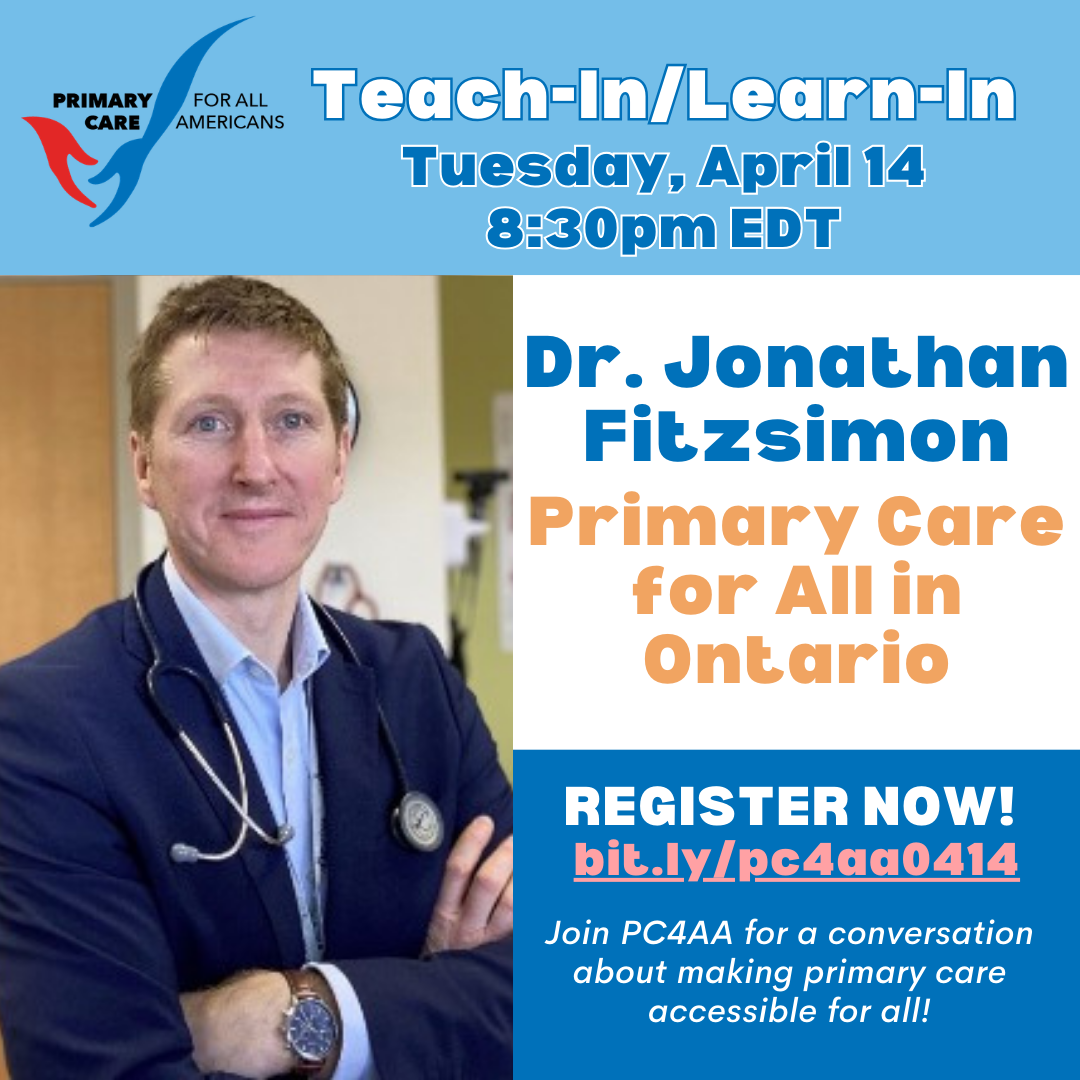
For inspiration, PC4AA is looking to Ontario! Please register for our April 14th Teach-In/Learn-In with Dr. Jonathan Fitzsimon about the impact of providing primary care to everyone in Ontario. We also look forward to learning with him at the National Convening in Cambridge, MA May 20th - stay tuned for registration! And finally, a warm welcome to all joining for the first time from conversations at the MA Academy of Family Physicians meeting this past weekend – we’re so glad you’re here.
|