|
This Week in Primary Care
The Sustainability AND Access Issue
--View as Webpage--
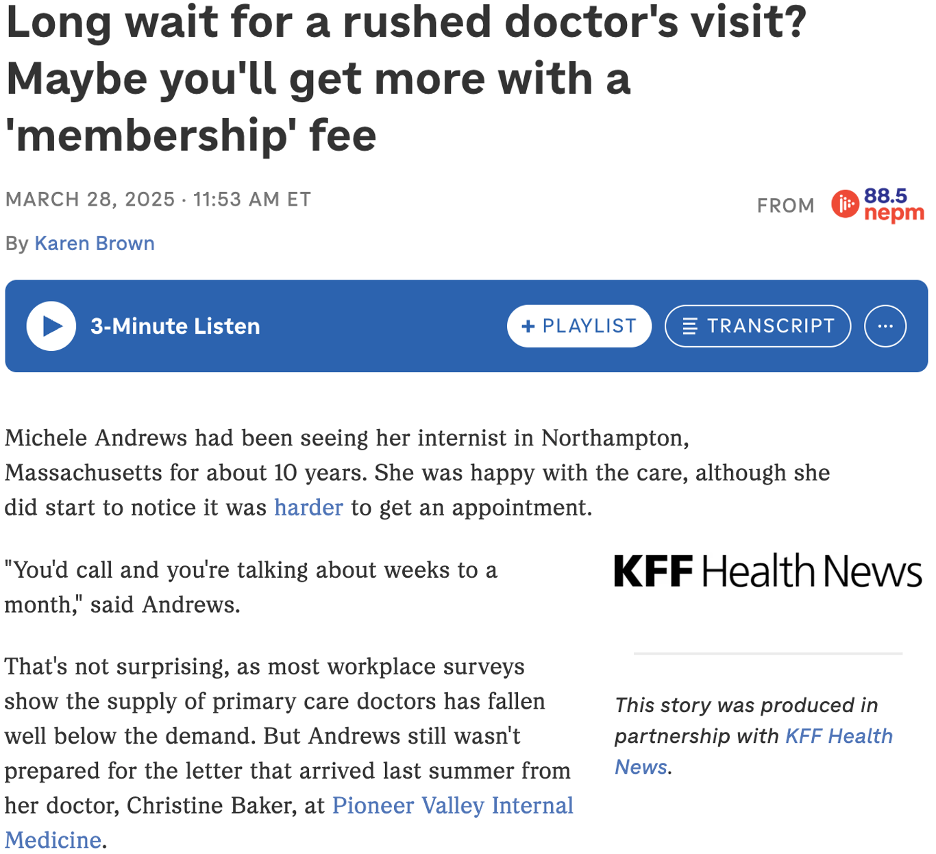
Two seemingly different articles reveal the complicated life of a primary care physician in 2025. In the article, Long wait for a rushed doctor’s visit? Maybe you’ll get more with a membership fee, a patient in Massachusetts opens a letter from her longtime internist and learns that if she wants to keep her doctor, she must now pay an additional annual fee on top of her insurance. The article explores the rapid rise of concierge and direct primary care (DPC) models and the tradeoffs these models create for patients and communities.
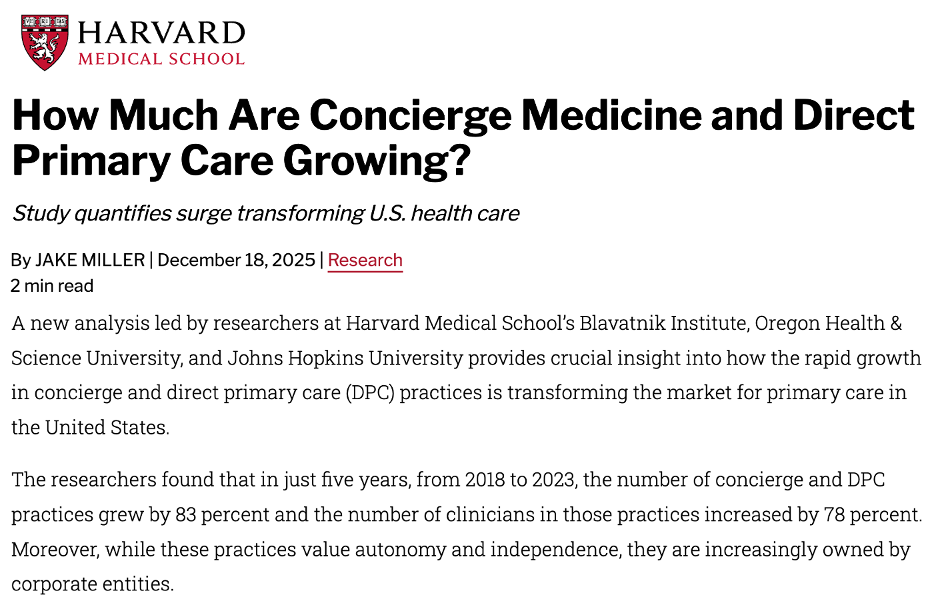
Concierge medicine limits a physician’s patient panel size in exchange for membership fees on top of insurance, allowing for longer visits, same-day appointments, and reduced administrative burden. In DPC, doctors bypass insurance entirely and charge monthly fees. While DPC can simplify care delivery and restore doctor-patient relationships, it requires patients to pay up front. Often the DPC physicians have negotiated lower prices for medications and diagnostics as well. These models are growing rapidly - in his December PC4AA Teach-In/Learn-In, Dr. Zirui Song shared from a brand-new study that an estimated 10-20% of U.S. primary care clinicians now practice in a concierge or DPC model.
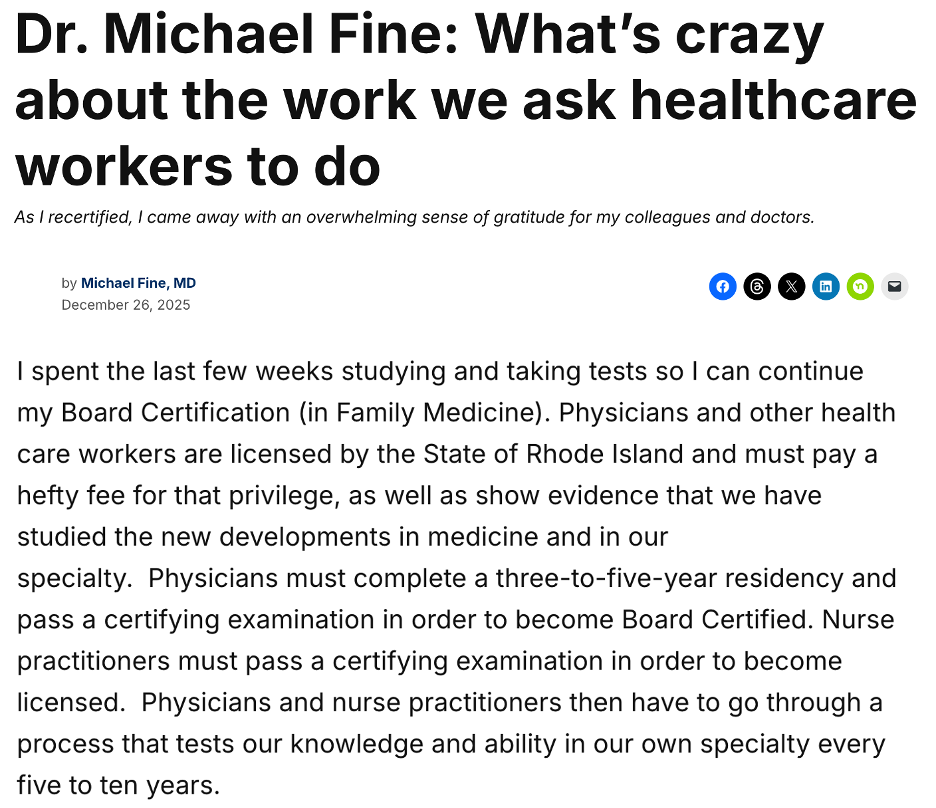
A recent article from one of PC4AA’s founders, Dr. Michael Fine: What's crazy about the work we ask healthcare workers to do, spells out some reasons why there is this growth of DPC and Concierge practices. Physicians and nurse practitioners must undergo years of training, repeated high-stakes exams, ongoing education, and licensing requirements simply to remain eligible to practice and be paid.
Dr. Fine describes how much medical knowledge has expanded over recent decades, across diabetes, mental health, asthma, heart disease, and cancer, bringing more precise diagnoses and better treatments. Frontline clinicians must continually master new science while applying it to real people and families. Yet despite this knowledge, the U.S. healthcare system delivers expensive, frustrating, and often poor results.
Clinicians are caught in the middle: expected to maintain encyclopedic expertise while being pushed, devalued, and overworked by profit-driven administrators. Dr. Fine describes health care workers as modern “Jedi knights”, deeply skilled, ethically driven, and essential, yet culturally underappreciated and insufficiently protected.
In this context, concierge and direct primary care models have emerged as a way for physicians to preserve the kind of medicine they were trained to practice. By reducing panel sizes and administrative burden, these models can prevent experienced clinicians from leaving medicine altogether. They can function as pressure valves in a system that otherwise pushes clinicians to burnout or exit.
At the same time, these models raise real and important concerns. When primary care becomes dependent on membership fees, access narrows. Patients with limited means are displaced. Remaining practices shoulder greater strain. The problem is not that doctors are choosing sustainability. The problem is that our health care system forces sustainability to come at the expense of access.
Concierge and DPC practices show us what clinicians need to stay in practice: smaller, humane panel sizes; time to think, listen, and prevent disease; administrative simplicity, and professional autonomy and trust.
The next step is to bring those conditions to everyone, not just those who can pay membership fees. That requires public investment, payment reform, and policy choices that treat primary care as essential infrastructure rather than a commodity. This is the core work of PC4AA local and state workgroups. Please email admin@primarycareforallamericans.org to get connected and get started!
|