The content in this preview is based on the last saved version of your email - any changes made to your email that have not been saved will not be shown in this preview.
Lurie Institute for Disability Policy logo

May News from the Lurie Institute

We recommend viewing this newsletter email as a webpage for the best and most accessible experience.

The Lurie Institute for Disability Policy releases 2024 Annual Report

Cover of the "2024 Annual Report" from the Lurie Institute for Disability Policy at Brandeis University's Heller School for Social Policy and Management. The design features various disability and healthcare-related icons arranged around the edges, including symbols for mobility aids, hearing and visual disabilities, caregiving, healthcare, communication, and research. The center text displays the Lurie Institute logo in bold blue font on a light blue background.

Last month, we released our 2024 Annual Report! The report showcases key research findings, a wide range of dissemination products and resources, education programs and fellowships, community outreach initiatives, and more. Read the report to review the many accomplishments and milestones we've achieved over the past year.

NIDILRR funds important research at Lurie

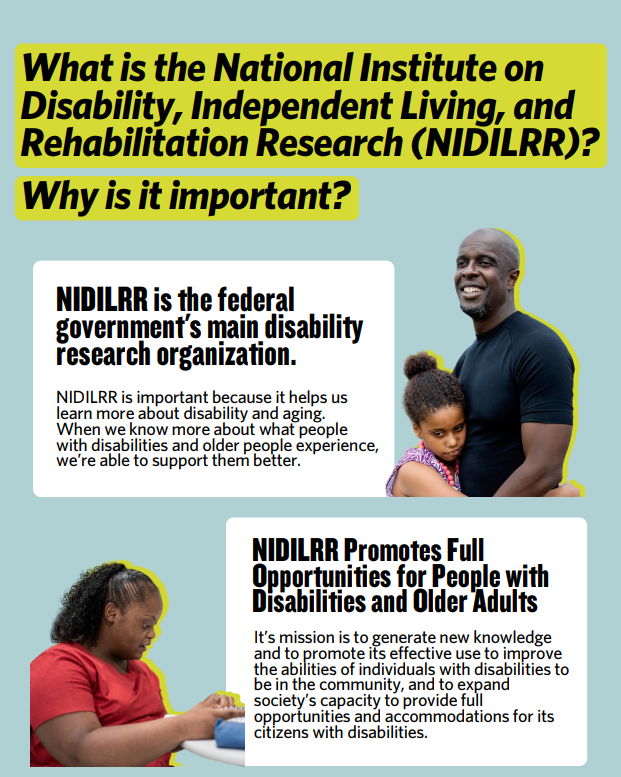
The image is an informational graphic explaining the role and importance of the National Institute on Disability, Independent Living, and Rehabilitation Research (NIDILRR). It highlights that NIDILRR is the federal government’s main disability research organization and emphasizes its significance in helping society learn more about disability and aging. By understanding the experiences of people with disabilities and older adults, we can better support them. The graphic also explains that NIDILRR's mission is to generate new knowledge and promote its effective use to improve the abilities of individuals with disabilities to live in the community, and to expand society’s capacity to provide full opportunities and accommodations for all citizens with disabilities. The image features photos of people engaging warmly, including a smiling man holding a child and a woman in a red shirt, with a light blue background and yellow highlights around the people.

The National Institute on Disability, Independent Living, and Rehabilitation Research (NIDILRR) funds important research and advances policies that benefit disability community and the broader population's access to community living and better healthcare.


We have prepared a series of infographics, highlighting the important work NIDILRR supports:

  1. What is NIDILRR? Why is it important?
  2. NIDILRR Promotes Community Living
  3. NIDILRR Supports Family Caregivers
  4. NIDILRR Supports People with IDD
  5. NIDILRR Supports Healthy Pregnancy

Dr. Mitra joins newly launched Lancet Commission on Disability and Health as a Commissioner

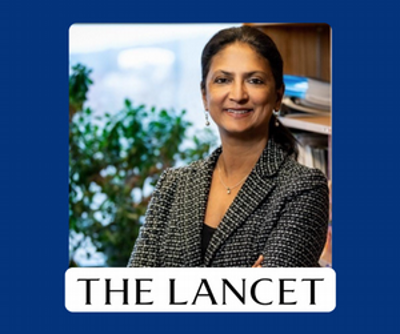
Dr. Mitra smiling alongside the logo for The Lancet

We are thrilled to announce that the Lurie Institute’s Director, Dr. Monika Mitra, was named a Commissioner for the newly launched Lancet Commission on Disability and Health!


The Lancet is the world’s leading public health journal, and we are excited that Dr. Mitra will be joining this important Commission to lead global disability health efforts.

Lurie Institute Advisory Board members and staff speak about disability health access and inclusion at the Massachusetts State House

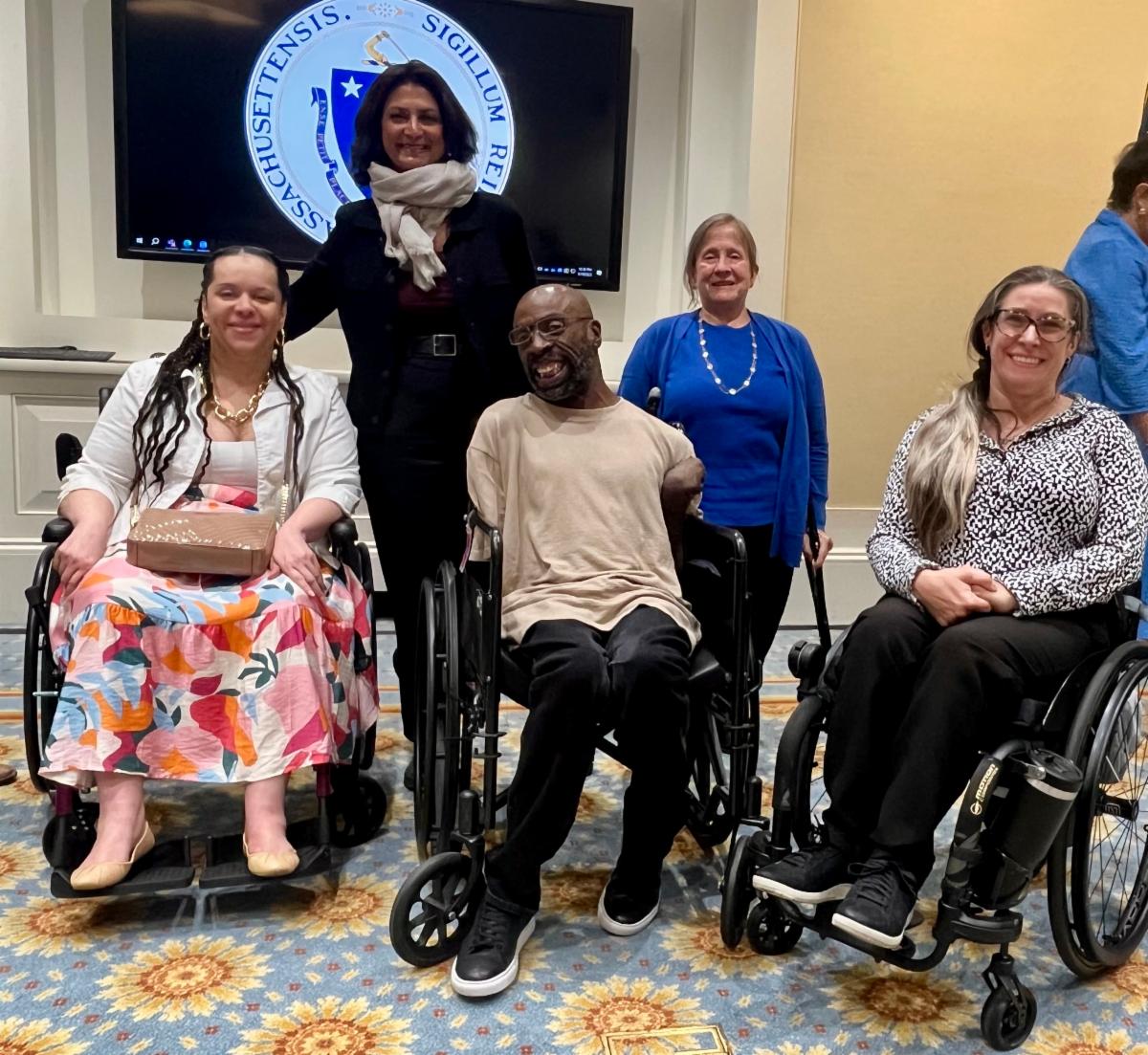
From left to right, Heather Watkins, Dr. Monika Mitra, Keith Jones, Linda Long-Bellil, and Nicole Lomerson pose together and smile for a group photo indoors. Heather Watkins is wearing a white jacket and a colorful floral skirt, Dr. Mitra is wearing a black suit with a red shirt and a beige scarf, Keith Jones is wearing a beige shirt and black trousers, Linda Long-Bellil is wearing a blue cardigan on a blue shirt, and Nicole Lomerson is wearing a black-and-white patterned top. The Massachusetts state seal is visible on a screen behind them, and the room has a blue and yellow floral carpet and cream-colored walls.

On May 19th, our staff and advisory board members spoke about disability health access and inclusion at the Massachusetts State House.


Lurie Institute Advisory Board members Heather Watkins and Keith Jones offered expert opinions and insights, as did our research partner Linda Long-Bellil.


These conversations are crucial to ensuring that people with disabilities have equitable access to health care and services.

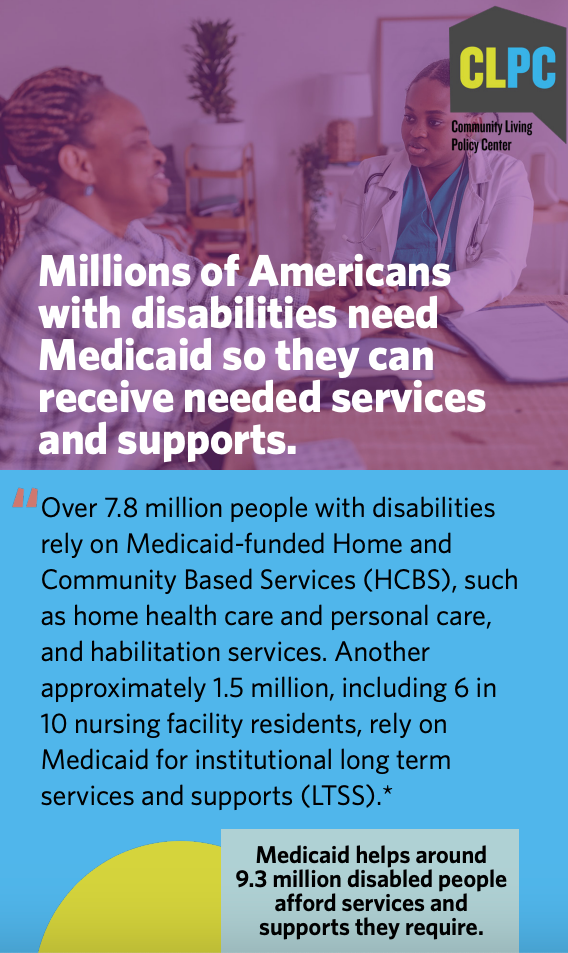
Medicaid is Vital for the Disability Community: a new set of infographics

Preview of first Medicaid infographic.

We've prepared a set of infographics highlighting Medicaid's importance for people with disabilities.


  1. The number of disabled people who use Medicaid for access to HCBS and needed services and supports.
  2. The reliance of millions of disabled people on Medicaid HCBS services that are designated as "optional," including personal care, transportation, and family support.
  3. The relationship between Medicaid recipients using LTSS and the potential risks created by budgetary reductions.

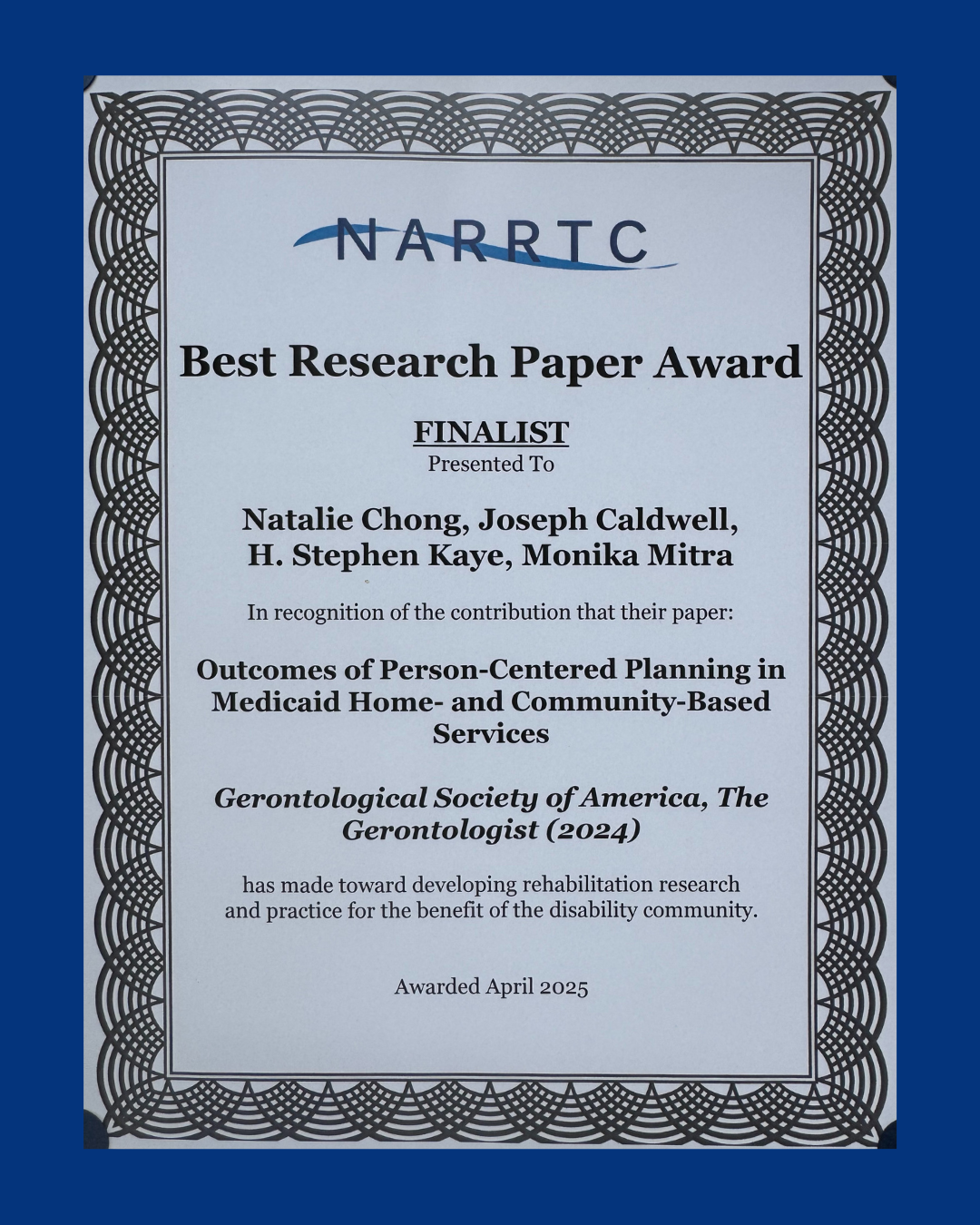
Lurie Institute scholars named finalists for Best Research Paper Award at National Association of Rehabilitation Research and Training Centers (NARRTC) Conference 

Miriam Heyman and Kimberly The smiling and posing for a selfie at the conference. Text reads: "Lurie at NARRTC".
 Certificate with the NARRTC logo at the top, titled "Best Research Paper Award." It recognizes Natalie Chong, Joseph Caldwell, H. Stephen Kaye, and Monika Mitra as finalists for their paper titled "Outcomes of Person-Centered Planning in Medicaid Home- and Community-Based Services," published in the Gerontologist (2024) by the Gerontological Society of America. The certificate acknowledges the paper's contribution to developing rehabilitation research and practice for the benefit of the disability community. "Awarded April 2025". The certificate has a decorative black border and is set against a blue background.

Lurie Institute researchers attended the National Association of Rehabilitation Research and Training Centers (NARRTC) Conference, where they shared key findings from their work.


During the conference, our study, Outcomes of Person-Center Planning in Medicaid Home- and Community-Based Services, was also graciously noted as a finalist for the Best Research Paper Award!

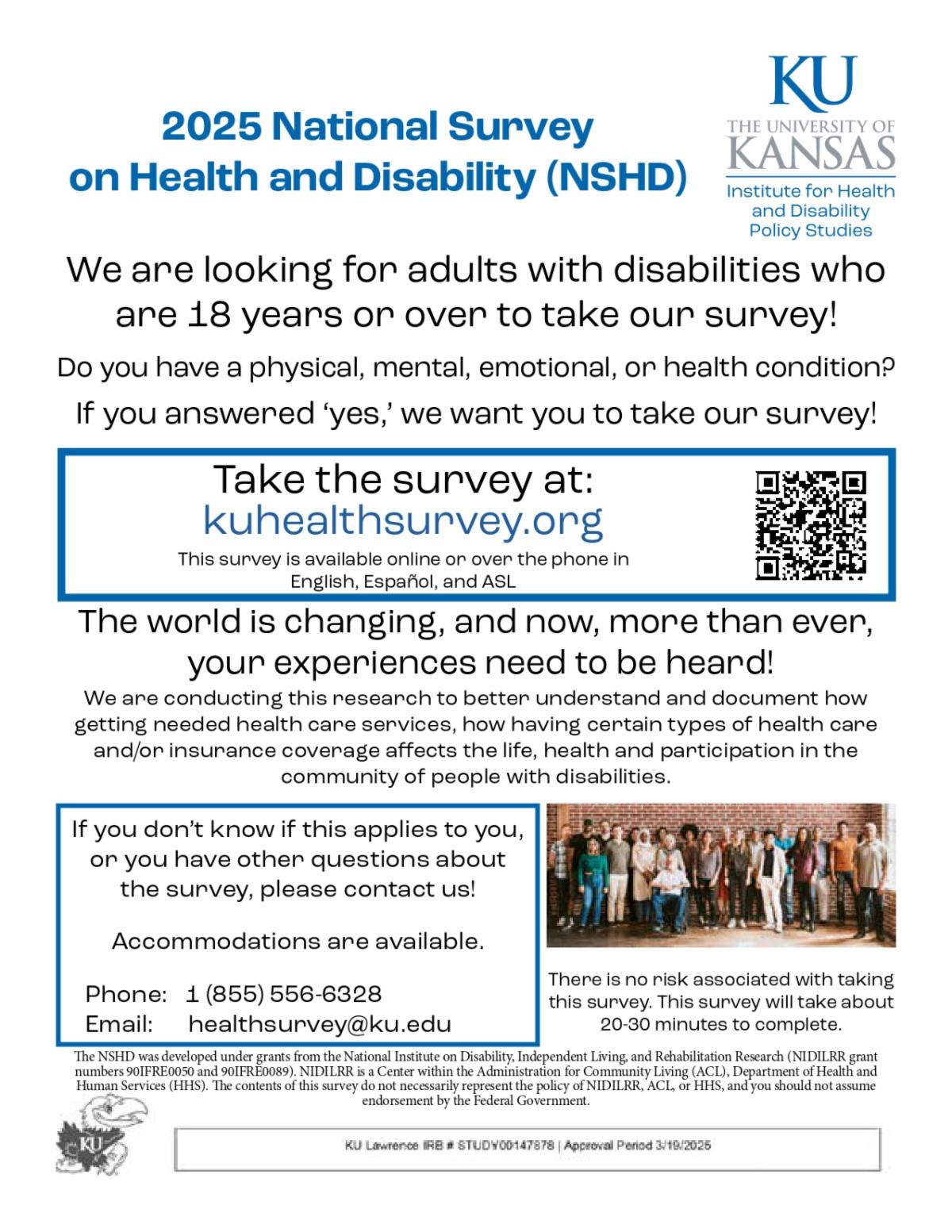
The 2025 National Survey on Health and Disability (NSHD) is open

University of Kansas's Institute for Health and Disability Policy Studies, in partnership with the Community Living Policy Center at the Lurie Institute, is looking for adults with disabilities who are 18 years or over to take their survey.


The world is changing, and now, more than ever, your experiences need to be heard!


Questions? Contact IHDPS:

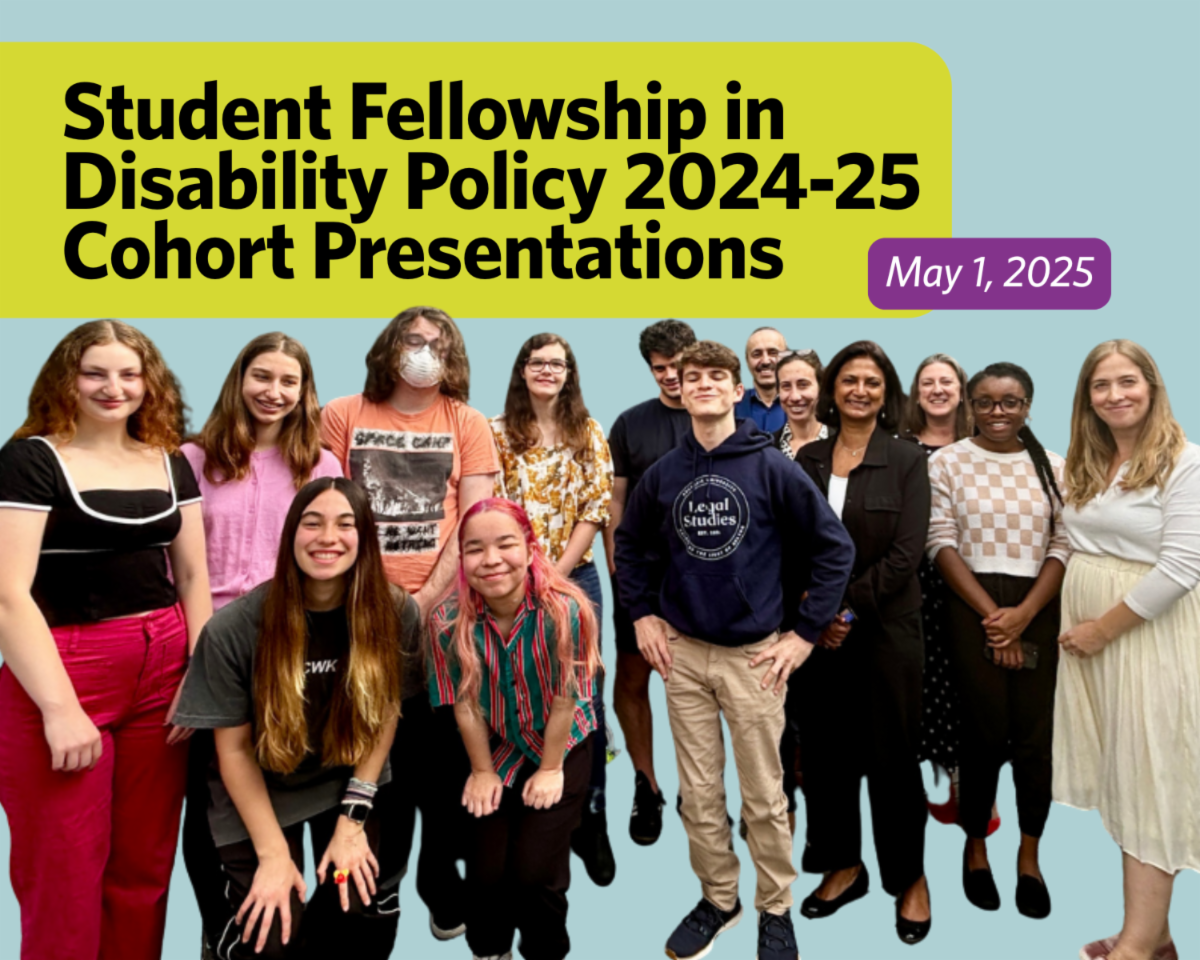
2024-2025 Student Fellowship in Disability Policy Cohort present findings

The Student Fellows stand together, smiling, with a section of Lurie staff who mentored them and directed the program. The picture is placed in front of a light blue background. Text at the top reads: “Student Fellowship in Disability Policy 2024–25 Cohort Presentations” in bold black letters on a yellow background. A purple label to the right displays the date “May 1, 2025.” The group includes individuals of varying genders, races, and dress styles.

After successfully completing their 2024–25 Student Fellowship, our Student Fellows presented their work, showcasing the research they developed throughout the program, and the skills gained.

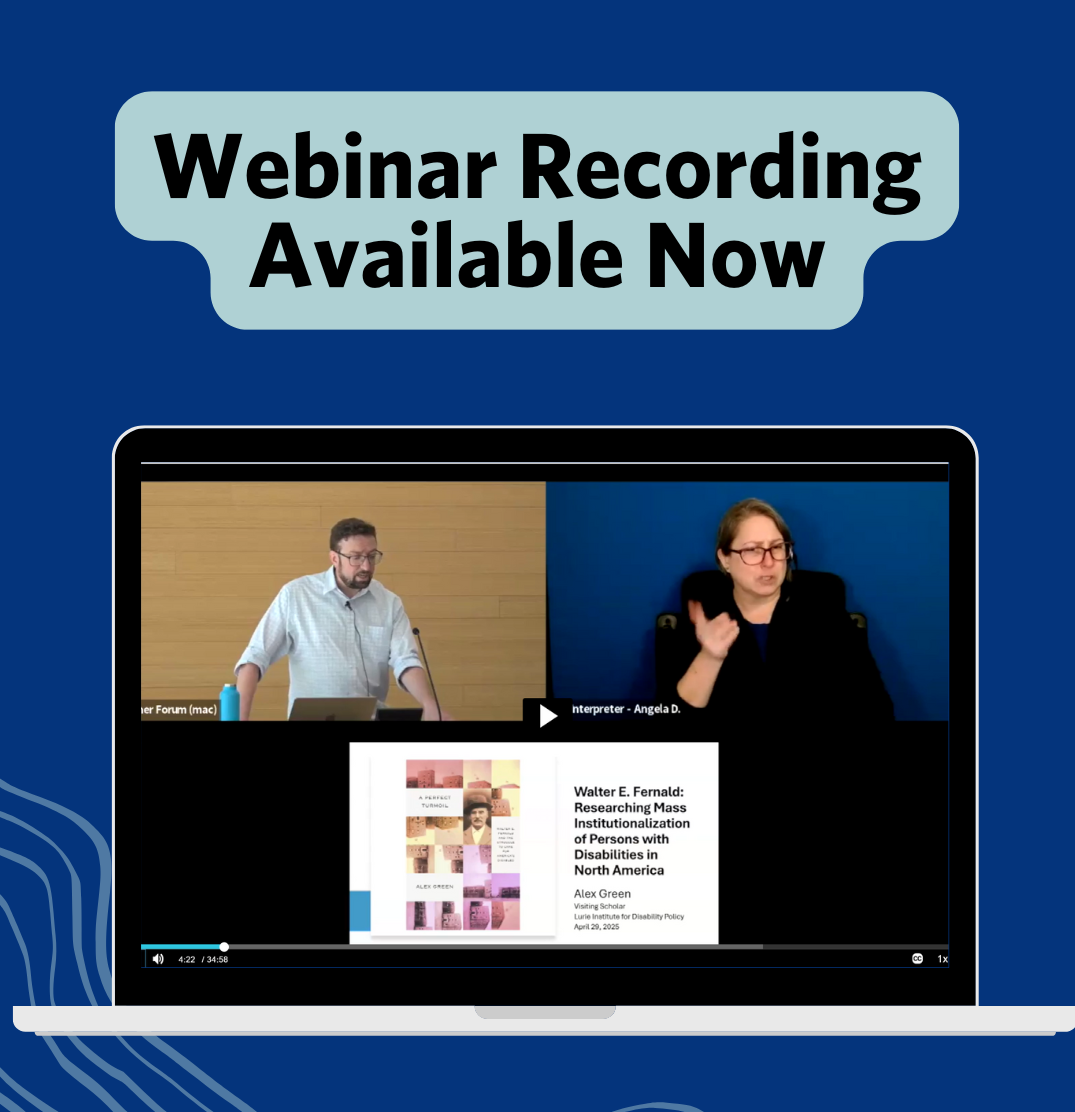
Watch our latest webinar

Find our latest webinars on our YouTube channel or by using the link below.

A Perfect Turmoil: Walter E. Fernald and the Struggle to Care for America’s Disabled

A Book Talk with Lurie Institute Visiting Scholar Alex Green

a laptop displaying a zoom call featuring Dr. Alex Green, his presentation slides, and an ASL interpreter. Text above reads 'Webinar Recording Available Now' on a blue background.

In this recording, Alex Green uncovers the hidden story of Walter E. Fernald, a pivotal yet controversial individual in the history of institutionalization of people with disabilities.

Our latest publications 📄


Research Briefs

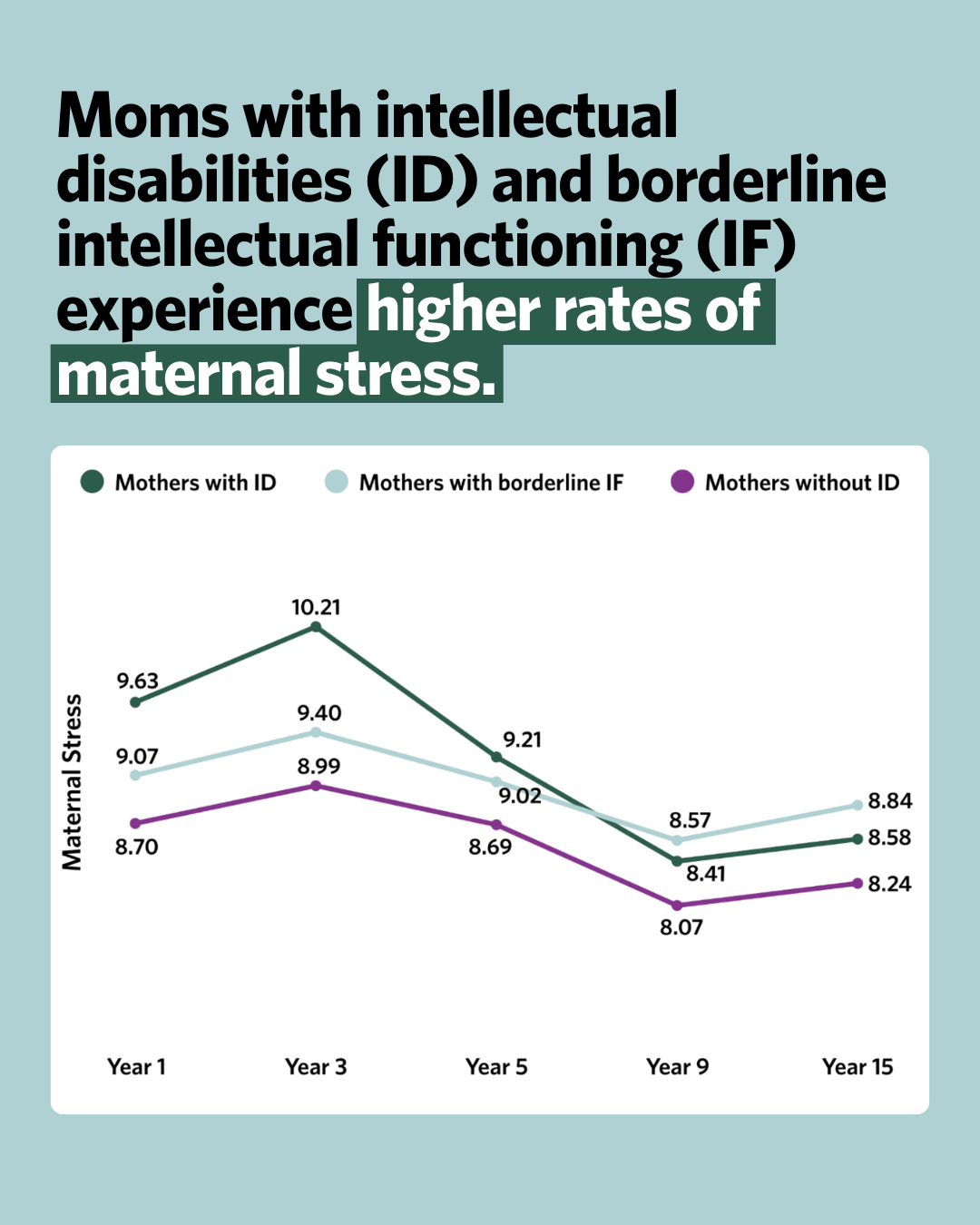
A light green graphic. The title says: Moms with intellectual disabilities (ID) and borderline intellectual functioning (IF) experience higher rates of maternal stress. Below the title is a graph displaying maternal stress levels over a 15-year period for three groups: mothers with intellectual disabilities (ID), mothers with borderline intellectual functioning (IF), and mothers without ID. Throughout the first nine years, mothers with ID consistently report the highest levels of maternal stress. At year nine, mothers with borderline IF begin to show higher stress levels than both other groups.

Long-term Patterns of Maternal Stress for Mothers with Intellectual Disabilities and Borderline Intellectual Functioning: What the Future of Families and Child Wellbeing Study Tells Us


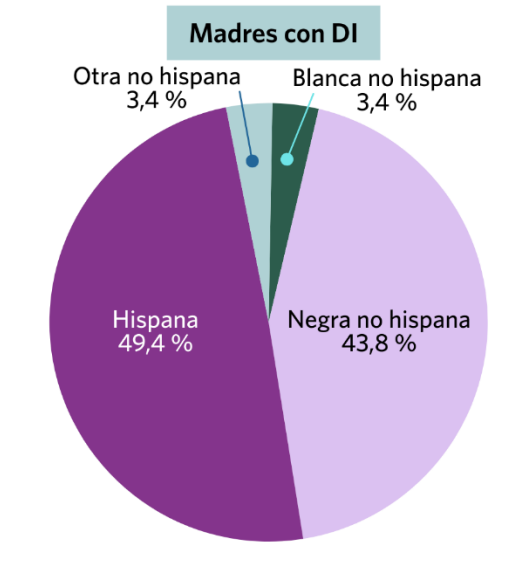
A pie chart showing the breakdown of mothers with ID, highlighting that majority of these mothers are Hispanic, followed closely by non-Hispanic black mothers.

Patrones de estrés materno a largo plazo de madres con discapacidades intelectuales y funcionamiento intelectual límite: Lo que nos dice el Estudio sobre el futuro de las familias y el bienestar infantil


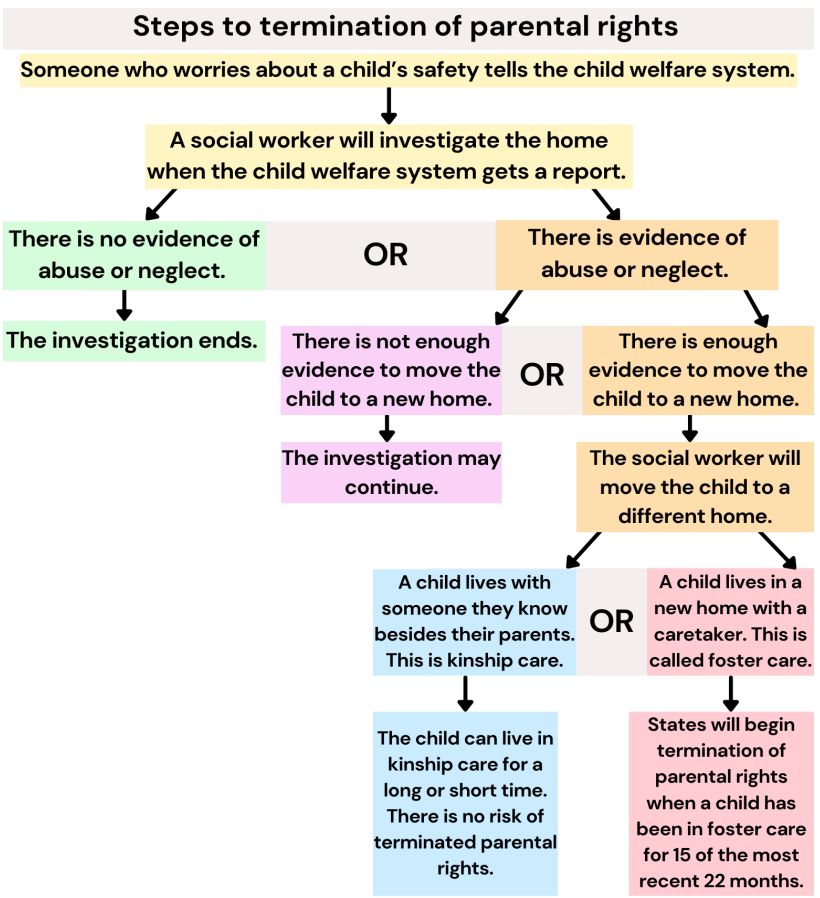
An infographic depicting steps to termination of parental rights. In the infographic, it shows how a report to the child welfare system leads to an investigation, and how the investigation will end if no evidence is found, or further investigations may lead to the child being moved to kinship care or foster care.

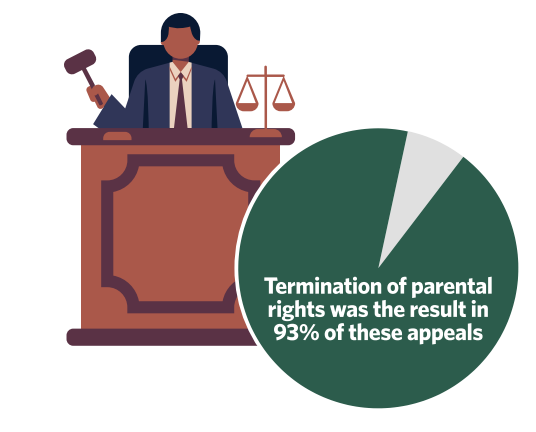
Terminating the parental rights of mothers with disabilities


Illustration of a judge presiding of a case and a pie chart showing how 93% of TPR came from the appeals

Suspensión de la patria potestad de las madres con discapacidades


Research Shows that Women with Disabilities Experience Severe Maternal Morbidity (SMM) at Higher Rates than Nondisabled Women


Research articles

An image of a father in a wheelchair joyfully playing with his child. The text reads: Submit a Blog.

Submit a parenting blog 📝

Are you a parent with a disability? Are you interested in sharing a blog post about adaptable summer activities with your kids, or other topics relevant to parents with disabilities? 


We’d love to hear from you! Share your experiences with us in our Parents with Disabilities Blog.

Research participant opportunities 💬

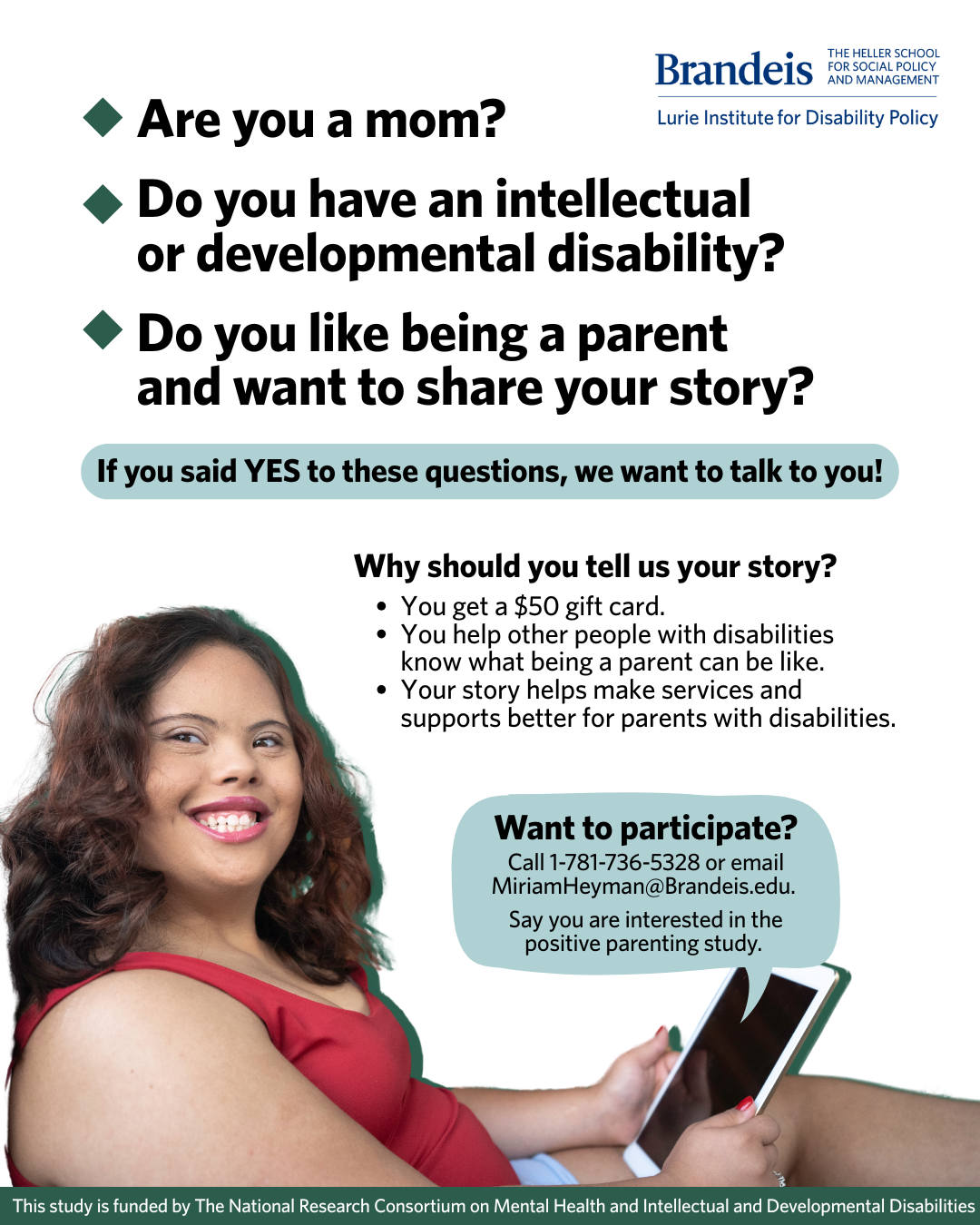
Moms with an intellectual or developmental disability, we want to hear your positive parenting stories!

A Latina woman with IDD smiling.
  • Are you a mom?
  • Do you have an intellectual or developmental disability?
  • Are you 18 years old or older?
  • Did you have a baby in the last 5 years?
  • Do you have happy or good stories to tell about being a parent?


If you said YES to these questions, we want to talk to you about your positive parenting stories! 


Sharing your story can help other people with disabilities know what being a parent can be like. Your story can also help make services better for parents with disabilities.

Do you want to tell your parenting story? If you said yes, contact us!

📞 Call 1-781-736-5328 OR

✉️ Email MiriamHeyman@Brandeis.edu


Download our plain language recruitment flyer.

Learn more about the study on our website.


Note: Do not share this study opportunity on social media. We want to avoid bots and scammers. Thank you! 

This study is funded by The National Research Consortium on Mental Health and Intellectual and Developmental Disabilities.

Seeking teens and young adults with disabilities to be interviewed

Illustration featuring six diverse individuals with visible disabilities. From left to right, the group includes a woman in a motorized wheelchair, a man with crutches, a woman with bilateral running blade prosthetics, a man using a cane and wearing dark glasses accompanied by a yellow guide dog, and a woman in a manual wheelchair raising her hand. The individuals are depicted in casual clothing and appear to be engaged in friendly conversation.

Sexual and reproductive health is an important part of being healthy.


Brandeis University is doing a study about the things that young people with disabilities think are important for their sexual health. We also want to learn how their family, doctor, school, and/or community can help them take care of their sexual health. There may be things that make it difficult or easy for them to get sexual health services. We want to know about these things too. We will use what we learn in the interviews to make a website. The website will teach teens and young adults with disabilities about taking good care of their sexual health.


We are looking for people to take part in interviews.


To take part, you must:

  • Have been born in the United States
  • Live in the United States
  • Be between 15 and 25 years old
  • Have a disability
  • Be able to talk to us in English or American Sign Language over a Zoom call


Learn more about this study on our website.

Looking for disabled people of color who are self-directing their services

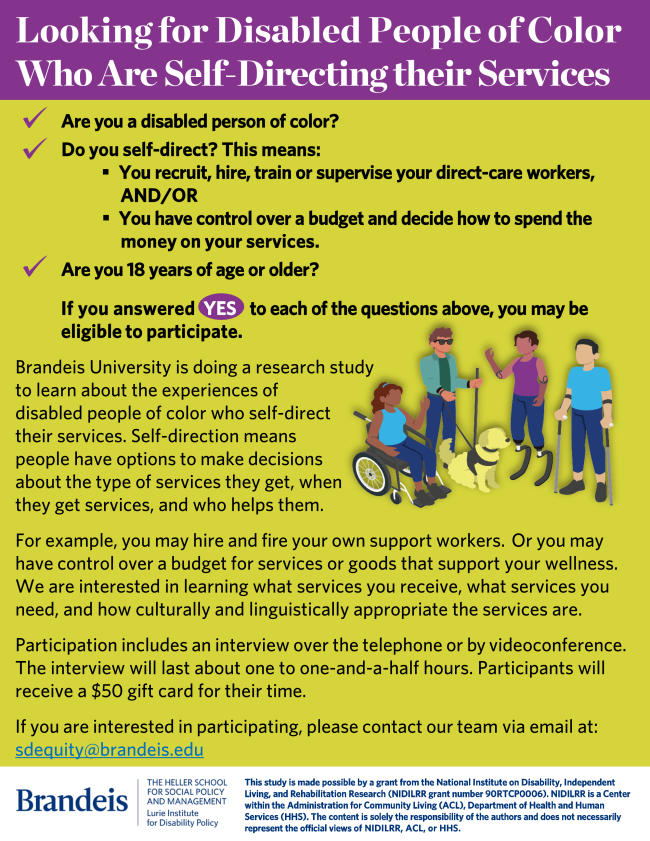
study promotional flyer. available to download on website in spanish and english
  • Are you a disabled person of color?
  • Do you self-direct? This means:
  • You recruit, hire, train or supervise your direct care workers AND/OR
  • You have control over a budget and decide how to spend the money on your services?
  • Are you 18 years of age or older?


If you answered YES to each of the questions above, you may be eligible to participate.


Learn more on our Self-Direction and Community Living Outcomes for People of Color study webpage.

Watch or share our recruitment video on YouTube.

Looking for people of color who self-direct their services

Follow us on social media 📲

Facebook  Instagram  LinkedIn  Web  YouTube  TikTok